

Building Surveys Integrating Whole Life Carbon Assessments: RICS 2nd Edition Guidance for 2026 Valuations
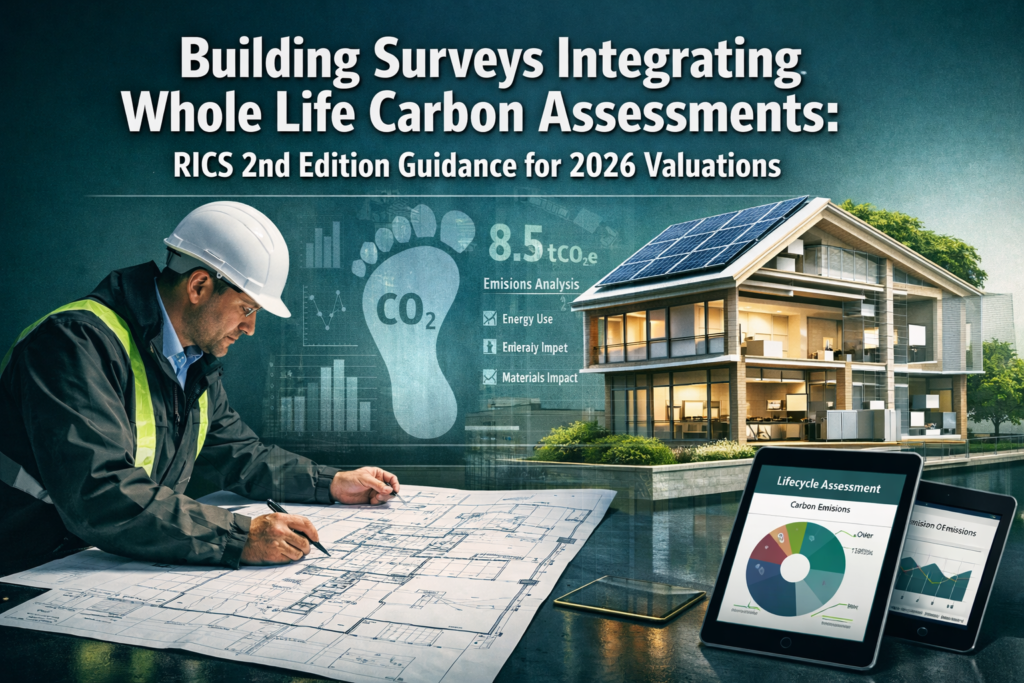
The built environment accounts for nearly 40% of global carbon emissions, yet until recently, most building surveys focused solely on structural condition and market value. That changed on July 1, 2024, when the RICS Whole Life Carbon Assessment 2nd edition became mandatory for all RICS members [6]. Now in 2026, Building Surveys Integrating Whole Life […]
Building Surveys and Awaab’s Law 2026 Expansion: Assessing New Hazard Categories Beyond Damp and Mould
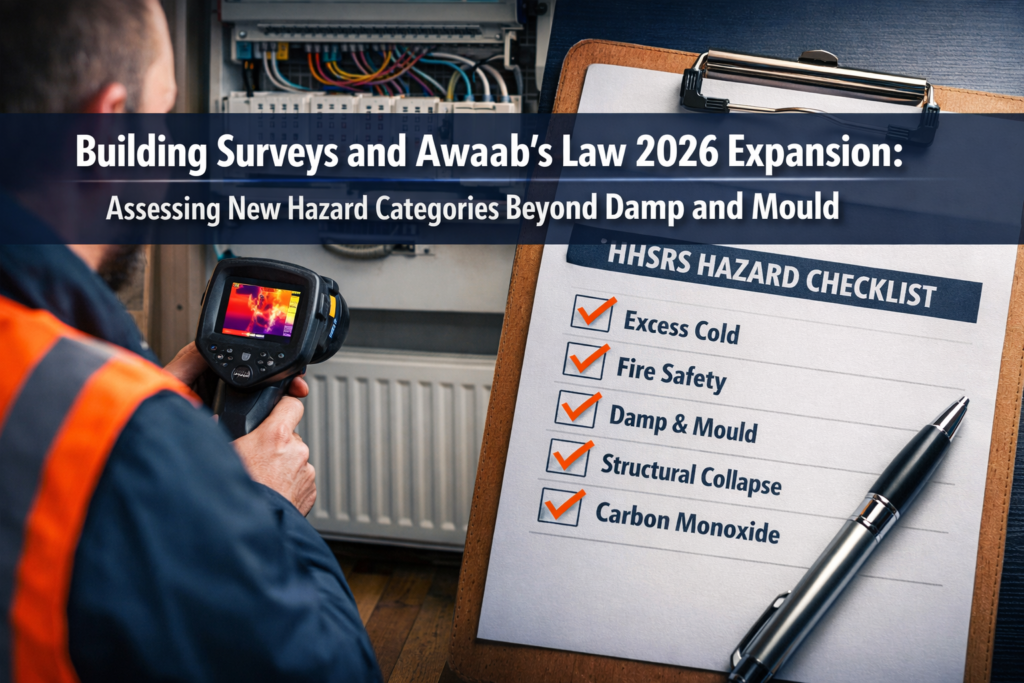
Nearly 40% of social housing properties in England contain at least one Category 1 hazard under the Housing Health and Safety Rating System, yet until 2025, no statutory repair timeframes existed to protect tenants from these dangers.[1] That changed with Awaab's Law—named after two-year-old Awaab Ishak, who died from prolonged mould exposure in his family's […]
Renters’ Rights Act 2026 Impact on Valuation Surveys: Adapting Rental Property Assessments Post-Section 21 Abolition
The Renters' Rights Act received Royal Assent on October 27, 2025, and fundamentally reshapes how 11 million private renters and 2.3 million landlords interact across England [1]. With all provisions taking effect from May 1, 2026, property valuers face their most significant challenge in decades: recalibrating rental property assessments in a landscape where Section 21 […]
Party Wall Surveys in PRS Extensions: Navigating Awaab’s Law Compliance and Structural Hazard Mitigation
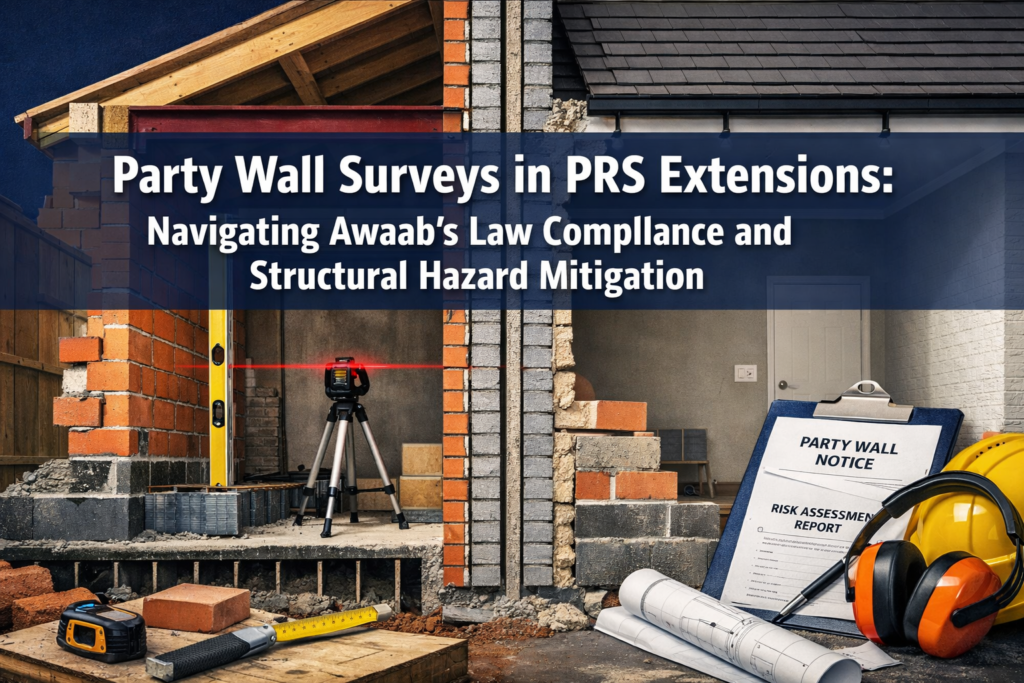
The number of party wall awards now flagging Awaab's Law-related hazards has increased by 340% since October 2025, with structural collapse risks, electrical failures, and moisture ingress dominating surveyor reports across Private Rented Sector (PRS) extension projects. As regulatory enforcement intensifies in 2026, landlords and property developers face a complex intersection of Party Wall Act […]
Party Wall Surveys for Pet-Friendly Rental Conversions Under Renters’ Rights Act 2026: Ensuring Compliance and Minimising Disputes

Despite the Renters' Rights Act 2026 aiming to expand pet-friendly housing, pet-friendly property listings have actually declined by 13% since implementation[1]. This counterintuitive trend reveals a critical gap: landlords fear structural modifications and neighbour disputes when converting properties for pet access. As 81% of rental operators report growth in pet ownership[2], understanding how party wall […]
Level 3 Building Surveys for Excess Temperature Hazards in PRS: Awaab’s Law 2026 Protocols for Overheating Assessments
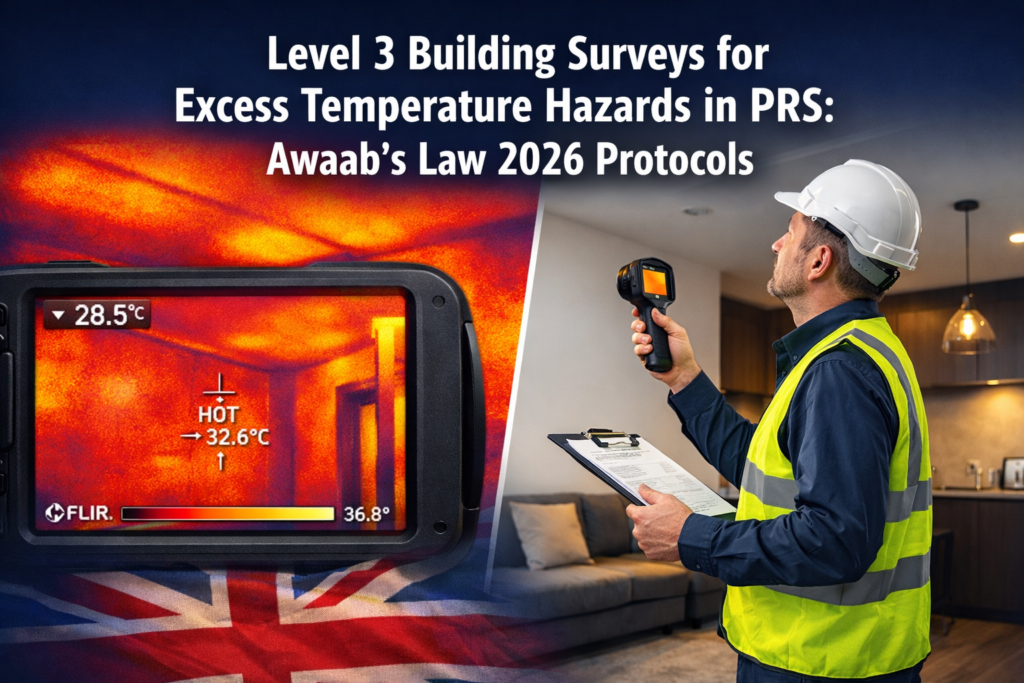
Excess temperature hazards in rental properties now carry the same enforcement weight as structural collapse and fire risks. Under Phase 2 of Awaab's Law regulations taking effect in 2026, private rental sector (PRS) landlords face strict 10-working-day investigation deadlines and mandatory remedial action for overheating issues that previously received minimal regulatory attention[7]. This shift transforms […]
AI-Driven Building Surveys Under RICS 2026 Standards: Practical Protocols for Level 3 Accuracy and Efficiency

The Royal Institution of Chartered Surveyors (RICS) has fundamentally reshaped the surveying landscape with its Responsible Use of AI in Surveying Practice professional standard, which came into effect on March 9, 2026[1]. This regulatory milestone marks the first comprehensive framework governing artificial intelligence applications in property assessment, creating both opportunities and obligations for surveyors conducting […]
Level 3 Surveys for Institutional Buy-to-Let in Renewed 2026 Demand: Structural Protocols for Professional Landlord Portfolios

Institutional landlords are pouring capital into buy-to-let portfolios at unprecedented rates in 2026, even as retail investors retreat from regulatory uncertainty. This bullish institutional appetite—driven by professional fund managers and corporate landlords—demands survey protocols that far exceed traditional homebuyer requirements. Level 3 Surveys for Institutional Buy-to-Let in Renewed 2026 Demand: Structural Protocols for Professional Landlord […]
Building Survey Protocols for Bungalow Subsidence and Roof Spread: Level 3 Essentials in 2026 Regional Soil Concerns
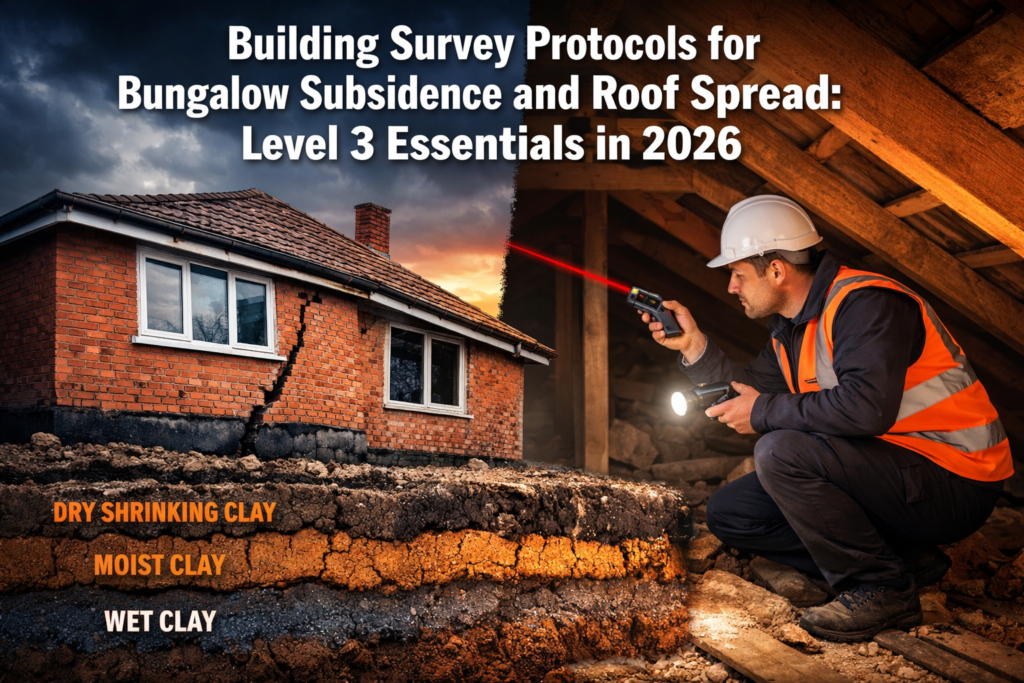
Bungalows account for a disproportionate share of structural insurance claims in the UK, with subsidence and roof spread representing the two most expensive defects discovered during property transactions. Recent data shows that Level 3 building surveys on bungalows built before 1990 identify significant structural movement in approximately 35% of inspections—a figure that has climbed steadily […]
Sustainability Reporting in Building Surveys: Applying RICS 2025 Insights to 2026 Valuation Challenges
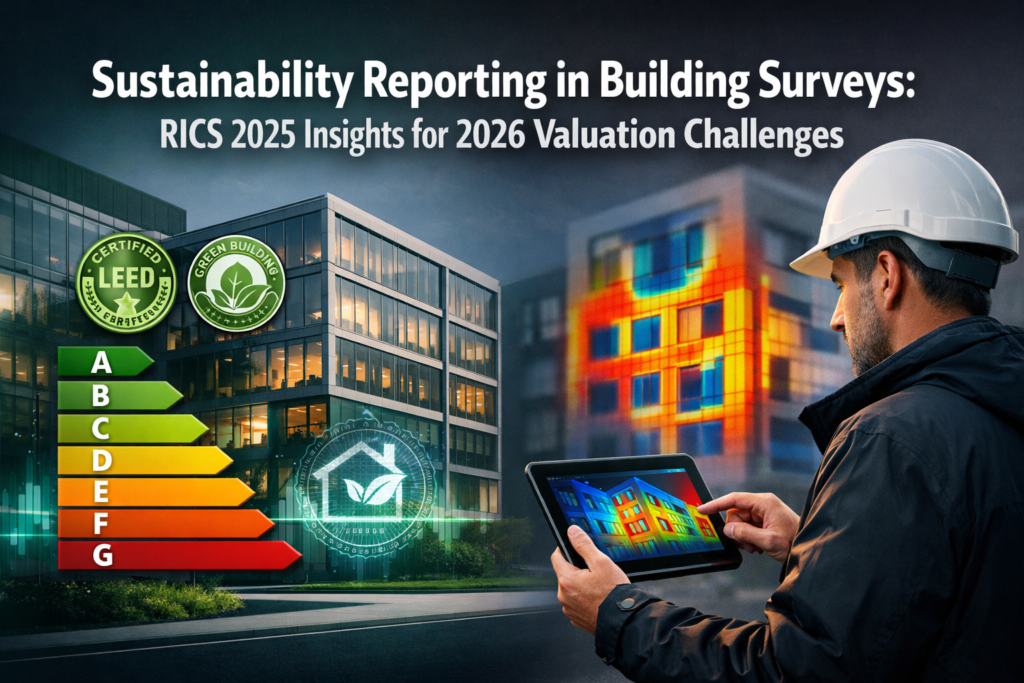
The countdown has begun: ESG standards for commercial property valuations become mandatory in just 20 days (April 30, 2026), yet nearly half of construction professionals still don't measure carbon emissions across their projects. This regulatory collision between new requirements and inadequate industry preparation creates unprecedented challenges for property valuers, building surveyors, and real estate investors […]