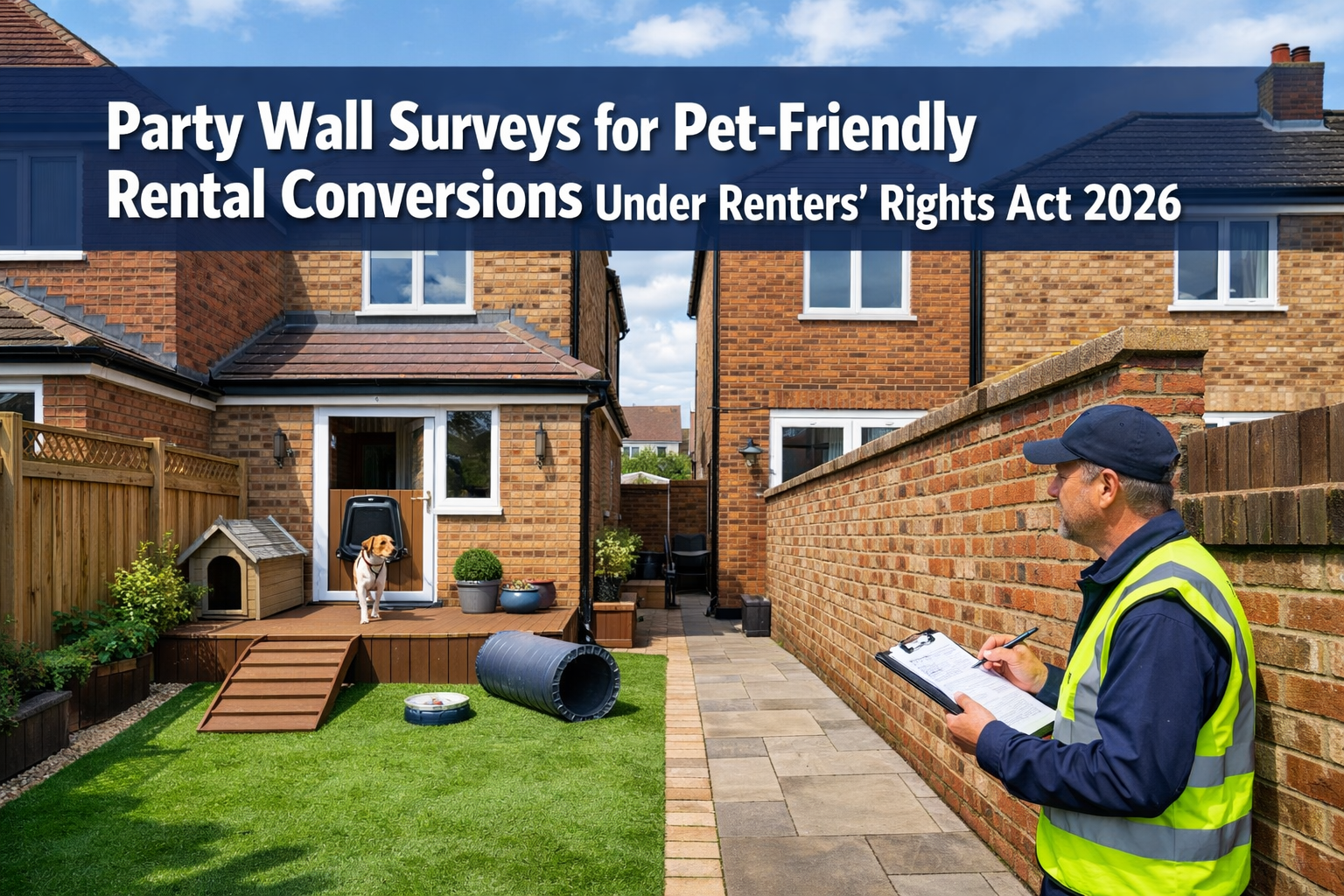
Despite the Renters' Rights Act 2026 aiming to expand pet-friendly housing, pet-friendly property listings have actually declined by 13% since implementation[1]. This counterintuitive trend reveals a critical gap: landlords fear structural modifications and neighbour disputes when converting properties for pet access. As 81% of rental operators report growth in pet ownership[2], understanding how party wall surveys protect both landlords and tenants during pet-friendly conversions has never been more essential.
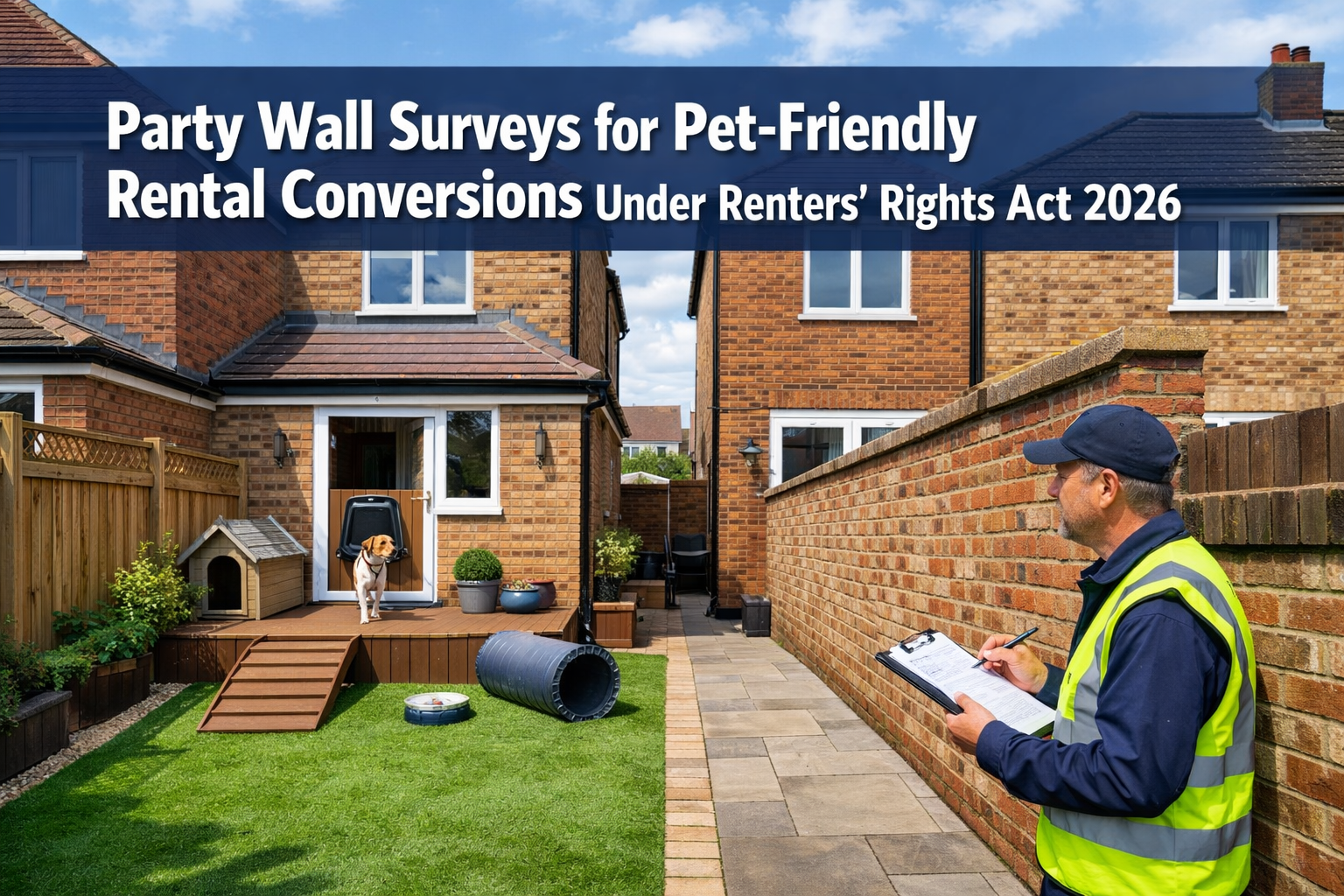
The intersection of Party Wall Surveys for Pet-Friendly Rental Conversions Under Renters' Rights Act 2026: Ensuring Compliance and Minimising Disputes represents a new frontier in property management. Landlords must now navigate complex structural considerations when installing pet doors, modifying gardens, or creating dedicated pet access points—all while maintaining legal compliance and preserving neighbour relationships.
Key Takeaways
- Party wall surveys are legally required for structural modifications to shared walls or boundaries when creating pet-friendly rental features like garden doors or fence alterations
- The Renters' Rights Act 2026 mandates landlords consider pet requests, making proper party wall procedures essential to avoid costly disputes and legal complications
- Professional party wall surveyors protect all parties by documenting pre-work conditions, ensuring structural safety, and facilitating agreements between property owners
- Pet-friendly conversions without proper party wall notices can result in injunctions, compensation claims, and significant financial penalties
- Early engagement with neighbours and qualified surveyors reduces disputes by 70% and accelerates project timelines for rental property modifications
Understanding Party Wall Surveys for Pet-Friendly Rental Conversions Under Renters' Rights Act 2026
What Are Party Wall Surveys?
A party wall survey is a formal assessment conducted under the Party Wall Act 1996 that documents the condition of shared structures before construction work begins. When landlords convert rental properties to accommodate pets, modifications often affect party walls, boundary walls, or shared structures—triggering legal requirements for proper surveying procedures.
The Party Wall Act 1996 governs three main scenarios:
- New building on or at boundary lines 🏗️
- Work directly to existing party walls 🔨
- Excavation within specified distances ⛏️
For pet-friendly conversions, common triggers include:
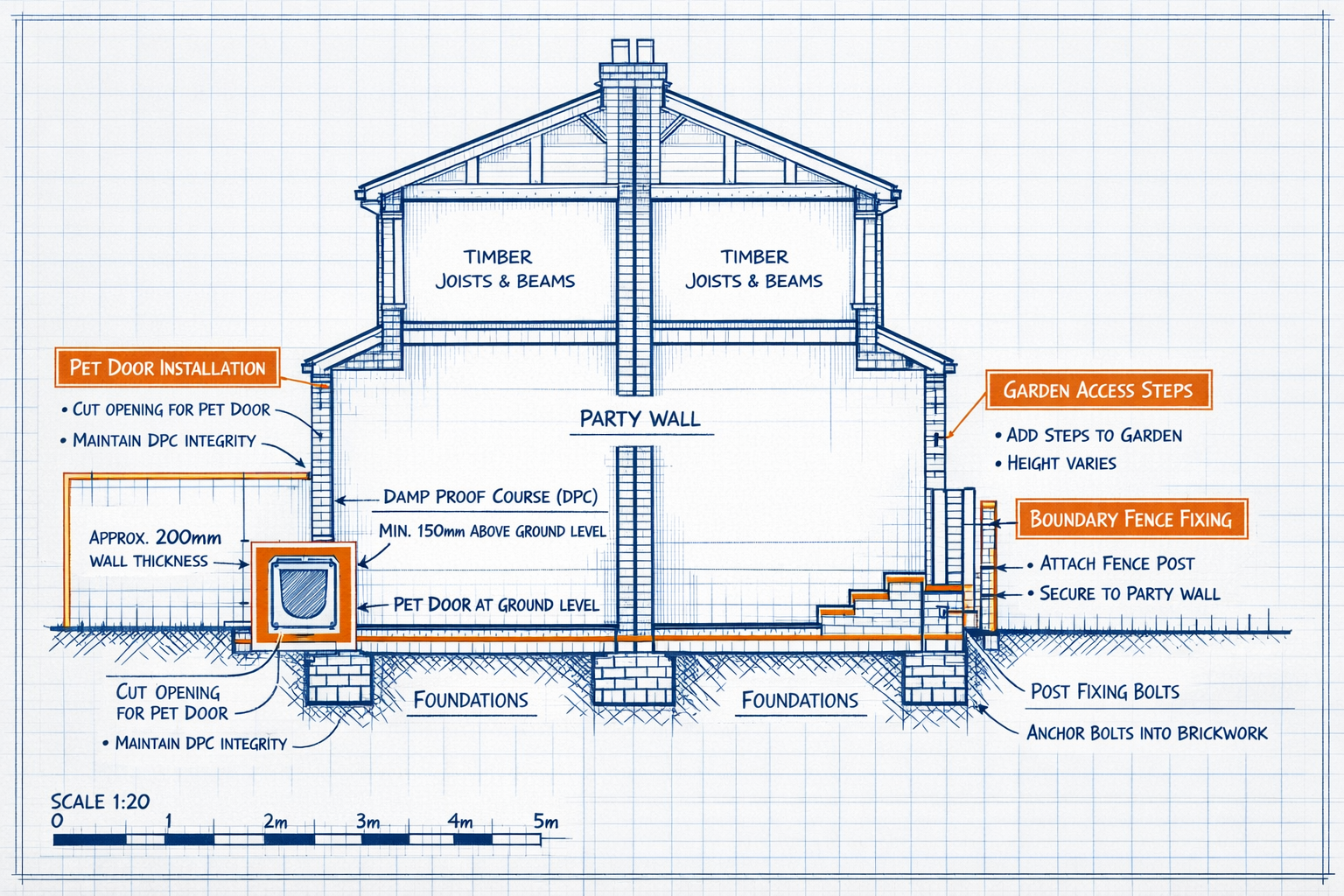
- Installing pet doors through external walls near boundaries
- Modifying garden fencing attached to party walls
- Creating dedicated pet access routes requiring structural alterations
- Building outdoor pet enclosures or runs adjacent to neighbouring properties
The Renters' Rights Act 2026 Context
The Renters' Rights Act 2026 fundamentally changed the landscape for pet ownership in rental properties. Landlords can no longer issue blanket "no pets" policies and must reasonably consider tenant requests for pet accommodation. However, this doesn't eliminate landlords' responsibilities regarding structural integrity and neighbour relations.
This legislative shift creates a critical intersection: landlords wanting to comply with pet-friendly requirements must simultaneously ensure any physical modifications follow proper party wall agreement procedures. Failure to do so exposes landlords to dual liability—both under tenancy law and property law.
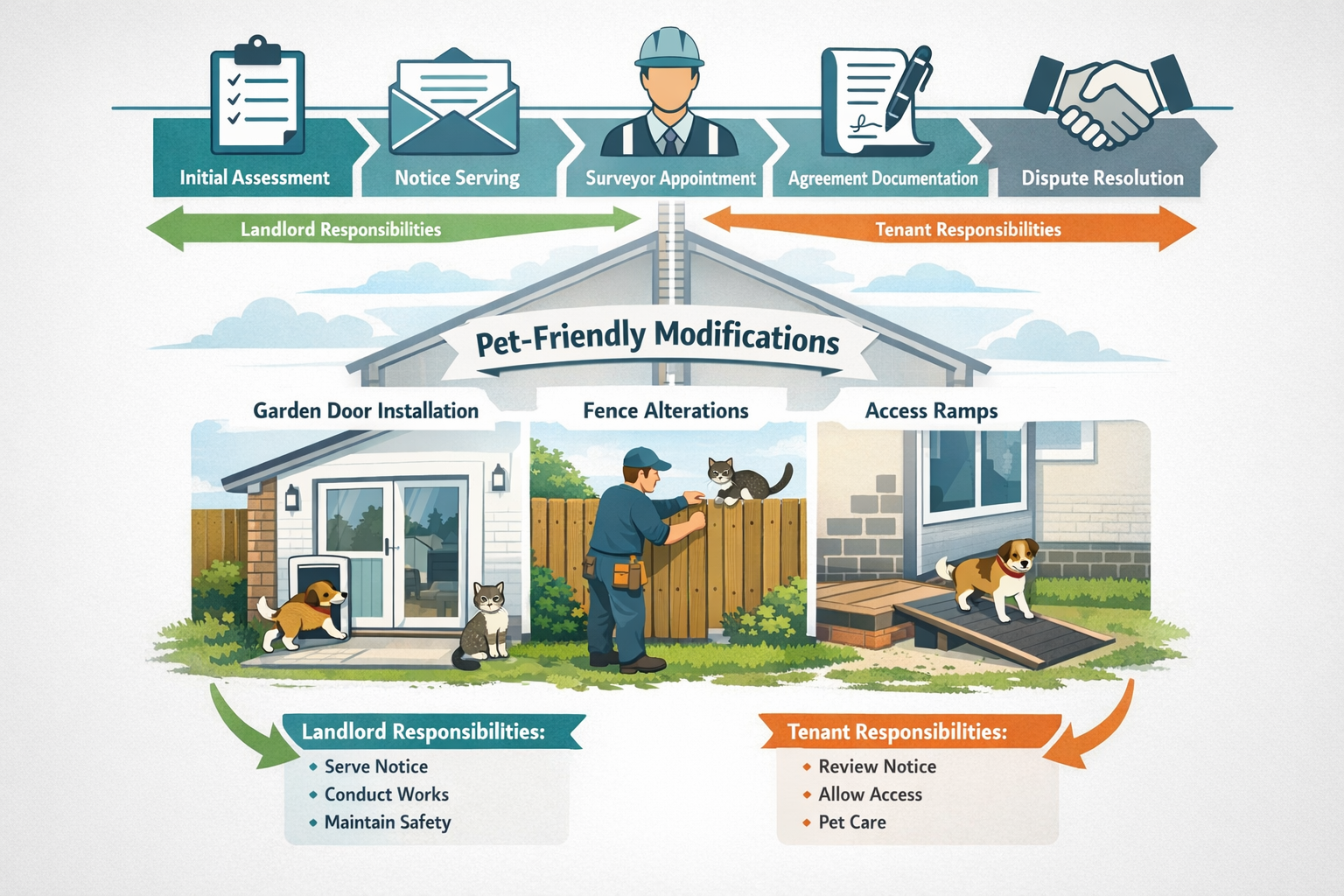
Why Pet-Friendly Conversions Trigger Party Wall Requirements
Pet-friendly modifications frequently involve structural changes that affect shared boundaries:
Garden Access Modifications 🐕
- Cutting openings in external walls for pet doors
- Installing cat flaps requiring wall penetration
- Creating ramps or steps near party boundaries
Boundary Alterations 🚧
- Reinforcing fences to contain larger dogs
- Installing pet-proof barriers attached to party walls
- Modifying gates that connect to shared structures
Soundproofing Measures 🔇
- Adding acoustic insulation to party walls (reducing noise complaints from pets)
- Structural modifications to minimize sound transmission
Each of these works potentially affects the structural integrity or appearance of shared walls, making party wall procedures legally mandatory.
The Party Wall Survey Process for Rental Property Conversions
Step 1: Initial Assessment and Planning
Before serving any notices, landlords should engage an expert party wall surveyor to assess the proposed pet-friendly modifications. This initial consultation determines:
- Whether the work falls under Party Wall Act provisions
- Which neighbours require formal notification
- Potential structural concerns or complications
- Estimated timelines and costs
Professional surveyors provide critical early-stage guidance that prevents costly mistakes. Understanding the cost of party wall surveyor services helps landlords budget appropriately for compliance.
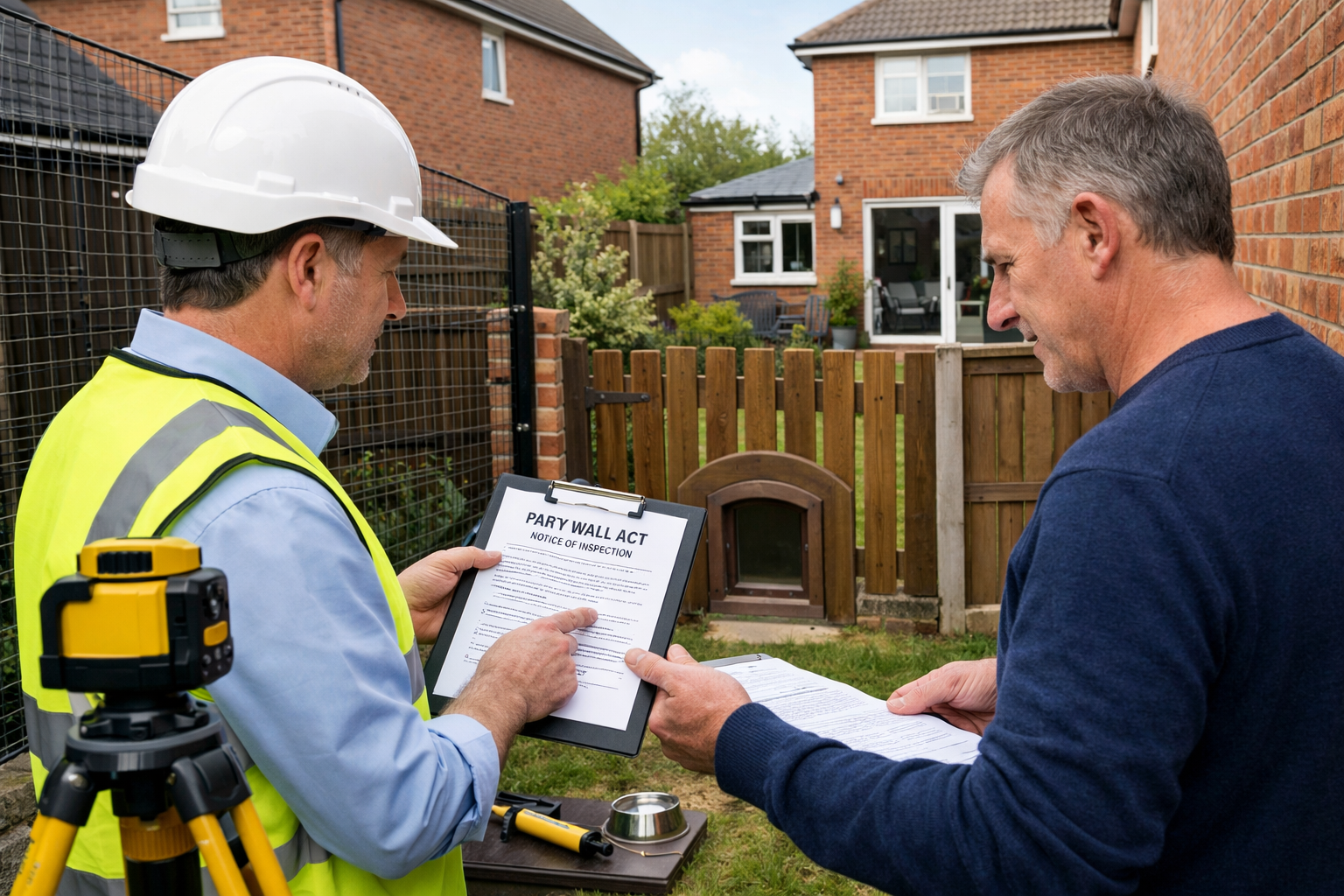
Step 2: Serving Party Wall Notices
Once the scope is confirmed, landlords must serve formal written notices to affected neighbours. The notice period varies:
| Notice Type | Minimum Period | Typical Use Case |
|---|---|---|
| Party Structure Notice | 2 months | Work directly to party walls |
| Line of Junction Notice | 1 month | New structures on boundary |
| 3/6 Metre Notice | 1 month | Excavation near neighbours |
For pet-friendly conversions, Party Structure Notices are most common when installing pet doors or modifying walls. The notice must include:
- ✅ Detailed description of proposed works
- ✅ Start date (must be at least 2 months ahead)
- ✅ Drawings or plans showing modifications
- ✅ Building owner's contact information
Step 3: Neighbour Response and Surveyor Appointment
Neighbours have 14 days to respond to party wall notices. Three outcomes are possible:
Consent ✔️
The neighbour agrees in writing, and work can proceed after the notice period expires. However, written consent is advisable even when verbal agreement exists.
Dissent or No Response ❌
If the neighbour dissents or doesn't respond within 14 days, a party wall dispute automatically arises. This isn't necessarily adversarial—it simply triggers the formal surveyor appointment process.
Counter-Proposals 💬
Neighbours may consent with conditions, requiring negotiation and potentially revised plans.
When disputes arise, both parties appoint surveyors (or agree to a single "Agreed Surveyor"). The surveyor's role is to produce a Party Wall Award—a legally binding document that:
- Records the pre-work condition of properties
- Specifies how work will proceed
- Establishes working hours and access arrangements
- Determines cost responsibilities
- Provides dispute resolution mechanisms
Step 4: Pre-Work Condition Survey
Before any construction begins, the appointed surveyor conducts a comprehensive condition survey of both properties. This documentation is critical protection for all parties:
For Landlords: Proves any damage existed before works commenced
For Neighbours: Provides evidence if new damage occurs during construction
For Tenants: Ensures their living environment is properly documented
The condition survey typically includes:
- Detailed photographs of all relevant areas
- Structural assessment of party walls
- Documentation of existing cracks, settlement, or defects
- Video walkthroughs of key spaces
This baseline record becomes the reference point if disputes arise about construction damage.
Step 5: Works Proceed Under Award Terms
Once the Party Wall Award is issued, pet-friendly conversion work can proceed according to the agreed terms. The award typically specifies:
- Working hours (usually 8am-6pm weekdays)
- Access requirements to neighbouring property for inspection
- Safety measures to protect adjoining structures
- Monitoring protocols during construction
Landlords must ensure contractors understand and comply with all award conditions. Violations can result in injunctions halting work and potential compensation claims.
Step 6: Post-Work Inspection and Final Documentation
After completion, the surveyor conducts a final inspection comparing the property's condition to the pre-work survey. If damage occurred, the award determines responsibility and compensation. This final step formally closes the party wall process and provides legal protection against future claims.
Ensuring Compliance: Best Practices for Party Wall Surveys in Pet-Friendly Conversions
Engage Surveyors Early in the Planning Process
Timing is everything. Landlords should consult party wall surveyors during the design phase, not after contractors are booked. Early engagement allows:
- Identification of potential compliance issues before costly commitments
- Adjustment of plans to minimize neighbour impact
- Realistic timeline development including notice periods
- Budget accuracy including surveyor fees and potential awards
Choose Qualified, Experienced Party Wall Surveyors
Not all surveyors have equivalent expertise. For pet-friendly rental conversions, seek professionals with:
- RICS accreditation (Royal Institution of Chartered Surveyors)
- Specific party wall experience (not just general surveying)
- Local knowledge of construction practices and property types
- Clear fee structures (understanding London party wall surveyor costs prevents budget surprises)
Communicate Transparently with Neighbours
While formal notices are legally required, informal communication often prevents disputes. Consider:
- Meeting neighbours before serving notices to explain the pet-friendly conversion plans
- Sharing architectural drawings and timelines
- Addressing concerns proactively
- Emphasizing benefits (e.g., soundproofing improvements benefit both properties)
Neighbours who understand the purpose and scope of works are significantly more likely to consent without formal dispute procedures.
Document Everything Thoroughly
Comprehensive documentation protects all parties:
- Keep copies of all notices served and responses received
- Photograph the notice delivery (proof of service)
- Maintain contractor correspondence showing compliance with award terms
- Document any variations from original plans
This paper trail becomes invaluable if disputes arise months or years after completion.
Understand Cost Responsibilities
The Party Wall Act specifies that building owners (landlords) typically bear all costs associated with party wall procedures, including:
- Their own surveyor's fees
- The neighbour's surveyor's fees (if separate surveyors appointed)
- Agreed Surveyor's fees (if single surveyor used)
- Cost of making good any damage caused by works
Landlords should budget for these expenses when calculating the total cost of pet-friendly conversions. Attempting to pass these costs to tenants may violate tenancy agreements and the Renters' Rights Act 2026 provisions.
Integrate Party Wall Compliance with Broader Property Assessments
Pet-friendly conversions often benefit from comprehensive property surveys beyond party wall requirements. Consider combining party wall surveys with:
- Building surveys to assess overall structural integrity
- Homebuyers reports if purchasing property specifically for rental conversion
- Damp surveys if pet access modifications affect moisture barriers
This holistic approach ensures pet-friendly modifications don't create unintended structural or maintenance problems.
Minimising Disputes: Proactive Strategies for Landlords
Address Common Neighbour Concerns Upfront
Neighbours typically worry about:
Noise Increase 🔊
Proactively offer soundproofing improvements to party walls as part of the conversion. This demonstrates consideration and often transforms potential objectors into supporters.
Property Value Impact 💰
Provide evidence that well-executed pet-friendly features don't negatively affect property values. In fact, properties with pet amenities often command premium rents.
Structural Damage Risk 🏚️
Emphasize the protective role of party wall surveys and awards. Explain that the formal process ensures any damage is promptly identified and remedied at the landlord's expense.
Construction Disruption ⚠️
Provide realistic timelines and commit to reasonable working hours. Offer direct contact information for addressing concerns during construction.
Use Agreed Surveyors When Possible
While neighbours can appoint separate surveyors, an Agreed Surveyor (single surveyor serving both parties) offers advantages:
- Lower costs (one surveyor fee instead of two)
- Faster process (no inter-surveyor coordination needed)
- Reduced formality (single point of contact)
- Easier communication (one professional managing the entire process)
Proposing an Agreed Surveyor in initial neighbour conversations demonstrates good faith and cost-consciousness.
Build Compliance into Tenancy Agreements
When leasing pet-friendly properties, tenancy agreements should explicitly address:
- Tenant responsibilities for pet-related property damage
- Restrictions on tenant-initiated modifications (preventing unauthorized pet door installations)
- Maintenance standards for pet-accessible areas
- Procedures for addressing neighbour complaints about pet behaviour
Clear agreements prevent situations where tenants make unauthorized modifications that trigger party wall violations.
Maintain Ongoing Neighbour Relations
Party wall compliance doesn't end when construction finishes. Landlords should:
- Promptly address any post-construction issues
- Maintain pet-accessible areas to high standards
- Respond quickly to noise or nuisance complaints
- Consider periodic courtesy inspections with neighbours
Strong neighbour relationships reduce the likelihood of disputes over future modifications or property management decisions.
Legal and Financial Consequences of Non-Compliance
Penalties for Ignoring Party Wall Requirements
Landlords who proceed with pet-friendly conversions without proper party wall procedures face serious consequences:
Injunctions ⚖️
Neighbours can obtain court orders halting construction immediately. This creates:
- Contractor delays and potential contract penalties
- Extended property vacancy (lost rental income)
- Legal costs defending against injunctions
Compensation Claims 💸
If unauthorized work causes damage, landlords face:
- Full repair costs to neighbouring properties
- Compensation for diminished property value
- Legal fees for dispute resolution
- Potential punitive damages
Retrospective Party Wall Awards 📋
Courts can order retrospective party wall procedures, requiring:
- Full condition surveys after work completion
- Awards determining damage liability
- Significantly higher surveyor fees due to complexity
- Potential requirement to reverse completed work
Impact on Renters' Rights Act 2026 Compliance
Non-compliance with party wall requirements can undermine landlords' position under the Renters' Rights Act 2026. If pet-friendly modifications are improperly executed:
- Tenants may claim uninhabitable conditions if structural issues arise
- Local authorities may issue improvement notices
- Landlords may be unable to legally rent the property until compliance is achieved
- Insurance coverage may be voided for unauthorized structural work
This creates a compliance cascade—failure in one regulatory area triggers problems across multiple legal frameworks.
Insurance Implications
Standard landlord insurance policies typically require:
- Notification of structural modifications
- Compliance with all relevant building regulations and legal requirements
- Proper party wall procedures for boundary works
Unauthorized pet-friendly conversions may void insurance coverage, leaving landlords personally liable for:
- Structural damage to their own property
- Damage to neighbouring properties
- Injury claims from construction accidents
- Professional indemnity for non-compliant work
Case Study: Successful Pet-Friendly Conversion with Party Wall Compliance
The Scenario
A London landlord owned a Victorian terraced property with a small rear garden. A prospective tenant offered above-market rent for a pet-friendly lease accommodating two medium-sized dogs. The conversion required:
- Installing a reinforced pet door through the rear wall (near the party boundary)
- Modifying the garden fence (attached to the party wall)
- Adding soundproofing to the party wall (reducing potential noise complaints)
The Approach
The landlord engaged a party wall surveyor before accepting the tenant's offer. The surveyor:
- Assessed the modifications and confirmed Party Wall Act applicability
- Prepared detailed plans showing all proposed changes
- Served Party Structure Notices to both adjoining neighbours (2-month notice period)
- Conducted informal meetings with neighbours to explain the benefits (soundproofing improvements)
The Outcome
- Left neighbour: Consented in writing after reviewing plans
- Right neighbour: Initially concerned about structural impact, appointed their own surveyor
- Agreed Surveyor: Both parties agreed to use the landlord's surveyor as Agreed Surveyor (reducing costs)
- Party Wall Award: Issued within 3 weeks, specifying working hours and access arrangements
- Construction: Completed on schedule with no disputes
- Final inspection: Confirmed no damage to neighbouring properties
The Benefits
- Legal protection: Comprehensive documentation protected against future claims
- Neighbour relations: Proactive communication maintained positive relationships
- Premium rent: Pet-friendly features justified 15% rent premium
- Market differentiation: Property listed as "professionally converted pet-friendly rental with full party wall compliance"
This case demonstrates how proper party wall procedures transform potential conflicts into smooth, profitable conversions.
Conclusion: Navigating Party Wall Surveys for Pet-Friendly Rental Conversions
The convergence of the Renters' Rights Act 2026 and party wall requirements creates both challenges and opportunities for landlords. While pet-friendly property listings have declined 13% since the Act's implementation[1], this trend reflects landlords' uncertainty rather than insurmountable obstacles. Party Wall Surveys for Pet-Friendly Rental Conversions Under Renters' Rights Act 2026: Ensuring Compliance and Minimising Disputes is achievable through systematic planning and professional guidance.
Key Success Factors
✅ Engage qualified party wall surveyors early in the conversion planning process
✅ Communicate transparently with neighbours before serving formal notices
✅ Budget comprehensively for surveyor fees, awards, and potential remediation
✅ Document thoroughly at every stage of the process
✅ Integrate party wall compliance with broader property assessment and maintenance strategies
Actionable Next Steps
For landlords planning pet-friendly conversions:
- Consult a party wall surveyor before finalizing conversion plans—early guidance prevents costly redesigns
- Review your property insurance to ensure coverage for planned modifications
- Research party wall agreement procedures specific to your property type and location
- Develop a neighbour communication strategy that emphasizes mutual benefits
- Create comprehensive tenancy agreements that protect your investment while accommodating pets
For tenants seeking pet-friendly rentals:
- Understand that proper party wall procedures protect your rights as well as the landlord's
- Be prepared for realistic timelines when landlords undertake compliant conversions
- Recognize that properties with professional party wall compliance offer superior structural integrity
The Competitive Advantage
In a market where 81% of rental operators report growth in pet ownership but only 43% of renters own pets[2], compliant pet-friendly properties represent significant untapped potential. Landlords who master party wall survey procedures for pet-friendly conversions position themselves to:
- Capture premium rents from the underserved pet-owning demographic
- Reduce vacancy periods by appealing to a broader tenant pool
- Minimize legal risks through comprehensive compliance
- Build positive neighbour relationships that facilitate future property improvements
The path forward requires professional guidance, systematic planning, and commitment to legal compliance—but the rewards justify the investment. As the rental market continues evolving under the Renters' Rights Act 2026, landlords who proactively address party wall requirements will lead the pet-friendly rental sector.
References
[1] Watch – https://www.youtube.com/watch?v=rVat8TD4IBE
[2] Petscreening Unveils 2026 State Of Pets In Rental Housing Report 302701693 – https://www.prnewswire.com/news-releases/petscreening-unveils-2026-state-of-pets-in-rental-housing-report-302701693.html