

Nearly one in five homebuyers who rely solely on a mortgage valuation later discover significant defects that were never flagged before completion [2]. That gap between what a lender needs to know and what a buyer needs to know is at the heart of the mortgage valuation vs homebuyers survey debate, and misunderstanding it can cost thousands of pounds in unexpected repairs.
This article explains exactly what each assessment covers, who it protects, and why the two are not interchangeable.
Key Takeaways
- A mortgage valuation protects the lender, not the buyer, it confirms the property is worth the loan amount, not that it is free from defects.
- A homebuyers survey is commissioned by and for the buyer, providing condition ratings and repair advice.
- A mortgage valuation typically takes 20 minutes or less; a homebuyers survey can take several hours.
- RICS Home Survey Levels 1, 2, and 3 offer escalating depth of inspection to suit different property types and buyer needs.
- In 2026, RICS is consulting on an updated Home Survey Standard that integrates energy performance and retrofit considerations into survey reporting.
What a Mortgage Valuation Actually Does
A mortgage valuation is a brief assessment carried out on behalf of the mortgage lender. Its sole purpose is to confirm that the property provides adequate security for the loan being advanced [1]. In practical terms, the surveyor, appointed and paid for by the lender, even if the fee is passed to the buyer, answers one question: is this property worth at least the agreed purchase price?
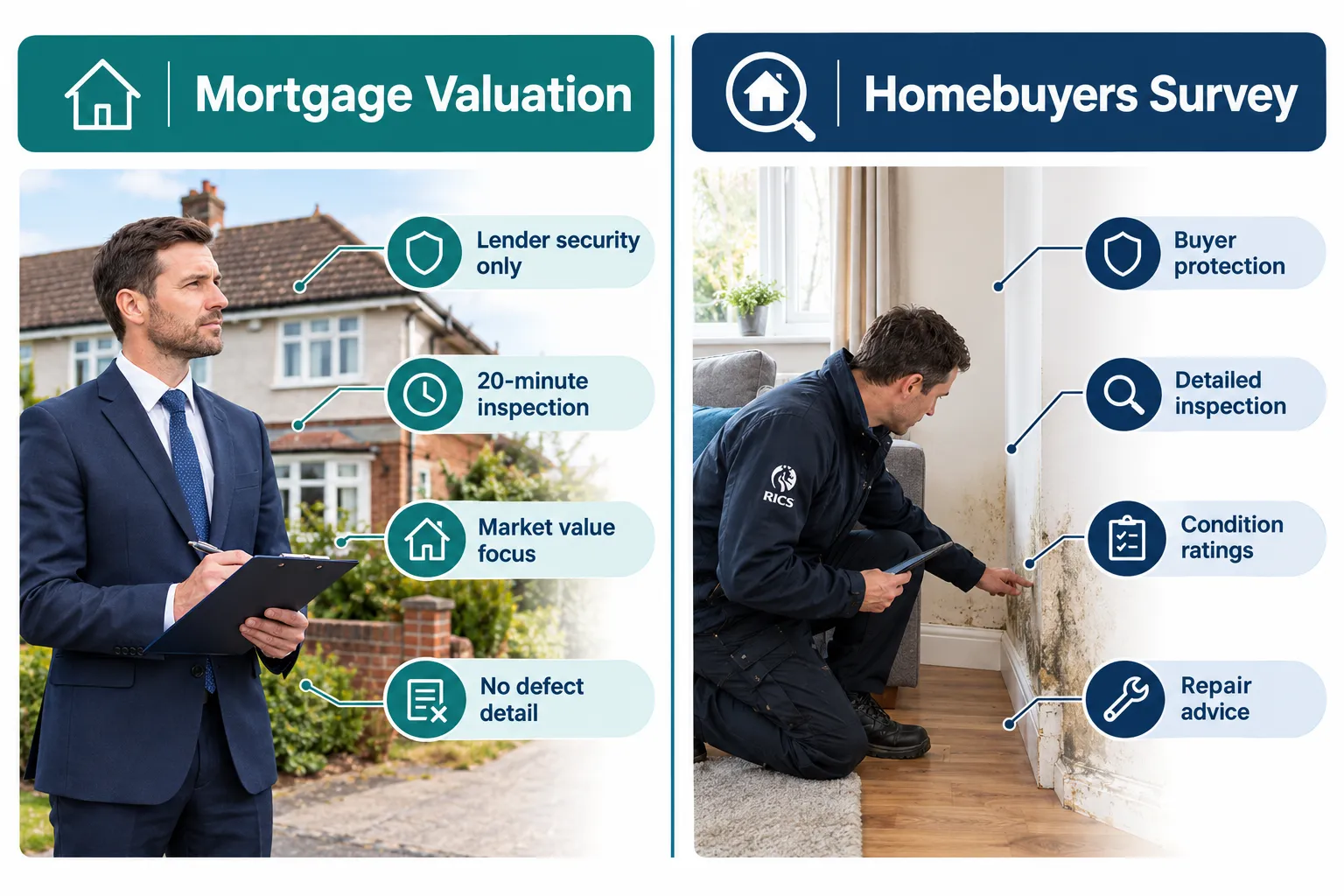
The inspection is deliberately limited in scope. A valuer may spend as little as 15 to 20 minutes at the property, walking through rooms, noting the general condition, and comparing the address against recent comparable sales data [2]. The resulting report goes directly to the lender. Buyers often receive no copy at all, or receive only a brief summary confirming whether the mortgage has been approved.
What lenders check in a mortgage valuation:
- Approximate market value relative to the purchase price
- General construction type and age of the property
- Obvious structural issues that might affect saleability
- Tenure (freehold or leasehold) and any obvious legal concerns
- Whether the property is habitable and mortgageable
What lenders do not check, and are not required to check, includes hidden damp, roof condition, the state of electrics or plumbing, subsidence risk, or any of the dozens of defects that can make a property expensive to own [6]. The valuation is not a health check for the buyer; it is a risk assessment for the bank.
"The mortgage valuation is designed to protect the lender's investment, not the buyer's. Those are two very different things." [2]
Understanding the Homebuyers Survey: Depth, Levels, and What Buyers Gain
A homebuyers survey, more formally known as an RICS Home Survey, is an independent inspection commissioned by and paid for by the buyer. Its purpose is to give the purchaser a clear picture of the property's condition before contracts are exchanged [3].
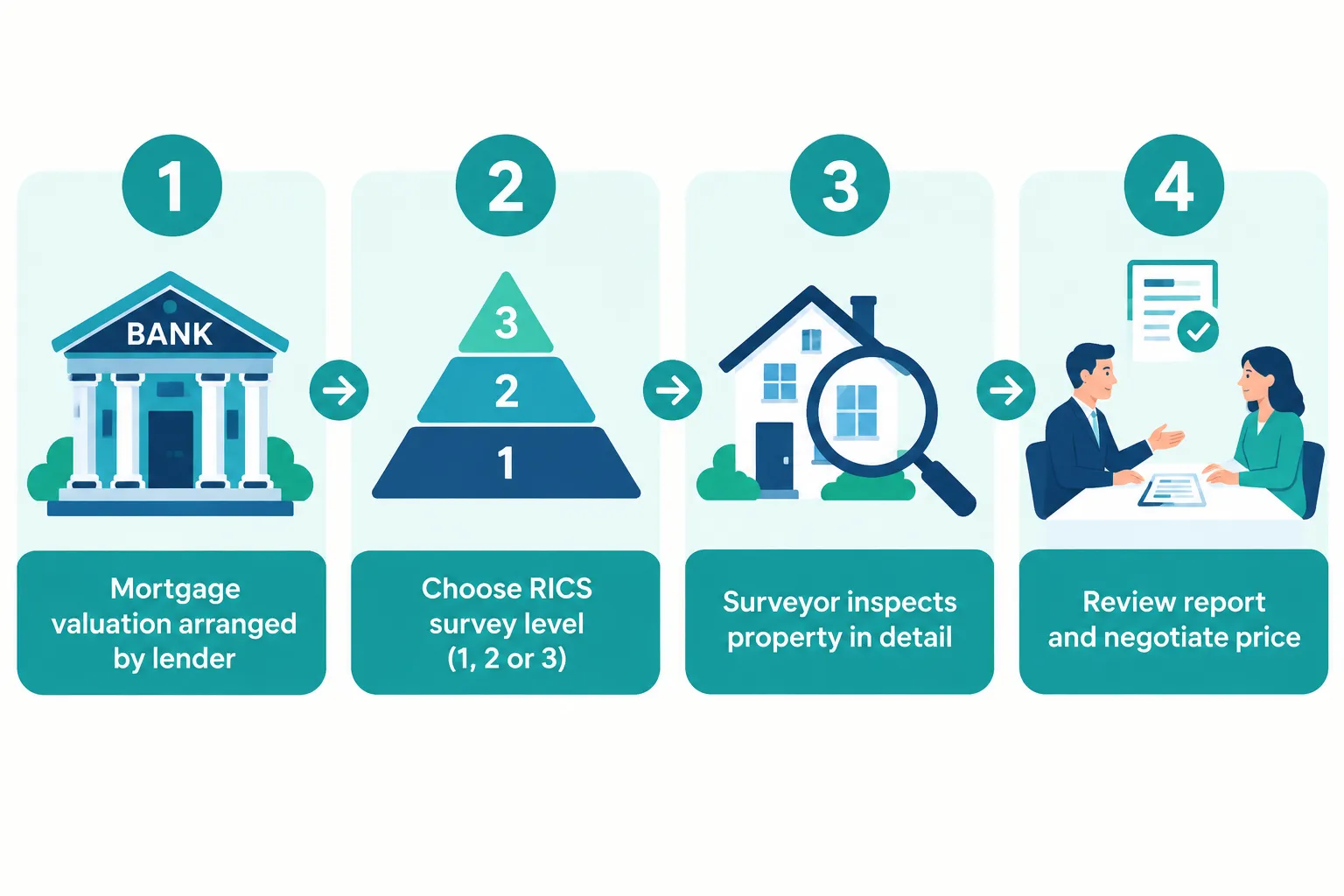
The RICS Home Survey Standard, which governs how chartered surveyors carry out residential inspections in the UK, sets out three levels of service [9]:
| Survey Level | Formal Name | Best Suited For |
|---|---|---|
| Level 1 | RICS Home Survey – Level 1 | New builds and conventionally constructed modern homes |
| Level 2 | RICS Home Survey – Level 2 | Standard properties in reasonable condition |
| Level 3 | RICS Home Survey – Level 3 | Older, larger, or significantly altered properties |
For most buyers purchasing a pre-1970s property, a Level 2 or Level 3 survey is strongly recommended. To understand the practical differences in depth and cost between these options, see this guide to exploring the key difference between Level 2 and Level 3 survey.
What a homebuyers survey covers that a valuation does not:
- Condition ratings (1 = no action, 2 = monitor, 3 = urgent repair) for every major element
- Roof structure, coverings, and chimney stacks
- Damp, timber defects, and rot
- Walls, floors, and ceilings
- Windows, doors, and external joinery
- Drainage, heating, and services (visual inspection)
- Legal and planning matters to raise with a solicitor
A Level 2 or Level 3 survey typically takes two to four hours on site, and the resulting report runs to many pages [1]. For buyers of older properties, understanding what rising damp looks like before the survey can help them ask better questions and interpret the findings more confidently.
The Critical Gap: What Buyers Miss by Relying on the Valuation Alone
The most common and costly misunderstanding in residential property purchases is the assumption that a mortgage valuation provides some degree of buyer protection. It does not [2]. Understanding the mortgage valuation vs homebuyers survey distinction is not just a technicality, it has direct financial consequences.
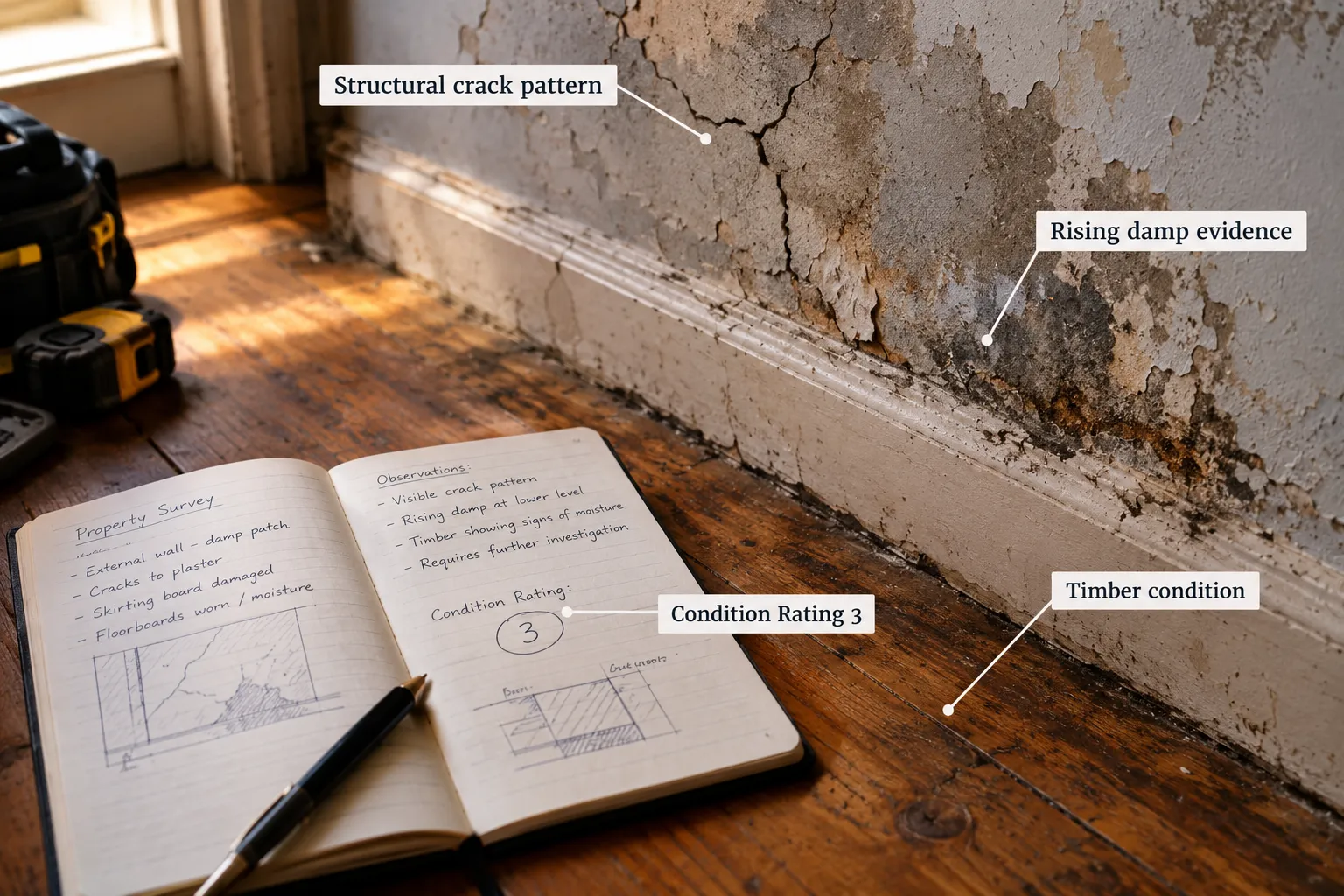
Consider a typical scenario: a buyer purchases a 1930s semi-detached house. The mortgage valuation confirms the property is worth the agreed price and the lender approves the loan. Eighteen months later, the buyer discovers significant rising damp behind fitted wardrobes, defective lead flashings on the roof, and early-stage woodworm in the loft. None of these were visible during the 20-minute valuation visit. A Level 2 homebuyers survey would likely have flagged all three.
Common defects missed when buyers skip an independent survey:
- Rising damp and penetrating damp behind furniture or wall coverings
- Roof defects including slipped tiles, failed flashings, and blocked gutters
- Structural movement and crack patterns in walls
- Subsidence or heave, particularly in clay-heavy areas of London and the South East
- Electrical installations that do not meet current standards
- Asbestos-containing materials in pre-2000 properties
- Japanese knotweed in gardens or neighbouring land
For buyers of older London properties in particular, a first-time buyer building survey can be one of the most financially protective steps taken during the purchase process. The upfront cost of a survey is almost always smaller than the cost of the defects it uncovers.
The Negotiation Advantage
Beyond defect discovery, a homebuyers survey gives buyers a documented basis for price renegotiation. If a Level 2 survey identifies that the roof requires replacement within five years at an estimated cost of £8,000, the buyer can return to the vendor with evidence and request a reduction. Without a survey, that leverage disappears entirely.
Buyers who want to understand how survey findings translate into savings can read more about saving money with building surveys.
RICS Standards in 2026: What Is Changing and Why It Matters
The regulatory landscape for home surveys is evolving significantly in 2026. RICS has launched a formal consultation on an updated second edition of the Home Survey Standard, with two major areas of change [8].
1. Integration of energy performance and retrofit
The updated standard proposes that surveyors comment on energy efficiency, retrofit potential, and the implications of planned improvements such as heat pump installation or external wall insulation [4]. This reflects the growing importance of running costs and energy performance in property purchasing decisions. A buyer in 2026 is not just buying bricks and mortar, they are buying a future energy bill.
2. Greater flexibility for mortgage valuations within home surveys
One of the more significant proposals is the option for a mortgage valuation to be embedded within a Level 2 or Level 3 home survey, rather than conducted as a completely separate exercise [3]. This would allow buyers to commission a single, more comprehensive inspection that satisfies both the lender's valuation requirement and the buyer's need for condition information. The practical benefit is reduced duplication of fees and a more coherent picture of the property.
3. A new regulatory scheme for surveyors
RICS is also consulting on a formal regulatory scheme for home survey practitioners, introducing closer oversight of competency, conduct, and consumer redress [4]. For buyers, this means greater confidence that the surveyor inspecting their prospective home meets a defined professional standard.
These changes build on the existing RICS profession standards framework [7], which already governs how chartered surveyors operate across all disciplines. For a broader understanding of what a surveyor does and the scope of their professional responsibilities, see this overview of what a surveyor does: roles, responsibilities, and career insights.
Practical Implications for Buyers in 2026
The proposed changes do not yet alter the fundamental position: in 2026, a mortgage valuation and a homebuyers survey remain separate instruments serving different principals. Buyers should not wait for regulatory change before acting in their own interest.
Key practical points for buyers this year:
- Always commission an independent survey, regardless of what the lender's valuation says.
- Match the survey level to the property, a Level 1 is rarely sufficient for anything built before 1990.
- Read the report carefully, condition ratings of 3 require urgent attention and should inform renegotiation.
- Use the survey findings with your solicitor, some issues flagged by surveyors have legal or planning dimensions that require separate investigation.
Buyers who want to make the most of their survey appointment can prepare in advance by reviewing guidance on preparing for an RICS home survey.
Costs: What to Expect in 2026
Survey costs vary by property size, age, location, and survey level. As a general guide for 2026 [1]:
- Mortgage valuation: Often £150,£400, paid to the lender (sometimes offered free as a mortgage incentive)
- Level 1 Home Survey: Approximately £300,£500
- Level 2 Home Survey: Approximately £400,£900
- Level 3 Building Survey: Approximately £600,£1,500 or more for large or complex properties
These figures are indicative. London and the South East typically attract higher fees due to property values and surveyor demand. Buyers concerned about additional specialist costs, for example, if the homebuyers survey recommends a follow-up damp investigation, can find detailed information in this guide to damp survey costs in the UK.
The cost of a survey should always be weighed against the purchase price and the potential cost of undetected defects. On a £400,000 property, a £600 survey that uncovers £15,000 of necessary repairs pays for itself many times over.
Conclusion
The mortgage valuation vs homebuyers survey distinction is not a minor procedural detail, it defines who is protected and who bears the risk. A mortgage valuation tells the lender whether the property is worth lending against. A homebuyers survey tells the buyer whether the property is worth buying, and at what price.
In 2026, with RICS actively updating the Home Survey Standard to incorporate energy performance and closer regulatory oversight, the professional framework around buyer-instructed surveys is strengthening. That is good news for buyers, but only if they choose to use it.
Actionable next steps for buyers:
- Confirm with your mortgage broker whether the lender's valuation is included in the mortgage product or charged separately.
- Commission an independent RICS Level 2 or Level 3 survey as soon as an offer is accepted, do not wait for the valuation result.
- Choose a surveyor who is RICS-accredited and experienced with the property type and age you are purchasing.
- Read the full survey report, not just the summary, and raise any Condition Rating 3 items with your solicitor before exchange.
- Use the survey findings as a negotiation tool if significant defects are identified.
Protecting the lender is the bank's job. Protecting the buyer is the buyer's responsibility, and the right survey is the most effective tool available.
References
[1] Mortgage Valuation Vs Homebuyer Survey Vs Full Survey 2026 – calchub.uk
[2] Do I Need A House Survey Or A Mortgage Valuation – reallymoving.com
[3] The New Home Survey Standard – ww3.rics.org
[4] 250922 The Home Survey Standard And Regulatory Scheme A Guide To The Rics Consultations – hqnetwork.co.uk
[6] The Difference Between A Homebuyer Report Structural Survey – mortgagerequired.com
[7] Profession Standards – rics.org
[8] Rics Launches Consultation Updated Home Survey Standard – rics.org
[9] Home Survey Standards – rics.org