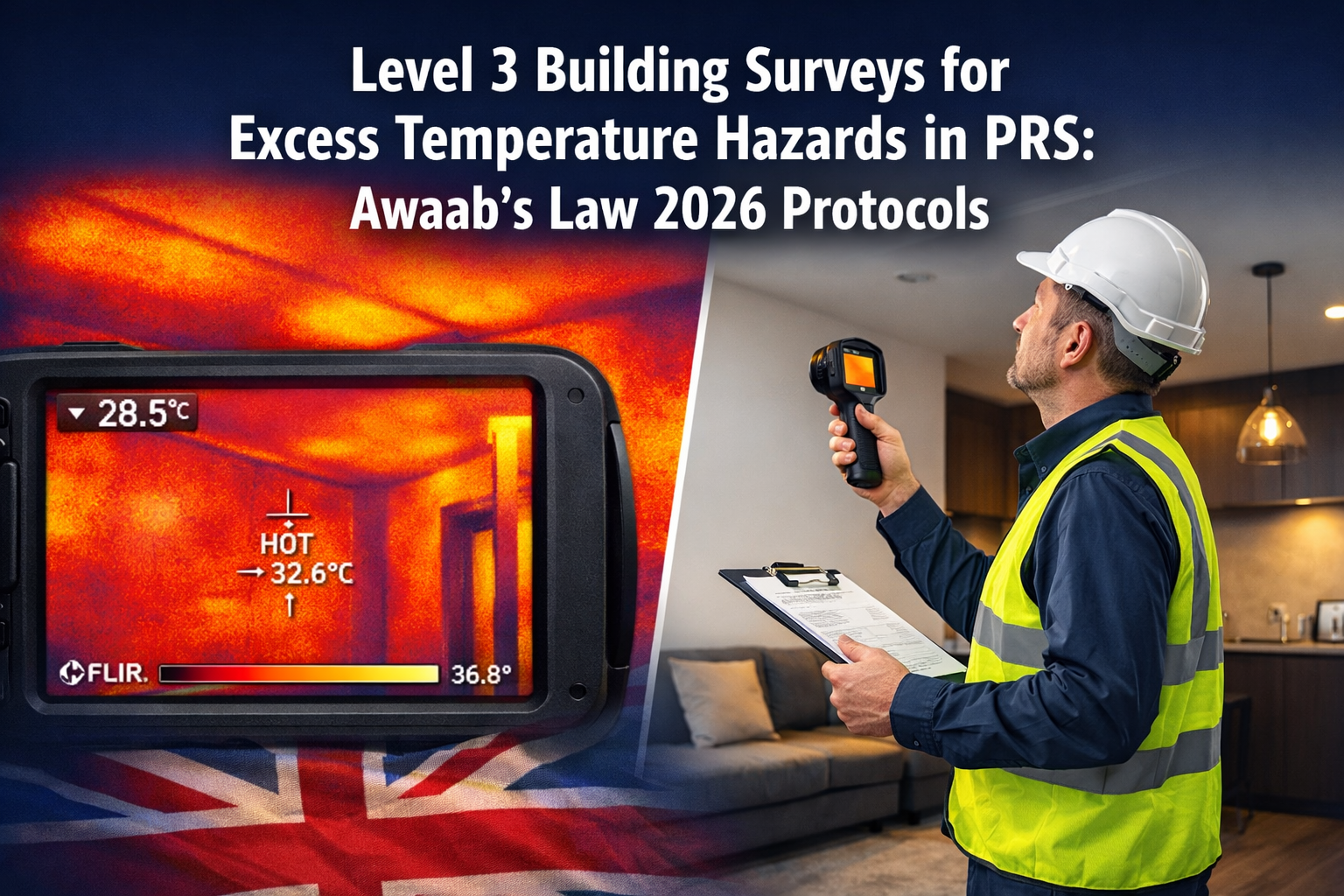
Excess temperature hazards in rental properties now carry the same enforcement weight as structural collapse and fire risks. Under Phase 2 of Awaab's Law regulations taking effect in 2026, private rental sector (PRS) landlords face strict 10-working-day investigation deadlines and mandatory remedial action for overheating issues that previously received minimal regulatory attention[7]. This shift transforms Level 3 Building Surveys for Excess Temperature Hazards in PRS: Awaab's Law 2026 Protocols for Overheating Assessments from optional due diligence into essential compliance documentation that can determine whether landlords face enforcement penalties or successfully demonstrate duty-of-care.
The regulatory landscape has fundamentally changed. Excess temperature hazards now sit alongside falls, electrical hazards, and hygiene risks in Phase 2 protections, with the same stringent timeframes that apply to Phase 1 damp and mould requirements[4][7]. For building surveyors and property professionals, this means developing specialized assessment protocols that identify overheating risks before they trigger enforcement action.
Key Takeaways
- 🔥 Phase 2 regulations place excess temperature hazards under the same 10-day investigation and 5-day remedial commencement windows as critical safety hazards[4][7]
- 📋 Level 3 surveys must now incorporate specialized thermal assessments, insulation evaluations, and ventilation system checks to identify overheating risks in PRS properties
- ⚖️ Enforcement penalties for non-compliance mirror those for structural and fire hazards, making comprehensive temperature assessments essential for landlord protection
- 🏠 Surveyor checklists must document thermal bridging, inadequate ventilation, solar gain vulnerabilities, and insufficient insulation that contribute to excess temperature conditions
- ⏱️ Strict timeframes require surveyors to deliver actionable findings rapidly, with clear prioritization of hazards requiring immediate attention versus longer-term improvements
Understanding Awaab's Law Phase 2 Expansion to Temperature Hazards
Awaab's Law originated from the tragic death of two-year-old Awaab Ishak in 2020, whose prolonged exposure to damp and mould in social housing proved fatal[1][2]. The initial Phase 1 regulations, which came into force in 2023, established mandatory timeframes for social landlords to investigate and remedy damp and mould hazards. Phase 2 represents a significant expansion of these protections.
The 2026 Phase 2 implementation extends Awaab's Law protections to cover excess temperature hazards alongside falls, structural collapse, fire hazards, electrical hazards, and hygiene risks[7]. This expansion recognizes that overheating poses serious health risks, particularly to vulnerable tenants including elderly residents, young children, and those with pre-existing health conditions.
Regulatory Timeframes and Compliance Requirements
Social landlords—and increasingly PRS landlords operating under similar frameworks—must now adhere to specific timelines when excess temperature hazards are reported[4][5]:
| Stage | Timeframe | Required Action |
|---|---|---|
| Investigation | 10 working days | Conduct thorough assessment of reported hazard |
| Remedial Work Start | 5 working days | Commence safety-critical repairs after investigation |
| Emergency Response | 24 hours | Address immediate life-threatening conditions |
| Full Remediation | Reasonable timeframe | Complete all necessary repairs and improvements |
These timeframes apply equally to excess temperature hazards as they do to damp, mould, and structural issues[7]. The Housing Health and Safety Rating System (HHSRS) provides the framework for assessing hazard severity, with Category 1 hazards (serious and immediate risks) requiring the most urgent response.
Why Level 3 Surveys Are Essential for Temperature Assessments
While Level 2 HomeBuyer Reports provide adequate assessment for standard property transactions, Level 3 Building Surveys for Excess Temperature Hazards in PRS: Awaab's Law 2026 Protocols for Overheating Assessments offer the comprehensive investigation necessary for regulatory compliance. A Level 3 building survey provides detailed analysis of building fabric, thermal performance, and environmental conditions that simpler surveys cannot capture.
The distinction matters because excess temperature hazards often stem from complex interactions between building design, insulation performance, ventilation systems, and solar orientation. Identifying these factors requires the thorough inspection methodology that defines Level 3 surveys. For landlords seeking to understand the key differences between Level 2 and Level 3 surveys, the regulatory requirements of Awaab's Law provide clear justification for the more comprehensive approach.
Surveyor Checklists for Identifying Excess Temperature Risks
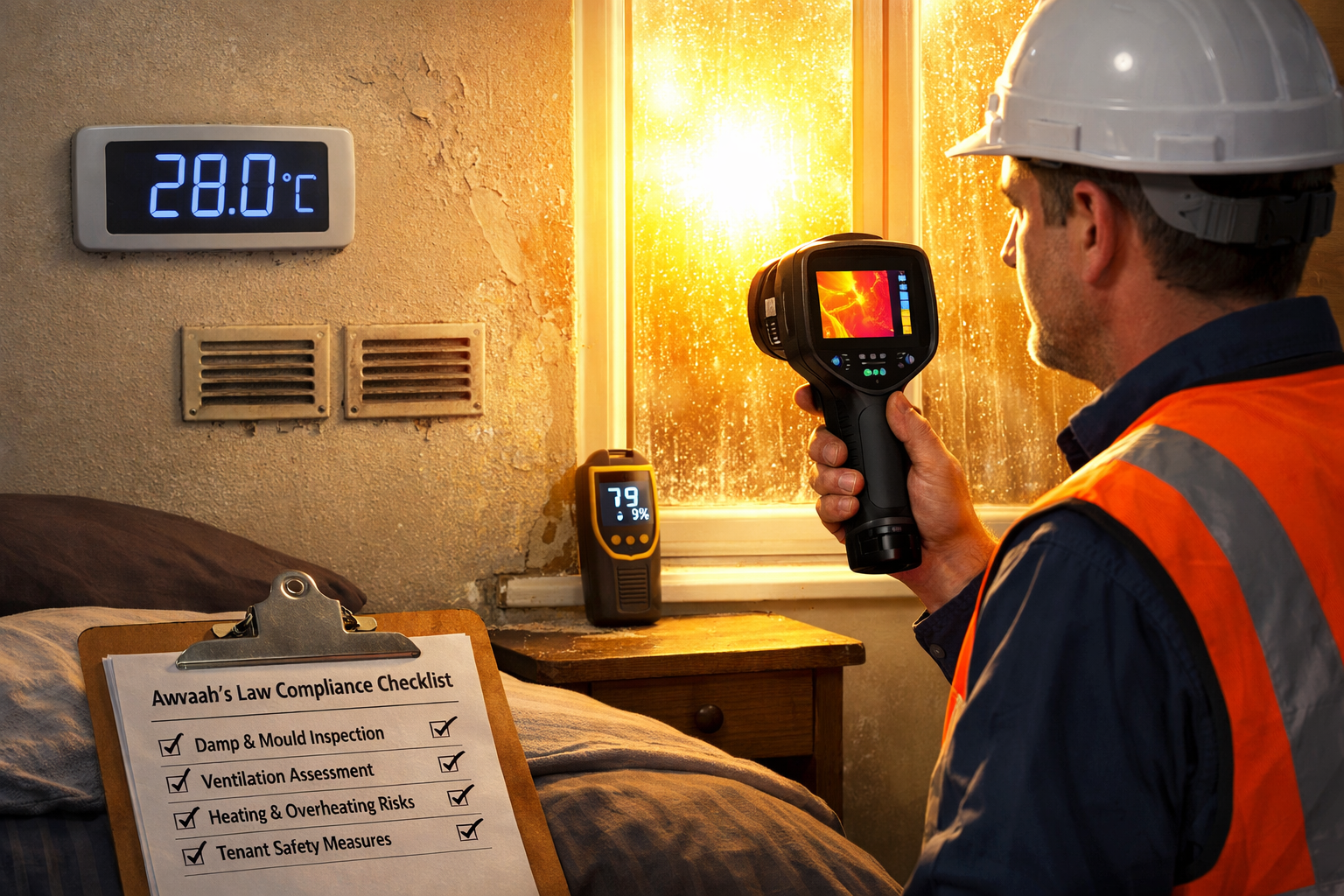
Conducting Level 3 Building Surveys for Excess Temperature Hazards in PRS: Awaab's Law 2026 Protocols for Overheating Assessments requires systematic evaluation across multiple building systems and environmental factors. Professional surveyors must develop specialized checklists that capture all potential contributors to overheating conditions.
Thermal Envelope Assessment
The building's thermal envelope—the barrier between conditioned interior space and the external environment—plays a crucial role in temperature regulation. Surveyors must evaluate:
Insulation Performance:
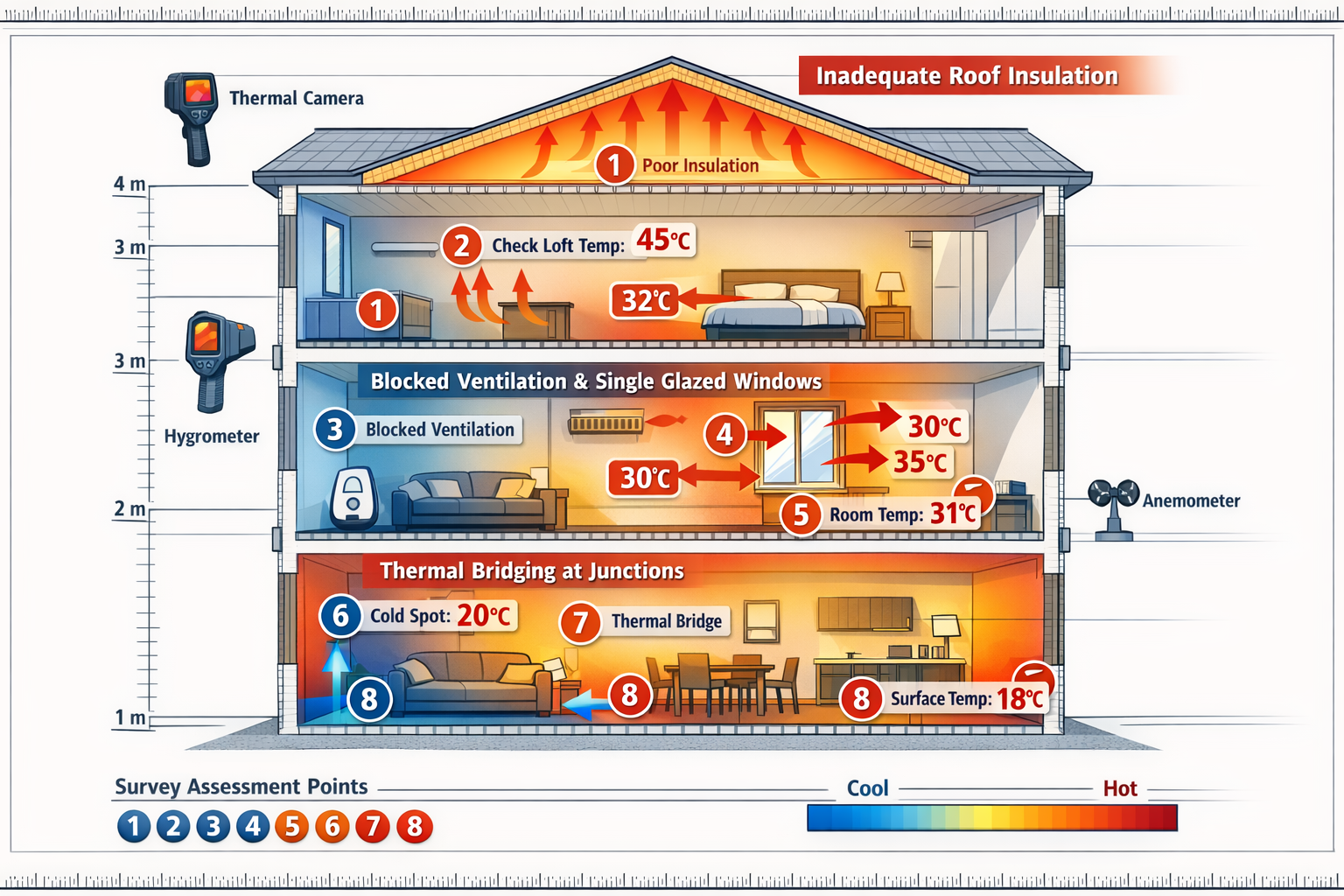
- ✅ Roof and loft insulation thickness and condition
- ✅ Wall insulation type (cavity, solid wall, external, internal)
- ✅ Floor insulation presence and effectiveness
- ✅ Thermal bridging at junctions and penetrations
- ✅ Insulation gaps, compression, or deterioration
Glazing and Solar Gain:
- ✅ Window orientation and solar exposure assessment
- ✅ Glazing type (single, double, triple) and U-values
- ✅ Presence and effectiveness of solar shading devices
- ✅ Window-to-floor area ratios in habitable rooms
- ✅ Reflective coatings or tinting on high-exposure glazing
Excessive insulation without adequate ventilation can trap heat during warm periods, while inadequate insulation allows solar gain to rapidly increase internal temperatures. The surveyor must balance these factors when assessing overheating risk.
Ventilation System Evaluation
Inadequate ventilation represents one of the most common contributors to excess temperature hazards in PRS properties. Level 3 survey protocols must include comprehensive ventilation assessment:
Natural Ventilation:
- 🌬️ Operable window quantity, size, and functionality
- 🌬️ Trickle vent presence and operational status
- 🌬️ Cross-ventilation potential between rooms
- 🌬️ Stack effect ventilation in multi-story units
- 🌬️ Obstructions to natural airflow patterns
Mechanical Ventilation:
- 🌬️ Extract fan locations, capacity, and operational status
- 🌬️ Mechanical ventilation with heat recovery (MVHR) system performance
- 🌬️ Ductwork condition and maintenance history
- 🌬️ Air change rates compared to Building Regulations requirements
- 🌬️ Filter cleanliness and replacement schedules
The RICS building survey standards require documentation of all ventilation deficiencies that could contribute to temperature hazards. Blocked vents, non-functional extract fans, or sealed windows in converted properties frequently create conditions where heat accumulates without adequate dissipation.
Building Fabric and Construction Details
Certain construction types and building characteristics increase vulnerability to overheating:
High-Risk Building Features:
- 🏢 Top-floor apartments with inadequate roof insulation
- 🏢 South and west-facing units with extensive glazing
- 🏢 Properties with dark external finishes that absorb solar radiation
- 🏢 Converted loft spaces with limited ventilation options
- 🏢 Single-aspect units lacking cross-ventilation
- 🏢 Properties with mechanical systems but no cooling capacity
Thermal Mass Considerations:
- Heavy masonry construction that stores and releases heat
- Lightweight construction that responds rapidly to temperature changes
- Internal finishes that affect heat absorption and radiation
- Exposed concrete or brick surfaces in habitable spaces
Understanding how different survey levels address these complexities helps landlords and property managers select appropriate assessment methodologies for their portfolios.
Environmental Monitoring and Data Collection
Effective Level 3 Building Surveys for Excess Temperature Hazards in PRS: Awaab's Law 2026 Protocols for Overheating Assessments incorporate environmental monitoring to establish baseline conditions:
Temperature Monitoring:
- 📊 Multi-room temperature logging over 24-48 hour periods
- 📊 Peak temperature identification during warmest conditions
- 📊 Temperature stratification between floors and rooms
- 📊 Comparison against CIBSE TM59 overheating criteria
- 📊 Identification of rooms exceeding 26°C operative temperature thresholds
Thermal Imaging:
- 📊 Infrared thermography to identify thermal bridging
- 📊 Heat loss and heat gain visualization
- 📊 Insulation deficiency detection
- 📊 Air leakage pathway identification
- 📊 Solar gain pattern documentation
Humidity and Air Quality:
- 📊 Relative humidity measurements in conjunction with temperature
- 📊 CO₂ levels indicating ventilation effectiveness
- 📊 Air movement and stagnation zone identification
This data-driven approach provides objective evidence of excess temperature conditions and supports enforcement defense if regulatory questions arise.
Avoiding Enforcement Penalties Through Comprehensive Assessment
The enforcement landscape under Awaab's Law Phase 2 creates significant financial and reputational risks for landlords who fail to identify and remedy excess temperature hazards within prescribed timeframes. Level 3 Building Surveys for Excess Temperature Hazards in PRS: Awaab's Law 2026 Protocols for Overheating Assessments serve as both preventive measures and compliance documentation.
Documentation Standards for Regulatory Defense
When excess temperature hazards are reported, landlords must demonstrate that they conducted thorough investigations within the 10-working-day window[4][7]. Comprehensive survey documentation provides essential evidence of compliance:
Essential Documentation Elements:
- 📝 Detailed room-by-room temperature assessment results
- 📝 Photographic evidence of ventilation systems and insulation
- 📝 Thermal imaging reports with annotated findings
- 📝 Ventilation performance measurements and calculations
- 📝 Identification of specific defects contributing to overheating
- 📝 Prioritized remediation recommendations with cost estimates
- 📝 Timeline for implementing corrective measures
The same rigorous approach that characterizes expert building evaluation services must extend to temperature hazard assessments. Incomplete or superficial surveys leave landlords vulnerable to enforcement action if hazards persist or worsen.
Prioritizing Remedial Actions
Not all excess temperature issues require identical responses. Surveyors must categorize findings to guide landlord decision-making:
Immediate Safety Measures (0-5 working days):
- ⚡ Provision of temporary cooling equipment in extreme conditions
- ⚡ Emergency ventilation improvements for vulnerable occupants
- ⚡ Removal of obstructions to existing ventilation systems
- ⚡ Repair of broken windows preventing natural ventilation
Short-Term Improvements (5-30 days):
- 🔧 Installation or repair of mechanical extract ventilation
- 🔧 Addition of solar shading devices (blinds, films, external shading)
- 🔧 Ventilation system cleaning and maintenance
- 🔧 Minor insulation adjustments to prevent heat retention
Long-Term Remediation (30+ days):
- 🏗️ Comprehensive insulation upgrades with balanced ventilation
- 🏗️ Window replacement with improved thermal performance
- 🏗️ Installation of mechanical ventilation with heat recovery
- 🏗️ Structural modifications to improve cross-ventilation
- 🏗️ External shading structures or architectural modifications
This prioritization framework aligns with the enforcement expectations established in official guidance[7]. Landlords who demonstrate clear action plans based on professional survey findings position themselves favorably in any regulatory review.
Integration with Broader Property Management
Excess temperature assessments should not exist in isolation. Forward-thinking landlords integrate these evaluations into comprehensive property management strategies:
Portfolio-Wide Risk Assessment:
- Systematic review of all PRS properties for overheating vulnerability
- Prioritization based on building characteristics and tenant demographics
- Proactive surveys before tenant complaints trigger investigations
- Regular monitoring of high-risk properties during warm seasons
Tenant Communication:
- Clear guidance on ventilation system operation
- Instructions for maximizing natural ventilation during warm periods
- Explanation of solar shading device usage
- Reporting procedures for temperature concerns
Maintenance Schedules:
- Regular ventilation system servicing and filter replacement
- Seasonal preparation including ventilation system checks
- Responsive repair systems for ventilation and shading equipment
- Documentation of all maintenance activities for compliance evidence
This holistic approach mirrors the comprehensive methodology that defines professional building surveyor services and demonstrates the duty-of-care that regulators expect under Awaab's Law.
Cost Considerations and Investment Justification
Landlords frequently question the cost-benefit analysis of comprehensive Level 3 surveys for temperature hazards. However, the financial calculus strongly favors proactive assessment:
Survey Investment vs. Enforcement Costs:
- Level 3 survey: £800-£1,500 (typical range for standard property)
- Enforcement penalties: £5,000-£30,000+ depending on severity and jurisdiction
- Legal costs defending enforcement action: £3,000-£15,000+
- Tenant compensation claims: Variable, potentially substantial
- Reputational damage and difficulty securing future tenants: Unquantifiable
The cost-saving potential of building surveys extends beyond purchase negotiations to include ongoing compliance management. For PRS landlords managing multiple properties, the return on investment from preventing a single enforcement action justifies systematic survey programs across entire portfolios.
Specialist Survey Expertise Requirements
Not all building surveyors possess the specialized knowledge necessary for effective excess temperature hazard assessment. Landlords should verify that their chosen surveyor demonstrates:
✅ Thermal Performance Expertise: Understanding of building physics, heat transfer, and thermal modeling
✅ HHSRS Knowledge: Familiarity with Housing Health and Safety Rating System assessment protocols
✅ Regulatory Awareness: Current knowledge of Awaab's Law requirements and enforcement practices
✅ Technical Equipment: Access to thermal imaging cameras, environmental monitors, and ventilation testing equipment
✅ Report Quality: Ability to produce detailed, actionable reports suitable for regulatory submission
When choosing between different survey options, landlords should prioritize surveyors who demonstrate specific competence in thermal assessments rather than selecting based solely on price.
Phase 3 Preparation and Future Regulatory Expansion
While Phase 2 regulations address excess temperature alongside specific hazard categories, Phase 3 is expected to extend Awaab's Law protections to all remaining HHSRS hazards by 2027[1][7]. This expansion will create comprehensive coverage across the entire spectrum of housing health and safety concerns.
Anticipated Phase 3 Coverage
The complete HHSRS framework encompasses 29 hazard categories. Phase 3 implementation will likely include:
- Radon and radiation hazards
- Noise exposure
- Lighting deficiencies
- Crowding and space standards
- Entry security
- Personal hygiene facilities
- Food safety
- Water supply quality
- Falling on level surfaces
- Collision and entrapment hazards
For building surveyors and property professionals, this trajectory suggests that comprehensive assessment methodologies will become standard practice across all PRS properties. The specialized protocols developed for Level 3 Building Surveys for Excess Temperature Hazards in PRS: Awaab's Law 2026 Protocols for Overheating Assessments will serve as templates for expanded hazard evaluation frameworks.
Preparing for Comprehensive Compliance
Forward-thinking landlords are already positioning their portfolios for Phase 3 requirements:
Strategic Preparation Steps:
- 📋 Conduct comprehensive Level 3 surveys addressing all potential HHSRS hazards
- 📋 Develop property-specific hazard registers documenting known issues
- 📋 Establish maintenance schedules addressing common hazard categories
- 📋 Create response protocols for tenant-reported hazards across all categories
- 📋 Build financial reserves for remediation across multiple hazard types
This proactive approach reduces the compliance burden when Phase 3 regulations take effect and demonstrates the systematic risk management that characterizes professional property management.
Conclusion
The expansion of Awaab's Law to include excess temperature hazards under Phase 2 regulations fundamentally transforms compliance requirements for private rental sector landlords in 2026. Level 3 Building Surveys for Excess Temperature Hazards in PRS: Awaab's Law 2026 Protocols for Overheating Assessments have evolved from optional enhancements to essential compliance tools that protect both tenant welfare and landlord interests.
The 10-working-day investigation window and 5-working-day remedial commencement requirement create tight timeframes that demand systematic assessment protocols[4][7]. Surveyors must evaluate thermal envelopes, ventilation systems, building fabric characteristics, and environmental conditions to identify overheating risks before they trigger enforcement action. Comprehensive documentation of these assessments provides essential regulatory defense while guiding prioritized remediation strategies.
For landlords managing PRS properties, the cost-benefit analysis overwhelmingly favors proactive Level 3 surveys over reactive responses to tenant complaints or enforcement notices. The relatively modest investment in professional assessment prevents substantial enforcement penalties, legal costs, and reputational damage while fulfilling the duty-of-care obligations that Awaab's Law enshrines.
Actionable Next Steps
For PRS Landlords:
- 🎯 Commission Level 3 surveys for all properties with known overheating risks (top-floor units, south-facing apartments, inadequate ventilation)
- 🎯 Develop portfolio-wide temperature hazard assessment programs before peak summer conditions
- 🎯 Establish clear tenant reporting procedures for temperature concerns
- 🎯 Create documented maintenance schedules for ventilation systems and thermal performance elements
- 🎯 Build relationships with surveyors experienced in thermal assessments and Awaab's Law compliance
For Building Surveyors:
- 🎯 Develop specialized expertise in thermal performance assessment and overheating evaluation
- 🎯 Invest in thermal imaging equipment and environmental monitoring technology
- 🎯 Create standardized checklists and reporting templates for excess temperature hazard surveys
- 🎯 Maintain current knowledge of HHSRS assessment protocols and enforcement practices
- 🎯 Establish rapid-turnaround survey capabilities to meet 10-day investigation windows
For Property Managers:
- 🎯 Integrate excess temperature monitoring into routine property inspections
- 🎯 Document all ventilation system maintenance and tenant guidance on temperature management
- 🎯 Develop emergency response protocols for extreme temperature conditions
- 🎯 Create compliance documentation systems that track survey findings and remediation progress
- 🎯 Prepare for Phase 3 expansion by addressing broader HHSRS hazard categories proactively
The regulatory landscape established by Awaab's Law reflects a fundamental shift toward preventive rather than reactive housing standards. By embracing comprehensive assessment protocols and systematic risk management, landlords and property professionals can navigate these requirements successfully while delivering the safe, healthy housing that all tenants deserve.
References
[1] Awaabs Law Explained – https://firntec.com/blog/awaabs-law-explained
[2] Awaabs Law – https://www.apizee.com/awaabs-law.php
[4] Awaabs Law Comes Into Force What Does It Mean For Construction – https://www.trowers.com/insights/2025/november/awaabs-law-comes-into-force-what-does-it-mean-for-construction
[5] Awaabs Law Timeframes And The Dfg – https://www.foundations.uk.com/awaabs-law-timeframes-and-the-dfg/
[7] Awaabs Law Guidance For Social Landlords Timeframes For Repairs In The Social Rented Sector – https://www.gov.uk/government/publications/awaabs-law-guidance-for-social-landlords/awaabs-law-guidance-for-social-landlords-timeframes-for-repairs-in-the-social-rented-sector