


Over 40% of UK households own a pet, yet until 2026, millions of renters faced blanket "no pets" clauses that left them with an impossible choice between a home and a companion animal. The Renters' Rights Act changes that equation permanently — and it is reshaping how chartered surveyors assess, document, and value private rented sector (PRS) properties across England.
From 1 May 2026, tenants gained a statutory right to request permission to keep a pet, and landlords must respond within 28 days with a valid reason for any refusal [1][2]. The valuation impacts of pet permissions under Renters' Rights Act 2026: surveyor assessments for PRS properties are now a central concern for landlords, lenders, and investors who need accurate, evidence-based appraisals of what these legislative changes mean for asset values, insurance costs, and dilapidations liability.
Key Takeaways 📋
- May 1, 2026 marks the start of enforceable pet permission rights for tenants in England under the Renters' Rights Act [1][2].
- Landlords cannot impose blanket pet bans, charge pet deposits, or increase rent for pet-owning tenants — penalties reach £7,000 [1].
- Chartered surveyors — particularly those conducting Level 3 building surveys — now play a pivotal role in documenting pet-related wear and informing valuations [3].
- Pet permissions introduce new variables into PRS valuations: damage risk, insurance premiums, yield adjustments, and end-of-tenancy dilapidations all require reassessment.
- Landlords who commission professional survey reports are better positioned to negotiate insurance terms and defend dilapidations claims at tenancy end.
What the Renters' Rights Act 2026 Actually Changes for Landlords
The Renters' Rights Act represents the most significant overhaul of the private rented sector in a generation. For landlords managing PRS portfolios, several provisions directly affect how properties are valued and managed.
The New Pet Permission Framework
Under the Act's pet provisions [2]:
- Tenants may submit a written request to keep a named pet at the property.
- Landlords must respond within 28 days, granting or refusing with reasonable justification.
- Landlords cannot apply a blanket "no pets" policy — each request must be individually considered [1].
- Landlords may require tenants to take out appropriate pet damage insurance as a condition of consent.
- Charging a separate pet deposit or pet fee is prohibited, with fines up to £7,000 for violations [1].
- Increasing rent specifically because a tenant has a pet is also prohibited under the same penalty framework [1].
💬 "The legislation removes the landlord's most blunt tool — the blanket ban — and replaces it with a structured, evidence-based consent process."
Section 21 Abolition and Its Knock-On Effects
From 1 May 2026, Section 21 "no-fault" evictions are abolished [1]. Landlords can no longer remove a tenant simply because an unauthorised pet is present. They must rely on specific Section 8 grounds, which require demonstrable breach of tenancy terms and, typically, evidence of damage. This makes the surveyor's role in documenting property condition — both at the start and end of tenancy — more legally significant than ever.
How Surveyor Assessments for PRS Properties Are Evolving
The valuation impacts of pet permissions under Renters' Rights Act 2026: surveyor assessments for PRS properties have prompted RICS-qualified professionals to adapt their inspection methodologies. A standard homebuyer's report may not capture the granular detail now required for PRS assets. Landlords are increasingly commissioning Level 3 building surveys to establish a comprehensive baseline condition record.
What Surveyors Now Document in Pet-Permission Contexts
A thorough surveyor inspection for a PRS property in 2026 will typically address:
| Inspection Area | Pet-Specific Risk | Surveyor's Assessment Focus |
|---|---|---|
| Flooring (hardwood, laminate, carpet) | Scratching, staining, odour absorption | Material condition, replacement cost estimate |
| Skirting boards & door frames | Chewing, scratching | Extent of damage, repair vs. replace |
| Garden & external spaces | Digging, fouling, plant destruction | Boundary integrity, soil condition |
| Walls & plasterwork | Scratching, moisture from animal contact | Surface condition, damp readings |
| Pipework & drainage | Hair blockages, urine corrosion | Functional test, CCTV drain survey if indicated |
| Ventilation & air quality | Odour permeation, allergen residue | Ventilation adequacy, specialist cleaning need |
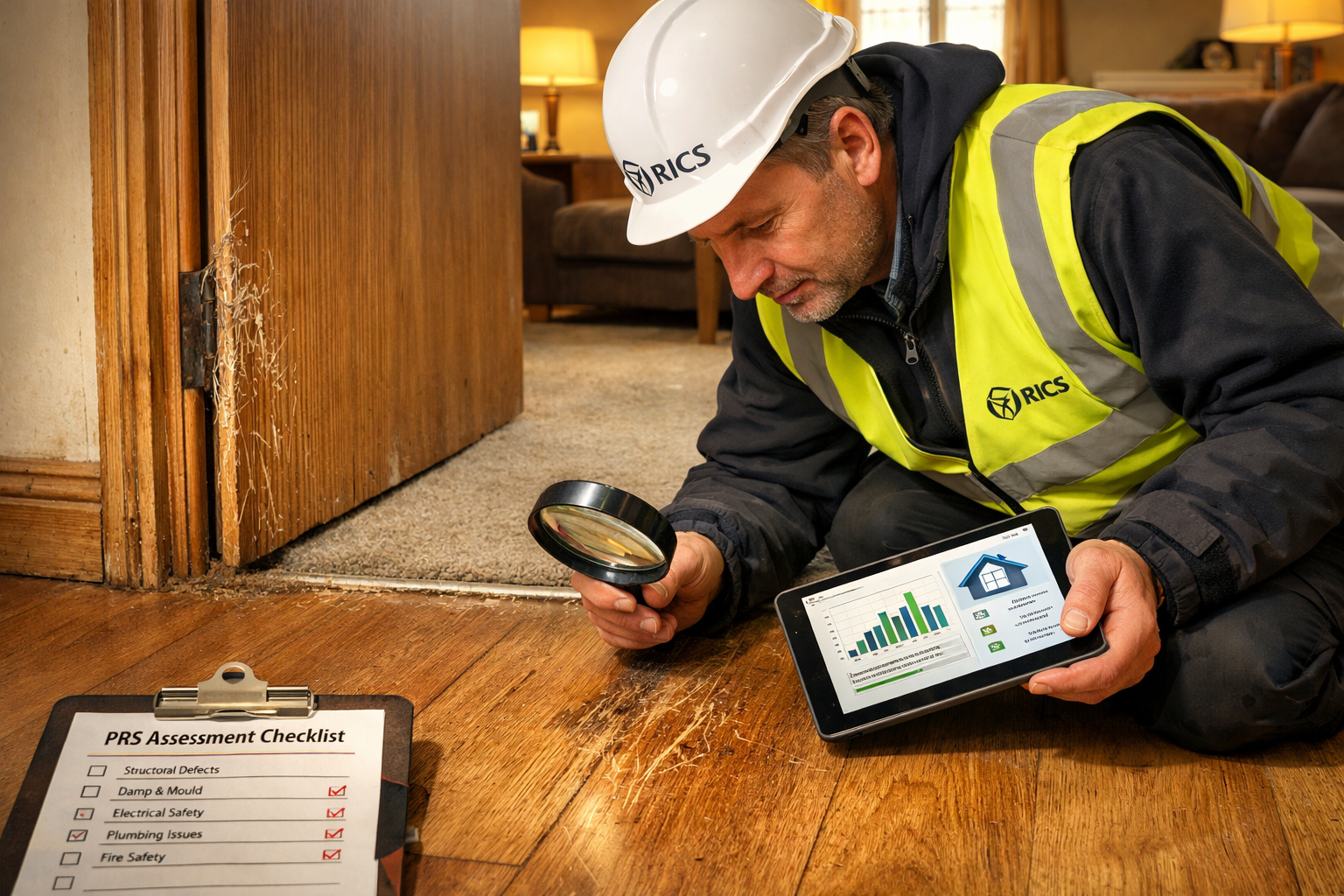
Surveyors conducting condition survey reports for PRS landlords are now expected to flag these areas explicitly, providing photographic evidence and cost schedules that can be used in dilapidations negotiations or insurance claims [3].
The Role of Specific Defect Surveys
Where a surveyor identifies concentrated damage — for example, severe floor staining or structural damage to a door frame — a specific defect survey can isolate and quantify that issue in detail. This is particularly useful when a landlord needs to demonstrate the monetary value of pet-related deterioration beyond fair wear and tear.
Valuation Impacts of Pet Permissions Under Renters' Rights Act 2026: Surveyor Assessments for PRS Properties — The Numbers
Understanding the financial implications requires breaking down the valuation equation into its component parts.
🏠 Capital Value Adjustments
For properties sold as tenanted investments, pet-friendly status now carries a dual edge:
Potential value uplift:
- Broader tenant pool (pet owners represent 40%+ of households) can reduce void periods.
- Lower void rates improve net yield, which positively affects investment value calculations.
- Pet-friendly properties in competitive rental markets may achieve marginally stronger yields.
Potential value reduction:
- Accumulated pet-related wear, if not properly managed, reduces the physical condition of the asset.
- Lenders may apply additional scrutiny to properties with a history of pet tenancies.
- Insurance premium increases affect net operating income, compressing yield.
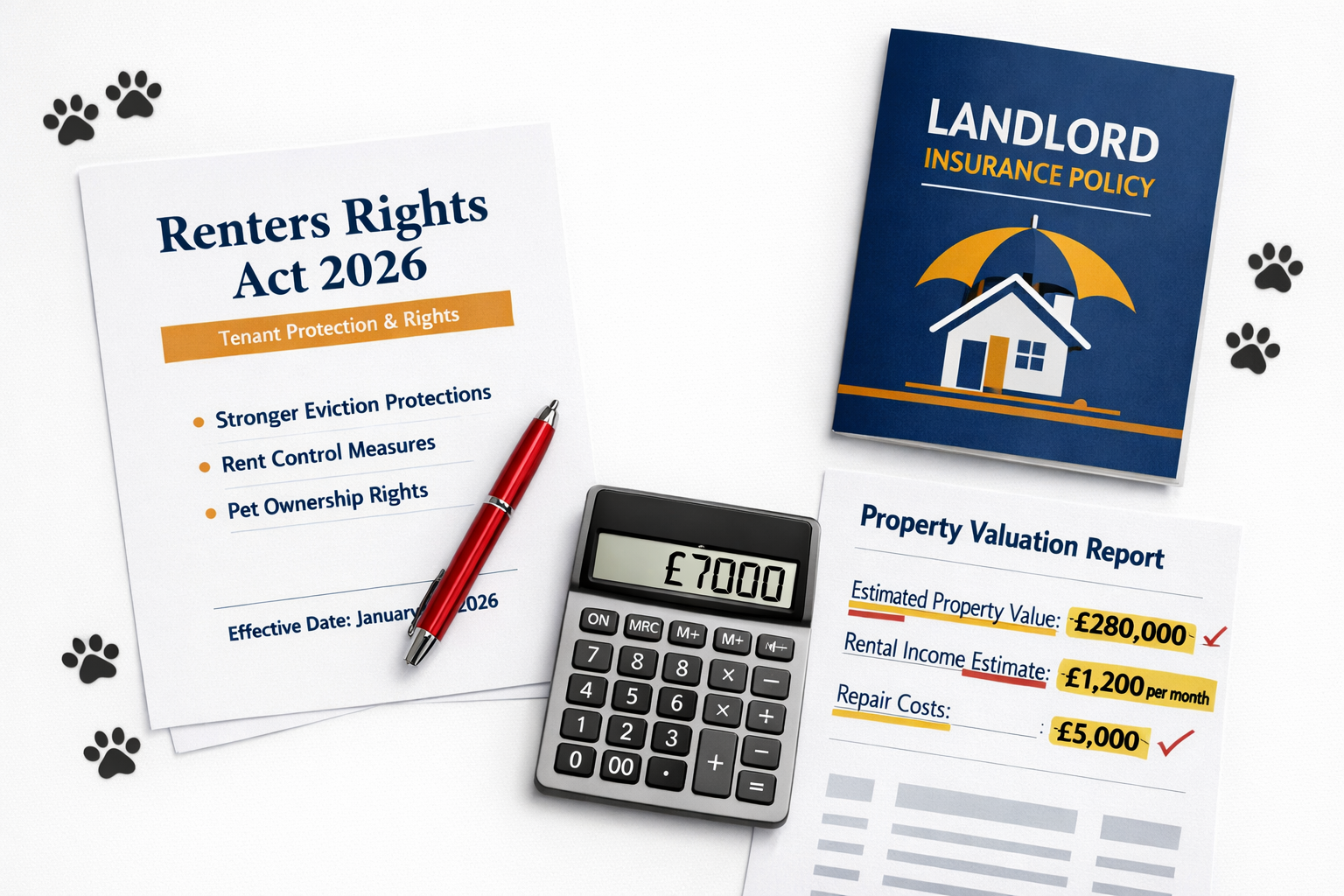
A surveyor's valuation report must now weigh these factors explicitly. For a mid-range London PRS flat worth approximately £400,000, even a 2–3% condition-related adjustment represents £8,000–£12,000 — a material figure in any investment appraisal.
📊 Rental Yield Implications
The prohibition on charging higher rent for pet-owning tenants [1] removes a traditional compensatory mechanism. Landlords who previously added a "pet premium" to monthly rent can no longer do so legally. This means:
- Insurance cost increases must be absorbed within the existing rent structure.
- Maintenance reserves should be recalculated to account for higher expected wear rates.
- Dilapidations recovery at tenancy end becomes the primary financial protection mechanism.
Surveyors working with landlords in areas like Wandsworth, Battersea, and Fulham — where high-value PRS stock is concentrated — are already incorporating these adjustments into their rental valuation methodologies.
🔍 Insurance Premium Adjustments
Landlord insurance providers are recalibrating their risk models in response to the Act. Key changes include:
- Pet damage endorsements are becoming standard policy additions rather than optional extras.
- Some insurers are requiring a surveyor's pre-tenancy condition report as a condition of cover.
- Premiums for properties with multiple pets or large breeds may increase by 15–25% depending on the insurer's risk assessment.
- Landlords who cannot produce a professional survey baseline may find claims disputed or reduced.
This dynamic makes the surveyor's pre-tenancy inspection report a financial instrument as much as a technical document.
Practical Steps for Landlords: Working with Surveyors Under the New Framework
The valuation impacts of pet permissions under Renters' Rights Act 2026: surveyor assessments for PRS properties are best managed through a proactive, structured approach. Here is a practical framework:
Step 1: Commission a Pre-Tenancy Level 3 Survey
Before granting pet permission, landlords should have a comprehensive baseline survey completed. Understanding whether a homebuyers report or structural survey is the right choice is the starting point. For PRS properties where pet tenancies are anticipated, a Level 3 building survey provides the most detailed baseline [3].
Step 2: Establish a Photographic and Condition Schedule
The surveyor should produce a schedule of condition — a detailed, room-by-room record of the property's state at the start of tenancy. This document:
- Defines what constitutes "fair wear and tear" versus actual damage.
- Provides the evidential baseline for any future dilapidations claim.
- Supports insurance claims if pet-related damage occurs.
Step 3: Require Tenant Pet Insurance
The Act allows landlords to require tenants to hold pet damage insurance as a condition of consent [2]. Surveyors can advise on the minimum coverage levels appropriate for the property's value and condition.
Step 4: Mid-Tenancy Monitoring Surveys
For longer tenancies, monitoring surveys allow landlords to identify emerging pet-related issues before they escalate. Catching a developing damp problem caused by a pet door installation, for example, is far cheaper to address early than after years of moisture ingress.
Step 5: End-of-Tenancy Dilapidations Assessment
At tenancy end, a formal dilapidations survey compares the property's condition against the original schedule. The surveyor quantifies:
- Damage attributable to the pet (beyond fair wear and tear).
- Repair and reinstatement costs.
- Any specialist cleaning or odour remediation required.
This report forms the basis of any deductions from the tenant's deposit or a claim against their pet insurance policy.

Regional Considerations: PRS Markets Most Affected
The impact of pet permissions is not uniform across England. Urban PRS markets with high tenant demand and strong pet ownership rates face the most significant valuation adjustments.
High-impact PRS markets in 2026:
- Inner London boroughs — High property values mean even small condition adjustments carry large monetary consequences. Islington and Chelsea landlords face particular scrutiny from lenders.
- Outer London zones — Areas like Bromley and Ealing have large family-oriented PRS stock where pet ownership rates are higher.
- Commuter belt towns — Properties in areas like Chelmsford attract tenants with gardens, increasing the likelihood of pet permission requests for larger animals.
Surveyors operating across these markets are developing location-adjusted condition benchmarks that account for local property types, tenant demographics, and typical pet ownership patterns.
What Landlords and Investors Should Do Right Now ✅
The legislative landscape has shifted. Waiting to adapt is not a neutral position — it carries financial risk. Here are the most important actions for 2026:
- Audit your existing tenancy agreements — Remove any blanket pet ban clauses that are now unenforceable [2].
- Commission baseline surveys for all PRS properties before the next tenancy begins.
- Review landlord insurance policies — Ensure pet damage is explicitly covered and understand what documentation insurers require.
- Develop a pet consent process — Create a standard written response framework that complies with the 28-day response requirement [1].
- Build dilapidations clauses into tenancy agreements that clearly define pet-related damage thresholds.
- Consult a RICS-qualified surveyor to understand how pet permissions affect your specific property's valuation and yield profile.
⚠️ Important: Landlords who charge pet fees, impose pet deposits, or increase rent for pet-owning tenants face penalties of up to £7,000 per violation [1]. Legal compliance is not optional.
Conclusion: Surveyors as the Cornerstone of Pet-Permission Valuations
The Renters' Rights Act 2026 has fundamentally altered the risk and reward calculus for PRS landlords. The removal of blanket pet bans, the prohibition on pet-related charges, and the abolition of Section 21 evictions collectively shift the burden of property protection toward evidence-based documentation — and that is precisely where chartered surveyors add their greatest value.
For landlords, the message is clear: a professional survey is no longer a discretionary expense. It is the primary mechanism for protecting asset value, supporting insurance claims, and recovering legitimate dilapidations costs in a regulatory environment that strongly favours tenants.
Actionable next steps:
- 📞 Contact a RICS-qualified surveyor to commission a pre-tenancy Level 3 condition report before granting any pet permission.
- 📄 Request a detailed schedule of condition that can serve as a legal baseline document.
- 🔄 Schedule mid-tenancy monitoring surveys for any tenancy where pets are present.
- 💼 Work with a specialist landlord insurance broker to update your policy in light of the new pet permission framework.
- 📊 Ask your surveyor to model the yield and capital value implications of pet-friendly tenancies for your specific portfolio.
The valuation impacts of pet permissions under Renters' Rights Act 2026 are real, quantifiable, and manageable — but only for landlords who invest in the professional assessments that make evidence-based decision-making possible.
References
[1] Renting With Pets – https://blog.goodlord.co/renting-with-pets
[2] Guide To The Renters Rights Act – https://www.gov.uk/government/publications/guide-to-the-renters-rights-act/guide-to-the-renters-rights-act
[3] Renters Rights Act 2026 Building Survey Implications For Pet Friendly Rentals And New Decent Homes Standards – https://nottinghillsurveyors.com/blog/renters-rights-act-2026-building-survey-implications-for-pet-friendly-rentals-and-new-decent-homes-standards
[4] Alerts Realestate Impacts Of The Renters Rights Act – https://www.goodwinlaw.com/en/insights/publications/2026/01/alerts-realestate-impacts-of-the-renters-rights-act