

The UK property market is experiencing a pivotal transformation in 2026, and building surveyors stand at the forefront of this change. As homebuying reforms gain momentum and consumer expectations evolve, Implementing RICS Home Survey Standard 2nd Edition: Practical Updates for Building Surveyors in 2026 Recovery has become the profession's most critical focus. While the 2nd edition remains in development following an intensive consultation period, understanding the proposed changes and preparing for their implementation is essential for surveyors navigating today's demanding market landscape.
The journey toward the updated standard represents more than regulatory compliance—it signals a fundamental shift in how building surveyors deliver value to homebuyers. With over 1,000 consultation responses analyzed and rising demand for Level 3 surveys, the profession faces both challenges and opportunities in this recovery phase.
Key Takeaways
- Timeline Reality: The RICS Home Survey Standard 2nd Edition remains under development in 2026, with surveyors currently following the 1st edition while preparing for upcoming changes
- Technology Integration: Proposed updates address AI, drones, and advanced inspection tools that have emerged since 2019, reflecting modern surveying capabilities
- Enhanced Consumer Clarity: New "basic," "intermediate," and "advanced" terminology replaces traditional Level 1/2/3 designations to improve homebuyer understanding
- Expanded Service Scope: Optional services now include retrofit assessments, energy efficiency evaluations, and climate change considerations aligned with 2026 priorities
- Practical Preparation: Building surveyors can implement preparatory measures now, including technology adoption and enhanced reporting frameworks, ahead of formal publication
Understanding the Current Status of Implementing RICS Home Survey Standard 2nd Edition in 2026
Where We Stand Today
Building surveyors must recognize a crucial distinction: while discussions about Implementing RICS Home Survey Standard 2nd Edition: Practical Updates for Building Surveyors in 2026 Recovery dominate professional conversations, the 1st edition remains the operative standard. [1] This creates a unique professional environment where forward-thinking surveyors prepare for change while maintaining compliance with existing requirements.
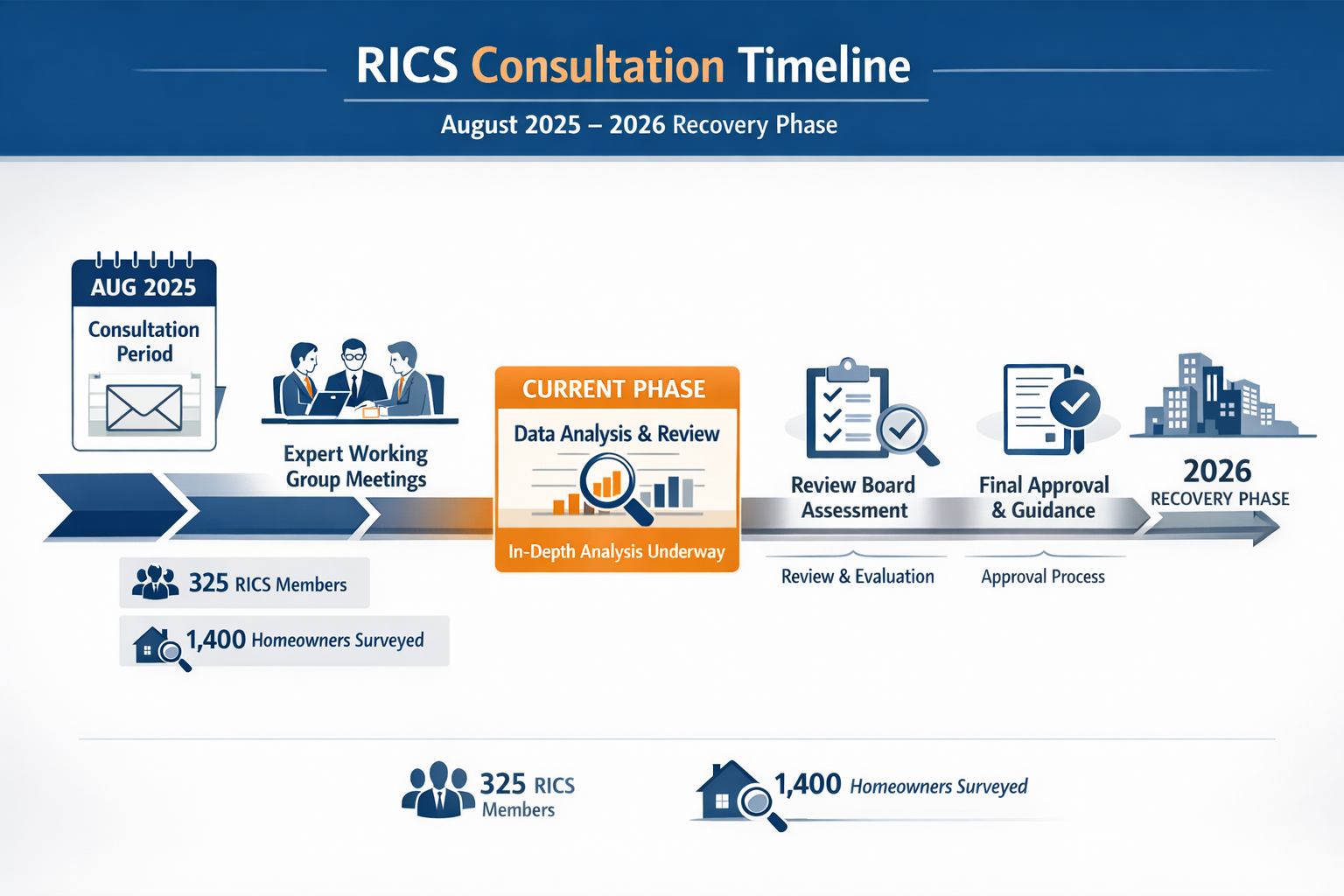
The consultation phase, which ran from August 19 to October 14, 2025, generated unprecedented engagement. RICS received feedback from diverse stakeholders, with particularly strong participation from small and medium-sized enterprises (SME) firms. [2] This broad engagement underscores the standard's significance across the entire surveying profession, from solo practitioners to large corporate firms.
The Analysis Phase: What's Happening Behind the Scenes
As of February 2026, RICS has entered what officials describe as "the most time-intensive phase" of the standard's development. [2] This involves:
Line-by-Line Review Process 📋
- Systematic analysis of each consultation response
- Categorization of feedback by theme and priority
- Identification of consensus areas and contentious issues
- Assessment of practical implementation implications
A dedicated project lead, appointed in December 2025, now guides the standard through its critical development stages. [2] This leadership ensures consistency and maintains momentum as the standard progresses toward publication.
The Path to Publication
The journey from current analysis to final implementation involves multiple review stages:
| Review Stage | Purpose | Key Stakeholders |
|---|---|---|
| Editorial Review | Clarity, consistency, and technical accuracy | RICS editorial team |
| Residential Professional Group Panel | Practical application and professional feasibility | Practicing surveyors |
| Knowledge and Practice Committee | Technical standards alignment | Subject matter experts |
| Standards and Regulation Board | Final approval and publication authorization | RICS governance body |
Each stage serves as a quality checkpoint, ensuring the final standard meets professional needs while serving consumer interests. For building surveyors preparing for these changes, understanding this timeline helps inform strategic planning and resource allocation.
Key Proposed Changes in Implementing RICS Home Survey Standard 2nd Edition for 2026 Practice
Redesignated Survey Levels: From Numbers to Descriptive Terms
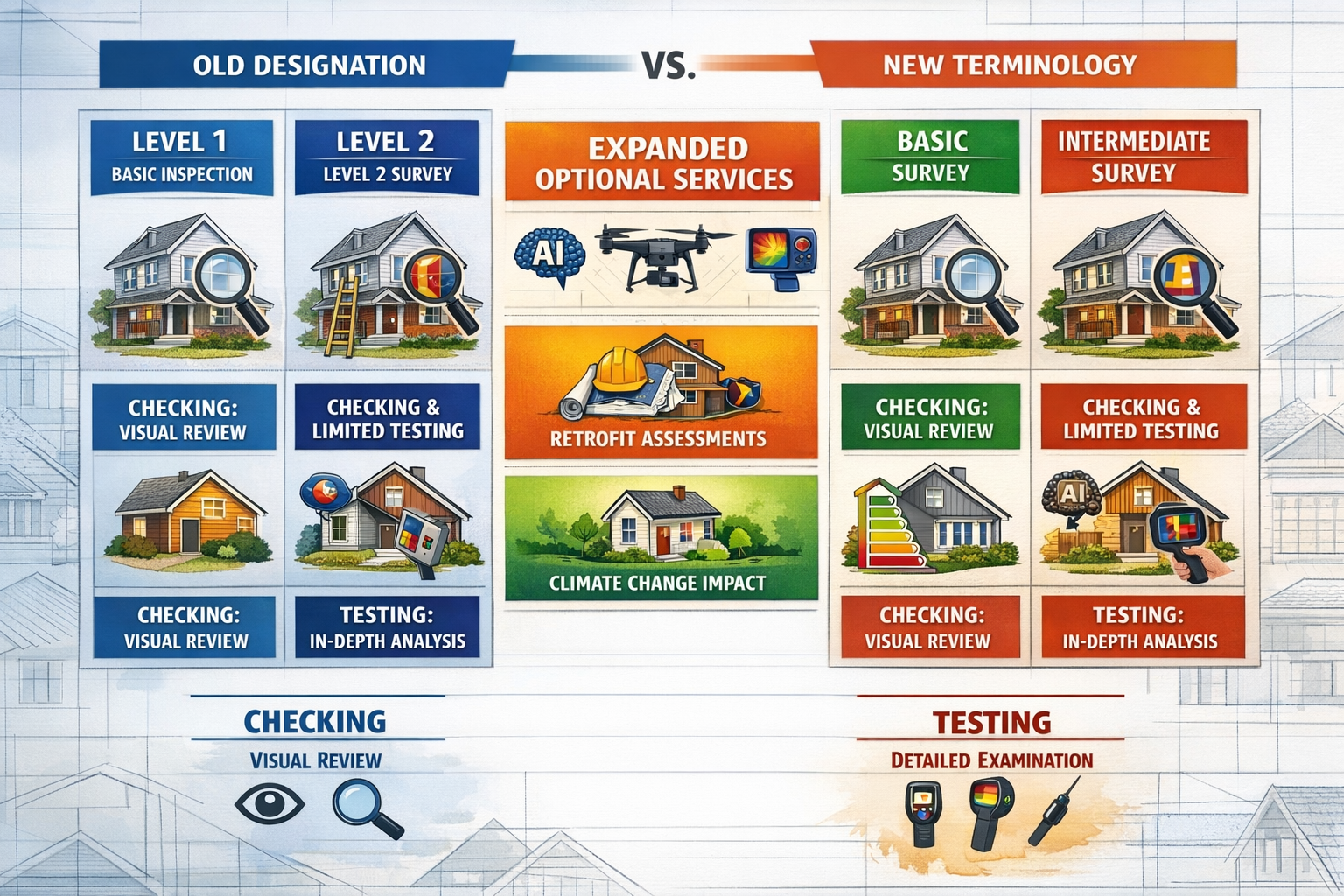
One of the most significant consumer-facing changes involves moving away from the traditional "Level 1, Level 2, Level 3" nomenclature. The proposed standard introduces "basic," "intermediate," and "advanced" designations. [3] This change addresses years of consumer confusion about what different survey levels actually provide.
Why This Matters for Building Surveyors:
- Clearer client conversations during initial consultations
- Reduced scope disputes and expectation misalignment
- Enhanced professional credibility through transparent service descriptions
- Better differentiation between Level 2 and Level 3 survey options
The updated standard includes enhanced scope descriptions in Section 4 ("The Report") and detailed inspection differentiation in Appendix A. [3] These additions provide surveyors with clearer guidance on what constitutes appropriate inspection depth at each level.
Technology and AI Integration: Embracing Modern Tools
Since the 2019 standard, surveying technology has evolved dramatically. The proposed 2nd edition acknowledges advances including:
🚁 Drone Technology
- Roof inspections without scaffolding access
- Detailed photographic documentation of inaccessible areas
- Enhanced safety for surveyors
- Comprehensive visual records for reports
🤖 Artificial Intelligence Applications
- Automated defect detection in photographs
- Pattern recognition for structural issues
- Data analysis for comparative assessments
- Report generation efficiency improvements
📸 Advanced Camera Equipment
- Pole-mounted cameras for high-level inspections
- Thermal imaging for moisture detection
- 360-degree documentation capabilities
- Enhanced reporting visuals
These technological advances reflect evolving homebuyer priorities around climate change, energy efficiency, and retrofit assessments. [4] For surveyors considering technology investments, the proposed standard provides validation and guidance for tool selection and application.
Enhanced Service Definitions: Checking vs. Testing
A critical clarification in the proposed standard distinguishes between "checking" and "testing" services, with explicit definitions added to the glossary. [3] This distinction eliminates ambiguity about service scope:
Checking (Typically Level 2):
- Visual verification of presence and basic operation
- Example: Confirming a gas hob operates to verify connection
- Non-invasive assessment methods
- Surface-level functionality confirmation
Testing (Typically Level 3):
- Detailed operational assessment
- Functional performance evaluation
- More comprehensive examination protocols
- Technical performance verification
This clarity helps surveyors scope work accurately and helps clients understand what they're purchasing. When choosing between a homebuyers report or structural survey, clients benefit from these clear service distinctions.
Expanded Optional Services: Meeting 2026 Market Demands
The proposed standard significantly expands optional services available across all survey levels:
New Optional Service Categories:
- ✅ Retrofit building assessments
- ✅ Energy efficiency evaluations
- ✅ Climate change resilience assessments
- ✅ Drone-based inspections
- ✅ Specialist testing services
- ✅ Valuation services (now available across all levels) [4]
Previously, valuation services were typically associated with specific survey levels. The proposed change allows optional valuations across all three levels, providing flexibility for clients with varying needs and budgets.
Additional Risk Dwellings: Specialized Guidance
The revised standard includes new guidance specifically addressing "additional risk" dwellings. [4] These properties require enhanced scrutiny due to:
- Non-traditional construction methods
- Historical significance and conservation requirements
- Known structural vulnerabilities
- Environmental risk factors
- Complex access or inspection challenges
This guidance helps surveyors identify when standard inspection protocols require enhancement and provides framework for communicating additional risk factors to clients. Understanding subsidence risks and structural concerns becomes particularly important for these properties.
Regulatory and Legislative Updates
The standard incorporates changes to legislation and regulatory practices that have evolved since 2019. [4] These updates ensure surveying practices align with:
- Current building regulations
- Updated safety standards
- Revised professional liability frameworks
- Contemporary consumer protection requirements
- Post-pandemic market conditions
Practical Implementation Strategies for Building Surveyors in 2026 Recovery
Preparing Now: Actions Before Official Publication
While the 2nd edition awaits final approval, proactive building surveyors can begin preparation:
1. Technology Assessment and Investment 💻
Evaluate current inspection tools against proposed standard expectations:
- Research drone options suitable for residential surveys
- Investigate thermal imaging equipment capabilities
- Explore AI-assisted defect detection software
- Upgrade camera equipment for enhanced documentation
2. Service Menu Redesign 📋
Begin restructuring service offerings to align with new terminology:
- Develop "basic," "intermediate," and "advanced" service descriptions
- Create clear scope-of-work documents for each level
- Design pricing structures reflecting enhanced services
- Prepare marketing materials explaining the new framework
3. Professional Development 🎓
Invest in training that addresses emerging requirements:
- Drone operation certification and licensing
- Energy efficiency assessment qualifications
- Retrofit assessment training
- Climate change impact evaluation courses
- Technology tool proficiency development
4. Template and Process Updates 📝
Modernize reporting frameworks ahead of requirement changes:
- Revise report templates incorporating clearer "must" vs. "should" language
- Enhance visual documentation standards
- Develop checking vs. testing protocols
- Create additional risk dwelling assessment checklists
Level 3 Survey Checklists: Meeting Rising Demand
The 2026 recovery phase has seen increased demand for comprehensive Level 3 surveys as homebuyers seek thorough property assessments. Implementing enhanced checklists ensures consistent, high-quality delivery:
Pre-Inspection Planning Checklist:
- ✓ Review property history and available documentation
- ✓ Identify potential additional risk factors
- ✓ Confirm appropriate technology and equipment availability
- ✓ Schedule adequate inspection time (typically 3-5 hours for standard properties)
- ✓ Arrange specialist access if required (loft, underfloor, etc.)
- ✓ Verify insurance coverage for inspection methods employed
On-Site Inspection Checklist:
- ✓ Systematic room-by-room documentation
- ✓ Comprehensive photographic record (minimum 100+ images)
- ✓ Detailed structural element assessment
- ✓ Testing protocols for services (not just checking)
- ✓ Drone inspection of roof and high-level elements (where appropriate)
- ✓ Thermal imaging for moisture and insulation issues
- ✓ Detailed notes on defects, maintenance needs, and risks
Post-Inspection Reporting Checklist:
- ✓ Clear categorization of defects by severity
- ✓ Specific recommendations with priority rankings
- ✓ Cost implications for identified issues
- ✓ Timeline recommendations for remedial work
- ✓ Additional specialist investigation recommendations
- ✓ Energy efficiency observations and improvement suggestions
- ✓ Climate resilience considerations
These comprehensive checklists support the detailed approach expected in full structural surveys and help clients understand the value they receive.
Addressing Consultation Feedback: Clarity and Conciseness
A consistent theme throughout consultation responses emphasized the need for standards to be "clearer and more concise in its requirements." [2] Building surveyors implementing the updated standard should prioritize:
Clear Communication Principles:
- Distinguish mandatory requirements ("must") from recommended practices ("should")
- Use plain language accessible to clients without technical backgrounds
- Provide specific examples rather than general statements
- Include visual aids and diagrams where helpful
- Structure reports with clear hierarchy and navigation
This clarity benefits both professional compliance and client satisfaction. When clients understand how an RICS survey can help negotiate property prices, they appreciate the surveyor's value more fully.
Consumer Insight Integration: Understanding 2026 Homebuyer Priorities
RICS's extensive research—surveying 325 RICS members and over 1,400 UK homeowners—revealed shifting priorities. [2] Building surveyors implementing the 2nd edition should address:
Top 2026 Homebuyer Concerns:
- Energy Efficiency: Rising energy costs drive demand for efficiency assessments
- Climate Resilience: Flooding, overheating, and extreme weather considerations
- Retrofit Potential: Feasibility and cost of property improvements
- Long-term Maintenance: Comprehensive understanding of ongoing costs
- Technology Integration: Smart home compatibility and modern systems
Surveyors who proactively address these concerns in their reports deliver enhanced value and differentiate their services in competitive markets.
Building Surveyor Business Strategies for 2026 Recovery
Market Positioning:
The recovery phase presents opportunities for surveyors who position themselves strategically:
- Specialization: Develop expertise in additional risk dwellings or specific property types
- Technology Leadership: Become known for advanced inspection capabilities
- Educational Marketing: Help consumers understand why to choose RICS surveyors
- Transparent Pricing: Clear service tiers aligned with new terminology
- Value Demonstration: Show how comprehensive surveys save money long-term
Operational Efficiency:
Implementing the 2nd edition provides opportunity to streamline operations:
- Standardized inspection protocols reduce variability
- Technology integration improves documentation speed
- Clear service definitions minimize scope disputes
- Enhanced templates accelerate report production
- Better client communication reduces revision requests
Regional Considerations and Local Market Adaptation
Building surveyors must adapt implementation to regional market characteristics. London and Southeast markets, for example, face unique challenges:
Urban Market Considerations:
- Higher proportion of leasehold properties requiring specialized assessment
- Complex party wall situations in terraced developments
- Listed buildings and conservation area restrictions
- Premium property segment expectations
- Diverse construction types and periods
Surveyors serving areas like Westminster, Fulham, or Richmond must tailor their approach to local property characteristics while maintaining standard compliance.
Collaboration and Professional Networks
Implementing RICS Home Survey Standard 2nd Edition: Practical Updates for Building Surveyors in 2026 Recovery succeeds when professionals collaborate:
Professional Engagement Opportunities:
- Participate in RICS regional forums and working groups
- Attend industry conferences and training events
- Join online professional communities discussing implementation
- Share best practices with colleagues
- Contribute to ongoing standard development feedback
The consultation process demonstrated the value of collective professional input, with over 70 hours of Expert Working Group meetings and presentations to more than 1,600 industry professionals. [2] This collaborative approach continues through implementation.
Quality Assurance and Compliance Monitoring
As the standard evolves, building surveyors must establish robust quality assurance processes:
Internal Quality Controls:
- Regular peer review of reports
- Systematic file audits against standard requirements
- Client feedback collection and analysis
- Continuous professional development tracking
- Technology and methodology updates
External Compliance:
- Professional indemnity insurance alignment
- RICS regulatory requirement adherence
- Consumer protection standard compliance
- Data protection and privacy regulations
- Health and safety protocol maintenance
Financial Planning for Implementation
Transitioning to the 2nd edition involves financial considerations:
Investment Areas:
- Technology and equipment purchases (£5,000-£15,000+)
- Professional training and certification (£1,000-£3,000 per surveyor)
- Template and software updates (£500-£2,000)
- Marketing and communication materials (£1,000-£5,000)
- Insurance policy reviews and adjustments (variable)
Return on Investment:
- Enhanced service offerings command premium pricing
- Improved efficiency reduces per-survey costs
- Technology adoption enables expanded service territory
- Professional differentiation attracts quality clients
- Reduced liability through clearer scope definition
Managing Client Expectations During Transition
The period between consultation and publication creates communication challenges. Building surveyors should:
Client Communication Strategies:
- Explain current standard compliance while highlighting upcoming changes
- Demonstrate proactive adoption of best practices from proposed updates
- Clarify service scope using both current and proposed terminology
- Set realistic expectations about inspection limitations and capabilities
- Provide educational resources about choosing the right survey
Transparency Benefits:
- Builds trust through honest communication
- Positions surveyor as industry expert
- Reduces potential disputes
- Enhances professional reputation
- Creates opportunities for service upgrades
Conclusion
Implementing RICS Home Survey Standard 2nd Edition: Practical Updates for Building Surveyors in 2026 Recovery represents both a professional obligation and a strategic opportunity. While the standard remains in development, with final publication pending completion of rigorous review processes, building surveyors who prepare proactively position themselves for success in an evolving market.
The proposed changes—from redesignated survey levels to technology integration, from enhanced service definitions to expanded optional offerings—reflect the profession's commitment to meeting modern homebuyer needs. The unprecedented consultation engagement, with over 1,000 responses and extensive stakeholder involvement, demonstrates the standard's importance across the surveying community.
Actionable Next Steps for Building Surveyors
Immediate Actions (Next 30 Days):
- Review current service offerings against proposed standard framework
- Assess technology gaps and create equipment investment plan
- Begin updating internal templates and documentation
- Research professional development opportunities
- Communicate with clients about upcoming industry changes
Short-term Preparation (Next 3-6 Months):
- Invest in priority technology and training
- Redesign service menus using new terminology
- Update marketing materials and website content
- Establish quality assurance protocols
- Build professional networks for ongoing learning
Long-term Strategic Planning (Next 6-12 Months):
- Develop specialization in high-demand areas
- Implement comprehensive technology suite
- Establish market leadership position
- Monitor standard publication and finalize compliance
- Measure ROI and adjust strategies accordingly
The 2026 recovery phase offers building surveyors the opportunity to elevate professional standards, embrace technological advancement, and deliver enhanced value to homebuyers navigating an increasingly complex property market. By understanding the proposed changes, preparing systematically, and implementing best practices proactively, surveyors can ensure they're ready when the RICS Home Survey Standard 2nd Edition receives final approval and publication.
Success in this transition requires balancing current compliance with future preparation, maintaining professional excellence while embracing innovation, and serving client needs while advancing industry standards. Building surveyors who approach implementation strategically will not only meet regulatory requirements but will distinguish themselves as leaders in a profession fundamental to informed homebuying decisions.
References
[1] What The Rics Home Buying And Selling Reform Hub Means For Surveyors – https://www.surventrix.com/blog/what-the-rics-home-buying-and-selling-reform-hub-means-for-surveyors
[2] Home Survey Standard 2nd Edition A Progress Update – https://www.rics.org/news-insights/home-survey-standard-2nd-edition-a-progress-update
[3] Understanding The Rics Home Survey Standard Proposal – https://www.rics.org/news-insights/understanding-the-rics-home-survey-standard-proposal
[4] Home Survey Standards – https://www.rics.org/profession-standards/rics-standards-and-guidance/sector-standards/building-surveying-standards/home-surveys/home-survey-standards









