
{"cover":"Professional landscape format (1536x1024) hero image with bold text overlay 'Building Survey Defect Prioritization in Stabilizing Markets: Cladding, RAAC, and Structural Risks for 2026 Buyers' in extra large 72pt white sans-serif font with dark shadow and semi-transparent navy overlay box, centered in upper third. Background shows split-screen composition: left side displays modern apartment building with visible cladding panels and scaffolding, right side shows surveyor in hard hat examining structural elements with thermal imaging camera and clipboard. Color scheme: deep navy blue, safety orange, white accents. High contrast, magazine cover quality, editorial style with professional architectural photography aesthetic, sharp focus, dramatic lighting highlighting building defects and inspection technology.","content":["Detailed landscape format (1536x1024) editorial photograph showing close-up comparison of three critical building defects: left panel displays combustible cladding panels with ACM material cross-section visible, center panel shows deteriorating RAAC concrete plank with visible honeycomb structure and cracking, right panel reveals structural subsidence with measurement laser device and visible foundation cracks. Each panel labeled with bold white text overlays identifying defect type. Professional surveyor's hands visible holding inspection tools. Color-coded risk indicators: red for critical, amber for significant, yellow for moderate. Clean architectural photography style with dramatic side lighting emphasizing texture and material degradation, technical documentation aesthetic.","Detailed landscape format (1536x1024) infographic-style image showing thermal imaging survey in action on multi-story residential building facade. Split composition: left half displays actual thermal camera view with heat signature showing insulation failures and moisture penetration in bright yellow-red gradient against cool blue background, right half shows surveyor operating handheld thermal imaging device with digital display visible. Overlay graphics include temperature scale, defect markers, and annotation callouts pointing to problem areas. Modern tech-forward aesthetic with data visualization elements, clean sans-serif typography labeling 'Thermal Detection', 'Moisture Mapping', 'Defect Identification'. Professional building inspection documentation style with high-tech equipment focus.","Detailed landscape format (1536x1024) professional business scene showing property negotiation meeting in modern office conference room. Central focus on large wall-mounted display screen showing detailed building survey report with highlighted defect sections, cost estimates in tabular format, and property floor plans with marked problem areas. Three professionals seated at glass table: buyer reviewing documents, surveyor presenting findings with laser pointer indicating critical defects on screen, and estate agent taking notes. Foreground shows open survey report with visible sections on cladding risks, RAAC concerns, and repair cost breakdowns. Color scheme: professional navy, white, accent colors for risk categories. Clean corporate photography style with natural window lighting, sharp focus on documentation and collaborative discussion, modern property investment aesthetic."]}
As the UK property market enters 2026 with renewed buyer confidence and stabilizing prices, a critical challenge emerges: distinguishing between cosmetic concerns and investment-threatening defects. For institutional investors and cautious buyers re-entering the market, understanding which building issues pose immediate financial risks has never been more important. Building Survey Defect Prioritization in Stabilizing Markets: Cladding, RAAC, and Structural Risks for 2026 Buyers represents the difference between a sound investment and a costly liability.
The landscape has fundamentally shifted. Government tracking systems now monitor remediation progress through sophisticated digital platforms, while modern surveying technology employs thermal imaging and laser measurement to detect hidden dangers. With properties attracting multiple offers again, buyers must act decisively—but informed decisions require clear prioritization of defects that truly matter.
Key Takeaways
- Life-critical defects like combustible cladding and RAAC concrete require immediate identification and remediation tracking through government systems 🏗️
- Level 3 building surveys have become the standard for properties with potential structural risks, providing detailed repair cost estimates essential for negotiation
- Market stabilization in 2026 gives buyers increased leverage to negotiate price reductions based on verified defect findings
- Modern surveying technology including thermal imaging and laser measurement eliminates disputes and improves defect detection accuracy
- Prioritization frameworks help distinguish between urgent structural risks and manageable maintenance issues in competitive bidding situations
Understanding the 2026 Defect Landscape: What's Changed
The National Remediation System Revolution
The UK government's migration from quarterly surveys to the National Remediation System (NRS) in July 2025 has transformed how building defects are tracked and verified[1]. This digital platform, managed by Homes England, provides unprecedented transparency for buyers investigating properties with potential fire safety issues.
Buildings are now classified as having life-critical defects only when three conditions are met:
- Developers confirm defects through formal assessment
- Remediation status is documented as Planned, Started, or Complete
- Funding approval exists through Building Safety Fund or ACM programmes[1]
This systematic approach means buyers can verify remediation status with greater confidence than ever before. However, it also reveals a sobering reality: where developers haven't specified defect types, the government assumes issues relate to cladding, confirming it remains the predominant fire-safety risk in tracked buildings[1].
Market Dynamics Favor Informed Buyers
The 2026 property market presents a unique opportunity. After years of volatility, price stabilization has shifted negotiating power back toward buyers[3]. Properties with identified defects now face genuine scrutiny, and sellers recognize that comprehensive survey findings carry weight in price discussions.
This environment rewards buyers who invest in thorough building surveyor services capable of identifying and quantifying risks. The days of overlooking defects in competitive bidding wars have given way to measured evaluation and evidence-based negotiation.
Critical Defect Categories: Building Survey Defect Prioritization in Stabilizing Markets
🔥 Cladding: The Persistent Fire Safety Concern
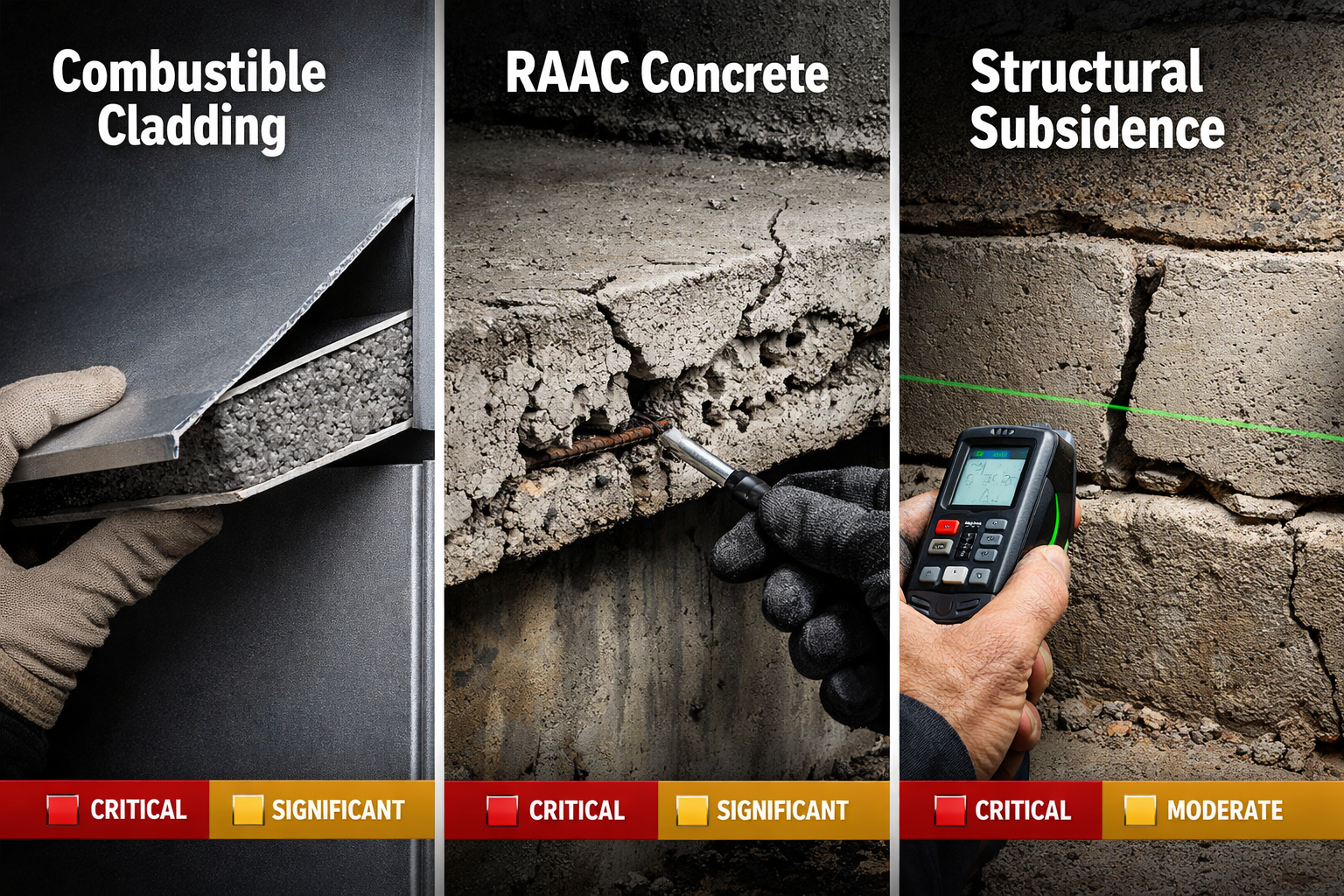
Combustible cladding remains the highest-priority defect for 2026 buyers. Buildings with aluminum composite material (ACM) cladding or other combustible external wall systems face:
- Immediate safety risks requiring evacuation protocols
- Mortgage restrictions from major lenders
- Remediation costs ranging from £50,000 to £150,000+ per unit
- Service charge increases to fund building-wide repairs
- Resale difficulties until remediation completion
Buyer Action: Before making offers on flats in buildings over 11 meters tall, verify remediation status through the NRS and request EWS1 (External Wall System) certificates. Properties without clear certification should trigger significant price reductions or walk-away decisions.
🏚️ RAAC: The Hidden Structural Time Bomb
Reinforced Autoclaved Aerated Concrete (RAAC) has emerged as a critical concern in buildings constructed between the 1950s and mid-1990s. This lightweight concrete material has a design life of approximately 30 years and shows increasing failure rates as it ages.
Identification challenges:
- RAAC often exists in roof structures and floor slabs where visual inspection is limited
- Deterioration may not be visible until structural failure is imminent
- Replacement requires extensive structural work, often costing £100,000+ for residential properties
Detection methods:
Modern Level 3 building surveys now include specific RAAC assessment protocols, particularly for properties built during the risk period. Surveyors examine construction records, inspect accessible structural elements, and may recommend invasive investigation where suspicion exists.
🏗️ Structural Defects: Subsidence, Settlement, and Foundation Issues
Traditional structural problems remain investment-critical in 2026:
| Defect Type | Typical Cost | Timeline | Mortgage Impact |
|---|---|---|---|
| Subsidence | £10,000-£50,000 | 6-18 months | High – often requires specialist insurance |
| Settlement cracks | £5,000-£20,000 | 3-12 months | Moderate – depends on severity |
| Foundation movement | £20,000-£100,000+ | 12-24 months | Severe – may prevent lending |
| Roof structural failure | £15,000-£60,000 | 4-12 months | Moderate to High |
These issues require immediate attention in purchase negotiations. A comprehensive Level 3 survey identifies these problems with practical repair cost estimates and timelines[2], providing concrete evidence for price renegotiation.
💧 Damp and Water Penetration: The Value Destroyer
While less dramatic than structural collapse risks, chronic damp problems destroy property value through:
- Progressive structural deterioration
- Health hazards (mold, respiratory issues)
- Decoration and finishing damage
- Reduced energy efficiency
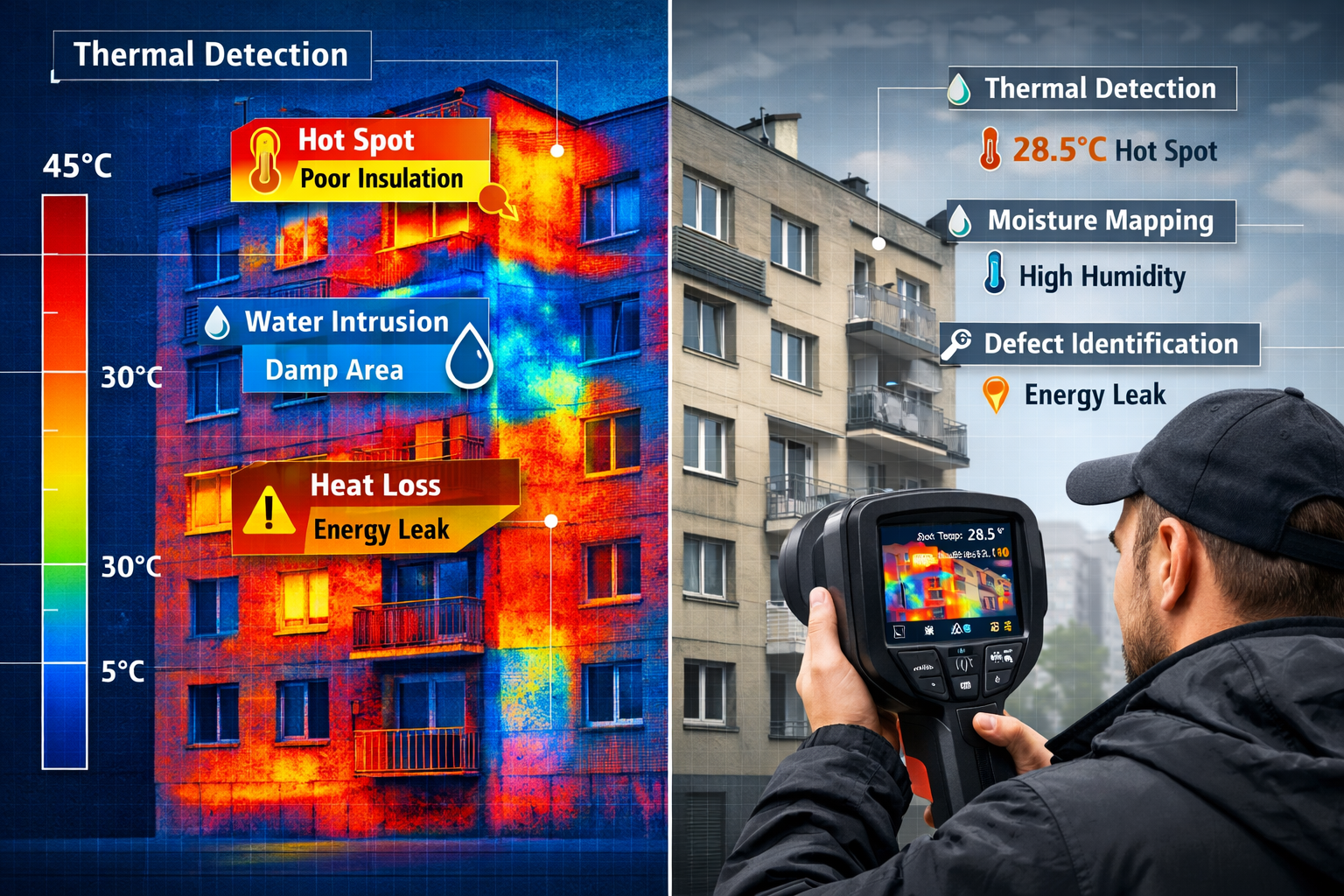
Modern surveying employs thermal imaging technology to detect moisture penetration invisible to the naked eye[4]. This advanced detection capability means buyers receive far more accurate assessments of damp extent and remediation requirements.
For properties showing damp indicators, specialized damp surveys provide detailed analysis of causes, extent, and treatment costs—essential information for informed negotiation.
The Modern Survey Approach: Technology Meets Expertise
Level 3 Surveys: The New Standard for Risk Properties
Level 3 building surveys have become the recommended approach for properties where defect identification is critical[2]. These comprehensive assessments:
- Duration: 4-8 hours depending on property complexity
- Focus: Structural issues, damp, subsidence, roofing problems
- Output: Detailed repair cost estimates and timelines
- Best for: Older properties, altered buildings, below-average condition homes
The investment in a thorough survey pays dividends in 2026's stabilized market, where negotiation strategies based on verified defects achieve measurable price reductions[3].
Advanced Detection Technologies
Modern surveying practices now routinely employ:
Laser Measurement Systems
- Eliminate measurement disputes
- Provide precise dimensional analysis
- Document structural movement with millimeter accuracy[4]
Thermal Imaging
- Reveals hidden moisture penetration
- Identifies insulation failures
- Detects structural voids and defects
- Particularly valuable for high-value properties[4]
Moisture Meters and Hygrometers
- Quantify damp severity
- Distinguish condensation from penetrating damp
- Track moisture levels through building materials
These technologies transform subjective assessments into objective, measurable data—exactly what buyers need for confident decision-making and effective negotiation.
Prioritization Framework: Building Survey Defect Prioritization in Stabilizing Markets
Not all defects carry equal weight. Buyers must prioritize based on safety, cost, and urgency:
🚨 Tier 1: Deal-Breakers (Immediate Action Required)
- Combustible cladding without remediation plan
- RAAC concrete showing deterioration
- Active structural movement (subsidence, heave)
- Major roof structural failure
- Electrical systems presenting fire risk
Buyer response: Demand significant price reduction (20-40% of remediation cost) or walk away. These defects prevent normal financing and pose genuine safety risks.
⚠️ Tier 2: Major Negotiation Points (Significant Cost Impact)
- Non-compliant fire safety measures
- Extensive damp requiring structural intervention
- Aging building systems (heating, plumbing) near end-of-life
- Roof covering requiring complete replacement
- Window/door failures affecting building envelope
Buyer response: Request price reduction of 50-75% of estimated repair costs, or require seller remediation before completion.
⚙️ Tier 3: Maintenance Issues (Manageable Costs)
- Minor damp from maintenance neglect
- Cosmetic repairs and decoration
- Garden and boundary maintenance
- Minor plumbing or electrical updates
Buyer response: Factor into offer price with 25-50% discount on repair estimates, or accept as part of normal property ownership.
Negotiation Strategies in Stabilizing Markets
The 2026 market environment empowers buyers to leverage survey findings effectively. When choosing the right survey type, consider that comprehensive reports provide stronger negotiating positions.
Evidence-Based Price Reduction Requests
Successful negotiations in stabilizing markets follow this structure:
1. Present Professional Survey Evidence
Share the complete survey report with clear highlighting of Tier 1 and Tier 2 defects. Professional documentation from RICS-qualified surveyors carries significant weight.
2. Provide Itemized Repair Costings
Obtain contractor quotes for major works. Detailed cost breakdowns demonstrate serious intent and prevent seller dismissal of concerns.
3. Reference Comparable Sales
Show how similar properties without defects achieved higher prices, quantifying the value impact of identified issues.
4. Offer Structured Solutions
Present options: price reduction, seller-funded repairs, or retention of funds in escrow pending remediation.
For guidance on handling significant defect discoveries, review strategies on what to do after a bad building survey report.
When to Walk Away
Despite market stability, some defects justify withdrawal:
- Unquantifiable remediation costs (extensive RAAC, unknown structural issues)
- Seller unwillingness to negotiate on Tier 1 defects
- Mortgage lender rejection due to defect severity
- Insurance unavailability for subsidence or structural risks
Walking away from a fundamentally flawed property protects long-term financial interests, regardless of emotional investment in the purchase.
Regional Considerations and Local Expertise
Building defect priorities vary by location and property type. Buyers in different London areas benefit from surveyors with local knowledge:
- Period properties in areas like Richmond and Wandsworth often face subsidence and structural movement issues
- Modern developments in Battersea and Hammersmith may have cladding concerns requiring verification
- Converted properties in Lewisham and Camberwell frequently present building regulation compliance questions
Local surveyors understand regional construction methods, common defect patterns, and realistic remediation costs for the area.
First-Time Buyers: Special Considerations for 2026
First-time buyers entering the stabilized 2026 market face unique challenges in defect prioritization. Limited budgets make comprehensive surveys feel expensive, yet the cost pales against potential defect remediation.
Essential guidance for first-time buyers:
- Invest in comprehensive surveys for any property over 30 years old or showing visible condition concerns
- Budget for defects by maintaining a 10-15% contingency beyond purchase price
- Understand financing limitations around properties with Tier 1 defects
- Seek professional interpretation of survey findings before making emotional decisions
The first-time buyer's guide to building surveys provides detailed information on navigating this process with confidence.
The Role of Professional Surveyors in Risk Assessment
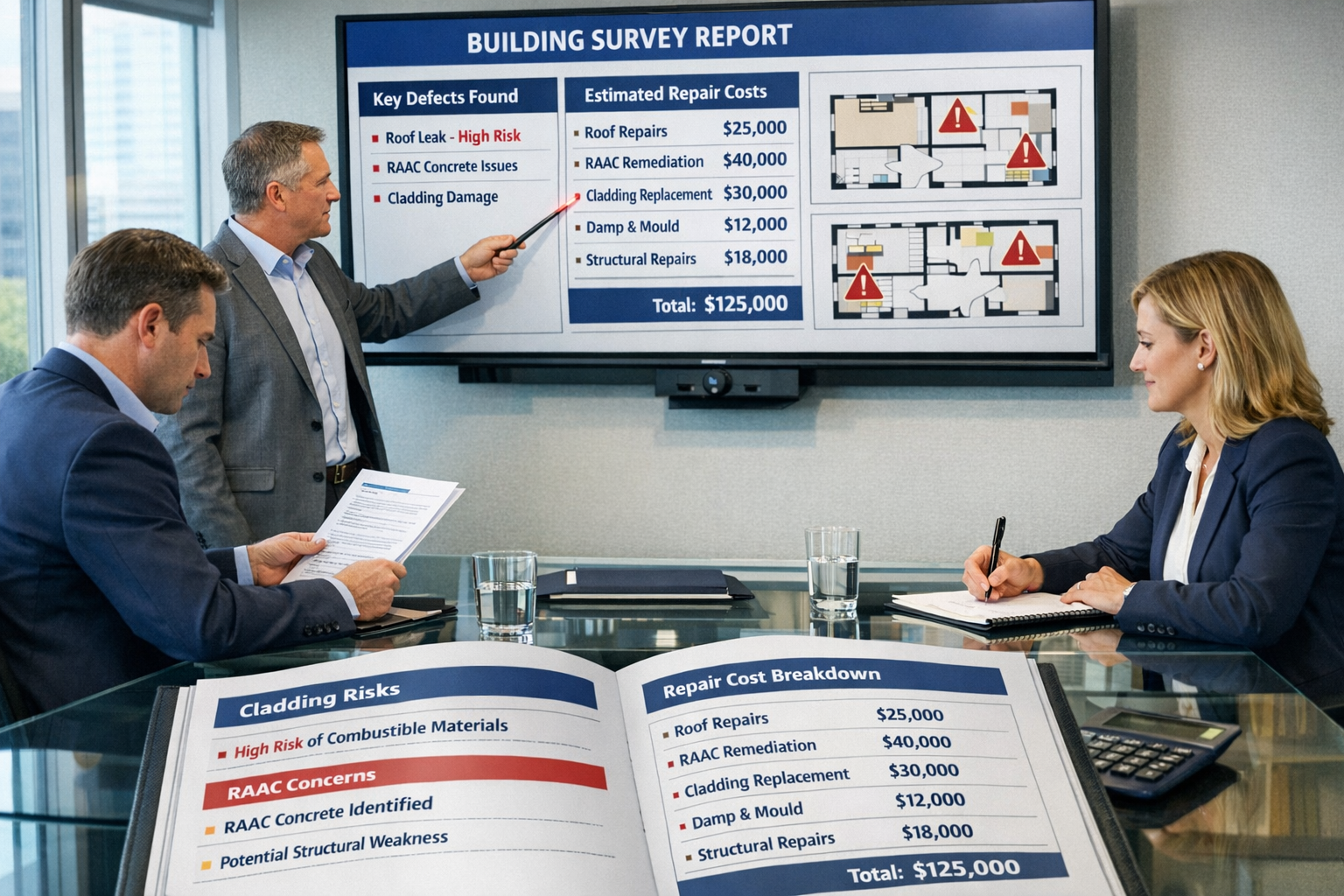
Professional surveyors provide value far beyond defect identification. In 2026's complex building landscape, they offer:
Expert Risk Interpretation
Surveyors translate technical findings into investment risk assessments. A crack may indicate minor settlement or catastrophic structural failure—professional judgment distinguishes between these scenarios.
Remediation Pathway Guidance
Experienced surveyors recommend appropriate specialists for further investigation, provide realistic cost ranges, and suggest remediation approaches that preserve property value.
Negotiation Support
Many surveyors offer post-survey consultation, helping buyers understand which defects justify price reductions and providing evidence for negotiations.
Regulatory Compliance Verification
Building regulation compliance affects future alterations, extensions, and resale value. Surveyors identify non-compliant work requiring regularization.
Understanding what surveyors do and their responsibilities helps buyers maximize the value of professional engagement.
Future-Proofing Your Purchase: Beyond Immediate Defects
Smart buyers in 2026 look beyond current defects to future risks:
Climate Resilience
Properties face increasing exposure to:
- Flooding from extreme weather events
- Overheating requiring cooling system installation
- Storm damage to aging roof structures
Surveys should assess climate vulnerability and adaptation costs.
Energy Efficiency Requirements
Evolving EPC (Energy Performance Certificate) regulations may require significant investment in:
- Insulation upgrades
- Heating system replacement
- Window and door improvements
Properties with poor energy efficiency face both immediate running costs and future compliance expenses.
Building Safety Act Compliance
The Building Safety Act continues to evolve, potentially requiring:
- Additional fire safety measures
- Building inspection regimes
- Service charge increases for compliance
Buyers should verify current compliance status and anticipate future requirements.
Conclusion
Building Survey Defect Prioritization in Stabilizing Markets: Cladding, RAAC, and Structural Risks for 2026 Buyers demands a systematic, evidence-based approach. As market confidence returns and competition for quality properties intensifies, the ability to distinguish between cosmetic concerns and genuine investment risks separates successful buyers from those facing costly surprises.
Key actions for 2026 buyers:
✅ Commission comprehensive Level 3 surveys for any property with age, alteration history, or visible condition concerns
✅ Verify cladding and RAAC status through government systems and professional assessment before making offers on at-risk properties
✅ Leverage modern surveying technology including thermal imaging and laser measurement for accurate defect detection
✅ Prioritize defects systematically using the three-tier framework: deal-breakers, major negotiation points, and manageable maintenance
✅ Negotiate confidently using professional survey evidence and itemized repair costings to achieve fair price adjustments
✅ Engage local expertise through experienced surveyors who understand regional construction methods and common defect patterns
The stabilized 2026 market rewards informed decision-making. Properties with significant defects will sell—but at prices reflecting genuine remediation costs. Buyers who invest in thorough professional surveys and apply clear prioritization frameworks protect their financial interests while securing properties with manageable risk profiles.
Don't let market enthusiasm override due diligence. The cost of a comprehensive survey represents a fraction of potential defect remediation expenses, and in 2026's buyer-favorable environment, survey findings provide powerful negotiating leverage. Make your next property purchase with confidence, backed by professional expertise and clear-eyed risk assessment.
References
[1] Building Safety Remediation Technical Note January 2026 – https://www.gov.uk/government/publications/building-safety-remediation-monthly-data-release-january-2026/building-safety-remediation-technical-note-january-2026
[2] Level 3 Survey – https://surveymatch.co.uk/level-3-survey/
[3] Building Surveys In A Cooling Then Recovering Market How 2026 Price Stability Changes What Buyers Should Prioritise – https://nottinghillsurveyors.com/blog/building-surveys-in-a-cooling-then-recovering-market-how-2026-price-stability-changes-what-buyers-should-prioritise
[4] Post Budget 2026 Valuation Challenges Surveyor Strategies For High Value Properties Over 2 Million – https://nottinghillsurveyors.com/blog/post-budget-2026-valuation-challenges-surveyor-strategies-for-high-value-properties-over-2-million