

Roughly one in five UK mortgage applications in 2026 encounters a down-valuation, where the lender's surveyor values a property below the agreed purchase price, forcing buyers to renegotiate or find extra cash. Most of those buyers had already checked an online automated estimate and assumed it confirmed the deal. Understanding mortgage lender survey requirements: what valuers check that online estimates miss is the single most important piece of knowledge a buyer can have before exchanging contracts.
This guide explains what lenders actually demand from a valuation, how RICS Red Book standards govern that work, and which property-specific risks cause surveyors to arrive at figures that no algorithm can replicate.
Key Takeaways
- Mortgage lenders require a physical RICS Red Book valuation, not an automated estimate, before releasing funds.
- Valuers assess structural condition, fire safety, lease terms, flood risk, and local comparable evidence, none of which an online tool can inspect.
- Basel 3.1 rules, effective January 2026, require lenders to use a "prudently conservative" mortgage lending value, pushing valuations below optimistic market peaks.
- A down-valuation does not have to end a purchase; understanding its causes helps buyers challenge or adapt.
- Commissioning an independent survey before making an offer reduces the risk of late-stage surprises.
Why Online Estimates Cannot Satisfy Mortgage Lender Survey Requirements
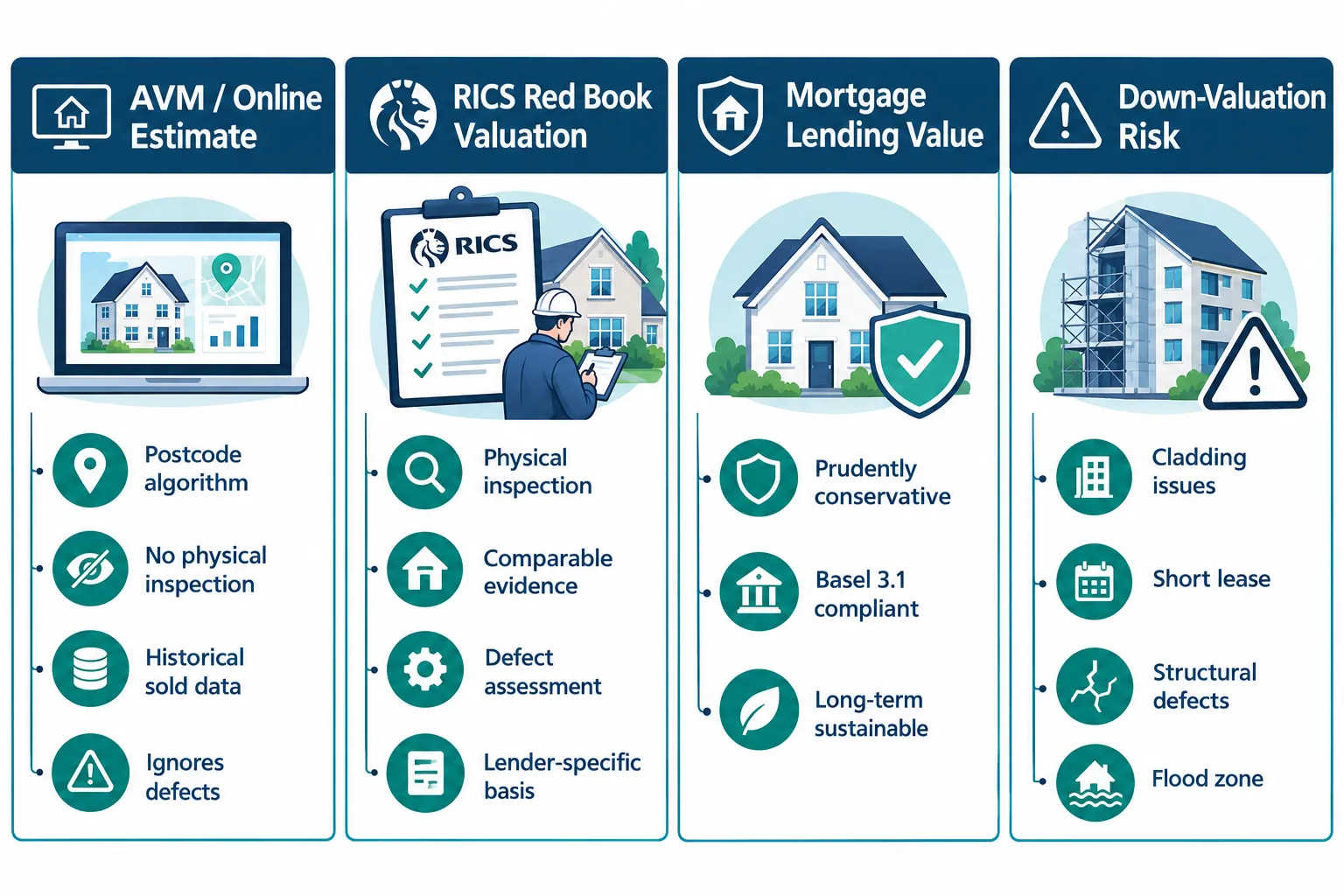
Automated valuation models (AVMs), the engines behind tools such as Zoopla estimates and instant online valuations, rely on historical sold-price data, postcode-level statistics, and property size records held at the Land Registry. They are fast, free, and directionally useful for a first sense of value. What they cannot do is walk through a front door.
Mortgage lenders have a legal and regulatory obligation to lend responsibly. That obligation requires them to instruct a qualified valuer to carry out a physical inspection and produce a report that meets the RICS Red Book Global Standards [7]. These standards, maintained by the Royal Institution of Chartered Surveyors, set out mandatory requirements for how valuations are structured, evidenced, and reported [8]. An AVM output, however sophisticated, does not satisfy those requirements.
"The Red Book sets out the framework within which valuers must operate, from inspection and investigation through to the selection and application of valuation models." [2]
The gap between an AVM figure and a Red Book mortgage valuation can be substantial. AVMs smooth out individual defects across thousands of comparable transactions. A surveyor standing in a kitchen notices the damp patch behind the units, the sagging ceiling above the bathroom, or the cladding material on the external elevation. Each of those observations can reduce the valuation figure, or, in serious cases, lead the lender to decline to lend at all.
Many buyers are also surprised to learn that the lender's valuation is not the same as a buyer's survey. It is a short report prepared for the lender's security purposes. Buyers wanting a detailed condition assessment should commission a separate RICS Level 2 HomeBuyer Survey or a full building survey in their own name.
What the RICS Red Book Actually Requires Valuers to Do
The RICS Red Book is not a single document but a suite of standards updated on a rolling basis. The 2025 global edition, supplemented by a UK national supplement also updated in 2025, governs the vast majority of residential mortgage valuations carried out in England, Scotland, and Wales [1][3].
The Inspection Requirement
The Red Book requires valuers to carry out an inspection sufficient to support the valuation opinion. For a standard residential mortgage this typically means:
- A room-by-room internal inspection
- A full external walk-around
- Observation of roof condition, drainage, boundaries, and outbuildings
- Assessment of any visible defects that could affect value or marketability
The UK national supplement reinforces the principle of independence: the valuer must not be influenced by the lender's desired loan-to-value ratio, the agreed purchase price, or pressure from any party [3]. This independence is precisely why lenders trust the output, and why buyers sometimes find the figure uncomfortable.
Mortgage Lending Value vs Market Value
A critical concept that online estimates never apply is the distinction between market value and mortgage lending value (MLV). Market value reflects what a willing buyer would pay a willing seller on the open market today. MLV, by contrast, is a long-term sustainable value that excludes speculative elements and temporary market peaks.
Under Basel 3.1 capital rules, which became effective on 1 January 2026, lenders using the advanced internal ratings-based approach are required to base their capital calculations on a prudently conservative MLV rather than a spot market value. This means that in a rising market, the lender's valuation figure may be deliberately set below the current market price, not because the property is overpriced, but because the regulatory framework demands a conservative long-term view.
The Help to Buy, Wales valuation guide (July 2024) illustrates a similar principle in a scheme context: valuers must use an interior inspection and select genuinely comparable sales evidence, not simply accept the developer's or seller's stated price [10].
The Specific Defects and Risks That Cause Down-Valuations
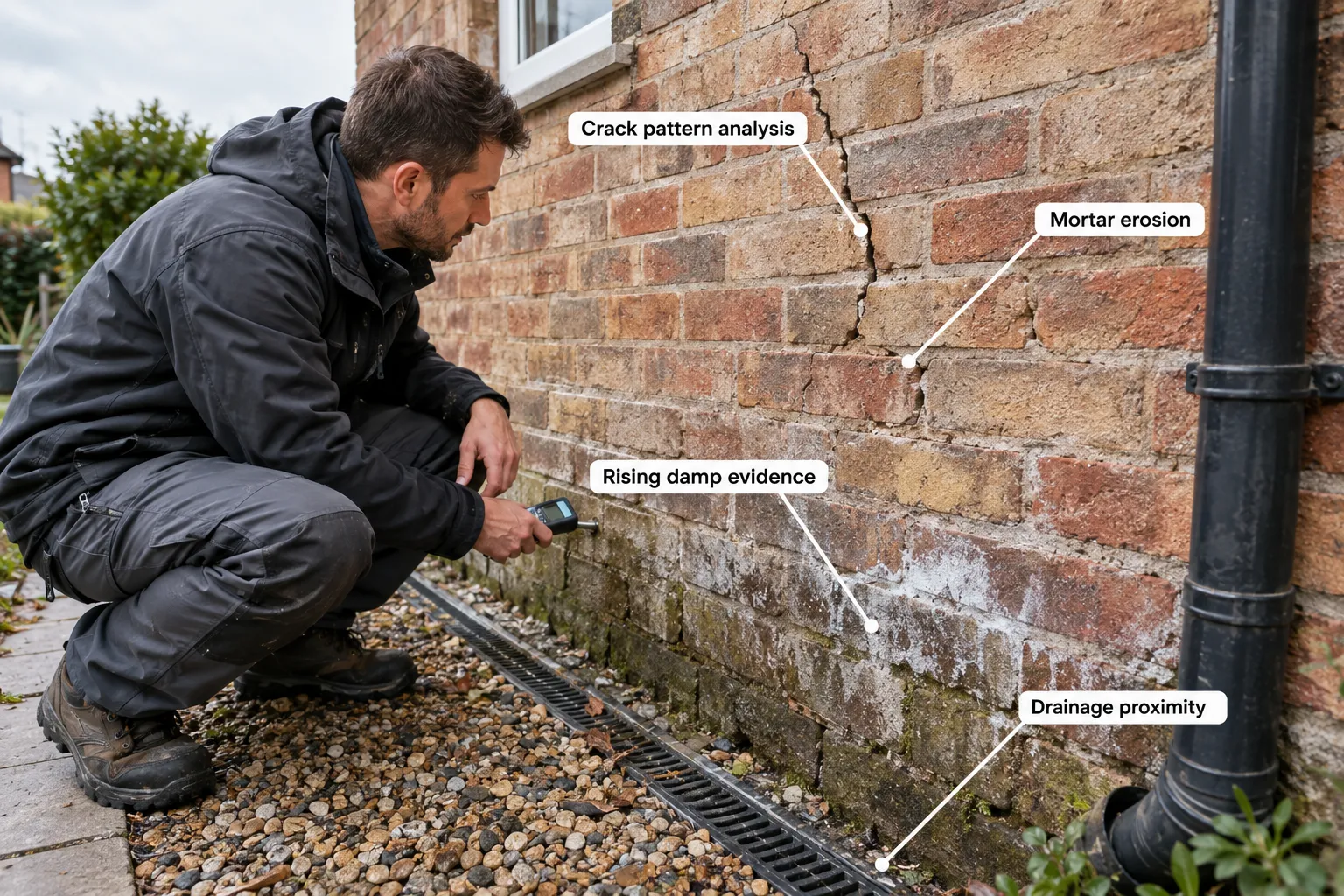
This is where mortgage lender survey requirements diverge most sharply from what online estimates miss. A surveyor's job is to identify and quantify risks that affect the security of the lender's loan. The following categories account for the majority of down-valuations and mortgage refusals in 2026.
Structural Defects
Cracks in walls are one of the most common triggers for a reduced valuation or a requirement for further specialist investigation. Not all cracks are equal, a surveyor distinguishes between cosmetic shrinkage cracks and those indicating subsidence, heave, or settlement. For a detailed breakdown of how professionals assess this risk, see Cracks in Walls: When to Worry (a Surveyor Explains).
Where structural concerns are identified, the lender will typically require a structural engineer's report before proceeding, and the valuation may be held "subject to" that report. No AVM flags this requirement.
Damp and Timber Defects
Rising damp, penetrating damp, and timber decay (including dry rot and wet rot) are invisible to an online algorithm but immediately apparent to a trained surveyor using a damp meter. These defects can significantly reduce a property's value and, in severe cases, make it unmortgageable until remediated. Understanding the costs involved is important, see Damp and Timber Report Pricing and What to Expect for a practical overview.
Cladding and Fire Safety
Since the Grenfell Tower fire, cladding and fire-safety risk have become a major focus of residential valuations, particularly for flats. Surveyors must check:
- External wall system materials and any EWS1 form status
- Height of the building (RICS updated its residential blocks standard in 2026 to reflect current fire-safety thresholds)
- Whether remediation works are planned, funded, or disputed
An AVM has no access to EWS1 records or building safety fund applications. A surveyor does, and a property with unresolved cladding issues may receive a zero or nominal valuation from the lender, regardless of what online tools suggest.
Lease Length and Leasehold Terms
For leasehold properties, lease length is a hard numerical factor that directly affects value and mortgageability. Most lenders will not lend on a lease with fewer than 70-85 years remaining at the end of the mortgage term. RICS published updated specialised guidance for leasehold mortgage valuations in England and Wales in 2026, reflecting the ongoing complexity of service charges, ground rent structures, and the Leasehold Reform Act.
A lease with an escalating ground rent clause, a short remaining term, or onerous covenants can reduce value by tens of thousands of pounds, none of which an AVM captures.
Location-Specific Risks
| Risk Factor | How a Valuer Assesses It | What an AVM Does |
|---|---|---|
| Flood risk | Checks Environment Agency flood maps and drainage | Uses postcode average |
| Subsidence history | Reviews local geology and insurance history | Ignores ground conditions |
| Contaminated land | Checks proximity to former industrial sites | Not assessed |
| Noise and nuisance | Physically observes flight paths, roads, rail | Not assessed |
| Neighbourhood change | Local market knowledge and recent comparables | Uses historic sold data |
Comparable Evidence
The Red Book requires valuers to support their opinion of value with comparable sales evidence, recent transactions of genuinely similar properties in the same area [5]. This is more nuanced than it sounds. A valuer must adjust comparables for differences in size, condition, floor level, aspect, and tenure. An AVM applies statistical weighting to large datasets; a valuer applies professional judgment to a handful of the most relevant transactions.
In thin markets, rural locations, unusual property types, or areas with few recent sales, the valuer's judgment is the only reliable source of value. AVMs in these markets are notoriously unreliable.
How Buyers Can Prepare for Mortgage Lender Survey Requirements
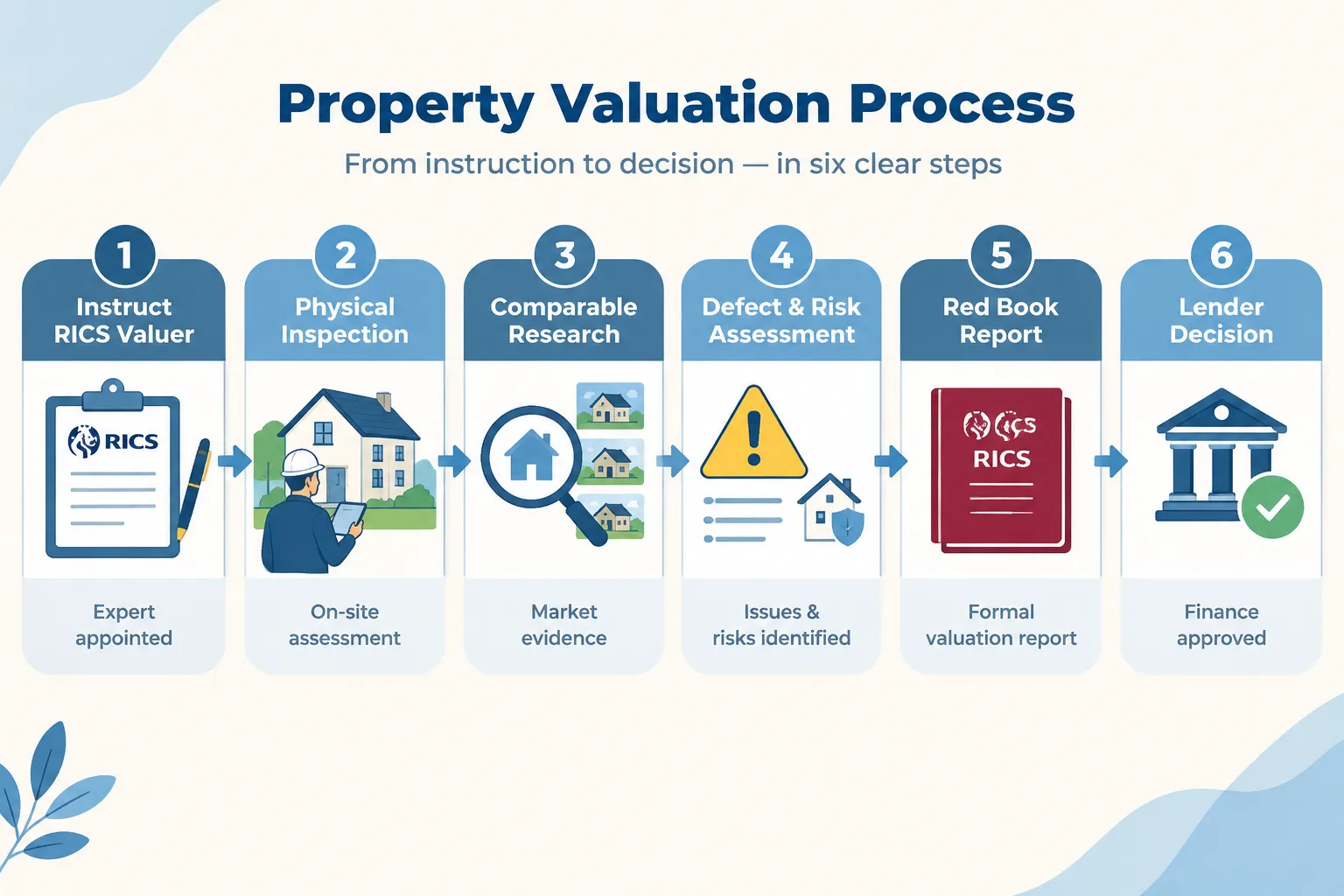
Understanding what surveyors check is only useful if buyers act on that knowledge before problems arise. The following steps reduce the risk of a late-stage down-valuation derailing a purchase.
1. Commission an independent survey before making an offer. A RICS Level 2 HomeBuyer Survey or a full building survey gives buyers an independent view of condition before they are financially committed. It also provides negotiating leverage if defects are found. Reviewing a house survey sample in advance helps buyers understand what to expect from the report format.
2. Check the lease early. For leasehold properties, obtain the lease from the seller's solicitor at the start of the transaction and check the remaining term, ground rent, and service charge history. Do not wait for the lender's valuer to flag a short lease.
3. Research cladding status. For flats, ask the managing agent or freeholder for the EWS1 form and any building safety correspondence before instructing a solicitor. A property without a valid EWS1 in a building that requires one is effectively unmortgageable until one is obtained.
4. Understand what happens after a bad report. A down-valuation or a survey flagging serious defects is not automatically the end of a purchase. Buyers have options: renegotiate the price, commission a specialist report to challenge the findings, or walk away. The guide on what to do after a bad survey report sets out practical next steps.
5. Use the right survey level for the property. Older properties, unusual construction types, and extended or altered homes warrant a more detailed inspection than a standard valuation provides. Comparing survey levels before instructing helps buyers choose the right product.
Reconsideration of Value
In the United States, revised reconsideration-of-value (ROV) policies for Fannie Mae and Freddie Mac, effective from 3 September 2025, formalised the process by which borrowers can challenge an appraisal they believe to be inaccurate [6]. The UK does not have an equivalent statutory ROV process, but buyers can ask the lender to review the valuation if they can provide evidence of comparable sales that the valuer did not consider. This is most effective when the buyer has their own independent survey to support the challenge.
The Ongoing Evolution of Valuation Standards
The RICS valuation standards programme is not static. RICS runs continuous workstreams reviewing risks, including climate risk, building safety, and market transparency, and updates guidance accordingly [9]. The 2025 Red Book global update and the UK national supplement both reflect lessons from post-pandemic market volatility, the building safety crisis, and the Basel 3.1 implementation [1][2][3].
For buyers, this means that the standards governing their lender's valuation are more rigorous in 2026 than they were five years ago. A property that sailed through a mortgage valuation in 2019 may face additional scrutiny today if it is in a flood zone, has unresolved fire-safety issues, or sits in a market where comparable evidence is thin.
Lenders, too, are subject to strengthened appraisal review requirements. The U.S. multifamily lending sector saw reinforced lender appraisal review standards take effect on 30 June 2025 [6], a trend that mirrors the direction of travel in UK regulated mortgage lending.
Conclusion
The gap between what an online estimate shows and what a mortgage lender's surveyor concludes is not a flaw in the system, it is the system working as intended. Mortgage lender survey requirements exist to protect lenders from overexposed security and, ultimately, to protect borrowers from paying more than a property is sustainably worth.
Buyers who treat an AVM figure as a reliable guide to what a lender will lend are taking a significant risk. The physical inspection, the Red Book methodology, the Basel 3.1 prudence requirement, and the valuer's assessment of defects, lease terms, and fire safety all combine to produce a figure that no algorithm can replicate.
Actionable next steps for buyers in 2026:
- Instruct an independent RICS surveyor before exchange, not after.
- Check lease length, EWS1 status, and flood risk before making an offer.
- Review comparable sold prices in the area to sense-check the agreed purchase price.
- If a down-valuation occurs, seek professional advice on whether to challenge it or renegotiate.
- Choose the right survey level for the age and type of property being purchased.
Taking these steps transforms mortgage lender survey requirements from an unwelcome surprise into a manageable part of the buying process.
References
[1] Rics Updates Global Guidance On Bank Lending Valuations With Two Key Publications – rics.org
[2] Global Red Book Updates – ww3.rics.org
[3] Red Book Uk Supplement Updated Guidance – ww3.rics.org
[4] Residential Valuations – rics.org
[5] Valuation And Sale Price – rics.org
[6] mfguide.fanniemae – mfguide.fanniemae.com
[7] Red Book Global – rics.org
[8] Red Book – rics.org
[9] Rics Valuation Standards Programme And How To Contribute – rics.org
[10] Help To Buy Valuation Guide – gov.wales