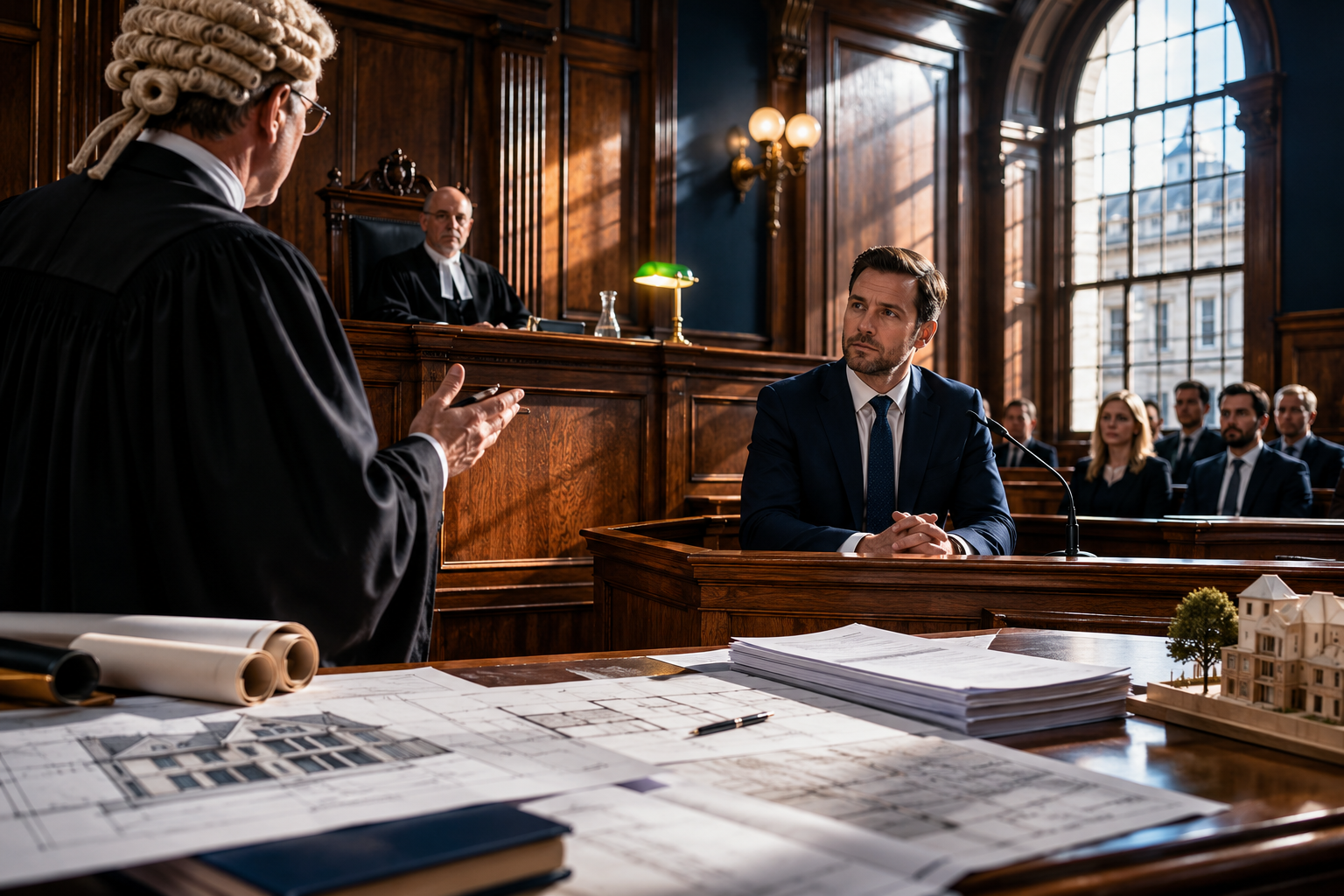
Fewer than one in five expert witnesses feel fully prepared for the pressure of cross-examination the first time they face it in a UK courtroom. For building surveyors and valuers, that unpreparedness can be catastrophic — not just for the case, but for their professional reputation. Expert witness surveyor cross-examination in UK property cases is a high-stakes discipline where common traps can unravel years of careful fieldwork in minutes. Understanding those traps, and preparing systematically to avoid them, is no longer optional for any surveyor who steps into the witness box.
Courts in England and Wales are scrutinising surveyor evidence with increasing rigour. Judges and barristers now routinely probe methodology, challenge assumptions, and test whether an expert has genuinely maintained the independence required under Civil Procedure Rules (CPR) Part 35 [6]. This article maps the most frequent pitfalls and provides actionable preparation strategies for surveyors who want to give robust, credible oral evidence.
Key Takeaways
- CPR Part 35 places a duty of independence on expert witnesses that overrides any obligation to the instructing party — courts will test this under cross-examination.
- The most common traps include inconsistent methodology, overconfidence in assumptions, inadequate inspection records, and failure to address the opposing expert's points.
- Preparation must include a line-by-line review of your own report, mock cross-examination sessions, and clear documentation of every site visit and data source.
- RICS has issued formal guidance and alerts about the quality of expert witness evidence, particularly in disrepair and dilapidations claims.
- Surveyors who invest in formal expert witness training consistently perform better under courtroom pressure and face fewer credibility challenges.
The Legal Framework Every Surveyor Expert Witness Must Know
Before examining specific cross-examination traps, surveyors must understand the legal environment they operate in. CPR Part 35 is the governing framework for expert evidence in civil proceedings in England and Wales. It establishes clearly that the expert's primary duty is to the court, not to the party who instructs or pays them [6]. This principle sounds straightforward, but it is precisely where many surveyors first stumble.
A barrister conducting cross-examination will often open by establishing the expert's relationship with the instructing solicitor or client. Questions about how many times the expert has testified for the same firm, how fees are structured, and whether the expert reviewed the client's position before forming an opinion are all designed to test independence. Any answer that suggests the surveyor shaped their conclusions to support the instructing party's case will seriously damage credibility.
Key CPR Part 35 obligations include:
- Providing an opinion that is genuinely independent and uninfluenced by the litigation
- Stating clearly the substance of all material instructions received
- Disclosing any range of opinion on a matter and explaining why the expert has adopted a particular position
- Notifying the court if the expert changes their opinion after the report is filed
Surveyors who are unfamiliar with these requirements before they write their report — not just before they enter the witness box — are already at a disadvantage. Understanding what a surveyor does and their professional responsibilities is the foundation upon which expert witness duties are built.
The RICS has responded to growing concerns about the quality of expert evidence by emphasising formal training for surveyors acting in this capacity [2]. Courts increasingly expect professionals providing expert testimony to demonstrate not only technical competence but also procedural literacy.
Common Traps in Expert Witness Surveyor Cross-Examination
Trap 1: Inconsistent Methodology
The single most exploited weakness in surveyor expert evidence is methodological inconsistency. A barrister will compare the approach taken in the current report against the expert's previous reports, published articles, or RICS guidance documents. If the methodology differs without clear justification, the expert's credibility collapses.
"An expert who applies one standard of measurement in one case and a different standard in another, without explanation, has handed opposing counsel their most powerful weapon."
This is particularly relevant in valuation disputes, where the choice of comparable transactions, yield rates, or depreciation assumptions can be challenged if they deviate from standard RICS Red Book methodology. Surveyors providing valuations in litigation should review when a Red Book valuation is required to ensure their approach aligns with professional standards courts will recognise.
How to avoid it: Document every methodological decision in writing before finalising the report. If a departure from standard practice is necessary, explain it explicitly within the report body — do not leave it to be explained under pressure in the witness box.
Trap 2: Overconfidence in Assumptions
Surveyors are trained to make professional judgements, and that confidence is an asset in practice. In the witness box, however, overconfidence becomes a liability. Cross-examination frequently targets the assumptions underpinning an expert's conclusions — particularly where those assumptions cannot be independently verified.
Common examples in UK property cases include:
| Assumption Type | Typical Challenge |
|---|---|
| Extent of damp penetration | Was invasive testing conducted, or was the assessment visual only? |
| Structural defect causation | What evidence rules out alternative causes? |
| Market value at a specific date | Which comparables were used and why were others excluded? |
| Cost of remedial works | Were contractor quotes obtained, or were rates estimated? |
| Boundary position | What historical documents or measurements support the line drawn? |
RICS has raised concerns about inaccurate assessments in disrepair claims specifically, noting instances where expert reports overstated defects or relied on insufficient inspection evidence [1]. These are exactly the kinds of weaknesses that opposing counsel will identify and exploit.
How to avoid it: Distinguish clearly in the report between facts observed, inferences drawn from those facts, and assumptions made where direct evidence is unavailable. Never present an assumption as a certainty.
Trap 3: Inadequate Inspection Records
A surveyor's report is only as strong as the inspection that underpins it. Cross-examination will probe the thoroughness of site visits — how long was spent, which areas were accessed, what equipment was used, and whether conditions at the time of inspection were noted. If contemporaneous records are thin or absent, the expert is exposed.
This is a particular issue in specific defect surveys and damp surveys, where the scope and methodology of the inspection directly determines the reliability of findings. A barrister who can demonstrate that the expert spent forty-five minutes on a complex multi-storey property will use that fact to suggest the assessment was superficial.
How to avoid it: Maintain detailed contemporaneous notes, timestamped photographs, and equipment calibration records for every inspection. These should be retained and disclosed if required. The report should reference the inspection methodology explicitly.
Trap 4: Failure to Engage With the Opposing Expert's Report
CPR Part 35 requires experts to address material points raised by the opposing expert, particularly following the joint statement process. Surveyors who ignore or inadequately address the opposing expert's conclusions leave themselves open to the suggestion that they cannot answer the points — which a barrister will present to the court as tacit concession.
Joint statements are increasingly used by courts as a tool to narrow the issues in dispute. An expert who enters the witness box having agreed more points than their instructing solicitor anticipated, or who has failed to record genuine disagreements clearly, will face difficult questions from both sides.
How to avoid it: Approach the joint statement process as a professional exercise in identifying genuine areas of agreement and disagreement — not as a negotiation on behalf of the client. Document the reasoning behind every position taken.
Trap 5: Advocacy Creep
Perhaps the most insidious trap is advocacy creep — the gradual shift from independent expert to partisan advocate. It often happens unconsciously. The expert becomes invested in the outcome, adopts the language of the instructing solicitor's case theory, and selects evidence that supports rather than tests their conclusions.
Courts are alert to this pattern. Judges will note when an expert's language mirrors the pleadings, when inconvenient evidence is minimised rather than addressed, and when the expert's demeanour in the witness box suggests loyalty to the client rather than the court [3].
The RICS has flagged this issue directly, noting concerns about potential fraud and deliberate misrepresentation in some disrepair claims — but advocacy creep is a far more common and subtle problem that affects well-intentioned experts [1].
How to avoid it: Before finalising any report, ask: "Would I reach the same conclusion if I had been instructed by the other side?" If the answer is no, the report needs revision.
How to Prepare for Expert Witness Surveyor Cross-Examination in UK Property Cases
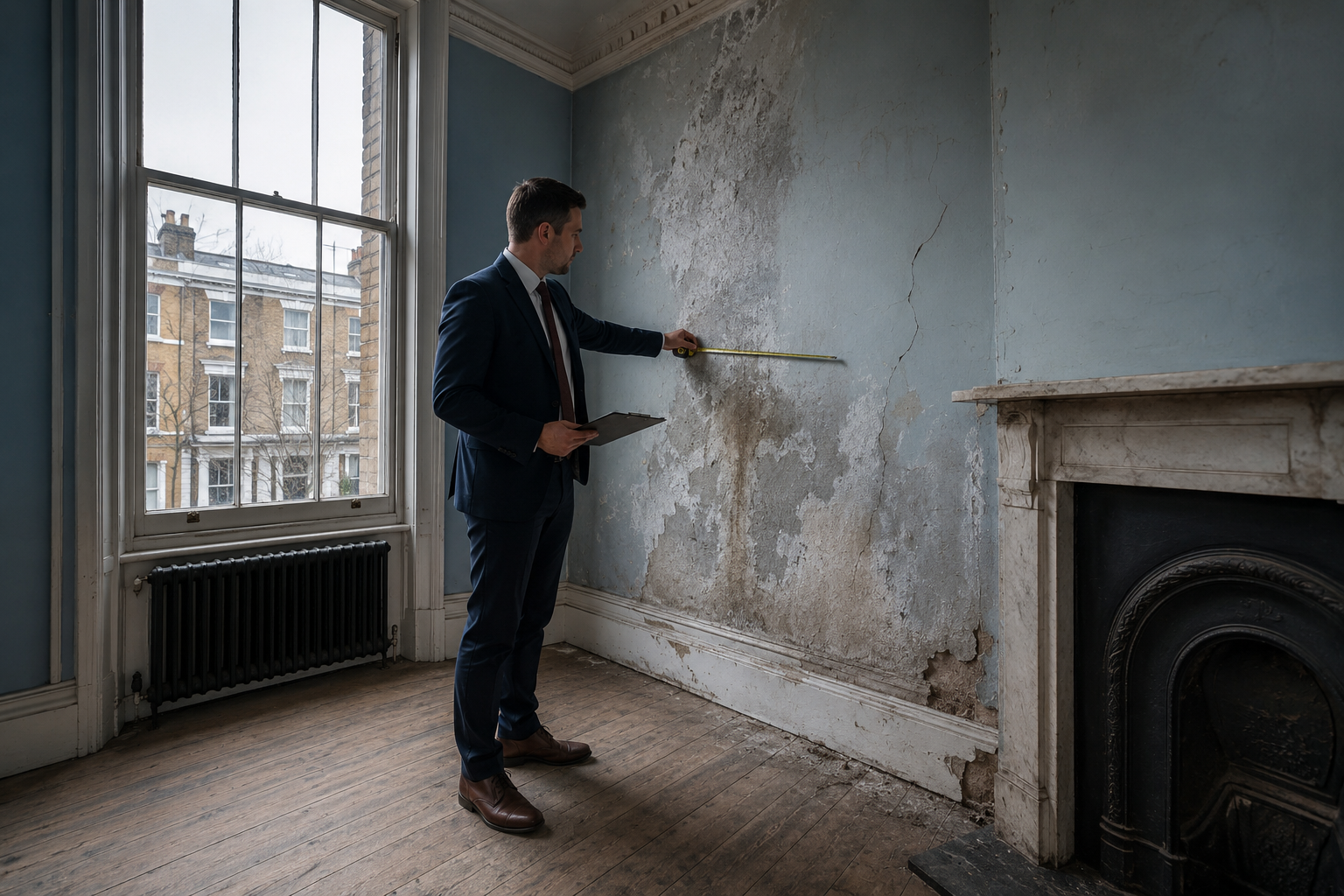
Preparation for cross-examination must begin long before the hearing date. The following framework reflects best practice drawn from formal expert witness training programmes and procedural guidance [4] [7].
Step 1: Conduct a Rigorous Self-Review of the Report
Read the report as if opposing counsel wrote it. Identify every statement that could be challenged, every assumption that is not evidenced, and every conclusion that goes further than the underlying data supports. Make notes on how each point would be defended — and whether it actually can be.
Pay particular attention to:
- Numerical data — are figures accurate and sourced?
- Photographs — do they support the text or could they be interpreted differently?
- Dates — are inspection dates, market dates, and report dates consistent?
- Qualifications stated — are credentials accurately described?
Step 2: Anticipate the Lines of Attack
Cross-examination in UK property cases follows recognisable patterns [3] [8]. Prepare specifically for:
- Challenges to professional qualifications or relevant experience
- Questions about the number of instructions received from the same firm
- Requests to explain departures from RICS guidance
- Challenges to the comparables or data sources used in valuations
- Questions about what was not inspected and why
For boundary disputes and property disputes more broadly, expect detailed questioning about historical title documents, OS mapping, and the basis for any measurements taken.
Step 3: Engage in Mock Cross-Examination
This is the single most effective preparation tool available, and it remains underused [4]. A mock cross-examination conducted by an experienced solicitor or barrister — ideally someone unfamiliar with the case — will surface weaknesses that self-review misses. It also builds the composure and pacing skills that are essential in the witness box.
Surveyors who have undergone formal expert witness training report significantly greater confidence in managing hostile questioning, maintaining their position under pressure, and recognising when it is appropriate to concede a point without conceding the overall conclusion [2].
Step 4: Master the Rules of Giving Oral Evidence
Technical expertise is necessary but not sufficient. Surveyors must also understand how to communicate effectively under cross-examination:
- Listen to the full question before answering — do not anticipate where it is going
- Answer only what is asked — volunteering additional information often creates new lines of attack
- Pause before answering — this is not a weakness; it signals careful thought
- Acknowledge uncertainty honestly — "I cannot say with certainty, but my professional judgement is…" is far stronger than false precision
- Do not argue with counsel — address the judge, not the barrister
Step 5: Understand the Joint Statement Process Thoroughly
The joint statement between opposing experts is a critical document. Courts rely on it to understand what is genuinely in dispute. Surveyors should approach joint meetings prepared to discuss technical issues substantively, not to protect their report from modification.
Where genuine disagreement exists, the reasons must be recorded clearly and without partisan language. Where agreement is reached, it should be recorded honestly — even if it narrows the instructing party's case.
Dilapidations and Disrepair: Heightened Scrutiny in 2026
Dilapidations disputes and housing disrepair claims have attracted particular judicial and regulatory attention. Courts have become more sceptical of expert evidence in these areas following a series of cases where reports were found to be exaggerated or methodologically flawed [1] [6].
For surveyors acting as expert witnesses in dilapidations cases, the Ashfords toolkit guidance identifies specific requirements: a thorough understanding of the relevant lease terms, a clear schedule of dilapidations that distinguishes between items of repair, decoration, and reinstatement, and a rigorous costing methodology that can withstand scrutiny [6].
Understanding what a dilapidations survey involves is the starting point, but expert witnesses in this area must go further — they must be able to justify every line item in the schedule under detailed cross-examination.
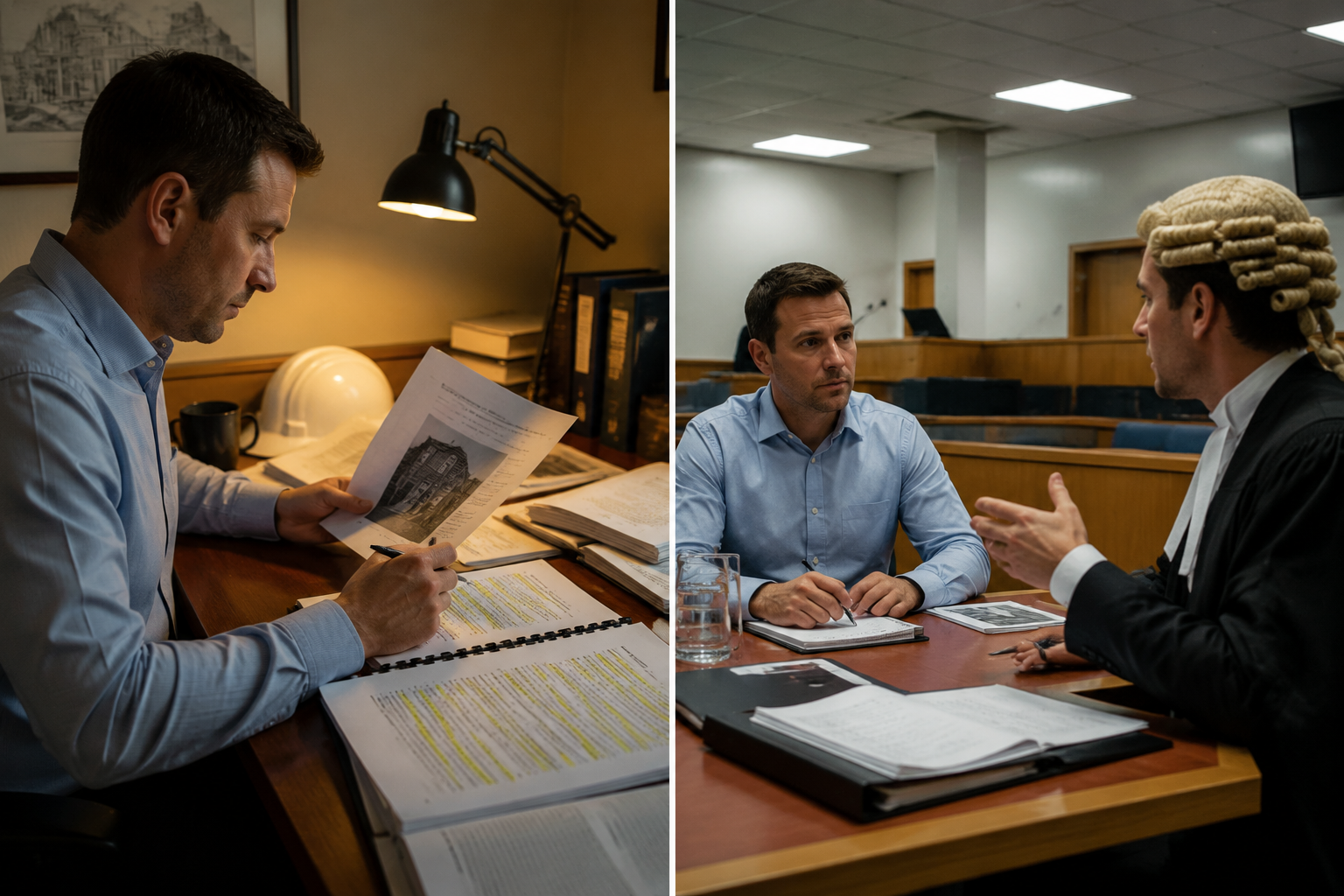
Similarly, in housing disrepair claims, surveyors must be prepared to explain the basis for any assessment of damp, structural movement, or other defects, including the specific tests conducted and the limitations of those tests. The RICS alert on this issue makes clear that courts are increasingly aware of the potential for inflated or inaccurate reports [1].
Boundary disputes present their own cross-examination challenges. Surveyors must demonstrate a thorough understanding of the relevant title documents, historical mapping, and measurement methodology. The average cost and complexity of boundary disputes reflects how contested these cases can become — and how closely the expert evidence will be tested.
The Role of RICS Accreditation and Continuous Professional Development
Courts and opposing counsel will scrutinise an expert's qualifications and professional standing. RICS membership and accreditation provide a recognised framework of professional standards that courts understand and respect. Surveyors should ensure their CPD record reflects relevant training in expert witness practice, not just technical surveying skills [2].
The reasons to choose RICS surveyors are well established in professional practice — but in the expert witness context, RICS membership also signals to the court that the expert is bound by a professional code of conduct that reinforces the duty of independence required under CPR Part 35.
Formal expert witness training courses — including those accredited by the Academy of Experts or the Expert Witness Institute — provide structured preparation that goes beyond technical knowledge. They cover report writing, the joint statement process, courtroom procedure, and the psychological demands of cross-examination. Surveyors who have completed such training are demonstrably better equipped to withstand the pressures of the witness box [2] [4].
Conclusion
Expert witness surveyor cross-examination in UK property cases is a discipline that demands both technical excellence and procedural rigour. The most common traps — methodological inconsistency, overconfident assumptions, inadequate inspection records, failure to engage with the opposing expert, and advocacy creep — are all avoidable with disciplined preparation.
Actionable next steps for surveyors preparing for the witness box:
- Review CPR Part 35 and the relevant RICS guidance on expert witness duties before accepting any instruction.
- Conduct a rigorous self-review of the report, treating every statement as a potential cross-examination question.
- Invest in formal expert witness training — ideally before the first instruction, not after the first difficult hearing.
- Engage in at least one full mock cross-examination session with an experienced legal professional.
- Approach the joint statement process as a professional duty, not a tactical exercise.
- Maintain meticulous contemporaneous records of every inspection, including photographs, equipment used, and time spent on site.
The surveyor who enters the witness box with thorough preparation, genuine independence, and a clear understanding of their duty to the court will always be in a stronger position than one who relies on technical expertise alone. In 2026, with judicial scrutiny of expert evidence at an all-time high, that preparation is the difference between a credible expert and a discredited one.
References
[1] Surveyors Concerned About Expert Witness Evidence And Potential Fraud In Disrepair Claims – https://management.insidehousing.co.uk/home/surveyors-concerned-about-expert-witness-evidence-and-potential-fraud-in-disrepair-claims-91527?utm_source=openai
[2] Surveyors As Expert Witnesses – https://www.rics.org/news-insights/surveyors-as-expert-witnesses?utm_source=openai
[3] Ultimate Guide Cross Examining Expert Witnesses – https://www.expertinstitute.com/resources/insights/ultimate-guide-cross-examining-expert-witnesses/?utm_source=openai
[4] Expert Witness Prepare Cross Examination – https://www.testifyingtraining.com/expert-witness-prepare-cross-examination/?utm_source=openai
[5] Expert Witness Reports For Property Disputes A Chartered Surveyors Guide – https://www.oldenproperty.com/blogs/expert-witness-reports-for-property-disputes-a-chartered-surveyors-guide?utm_source=openai
[6] The Essentials Toolkit For Dilapidations Expert Witnesses – https://www.ashfords.co.uk/insights/articles/the-essentials-toolkit-for-dilapidations-expert-witnesses?utm_source=openai
[7] Preparation Cross Examination – https://nij.ojp.gov/nij-hosted-online-training-courses/law-101-legal-guide-forensic-expert/trial/cross-examination/preparation-cross-examination?utm_source=openai
[8] Preparing Expert Witness Trial Testimony – https://www.expertinstitute.com/resources/insights/preparing-expert-witness-trial-testimony/?utm_source=openai