

Average asking prices reached £373,971 in April 2026 — yet the market simultaneously recorded the highest volume of homes for sale in over a decade. That apparent contradiction tells a nuanced story that every buyer, seller, and RICS chartered surveyor operating in Wimbledon and South West London needs to understand.
The April 2026 Rightmove House Price Index confirms that the UK property spring 2026 asking prices 11-year supply high dynamic is reshaping negotiating power, survey commissioning decisions, and pricing strategy across the country. For those of us working at the sharp end of property transactions in SW19 and the surrounding boroughs, the implications are immediate and practical.
Key Takeaways 📋
- 🏠 Average UK asking prices rose to £373,971 in April 2026, marking three consecutive months of 0.8% monthly growth.
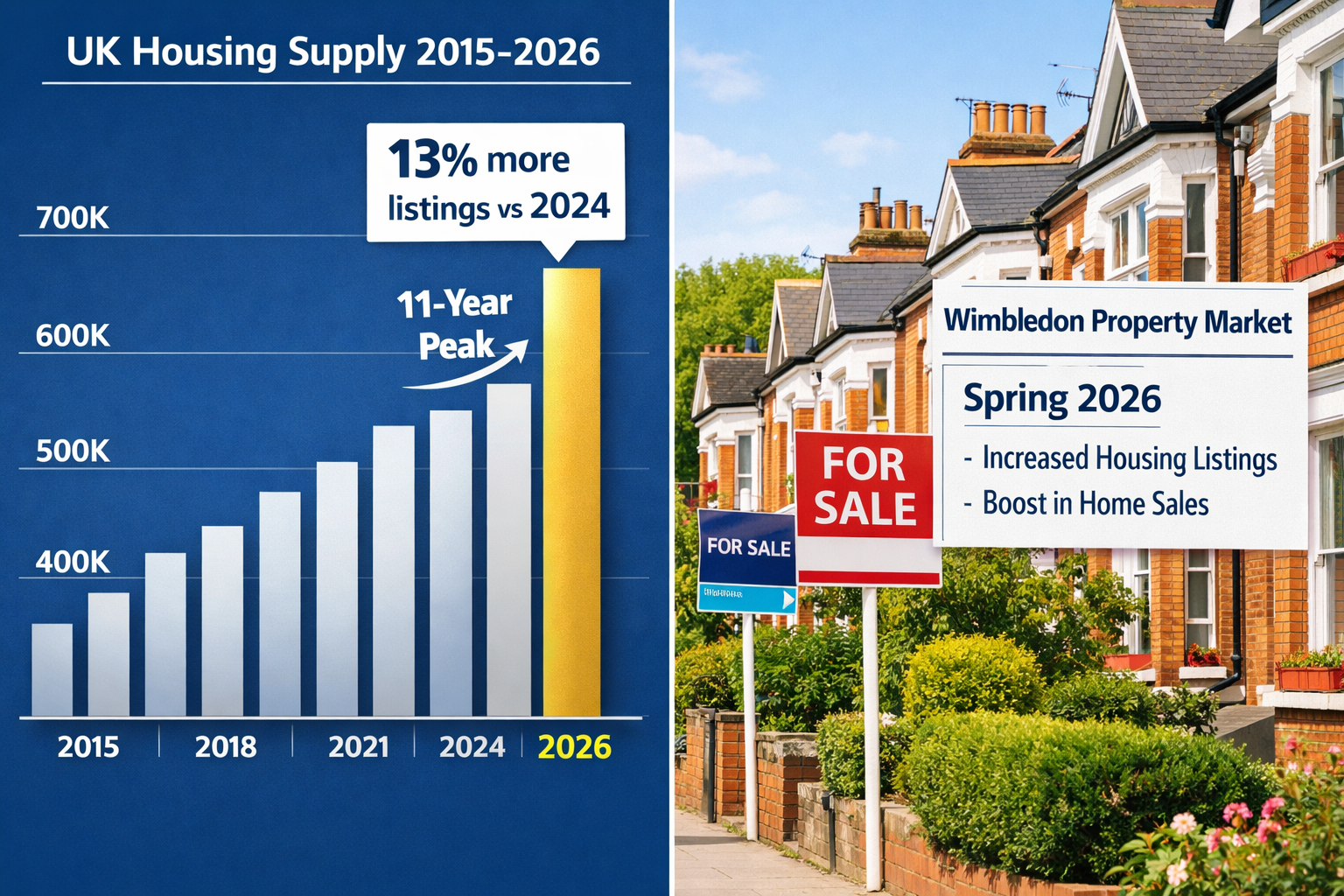
- 📈 Housing supply has hit an 11-year seasonal high, with new listings up 13% compared to 2024, giving buyers more choice and leverage.
- 💷 Average 2-year fixed mortgage rates climbed to 5.42%, adding approximately £235 per month to typical repayments.
- 🔍 More supply means more risk exposure — buyers and surveyors must work harder to identify overpriced or structurally compromised properties.
- 📍 Wimbledon and South West London remain premium, resilient markets where independent RICS survey advice is critical to protecting your investment.
Understanding the April 2026 Rightmove Data
The headline figure of £373,971 represents a £2,929 increase on March 2026 — the third consecutive month of 0.8% monthly growth. On the surface, this looks like a healthy, rising market. But context is everything.
Year-on-year, asking prices are actually down 0.9%. This tells us that while sellers are incrementally pushing prices upward month-to-month, the broader annual picture reflects a market that has been repriced from the frothy levels of 2024–2025. Wage growth of 3.9% annually is now outpacing asking price growth — a meaningful affordability improvement that is quietly underpinning demand.
Supply: The Defining Story of Spring 2026
The more significant data point in the UK property spring 2026 asking prices 11-year supply high picture is not the price — it is the volume of homes available. New listings are running 13% ahead of 2024 levels and are only 1% behind 2025. For context, this is the most stock available for any spring market in over a decade.
| Metric | April 2026 | Year-on-Year Change |
|---|---|---|
| Average asking price | £373,971 | -0.9% |
| Monthly price change | +0.8% (+£2,929) | — |
| New listings vs 2024 | +13% | — |
| Buyer enquiries | Steady | -7% |
| Sales agreed | Resilient | -3% |
| Average 2-yr fixed rate | 5.42% | Up from 4.25% |
💬 “More supply does not automatically mean falling prices — but it does mean that overpriced or poorly presented properties will be left behind.”
What is particularly striking is that buyer demand has held up remarkably well. Enquiries are only 7% below the prior year, and sales agreed are just 3% down. First-time buyers have proven especially resilient, with demand down just 6% despite the mortgage rate headwinds.
Cash buyers — representing approximately 25% of all sales — are insulated from the rate environment entirely, and their activity is providing a floor beneath the market.
Mortgage Rates, Affordability & the Wimbledon Premium
The average 2-year fixed mortgage rate has surged to 5.42%, up sharply from 4.25% before recent geopolitical escalation in the Middle East. For a buyer financing a typical £373,971 property, this translates to approximately £235 more per month in mortgage costs compared to earlier in the year.
In Wimbledon and South West London, where average property values significantly exceed the national asking price figure, the affordability squeeze is amplified. A buyer purchasing a three-bedroom semi-detached in SW19 — where values routinely sit between £700,000 and £1.1 million — faces a materially larger monthly increase than the national average suggests.
What This Means for the Wimbledon Market Specifically
South West London has long been characterised by:
- Strong owner-occupier demand from professionals and families
- A high proportion of period Victorian and Edwardian stock requiring thorough structural assessment
- Significant leasehold flat inventory, particularly around Wimbledon town centre and the Broadway corridor
- Active cash buyer participation from downsizers and international purchasers
The 11-year supply high creates a more balanced market than we have seen in many years. Sellers who price realistically will transact. Those who anchor to 2022 peak valuations will find their properties sitting on Rightmove for weeks, accumulating the kind of “days on market” stigma that erodes negotiating position.
For buyers, this is the most choice-rich spring market in over a decade. But more choice brings more risk — and that is precisely where professional survey advice becomes indispensable.
Why the UK Property Spring 2026 Asking Price & Supply Environment Demands Professional Survey Advice
When supply is tight and competition is fierce, buyers sometimes skip or rush surveys. When supply is abundant — as it is now — a different temptation emerges: buyers assume that because they have leverage, a survey is less urgent. Both assumptions are wrong.
In a high-supply market, sellers under pricing pressure may defer maintenance, present properties cosmetically rather than structurally, or price in defects they hope buyers will not identify. The 11-year supply high in spring 2026 means there is more property on the market — and statistically, more properties with undisclosed issues.
Choosing the Right Survey Level
Not all surveys are equal. Understanding which level of inspection is appropriate for your purchase is one of the most important decisions in any transaction:
- RICS Level 2 Home Survey (HomeBuyer Report): Suitable for conventional, modern properties in reasonable condition. Provides a condition rating for key elements and flags issues requiring further investigation. See our detailed guide on choosing between a Level 2 and Level 3 home survey to understand which is right for your purchase.
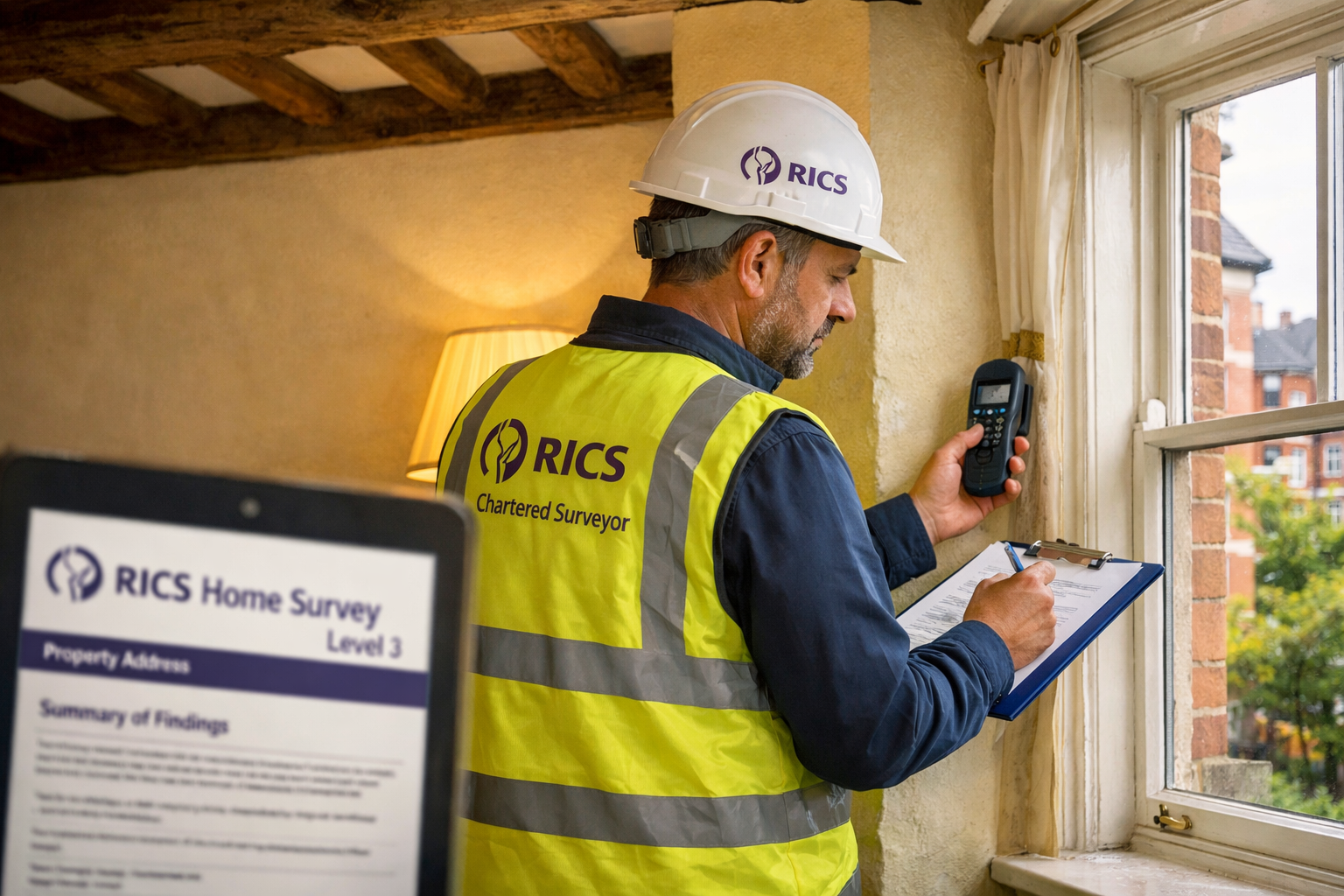
- RICS Level 3 Building Survey: Essential for older, extended, or non-standard properties — which describes a significant proportion of Wimbledon’s Victorian and Edwardian housing stock. Our comprehensive RICS Building Survey service provides the in-depth structural analysis that period properties demand.
💬 “In a market with 13% more listings than last year, the properties that linger are often the ones with problems. A thorough survey is your protection against buying someone else’s problem.”
Using Your Survey to Negotiate
One of the most underused tools in a buyer’s armoury is the survey report itself. In a market where sellers face more competition, a well-evidenced survey finding can support a meaningful price reduction. Our guide on how an RICS survey can help you negotiate the purchase price sets out exactly how this process works — and the average price reductions achievable after a building survey can be substantial.
Regional Context: Where the UK Property Spring 2026 Asking Price Trends Diverge
The national average masks significant regional variation. Scotland is leading the country with 4.3% price growth, driven by lower average asking prices and a faster conveyancing process. Northern regions are recording up to 11% growth over the past year.
London and South East England tell a different story. Premium markets like Wimbledon are experiencing more measured price movements, with the year-on-year decline of 0.9% nationally reflecting the correction from London’s outsized 2021–2022 gains more acutely than elsewhere.
The rental market provides additional context. Average UK private rents rose 3.5% to £1,374 in the 12 months to February 2026. London rents average £2,273 — 66% above the national figure — but are rising at just 1.7% as affordability constrains further growth. This rental ceiling is nudging some long-term renters toward purchase, supporting first-time buyer activity in accessible South West London locations like Croydon and Kingston.
Practical Guidance: What to Do If Your Offer Has Been Accepted
If you are currently under offer on a Wimbledon or South West London property, the high-supply environment of spring 2026 actually strengthens your position. Here is what we recommend:
- Commission your survey promptly. Delays cost you time and can allow other complications to develop. Our guide on what to do when your property offer has been accepted walks you through the full post-offer process.
- Select the right survey level for the property type. A 1930s semi in Raynes Park needs a different approach to a new-build flat near Wimbledon station.
- For leasehold properties, get specialist advice. With a significant proportion of Wimbledon’s flat stock held on leasehold terms, our guide on what to check before buying a leasehold property is essential reading.
- Use survey findings as a negotiating tool. In a market with 13% more supply than 2024, sellers are more motivated to negotiate than they have been in years.
- Do not overlook specialist surveys. Damp, timber, and drainage issues are common in period South West London stock. Our RICS HomeBuyer Survey guide explains when a standard survey is sufficient and when specialist follow-up is warranted.
Conclusion: Spring 2026 Is a Surveyor’s Market — Use It Wisely
The UK property spring 2026 asking prices 11-year supply high environment is, in many respects, the most balanced and buyer-friendly market we have seen since before the pandemic. Asking prices are holding at £373,971 nationally, monthly growth is steady, but supply is abundant and sellers face genuine competition for the first time in years.
For buyers in Wimbledon and South West London, this is a genuine window of opportunity — but only if you approach it with professional rigour. More properties on the market means more potential pitfalls. Rising mortgage costs mean there is less financial buffer to absorb unexpected repair costs post-completion.
Your actionable next steps:
- ✅ Commission a RICS Level 2 or Level 3 survey before exchange — not after
- ✅ Use your survey report to negotiate on price or request remedial works
- ✅ Seek specialist leasehold advice if purchasing a flat
- ✅ Engage a local RICS chartered surveyor who knows the Wimbledon and South West London market intimately
At Wimbledon Surveyors, we are RICS chartered surveyors with deep local expertise across SW19 and the surrounding boroughs. Whether you need a HomeBuyer Report, a full Building Survey, or specialist advice on a complex period property, we are here to protect your investment.
Get in touch with our team today to discuss your survey requirements and ensure you make the most informed decision in this dynamic spring 2026 market.