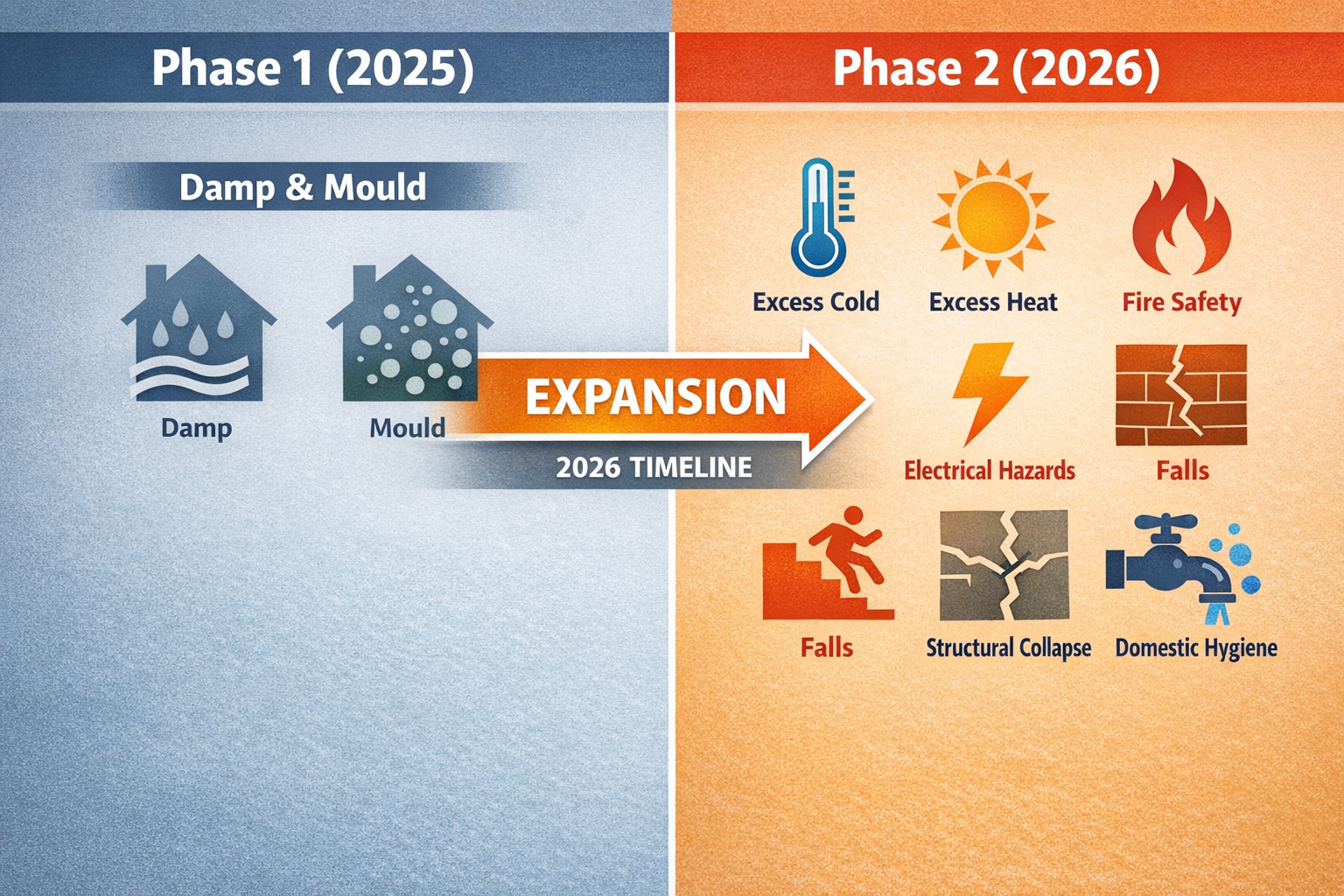
Nearly 40% of social housing properties in England contain at least one Category 1 hazard under the Housing Health and Safety Rating System, yet until 2025, no statutory repair timeframes existed to protect tenants from these dangers.[1] That changed with Awaab's Law—named after two-year-old Awaab Ishak, who died from prolonged mould exposure in his family's social housing flat—which introduced mandatory investigation and repair deadlines for emergency and damp-related hazards. Now, in 2026, the law's Phase 2 expansion extends these strict timelines to cover excess cold and heat, electrical hazards, fire safety risks, structural collapse, and domestic hygiene issues, fundamentally transforming how building surveyors must assess and report on rental properties.
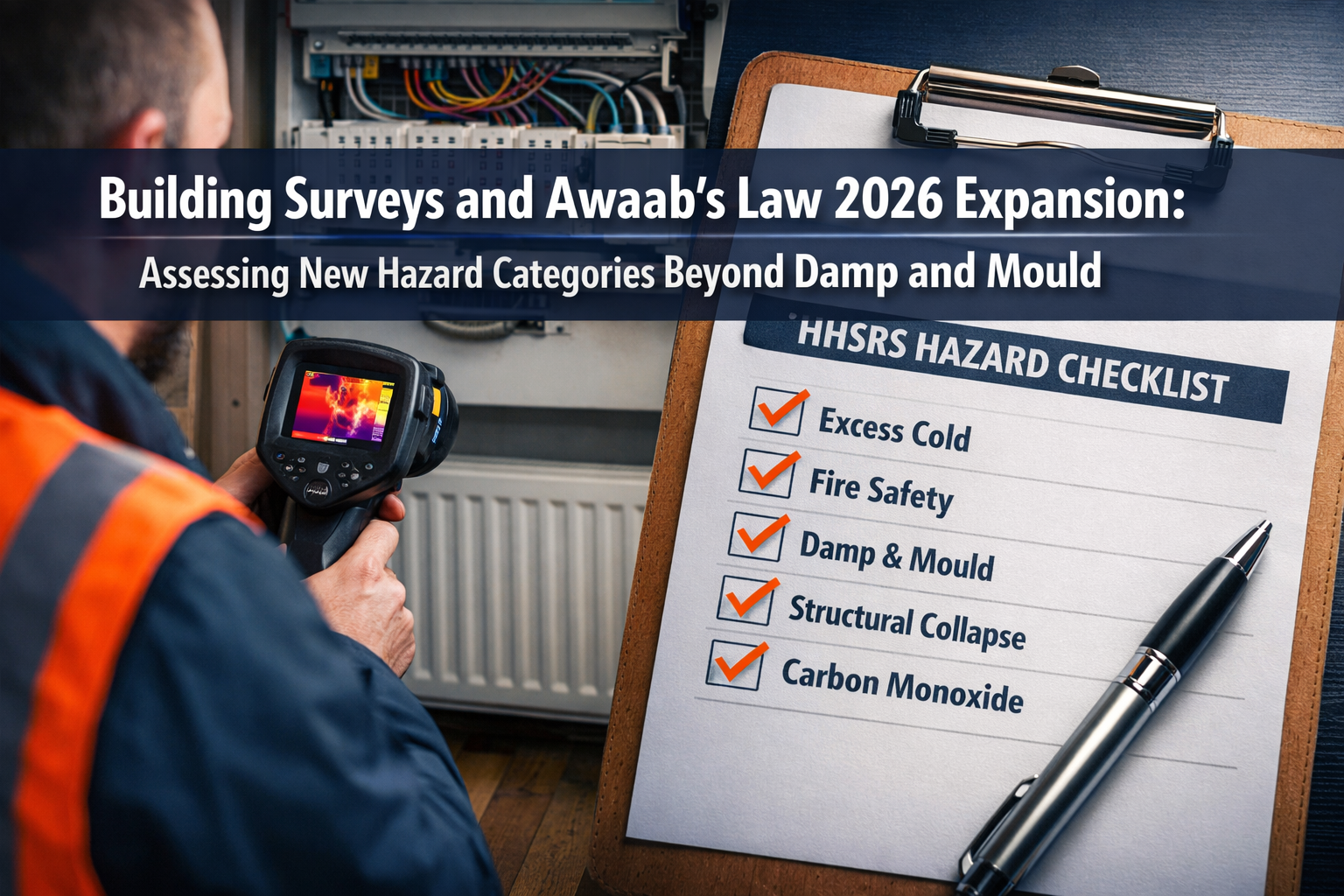
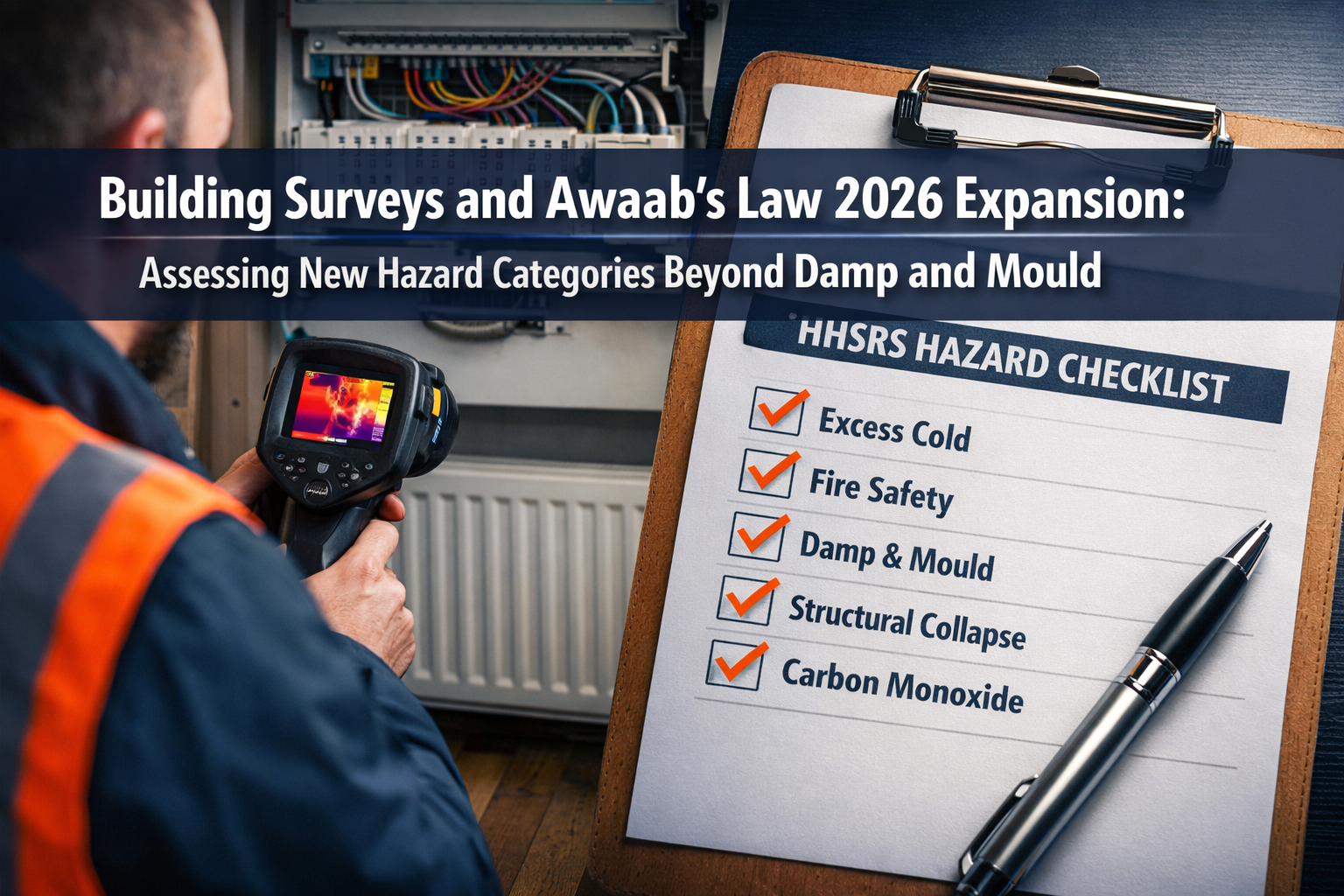
The Building Surveys and Awaab's Law 2026 Expansion: Assessing New Hazard Categories Beyond Damp and Mould represents a significant shift in surveyor responsibilities, requiring professionals to develop new assessment protocols, update reporting frameworks, and adopt person-centered risk evaluation methods that go far beyond traditional damp surveys.
Key Takeaways
- 🏠 Phase 2 expansion in 2026 extends mandatory repair timeframes to six additional hazard categories: excess cold/heat, electrical risks, fire safety, falls, structural collapse, and domestic hygiene
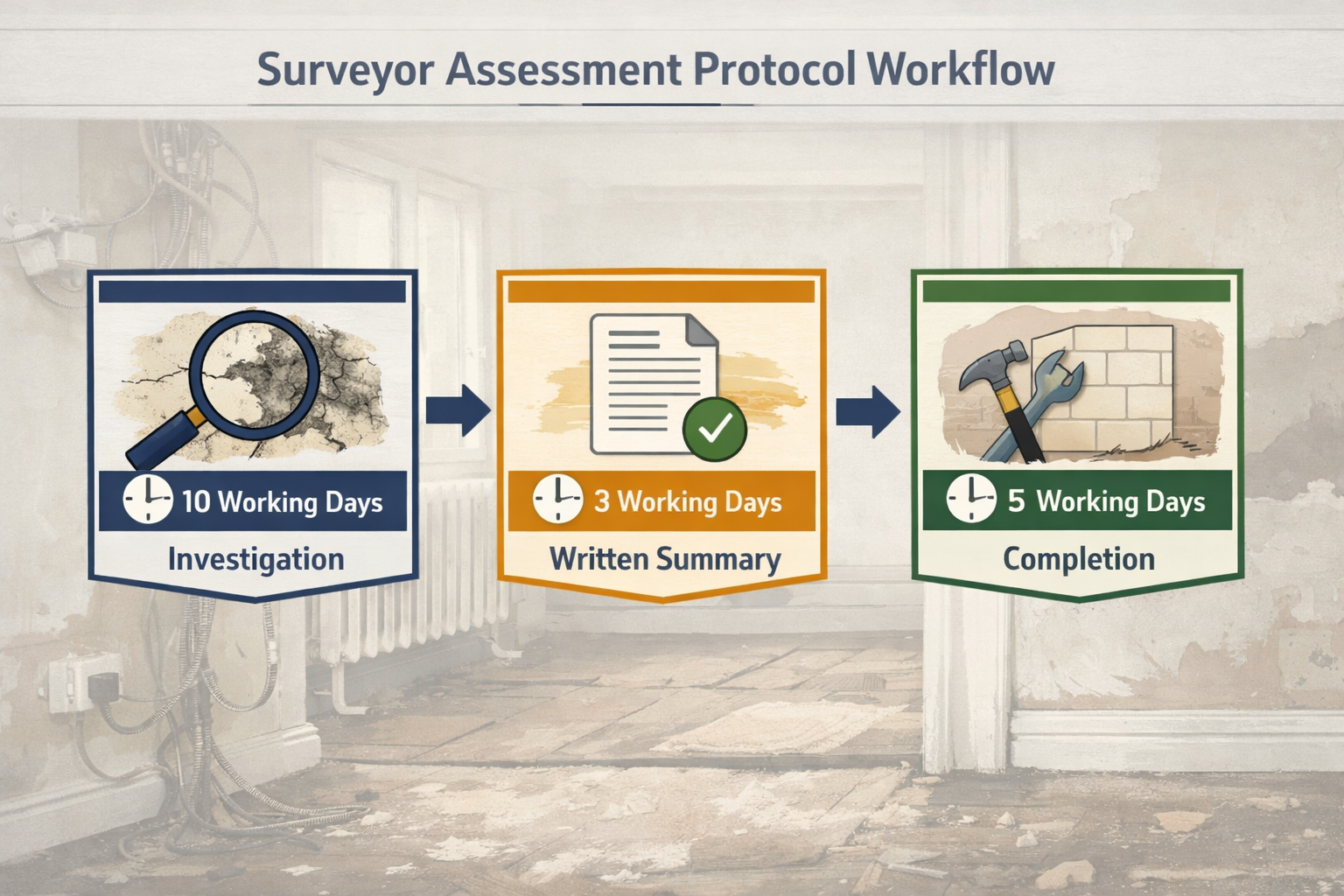
- ⏱️ Strict compliance deadlines require landlords to investigate significant hazards within 10 working days, provide written summaries within 3 days, and complete safety works within 5 days
- 👥 Person-centered assessment replaces pure HHSRS scoring—surveyors must now evaluate hazard significance based on the specific tenant's age, health conditions, and vulnerabilities
- 📊 Surveyor training requirements have expanded dramatically, demanding proficiency across multiple hazard categories and new digital assessment tools
- ⚖️ Enforcement consequences include unlimited fines and legal proceedings for non-compliance, making accurate hazard identification critical for landlords and surveyors alike
Understanding the Phase 2 Hazard Categories in Building Surveys and Awaab's Law 2026 Expansion
The 2026 expansion doesn't introduce new hazards—these risks have always existed within the Housing Health and Safety Rating System (HHSRS) framework established in 2006. What changes is the statutory obligation to respond within defined timeframes.[2] For building surveyors, this means developing specialized assessment protocols for each new category.
Excess Cold and Excess Heat
Excess cold remains one of the most prevalent hazards in UK housing stock, particularly affecting older properties with inadequate insulation or faulty heating systems. Surveyors must now assess:
- Heating system functionality and capacity
- Thermal insulation quality in walls, roofs, and floors
- Window condition and draught-proofing effectiveness
- Energy efficiency ratings and their impact on vulnerable tenants
Excess heat has gained prominence due to climate change and increasingly frequent heatwaves. Assessment criteria include:
- Ventilation adequacy and air circulation
- Window positioning and solar gain management
- Lack of cooling mechanisms in properties designed without climate adaptation
- Impact on tenants with cardiovascular conditions or mobility limitations
The person-centered approach means a property with marginal heating might not trigger action for a healthy adult tenant but would constitute a significant hazard for an elderly person with respiratory conditions.[1]
Fire Safety and Electrical Hazards
These interconnected categories require surveyors to evaluate both passive fire protection (structural elements, escape routes) and active systems (alarms, extinguishers), alongside electrical installation safety.[3]
Fire safety assessments must cover:
✅ Smoke and carbon monoxide detector presence and functionality
✅ Fire escape route accessibility and signage
✅ Fire door condition and self-closing mechanisms
✅ Combustible material storage in communal areas
✅ Electrical appliance safety in landlord-provided equipment
Electrical hazard evaluation includes:
- Inspection of consumer units and circuit breakers
- Identification of overloaded sockets or extension lead misuse
- Assessment of DIY electrical work or non-compliant installations
- Verification of Electrical Installation Condition Reports (EICR) currency
For comprehensive property assessments, surveyors should consider conducting a RICS Building Survey that incorporates these expanded hazard categories.
Falls Associated with Stairs, Baths, and Level Surfaces
Falls represent a leading cause of injury in residential properties, particularly for older tenants and those with mobility impairments. Surveyor assessment protocols must now systematically evaluate:
| Fall Hazard Type | Assessment Criteria | Common Defects |
|---|---|---|
| Stairways | Handrail security, tread condition, lighting adequacy | Loose handrails, worn treads, inadequate lighting |
| Bathrooms | Slip-resistant surfaces, grab rail provision, bath/shower accessibility | Missing grab rails, slippery tiles, high bath sides |
| Level Surfaces | Flooring condition, trip hazards, threshold heights | Uneven flooring, loose carpets, protruding thresholds |
| External Areas | Path condition, drainage, lighting | Cracked paving, standing water, poor illumination |
The person-centered lens is particularly relevant here—a slightly uneven floor might pose minimal risk to a young tenant but represents a significant fall hazard for someone with vision impairment or using mobility aids.[1]
Structural Instability and Collapse
While catastrophic structural failure is rare, progressive deterioration can create significant hazards. Surveyors must identify:
- Foundation movement indicated by cracking patterns
- Wall bulging or leaning suggesting structural distress
- Roof structure defects including sagging ridge lines or rafter failure
- Damp-related timber decay in structural elements
- Corroded steel reinforcement in concrete structures
This category requires surveyors to distinguish between cosmetic defects and genuine structural concerns. When dealing with a bad building survey report, structural issues often take priority due to their potential severity.
Domestic Hygiene, Sanitation, and Food Safety
This often-overlooked category addresses hazards arising from:
🚰 Sanitation failures: Blocked drains, sewage backflow, inadequate waste disposal
💧 Water supply issues: Contamination risks, inadequate pressure, lead pipework
🦠 Pest infestation: Rodents, insects, or other vermin creating health risks
🍽️ Food preparation safety: Inadequate kitchen facilities, contamination risks
Surveyors must assess whether landlord-controlled defects create conditions that prevent tenants from maintaining basic hygiene standards.
Implementing Person-Centered Assessment in Building Surveys and Awaab's Law 2026 Expansion
The most significant methodological change in the Building Surveys and Awaab's Law 2026 Expansion is the shift from purely technical hazard scoring to person-centered risk evaluation.[1] This approach recognizes that identical defects pose different levels of risk depending on who occupies the property.
The Person-Centered Test Explained
Under traditional HHSRS assessment, surveyors evaluated hazards based on a hypothetical "vulnerable occupant" for each hazard category. The new framework requires consideration of the actual tenant's circumstances:
Traditional Approach: "This patch of mould scores as HHSRS Category 2 (lower risk) based on its size and location."
Person-Centered Approach: "This patch of mould, though small, constitutes a significant hazard because the tenant has documented asthma and the mould is located in their bedroom where they spend 8+ hours daily."
This shift requires surveyors to:
- Request tenant vulnerability information from landlords (age, disability, health conditions)
- Adjust hazard significance ratings based on individual circumstances
- Document the reasoning behind person-centered classifications
- Communicate clearly why seemingly minor defects may require urgent action
Practical Application for Surveyors
When conducting assessments under the expanded law, surveyors should follow this protocol:
Step 1: Standard Hazard Identification
Conduct comprehensive property inspection using established HHSRS methodology, identifying all potential hazards across the expanded categories.
Step 2: Tenant Profile Review
Obtain information about tenant demographics, health conditions, disabilities, and daily living patterns that may affect hazard significance.
Step 3: Person-Centered Evaluation
Re-assess each identified hazard through the lens of the specific tenant's vulnerabilities, adjusting significance ratings accordingly.
Step 4: Prioritization and Reporting
Categorize hazards as "significant" or "non-significant" based on the combined technical assessment and person-centered evaluation, clearly documenting the rationale.
For properties with complex issues, surveyors may need to conduct specialized assessments such as damp surveys alongside the broader hazard evaluation.
Compliance Timeframes and Surveyor Responsibilities Under Building Surveys and Awaab's Law 2026 Expansion
Understanding the mandatory timeframes is essential for both landlords and surveyors conducting assessments under the expanded law.[1][4]
The Compliance Timeline
Day 0: Hazard Awareness
The compliance clock starts when the landlord becomes aware of a potential significant hazard through tenant report, inspection, or surveyor notification.
Days 1-10: Investigation Period
Landlords must investigate the reported hazard within 10 working days. This typically involves commissioning a surveyor assessment or conducting internal inspection.
Day 11-13: Written Summary
Within 3 working days of completing the investigation, landlords must provide tenants with a written summary explaining:
- Whether a significant hazard exists
- What actions will be taken
- The timeline for completion
- Any interim measures to reduce risk
Days 14-18: Safety Works Completion
Complete safety works must be finished within 5 working days of the investigation conclusion. These are works that immediately eliminate or substantially reduce the hazard.
Weeks 3-12: Supplementary Works
Long-term or supplementary works must begin within 5 working days and be completed within 12 weeks of the investigation.[1]
Hazard Scope Criteria
Not every defect triggers Awaab's Law obligations. For a hazard to fall within scope, it must meet four criteria:[1][4]
- ✓ Exists on landlord-controlled property (land or building under landlord responsibility)
- ✓ Within landlord's power to repair (not requiring third-party permission)
- ✓ Not caused by tenant breach (tenant actions haven't created or worsened the hazard)
- ✓ Arises from defects or disrepair (stems from lack of maintenance, not design limitations)
Surveyors must clearly identify which hazards meet these criteria in their reports, as this determines whether statutory timeframes apply.
Surveyor Documentation Requirements
To support landlord compliance, surveyor reports should include:
📋 Hazard categorization: Clear identification of which Phase 2 categories apply
📋 Significance assessment: Person-centered evaluation of hazard severity
📋 Scope determination: Whether the hazard meets the four criteria for Awaab's Law application
📋 Recommended actions: Specific remedial works with priority levels
📋 Timeline guidance: Whether works fall under 5-day or 12-week requirements
📋 Interim measures: Temporary risk reduction options while permanent works are arranged
For surveyors working across London, understanding local housing conditions is crucial—London building inspections often reveal region-specific hazard patterns.
Training and Technology Requirements for Surveyors
The Building Surveys and Awaab's Law 2026 Expansion demands significant professional development and technological investment from surveying practices.[2]
Expanded Training Needs
Surveyors must now demonstrate competence across all Phase 2 hazard categories, requiring training in:
Thermal Assessment
- Infrared thermography for identifying cold spots and heat loss
- Understanding of heating system types and capacity calculations
- Energy efficiency evaluation and improvement recommendations
Electrical Safety
- Basic electrical hazard recognition (though not replacing qualified electrician assessment)
- EICR interpretation and integration into broader hazard reports
- Identification of non-compliant installations
Fire Safety Fundamentals
- Passive fire protection assessment
- Means of escape evaluation
- Fire risk assessment principles for residential properties
Structural Evaluation
- Crack pattern analysis and significance determination
- Progressive structural deterioration identification
- When to recommend specialist structural engineer involvement
Many building surveyor services are now offering specialized training programs to ensure their teams meet these expanded competency requirements.
Technology and Data Systems
Effective compliance requires digital infrastructure that supports:[2]
🔧 Hazard tracking systems that map inspection data against all HHSRS categories
🔧 Tenant vulnerability databases enabling person-centered assessment
🔧 Timeline management tools ensuring compliance with statutory deadlines
🔧 Repair data analytics identifying patterns that may indicate emerging hazards
🔧 Mobile inspection apps allowing real-time hazard documentation and photo evidence
The most effective preparation involves mapping current processes against HHSRS hazards, identifying data gaps or delays, and investing in systems that support early hazard detection rather than just fast response times.[2]
Enforcement, Penalties, and Risk Management
Non-compliance with Awaab's Law carries serious consequences for landlords, making accurate surveyor assessment more critical than ever.[1][6]
Enforcement Mechanisms
Failure to meet the statutory timeframes constitutes both:
- Breach of tenancy agreement
- Breach of statutory law
This exposes landlords to:
⚠️ Enforcement action by local housing authorities
⚠️ Unlimited fines with no statutory cap
⚠️ Legal proceedings initiated by tenants
⚠️ Reputational damage particularly for social housing providers
⚠️ Regulatory intervention by the Regulator of Social Housing
Risk Management for Surveyors
Surveyors face their own professional risks in this expanded regulatory environment:
Under-identification of hazards could lead to:
- Professional negligence claims if missed hazards cause tenant harm
- Reputational damage and loss of client confidence
- Professional indemnity insurance claims
Over-identification or misclassification might result in:
- Unnecessary expenditure by landlords
- Strained client relationships
- Disputes over professional fees
The solution lies in thorough documentation, clear communication of uncertainty, and appropriate use of specialist consultants when hazards fall outside core competence.
When surveyors identify multiple significant issues, understanding what to do after a bad building survey report becomes essential for both professionals and property owners.
Looking Ahead: Phase 3 and the Complete HHSRS Integration
The expansion doesn't stop in 2026. Phase 3, scheduled for 2027, will extend statutory response requirements to nearly all remaining HHSRS Category 1 hazards, excluding only overcrowding.[4][5][7]
Phase 3 Hazard Categories
The final expansion will include:
🔬 Asbestos and manufactured mineral fibers
🔬 Biocides (chemicals used in pest control or preservation)
🔬 Carbon monoxide and fuel combustion products
🔬 Lead exposure (from paint, water pipes, or other sources)
🔬 Radiation (primarily radon gas in affected geographical areas)
🔬 Uncombusted fuel gas (gas leaks)
🔬 Volatile organic compounds (from building materials or furnishings)
Preparing for Complete Integration
Surveyors should begin preparing now by:
- Auditing current competencies against the full HHSRS hazard list
- Identifying training gaps and developing professional development plans
- Building specialist networks for hazards requiring technical expertise (asbestos, radon, etc.)
- Updating report templates to accommodate all hazard categories
- Investing in detection equipment (CO detectors, radon test kits, etc.)
The trajectory is clear: by 2027, comprehensive hazard assessment across all HHSRS categories will become the standard expectation for residential property surveys in the social rented sector, with potential extension to private rentals thereafter.
Best Practice Recommendations for Surveyors
To excel in the Building Surveys and Awaab's Law 2026 Expansion environment, surveyors should adopt these best practices:
Assessment Protocol
✅ Use standardized checklists covering all Phase 2 hazard categories
✅ Request tenant information before site visits to enable person-centered assessment
✅ Employ appropriate technology (thermal cameras, moisture meters, electrical testers)
✅ Document extensively with photographs, measurements, and detailed notes
✅ Clearly distinguish between significant and non-significant hazards
Reporting Standards
✅ Structure reports by hazard category for easy reference
✅ Include executive summaries highlighting significant hazards and urgent actions
✅ Provide clear timelines aligned with statutory requirements
✅ Explain person-centered adjustments when hazard significance depends on tenant circumstances
✅ Recommend interim measures for hazards requiring extended repair periods
Client Communication
✅ Educate landlords about person-centered assessment methodology
✅ Clarify scope limitations when specialist assessment is needed
✅ Provide compliance guidance on statutory timeframes
✅ Offer follow-up services to verify remedial works effectiveness
✅ Maintain professional boundaries while advocating for tenant safety
For surveyors seeking to expand their service offerings, exploring expert building evaluation techniques can enhance assessment quality.
Conclusion
The Building Surveys and Awaab's Law 2026 Expansion: Assessing New Hazard Categories Beyond Damp and Mould represents the most significant shift in residential property assessment obligations in decades. By extending mandatory investigation and repair timeframes to excess temperatures, electrical hazards, fire safety, structural risks, falls, and domestic hygiene issues, the legislation fundamentally transforms surveyor responsibilities and landlord obligations.
The person-centered assessment methodology—evaluating hazards based on actual tenant vulnerabilities rather than abstract scoring—demands a more nuanced, individualized approach to property inspection. Surveyors must now combine technical expertise across multiple disciplines with an understanding of how health conditions, age, and disabilities affect hazard significance.
Key Action Steps
For surveyors navigating this expanded regulatory landscape:
- Invest in comprehensive training across all Phase 2 hazard categories immediately
- Update assessment protocols and report templates to incorporate person-centered evaluation
- Acquire appropriate technology for thermal, electrical, and structural assessment
- Build specialist networks for hazards requiring expert consultation
- Develop robust documentation systems that support statutory timeline compliance
For landlords and property managers:
- Commission comprehensive hazard assessments from qualified surveyors familiar with Awaab's Law requirements
- Establish tenant vulnerability tracking systems to enable person-centered risk evaluation
- Implement proactive inspection schedules rather than reactive responses
- Budget for accelerated repair timelines required by statutory deadlines
- Prepare for Phase 3 expansion in 2027 by addressing current hazard backlogs
The ultimate goal of Awaab's Law—preventing deaths and serious harm from housing hazards—depends on accurate identification, timely reporting, and swift remediation. Surveyors stand at the frontline of this public health initiative, and their professional competence directly impacts tenant safety.
As the regulatory framework continues to expand through 2027, the surveying profession must evolve alongside it, embracing new assessment methodologies, technologies, and training to meet the challenge of comprehensive hazard evaluation across the entire HHSRS spectrum.
The memory of Awaab Ishak and the tragedy that could have been prevented with proper hazard identification and timely action should motivate every surveyor to approach these expanded responsibilities with the seriousness and professionalism they demand. In 2026 and beyond, thorough building surveys incorporating all hazard categories aren't just good practice—they're a legal requirement and a moral imperative.
References
[1] Awaabs Law Is Here The Surveyors Guide For Compliance – https://www.surventrix.com/blog/awaabs-law-is-here-the-surveyors-guide-for-compliance
[2] Awaabs Law Phase 2 Is Coming What Social Landlords Need To Know About Additional Hazard Compliance In 2026 – https://www.mobysoft.com/resources/blogs/awaabs-law-phase-2-is-coming-what-social-landlords-need-to-know-about-additional-hazard-compliance-in-2026/
[3] Awaabs Law 2026 Hazard Expansions Surveyor Protocols For Electrical Fire And Excess Heat Risks In Rentals – https://nottinghillsurveyors.com/blog/awaabs-law-2026-hazard-expansions-surveyor-protocols-for-electrical-fire-and-excess-heat-risks-in-rentals
[4] Awaabs Law Guidance For Social Landlords Timeframes For Repairs In The Social Rented Sector – https://www.gov.uk/government/publications/awaabs-law-guidance-for-social-landlords/awaabs-law-guidance-for-social-landlords-timeframes-for-repairs-in-the-social-rented-sector
[5] Expert Witness Preparation For Awaabs Law 2026 Expansions Testifying On New Rental Hazards Like Fire And Electrical Risks – https://nottinghillsurveyors.com/blog/expert-witness-preparation-for-awaabs-law-2026-expansions-testifying-on-new-rental-hazards-like-fire-and-electrical-risks
[6] Awaabs Law Technical Compliance Hvac Ventilation – https://www.arm-environments.com/resources/awaabs-law-technical-compliance-hvac-ventilation
[7] Awaabs Law Compliance For Social Housing Providers – https://www.ovolobc.com/services/building-pathology/awaabs-law-compliance-for-social-housing-providers/
[8] Awaabs Law What Property Managers And Surveyors Must Know – https://www.howdengroup.com/uk-en/awaabs-law-what-property-managers-and-surveyors-must-know