
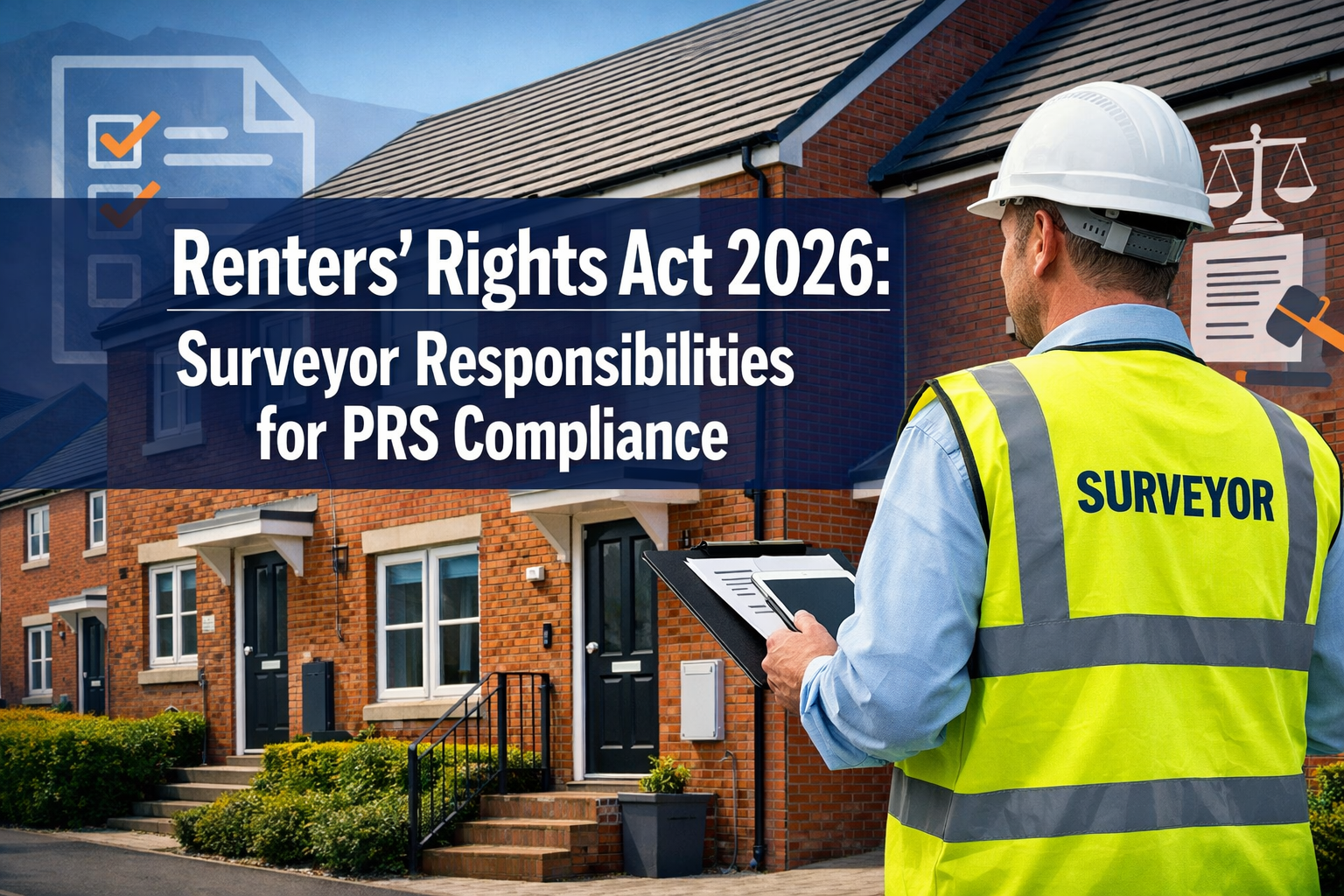
On May 1, 2026, the private rented sector (PRS) in England undergoes its most significant transformation in decades. With £7,000 penalties for information sheet non-compliance and £40,000 fines for continued violations, the Renters' Rights Act 2026 fundamentally reshapes how landlords operate—and creates unprecedented demand for professional surveyor expertise in compliance assessments and dispute resolution.[2][3]
The Renters' Rights Act 2026 Implementation: Surveyor Responsibilities for PRS Compliance Assessments and Landlord-Tenant Disputes represents a critical knowledge gap for property professionals. As all existing assured shorthold tenancies automatically convert to assured periodic tenancies and new standards take effect, surveyors must understand their evolving role in this regulatory landscape.[1]
Key Takeaways
- May 1, 2026 marks Phase 1 implementation with automatic tenancy conversions and mandatory information sheets due by May 31, 2026, creating immediate compliance assessment needs
- Surveyors face expanded responsibilities including PRS Database compliance audits, Decent Homes Standard assessments, and expert witness roles in landlord-tenant disputes
- Three-phase rollout introduces staggered compliance requirements: tenancy reforms (May 2026), database registration (late 2026), and property standards (date TBC)
- Civil penalty structure reaches £40,000 for continuing violations, making proactive surveyor-led compliance audits financially essential for landlords
- Property condition assessments become legally critical as the Decent Homes Standard applies to PRS for the first time, requiring professional surveyor certification
Understanding the Renters' Rights Act 2026 Three-Phase Implementation Timeline
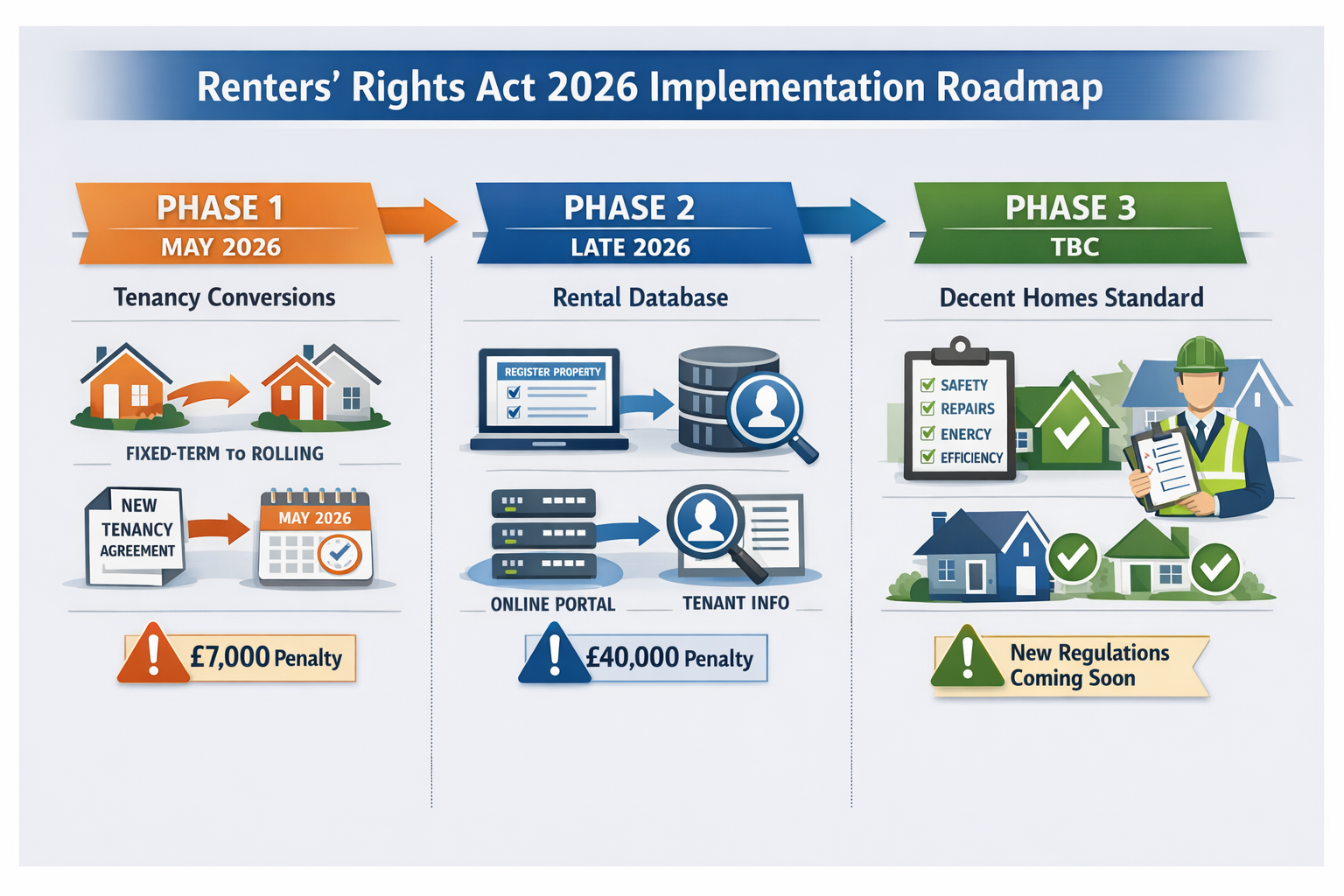
The Renters' Rights Act 2026 Implementation: Surveyor Responsibilities for PRS Compliance Assessments and Landlord-Tenant Disputes begins with a carefully structured three-phase rollout designed to give landlords and property professionals time to adapt.
Phase 1: May 1, 2026 – Tenancy Structure Transformation
Phase 1 fundamentally alters the tenancy landscape across England. All existing assured tenancies and assured shorthold tenancies (ASTs) automatically convert to assured periodic tenancies (APTs) without requiring landlord or tenant action.[1] This conversion eliminates Section 21 "no-fault" evictions and creates a new framework where landlords must rely exclusively on Section 8 grounds for possession.
Critical May 31, 2026 deadline: Landlords must provide all existing tenants with official RRA information sheets explaining these changes. Non-compliance carries penalties of up to £7,000, and landlords must maintain proof of delivery.[5] This creates immediate demand for professional surveyor services to audit landlord compliance systems.
The government published a draft tenancy agreement template in January 2026 to help operators prepare for new tenancies created after May 1, 2026.[1] Surveyors reviewing these agreements must understand how property condition clauses align with emerging standards.
Phase 2: Late 2026 – PRS Database Registration
Phase 2 introduces the Private Rented Sector Database, a centralized registration system requiring all landlords to register personal details, property information, and pay registration fees.[2] This database fundamentally changes how surveyors approach property condition assessments, as compliance verification becomes a prerequisite for legal operation.
Local councils gain enforcement powers to issue civil penalties of £7,000 for initial breaches and £40,000 for continuing violations against landlords who fail to register or join the mandatory ombudsman service.[3] Criminal prosecution becomes possible for repeated breaches, elevating the stakes for non-compliance.
Phase 3: Date TBC – Decent Homes Standard Application
Phase 3 applies the Decent Homes Standard to the private rented sector for the first time. Properties must meet five core criteria:[2]
✅ Free from serious hazards under the Housing Health and Safety Rating System (HHSRS)
✅ In reasonable repair with structural elements and installations maintained
✅ Equipped with modern facilities including kitchens, bathrooms, and heating systems
✅ Providing thermal comfort through adequate insulation and heating
✅ Free from damp and mould with effective ventilation and moisture control
This phase creates substantial demand for chartered surveyor expertise in conducting comprehensive property audits and certification.
Surveyor Responsibilities Under Renters' Rights Act 2026 Implementation: PRS Compliance Assessment Protocols
The Renters' Rights Act 2026 Implementation: Surveyor Responsibilities for PRS Compliance Assessments and Landlord-Tenant Disputes extends far beyond traditional building surveys. Surveyors now serve as compliance gatekeepers, risk assessors, and technical experts in a heavily regulated environment.
Pre-Tenancy Compliance Audits
Landlords increasingly require pre-tenancy compliance audits before listing properties or renewing tenancies. These assessments verify that properties meet Decent Homes Standard criteria before tenants occupy them, reducing future dispute risk.
A comprehensive pre-tenancy audit includes:
| Assessment Area | Surveyor Responsibilities | Compliance Link |
|---|---|---|
| HHSRS Hazard Rating | Identify Category 1 and 2 hazards; prioritize remediation | Decent Homes Standard criterion 1 |
| Structural Condition | Assess building envelope, foundations, roof, walls | Decent Homes Standard criterion 2 |
| Facilities Assessment | Verify kitchen, bathroom, heating system age and function | Decent Homes Standard criterion 3 |
| Thermal Performance | Evaluate insulation, glazing, heating capacity | Decent Homes Standard criterion 4 |
| Damp and Mould Risk | Conduct moisture surveys, ventilation assessments | Decent Homes Standard criterion 5 |
Surveyors conducting these audits should reference condition survey methodologies to ensure comprehensive coverage.
PRS Database Compliance Verification
The PRS Database registration process requires landlords to provide accurate property information. Surveyors play a critical role in verifying property details before submission, including:
- Property type, age, and construction method
- Number of habitable rooms and tenant capacity
- Presence of safety certificates (gas, electrical, EPC)
- Current condition rating and outstanding defects
- Compliance with local licensing requirements
Incorrect database submissions can result in penalties, making surveyor verification a valuable risk mitigation service. Properties requiring party wall works for compliance upgrades face additional complexity, as tenant rights now factor into surveyor-managed notice procedures.[6]
Ongoing Condition Monitoring and Re-Certification
Unlike one-time surveys, RRA 2026 compliance requires ongoing monitoring. Surveyors should establish re-inspection schedules based on property age, condition, and risk factors:
🔄 Annual inspections for properties with previous Category 1 hazards
🔄 Biennial inspections for properties built before 1980
🔄 Post-remediation verification after major repair works
🔄 Tenant-triggered assessments following condition complaints
This creates recurring revenue opportunities for surveying practices while ensuring landlords maintain continuous compliance.
Expert Witness Services in Landlord-Tenant Disputes
The elimination of Section 21 evictions means landlords must prove grounds for possession under Section 8. Many grounds involve property condition disputes where surveyor expert witness testimony becomes decisive evidence.
Common dispute scenarios requiring surveyor involvement include:
Ground 14 (Anti-social behavior affecting property): Surveyors document property damage, assess repair costs, and determine whether damage constitutes breach of tenancy
Ground 13 (Deterioration of condition): Surveyors compare property condition at tenancy start versus current state, attributing deterioration to tenant actions or natural wear
Rent review disputes: Surveyors provide market rent assessments based on comparable properties and condition adjustments
Deposit disputes: Surveyors prepare dilapidation reports comparing check-in and check-out conditions
Surveyors serving as expert witnesses must maintain impartiality, provide evidence-based opinions, and withstand cross-examination. This role requires understanding both surveyor responsibilities and legal procedure.
Landlord-Tenant Disputes Under Renters' Rights Act 2026: Surveyor's Role in Resolution and Evidence
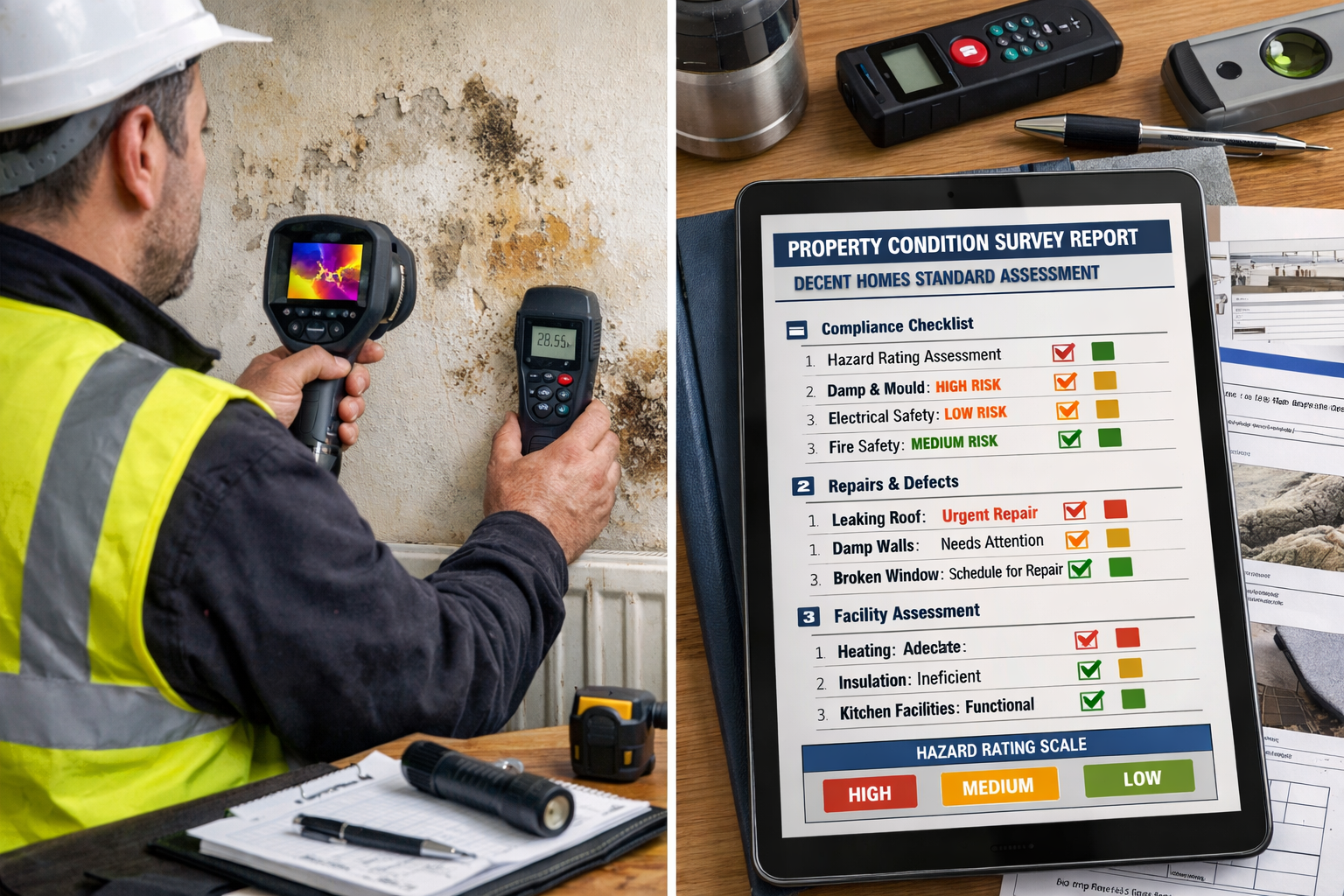
The Renters' Rights Act 2026 Implementation: Surveyor Responsibilities for PRS Compliance Assessments and Landlord-Tenant Disputes positions surveyors as critical third-party experts in resolving conflicts between landlords and tenants.
The New Ombudsman Requirement and Surveyor Integration
All landlords must join a government-approved ombudsman service by late 2026.[3] This creates a formal dispute resolution pathway where surveyor evidence often determines outcomes.
When tenants raise complaints about property conditions, the ombudsman process typically follows this sequence:
1️⃣ Tenant complaint submission detailing alleged condition defects
2️⃣ Landlord response including any prior inspection reports
3️⃣ Independent surveyor assessment commissioned by ombudsman or agreed by parties
4️⃣ Surveyor report submission with findings, photos, and recommendations
5️⃣ Ombudsman determination based substantially on surveyor evidence
6️⃣ Remedy implementation with surveyor verification of completion
Surveyors must prepare reports that meet ombudsman evidence standards: clear, impartial, technically sound, and accessible to non-experts.
Damp, Mould, and Health Hazard Disputes
Damp and mould represent the most common condition disputes under RRA 2026, as the Decent Homes Standard explicitly requires properties to be "free from damp and mould."[2] Surveyors must distinguish between:
Structural damp: Rising damp, penetrating damp, or construction defects requiring landlord remediation
Lifestyle condensation: Moisture from tenant activities requiring ventilation improvements and behavior changes
Mixed causation: Combined structural and lifestyle factors requiring shared responsibility
Effective damp survey methodologies include moisture meter readings, thermal imaging, ventilation assessments, and occupancy pattern analysis. Surveyors should document:
📊 Moisture meter readings at multiple wall locations
📊 Condensation risk calculations based on heating and ventilation
📊 External building envelope condition (gutters, pointing, flashings)
📊 Tenant lifestyle factors (drying clothes indoors, window opening patterns)
📊 Previous remediation attempts and their effectiveness
This evidence-based approach helps ombudsmen and courts allocate responsibility fairly.
Repair and Maintenance Disputes
The "reasonable repair" requirement under Decent Homes Standard criterion 2 generates frequent disputes about repair scope, urgency, and cost responsibility.[2] Surveyors provide objective assessments of:
Repair necessity: Whether defects constitute health/safety hazards or merely cosmetic issues
Repair urgency: Timelines for remediation based on risk severity
Repair cost: Reasonable cost estimates for specified remediation works
Betterment vs. repair: Whether proposed works exceed repair obligations
When landlords claim tenants caused damage requiring repair, surveyors examine evidence of pre-existing conditions, normal wear and tear, and tenant-caused deterioration. Check-in reports become critical baseline documentation.
Rent Review and Market Rent Determinations
RRA 2026 introduces new rent review processes requiring market rent assessments that account for property condition.[7] Surveyors provide expert opinions on how condition affects rental value:
Positive condition factors: Recent renovations, modern facilities, excellent repair
Negative condition factors: Outstanding defects, outdated facilities, poor energy efficiency
Comparable analysis: Adjusting comparable property rents for condition differences
A surveyor's market rent determination might conclude: "Based on comparable properties in similar condition, the subject property's market rent is £1,450 per month, representing a £150 reduction from comparable properties in excellent condition due to the outdated kitchen and single-glazed windows."
This evidence helps First-tier Tribunals determine fair rent levels when landlords and tenants disagree.
Party Wall Works and Tenant Rights Considerations
The RRA 2026 introduces new requirements for party wall procedures when landlords initiate compliance works affecting adjoining properties.[6] Surveyors managing party wall notices must now consider:
⚖️ Tenant notification requirements before works commence
⚖️ Section 8 possession ground implications if works require temporary vacation
⚖️ Tenant rights to remain during non-urgent works
⚖️ Alternative accommodation obligations during major works
This integration of party wall procedure with tenant rights creates complexity requiring specialized surveyor knowledge.
Practical Compliance Strategies: How Surveyors Can Help Landlords Navigate RRA 2026
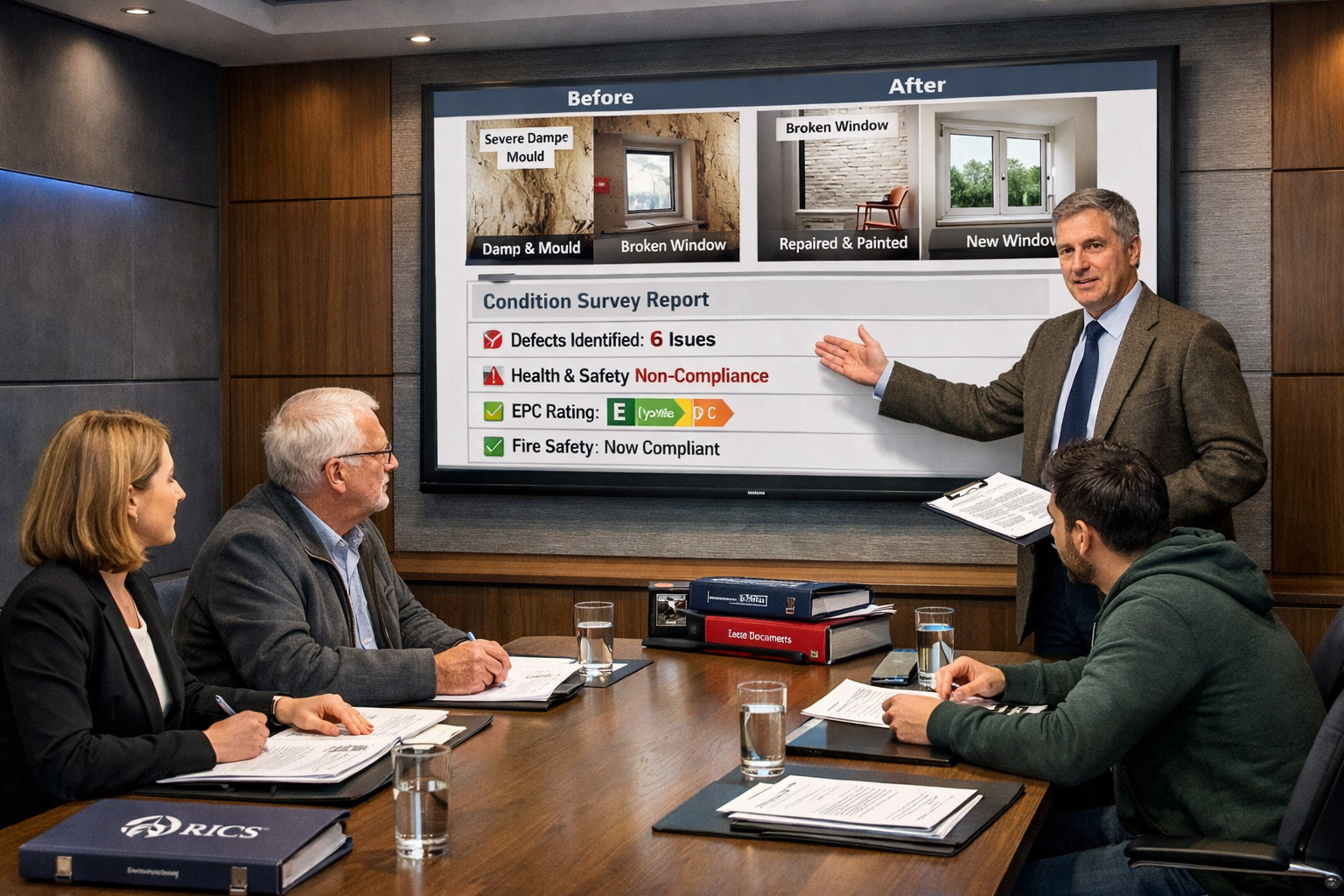
The Renters' Rights Act 2026 Implementation: Surveyor Responsibilities for PRS Compliance Assessments and Landlord-Tenant Disputes creates opportunities for surveyors to provide proactive compliance services that reduce landlord risk.
Developing Property-Specific Compliance Roadmaps
Rather than reactive assessments, surveyors should offer compliance roadmaps that guide landlords through multi-year improvement programs. A typical roadmap includes:
Phase 1 (Immediate – Pre-May 2026):
- Conduct baseline condition survey
- Identify Category 1 hazards requiring urgent remediation
- Prepare information sheets for existing tenants
- Establish PRS Database registration documentation
Phase 2 (May-December 2026):
- Complete PRS Database registration with verified property data
- Address Category 2 hazards
- Upgrade facilities approaching end-of-life
- Implement ongoing monitoring systems
Phase 3 (2027 onwards):
- Achieve full Decent Homes Standard compliance
- Establish annual re-inspection schedules
- Maintain compliance documentation for ombudsman/tribunal use
- Plan proactive upgrades before condition deteriorates
This strategic approach transforms surveyors from inspectors into compliance partners.
Creating Landlord Compliance Dashboards
Surveyors can differentiate their services by providing digital compliance dashboards that track:
📈 Current compliance status across all five Decent Homes criteria
📈 Outstanding remediation works with cost estimates and timelines
📈 Re-inspection due dates and scheduling
📈 Safety certificate expiration dates (gas, electrical, EPC)
📈 Tenant complaint history and resolution status
📈 Ombudsman membership status and renewal dates
These dashboards provide landlords with real-time compliance visibility, reducing risk and demonstrating due diligence.
Qualifying Operator Exemptions and Surveyor Certification
Purpose-built student accommodation (PBSA) operators meeting approved housing management code requirements can grant fixed-term tenancies and access modified possession grounds.[1] Surveyors can provide Qualifying Operator certification services verifying:
✅ Property meets PBSA definition and construction standards
✅ Operator maintains approved code membership
✅ Management systems meet quality standards
✅ Tenancy agreements comply with RRA 2026 requirements
This niche service helps institutional operators maintain their operational flexibility while ensuring compliance.
Training and CPD for Surveying Professionals
Surveyors must invest in continuous professional development covering:
- RRA 2026 legislation and implementation timelines
- Decent Homes Standard assessment methodologies
- HHSRS hazard identification and rating
- Ombudsman evidence preparation
- Expert witness procedures and testimony skills
- Tenant rights and landlord obligations
- PRS Database requirements and verification protocols
Professional bodies should develop RRA 2026 specialist certifications that demonstrate surveyor competence in this evolving regulatory landscape.
Risk-Based Inspection Protocols
Not all properties require identical inspection intensity. Surveyors should develop risk-based protocols that allocate resources efficiently:
High-risk properties (annual inspections):
- Pre-1919 construction with original features
- Previous Category 1 hazards
- History of tenant complaints
- Vulnerable tenant populations
- Properties in poor condition at baseline
Medium-risk properties (biennial inspections):
- 1919-1980 construction
- Previous Category 2 hazards
- Moderate condition at baseline
- Standard tenant demographics
Low-risk properties (triennial inspections):
- Post-1980 construction
- Excellent condition at baseline
- No previous hazards or complaints
- Proactive landlord maintenance history
This approach balances compliance assurance with cost efficiency.
Documentation and Evidence Management
Effective RRA 2026 compliance requires comprehensive documentation systems. Surveyors should establish protocols for:
📁 Photographic evidence: Date-stamped, location-tagged photos of all property areas
📁 Measurement records: Moisture readings, temperature data, ventilation rates
📁 Correspondence logs: All landlord-tenant communications regarding conditions
📁 Remediation tracking: Before/after photos, contractor invoices, completion certificates
📁 Tenant acknowledgments: Signed documents confirming condition at tenancy start
This documentation proves invaluable in ombudsman proceedings and tribunal hearings, where surveyors must substantiate their findings with contemporaneous evidence.
Conclusion
The Renters' Rights Act 2026 Implementation: Surveyor Responsibilities for PRS Compliance Assessments and Landlord-Tenant Disputes represents a fundamental shift in how the private rented sector operates. With Phase 1 commencing May 1, 2026, and penalties reaching £40,000 for continuing violations, landlords face unprecedented compliance pressure—and surveyors face unprecedented opportunity.
Professional surveyors must evolve from traditional building inspectors to compliance specialists, expert witnesses, and strategic advisors. The three-phase implementation timeline provides a roadmap: immediate tenancy reforms and information sheet requirements (May 2026), PRS Database registration (late 2026), and Decent Homes Standard application (date TBC). Each phase creates distinct surveyor responsibilities and service opportunities.
The elimination of Section 21 evictions and introduction of mandatory ombudsman services position surveyors as critical third-party experts in landlord-tenant disputes. Whether assessing damp and mould causation, determining market rents, or providing expert witness testimony, surveyors must deliver impartial, evidence-based opinions that withstand scrutiny.
Actionable Next Steps
For Surveyors:
- Invest in RRA 2026 training covering Decent Homes Standard, HHSRS, and ombudsman procedures
- Develop compliance audit services including pre-tenancy assessments and ongoing monitoring
- Create standardized reporting templates that meet ombudsman evidence requirements
- Build expert witness capabilities through training and professional certification
- Establish digital compliance tracking systems for landlord clients
For Landlords:
- Commission baseline property assessments before May 1, 2026 to identify compliance gaps
- Prepare information sheets for existing tenants with proof of delivery by May 31, 2026
- Develop property improvement roadmaps addressing Decent Homes Standard criteria systematically
- Establish relationships with qualified surveyors for ongoing compliance support
- Implement documentation systems capturing property condition and maintenance history
For Tenants:
- Understand new rights under RRA 2026 including ombudsman access and condition standards
- Document property condition at tenancy start with photos and written records
- Report condition issues promptly through formal channels maintaining written records
- Request independent surveyor assessments when disputes arise over property conditions
- Engage with ombudsman services when landlords fail to address legitimate condition concerns
The Renters' Rights Act 2026 creates a more regulated, professionalized private rented sector where surveyor expertise becomes essential infrastructure. Those who adapt quickly will find substantial opportunities in compliance assessment, dispute resolution, and strategic advisory services.
For landlords seeking comprehensive property assessments, consider reviewing our guide to choosing the right property survey to understand different survey levels and their applications in the RRA 2026 context.
References
[1] Impacts Of The Renters Rights Act On 1951530 – https://www.jdsupra.com/legalnews/impacts-of-the-renters-rights-act-on-1951530/
[2] Renters Rights Act A Compliance Guide For Landlords – https://www.hibberts.com/renters-rights-act-a-compliance-guide-for-landlords/
[3] Guide To The Renters Rights Act – https://www.gov.uk/government/publications/guide-to-the-renters-rights-act/guide-to-the-renters-rights-act
[5] The Renters Right Act Information Sheet 2026 – https://blog.goodlord.co/the-renters-right-act-information-sheet-2026
[6] Party Wall Surveys For Renters Rights Act Compliance Managing Notices When Landlord Initiated Works Face New Section 8 Ground Requirements – https://nottinghillsurveyors.com/blog/party-wall-surveys-for-renters-rights-act-compliance-managing-notices-when-landlord-initiated-works-face-new-section-8-ground-requirements
[7] Renters Rights Act Implementation Roadmap Now Published – https://www.hoganlovells.com/en/publications/renters-rights-act-implementation-roadmap-now-published