
Landlords planning extensions on rental properties face a new compliance hurdle in 2026: mandatory PRS database registration that directly affects their ability to serve party wall notices and enforce possession orders. With penalties reaching £40,000 for repeat offences and restricted access to Section 8 grounds, understanding how PRS Database Registration Impacts on Party Wall Notices: Surveyor Strategies for Section 8 Compliant Extensions in 2026 has become critical for property professionals navigating this regulatory intersection.
The late 2026 rollout of England's Private Rented Sector (PRS) database introduces a fundamental shift in how landlords approach building works on shared boundaries. For the first time, a landlord's compliance status will determine their legal standing when serving party wall notices and resolving disputes. This article examines the practical implications for surveyors managing extension projects under periodic tenancies, where timing and compliance documentation can make or break a development timeline.
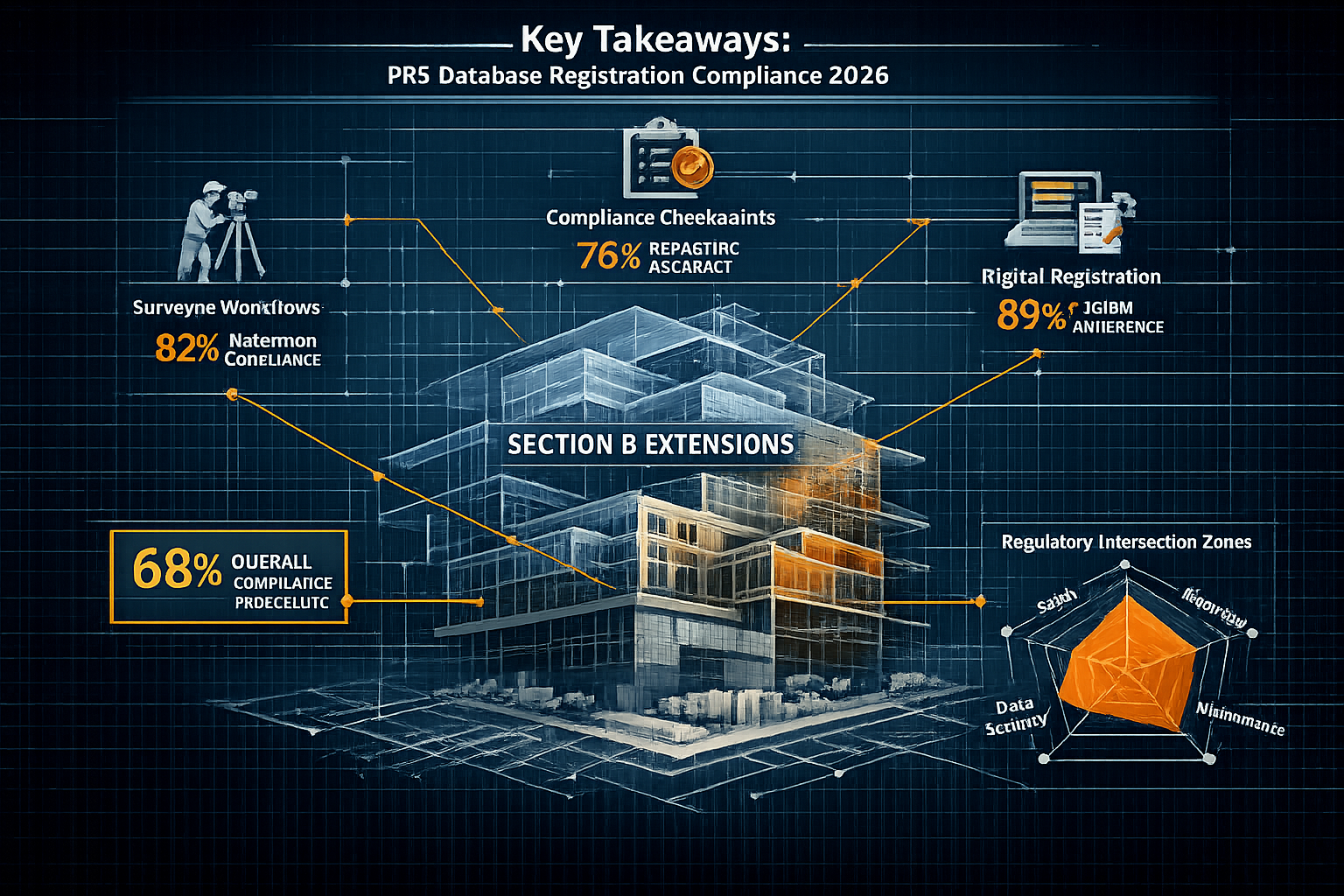
Key Takeaways
✅ Registration is mandatory for all landlords with assured or regulated tenancies before serving valid party wall notices for extension works in 2026
✅ Section 8 possession grounds are restricted to anti-social behaviour only (grounds 7A and 14) for unregistered landlords, eliminating most eviction routes during building disputes
✅ Surveyor strategies must incorporate PRS database verification checks into pre-construction compliance protocols to avoid project delays
✅ Annual per-property fees and potential £7,000-£40,000 penalties create significant cost implications for multi-property landlords planning simultaneous extension projects
✅ Regional rollout timing varies across England, requiring location-specific compliance calendars for party wall notice service
Understanding the PRS Database Registration Framework for 2026
The Private Rented Sector database represents the most comprehensive landlord registration system England has implemented. Unlike previous voluntary schemes, this mandatory registration applies to all landlords holding assured or regulated tenancies, regardless of portfolio size [2].
Who Must Register and When
The registration requirement encompasses:
- Single-property landlords renting out a spare room or investment property
- Portfolio landlords with multiple rental units
- Institutional investors managing large-scale residential portfolios
- Corporate landlords operating through limited companies
Personal responsibility remains with the landlord even when using letting agents to manage properties [2]. This creates a direct compliance obligation that cannot be delegated, particularly relevant when planning extension works that require party wall procedures.
The rollout begins in late 2026 with regional implementation rather than a single national launch date [3]. Landlords should monitor their local authority announcements to determine specific registration windows for their properties.
Registration Requirements and Costs
Each property requires separate registration with annual fees charged per unit [2]. While exact fee amounts await confirmation closer to launch, government guidance indicates a cost-recovery pricing model rather than revenue generation.
The registration process requires landlords to provide:
📋 Property address and tenure details
📋 Landlord contact information and identification
📋 Tenancy type and agreement dates
📋 Compliance certification for safety standards
📋 Energy Performance Certificate (EPC) ratings
For landlords planning extensions, maintaining current registration becomes particularly crucial. Party wall surveyors increasingly recommend verifying database compliance before commencing notice procedures.
Penalties and Enforcement Mechanisms
The enforcement regime carries substantial financial consequences:
| Offence Level | Penalty Amount | Additional Consequences |
|---|---|---|
| Initial breach | £7,000 | Notice to comply within 28 days |
| Repeat offence | Up to £40,000 | Restricted possession grounds |
| Persistent breach | Criminal prosecution | Potential rental income seizure |
Beyond monetary penalties, unregistered landlords lose access to most Section 8 possession grounds, retaining only anti-social behaviour provisions (grounds 7A and 14) [2][4]. This restriction creates significant leverage issues when building disputes arise during extension projects.
PRS Database Registration Impacts on Party Wall Notices: Critical Compliance Intersections
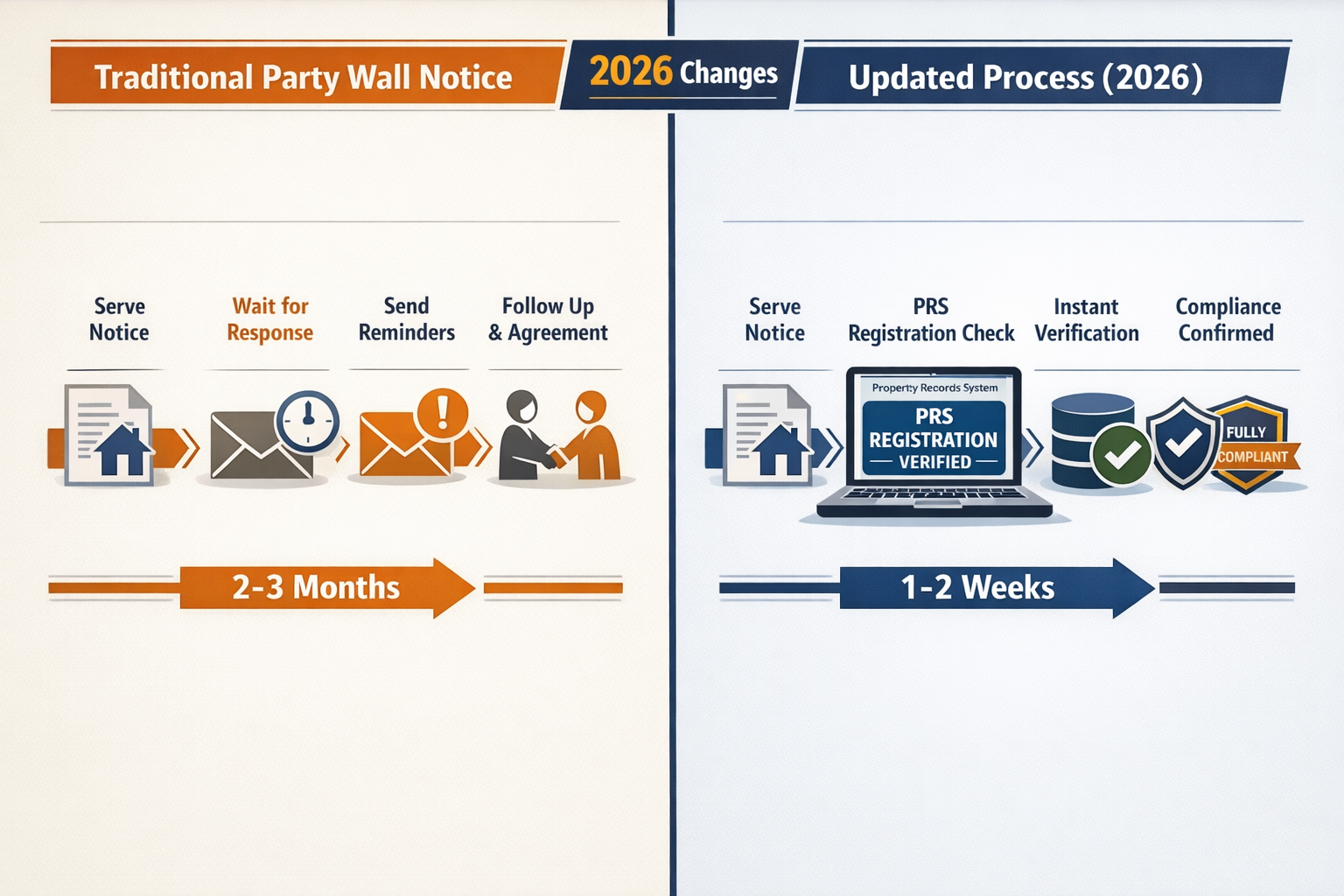
The intersection of PRS registration and party wall procedures creates new compliance checkpoints that surveyors must navigate. Understanding how these systems interact prevents project delays and legal complications.
Validation Requirements for Party Wall Notices
Under the Party Wall Act 1996, landlords serving notices for extension works must demonstrate legal standing. In 2026, this includes verifiable PRS database registration for rental properties [1].
Key validation changes include:
🔍 Adjoining owners can request proof of registration status
🔍 Surveyors may require database reference numbers in notice documentation
🔍 Dispute resolution processes can be challenged based on registration non-compliance
🔍 Awards may be deemed invalid if served by unregistered landlords
Party wall surveyor responsibilities now extend to verification of landlord compliance status before proceeding with formal procedures. This additional due diligence step protects all parties from invalid notices that could delay construction.
Impact on Periodic Tenancies and Building Works
Periodic tenancies present unique challenges when landlords plan extensions. Without fixed end dates, landlords traditionally relied on Section 8 possession grounds to regain property access for major works. The PRS database restriction fundamentally alters this dynamic.
Unregistered landlords cannot use:
❌ Ground 1 (landlord intends to occupy)
❌ Ground 6 (intention to demolish or reconstruct)
❌ Ground 9 (suitable alternative accommodation)
These grounds specifically facilitate building works requiring vacant possession. Their unavailability forces landlords to either:
- Complete registration before serving possession notices
- Negotiate voluntary tenant departures (costly and uncertain)
- Conduct works with tenants in situ (limited scope, higher risk)
For extension projects requiring building walls on property lines, the third option often proves impractical due to noise, access, and safety concerns.
Dispute Resolution Complications
Party wall disputes become significantly more complex when landlord registration status enters the equation. Adjoining owners who discover non-compliance may:
- Challenge the validity of served notices
- Delay surveyor appointments pending registration proof
- Seek injunctions preventing works commencement
- Claim damages for procedural irregularities
What does a party wall surveyor do now includes navigating these compliance questions. Surveyors must establish clear protocols for verification before accepting appointments.
Regional Rollout Timing Considerations
The regional implementation schedule creates geographic complexity for landlords with properties across multiple local authorities [3]. A landlord may be compliant in one area but not yet required to register in another.
For party wall works spanning multiple properties or involving landlords from different regions, surveyors should:
✔️ Confirm registration requirements for each property's local authority
✔️ Document compliance status in preliminary correspondence
✔️ Establish contingency timelines accounting for registration processing periods
✔️ Coordinate notice service with registration completion dates
This geographic variability particularly affects party wall surveyor quotes, as additional verification work increases time and cost estimates.
Surveyor Strategies for Section 8 Compliant Extensions in 2026
Professional surveyors must adapt their practice protocols to accommodate PRS database requirements while maintaining efficient party wall procedures. The following strategies help navigate this new compliance landscape.

Pre-Instruction Compliance Verification
Before accepting party wall instructions for rental property extensions, surveyors should implement a standardized verification protocol:
Step 1: Initial Client Questionnaire
Request confirmation of property tenure status and rental arrangements. For rental properties, obtain PRS database registration reference numbers and compliance certificates.
Step 2: Documentation Review
Examine registration documentation for currency and accuracy. Verify that registered property details match the address where works are proposed.
Step 3: Database Portal Check
Where public access allows, confirm registration status through official portals. Document verification date and reference numbers in case files [3].
Step 4: Risk Assessment
For unregistered landlords, provide written advice regarding compliance obligations and potential project delays. Consider declining instructions where registration appears unlikely before critical notice deadlines.
This front-loaded verification prevents mid-project complications that could invalidate notices or awards. Party wall surveyors who establish robust compliance protocols protect both clients and professional reputations.
Timing Strategies for Notice Service
Strategic timing becomes crucial when coordinating PRS registration with party wall notice periods. The standard notice requirements remain:
- Two months for works to party walls (Section 3)
- One month for excavations near boundaries (Section 6)
However, registration processing times add new variables. Surveyors should recommend:
📅 Initiating registration 3-4 months before planned notice service
📅 Confirming registration completion before drafting notices
📅 Building buffer periods into project timelines for potential registration delays
📅 Coordinating with planning and building control applications to align compliance milestones
For landlords with periodic tenancies, the timing becomes even more critical. If possession is required, Section 8 notice periods (typically two months for most grounds) must follow registration completion.
Documentation and Record-Keeping Protocols
Enhanced documentation standards help demonstrate compliance throughout party wall procedures:
Essential Records Include:
📄 PRS database registration certificates with property reference numbers
📄 Dated verification checks confirming current registration status
📄 Correspondence acknowledging compliance requirements
📄 Timeline documentation showing registration preceding notice service
📄 Copies of all notices with registration references included
Some surveyors now incorporate registration reference numbers directly into party wall notices as additional validation. While not legally required under the Party Wall Act 1996, this practice provides clear evidence of compliance status.
Party wall agreements and their costs may increase slightly to account for additional verification and documentation requirements.
Managing Multi-Property Extension Projects
Portfolio landlords planning simultaneous extensions across multiple properties face amplified compliance challenges. Each property requires individual registration, and regional rollout variations create scheduling complexity.
Recommended approach:
- Audit entire portfolio for registration status and regional deadlines
- Prioritize properties based on local authority rollout schedules
- Phase extension projects to align with registration completion
- Coordinate party wall procedures across properties with similar timelines
- Maintain centralized compliance tracking for all properties and deadlines
For large portfolios, engaging specialist compliance consultants alongside party wall surveyors may prove cost-effective compared to managing registration piecemeal.
Negotiation Tactics for Tenant Cooperation
When extensions require tenant cooperation or temporary relocation, landlord registration status affects negotiating leverage. Registered landlords demonstrate professionalism and compliance, potentially facilitating smoother negotiations.
Effective approaches include:
💬 Early transparent communication about planned works and timelines
💬 Offering temporary accommodation or rent reductions during disruptive phases
💬 Demonstrating compliance with all regulatory requirements including PRS registration
💬 Providing detailed schedules minimizing inconvenience to tenants
💬 Documenting agreements in writing with clear expectations
Unregistered landlords face weaker negotiating positions, as tenants aware of non-compliance may resist cooperation or seek leverage through complaint mechanisms.
Handling Adjoining Owner Challenges
Adjoining owners increasingly understand landlord compliance requirements and may raise registration status questions during party wall procedures. Surveyors should prepare clients for potential challenges:
If registration is current: Provide documentation promptly and professionally, demonstrating compliance without defensiveness.
If registration is pending: Explain the timeline, provide evidence of application submission, and offer to pause procedures until completion if necessary.
If registration is absent: Strongly advise immediate compliance before proceeding. Consider whether professional obligations allow continuing with non-compliant clients.
Some surveyors include compliance disclaimers in engagement letters, clarifying that clients warrant their registration status and that surveyors rely on provided information.
Integration with Building Control and Planning
Extension projects require coordination across multiple regulatory frameworks. PRS database registration adds another compliance layer alongside:
- Planning permission for design and use changes
- Building regulations approval for structural and safety standards
- Party wall procedures for boundary works
- Energy Performance Certificate updates for completed works
Smart surveyors coordinate these requirements holistically, ensuring registration verification occurs early enough to prevent cascading delays across other approval processes.
Practical Scenarios and Case Studies
Understanding theoretical compliance requirements differs from managing real-world situations. These scenarios illustrate common challenges surveyors face.
Scenario 1: Single-Property Landlord Rear Extension
Situation: A landlord with one rental property plans a single-story rear extension requiring party wall notices to both adjoining properties. The property has a periodic assured shorthold tenancy.
Complications:
- Tenant refuses temporary relocation
- Works require internal access for structural support
- One adjoining owner questions landlord's compliance status
Surveyor Strategy:
- Verify PRS registration before accepting instruction
- Advise landlord on tenant negotiation options given restricted Section 8 grounds
- Provide registration documentation to adjoining owners proactively
- Design works schedule minimizing tenant disruption
- Include tenant access provisions in party wall award
Outcome: Registration verification prevents mid-project challenges. Early tenant engagement secures cooperation without possession proceedings.
Scenario 2: Portfolio Landlord Multi-Property Programme
Situation: An investor owns 15 rental properties across three local authorities, planning extensions on eight properties over 18 months.
Complications:
- Regional rollout creates different registration deadlines
- Some properties have fixed-term tenancies ending, others periodic
- Party wall procedures overlap across multiple properties
Surveyor Strategy:
- Create compliance matrix mapping registration deadlines by local authority
- Phase extension projects by registration completion dates
- Coordinate party wall notices in batches for properties in same areas
- Align tenancy renewals with planned works schedules
- Establish centralized documentation system for all compliance records
Outcome: Systematic planning prevents compliance gaps. Phased approach maintains continuous project flow while meeting regional requirements.
Scenario 3: Dispute with Non-Compliant Landlord
Situation: A surveyor discovers mid-procedure that the appointing landlord lacks PRS registration. Adjoining owner's surveyor challenges notice validity.
Complications:
- Works already designed and priced
- Planning permission obtained with time-limited validity
- Contractor scheduled with penalty clauses for delays
Surveyor Strategy:
- Immediately advise landlord of compliance breach and consequences
- Pause party wall procedures pending registration
- Negotiate with adjoining owner's surveyor for conditional continuation
- Document all compliance issues in writing
- Consider professional indemnity implications and potential instruction withdrawal
Outcome: Honest communication with all parties preserves relationships. Delay costs are significant but less than proceeding with invalid notices.
Future-Proofing Your Practice for Evolving Compliance Requirements
The PRS database represents just one element of an evolving regulatory landscape for rental property works. Forward-thinking surveyors should anticipate further changes.
Anticipated Regulatory Developments
Government consultations suggest potential future requirements:
🔮 Enhanced energy efficiency standards for rental properties affecting extension designs
🔮 Stricter safety certifications requiring more frequent inspections
🔮 Digital integration between PRS database, planning portals, and building control systems
🔮 Expanded public access to landlord compliance records
🔮 Additional registration categories for HMOs and commercial conversions
Surveyors who build flexible compliance protocols can adapt more easily as requirements evolve.
Technology and Systems Integration
Professional practice management increasingly requires digital tools for compliance tracking:
- Client relationship management (CRM) systems with compliance checkpoints
- Automated deadline tracking for registration renewals and notice periods
- Document management platforms maintaining audit trails
- Portal integrations with government databases where available
Investment in appropriate technology supports scalable compliance management, particularly for surveyors handling multiple party wall instructions simultaneously.
Professional Development and Training
Continuing professional development should now include:
✏️ PRS database registration procedures and verification protocols
✏️ Integration of compliance requirements with party wall practice
✏️ Risk management strategies for non-compliant clients
✏️ Digital systems training for compliance tracking tools
✏️ Regulatory update monitoring for evolving requirements
Professional bodies may develop specific guidance for party wall surveyors navigating landlord compliance issues. Active engagement with industry associations helps surveyors stay current.
Conclusion
The intersection of PRS database registration and party wall procedures creates a new compliance landscape that surveyors must navigate with precision and professionalism. Understanding how PRS Database Registration Impacts on Party Wall Notices: Surveyor Strategies for Section 8 Compliant Extensions in 2026 is no longer optional—it's essential for effective practice.
Key action steps for surveyors include:
✅ Implement pre-instruction verification protocols confirming landlord registration status before accepting party wall appointments
✅ Build extended timelines into project planning, accounting for registration processing and regional rollout variations
✅ Enhance documentation standards to demonstrate compliance throughout party wall procedures
✅ Develop client education materials explaining registration requirements and consequences of non-compliance
✅ Coordinate with other professionals including letting agents, property lawyers, and compliance consultants
✅ Monitor regional rollout schedules for all local authorities where you practice
✅ Invest in professional development covering evolving compliance requirements
The restricted access to Section 8 possession grounds for unregistered landlords fundamentally changes the dynamics of party wall procedures involving rental properties. Surveyors who adapt their practice protocols proactively will protect clients, minimize project delays, and maintain professional standards in this new regulatory environment.
For landlords planning extensions on rental properties, the message is clear: registration must precede construction planning. The costs of non-compliance—both financial penalties and lost project opportunities—far exceed registration fees and administrative effort.
As the late 2026 rollout approaches, now is the time to audit compliance status, establish verification systems, and integrate PRS database requirements into standard party wall procedures. Surveyors who lead this transition will position themselves as trusted advisors navigating the complex intersection of property development and rental sector regulation.
For expert guidance on party wall procedures incorporating PRS compliance requirements, party wall surveyor fees reflect the enhanced due diligence now required for rental property extensions. Professional surveyors provide the verification, documentation, and strategic planning necessary to ensure compliant, successful building projects in 2026 and beyond.
References
[1] Party Wall Surveys Under Renters Rights Act 2026 Managing Landlord Modifications And Pet Friendly Extensions – https://nottinghillsurveyors.com/blog/party-wall-surveys-under-renters-rights-act-2026-managing-landlord-modifications-and-pet-friendly-extensions
[2] Prs Database Registration Uk Landlord Compliance – https://connaughtlaw.com/prs-database-registration-uk-landlord-compliance/
[3] Late 2026 Prs Database Rollout Begins What We Know So Far What It Will Contain And Who Will Be Able To Access It – https://www.netrent.co.uk/2026/02/05/late-2026-prs-database-rollout-begins-what-we-know-so-far-what-it-will-contain-and-who-will-be-able-to-access-it/
[4] Prs Database Registration – https://landlord-os.com/prs-database-registration/
[5] Private Rented Sector Database – https://hmorley.co.uk/private-rented-sector-database/
[6] Private Landlords In 2026 The Legislation That Changes Everything – https://www.foys.co.uk/news/property/private-landlords-in-2026-the-legislation-that-changes-everything/