{"cover":"Professional landscape format (1536×1024) hero image featuring bold text overlay 'Excess Temperature and Falls Hazards in Bungalow Building Surveys: Awaab's Law 2026 Protocols for Vulnerable Tenants' in extra large 70pt white sans-serif font with dark shadow effect, positioned in upper third with perfect center alignment. Background shows split-screen composition: left side displays thermal imaging camera scanning bungalow interior with heat signature gradients in red and blue tones, right side shows elderly tenant with walking aid near bathroom entrance with safety assessment markers. Color scheme: deep navy blue, bright red, white accents. Magazine cover aesthetic, editorial quality, high contrast professional surveying context with HHSRS compliance visual elements and modern diagnostic equipment visible.","content":["Landscape format (1536×1024) detailed technical illustration showing Level 3 building survey methodology for bungalow properties, featuring cross-section cutaway view of single-story dwelling with annotated hazard zones. Visual elements include thermal imaging overlay showing excess heat concentration in poorly ventilated rooms with temperature gradient scale (18°C to 32°C), moisture meter readings on walls with digital display showing elevated humidity levels, uneven floor surface highlighted with measurement annotations, and bathroom area with slip risk assessment markers. Foreground shows chartered surveyor in high-visibility vest holding tablet displaying HHSRS categorization checklist. Color palette: technical blueprint blue, warning orange, diagnostic red zones. Infographic style with clear labels, measurement callouts, and compliance protocol indicators. Professional surveying aesthetic with equipment detail.","Landscape format (1536×1024) comprehensive infographic showing Awaab's Law 2026 Phase 2 compliance timeline flowchart for landlords and property managers. Central timeline arrow spans from 'Hazard Awareness' through investigation, documentation, and remediation stages. Each phase marked with specific timeframes: 10 working days investigation period highlighted in amber, 3-day written summary deadline in green, 5-day remediation commencement in blue, 12-week complex works limit in red. Side panels display hazard category icons for excess temperature (thermometer), falls risks (staircase symbol), with vulnerability assessment criteria checklist for elderly tenants, children, respiratory conditions. Bottom section shows enforcement consequences pyramid with unlimited fines at apex. Clean corporate design with calendar icons, clock symbols, and legal compliance badges. Professional regulatory guidance aesthetic.","Landscape format (1536×1024) detailed scene showing vulnerable tenant risk assessment protocol in bungalow bathroom environment. Foreground features occupational therapist or surveyor conducting mobility assessment with elderly female tenant using walking frame near bathtub, measuring grab rail positions and floor surface conditions. Technical overlays include falls risk scoring matrix visible on tablet screen, photographic documentation timestamp (2026 date visible), bathroom hazard checklist with ticked items for inadequate lighting, slippery surfaces, and temperature control issues. Background shows thermal camera mounted on tripod capturing heat distribution patterns, with digital readout displaying excessive temperature readings above safe thresholds. Equipment visible includes moisture detection devices, measuring tape for level surface assessment, and safety documentation clipboard. Warm professional lighting, empathetic care context combined with technical precision. Color scheme: healthcare teal, safety yellow accents, warm neutral tones. Documentary photography style with technical overlay elements."]"}
The Housing Ombudsman recorded a staggering 42% surge in hazard-related complaints during the first quarter of 2026, with fire safety and electrical hazards leading the charge—but a quieter crisis is unfolding in single-story dwellings where excess temperature and bathroom falls are silently endangering the UK's most vulnerable tenants[7]. As Awaab's Law Phase 2 takes full effect this year, landlords and surveyors face an unprecedented regulatory shift that transforms how Excess Temperature and Falls Hazards in Bungalow Building Surveys: Awaab's Law 2026 Protocols for Vulnerable Tenants must be assessed, documented, and remediated under strict statutory timelines.
Phase 2 expansion now mandates that landlords manage excess heat hazards in properties that cannot be adequately cooled, alongside traditional excess cold conditions, with response timelines anchored to Housing Health and Safety Rating System (HHSRS) standards[1][2]. For bungalows housing elderly residents, individuals with mobility challenges, or those with respiratory conditions, this regulatory evolution demands individualized risk assessments where seemingly minor defects can escalate to significant hazard classifications based solely on tenant circumstances[3].
Key Takeaways
- ✅ Awaab's Law Phase 2 (2026) extends compliance requirements to excess heat, falls on stairs/baths/level surfaces, fire, and electrical hazards—with mandatory 10-day investigation timelines for significant hazards[1][3]
- 🏠 Bungalow-specific risks include bathroom falls, level surface defects, and inadequate temperature control affecting vulnerable tenants differently than general populations[5]
- 📊 Level 3 survey techniques now require thermal imaging, moisture meters, salt analysis, and timestamped photographic documentation to provide objective evidence for HHSRS compliance[5]
- 👵 Vulnerable tenant protocols demand individualized hazard scoring—a Category 2 defect for most occupants may become significant for elderly or disabled residents[3]
- ⚖️ Non-compliance consequences include unlimited fines, enforcement action, and legal proceedings for landlords failing to meet statutory response timelines[3]
Understanding Awaab's Law 2026 Phase 2: The Expanded Hazard Framework
Awaab's Law emerged from the tragic death of two-year-old Awaab Ishak in 2020, whose prolonged exposure to severe damp and mould in social housing led to a fatal respiratory condition. The initial legislation focused narrowly on damp and mould remediation, but Phase 2 represents a fundamental broadening of landlord obligations across the entire HHSRS hazard spectrum[1].
What Phase 2 Covers in 2026
The 2026 expansion now requires formal assessment and remediation protocols for:
| Hazard Category | Specific Requirements | Bungalow Relevance |
|---|---|---|
| Excess Cold | Properties that cannot be adequately heated | High—single-story dwellings with poor insulation |
| Excess Heat | Properties that cannot be adequately cooled | High—limited ventilation, elderly occupants at risk |
| Falls on Stairs | Structural defects, inadequate lighting, handrails | Low—most bungalows are single-level |
| Falls on Level Surfaces | Uneven floors, poor lighting at level changes, trip hazards | Critical—primary falls risk in bungalows |
| Falls Associated with Baths | Slippery surfaces, inadequate grab rails, access issues | Critical—elderly tenants face elevated risk |
| Fire Hazards | Inadequate detection, escape routes, electrical risks | Moderate—open-plan layouts vary risk profile |
| Electrical Hazards | Faulty wiring, inadequate earthing, overloaded circuits | Moderate—older bungalows may have outdated systems |
Temperature control is now treated as a non-negotiable aspect of Indoor Environment Quality (IEQ), recognizing that excessive indoor temperatures cause serious health consequences for vulnerable populations including heat exhaustion, dehydration, cardiovascular stress, and exacerbation of respiratory conditions[2][4].
Statutory Response Timelines
Phase 2 establishes rigid compliance timelines that landlords must meet upon becoming aware of significant hazards[3][4]:
- Investigation: Must commence within 10 working days of hazard awareness
- Written Summary: Must be completed within 3 working days after investigation conclusion
- Remedial Works: Must begin within 5 working days of investigation completion
- Complex Works: Must commence no later than 12 weeks from investigation completion
These timelines apply regardless of property type, meaning building survey findings that identify significant hazards trigger immediate statutory obligations.
"The regulatory shift moves organizations from reactive repair response to proactive, multi-hazard monitoring systems, requiring integration of repairs data as a compliance asset and formal triage protocols."[1]
Level 3 Survey Techniques for Excess Temperature and Falls Hazards in Bungalow Building Surveys: Awaab's Law 2026 Protocols for Vulnerable Tenants
Traditional homebuyer surveys and condition surveys often relied on visual inspection and basic testing. Awaab's Law 2026 protocols demand objective, evidence-based assessment using advanced diagnostic equipment to identify hazards that may not be immediately visible[5].
Essential Diagnostic Equipment for Bungalow Surveys
1. Thermal Imaging Cameras 🌡️
Thermal cameras detect temperature differentials that indicate:
- Inadequate insulation allowing heat loss (excess cold hazards)
- Poor ventilation creating heat accumulation zones (excess heat hazards)
- Thermal bridging at structural junctions
- Hidden moisture intrusion affecting temperature regulation
For bungalows, thermal imaging should focus on:
- Roof void insulation effectiveness (single-story properties lose significant heat through roofs)
- External wall thermal performance
- Window and door seal integrity
- Bathroom and kitchen ventilation adequacy
2. Moisture Meters and Humidity Sensors
Excess moisture directly impacts temperature regulation and creates conditions for mould growth. Surveyors must use:
- Pin-type moisture meters for penetrative readings in suspect areas
- Radio frequency meters for non-invasive scanning of larger wall areas
- Hygrometers to measure relative humidity levels (target: 40-60% RH)
3. Salt Analysis Kits
Salt contamination indicates rising damp or historic water ingress, which affects both structural integrity and temperature control capacity[5].
4. Lux Meters for Lighting Assessment
Falls on level surfaces and in bathrooms are frequently linked to inadequate lighting. British Standards recommend:
- 100-150 lux for general circulation areas
- 200-300 lux for bathrooms and kitchens
- 300-500 lux for stairways (where present)
Documenting Falls Hazards in Bungalows
While bungalows eliminate most stair-related falls risks, they present unique challenges for level surface and bathroom hazards[5]:
Level Surface Assessment Checklist:
- ✅ Floor levelness variations (maximum 3mm per meter under BS 8204)
- ✅ Transition strips between flooring types (height differential assessment)
- ✅ Carpet condition and secure fixing
- ✅ Threshold heights at doorways
- ✅ Lighting levels at level changes (even minor steps)
- ✅ Outdoor access points (step heights, handrail provision)
Bathroom Falls Risk Assessment:
- ✅ Slip resistance of flooring (pendulum test values)
- ✅ Grab rail provision and secure fixing (minimum 1.5kN load capacity)
- ✅ Bath/shower access barriers
- ✅ Temperature control at fixtures (scalding risk)
- ✅ Adequate lighting (especially for nighttime use)
- ✅ Ventilation effectiveness (condensation creates slip hazards)
Photographic Documentation Standards
Awaab's Law compliance requires timestamped photographic records that provide objective evidence of conditions at time of survey[5]. Best practices include:
- 📸 Wide-angle shots establishing context
- 📸 Close-up detail of specific defects
- 📸 Thermal imaging overlays with temperature scales visible
- 📸 Moisture meter readings captured in-frame
- 📸 Measurement tools visible in frame (scale reference)
- 📸 Metadata preservation (date, time, location, equipment used)
For landlords dealing with adverse survey findings, this documentation becomes critical evidence for both compliance demonstration and potential defense against claims.
Vulnerable Tenant Protocols: Individualized Risk Assessment Under Awaab's Law 2026
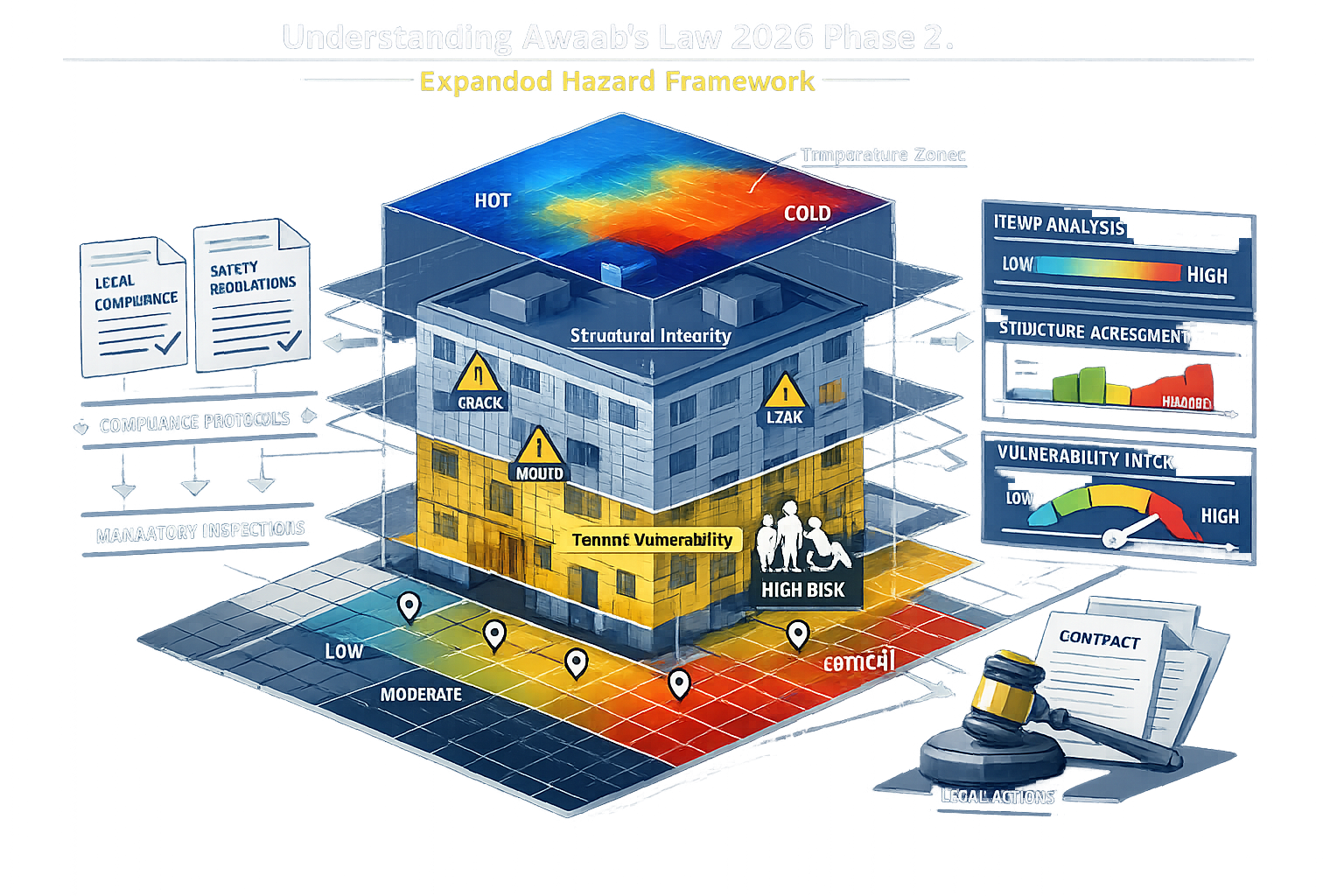
Perhaps the most significant shift in Phase 2 is the requirement for individualized hazard assessment based on tenant characteristics rather than applying generic HHSRS scoring to all occupants[3].
Who Qualifies as a Vulnerable Tenant?
Vulnerable populations requiring enhanced assessment protocols include:
| Vulnerability Category | Specific Considerations | Temperature Sensitivity | Falls Risk Multiplier |
|---|---|---|---|
| Elderly (65+) | Reduced thermoregulation, mobility limitations | High | 3-4x baseline |
| Young Children (0-5) | Developing immune systems, crawling/early walking | High | 2-3x baseline |
| Respiratory Conditions | Asthma, COPD, bronchitis exacerbated by temperature extremes | Very High | 1.5x baseline |
| Mobility Impairments | Wheelchair users, walking aids, balance disorders | Moderate | 4-5x baseline |
| Cognitive Impairments | Dementia, acquired brain injury affecting hazard recognition | Moderate | 3-4x baseline |
| Cardiovascular Disease | Heat intolerance, medication interactions | Very High | 2x baseline |
Temperature Thresholds for Vulnerable Populations
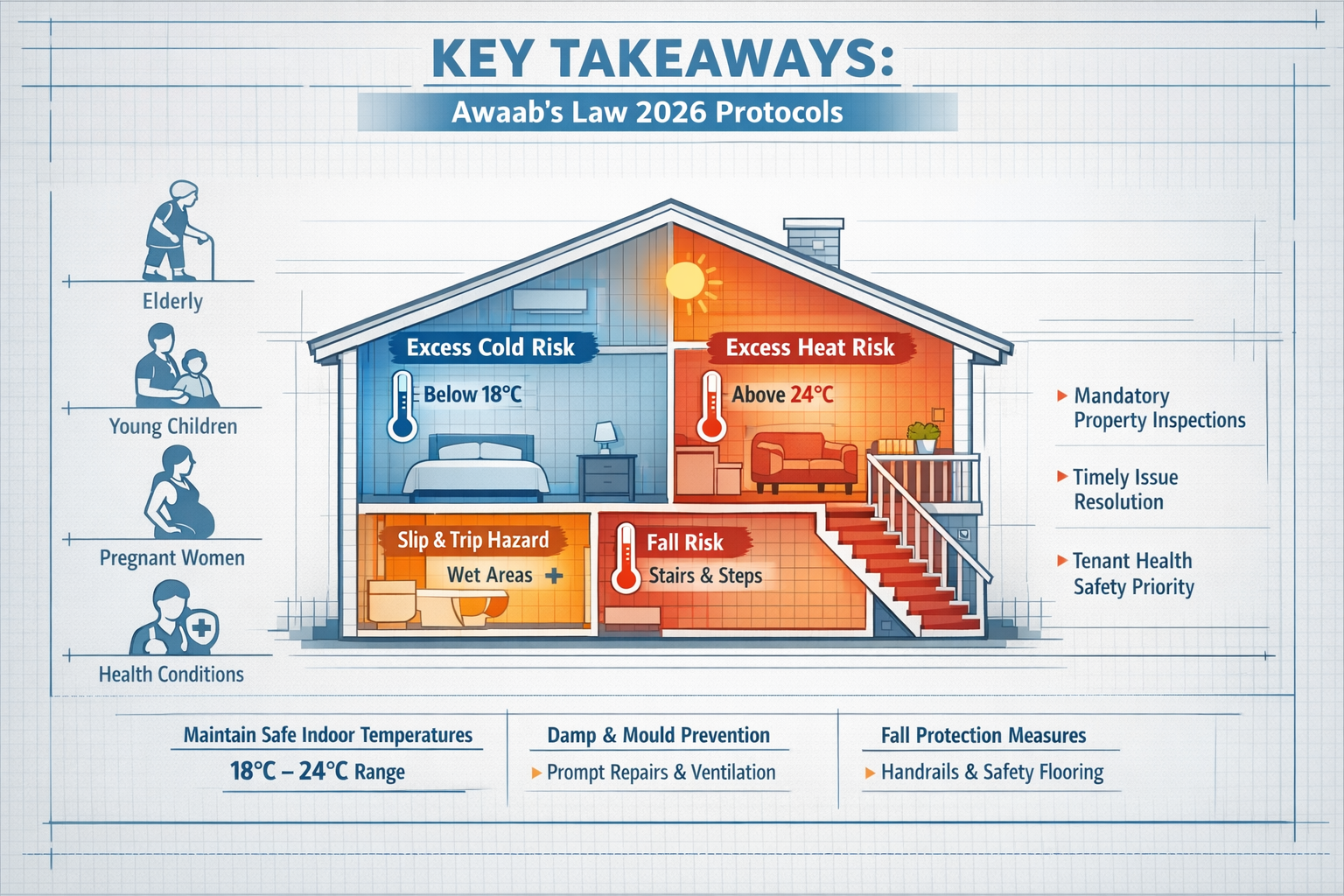
While the World Health Organization recommends indoor temperatures of 18°C minimum for general populations, vulnerable tenants require different standards[2][4]:
Excess Cold Thresholds:
- General population: Below 18°C
- Elderly/respiratory conditions: Below 21°C
- Young children: Below 20°C
Excess Heat Thresholds:
- General population: Above 26°C
- Elderly/cardiovascular conditions: Above 24°C
- Respiratory conditions: Above 25°C (with humidity consideration)
These individualized thresholds mean that a property deemed acceptable for general letting may constitute a significant hazard when occupied by vulnerable tenants[3].
Conducting Tenant-Specific Hazard Assessments
Surveyors must gather information about:
- Tenant Demographics: Age, health conditions, mobility status
- Occupancy Patterns: Time spent in property, bedroom locations
- Historical Incidents: Previous falls, temperature-related health episodes
- Adaptive Equipment: Walking aids, mobility devices, medical equipment requiring specific environmental conditions
This information transforms the HHSRS scoring process. A bathroom without grab rails might score as Category 2 (minor) for a healthy 40-year-old but becomes Category 1 (significant) for an 80-year-old with osteoporosis and balance issues[3].
Written Communication Requirements
All assessment findings must be communicated to tenants in clear, jargon-free written summaries within 48 hours of survey completion[5]. This summary must include:
- ✍️ Plain-language description of identified hazards
- ✍️ Explanation of health risks specific to tenant circumstances
- ✍️ Timeline for remedial works
- ✍️ Interim safety measures (if applicable)
- ✍️ Contact information for follow-up questions
- ✍️ Explicit urgency flagging for significant hazards
For first-time buyers purchasing bungalows intended for elderly relatives, understanding these protocols is essential for ensuring the property meets enhanced standards before occupation.
PRS Compliance Checklist: Implementing Excess Temperature and Falls Hazards in Bungalow Building Surveys: Awaab's Law 2026 Protocols for Vulnerable Tenants
Private Rented Sector (PRS) landlords must now implement systematic monitoring and response protocols that go far beyond traditional reactive maintenance[1][5].
Pre-Letting Assessment Protocol
Before advertising any bungalow property:
- Commission Level 3 Building Survey with specific Awaab's Law 2026 compliance assessment
- Conduct Thermal Performance Testing during both heating and cooling seasons
- Document Baseline Conditions with timestamped photography and diagnostic readings
- Identify Tenant Vulnerability Factors if known occupants
- Complete HHSRS Assessment for all Phase 2 hazard categories
- Implement Remedial Works for any significant hazards before letting
- Provide Written Hazard Disclosure to prospective tenants
Ongoing Monitoring Requirements
Annual Assessment Cycle:
- 📅 Thermal imaging survey (ideally winter and summer)
- 📅 Moisture and humidity testing in all rooms
- 📅 Lighting level verification in circulation areas and bathrooms
- 📅 Structural integrity check for level surfaces
- 📅 Grab rail and safety equipment inspection
- 📅 Tenant health status review (with consent)
Triggered Assessments:
Landlords must conduct immediate investigation (within 10 working days) upon:
- Tenant complaint regarding temperature extremes
- Reported falls or near-miss incidents
- Visible deterioration of structural elements
- Changes in tenant health status affecting vulnerability classification
- Adverse weather events (flooding, extreme heat/cold)
Staff Training and Organizational Readiness
Social housing providers and professional landlords must ensure[1]:
- Frontline Staff Training: Recognition of Phase 2 hazard indicators beyond damp and mould
- Surveyor Upskilling: Competency in thermal imaging, moisture analysis, and vulnerability assessment
- Contractor Briefing: Understanding of statutory timelines and documentation requirements
- Data Integration: Repairs data treated as compliance asset, not just maintenance log
- Triage Protocols: Formal systems for categorizing hazard severity and prioritizing response
Organizations can learn from expert building evaluation methodologies to develop robust internal protocols.
Technology Integration for Compliance Management
Modern compliance requires digital systems that:
- 🖥️ Track statutory deadlines from hazard awareness through remediation completion
- 🖥️ Store diagnostic evidence (thermal images, photographs, test results)
- 🖥️ Generate compliant written summaries with standardized templates
- 🖥️ Monitor tenant vulnerability profiles with privacy safeguards
- 🖥️ Produce audit trails for regulator inspection
- 🖥️ Flag escalation triggers for legal/enforcement risk
Budget Planning for Phase 2 Compliance
Landlords should anticipate increased costs for:
| Cost Category | Typical Range (2026) | Frequency |
|---|---|---|
| Level 3 Survey with Thermal Imaging | £800-£1,500 | Annual or biennial |
| Bathroom Safety Modifications | £1,200-£3,500 | One-time per property |
| Ventilation System Upgrades | £2,000-£8,000 | One-time per property |
| Insulation Improvements | £3,000-£12,000 | One-time per property |
| Level Surface Remediation | £500-£2,500 | As needed |
| Staff Training Programs | £200-£500 per person | Annual refresher |
These investments must be balanced against the risk of unlimited fines for non-compliance and potential price reduction negotiations when properties fail to meet enhanced standards[3].
Case Study: Applying 2026 Protocols to a Typical Bungalow Scenario
Property Profile:
- 1960s two-bedroom bungalow
- Elderly tenant (78 years) with mobility limitations
- Original single-glazed windows
- Gas central heating (20-year-old boiler)
- Bathroom without grab rails
- Uneven threshold at rear door
Level 3 Survey Findings:
Excess Temperature Hazards:
- Thermal imaging revealed significant heat loss through roof (inadequate insulation depth)
- Summer afternoon temperatures in main bedroom reached 28°C (above 24°C threshold for elderly occupant)
- Single-glazed windows contributing to both heat loss and heat gain
- Inadequate trickle ventilation in habitable rooms
Falls Hazards:
- Bathroom floor slip resistance below recommended pendulum test value
- No grab rails at bath or toilet
- Lighting level in bathroom measured at 85 lux (below 200 lux minimum)
- 45mm height differential at rear door threshold without handrail
- Worn carpet edge in hallway creating trip hazard
HHSRS Classification:
For general population: Multiple Category 2 hazards (minor)
For elderly tenant with mobility limitations: Category 1 hazards (significant) requiring statutory response[3]
Landlord Response (Compliant):
Day 1-10 (Investigation Phase):
- Commissioned Level 3 survey with thermal imaging
- Documented tenant vulnerability factors
- Photographed all identified hazards
- Obtained specialist reports for structural and mechanical systems
Day 11-13 (Written Summary):
- Provided tenant with plain-language summary of findings
- Explained health risks specific to her circumstances
- Outlined proposed remediation timeline
- Implemented interim measures (portable lighting, warning signage)
Day 14-18 (Remediation Commencement):
- Installed bathroom grab rails (immediate safety improvement)
- Ordered materials for insulation upgrade
- Scheduled window replacement
- Engaged contractor for floor leveling and carpet replacement
Week 12 (Complex Works):
- Completed loft insulation upgrade (300mm depth)
- Installed secondary glazing (cost-effective alternative to full replacement)
- Upgraded bathroom lighting to 250 lux
- Installed mechanical ventilation with heat recovery (MVHR) system
- Remediated threshold and installed handrail
Total Cost: £14,500
Compliance Status: Achieved within statutory timelines
Tenant Outcome: Significant reduction in falls risk and improved thermal comfort
This case demonstrates how choosing the right property assessment methodology directly impacts compliance outcomes.
Enforcement Landscape and Consequences of Non-Compliance
The 42% increase in hazard-related complaints during Q1 2026 signals heightened tenant awareness and regulatory scrutiny[7]. Enforcement mechanisms include:
Local Authority Powers
Environmental Health Officers can:
- 🚨 Issue Improvement Notices requiring specific works within defined timelines
- 🚨 Serve Prohibition Orders preventing property occupation until hazards remediated
- 🚨 Conduct Emergency Remedial Action and recover costs from landlords
- 🚨 Impose Unlimited Fines for HHSRS breaches (no maximum penalty)
- 🚨 Prosecute landlords for criminal offenses where serious harm occurs
Housing Ombudsman Jurisdiction
Social housing tenants can escalate complaints to the Housing Ombudsman, which can:
- Order financial compensation for tenants
- Require specific remedial actions
- Publish adverse findings damaging organizational reputation
- Recommend systemic changes to landlord policies
Civil Litigation Risk
Tenants suffering harm from unaddressed hazards may pursue:
- Personal injury claims for falls or temperature-related health impacts
- Housing disrepair claims for breach of statutory obligations
- Judicial review of local authority enforcement decisions
For landlords, the financial and reputational consequences of non-compliance far exceed the cost of proactive assessment and remediation. Understanding what surveyors assess helps landlords anticipate regulatory expectations.
Future-Proofing Bungalow Properties for Enhanced Standards
Beyond minimum compliance, forward-thinking landlords are implementing measures that exceed current requirements:
Smart Home Technology Integration
- Temperature monitoring systems with remote alerts for threshold breaches
- Fall detection sensors in bathrooms and circulation areas
- Automated lighting responding to occupancy and ambient light levels
- Humidity control systems maintaining optimal moisture levels
Universal Design Principles
- Level access throughout (eliminating all thresholds)
- Wider doorways (900mm minimum) for mobility aid access
- Wet room conversions eliminating bath/shower barriers
- Contrast marking at level changes for visual impairment
- Lever-style controls for all fixtures (easier than rotary knobs)
Enhanced Thermal Performance
- Passive house principles (airtightness, super-insulation, MVHR)
- Solar shading for south-facing glazing (excess heat mitigation)
- Thermal mass materials moderating temperature fluctuations
- Ground source heat pumps providing efficient heating/cooling
These enhancements not only ensure compliance but create properties that command premium rents and attract quality tenants who value safety and comfort.
Conclusion: Embracing the Proactive Compliance Culture
Excess Temperature and Falls Hazards in Bungalow Building Surveys: Awaab's Law 2026 Protocols for Vulnerable Tenants represents more than regulatory compliance—it embodies a fundamental shift toward preventative, tenant-centered property management that recognizes housing as a determinant of health outcomes.
The 2026 Phase 2 expansion demands that landlords, surveyors, and housing providers move beyond reactive repair culture to implement systematic monitoring, evidence-based assessment, and timely remediation protocols. For bungalows housing vulnerable populations, this means recognizing that single-story living eliminates some hazards while intensifying others, particularly around temperature control and bathroom safety.
Actionable Next Steps for Landlords and Property Managers
Immediate Actions (This Month):
- ✅ Commission Level 3 surveys with thermal imaging for all bungalow properties
- ✅ Document tenant vulnerability profiles (with appropriate consent)
- ✅ Review existing hazard awareness and response procedures
- ✅ Establish statutory timeline tracking systems
- ✅ Conduct staff training on Phase 2 hazard categories
Short-Term Actions (Next Quarter):
- ✅ Implement digital compliance management systems
- ✅ Complete bathroom safety audits and install grab rails where needed
- ✅ Address all identified Category 1 hazards
- ✅ Develop tenant communication templates for hazard disclosure
- ✅ Budget for ongoing monitoring and remediation programs
Long-Term Strategic Actions:
- ✅ Integrate universal design principles in property acquisition criteria
- ✅ Develop partnerships with specialist contractors for rapid response
- ✅ Implement smart home monitoring technology
- ✅ Create internal centers of excellence for HHSRS compliance
- ✅ Establish regular dialogue with local authority enforcement teams
For surveyors, the 2026 protocols demand enhanced technical competency, sophisticated diagnostic equipment, and nuanced understanding of how tenant characteristics transform hazard severity. The profession must evolve from describing conditions to providing actionable, compliance-focused recommendations that enable landlords to meet statutory obligations.
For tenants, particularly vulnerable populations in bungalow properties, Awaab's Law 2026 provides unprecedented protections and clear remediation timelines. Understanding these rights empowers tenants to advocate for safe, healthy housing conditions.
The regulatory landscape will continue evolving, but the fundamental principle remains constant: housing providers bear legal and moral responsibility for ensuring properties do not pose health hazards to occupants. By embracing proactive assessment, evidence-based remediation, and tenant-centered protocols, the sector can transform compliance from burden to competitive advantage.
Those seeking expert guidance should consider engaging chartered surveyors with RICS credentials who understand both technical assessment methodologies and regulatory compliance frameworks. The investment in professional expertise pays dividends in risk mitigation, tenant satisfaction, and long-term property value preservation.
References
[1] Awaabs Law Phase 2 Is Coming What Social Landlords Need To Know About Additional Hazard Compliance In 2026 – https://www.mobysoft.com/resources/blogs/awaabs-law-phase-2-is-coming-what-social-landlords-need-to-know-about-additional-hazard-compliance-in-2026/
[2] Awaabs Law 2026 Hazard Expansions Surveyor Protocols For Electrical Fire And Excess Heat Risks In Rentals – https://nottinghillsurveyors.com/blog/awaabs-law-2026-hazard-expansions-surveyor-protocols-for-electrical-fire-and-excess-heat-risks-in-rentals
[3] Awaabs Law Is Here The Surveyors Guide For Compliance – https://www.surventrix.com/blog/awaabs-law-is-here-the-surveyors-guide-for-compliance
[4] Awaabs Law Technical Compliance Hvac Ventilation – https://www.arm-environments.com/resources/awaabs-law-technical-compliance-hvac-ventilation
[5] Awaabs Law Awareness Triage And Categorisation Of Hazards – https://www.sussexdampexperts.com/awaabs-law-awareness-triage-and-categorisation-of-hazards/
[6] Awaabs Law Phase 2 What It Covers And What Housing Providers Should Be Doing Now – https://www.madetech.com/blog/awaabs-law-phase-2-what-it-covers-and-what-housing-providers-should-be-doing-now/
[7] Expert Witness Preparation For Awaabs Law 2026 Expansions Testifying On New Rental Hazards Like Fire And Electrical Risks – https://nottinghillsurveyors.com/blog/expert-witness-preparation-for-awaabs-law-2026-expansions-testifying-on-new-rental-hazards-like-fire-and-electrical-risks