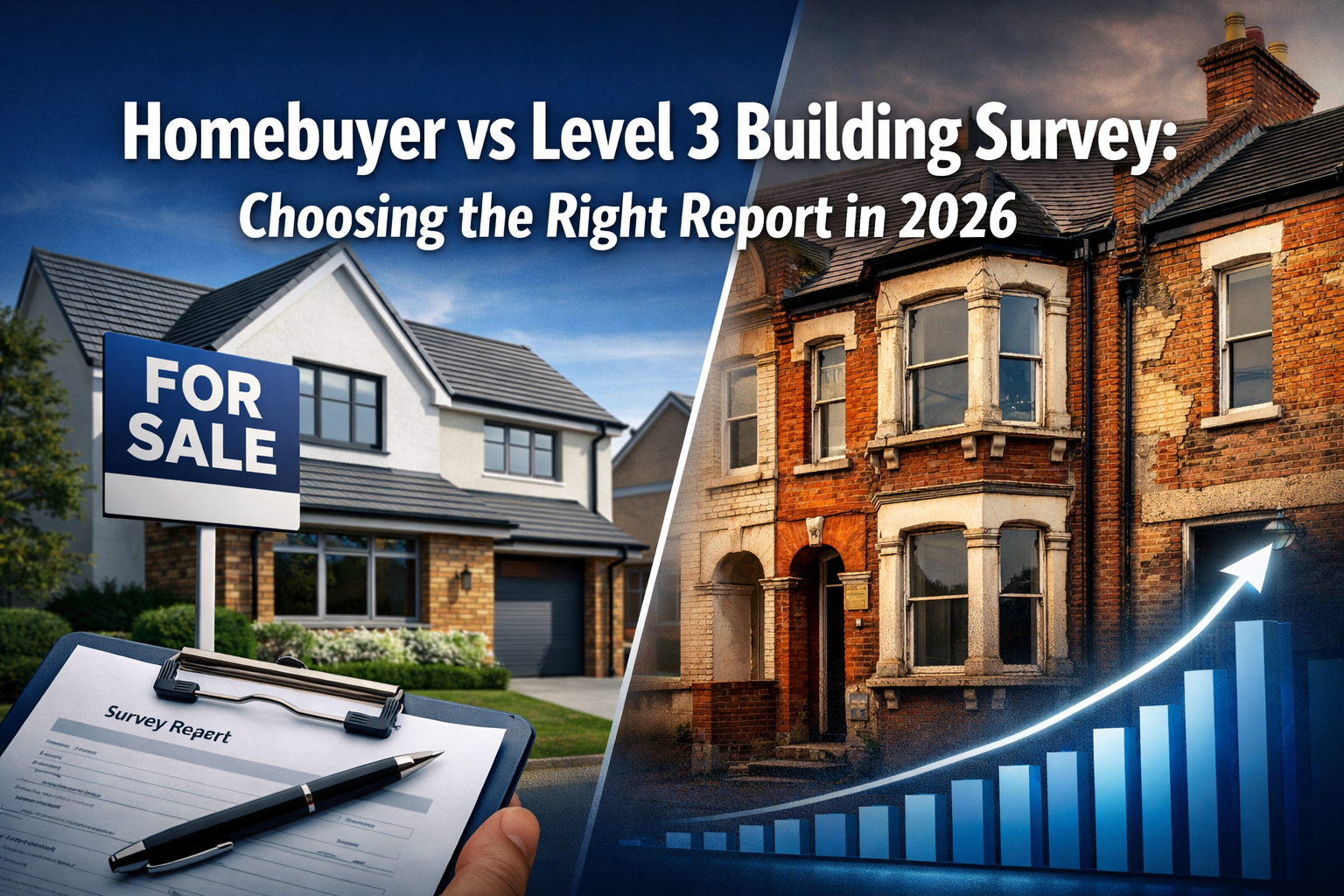
The UK property market is experiencing a notable shift in 2026. Transaction volumes are climbing, yet buyers are approaching purchases with heightened caution—and for good reason. With mortgage rates stabilising and property values adjusting after years of volatility, choosing the right property survey has never been more critical. Understanding the Homebuyer vs Level 3 Building Survey: How to Choose the Right Report in a Recovering UK Market can mean the difference between a sound investment and a costly mistake that haunts you for years.
As the market recovers, the stakes are higher. More buyers are competing for properties, yet the lessons of recent economic uncertainty have made due diligence essential. The survey you choose directly impacts your negotiating power, financial planning, and long-term property satisfaction. This comprehensive guide will help you navigate the crucial decision between a Level 2 HomeBuyer Report and a Level 3 Building Survey in today's recovering market conditions.
Key Takeaways
- Property age is the primary decision factor: Homes under 80-100 years in good condition typically suit Level 2 surveys, while older or altered properties require Level 3 inspection[1][3]
- Level 3 surveys provide comprehensive structural analysis including hidden defects, timber condition, and remedial work scope—essential for period properties and renovation projects[4]
- Cost differences are significant but justified: Level 2 surveys average £500+, while Level 3 ranges from £630-£1,500+, but can save thousands by identifying major issues early[3][5]
- The 2026 market demands informed decisions: Higher transaction volumes mean more competition, making thorough property assessment crucial for negotiation and avoiding overpayment
- Pre-purchase consultation with chartered surveyors ensures you select the appropriate survey level, preventing expensive surprises and matching inspection depth to property complexity[1]
Understanding the Fundamentals: Level 2 vs Level 3 Surveys
What Is a Level 2 HomeBuyer Report?
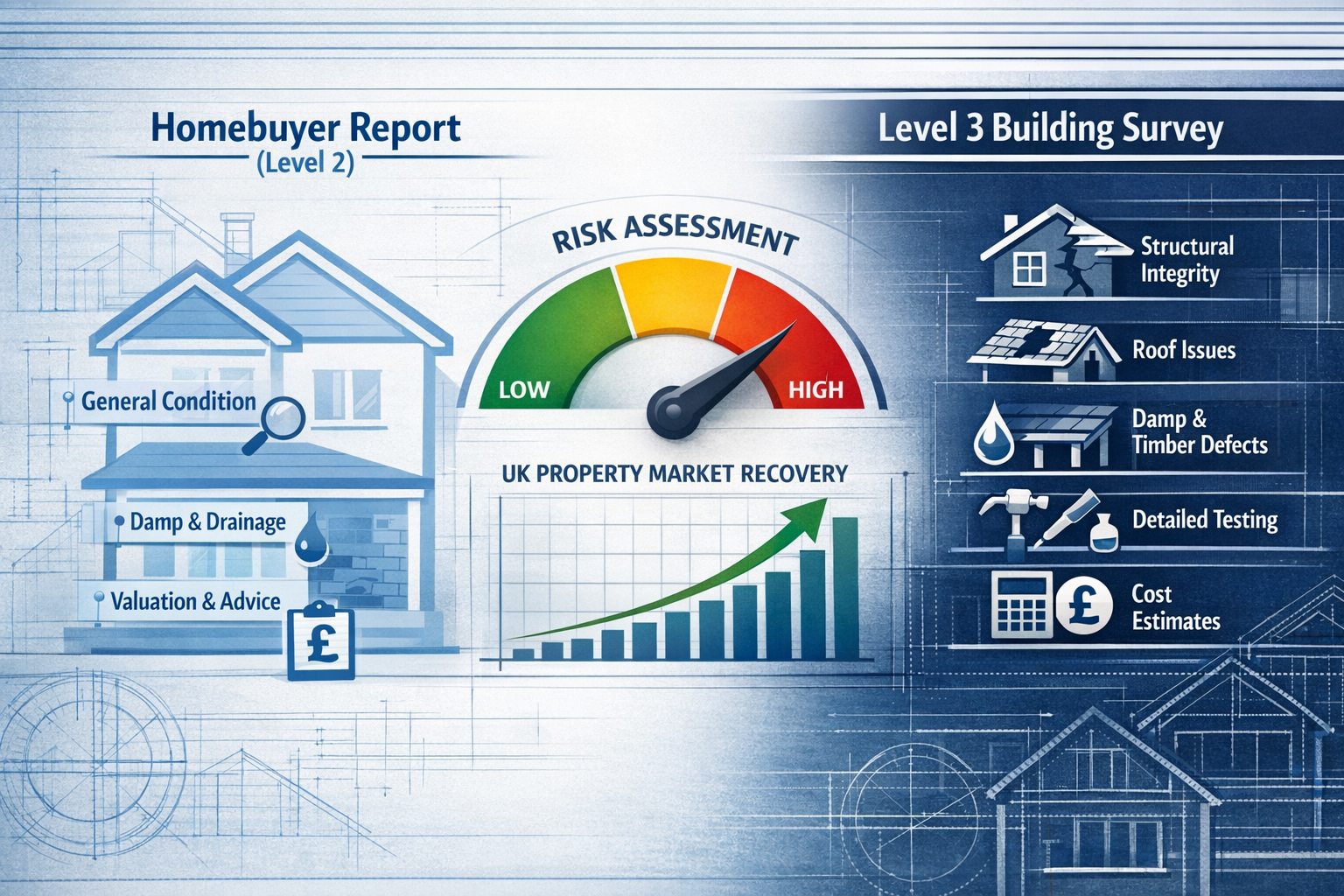
The Level 2 survey, formally known as the RICS HomeBuyer Report, represents the middle ground in property inspection services. Designed for conventional properties in reasonable condition, this survey provides a structured assessment using the familiar traffic-light rating system (🔴 red for urgent, 🟡 amber for attention needed, 🟢 green for satisfactory)[1].
Level 2 surveys are best suited for:
- Properties built after 1900
- Homes constructed within the last 80-100 years
- Standard construction methods without significant alterations
- Properties in reasonable to good condition
- Modern estates and conventional builds
The report includes basic advice on repairs and maintenance priorities, along with market valuation and insurance reinstatement costs[3]. However, it's important to understand what Level 2 surveys don't cover: they do not involve deep investigation into hidden structural elements, extensive testing of services, or detailed analysis of roof spaces and subfloors.
For those considering this option, reviewing a complete property survey guide can provide valuable insight into what to expect from the final report.
What Is a Level 3 Building Survey?
The Level 3 Building Survey (formerly known as a Full Structural Survey) represents the most comprehensive inspection available to property buyers. This detailed examination goes significantly beyond surface-level assessment to investigate the property's structural integrity, construction quality, and potential hidden defects[2][4].
Level 3 surveys are recommended for:
- Properties older than 80-100 years
- Listed buildings or those in conservation areas
- Homes with unusual construction methods
- Properties showing visible defects (cracks, damp, subsidence)
- Buildings that have undergone significant alterations
- Properties where major renovations are planned
- Homes in below-average condition
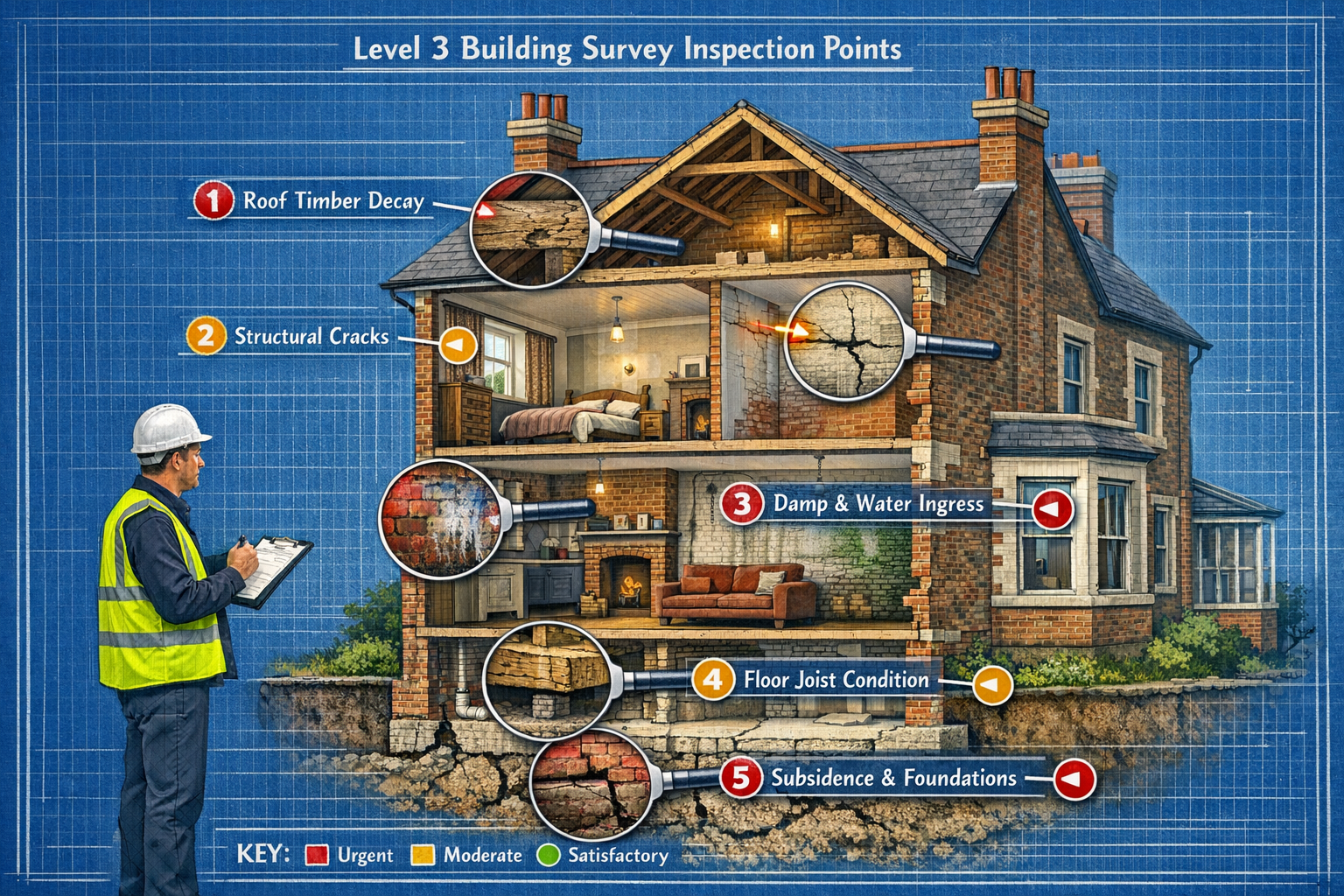
The survey includes comprehensive structural assessment covering:
✅ Detailed analysis of structural movement and stability
✅ Thorough roof space inspection including timber condition
✅ Damp risk evaluation and moisture penetration analysis
✅ Identification of defect causes and consequences of non-repair
✅ Scope and priority of remedial work required
✅ Strategic guidance on repair sequencing and timescales[1][5]
Unlike Level 2 surveys, Level 3 reports do not typically include market valuations—the focus is entirely on condition, construction, and maintenance requirements[3]. For buyers planning to book a building survey in London, understanding this comprehensive approach is essential.
Key Differences at a Glance
| Feature | Level 2 HomeBuyer Report | Level 3 Building Survey |
|---|---|---|
| Property Age | Under 80-100 years | Over 80 years or any age with concerns |
| Condition Required | Reasonable to good | Any condition, especially poor |
| Inspection Depth | Visual, non-invasive | Comprehensive, detailed investigation |
| Report Format | Traffic-light ratings | Detailed narrative with technical analysis |
| Valuation Included | Yes ✅ | No ❌ |
| Average Cost | £500+ VAT[3] | £630-£1,500+[3][5] |
| Hidden Defects | Limited detection | Extensive investigation |
| Renovation Planning | Basic guidance | Detailed scope and sequencing |
When to Choose Each Survey Type in Today's Market
The 80-100 Year Threshold: Your Primary Decision Point
Property age represents the critical decision factor when choosing between survey levels. The 80-100 year threshold exists because construction methods, materials, and building standards changed significantly throughout the 20th century[3].
Properties built before 1920-1940 typically feature:
- Solid wall construction (no cavity walls)
- Lime mortar rather than cement
- Traditional timber frame elements
- Original drainage systems
- Period-specific structural challenges
These characteristics mean older properties require the deeper investigation that only Level 3 surveys provide. The complexity of period construction, combined with decades of potential alterations, wear, and previous repairs, creates risks that surface-level inspection cannot adequately assess.
For modern properties built after 1940, particularly those constructed in the last 50 years using standard methods and showing no visible defects, a Level 2 survey typically provides sufficient information for an informed purchase decision[1].
Visible Defect Indicators That Demand Level 3
Regardless of property age, certain high-risk indicators should immediately point you toward a Level 3 survey:
🚨 Structural Warning Signs:
- Cracks wider than 5mm, especially diagonal or stepped patterns
- Uneven floors or sloping ceilings
- Doors and windows that stick or won't close properly
- Visible bulging in walls
- Gaps between walls and ceilings/floors
🚨 Moisture and Damp Issues:
- Visible damp patches or staining
- Musty odours or condensation problems
- Peeling paint or wallpaper
- Rotting woodwork or window frames
🚨 Alteration and Extension Concerns:
- Major structural alterations or extensions
- Removed chimney breasts or load-bearing walls
- Loft conversions or basement conversions
- Evidence of undocumented building work
When these indicators are present, the additional cost of a Level 3 survey is justified by the risk of missing serious structural issues that could cost tens of thousands to remedy[1]. Understanding when you can renegotiate after a poor building survey result makes this investment even more valuable.
Market Conditions in 2026: Why Thorough Surveys Matter More
The recovering UK property market in 2026 presents unique challenges that make survey choice particularly important:
Increased Competition 📈
Higher transaction volumes mean more buyers competing for properties. A comprehensive survey gives you negotiating leverage that other buyers may lack, allowing you to secure better terms or identify deal-breakers before committing.
Price Stability Concerns 💷
After years of volatility, buyers are more cautious about overpaying. A thorough survey provides the evidence needed to negotiate price reductions based on actual defects. Research shows that building surveys can support average price reductions that far exceed the survey cost.
Mortgage Lender Requirements 🏦
Lenders are increasingly cautious in 2026, particularly for older properties or those with visible concerns. A Level 3 survey can identify issues that might affect mortgage approval, preventing wasted application fees and legal costs.
Renovation Planning 🔨
Many 2026 buyers are purchasing properties below peak condition with renovation plans. Level 3 surveys provide the detailed scope of work and priority sequencing essential for accurate budgeting and project planning[5].
Property Types and Their Survey Requirements
Understanding how different property types align with survey levels helps clarify your decision:
Level 2 Suitable Properties:
- Post-war estates (1945 onwards)
- Modern developments (1980s-present)
- Standard semi-detached and terraced homes under 80 years
- Purpose-built flats in good condition
- Properties with recent, documented maintenance
Level 3 Essential Properties:
- Victorian and Edwardian terraces
- Georgian townhouses
- Listed buildings of any age
- Properties with thatched roofs or unusual construction
- Converted buildings (barns, churches, commercial)
- Properties showing any structural concerns
- Homes requiring significant renovation
For guidance specific to different property types and construction methods, exploring resources on home survey levels 2 vs level 3 provides additional context for making an informed choice.
Making Your Decision: Cost, Risk, and Long-Term Value
Understanding the True Cost-Benefit Analysis
Survey costs represent a small percentage of your total property investment, yet the information they provide can save or cost you thousands. Let's examine the real financial implications:
Level 2 HomeBuyer Report Costs:
- Average cost: £500 + VAT[3]
- Typical property value protected: £200,000-£400,000
- Cost as percentage of purchase: 0.13-0.25%
Level 3 Building Survey Costs:
- Average cost range: £630-£1,500+ depending on size and complexity[3][5]
- Typical property value protected: £300,000-£800,000+
- Cost as percentage of purchase: 0.10-0.50%
The return on investment becomes clear when you consider potential savings:
💡 Example Scenario:
A £900 Level 3 survey on a £450,000 Victorian terrace identifies:
- Roof repairs needed: £8,000
- Damp treatment required: £3,500
- Subsidence monitoring recommended: £2,000
- Total defects identified: £13,500
Armed with this information, the buyer negotiates a £10,000 price reduction, resulting in a net benefit of £9,100 from the survey investment—an 1,011% return.
This cost-benefit analysis demonstrates why experienced buyers view comprehensive surveys not as expenses, but as strategic investments in informed decision-making[1].
The Hidden Costs of Choosing the Wrong Survey Level
Selecting an insufficient survey level can result in expensive consequences that far exceed any initial savings:
Scenario 1: Level 2 on an Unsuitable Property
A buyer chooses a £500 Level 2 survey for a 1920s property showing minor cracks. The surface-level inspection misses:
- Progressive subsidence requiring £25,000 underpinning
- Roof timber decay necessitating £12,000 replacement
- Outdated electrical system needing £5,000 rewiring
- Total unexpected costs: £42,000
Scenario 2: Level 3 Providing Comprehensive Protection
A buyer invests £1,200 in a Level 3 survey for the same property type. The detailed investigation identifies all issues before purchase, allowing the buyer to:
- Withdraw from the purchase and avoid a money pit
- Negotiate a £35,000 price reduction
- Budget accurately for planned remedial work
- Result: Informed decision and significant savings
The pattern is clear: choosing the appropriate survey level based on property characteristics prevents costly surprises and supports confident decision-making[2].
Pre-Purchase Consultation: The Often-Overlooked Step
One of the most valuable yet underutilised aspects of the survey process is the pre-instruction consultation with a chartered surveyor. Before committing to either survey level, experienced professionals recommend discussing:
✅ Property-Specific Factors:
- Age, construction type, and visible condition
- History of alterations or extensions
- Known issues in the area (subsidence, flooding)
- Your renovation plans and timeline
✅ Market Context:
- Current property values and negotiation potential
- Lender requirements for the specific property
- Insurance implications of identified defects
✅ Survey Customisation:
- Additional investigations that might be needed
- Specific areas of concern to prioritise
- Timeline and report delivery expectations
This consultation ensures you match the survey level to the property's actual complexity rather than making assumptions based on age alone[1]. Many buyers discover that properties they assumed needed Level 3 surveys are actually suitable for Level 2, or vice versa—saving money or preventing inadequate assessment.
For those preparing for their survey, understanding what to do before an RICS home survey can streamline the process and ensure maximum value from the inspection.
Special Considerations for 2026 Buyers
Several factors specific to the 2026 market environment influence survey decisions:
Energy Efficiency and Sustainability 🌱
With increasing focus on energy performance and sustainability, buyers should consider whether their chosen survey level adequately addresses:
- Insulation quality and thermal efficiency
- Heating system condition and efficiency
- Potential for renewable energy installations
- Compliance with evolving building regulations
Level 3 surveys typically provide more detailed analysis of these factors, particularly valuable for older properties requiring energy upgrades.
Climate Change Impacts 🌧️
Increased flooding, subsidence from drought, and extreme weather require thorough assessment of:
- Drainage systems and flood risk
- Foundation stability in changing soil conditions
- Roof integrity against severe weather
Future-Proofing Your Investment 🔮
In a recovering market, buyers are thinking long-term. Level 3 surveys provide the strategic maintenance planning needed to:
- Prioritise repairs by urgency and cost
- Plan renovation sequencing efficiently
- Budget for 5-10 year maintenance cycles
- Understand the property's true long-term value[5]
Making the Final Decision: A Simple Framework
To determine which survey level suits your situation, work through this decision framework:
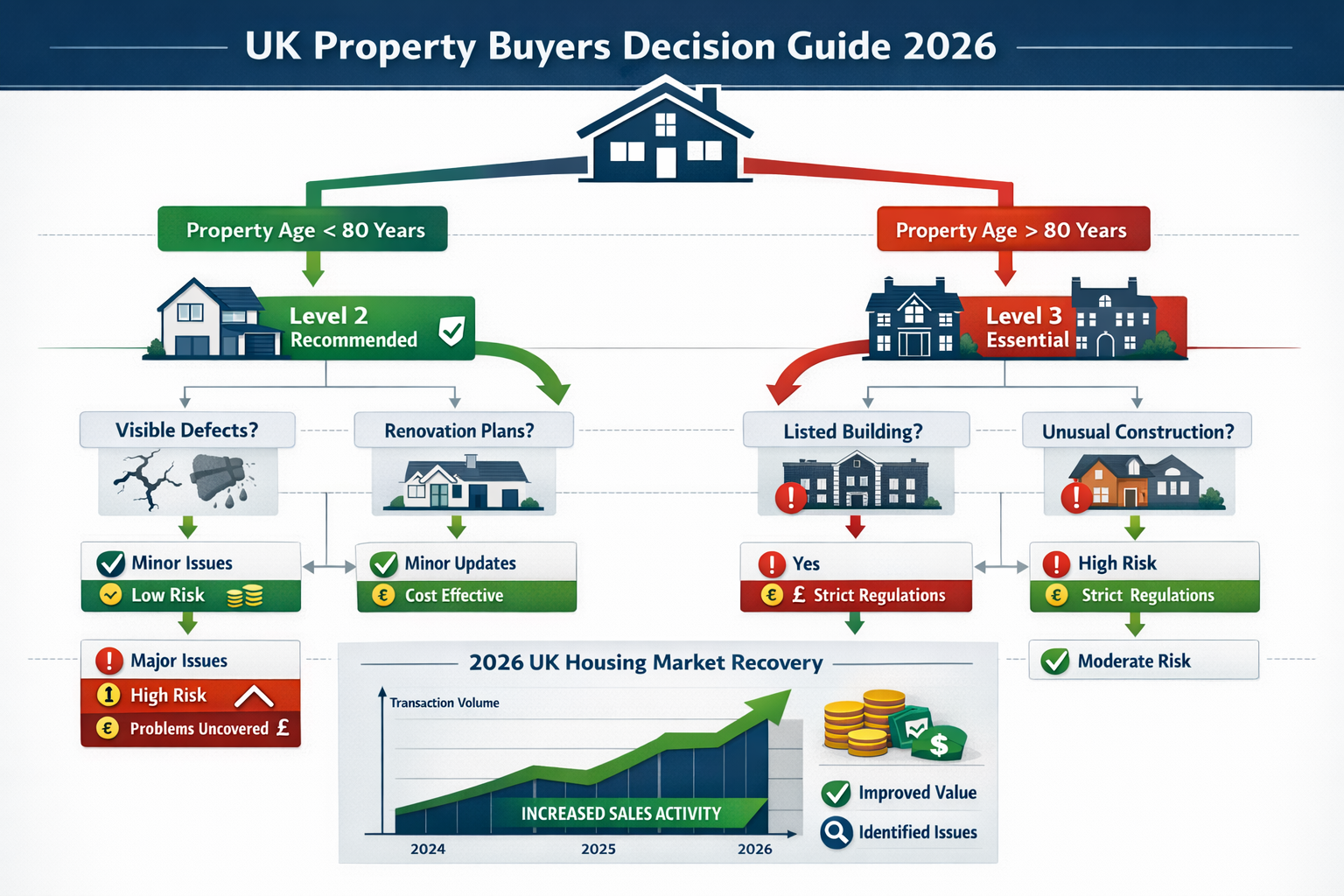
Step 1: Assess Property Age
- Under 80 years + good condition = Consider Level 2
- Over 80 years OR any concerns = Consider Level 3
Step 2: Evaluate Visible Condition
- No visible defects + standard construction = Level 2 likely sufficient
- ANY visible defects or unusual features = Level 3 essential
Step 3: Consider Your Plans
- Living as-is with minimal changes = Level 2 may suffice
- Planning renovations or extensions = Level 3 provides crucial detail
Step 4: Calculate Risk Tolerance
- Comfortable with some uncertainty = Level 2 acceptable for suitable properties
- Want comprehensive understanding = Level 3 provides peace of mind
Step 5: Consult a Professional
- Discuss your specific property with a chartered surveyor
- Get expert recommendation before instructing survey
- Ensure chosen level matches property complexity[1]
For those seeking professional guidance on RICS building surveys, expert consultation ensures you make the most appropriate choice for your circumstances.
Regional Considerations and Local Expertise
The UK property market varies significantly by region, and local knowledge plays a crucial role in survey selection. Properties in different areas face unique challenges:
London and Southeast England:
- Higher property values justify comprehensive surveys
- Victorian and Edwardian stock dominates many areas
- Subsidence risk from clay soil conditions
- Historic alterations and conversions common
Northern England and Midlands:
- Mix of Victorian terraces and post-war estates
- Mining subsidence concerns in specific areas
- Lower property values may influence cost-benefit analysis
- Industrial heritage buildings requiring specialist assessment
Scotland and Wales:
- Different building traditions and construction methods
- Stone construction requiring specialist knowledge
- Rural properties with unique challenges
- Listed building concentrations in historic areas
Working with local surveyors who understand regional property characteristics ensures your survey addresses area-specific concerns and provides relevant, actionable advice.
Common Mistakes to Avoid
When deciding between survey levels, buyers frequently make these costly errors:
❌ Choosing based solely on cost rather than property suitability
❌ Assuming newer properties don't need thorough inspection
❌ Skipping surveys entirely in competitive markets
❌ Not reading the survey report thoroughly before completion
❌ Failing to act on serious defects identified
❌ Instructing surveys without pre-purchase consultation
❌ Choosing unqualified surveyors to save money
Each of these mistakes can result in financial losses far exceeding any survey cost savings. The recovering 2026 market makes thorough due diligence more important than ever, not less.
Conclusion
Understanding Homebuyer vs Level 3 Building Survey: How to Choose the Right Report in a Recovering UK Market is essential for making an informed property purchase in 2026. The decision fundamentally comes down to matching survey depth to property complexity, with the 80-100 year age threshold serving as a primary guide alongside visible condition, construction type, and your renovation plans.
Level 2 HomeBuyer Reports provide excellent value for modern, conventional properties in good condition, offering traffic-light ratings and market valuations at an accessible price point around £500[3]. However, they have clear limitations when it comes to older properties, unusual construction, or buildings showing defects.
Level 3 Building Surveys represent the comprehensive option for period properties, buildings with concerns, or situations where detailed understanding is essential for renovation planning. While costing £630-£1,500 or more[3][5], they provide the in-depth structural analysis that can save thousands through early defect identification and informed negotiation.
In the recovering 2026 market, with higher transaction volumes and more cautious buyers, choosing the right survey level is a strategic decision that impacts your negotiating position, financial planning, and long-term satisfaction with your property investment.
Your Next Steps
- Assess your target property against the age, condition, and construction criteria outlined in this guide
- Consult with a chartered surveyor before instructing any survey to ensure appropriate level selection
- Budget appropriately for the survey level your property requires—view it as investment, not expense
- Read your survey report thoroughly and seek clarification on any concerns before proceeding
- Use survey findings strategically in negotiations to ensure fair pricing and informed decision-making
The right survey provides not just information, but confidence and negotiating power in one of the most significant financial decisions you'll make. In 2026's recovering market, that confidence is invaluable.
For expert guidance on choosing the right survey for your property, consult with qualified RICS surveyors who understand both the technical requirements and the current market dynamics. Your property purchase deserves the thorough assessment that protects your investment for years to come.
References
[1] Difference Between Level 2 And Level 3 Survey Which One Do You Actually Need – https://westernbuildingconsultants.com/2026/02/27/difference-between-level-2-and-level-3-survey-which-one-do-you-actually-need/
[2] Choosing The Right House Survey In 2026 – https://www.house-survey.co.uk/news/choosing-the-right-house-survey-in-2026/
[3] Homebuyers Report Vs Building Survey – https://www.comparemymove.com/guides/surveying/homebuyers-report-vs-building-survey
[4] House Surveys Uk The Costs Types And Benefits Of An Rics Home Survey – https://www.rics.org/consumer-guides/house-surveys-uk-the-costs-types-and-benefits-of-an-rics-home-survey
[5] What Sort Of Survey Should I Have – https://hoa.org.uk/advice/guides-for-homeowners/i-am-buying/what-sort-of-survey-should-i-have/