
AI-Driven Building Surveys Under RICS 2026 Standards: Practical Protocols for Level 3 Accuracy and Efficiency
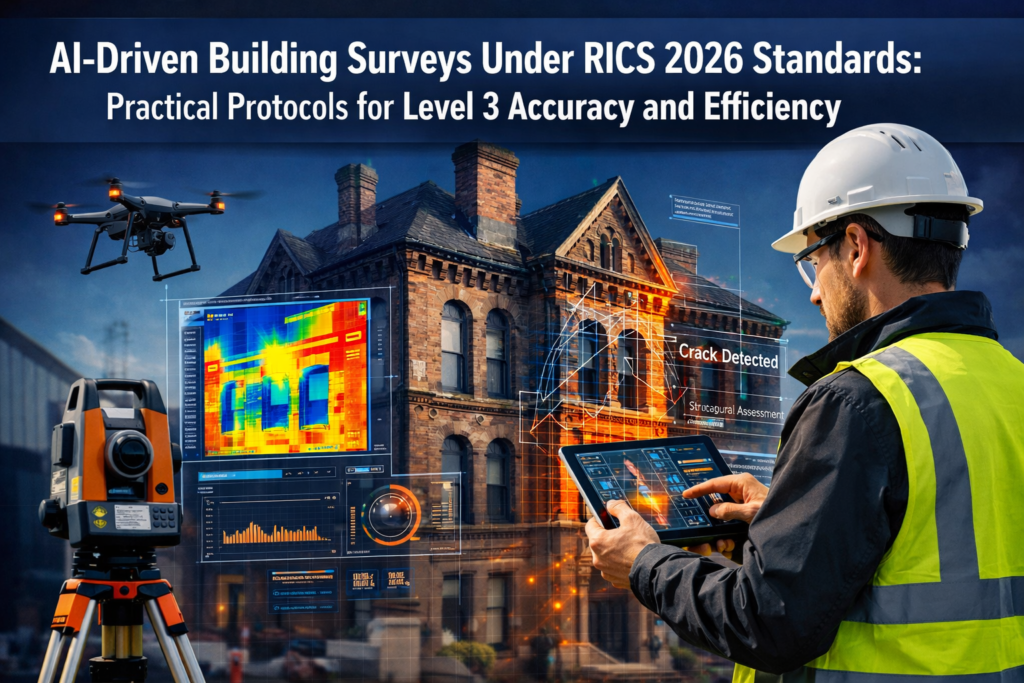
The Royal Institution of Chartered Surveyors (RICS) has fundamentally reshaped the surveying landscape with its Responsible Use of AI in Surveying Practice professional standard, which came into effect on March 9, 2026[1]. This regulatory milestone marks the first comprehensive framework governing artificial intelligence applications in property assessment, creating both opportunities and obligations for surveyors conducting […]
Level 3 Surveys for Institutional Buy-to-Let in Renewed 2026 Demand: Structural Protocols for Professional Landlord Portfolios

Institutional landlords are pouring capital into buy-to-let portfolios at unprecedented rates in 2026, even as retail investors retreat from regulatory uncertainty. This bullish institutional appetite—driven by professional fund managers and corporate landlords—demands survey protocols that far exceed traditional homebuyer requirements. Level 3 Surveys for Institutional Buy-to-Let in Renewed 2026 Demand: Structural Protocols for Professional Landlord […]
Geopolitical Uncertainty in Spring 2026 Valuations: RICS February Survey Insights for Northern England Resilience
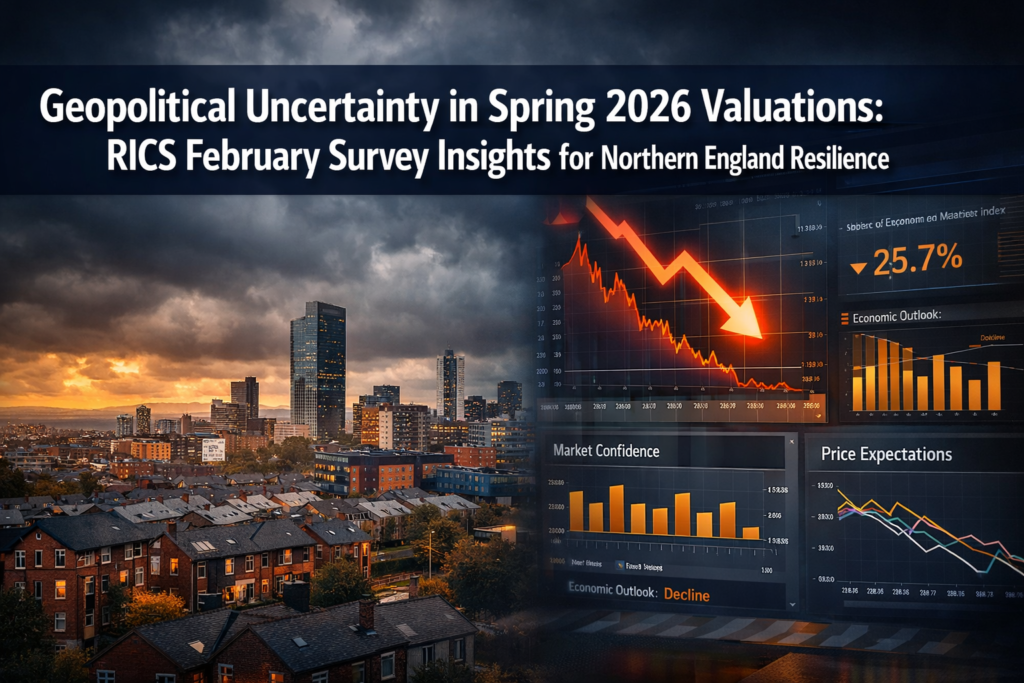
New buyer enquiries plummeted to -26% in February 2026, then crashed further to -39% in March, marking the sharpest deterioration in market confidence since the Middle East conflict escalated—yet 33% of surveyors still expect prices to rise over the next twelve months[1][5]. This striking contradiction between short-term pessimism and long-term optimism defines the complex landscape […]
Building Survey Protocols for PRS Database Compliance: Integrating Awaab’s Law and Renters’ Rights Act Checks in 2026 Rental Valuations
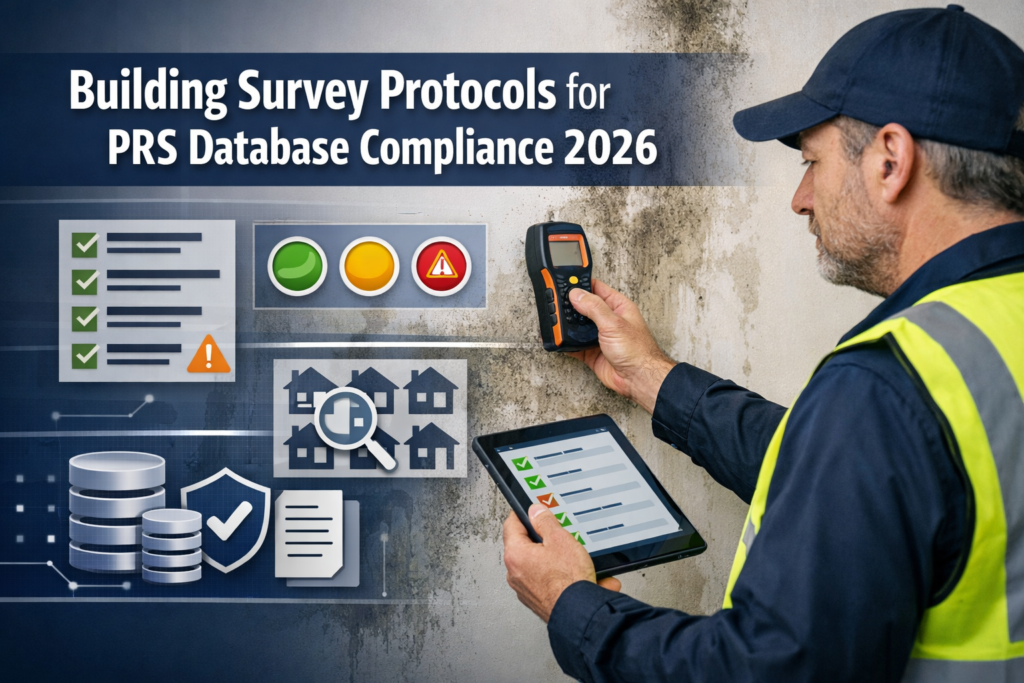
Landlords who fail to register on the new Private Rented Sector (PRS) Database in 2026 will be legally barred from serving Section 8 eviction notices—a seismic shift that transforms building surveys from optional due diligence into mandatory compliance tools. With Awaab's Law extending to private rentals this year and the Decent Homes Standard now applying […]
Building Survey Protocols for Bungalow Subsidence and Roof Spread: Level 3 Essentials in 2026 Regional Soil Concerns
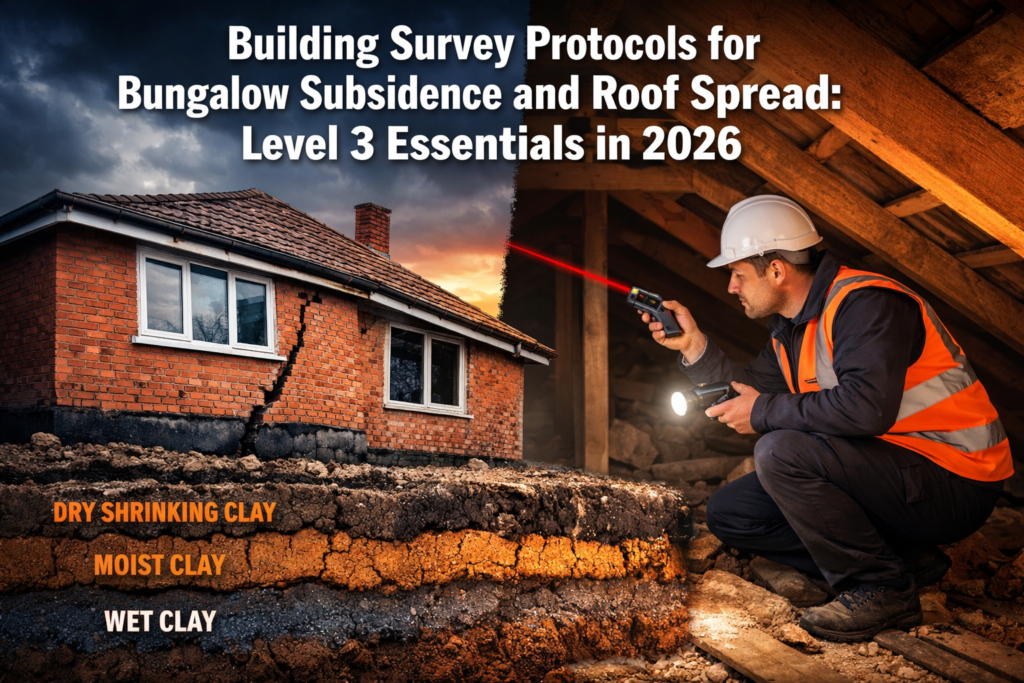
Bungalows account for a disproportionate share of structural insurance claims in the UK, with subsidence and roof spread representing the two most expensive defects discovered during property transactions. Recent data shows that Level 3 building surveys on bungalows built before 1990 identify significant structural movement in approximately 35% of inspections—a figure that has climbed steadily […]
Valuation Certainty Tools for Risk-Averse Buyers: Surveyor Strategies in 2026’s Uncertain Residential Market
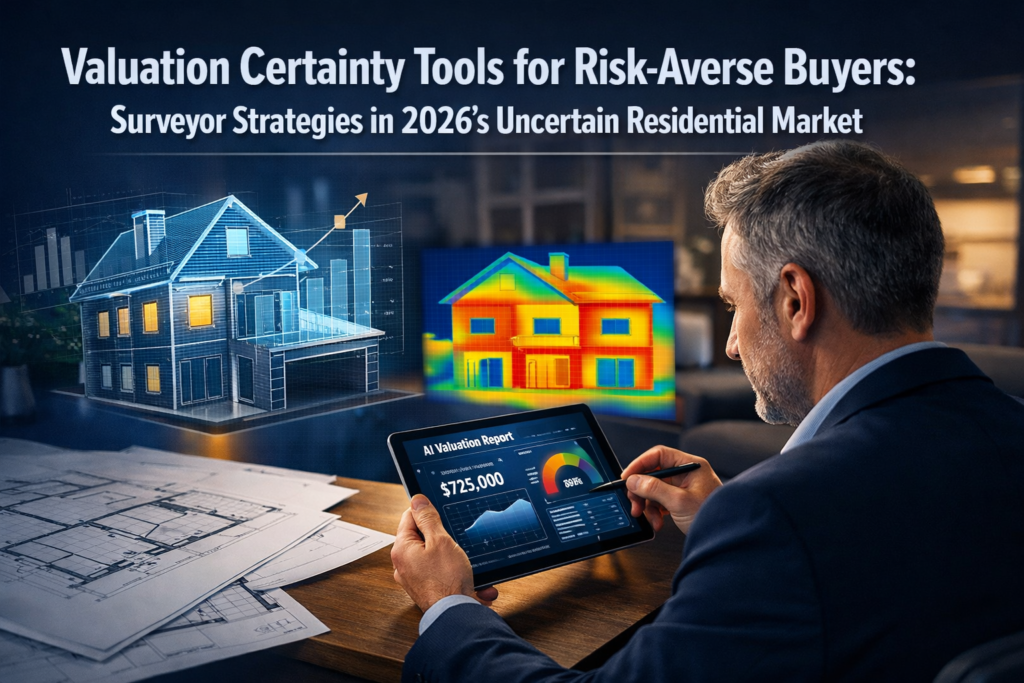
Valuation multiples remain near historic highs in 2026, with Shiller P/E ratios hovering just above 39—the second-highest level in over 150 years[2]. This unprecedented market positioning has created a perfect storm of uncertainty in residential property transactions, leaving risk-averse buyers scrambling for concrete assurance before committing six or seven-figure sums. As traditional market indicators flash […]
Awaab’s Law Expansion to PRS: Building Survey Protocols for New Hazards like Fire and Electrical Risks in 2026
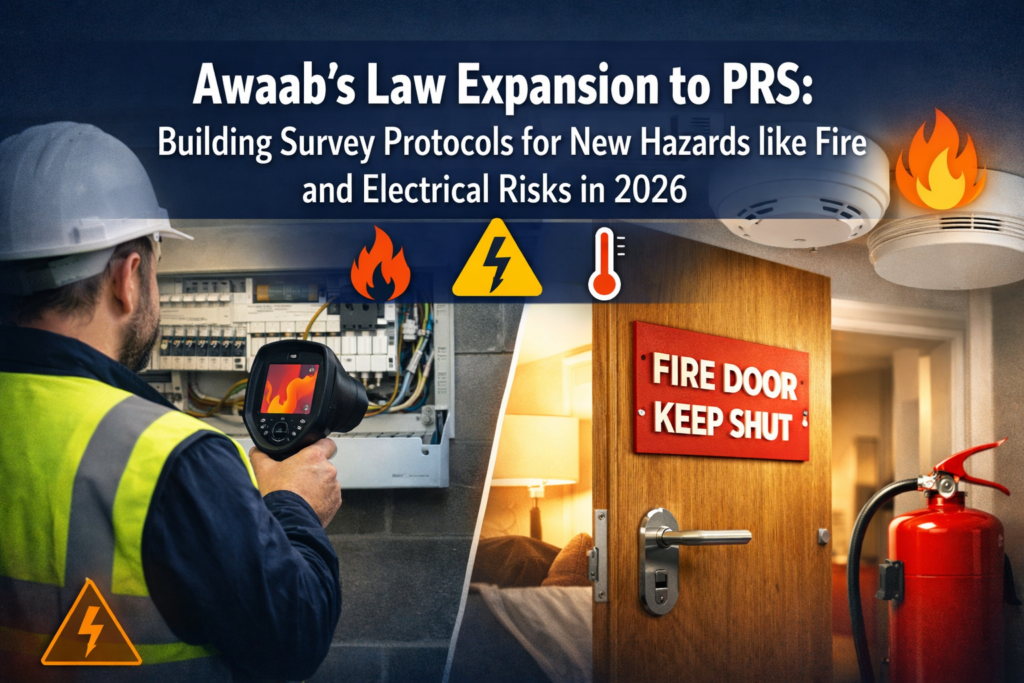
The tragic death of two-year-old Awaab Ishak from prolonged mould exposure in 2020 sparked legislative change that now extends far beyond damp and mould. As of 2026, approximately 4.6 million privately rented homes across England face sweeping new obligations under the expanded Awaab's Law framework, with fire and electrical hazards joining the list of critical […]
Building Survey Protocols for Private Rental Sector Compliance: Navigating Awaab’s Law 2026 Expansion
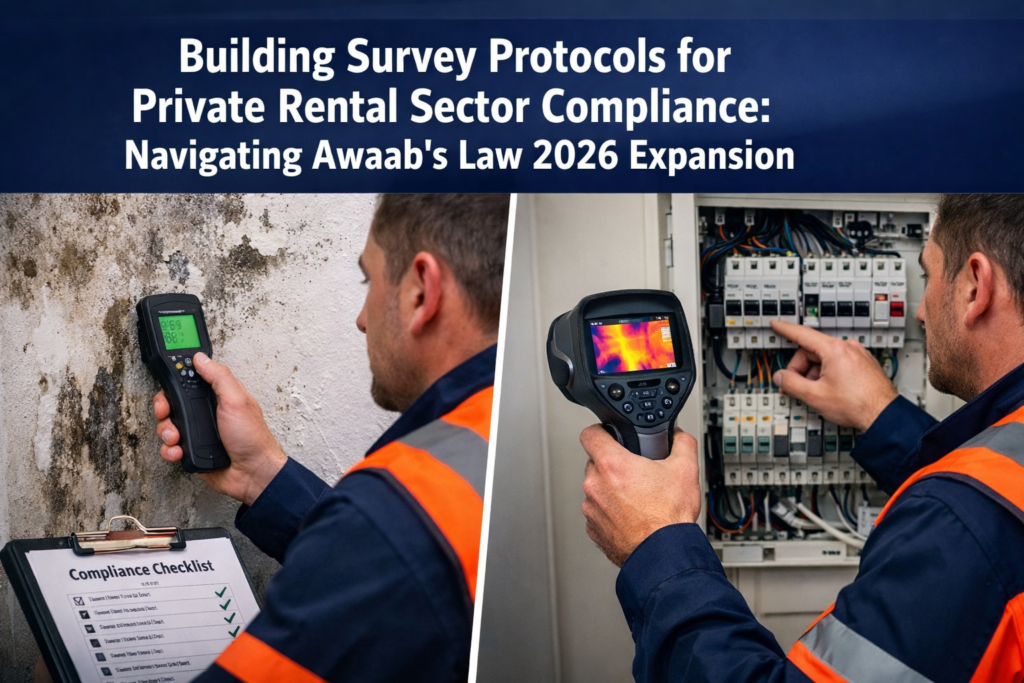
The death of two-year-old Awaab Ishak from prolonged mould exposure in December 2020 triggered one of the most significant legislative shifts in UK housing safety history. By 2026, Awaab's Law now mandates strict timeframes for addressing not just damp and mould, but eight additional hazard categories including electrical risks, fire hazards, excess temperatures, and structural […]
Real-Time Sensor Technology in Building Surveys: Detecting Damp, Mould, and Temperature Hazards in 2026
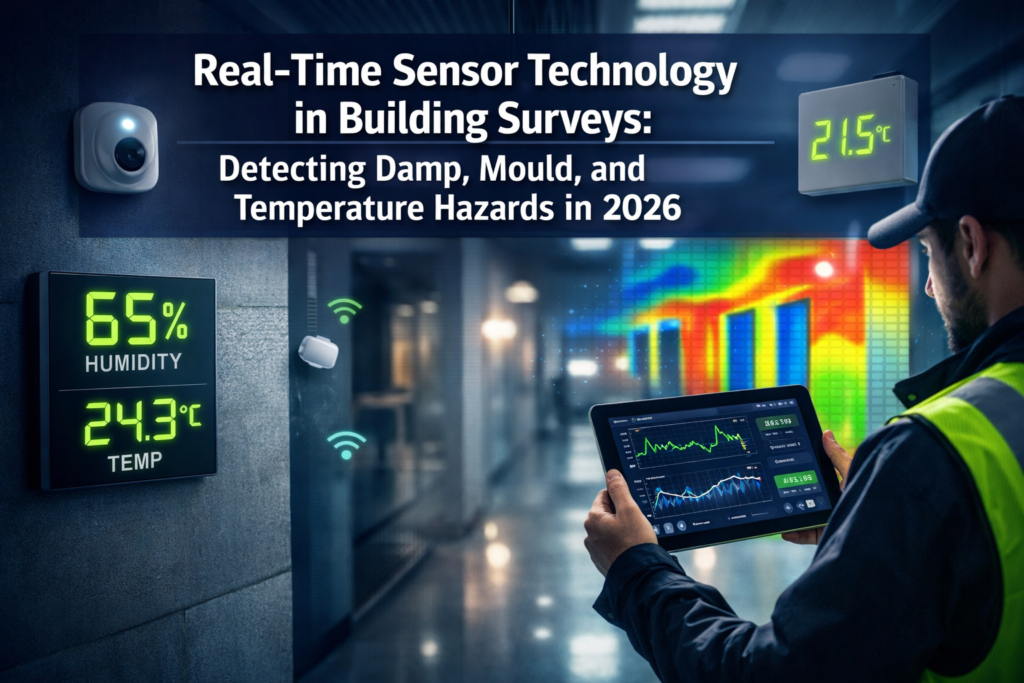
The global smart building sensors market is racing toward $143 billion by 2025, with projections showing a staggering 21.2% compound annual growth rate through 2033 [1]. This explosive growth signals a fundamental transformation in how building professionals detect and prevent property hazards. Real-Time Sensor Technology in Building Surveys: Detecting Damp, Mould, and Temperature Hazards in […]
Building Survey Protocols for Structural Collapse Risks in Awaab’s Law 2026: Rental Property Focus
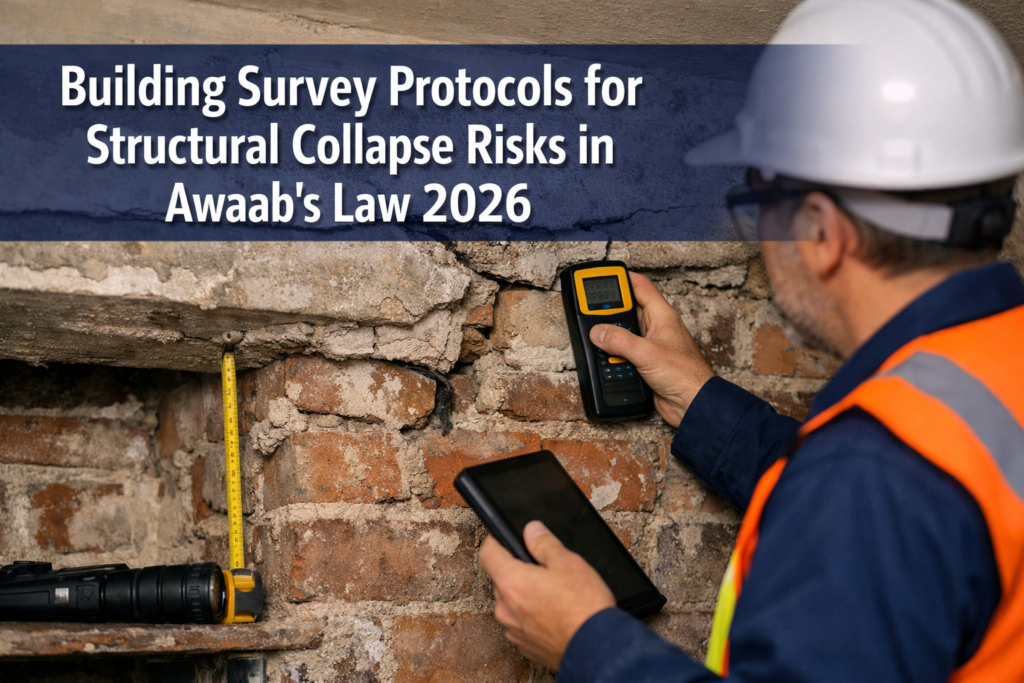
Structural collapse hazards in rental properties will trigger mandatory 24-hour emergency investigations under Awaab's Law Phase 2 extensions rolling out across England in 2026. For the estimated 4.5 million private rental sector properties—many built before modern building regulations—this legislative shift demands immediate protocol development from surveyors, landlords, and property professionals[2][3]. The tragic death of two-year-old […]