
On 13 October 2026, Defra and Flood Re quietly reshaped how every flood-prone property in England will be bought, sold and insured. A new national certificate, built on the same principle as the Energy Performance Certificate, is about to tell buyers, lenders and insurers exactly how exposed a home is to flooding, and what has or has not been done to protect it. For homeowners along the River Wandle, Beverley Brook and the surface-water hotspots of south-west London, this is not a distant policy footnote. It is a change that will show up in valuations, mortgage offers and sale negotiations within the next two years.
Flood Performance Certificates homeowners 2026 is quickly becoming the phrase estate agents, mortgage brokers and chartered surveyors in Wimbledon need to understand now, before the first pilots launch this winter.
Key Takeaways
- Flood Re and Defra announced Flood Performance Certificates (FPCs) on 13 October 2026, designed to work like Energy Performance Certificates but for flood risk.
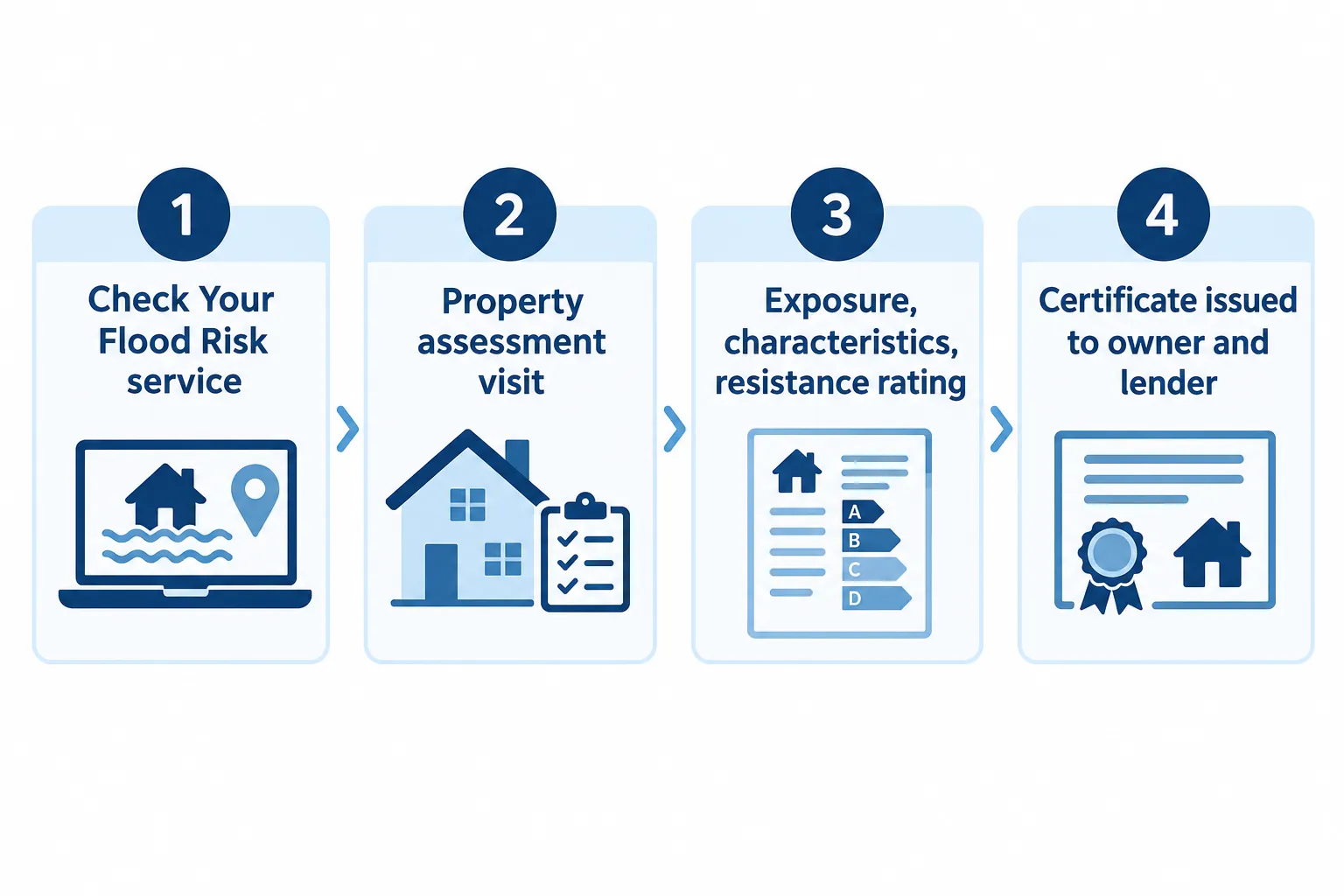
- A pilot "Flood Performance Rating" will score exposure, property characteristics and resistance, drawing on the government's Check Your Flood Risk service.
- Pilots start in flood-risk areas this winter, with wider rollout through 2027 and beyond, built with homeowners, insurers and lenders.
- Wimbledon and Merton properties near the River Wandle and Beverley Brook, or in areas affected by the July 2021 flash floods, sit squarely in the risk profile these certificates will target.
- Chartered surveyors already assess flood risk in HomeBuyer Reports and Building Surveys, FPCs will formalise and standardise that information for buyers, sellers and valuers.
What the 13 October 2026 Announcement Actually Says
Defra's press release, titled "New pioneering certificates to help homeowners cut flood risk," confirms that Flood Re is developing standardised certificates to show a property's flood risk and resilience in one place. Crucially, the certificates will record two things side by side: the level of risk a home faces, and the protective steps already taken to reduce that risk, alongside where further action is needed.
Floods Minister Emma Hardy described the human stakes plainly, noting that "flooding is devastating for families and communities," and framing the certificates as a way to give people clear, trusted information about their home's flood risk. That trust-building mission is deliberate. Just as an EPC became a routine part of selling or renting a home, Defra wants an FPC to become a routine part of understanding flood exposure before anyone signs a contract.
One pilot concept making the rounds is the Flood Performance Rating, which breaks risk into three components: exposure (how likely flooding is), characteristics (the nature and depth of potential flooding), and resistance (what the property itself can withstand). This data draws on the government's existing Check Your Flood Risk service, rather than creating an entirely new risk model from scratch.
Propertymark, reporting on the same day, confirmed that pilots are due to start this winter in flood-risk areas, with a wider rollout planned for 2027 and beyond. The certificates are being built jointly with homeowners, insurers and lenders, a sign that mortgage underwriting and insurance pricing are expected to plug directly into FPC data once the scheme matures.
There is also a financial sweetener attached to the wider flood strategy: Flood Re contents insurance premiums for Council Tax Bands A and B are due to fall to £25 from April 2027, easing costs for lower-value homes in at-risk areas.
Why Flood Performance Certificates Homeowners 2026 Matters for Wimbledon and Merton
Wimbledon does not fit the stereotype of a flood zone, but parts of Merton sit closer to water than many residents realise. The River Wandle runs through Colliers Wood and into Wandsworth, while Beverley Brook tracks along the western edge of Wimbledon Common toward Putney. Both watercourses have a history of localised flooding, and south-west London more broadly was hit hard by the flash floods of July 2021, when intense rainfall overwhelmed drainage faster than any river could.
That event is a useful reminder that flood risk in this part of London is rarely about a river bursting its banks in the classic sense. It is usually surface-water or "flash" flooding, rain falling faster than drains, gardens and roads can absorb it. The Flood Performance Rating's three-part structure (exposure, characteristics, resistance) is well suited to capturing this nuance, because it does not just ask "is this home near a river," it asks how water would behave if it arrived and how well the property is built to cope.
For Wimbledon homeowners, this means an FPC could eventually sit alongside the EPC as a standard document buyers expect to see. A property with a strong resistance score, thanks to features like flood doors or raised electrics, could become more attractive and arguably more valuable than an equivalent home with no protective measures, even if both sit in the same broad risk zone.
"Flooding is devastating for families and communities," said Floods Minister Emma Hardy, underscoring why Defra wants flood risk communicated as clearly as energy efficiency already is.
Aviva's chief executive has warned that by 2050, roughly a quarter of UK homes are likely to be at risk from flooding in some form. That statistic matters for Wimbledon precisely because it signals a shifting baseline, areas not traditionally seen as flood-prone may increasingly need to engage with this conversation.
How Chartered Surveyors Already Assess Flood Risk Today
Flood Performance Certificates homeowners 2026 will not start from zero. RICS chartered surveyors already build flood risk assessment into HomeBuyer Reports, Building Surveys and valuations, using a mix of data sources and physical inspection.
Typical elements a surveyor checks include:
- Environment Agency flood maps, showing flood zones for rivers, the sea and, increasingly, surface water.
- Historical flood records, whether the property or street has flooded before.
- Insurance availability, whether standard cover is obtainable, or whether a Flood Re-backed policy is needed.
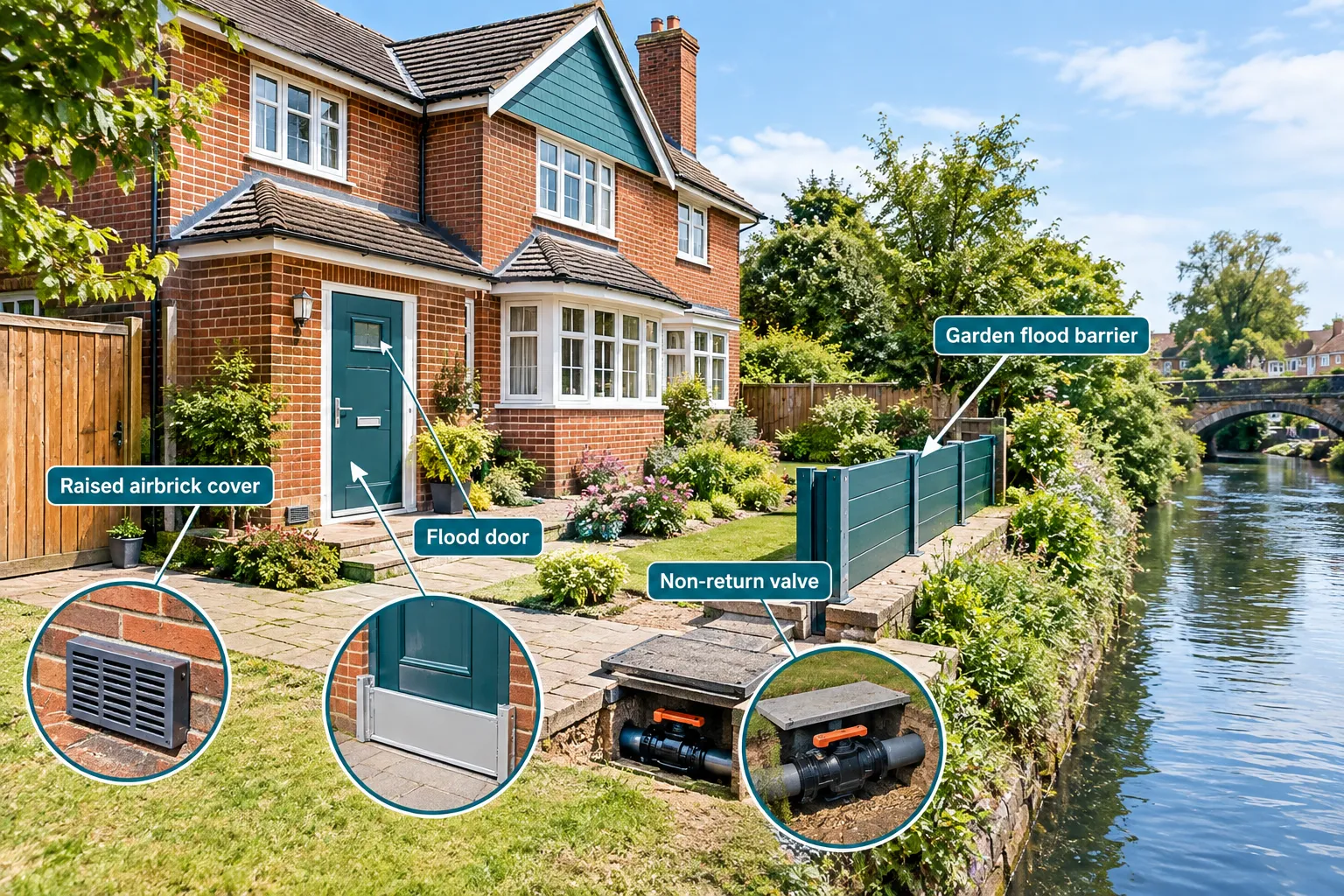
- Property-level resilience measures, flood doors, airbrick covers, non-return valves on drains, raised sockets, and sump pumps.
- Site drainage and gradient, how water would move across the plot during heavy rain.
| Assessment Area | What It Covers | Current Source |
|---|---|---|
| Flood zone mapping | River, coastal, surface water risk | Environment Agency / Check Your Flood Risk |
| Insurance position | Availability and cost of cover | Flood Re, insurer underwriting |
| Physical resilience | Doors, valves, airbricks, sumps | Surveyor site inspection |
| Future certificate | Standardised exposure/characteristics/resistance score | Flood Performance Certificate (pilot, 2026-27) |
Once FPCs become available, this table effectively gains a new column: a standardised, third-party-verified score that a surveyor can reference and cross-check against their own site observations, rather than relying solely on desktop mapping and visual inspection.
What Buyers, Sellers and Owners Should Do Now
Pilots have not launched everywhere yet, and Defra has not published a list of specific pilot locations. That means Wimbledon homeowners should not expect an FPC to appear automatically. But there is plenty worth doing in the meantime.
For current owners near the Wandle or Beverley Brook:
- Check the Environment Agency's flood risk tool for your specific postcode.
- Keep records of any flood resilience work already carried out, receipts and photos will matter once certificates arrive.
- Review your buildings and contents insurance to confirm Flood Re eligibility if you are in Council Tax Bands A or B.
For buyers considering a purchase:
- Ask whether a property sits in a known flood zone before making an offer, not after exchange.
- Commission a HomeBuyer Report or Building Survey that explicitly addresses flood risk and drainage.
- Factor resilience measures, or the lack of them, into your offer price.
For sellers:
- Start gathering evidence of any flood prevention work now, so it is ready when certificates roll out through 2027.
- Expect increased buyer questions about flood history as public awareness grows following the October announcement.
Frequently Asked Questions
What is a Flood Performance Certificate?
It is a standardised certificate, similar in concept to an Energy Performance Certificate, showing a property's flood risk and the resilience measures in place or still needed.
When will Flood Performance Certificates be available?
Pilots begin in flood-risk areas this winter following the October 2026 announcement, with broader rollout planned through 2027 and beyond.
Does Wimbledon have flood risk?
Parts of Merton near the River Wandle and Beverley Brook, and areas affected by the July 2021 flash floods, carry surface-water and watercourse flood risk, even though Wimbledon is not widely seen as flood-prone.
Will Flood Performance Certificates affect property valuations?
Over time, yes. Standardised, trusted flood data is likely to influence buyer confidence, mortgage lending decisions and insurance costs, all of which feed into valuations.
Do I need an FPC to sell my home right now?
No. The scheme is still in pilot stage as of this announcement, and no certificate is mandatory yet.
How does this relate to insurance premiums?
Separately from FPCs, Flood Re contents insurance premiums for Council Tax Bands A and B are due to fall to £25 from April 2027, reducing costs for many lower-value homes in at-risk areas.
Conclusion
The 13 October 2026 Defra and Flood Re announcement marks the start of a slow but significant shift in how flood risk is communicated, priced and factored into property decisions. Flood Performance Certificates homeowners 2026 will not transform Wimbledon's property market overnight, but the direction of travel is clear: flood data is moving from scattered maps and insurer small print toward a single, standardised certificate that buyers, lenders and valuers will come to expect.
Homeowners near the River Wandle, Beverley Brook or in areas touched by past surface-water flooding should start building a paper trail of resilience work now. Buyers should ask pointed questions about flood history before committing to an offer. And anyone planning a sale in 2027 or later should treat flood resilience as seriously as loft insulation or a new boiler, because, much like the EPC before it, this certificate is likely to become standard reading for every serious buyer.
For a flood risk assessment woven into a full HomeBuyer Report, Building Survey or valuation, speak to a RICS chartered surveyor covering Wimbledon SW19 and south-west London before listing or offering on a property.
flood performance certificates, Flood Re, Defra flood policy, flood risk Wimbledon, River Wandle flooding, Beverley Brook flood risk, surface water flooding London, HomeBuyer Report, Building Survey, property valuation flood risk, flood resilience measures, Check Your Flood Risk