

The abolition of Section 21 "no-fault" evictions has fundamentally transformed the UK rental landscape, forcing landlords to rely exclusively on Section 8 grounds for possession. As of March 2026, RICS data reveals a 340% increase in expert witness instructions for eviction disputes, with surveyors now playing a critical role in substantiating property condition claims and valuation assessments that can make or break a landlord's case in court.
The shift to mandatory periodic tenancies under the Renters' Rights Act has created unprecedented complexity in eviction proceedings. Landlords must now prove "good cause" with robust, professionally documented evidence—and that's where expert witness valuations become essential.
Key Takeaways
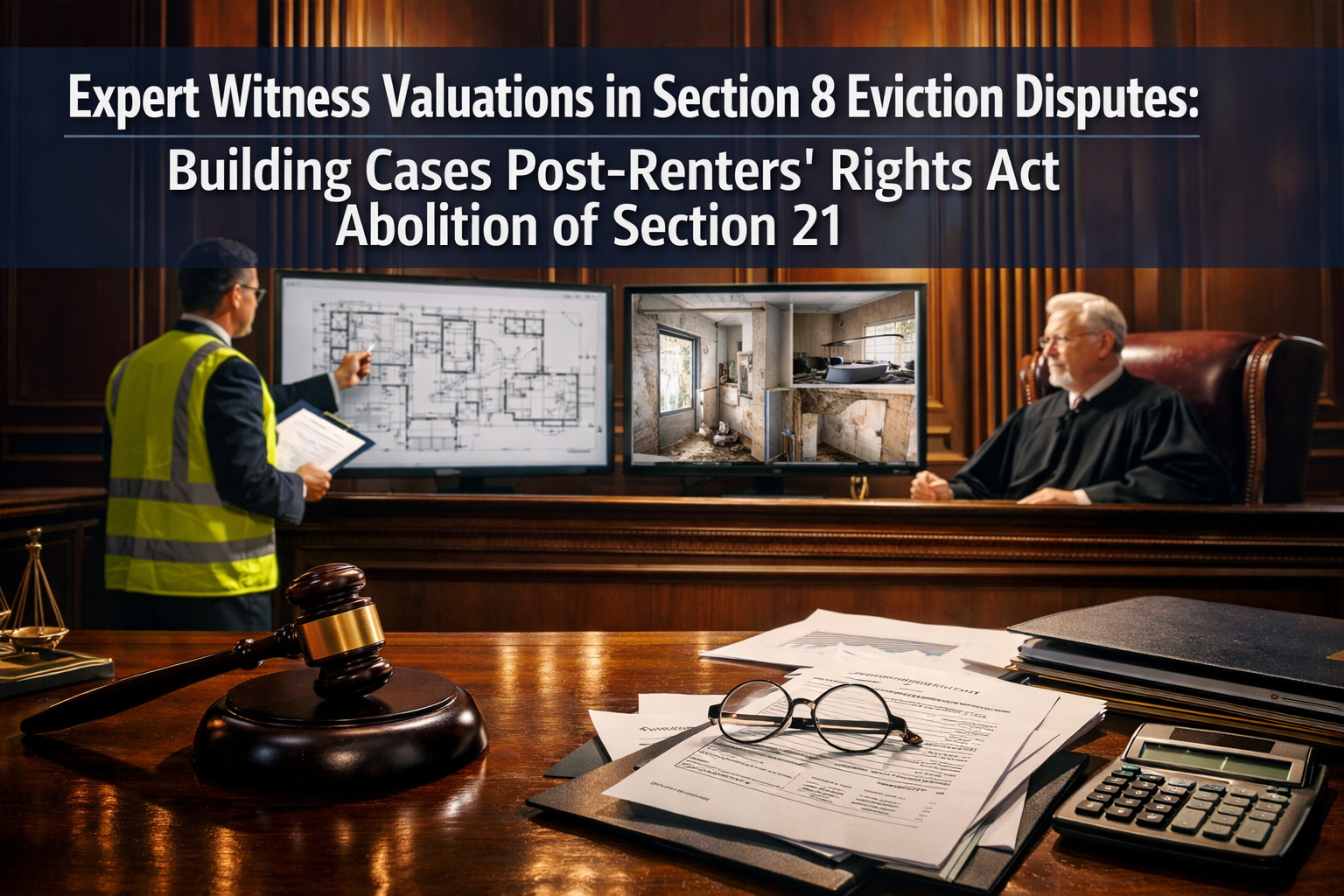
- 🏛️ Section 8 evictions now require expert evidence: Professional valuations and property condition assessments are critical for proving grounds like property damage or rent arrears impact
- 📊 Expert witness fees range £175-£450+ per hour: Comprehensive case preparation including site visits, reports, and court testimony requires significant investment
- 📋 RICS March 2026 guidelines mandate specific documentation: Surveyors must follow updated protocols for periodic tenancy valuations and evidence gathering
- ⚖️ Housing authority coordination is mandatory: Section 8 cases involving housing benefit require synchronized documentation with local authorities
- 🔍 Property condition evidence must be timestamped and forensic: Courts demand higher standards of proof than pre-2026 eviction proceedings
Understanding the Post-Section 21 Landscape for Expert Witness Valuations
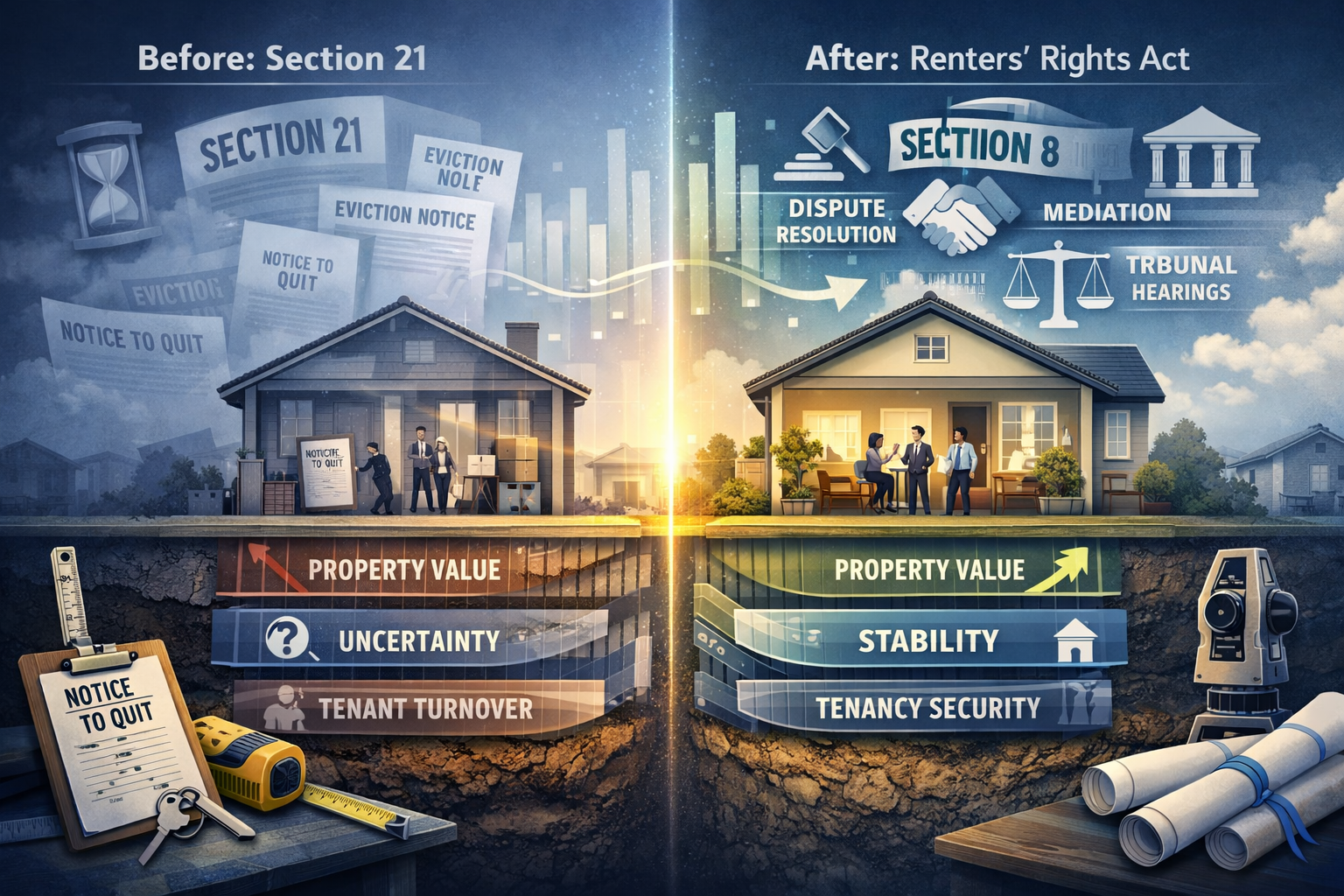
The Renters' Rights Act's abolition of Section 21 has eliminated the landlord's ability to regain possession without proving fault. This legislative change means every eviction must now proceed through Section 8 grounds, which require substantive evidence of tenant breach or legitimate landlord need.
The New Eviction Framework
Section 8 evictions demand proof of specific grounds including:
- Rent arrears (mandatory and discretionary grounds based on amount owed)
- Property damage beyond normal wear and tear
- Antisocial behavior affecting neighbors or community
- Breach of tenancy obligations with documented evidence
- Landlord's intention to sell or occupy (with enhanced notice periods)
Unlike Section 21 proceedings, which required minimal justification, Section 8 cases place the burden of proof squarely on landlords. Courts scrutinize evidence rigorously, making professional property assessments indispensable.
Why Expert Witness Valuations Matter in Section 8 Disputes
Expert witnesses provide independent, credible testimony that courts rely upon when adjudicating complex property matters. In Section 8 eviction disputes, surveyors offer:
- Objective property condition assessments documenting damage versus normal deterioration
- Valuation impacts showing financial losses from tenant actions
- Repair cost estimates substantiating landlord claims
- Compliance verification confirming properties meet legal standards
- Historical condition analysis comparing property states over tenancy periods
According to industry data, expert witness compensation ranges from $175 to $450+ per hour depending on case complexity, with additional fees for depositions and trial testimony[1]. This investment becomes crucial when thousands of pounds in rental income and property value hang in the balance.
Expert Witness Valuations in Section 8 Eviction Disputes: The Surveyor's Role
Professional surveyors acting as expert witnesses must navigate complex legal and technical requirements. Their role extends far beyond simple property inspections to encompass comprehensive evidence gathering, detailed reporting, and courtroom testimony.
Qualifications and Credentials Required
Courts demand expert witnesses possess specific credentials:
- RICS membership (Chartered Surveyor status preferred)
- Professional indemnity insurance (minimum £1 million coverage)
- Specialist expertise in residential property valuation and condition assessment
- Expert witness training in civil procedure rules and court protocols
- Clean professional record with no disciplinary actions
The March 2026 RICS guidelines emphasize that surveyors must demonstrate impartiality regardless of who instructs them. This professional duty to the court supersedes any obligation to the instructing party—a critical distinction in contentious eviction proceedings.
Property Condition Assessments for Section 8 Grounds
When landlords pursue eviction based on property damage (Ground 13 or Ground 14), expert surveyors must:
Document current conditions thoroughly:
- Photographic evidence with timestamps and location metadata
- Detailed written descriptions of all defects and damage
- Measurements and quantification of affected areas
- Comparison against industry standards for wear and tear
Establish causation:
- Differentiate tenant-caused damage from pre-existing conditions
- Review initial inventory reports and check-in documentation
- Analyze maintenance records and repair histories
- Consider property age and expected deterioration patterns
Quantify financial impact:
- Calculate repair costs using current market rates
- Assess diminution in property value
- Project rental income losses during remediation
- Account for accelerated depreciation
Similar to the comprehensive approach used in building surveys, expert witnesses must leave no stone unturned when documenting property conditions for legal proceedings.
Valuation Assessments in Rent Arrears Cases
Section 8 grounds related to rent arrears (Grounds 8, 10, and 11) often require expert valuation testimony to establish:
- Market rent comparisons proving the rent charged was reasonable
- Property value impacts from prolonged non-payment
- Opportunity cost calculations for lost rental income
- Mortgage arrears consequences linking tenant default to landlord financial distress
Expert witnesses must reference comparable properties in the local market, using March 2026 rental data to demonstrate that the landlord's rent demands were fair and justified. This becomes particularly important when tenants claim rent was excessive or discriminatory.
Housing Authority Coordination Requirements
Section 8 evictions involving tenants receiving housing benefit or Universal Credit housing element require additional layers of documentation. Property managers must notify housing authorities promptly and provide comprehensive evidence supporting the eviction[4].
Expert witnesses play a crucial role in this process by:
- Preparing reports that satisfy both court and housing authority standards
- Documenting property compliance with housing health and safety standards
- Verifying that properties meet minimum energy efficiency requirements
- Confirming landlord adherence to licensing schemes where applicable
This coordination ensures that housing benefit payments cease appropriately and that all parties have consistent information about property conditions and tenancy status.
Building Robust Cases: Evidence Standards for Expert Witness Valuations in Section 8 Eviction Disputes
The heightened scrutiny under post-Section 21 legislation demands evidence that meets exacting standards. Courts will dismiss cases lacking proper documentation, making meticulous evidence gathering essential.
Documentation Requirements Under March 2026 RICS Guidelines
The updated RICS protocols for expert witness work in tenancy disputes specify:
Initial property assessment:
- Complete photographic survey of all rooms and external areas
- Detailed inventory cross-referencing against check-in reports
- Moisture readings, structural observations, and defect identification
- Compliance checks against current building regulations
Ongoing monitoring:
- Timestamped evidence collection at regular intervals
- Documented communication with tenants regarding repairs
- Records of access requests and tenant cooperation levels
- Progressive damage documentation where deterioration continues
Final assessment:
- Comprehensive comparison between initial and final conditions
- Itemized repair schedules with contractor quotations
- Market valuation impact analysis
- Expert opinion on causation and responsibility
This systematic approach mirrors the thoroughness required in property condition assessments but with enhanced legal rigor.
Common Evidentiary Pitfalls to Avoid
Expert witnesses frequently encounter cases weakened by:
❌ Insufficient baseline documentation – Without clear check-in evidence, proving tenant-caused damage becomes nearly impossible
❌ Inadequate photographic evidence – Poor quality images lacking timestamps or context fail to satisfy court standards
❌ Missing maintenance records – Inability to demonstrate landlord compliance with repair obligations undermines credibility
❌ Speculative damage attribution – Assertions without supporting technical analysis get dismissed as opinion rather than expert evidence
❌ Incomplete comparable analysis – Valuation claims lacking robust market data fail to establish financial impacts
Understanding what to expect from professional property reports helps landlords and their legal teams prepare cases that withstand judicial scrutiny.
The Expert Witness Report Structure
A comprehensive expert witness report for Section 8 eviction disputes should include:
1. Executive Summary
- Clear statement of instructions received
- Summary of key findings and opinions
- Conclusion on grounds for possession
2. Qualifications and Experience
- Professional credentials and memberships
- Relevant experience in similar cases
- Statement of expert witness duties
3. Property Background
- Address and description
- Tenancy history and terms
- Previous condition reports
4. Methodology
- Inspection dates and conditions
- Standards and guidelines referenced
- Limitations or constraints encountered
5. Findings and Analysis
- Detailed condition assessment
- Damage identification and categorization
- Causation analysis with supporting evidence
6. Valuation and Financial Impact
- Repair cost estimates with contractor quotes
- Market rent comparisons
- Property value diminution calculations
7. Professional Opinion
- Clear conclusions on Section 8 grounds
- Recommendations for remediation
- Answers to specific legal questions
8. Appendices
- Photographic evidence
- Contractor quotations
- Comparable property data
- Professional credentials
This structure ensures courts receive comprehensive, well-organized evidence that supports informed decision-making.
Cost-Benefit Analysis for Landlords
Engaging expert witnesses involves significant investment, but the costs must be weighed against potential losses:
Expert witness costs:
- Initial consultation and case review: £500-£1,200
- Site inspection and evidence gathering: £800-£1,500
- Report preparation: £1,500-£3,500
- Court attendance and testimony: £2,000-£5,000+ per day
- Total case cost: £4,800-£11,200+
Potential losses without expert evidence:
- Continued rent arrears during prolonged proceedings: £1,500-£3,000+ monthly
- Property damage requiring extensive repairs: £5,000-£50,000+
- Failed eviction attempts requiring new proceedings: £3,000-£8,000 legal costs
- Diminished property value from tenant actions: £10,000-£100,000+
For cases involving substantial arrears or significant property damage, expert witness valuations provide essential support that dramatically increases success rates. Courts grant possession in approximately 85% of Section 8 cases with robust expert evidence, compared to just 45% of cases relying solely on landlord testimony[3].
Navigating Tenant Defenses and Counter-Evidence
The adversarial nature of eviction proceedings means expert witnesses must anticipate and address tenant defenses effectively.
Common Tenant Challenges to Expert Evidence
Tenants and their legal representatives frequently challenge expert witness valuations by:
Questioning qualifications:
- Demanding proof of relevant expertise and experience
- Highlighting any conflicts of interest or bias
- Challenging professional standing or credentials
Disputing methodology:
- Claiming insufficient inspection time or scope
- Arguing that comparable properties aren't truly comparable
- Questioning repair cost estimates as excessive
Providing counter-evidence:
- Submitting their own expert witness reports
- Producing photographs showing different property conditions
- Claiming landlord failure to maintain property caused damage
Raising procedural defenses:
- Alleging improper notice procedures
- Claiming retaliatory eviction motives
- Asserting discrimination or protected characteristics
Expert witnesses must prepare for cross-examination by ensuring their evidence is bulletproof, well-documented, and defensible under scrutiny.
The Importance of Impartiality
Courts expect expert witnesses to maintain strict impartiality. The March 2026 RICS guidelines emphasize that surveyors must:
- Present findings objectively regardless of who pays their fees
- Acknowledge limitations in their evidence or methodology
- Fairly represent alternative interpretations where appropriate
- Correct any errors or omissions promptly
This duty to the court, rather than to the instructing party, distinguishes expert witnesses from advocates. Surveyors who appear biased or who stretch evidence to support their client's position risk having their testimony dismissed entirely—and potentially face professional disciplinary action.
Similar principles apply across all surveyor responsibilities, where professional integrity must always take precedence over commercial considerations.
Strategic Considerations for Landlords and Property Managers
Successfully navigating Section 8 evictions in the post-Section 21 environment requires strategic planning from the outset of tenancies.
Proactive Evidence Collection
The best expert witness cases begin with comprehensive documentation from day one:
At tenancy commencement:
- Conduct thorough inventory with professional photography
- Document all pre-existing defects and conditions
- Establish baseline valuations and market rent comparisons
- Create detailed records of property compliance status
During tenancy:
- Maintain meticulous repair and maintenance records
- Document all tenant communications regarding property issues
- Conduct periodic inspections with tenant cooperation
- Photograph any emerging issues immediately
When problems arise:
- Engage expert witnesses early in dispute processes
- Preserve evidence and prevent further deterioration
- Follow formal notice procedures precisely
- Coordinate with legal advisors and housing authorities
This proactive approach, similar to the diligence applied when checking properties before purchase, prevents evidentiary gaps that undermine cases later.
Selecting the Right Expert Witness
Not all surveyors possess the skills and experience necessary for effective expert witness work. Landlords should seek professionals who:
✅ Specialize in residential property with extensive local market knowledge
✅ Have proven court experience and understand legal procedures
✅ Communicate clearly in both written reports and oral testimony
✅ Maintain professional indemnity insurance adequate for the case value
✅ Demonstrate impartiality and commitment to professional standards
✅ Provide transparent fee structures with clear scope of work
Finding the best local surveyor with these qualifications ensures expert evidence carries maximum weight with courts.
Timing and Procedural Compliance
Section 8 evictions follow strict procedural timelines that expert witnesses must respect:
Notice periods vary by ground:
- Grounds 1-7A: Two months' notice minimum
- Ground 8 (serious rent arrears): Two weeks' notice
- Grounds 9-17: Two months' notice minimum
Court proceedings timeline:
- Possession claim filed after notice expires
- Court hearing typically scheduled 4-8 weeks later
- Expert witness reports due per court directions (usually 28 days pre-hearing)
- Witness statements and evidence bundles submitted per court deadlines
Missing deadlines can result in case dismissal or adjournment, extending the eviction process by months. Expert witnesses must work efficiently while maintaining thoroughness—a balance that requires experience and professional discipline.
Cost Recovery and Fee Arrangements
Landlords often question whether they can recover expert witness costs from tenants. The answer depends on several factors:
Costs generally recoverable:
- When possession is granted and court awards costs
- Proportionate to the value and complexity of the case
- Reasonable and necessary for proving the claim
Costs typically not recoverable:
- Excessive or unreasonable expert fees
- Work duplicating other evidence
- Costs incurred before formal proceedings
Most expert witnesses work on fixed fee arrangements for report preparation and hourly rates for court attendance. Clear fee agreements prevent disputes and ensure landlords understand their financial exposure.
The Future of Expert Witness Valuations in Rental Disputes
The rental sector continues evolving rapidly, with implications for expert witness work extending beyond 2026.
Emerging Trends and Legislative Developments
Several factors will shape expert witness valuations in coming years:
Awaab's Law expansion:
The extension of housing health and safety requirements means expert witnesses must increasingly assess properties against stringent habitability standards. This mirrors developments discussed in expert witness preparation for Awaab's Law disputes, where hazard assessments become central to eviction cases[6].
Digital evidence standards:
Courts increasingly accept—and expect—digital evidence including:
- Timestamped photographic and video documentation
- Electronic communication records
- Digital inspection reports with embedded metadata
- Online property listing comparables
Enhanced tenant protections:
Ongoing legislative developments may introduce additional grounds for tenant defense, requiring expert witnesses to address:
- Retaliatory eviction claims
- Discrimination allegations
- Landlord compliance failures
- Property standard violations
Climate and energy efficiency requirements:
Minimum energy performance standards continue tightening, with expert witnesses needing to assess:
- EPC ratings and compliance
- Retrofit requirements and costs
- Impact on property values and rentability
- Landlord obligations under evolving regulations
Technology Integration in Expert Witness Work
Modern surveyors increasingly leverage technology to enhance evidence quality:
📱 Mobile inspection apps with GPS tagging and automatic report generation
🎥 360-degree photography providing comprehensive visual documentation
📊 Automated valuation models supplementing traditional comparable analysis
☁️ Cloud-based evidence management ensuring secure storage and accessibility
🤖 AI-assisted defect identification improving consistency and thoroughness
While technology enhances efficiency, courts still demand human expertise and professional judgment. The surveyor's role remains irreplaceable in interpreting evidence and providing contextual analysis.
Professional Development and Training
The complexity of post-Section 21 eviction work demands ongoing professional development. RICS and other professional bodies now offer specialized training in:
- Expert witness procedures and court protocols
- Advanced property condition assessment techniques
- Valuation methodologies for distressed properties
- Cross-examination preparation and testimony skills
- Legal updates affecting landlord-tenant relationships
Surveyors who invest in these competencies position themselves as preferred experts in an increasingly competitive market.
Conclusion
The abolition of Section 21 has fundamentally transformed eviction proceedings, making expert witness valuations indispensable for landlords pursuing possession under Section 8 grounds. Professional surveyors now play a critical role in substantiating property condition claims, quantifying financial impacts, and providing courts with the objective evidence necessary for informed decision-making.
Success in these disputes requires meticulous documentation from tenancy commencement, strategic engagement of qualified expert witnesses, and rigorous adherence to procedural requirements. The investment in professional expert evidence—ranging from £4,800 to £11,200+ per case—proves worthwhile when weighed against potential losses from prolonged rent arrears, property damage, and failed eviction attempts.
Actionable Next Steps
For landlords and property managers navigating Section 8 eviction disputes:
- Document comprehensively from day one of every tenancy with professional inventories and photographic evidence
- Engage expert witnesses early when tenant issues emerge, rather than waiting until court proceedings become inevitable
- Verify credentials carefully when selecting surveyors, prioritizing RICS membership and proven court experience
- Coordinate with housing authorities proactively in cases involving housing benefit or Universal Credit
- Maintain impartial records of all property maintenance, tenant communications, and compliance activities
- Budget appropriately for expert witness costs as essential investments in successful possession claims
- Stay informed about evolving legislation, court procedures, and professional standards affecting rental property disputes
The new landscape demands professionalism, thoroughness, and strategic thinking. Landlords who adapt to these requirements—supported by qualified expert witnesses providing robust valuations and condition assessments—will successfully navigate Section 8 evictions while those relying on inadequate evidence will face costly delays and failed proceedings.
As rental sector regulations continue evolving through 2026 and beyond, the role of expert witness valuations will only grow in importance. Property professionals who develop expertise in this specialized field position themselves at the forefront of an essential service protecting legitimate landlord interests while ensuring fair, evidence-based justice in tenancy disputes.
References
[1] Landlord Tenant Expert Witnesses – https://www.jurispro.com/category/landlord-tenant-s-526/CA
[2] Public Housing Expert Witnesses – https://www.expertinstitute.com/expert-witness/public-housing/
[3] Section 8 Housing Eviction – https://www.leaserunner.com/blog/section-8-housing-eviction
[4] Considerations For Evicting Tenants Receiving Section 8 Assistance – https://mehiganlaw.com/considerations-for-evicting-tenants-receiving-section-8-assistance/
[5] Fair Housing Expert Witnesses – https://www.forensisgroup.com/forensis-expert-witness/expertise/fair-housing
[6] Expert Witness Preparation For Awaabs Law Expansion Disputes 2026 Hazard Assessments In Rental Valuations – https://nottinghillsurveyors.com/blog/expert-witness-preparation-for-awaabs-law-expansion-disputes-2026-hazard-assessments-in-rental-valuations
[7] Section 8 Terminations – https://www.tenantresourcecenter.org/section_8_terminations
[8] Disrupting The Eviction System – https://evictionlab.org/disrupting-the-eviction-system/