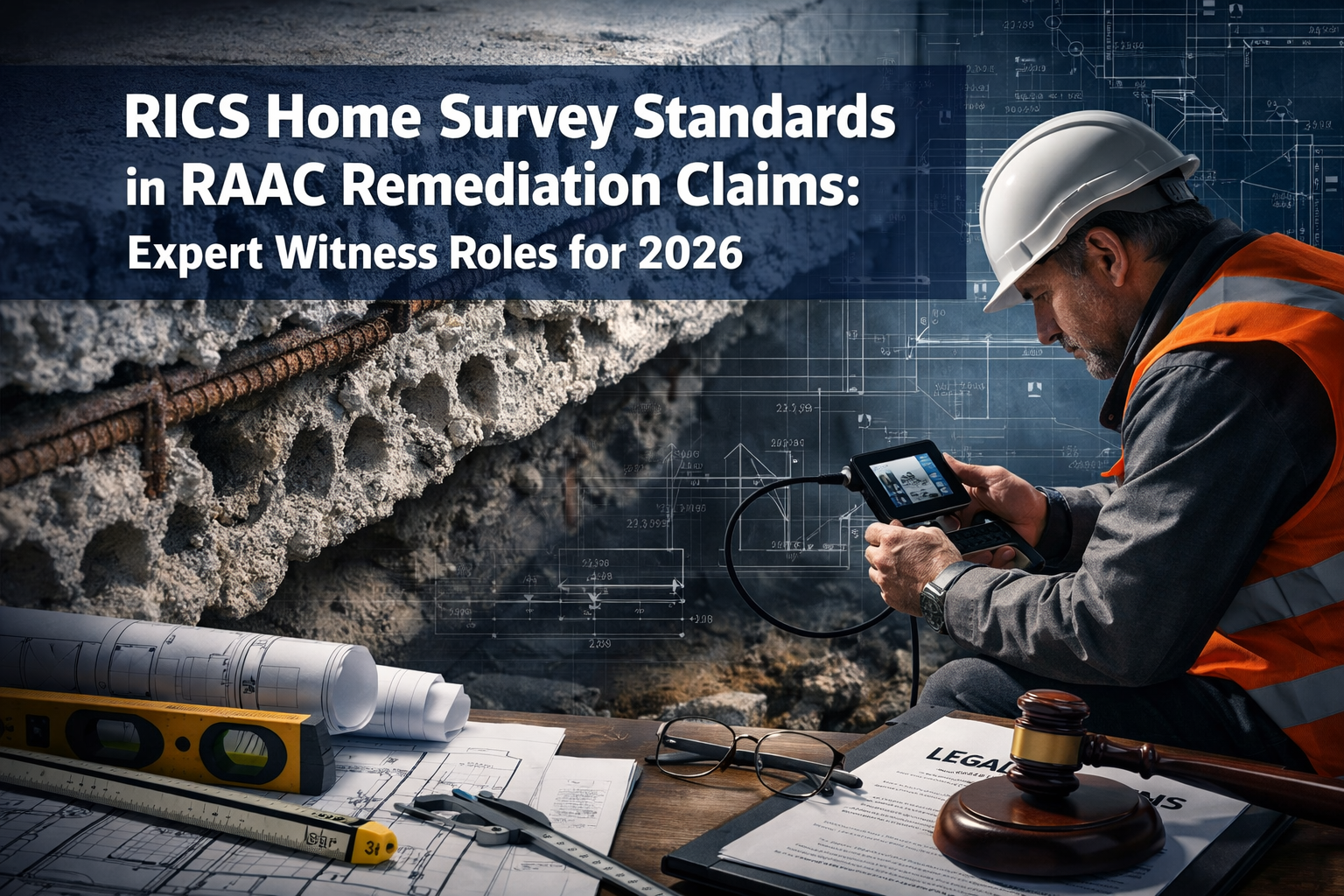
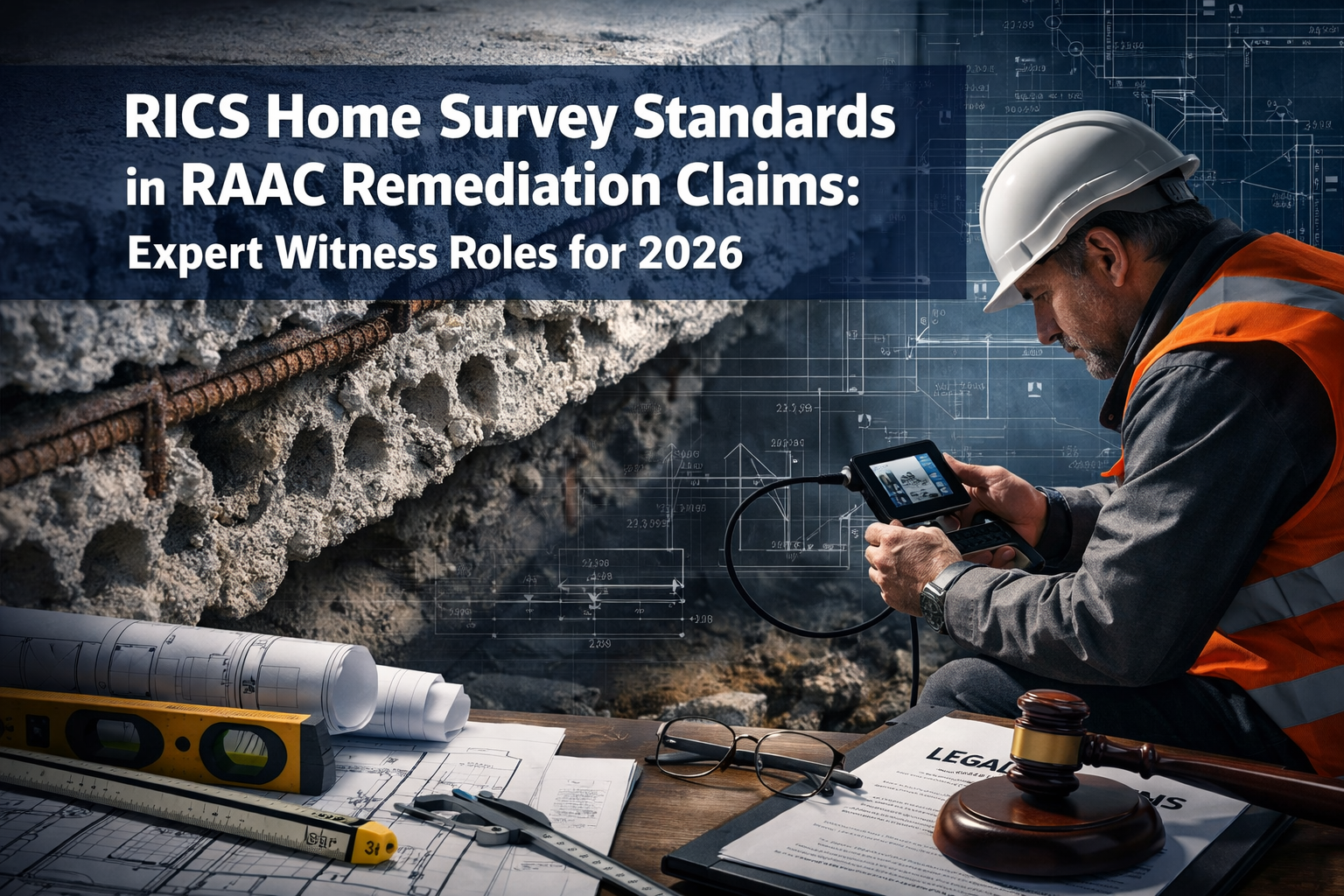
The discovery of Reinforced Autoclaved Aerated Concrete (RAAC) in thousands of UK buildings has triggered a wave of remediation claims worth billions of pounds, with chartered surveyors increasingly called upon as expert witnesses to navigate complex disputes over liability, valuation losses, and remediation costs. As RICS Home Survey Standards in RAAC Remediation Claims: Expert Witness Roles for 2026 continue to evolve with the second edition currently in development, understanding the protocols for evidence gathering, professional responsibilities, and valuation methodologies has never been more critical for property professionals.
The stakes are high: property owners face potential devaluation of 20-40% when RAAC is identified, while remediation costs can exceed £100,000 per dwelling. Meanwhile, surveyors must balance their duty of care with the technical complexities of identifying a material that wasn't widely recognized as problematic until recent years. This article examines how RICS standards shape expert witness roles in RAAC disputes, the protocols for evidence collection, and the valuation methodologies that determine claim outcomes.
Key Takeaways
- Enhanced RICS Standards: The 2nd edition Home Survey Standard includes new guidance for 'additional risk' dwellings, specifically addressing RAAC identification protocols effective from February 2026
- Multi-Disciplinary Approach: RAAC remediation claims require coordination between chartered building surveyors for identification and structural engineers for remediation advice
- Expert Witness Protocols: Surveyors acting as expert witnesses must follow strict evidence-gathering procedures, including material testing, photographic documentation, and comparative analysis
- Valuation Impact: Properties with confirmed RAAC typically experience significant diminution in value, requiring detailed before-and-after assessments for claims purposes
- Technology Integration: The updated standards incorporate AI-assisted detection, drone inspections, and thermal imaging to enhance RAAC identification accuracy
Understanding RAAC and Its Implications for Property Claims
Reinforced Autoclaved Aerated Concrete represents one of the most significant building defect challenges facing the UK property sector in 2026. This lightweight concrete material, used extensively in construction between the 1950s and mid-1990s, contains numerous air bubbles that make it less durable than traditional concrete. While RAAC was considered innovative during its widespread use, its limited lifespan of approximately 30 years has resulted in structural concerns across both public and private buildings.[9]
What Makes RAAC a Claims Issue?
The material's inherent characteristics create multiple liability pathways:
- Structural integrity concerns due to deterioration over time
- Safety risks from potential collapse under load
- Insurance complications with many policies excluding RAAC-related damage
- Valuation impacts affecting property transactions and mortgage lending
- Remediation costs that can be prohibitively expensive
When RAAC is discovered during a property transaction or building inspection, it typically triggers immediate notification protocols. Homeowners must be informed immediately of the risk, and remediation works require careful planning to minimize disruption.[2] This urgency creates pressure on surveyors to act decisively while maintaining professional standards.
The Role of RICS Standards in Claims
The RICS Home Survey Standards in RAAC Remediation Claims: Expert Witness Roles for 2026 framework provides essential guidance for surveyors navigating these complex situations. The standards, last formally updated on 16 February 2026, include specific provisions for 'additional risk' dwellings—a category that encompasses properties with conditions such as RAAC.[4]
Understanding what surveyors do and their responsibilities becomes crucial when RAAC is suspected. The professional must determine whether to proceed with a standard survey or recommend specialist investigation.
RICS Home Survey Standards Framework for RAAC Identification
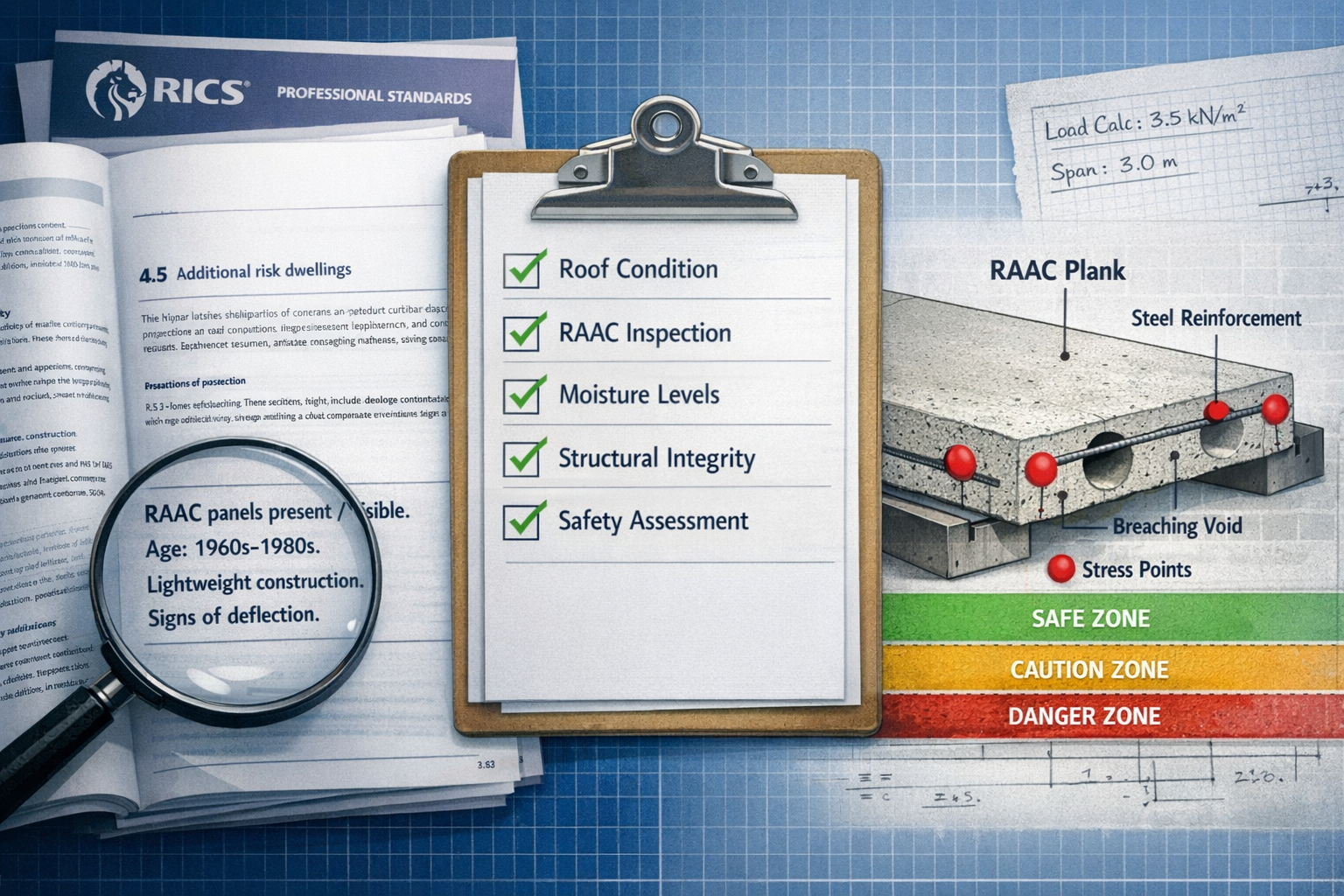
The evolution of RICS standards reflects the growing awareness of RAAC as a material defect requiring specific protocols. The 2nd edition currently in development represents a significant advancement from the 1st edition published in 2019 and effective from 2021.[4]
Key Components of the Updated Standards
The revised framework addresses several critical areas relevant to RICS Home Survey Standards in RAAC Remediation Claims: Expert Witness Roles for 2026:
1. Enhanced Risk Assessment Protocols
The new guidance for 'additional risk' dwellings provides surveyors with clearer direction when encountering potentially problematic materials. This includes:
- ✅ Specific visual identification criteria for RAAC elements
- ✅ Mandatory reporting requirements when RAAC is suspected
- ✅ Recommendations for specialist testing and structural assessment
- ✅ Guidance on immediate safety concerns requiring urgent action
2. Technology and AI Integration
The updated standards reflect modern surveying capabilities, including:[4]
- Thermal imaging to identify structural anomalies
- Drone inspections for roof and upper-level assessments
- AI-assisted defect detection to enhance identification accuracy
- Digital documentation for comprehensive evidence gathering
3. Expanded Service Offerings
Surveyors now have frameworks for providing:
- Optional valuation at all survey levels
- Retrofit building assessments
- Comprehensive material analysis
- Detailed remediation cost estimates
Professional Competence Requirements
When RAAC is suspected in a home, the RICS guidance is clear: a chartered building surveyor competent in RAAC identification should confirm its presence and identify other potential issues.[1] This competence requirement is critical for expert witness roles, as surveyors may be challenged on their qualifications during dispute proceedings.
The distinction between identification and remediation advice is equally important. While chartered building surveyors can identify RAAC and assess its implications, a structural engineer should advise on suitable remedies on a case-by-case basis.[1] This multi-disciplinary approach ensures that claims are supported by appropriate expertise at each stage.
Before undertaking any RAAC-related survey, professionals should review guidance on what to do before an RICS home survey to ensure proper preparation and risk assessment protocols are followed.
Survey Level Considerations
The type of survey conducted significantly impacts RAAC identification:
| Survey Type | RAAC Detection Capability | Typical Use Case |
|---|---|---|
| RICS Level 1 (Condition Report) | Limited – visual inspection only | Low-risk properties, no RAAC era construction |
| RICS Level 2 (HomeBuyer Report) | Moderate – can identify suspected RAAC | Standard properties where RAAC possible |
| RICS Level 3 (Building Survey) | Comprehensive – detailed investigation | High-risk properties, confirmed RAAC era |
For properties where RAAC is suspected or confirmed, understanding which home survey is right for you becomes essential for adequate protection and evidence gathering.
Expert Witness Roles in RAAC Remediation Claims
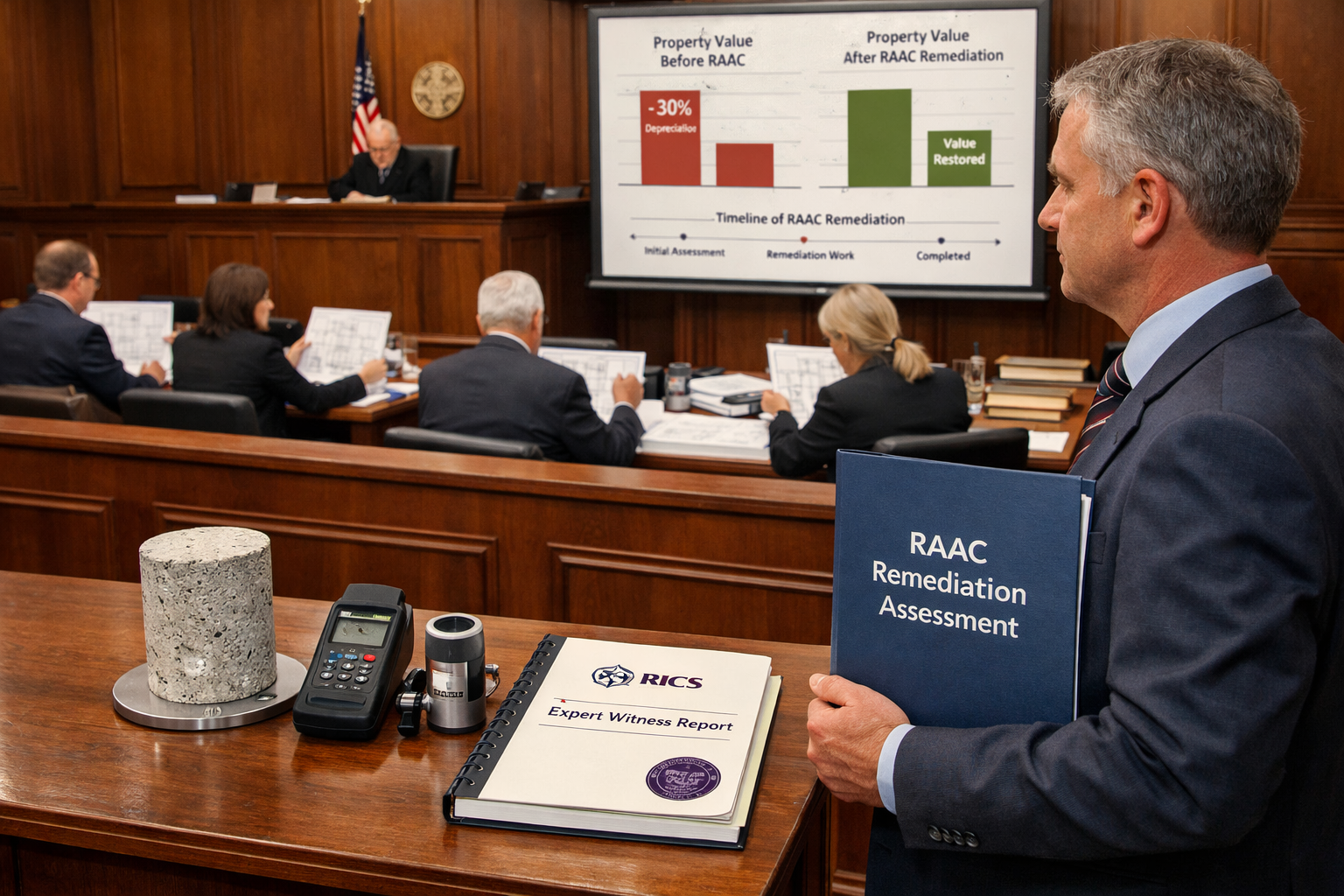
When RAAC disputes escalate to formal claims or litigation, chartered surveyors often serve as expert witnesses. This role carries specific responsibilities under RICS Home Survey Standards in RAAC Remediation Claims: Expert Witness Roles for 2026 and broader legal requirements.
Core Responsibilities of the Expert Witness
An expert witness in RAAC cases must:
1. Provide Independent Professional Opinion
The expert's primary duty is to the court or tribunal, not to the party instructing them. This means:
- 🔍 Objective assessment of RAAC presence and condition
- 🔍 Unbiased evaluation of causation and liability
- 🔍 Fair valuation of diminution in property value
- 🔍 Reasonable assessment of remediation costs
2. Evidence Collection and Documentation
Robust evidence gathering is fundamental to successful claims. The expert witness must:
- Conduct thorough site inspections with comprehensive photographic documentation
- Obtain material samples for laboratory testing when appropriate
- Review historical documentation including original construction specifications
- Analyze previous surveys to determine when RAAC should have been identified
- Compile comparative data on similar properties with and without RAAC
3. Prepare Detailed Expert Reports
The expert report forms the cornerstone of the claim. It must include:
- Clear identification of RAAC elements and their locations
- Assessment of structural condition and safety implications
- Opinion on whether previous surveyors should have identified the issue
- Detailed valuation analysis showing diminution in value
- Itemized remediation cost estimates with supporting quotations
- Professional opinion on liability and causation
Protocols for RAAC Evidence Gathering
Effective evidence collection follows a systematic approach:
Phase 1: Initial Assessment
- Visual inspection of accessible areas
- Identification of construction era indicators
- Review of building plans and specifications
- Preliminary photographic survey
- Assessment of safety concerns requiring immediate action
Phase 2: Detailed Investigation
- Comprehensive inspection using appropriate access equipment
- Thermal imaging and non-destructive testing
- Material sampling (with appropriate permissions)
- Measurement and documentation of all RAAC elements
- Assessment of associated defects (water ingress, structural movement)
Phase 3: Specialist Testing
- Laboratory analysis of core samples
- Structural load testing where appropriate
- Comparative analysis with known RAAC characteristics
- Review of test results by structural engineers
Phase 4: Compilation and Analysis
- Synthesis of all evidence into coherent narrative
- Comparison with RICS standards and guidance
- Assessment against reasonable professional standards
- Preparation of expert opinion on liability
For properties requiring comprehensive investigation, professionals should consider whether a homebuyers report or building survey provides adequate scope for RAAC assessment.
Valuation Methodologies in RAAC Claims
Determining the financial impact of RAAC is central to most claims. Expert witnesses must employ rigorous valuation approaches:
Before-and-After Method
This approach compares property value immediately before RAAC discovery with value after disclosure:
- Before value: Market value assuming no RAAC present
- After value: Market value with RAAC disclosed
- Diminution: Difference between the two values
Factors affecting diminution include:
- Extent and location of RAAC elements
- Structural implications and safety concerns
- Remediation costs and complexity
- Impact on insurance and mortgage availability
- Market perception and stigma effects
Cost-to-Cure Analysis
Some claims focus on remediation costs rather than diminution in value:
- Detailed quotations from specialist contractors
- Temporary accommodation costs during works
- Professional fees (structural engineers, project managers)
- Associated works (asbestos removal, service disconnections)
- Contingency allowances for unforeseen complications
Comparable Evidence
Expert witnesses strengthen valuations through:
- Sales data for similar properties with disclosed RAAC
- Market evidence of buyer reactions to RAAC
- Insurance premium impacts and availability issues
- Mortgage lending criteria for RAAC-affected properties
The RICS consumer guide on RAAC provides valuable context on insurance implications and remedies that inform valuation approaches.[1]
Common Dispute Scenarios
Scenario 1: Missed Identification in Pre-Purchase Survey
A buyer claims their surveyor should have identified RAAC during a Level 2 or Level 3 survey. The expert witness must determine:
- Was RAAC reasonably identifiable during the survey?
- Did the surveyor have appropriate access and visibility?
- Would a competent surveyor have recognized the indicators?
- What was the standard of care expected at the time?
Scenario 2: Valuation Disputes in Remediation Claims
Property owners and insurers disagree on diminution in value or remediation costs. The expert must:
- Provide independent valuation based on market evidence
- Justify remediation cost estimates with detailed specifications
- Address alternative remediation approaches and their costs
- Consider impact of partial versus complete remediation
Scenario 3: Liability Between Multiple Parties
Complex claims involving developers, contractors, and previous owners require the expert to:
- Establish timeline of RAAC installation and deterioration
- Assess whether original construction met standards of the time
- Determine when defects became apparent or should have been discovered
- Apportion liability based on professional responsibilities
Understanding common myths about property surveys helps experts address misconceptions that may arise during disputes.
Technology-Enhanced RAAC Detection and Documentation
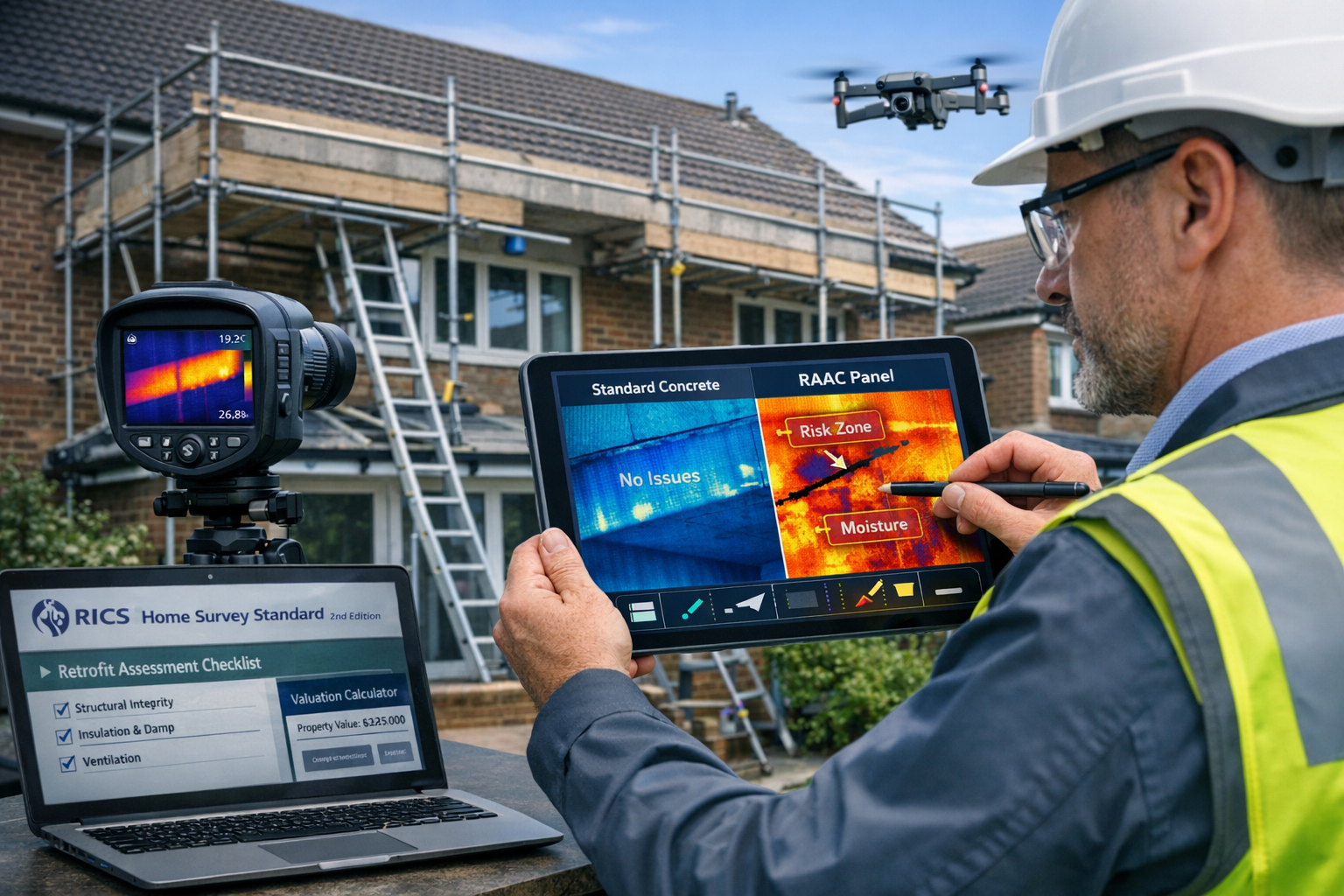
The integration of technology into RICS Home Survey Standards in RAAC Remediation Claims: Expert Witness Roles for 2026 represents a significant advancement in detection capabilities and evidence quality.
AI-Assisted Identification Systems
Artificial intelligence now supports surveyors in identifying potential RAAC through:
- Pattern recognition analyzing building photographs for characteristic RAAC features
- Predictive modeling based on construction date, location, and building type
- Defect correlation linking visual indicators to probable RAAC presence
- Risk scoring prioritizing areas requiring detailed investigation
These systems enhance but do not replace professional judgment. The expert witness must still apply their competence and experience to confirm AI-generated findings.
Drone and Remote Inspection Technologies
Unmanned aerial vehicles (UAVs) provide access to previously difficult-to-inspect areas:
- Roof-level RAAC planks without scaffolding
- High-level external walls and cladding systems
- Large commercial building roofs and upper stories
- Comparative analysis across multiple similar buildings
Drone footage provides compelling visual evidence for claims, particularly when demonstrating extent of RAAC installation or deterioration patterns.
Thermal Imaging Applications
Infrared thermography reveals:
- Moisture ingress associated with RAAC deterioration
- Structural voids indicating material degradation
- Thermal bridging patterns characteristic of RAAC construction
- Hidden defects not visible during standard visual inspection
Thermal imaging reports strengthen expert evidence by providing objective data supporting visual observations.
Digital Documentation Standards
Modern expert witness reports benefit from:
- 360-degree photography providing comprehensive site records
- Annotated floor plans showing RAAC locations precisely
- Time-stamped evidence establishing inspection dates and conditions
- Cloud-based collaboration enabling multi-disciplinary input
For properties requiring detailed condition assessment, professionals should explore options for stock condition surveys that may incorporate RAAC screening protocols.
Practical Guidance for Surveyors in RAAC Claims
Pre-Instruction Considerations
Before accepting an expert witness instruction in a RAAC case, surveyors should:
- Confirm competence in RAAC identification and assessment
- Check for conflicts of interest that might compromise independence
- Clarify scope of instruction and specific questions to be answered
- Agree fee structure appropriate for expert witness work
- Establish timeline for report delivery and potential court attendance
During the Investigation
Professional protocols require:
- Comprehensive note-taking documenting all observations and decisions
- Photographic evidence with clear labeling and metadata
- Witness statements from property owners, contractors, or other relevant parties
- Chain of custody for any material samples taken
- Safety compliance including appropriate PPE and risk assessments
Report Writing Best Practices
Expert witness reports in RAAC cases should:
- State qualifications clearly, including RICS membership and relevant experience
- Define scope of investigation and any limitations encountered
- Present findings in logical sequence with supporting evidence
- Express opinions clearly while acknowledging uncertainties
- Address alternative interpretations of evidence
- Provide clear conclusions on specific questions posed
Court and Tribunal Preparation
When giving evidence:
- Review all documentation thoroughly before attendance
- Prepare visual aids to explain technical concepts
- Anticipate challenges to methodology or conclusions
- Maintain professional demeanor under cross-examination
- Acknowledge limitations of evidence or opinion when appropriate
For surveyors expanding their expertise, understanding RICS property valuations provides essential context for valuation aspects of RAAC claims.
Insurance and Liability Considerations
Professional Indemnity Insurance
Surveyors involved in RAAC claims must ensure their professional indemnity insurance:
- Covers expert witness work specifically
- Provides adequate limits for potential claims
- Includes run-off cover for historical surveys
- Addresses RAAC-specific exclusions or limitations
Liability Exposure
Potential liability arises from:
- Failure to identify RAAC during original survey
- Inadequate reporting of suspected RAAC
- Incorrect advice on remediation approaches
- Valuation errors in claims assessments
- Expert witness negligence in report preparation or evidence
Risk Management Strategies
Surveyors can minimize liability through:
- ✅ Maintaining detailed contemporaneous records
- ✅ Following RICS standards and guidance consistently
- ✅ Seeking specialist advice when RAAC suspected
- ✅ Clear communication with clients about limitations
- ✅ Regular CPD on emerging building defects including RAAC
Future Developments in RAAC Standards and Guidance
The RICS Home Survey Standard 2nd edition currently in development will likely include:[4]
- Enhanced RAAC identification protocols based on emerging case law
- Standardized testing methodologies for material confirmation
- Updated valuation guidance reflecting market evidence
- Technology integration standards for AI and drone use
- Expert witness practice notes specific to RAAC disputes
As the standard evolves, surveyors must stay informed through:
- Regular review of RICS updates and guidance notes
- Participation in CPD events focused on RAAC
- Engagement with specialist interest groups
- Monitoring of case law and tribunal decisions
- Collaboration with structural engineers and material scientists
The progress update issued on 10 February 2026 indicates ongoing refinement of these standards.[4]
Conclusion
RICS Home Survey Standards in RAAC Remediation Claims: Expert Witness Roles for 2026 represents a critical framework for navigating one of the most significant building defect challenges facing the UK property sector. The updated standards, with their enhanced guidance on 'additional risk' dwellings and technology integration, provide surveyors with the tools needed to identify RAAC effectively and support robust claims processes.
Expert witnesses play an essential role in RAAC disputes, requiring a combination of technical competence, rigorous evidence-gathering protocols, and independent professional judgment. Success in this role demands understanding of both the material science of RAAC and the legal framework governing expert evidence.
Key Action Steps for Property Professionals
- Update your knowledge: Review the latest RICS guidance on RAAC and 'additional risk' dwellings
- Enhance your competence: Undertake specific CPD on RAAC identification and assessment
- Invest in technology: Consider thermal imaging, drone inspection, and AI-assisted detection tools
- Develop protocols: Establish systematic approaches to RAAC investigation and documentation
- Build your network: Connect with structural engineers and material specialists for multi-disciplinary support
- Review your insurance: Ensure adequate professional indemnity cover for RAAC-related work
For property owners concerned about RAAC, engaging a qualified chartered surveyor is essential. Whether you need a homebuyers survey or full structural assessment, choosing the right level of investigation can prevent costly surprises and provide the evidence needed for any subsequent claims.
The RAAC crisis will continue to generate remediation claims throughout 2026 and beyond. Surveyors who master the standards, protocols, and expert witness roles outlined in this article will be well-positioned to serve their clients effectively while maintaining the highest professional standards. As the RICS framework continues to evolve, staying informed and adaptable remains the key to navigating this complex and consequential area of building surveying practice.
References
[1] Reinforced Autoclaved Aerated Concrete Consumer Guide – https://ww3.rics.org/uk/en/journals/built-environment-journal/reinforced-autoclaved-aerated-concrete-consumer-guide.html
[2] Faqs – https://rcs-services.co.uk/faqs
[4] Home Survey Standards – https://www.rics.org/profession-standards/rics-standards-and-guidance/sector-standards/building-surveying-standards/home-surveys/home-survey-standards
[9] Reinforced Autoclaved Aerated Concrete Raac – https://www.rics.org/consumer-guides/reinforced-autoclaved-aerated-concrete-raac