
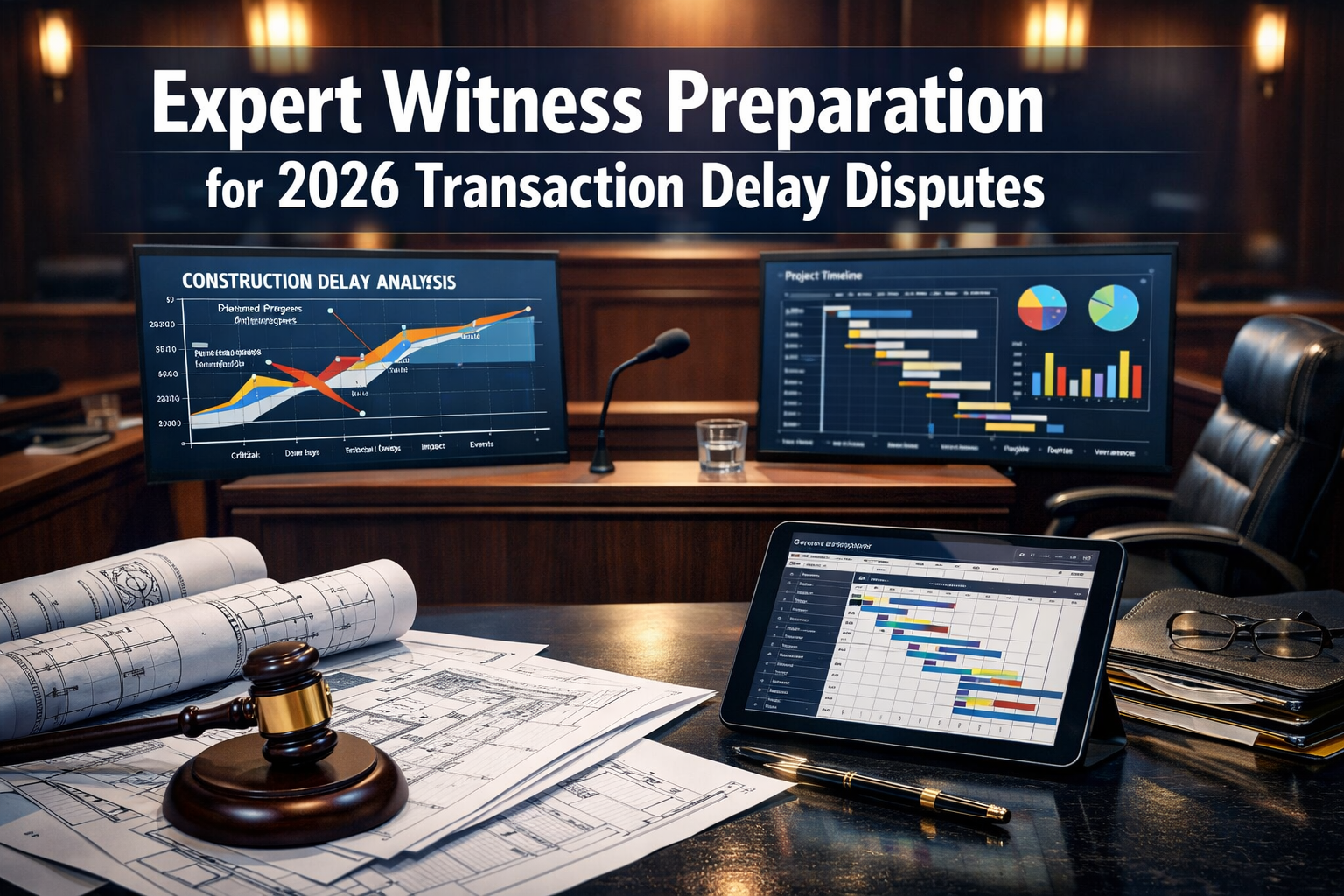
When construction projects stall and property transactions grind to a halt, the financial consequences can be devastating. In 2026, the gap between expected completion timelines and reality has never been wider, creating a surge in transaction delay disputes that demand expert testimony backed by irrefutable data. Expert Witness Preparation for 2026 Transaction Delay Disputes: Evidence from Data-Driven Certainty Solutions has become the cornerstone of successful litigation outcomes, as courts increasingly demand forensic evidence rather than subjective opinions.
The modern expert witness faces unprecedented challenges: remote testimony platforms, AI-powered case analysis, and skeptical tribunals that scrutinize every claim. Success requires mastering both traditional forensic methodologies and cutting-edge data analytics that can withstand rigorous cross-examination. This comprehensive guide explores how construction and property professionals can prepare compelling expert testimony using data-driven certainty solutions that transform complex delay claims into clear, defensible narratives.
Key Takeaways
⚡ Data-driven evidence is mandatory – Courts in 2026 require forensic schedule analysis and contemporaneous documentation, not retrospective opinions, to establish delay causation and liability.
📊 AI integration transforms preparation – Artificial intelligence tools now simulate case outcomes and identify evidentiary gaps, though only 35% of firms provide formal AI training to expert witnesses.[3]
🎥 Remote testimony dominates – 44% of law firms anticipate increased remote depositions in 2026, requiring experts to master virtual presentation skills alongside technical competencies.[3]
💼 Narrative translation skills are essential – Technical experts who can convert complex scheduling data into digestible stories for judges and arbitrators command premium rates and achieve better outcomes.[5]
✅ Early data collection prevents disputes – Establishing baseline schedules and documenting delay events as they occur provides the strongest foundation for future expert testimony.
Understanding Transaction Delay Disputes in the 2026 Property Market
Transaction delay disputes have evolved significantly as market pressures intensify in 2026. These conflicts arise when property sales, construction completions, or development handovers fail to meet contractual deadlines, triggering financial penalties, lost opportunities, and litigation. The current environment presents unique challenges that distinguish 2026 disputes from previous years.
The Reality Gap: Expectations vs. Completion Times
The construction and property sectors face a fundamental disconnect between promised timelines and achievable outcomes. Supply chain disruptions, labor shortages, and regulatory complexity have extended typical project durations by 20-30% compared to pre-pandemic baselines. Yet contractual commitments often reflect optimistic schedules that ignore these systemic constraints.
This reality gap creates fertile ground for disputes when:
- Buyers demand compensation for delayed occupancy and additional financing costs
- Sellers face penalties for late completion under conditional contracts
- Developers encounter cascading delays affecting multiple transaction chains
- Lenders seek recovery for extended construction loan periods
Understanding these dynamics is critical for experts preparing testimony, as establishing reasonable baseline expectations forms the foundation of delay analysis. When evaluating disputes, experts must reference property inspection guidance standards and condition survey reports that document property conditions at critical transaction milestones.
Common Causes of Transaction Delays Requiring Expert Testimony
Transaction delays stem from multiple sources, each requiring distinct analytical approaches:
| Delay Category | Common Causes | Expert Analysis Required |
|---|---|---|
| Construction-Related | Material shortages, weather events, design changes | Schedule forensics, critical path analysis |
| Regulatory | Planning permission delays, building control issues | Regulatory timeline benchmarking |
| Financial | Funding gaps, valuation disputes | Economic impact quantification |
| Legal | Title defects, easement disputes, party wall disagreements | Legal causation analysis |
| Survey-Related | Undisclosed defects, structural concerns | Technical assessment validation |
Disputes involving party wall surveyor responsibilities frequently require expert witnesses to establish whether proper procedures were followed and whether delays were reasonable given statutory requirements.
The Growing Demand for Construction Dispute Resolution Experts
The volume of construction and transaction delay disputes has surged in 2026, driven by increased project complexity and tighter profit margins that make stakeholders less willing to absorb delay costs. This trend has elevated demand for qualified experts who can provide objective, data-supported testimony.[5]
Key market drivers include:
🏗️ Increased project complexity – Modern developments involve multiple stakeholders, intricate phasing, and sophisticated building systems that create more potential delay points
📈 Higher financial stakes – Property values and construction costs have risen substantially, making delay damages more significant
⚖️ Litigation preference – Alternative dispute resolution remains popular, but parties increasingly pursue litigation when settlement negotiations fail, requiring formal expert testimony
🔍 Scrutiny intensity – Courts and arbitrators demand higher evidence standards, rejecting unsupported expert opinions that were previously acceptable
Experts preparing for 2026 disputes must recognize that objectivity and defensibility under cross-examination remain foundational requirements.[5] The ability to present forensic evidence that withstands aggressive questioning separates effective expert witnesses from those whose testimony gets dismissed or discredited.
Expert Witness Preparation for 2026 Transaction Delay Disputes: The Data-Driven Methodology
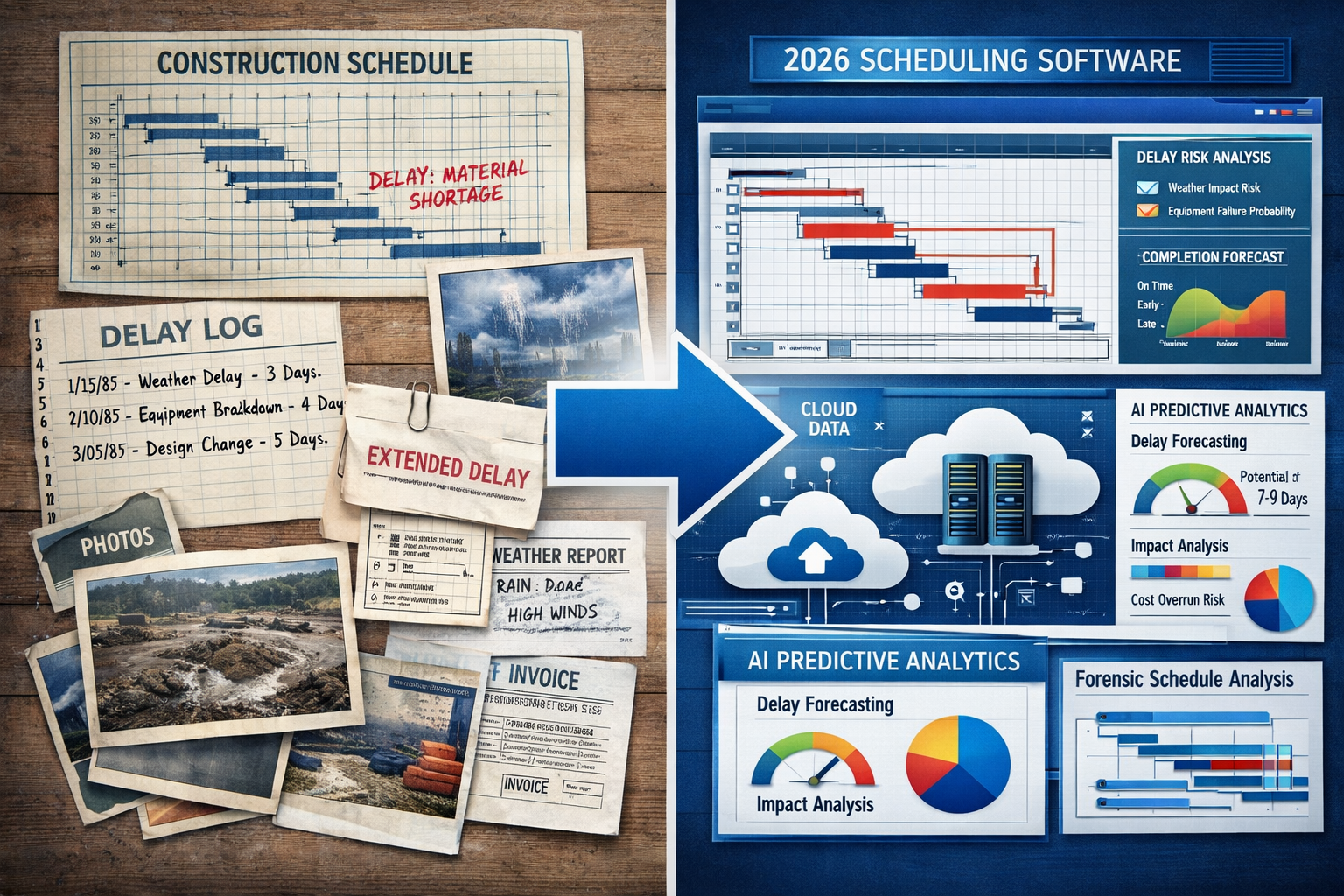
Preparing expert testimony for transaction delay disputes requires systematic methodology that transforms raw project data into compelling evidence. Expert Witness Preparation for 2026 Transaction Delay Disputes: Evidence from Data-Driven Certainty Solutions centers on forensic analysis techniques that establish causation, quantify impacts, and withstand rigorous cross-examination.
Forensic Schedule Analysis: Building the Foundation
Forensic schedule analysis forms the cornerstone of delay dispute testimony. This methodology involves reconstructing project timelines using contemporaneous documentation to identify when delays occurred, what caused them, and which party bears responsibility.
Essential components include:
Baseline Schedule Establishment – Every delay analysis begins with defining the original planned schedule. This requires collecting:
- Initial project schedules and Gantt charts
- Contract documents specifying completion dates
- Pre-construction planning materials
- Correspondence establishing timeline expectations
As-Built Schedule Reconstruction – Experts must document what actually happened by gathering:
- Daily site logs and progress reports
- Material delivery records
- Weather data for the project location
- Inspection reports and regulatory approval dates
- Payment application timelines
- Building survey documentation showing condition at key milestones
Critical Path Identification – Determining which activities controlled project duration requires sophisticated analysis to identify:
- Tasks that directly impacted completion dates
- Float periods and scheduling flexibility
- Concurrent delays from multiple causes
- Acceleration efforts and their effectiveness
Construction schedule and delay experts employ specialized software to model these relationships, creating visual representations that clearly demonstrate delay causation.[6] These tools allow experts to run "what-if" scenarios showing how the project would have progressed absent specific delay events.
Contemporaneous Documentation: The Gold Standard
Courts and arbitrators in 2026 place enormous weight on contemporaneous documentation—records created during project execution rather than retrospective analyses prepared for litigation. Expert witnesses must prioritize this evidence category when building their case.
Critical documentation types:
📧 Email correspondence – Communications between project stakeholders often reveal delay awareness, responsibility acknowledgment, and mitigation efforts in real-time
📋 Meeting minutes – Site meetings and coordination sessions document delay discussions as they occurred
📸 Photographic evidence – Time-stamped images showing site conditions, work progress, and delay causes
🌦️ Weather records – Official meteorological data supporting weather-related delay claims
📝 Change orders – Formal modifications to scope, schedule, or budget that document agreed adjustments
The absence of contemporaneous documentation significantly weakens expert testimony, as retrospective analyses are vulnerable to bias allegations. Experts should explicitly acknowledge documentation gaps and explain how they affected the analysis methodology.
Quantifying Delay Impacts with Data Certainty
Beyond establishing that delays occurred, experts must quantify their financial and temporal impacts with mathematical precision. This quantification process separates professional expert testimony from general opinions.
Delay quantification methods:
Time Impact Analysis – This prospective approach models how delay events affected the critical path by:
- Inserting delay activities into the baseline schedule
- Calculating resulting completion date changes
- Isolating individual delay contributions
- Demonstrating causation through logical progression
Window Analysis – This retrospective technique divides the project into time periods and:
- Compares planned vs. actual progress in each window
- Identifies delays that occurred during specific periods
- Attributes responsibility based on contemporaneous evidence
- Tracks cumulative delay accumulation
As-Planned vs. As-Built Analysis – This comparative method:
- Overlays actual performance against original plans
- Highlights variances requiring explanation
- Supports causation arguments with visual clarity
- Provides intuitive understanding for non-technical audiences
Collapsed As-Built Analysis – This technique removes delay events from the actual schedule to demonstrate:
- When the project would have completed absent delays
- The time impact of specific delay categories
- Comparative responsibility among multiple parties
Financial quantification extends beyond simple time calculations to include:
- Additional financing costs during delay periods
- Lost rental income or occupancy value
- Price escalation for materials and labor
- Professional fees for extended project duration
- Market opportunity costs from delayed transactions
When preparing testimony on average price reductions after surveys, experts must demonstrate how delays affected property values and negotiating positions with concrete data rather than speculation.
Integrating AI and Technology in Expert Preparation
Artificial intelligence has revolutionized expert witness preparation in 2026, though adoption remains uneven across the industry. AI tools offer powerful capabilities for analyzing vast documentation sets, identifying patterns, and simulating case outcomes that would be impossible through manual review.[3]
AI applications in delay dispute preparation:
🤖 Document analysis – Machine learning algorithms can review thousands of emails, reports, and contracts to identify relevant delay-related communications, saving hundreds of expert hours
📊 Pattern recognition – AI systems detect scheduling patterns and anomalies that human reviewers might miss, strengthening causation arguments
🎯 Outcome simulation – Predictive analytics model how different evidence presentations might influence case outcomes, allowing experts to refine their testimony strategies
⚠️ Evidentiary gap identification – AI tools highlight missing documentation or logical inconsistencies in the evidence chain, enabling experts to address weaknesses proactively
Despite these advantages, only 35% of firms provided formal technology or AI training to staff in 2025, creating a significant skills gap.[3] Experts who master these tools gain competitive advantages in efficiency and analytical depth, but must remain transparent about AI's role in their analysis to maintain credibility.
Best practices for AI integration:
- Disclose AI tool usage in expert reports and testimony
- Verify AI findings through traditional analytical methods
- Maintain human judgment as the ultimate decision authority
- Ensure AI systems don't introduce bias or unsupported conclusions
- Keep detailed records of AI methodologies for cross-examination
The most effective approach combines AI's processing power with expert judgment honed through decades of construction and property experience. Technology enhances but never replaces the critical thinking that distinguishes exceptional expert witnesses.
Preparing for Cross-Examination and Remote Testimony in 2026
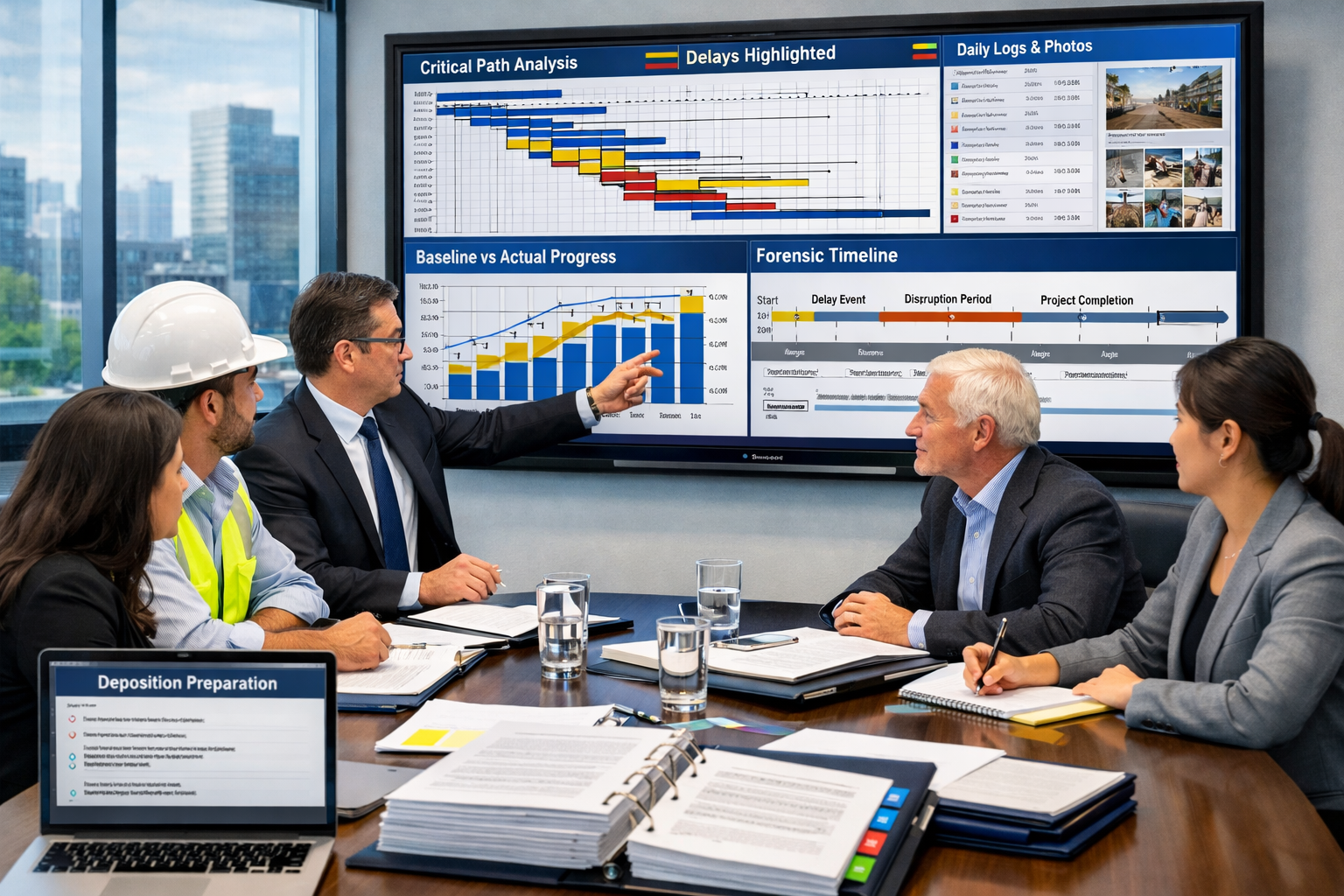
The courtroom environment has transformed dramatically, with remote testimony becoming standard practice and cross-examination techniques growing increasingly sophisticated. Expert Witness Preparation for 2026 Transaction Delay Disputes: Evidence from Data-Driven Certainty Solutions must address these evolving presentation challenges to ensure expert credibility survives aggressive questioning.
Mastering the Art of Technical Translation
The most technically brilliant analysis becomes worthless if judges, arbitrators, or juries cannot understand it. In 2026, the ability to translate complex scheduling forensics into clear narratives has become the differentiating factor between effective and ineffective expert witnesses.[5]
Translation strategies that work:
Visual storytelling – Replace dense technical reports with:
- Simplified Gantt charts highlighting critical delays
- Before/after timeline comparisons
- Color-coded responsibility matrices
- Annotated photographs showing delay progression
- Infographics summarizing key findings
Analogy usage – Connect technical concepts to everyday experiences:
- Compare critical path to the longest checkout line at a store
- Explain float as "scheduling cushion" or "wiggle room"
- Describe concurrent delays as "multiple problems happening simultaneously"
Layered explanation – Structure testimony in progressive detail levels:
- Executive summary in plain language
- Methodology overview for context
- Detailed technical analysis for scrutiny
- Supporting appendices for deep dives
Anticipatory clarification – Address predictable confusion points before they arise by:
- Defining technical terms immediately upon first use
- Providing glossaries in written reports
- Creating reference materials for tribunal use
- Offering to explain concepts multiple ways
Experts who excel at technical translation earn premium fees and achieve better outcomes because their testimony actually influences decision-makers rather than confusing them. This skill requires practice and feedback from non-technical audiences during preparation.
Remote Testimony Best Practices
Remote depositions, mediations, arbitrations, and even trials have surged in 2026, with 44% of law firms anticipating increased remote depositions and 35% expecting rises in virtual proceedings.[3] This shift demands new technical and presentation skills that traditional courtroom testimony never required.
Technical setup essentials:
💻 Professional equipment – Invest in:
- High-quality webcam (1080p minimum)
- Professional lighting (ring light or softbox)
- Clear audio (external microphone, not laptop built-in)
- Stable internet connection (hardwired preferred over WiFi)
- Backup systems for equipment failures
🎥 Camera positioning – Place camera at eye level, centered, with neutral professional background that doesn't distract from testimony
📱 Platform proficiency – Master the specific video conferencing platform being used, including:
- Screen sharing for visual evidence presentation
- Annotation tools for highlighting key information
- Breakout room functionality for private consultations
- Recording and transcription features
Presentation adaptations for virtual environments:
Enhanced visual engagement – Remote audiences have shorter attention spans and more distractions, requiring:
- More frequent visual aids than in-person testimony
- Shorter explanation segments before visual breaks
- Direct camera eye contact to simulate personal connection
- Varied vocal tone to maintain interest
Document handling protocols – Establish clear procedures for:
- Sharing exhibits with all parties simultaneously
- Referencing specific document sections visible to everyone
- Managing exhibit lists and tracking
- Handling confidential materials appropriately
Communication clarity – Virtual settings amplify misunderstandings, so experts should:
- Speak slightly slower than normal pace
- Pause between concepts for processing
- Confirm understanding before proceeding
- Repeat questions to ensure accurate responses
Professional presence maintenance – Remote settings tempt casual behavior that undermines credibility:
- Dress professionally as for in-person testimony
- Maintain posture and attentiveness throughout
- Avoid multitasking or checking phones
- Stay engaged during opposing counsel presentations
The transition to remote testimony has democratized access to expert witnesses across geographic boundaries while creating new challenges for maintaining gravitas and authority. Experts who master virtual presentation techniques position themselves for continued relevance as hybrid proceedings become permanent fixtures.
Defending Your Analysis Under Aggressive Cross-Examination
Cross-examination represents the ultimate test of expert witness preparation. Opposing counsel will attack methodology, challenge assumptions, highlight documentation gaps, and attempt to expose bias or inconsistency. Surviving this scrutiny requires meticulous preparation and disciplined testimony techniques.
Pre-cross-examination preparation:
📚 Know your report intimately – Review every statement, calculation, and conclusion until you can defend each without hesitation or reference materials
🔍 Identify vulnerabilities – Conduct honest self-assessment of:
- Analytical assumptions that could be challenged
- Documentation gaps affecting conclusions
- Alternative interpretations of evidence
- Limitations in your methodology
- Potential bias perceptions
🎭 Mock cross-examination – Practice with attorneys who simulate aggressive questioning to:
- Develop composed response patterns
- Identify unclear explanations requiring refinement
- Build confidence under pressure
- Test visual aid effectiveness
During cross-examination tactics:
Listen completely – Allow opposing counsel to finish questions entirely before responding, avoiding interruptions that appear defensive
Answer only what's asked – Resist the temptation to over-explain or volunteer additional information that creates new attack vectors
Maintain objectivity – Never appear argumentative or personally invested in the outcome; present yourself as an impartial analyst
Acknowledge limitations – Admitting reasonable uncertainties strengthens credibility rather than weakening it, as it demonstrates intellectual honesty
Request clarification – If questions are unclear or compound, ask for clarification rather than guessing at the intended question
Reference your report – Direct questioners to specific report sections supporting your positions, demonstrating consistency between testimony and written analysis
Avoid absolute statements – Use appropriately qualified language ("in my professional opinion," "based on available evidence") rather than unqualified certainties that invite challenge
When dealing with boundary disputes or party wall issues, experts must be particularly careful to distinguish factual findings from interpretations, as these areas often involve subjective judgment calls that opposing counsel will exploit.
Building Credibility Through Professional Qualifications
Expert witness credibility rests substantially on professional qualifications, industry experience, and demonstrated expertise. In 2026, tribunals scrutinize expert credentials more carefully than ever, making qualification establishment a critical preparation component.
Credibility foundations:
✅ Professional certifications – Maintain current credentials such as:
- RICS (Royal Institution of Chartered Surveyors) membership
- Professional engineering licenses
- Construction management certifications
- Specialized delay analysis training
📚 Continuing education – Demonstrate ongoing professional development through:
- Industry conference participation
- Technical publication authorship
- Professional association involvement
- Advanced training in forensic methodologies
💼 Relevant experience – Establish expertise through:
- Years of industry practice before litigation consulting
- Project types matching dispute characteristics
- Geographic market familiarity
- Technical specialization alignment
📊 Testimony history – Build track record through:
- Previous expert witness engagements
- Qualification as expert in multiple proceedings
- Published case outcomes (where permissible)
- Peer recognition and referrals
Experts should prepare detailed CV materials that highlight qualifications relevant to the specific dispute at hand. Generic credentials matter less than demonstrated expertise in the particular technical issues being litigated.
When testifying about construction law matters or property valuation issues, experts must establish not just general surveying competence but specific expertise in the dispute's technical domain.
Emerging Trends Shaping Expert Witness Roles in 2026 Disputes
The expert witness landscape continues evolving rapidly as technology, regulation, and market dynamics reshape dispute resolution. Understanding these trends helps experts position themselves for future engagements and adapt preparation methodologies to changing expectations.
The Rise of Data-Driven Certainty Solutions
The phrase "in my opinion" no longer suffices for expert testimony in 2026. Tribunals demand data-driven certainty solutions that replace subjective judgment with objective analysis backed by verifiable evidence.[1] This shift reflects broader societal trends toward quantification and away from authority-based decision-making.
Data-driven approaches include:
Quantitative benchmarking – Comparing disputed project performance against:
- Industry standard timelines for similar projects
- Historical performance data from comparable developments
- Regional construction productivity metrics
- Weather pattern norms for the project location
Statistical analysis – Applying mathematical rigor to:
- Delay probability calculations
- Risk factor quantification
- Causation correlation strength
- Impact magnitude confidence intervals
Predictive modeling – Using historical data to:
- Establish reasonable completion expectations
- Demonstrate alternative scenario outcomes
- Quantify uncertainty ranges
- Support "but-for" causation arguments
This data-driven emphasis doesn't eliminate expert judgment—it enhances it by grounding opinions in verifiable facts rather than unsupported assertions. Experts who master statistical methodologies and data visualization techniques gain significant advantages in 2026's evidence-focused environment.
Regulatory Changes Affecting Expert Testimony Standards
The UK homebuying reform proposals anticipated for 2026 implementation will substantially impact expert witness roles in transaction disputes.[1] These reforms emphasize upfront information disclosure and standardized survey requirements, creating new evidentiary frameworks that experts must navigate.
Key regulatory developments:
📋 Standardized survey protocols – New requirements for homebuyers surveys and structural assessments create uniform baselines for expert analysis
⚖️ Enhanced disclosure obligations – Stricter requirements for revealing potential conflicts of interest and fee arrangements
🎯 Competency standards – More rigorous qualification requirements for expert witness designation in property disputes
📊 Report formatting requirements – Standardized expert report structures improving comparability and comprehension
These regulatory changes aim to improve dispute resolution efficiency while ensuring expert testimony meets minimum quality thresholds. Experts must stay current with evolving standards to maintain their qualification status and avoid disqualification challenges.
Multidisciplinary Collaboration in Complex Disputes
Modern transaction delay disputes rarely involve single-issue causation. Instead, they typically require expertise spanning multiple disciplines—construction scheduling, structural engineering, cost estimation, contract law, and market analysis. This complexity drives increased collaboration among expert witnesses from different specializations.[2]
Collaborative models emerging:
🤝 Expert teams – Multiple specialists working together to address different dispute facets while maintaining consistency across analyses
🔄 Sequential analysis – Experts building on each other's findings to create comprehensive causation narratives
📞 Joint conferencing – Opposing experts meeting to narrow disputed issues and identify areas of agreement
💡 Cross-disciplinary validation – Experts from different fields reviewing each other's methodologies to ensure logical consistency
This collaborative trend requires experts to develop communication skills beyond their technical specializations. The ability to integrate findings from party wall surveyors, structural engineers, and cost consultants into coherent narratives becomes increasingly valuable.
Experts should also understand how their analyses interact with related disciplines. For example, delay testimony must align with cost expert findings on damages, and schedule analysis should reflect structural engineer assessments of defect remediation timelines.
The Growing Importance of Early Neutral Evaluation
Many 2026 disputes incorporate early neutral evaluation processes where experts provide preliminary assessments before formal litigation or arbitration.[2] This trend reflects parties' desires to understand case strengths and weaknesses before incurring full litigation costs.
Early evaluation characteristics:
⏰ Abbreviated timelines – Experts must provide credible opinions with limited documentation review periods
💰 Cost constraints – Budget limitations require efficient analysis focusing on key dispute drivers
🎯 Settlement facilitation – Evaluations aim to promote resolution rather than support adversarial positions
📊 Preliminary nature – Opinions remain subject to revision as additional evidence emerges
Experts participating in early neutral evaluations must balance thoroughness with efficiency, providing sufficient analysis to inform settlement discussions without conducting full forensic investigations. This requires strong professional judgment about which issues warrant detailed examination versus preliminary assessment.
The skills developed for early neutral evaluation—rapid analysis, clear communication, and balanced perspective—translate directly to traditional expert witness roles while expanding service offerings to clients seeking cost-effective dispute resolution alternatives.
Conclusion
Expert Witness Preparation for 2026 Transaction Delay Disputes: Evidence from Data-Driven Certainty Solutions represents the evolution of professional testimony from opinion-based assertions to forensic analysis backed by verifiable data. As transaction delays proliferate amid construction complexity and market pressures, the demand for qualified experts who can navigate this landscape continues growing.
Success in 2026's dispute resolution environment requires mastering multiple competencies: forensic schedule analysis using contemporaneous documentation, technical translation skills that make complex findings accessible, remote testimony proficiency for virtual proceedings, and cross-examination resilience built through meticulous preparation. Experts must also embrace emerging technologies like AI-powered document analysis while maintaining the objectivity and professional judgment that form the foundation of credible testimony.
The shift toward data-driven certainty solutions reflects broader trends in legal practice, where subjective opinions yield to quantitative analysis and visual evidence presentation. Experts who adapt to these expectations—integrating statistical methodologies, collaborative approaches, and regulatory compliance—position themselves as indispensable resources for resolving the increasingly complex transaction delay disputes that characterize 2026's property market.
Actionable Next Steps
For professionals preparing to serve as expert witnesses in transaction delay disputes:
🎯 Invest in specialized training – Pursue advanced certifications in forensic schedule analysis, delay quantification methodologies, and construction dispute resolution
📊 Develop data analytics capabilities – Master scheduling software, statistical analysis tools, and visualization platforms that support data-driven testimony
🎥 Practice remote presentation skills – Conduct mock virtual depositions to refine camera presence, visual aid integration, and virtual communication techniques
📚 Build documentation systems – Establish protocols for collecting and organizing contemporaneous project records that will support future expert analyses
🤝 Cultivate multidisciplinary networks – Develop relationships with experts in complementary fields to support collaborative engagement opportunities
⚖️ Stay current with regulatory changes – Monitor evolving expert witness standards, legal requirements, and industry best practices affecting testimony admissibility
The transaction delay disputes of 2026 demand expert witnesses who combine technical excellence with communication mastery, traditional forensic methods with cutting-edge technology, and specialized knowledge with collaborative flexibility. Those who meet these demands will find abundant opportunities to apply their expertise while contributing to fairer, more efficient dispute resolution outcomes.
For property professionals seeking expert guidance on transaction issues, comprehensive condition surveys and building evaluations provide the contemporaneous documentation foundation that prevents disputes or supports expert analysis when conflicts arise. Proactive documentation remains the single most effective strategy for managing transaction delay risks in 2026's challenging property market.
References
[1] Expert Witness Roles In 2026 Homebuying Reform Disputes Defending Survey Evidence Under New Upfront Standards – https://nottinghillsurveyors.com/blog/expert-witness-roles-in-2026-homebuying-reform-disputes-defending-survey-evidence-under-new-upfront-standards
[2] Predictions 2026 Disputes And Investigations – https://www.simmons-simmons.com/en/publications/cmj28qvjt00eouj4gwocfl0mg/predictions-2026-disputes-and-investigations
[3] Trial Readiness 2026 Trends – https://www.uslegalsupport.com/blog/trial-readiness-2026-trends/
[4] Peter J Wallace – https://www.hka.com/people/peter-j-wallace/
[5] Choosing The Right Construction Dispute Resolution Expert In 2026 – https://www.precisionschedulingconsultants.com/choosing-the-right-construction-dispute-resolution-expert-in-2026/
[6] Construction Schedule And Delay – https://www.thinkbrg.com/industries/construction-real-estate/construction-schedule-and-delay/
[7] Construction Consulting Litigation Support Expert Witness – https://www.yagroup.com/services/construction-consulting-litigation-support-expert-witness/