


As property markets show early signs of recovery in 2026, chartered surveyors face an unprecedented challenge: maintaining rigorous quality standards while managing surging instruction volumes. The Royal Institution of Chartered Surveyors (RICS) reports increased activity across residential markets, signaling a potential boom that could strain quality assurance protocols[1]. Building Survey Quality Assurance in Rapid Recovery Markets: Maintaining Standards as Instruction Volumes Surge in 2026 requires strategic planning, robust training frameworks, and technology-enabled consistency checks to ensure every property receives the thorough inspection it deserves.
The stakes have never been higher. As transaction volumes increase, the temptation to rush surveys or cut corners grows proportionally. Yet buyers depend on accurate, comprehensive building surveys to make informed purchasing decisions and negotiate property prices effectively. This article explores proven strategies for maintaining survey excellence when market pressures intensify.

Key Takeaways
- Market recovery demands proactive quality control: RICS forecasts indicate rising instruction volumes require surveyors to implement robust QA frameworks before capacity constraints compromise standards
- Technology enables consistency at scale: Digital tools, thermal imaging, and AI-powered defect detection help maintain thorough inspections even when workloads increase significantly
- Structured peer review prevents quality drift: Regular internal audits and collaborative review processes catch errors and maintain professional standards across all team members
- Continuous training protects reputation: Investment in ongoing professional development ensures surveyors maintain defect-spotting discipline regardless of time pressures
- Workload management is quality management: Strategic instruction acceptance and realistic scheduling prevent burnout and rushed inspections that damage client trust
Understanding the 2026 Market Recovery Context
Early Recovery Signals and Volume Projections
The UK residential property market is experiencing tentative recovery after a challenging period. RICS data shows new buyer enquiries rising for the first time in months, with agreed sales also trending upward[1]. This uptick signals potential instruction volume increases that could challenge surveying practices across the country.
Real estate industry predictions for 2026 suggest continued growth momentum, particularly in markets that have weathered recent economic uncertainty[2]. Construction activity is also rebounding, with private real estate investments seeking alpha opportunities in recovery markets[4]. For building surveyors, this translates to more homebuyer surveys, building surveys, and specialized inspections across diverse property types.
However, recovery brings risks. Rapid volume increases historically correlate with quality lapses as firms stretch capacity to capture market share. The pressure to accept every instruction, reduce turnaround times, and maximize revenue can compromise the thorough, methodical approach that defines professional surveying.
Why Quality Assurance Matters More During Growth
Building Survey Quality Assurance in Rapid Recovery Markets: Maintaining Standards as Instruction Volumes Surge in 2026 isn't just about professional pride—it's about protecting consumers and preserving industry credibility. When markets boom, inexperienced buyers enter the property ladder, often relying heavily on survey findings to understand their investment risks.
A rushed or incomplete survey can miss critical defects:
- Structural issues like subsidence, wall cracking, or roof deterioration
- Damp problems requiring specialist investigation
- Building regulation non-compliance in extensions or conversions
- Hidden defects in concealed areas requiring invasive inspection
These oversights expose buyers to unexpected costs and potentially dangerous living conditions. They also create professional liability risks for surveyors and damage the reputation of RICS-qualified professionals across the industry.
RICS Standards Updates and Industry Response
RICS has recognized the need for strengthened quality frameworks. The organization's Home Survey Standard 2nd edition update acknowledges feedback highlighting "the need to strengthen some areas of home surveys in addition to providing further clarification to reflect consumer insight and technological changes"[1].
While specific implementation details remain forthcoming, this initiative signals industry awareness of quality challenges. Forward-thinking surveying practices are already implementing enhanced QA protocols to stay ahead of regulatory changes and maintain competitive advantage through demonstrated excellence.
Building Survey Quality Assurance in Rapid Recovery Markets: Implementing Robust Training and Development Frameworks
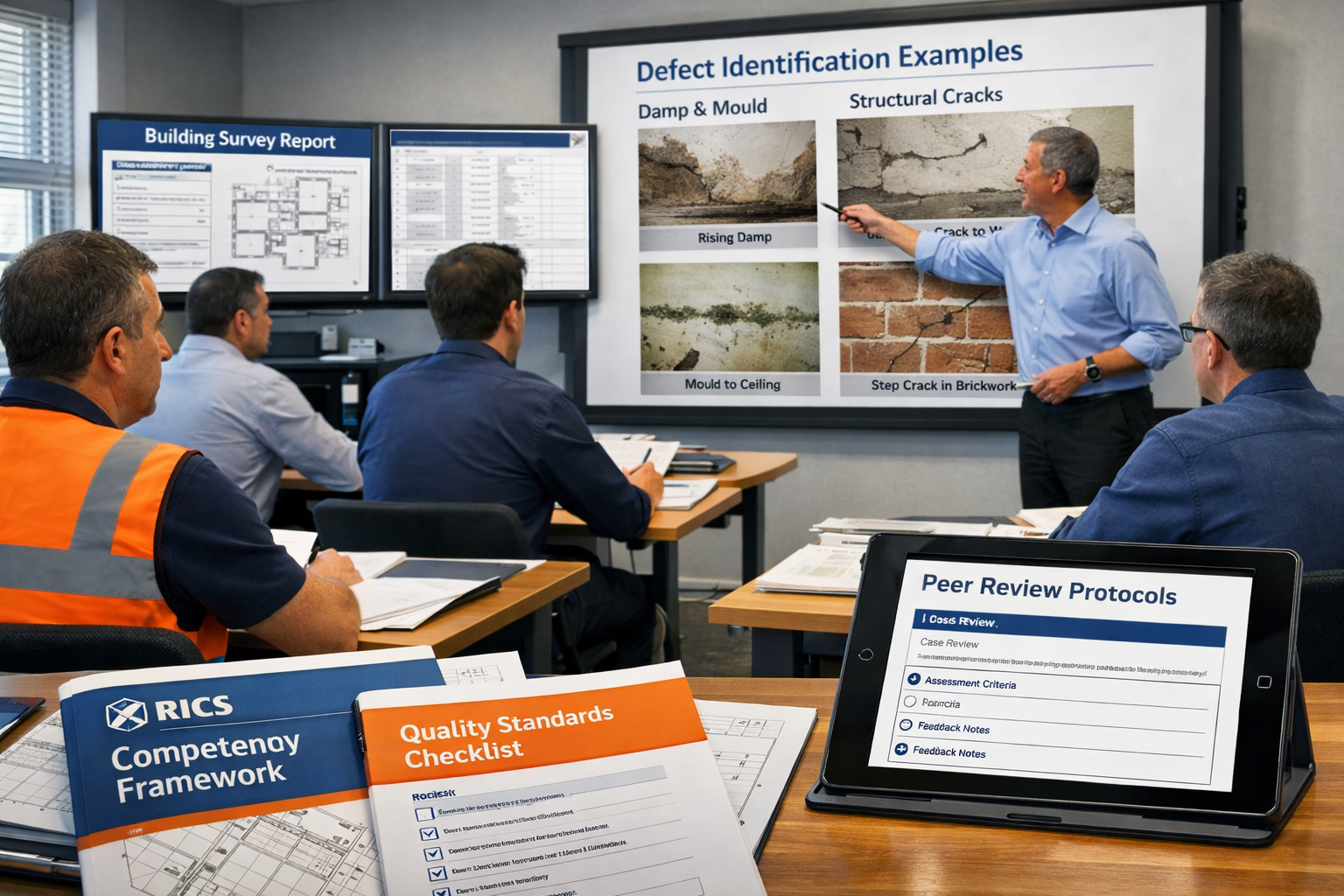
Continuous Professional Development as Quality Foundation
The cornerstone of quality assurance is competent, well-trained surveyors who maintain discipline under pressure. Building Survey Quality Assurance in Rapid Recovery Markets: Maintaining Standards as Instruction Volumes Surge in 2026 starts with investment in continuous professional development (CPD).
Essential training components include:
- 🎓 Regular technical updates: Monthly sessions covering new construction methods, materials, and defect identification techniques
- 📋 Quality protocol refreshers: Quarterly reviews of internal QA standards and RICS requirements
- 🔍 Defect identification workshops: Hands-on training using case studies and actual property examples
- 💻 Technology proficiency: Training on new surveying tools, software, and reporting platforms
- 📊 Report writing excellence: Workshops ensuring clarity, completeness, and consistency across all documentation
Experienced surveyors benefit from advanced training in specialized areas like damp surveys, party wall matters, and complex structural analysis. This expertise depth ensures thorough investigations even when time pressures mount.
Structured Onboarding for New Surveyors
As firms expand to meet increased demand, bringing new surveyors onboard safely is critical. A comprehensive onboarding program should include:
| Onboarding Phase | Duration | Key Activities |
|---|---|---|
| Shadowing | 2-4 weeks | Accompany senior surveyors on varied property types |
| Supervised Practice | 4-8 weeks | Conduct surveys with senior review before client delivery |
| Mentored Independence | 8-12 weeks | Complete surveys independently with mandatory peer review |
| Full Competency | 12+ weeks | Independent practice with random QA audits |
This graduated approach prevents quality compromises while building capacity. New surveyors develop proper understanding of surveyor roles and responsibilities without being thrown into high-pressure situations prematurely.
Peer Review and Collaborative Learning
Peer review protocols create multiple quality checkpoints throughout the survey process. Effective peer review systems include:
- Pre-instruction review: Senior surveyor confirms property complexity matches assigned surveyor's experience level
- Mid-survey consultation: Junior surveyors can request site visits from seniors when encountering unusual defects
- Draft report review: All reports undergo review by second qualified surveyor before client delivery
- Post-delivery debrief: Regular team meetings discussing challenging properties and lessons learned
This collaborative approach maintains standards while accelerating skill development across the team. It also creates safety nets that catch potential errors before they reach clients.
Technology-Enabled Consistency: Quality Assurance Tools for High-Volume Environments

Digital Survey Tools and Standardization
Building Survey Quality Assurance in Rapid Recovery Markets: Maintaining Standards as Instruction Volumes Surge in 2026 increasingly relies on technology to maintain consistency. Digital tools standardize data collection and reduce human error under time pressure.
Key technology enablers include:
Thermal Imaging Cameras 🌡️
- Quickly identify hidden moisture problems and insulation defects
- Provide objective, documented evidence of thermal performance issues
- Enable faster, more thorough inspections of large properties
Moisture Meters and Damp Detection
- Quantify moisture levels with precise measurements
- Distinguish between different damp sources (rising, penetrating, condensation)
- Support evidence-based recommendations for remediation
Digital Measuring Tools
- Laser distance meters ensure accurate room dimensions
- Digital levels detect subtle structural movement
- 3D scanning technology creates comprehensive property records
Structured Reporting Software
- Template-based systems ensure no sections are missed
- Automated prompts remind surveyors to address all required elements
- Consistent formatting improves client comprehension and professional presentation
These tools don't replace professional judgment—they enhance it by handling routine measurements and data collection, freeing surveyors to focus on analysis and defect interpretation.
AI-Powered Quality Checks and Defect Detection
Emerging artificial intelligence applications offer promising quality assurance capabilities. While still developing, AI tools can:
- Analyze survey photographs to flag potential defects that might be missed during rushed site visits
- Review report drafts for completeness, checking that all property areas have been adequately addressed
- Compare findings against typical defect patterns for similar property types and ages
- Identify inconsistencies between site notes, photographs, and written report content
These systems serve as additional safety nets, particularly valuable when instruction volumes surge and human fatigue increases error risk.
Cloud-Based Collaboration and Remote Review
Cloud platforms enable real-time collaboration and quality oversight regardless of physical location. Senior surveyors can:
- Review site photographs and notes while junior surveyors are still on-site
- Provide immediate guidance on areas requiring additional investigation
- Conduct virtual peer reviews without scheduling delays
- Track quality metrics across all team members and property types
This connectivity maintains quality standards even when team members work across different locations or coverage areas.
Maintaining Defect-Spotting Discipline Under Workload Pressure
Systematic Inspection Protocols
When instruction volumes surge, the temptation to rush through properties increases dramatically. Systematic inspection protocols combat this tendency by creating non-negotiable checklists that ensure thoroughness regardless of time pressure.
A comprehensive building survey protocol should include:
Exterior Inspection Sequence:
- ✅ Roof coverings, chimneys, and flashings (binoculars and close inspection where accessible)
- ✅ Rainwater goods and drainage systems
- ✅ External walls, pointing, and render condition
- ✅ Windows, doors, and external joinery
- ✅ Foundations and ground levels (signs of movement or settlement)
- ✅ Boundary walls, outbuildings, and site features
Interior Inspection Sequence:
- ✅ Roof spaces (insulation, ventilation, structural timbers, water tanks)
- ✅ Ceilings and walls (cracks, staining, damp)
- ✅ Floors (level, movement, construction type)
- ✅ Internal joinery and fittings
- ✅ Services (visible elements of heating, electrical, plumbing)
- ✅ Basement or cellar spaces
Following this sequence religiously—even when running behind schedule—ensures no areas are overlooked. Choosing the right survey level for each property type also prevents scope creep that compromises thoroughness.
Common Defects That Get Missed Under Pressure
Understanding which defects typically get overlooked during rushed surveys helps surveyors maintain vigilance:
Most Commonly Missed Issues:
- Subtle structural movement: Small cracks dismissed as "settlement" without proper investigation
- Early-stage damp: Moisture problems not yet visible but detectable with proper equipment
- Roof space issues: Inadequate insulation, poor ventilation, or hidden structural problems in hard-to-access areas
- Service deficiencies: Outdated electrical installations or plumbing that meets basic function but requires upgrading
- Building regulation non-compliance: Extensions or conversions completed without proper approvals
Creating specific reminder prompts for these high-risk areas helps surveyors maintain focus even when fatigued or time-pressured.
Quality Metrics and Performance Monitoring
Building Survey Quality Assurance in Rapid Recovery Markets: Maintaining Standards as Instruction Volumes Surge in 2026 requires measurement. Firms should track:
| Quality Metric | Target Standard | Review Frequency |
|---|---|---|
| Peer review pass rate | >95% first-time approval | Weekly |
| Client complaint rate | <1% of instructions | Monthly |
| Report turnaround time | Within agreed timeframe | Weekly |
| Photograph completeness | 100% of required areas documented | Per survey |
| Follow-up queries | <10% requiring clarification | Monthly |
Regular review of these metrics identifies quality trends before they become serious problems. Declining performance triggers intervention—additional training, workload reduction, or process improvements.
Strategic Workload Management: Protecting Quality Through Capacity Planning
Realistic Instruction Acceptance
The most effective quality assurance strategy is sometimes saying "no." Accepting more instructions than capacity allows inevitably compromises standards. Firms committed to quality must:
Implement capacity limits based on:
- Number of qualified surveyors available
- Complexity mix of current instructions (simple properties vs. complex investigations)
- Seasonal factors affecting inspection conditions
- Scheduled leave and training commitments
Establish clear instruction acceptance criteria:
- Maximum weekly instructions per surveyor (adjusted for property complexity)
- Minimum turnaround times that allow thorough inspection and reporting
- Referral partnerships for overflow work rather than overextending internal capacity
This disciplined approach may mean turning away short-term revenue, but it protects long-term reputation and client relationships.
Efficient Scheduling and Route Planning
Smart scheduling maximizes surveyor productivity without compromising quality:
- Geographic clustering: Group instructions in similar areas to minimize travel time
- Property type batching: Schedule similar property types together to maintain mental frameworks
- Complexity balancing: Mix straightforward and complex properties to prevent surveyor fatigue
- Buffer time allocation: Build contingency time for unexpected issues or difficult access
Technology platforms can optimize routes and scheduling automatically, ensuring surveyors spend maximum time inspecting properties rather than traveling between them.
Specialist Referral Networks
Not every instruction suits every surveyor. Building Survey Quality Assurance in Rapid Recovery Markets: Maintaining Standards as Instruction Volumes Surge in 2026 includes knowing when to refer specialized work:
- Complex structural issues requiring advanced engineering analysis
- Historic buildings needing conservation expertise
- Commercial properties outside residential specialization
- Specialist investigations like Japanese knotweed surveys or subsidence analysis
Maintaining relationships with specialist colleagues ensures clients receive appropriate expertise while protecting your firm from accepting instructions beyond core competencies.
Quality Assurance During Different Survey Types
Building Surveys vs. Homebuyer Reports
Different survey levels require adapted quality assurance approaches. Understanding survey type differences helps allocate appropriate time and resources:
Level 3 Building Surveys demand:
- Extensive time allocation for thorough inspection
- Detailed investigation of defects and their causes
- Comprehensive reporting with maintenance advice
- Higher surveyor experience requirements
Level 2 Homebuyer Reports require:
- Standardized inspection protocols
- Traffic light condition ratings
- Focus on significant issues affecting value
- Faster turnaround but consistent thoroughness
Quality metrics should be calibrated to survey type—a building survey naturally requires more time than a homebuyer report, and comparing them directly creates misleading performance data.
New Build Surveys and Snagging
New build surveys present unique quality challenges during market recovery when construction volumes surge:
- Snagging lists require meticulous attention to finishing details
- Building regulation compliance verification demands technical knowledge
- Warranty documentation review ensures buyer protection
- Defect prioritization helps buyers understand what requires immediate attention vs. cosmetic issues
The temptation to minimize concerns in new properties can compromise buyer interests. Quality assurance protocols must emphasize thorough inspection regardless of property age.
Specialist Surveys and Investigations
Specialized instructions require adapted quality frameworks:
- Party wall surveys: Precise condition documentation and neighbor relationship management
- Lease extension valuations: Accurate market analysis and legal compliance
- Dilapidations reports: Detailed schedule of condition and repair cost estimation
Each specialty demands specific competencies and quality checkpoints appropriate to its unique requirements.
Building Survey Quality Assurance in Rapid Recovery Markets: Creating a Quality-First Culture
Leadership Commitment to Standards
Quality assurance succeeds only when leadership prioritizes it consistently. Firm principals must:
Communicate quality expectations clearly:
- Regular team meetings emphasizing quality over volume
- Recognition and rewards for surveyors maintaining high standards
- Transparent discussion of quality metrics and improvement areas
Model quality-first behavior:
- Senior surveyors conducting their own work to same standards expected of juniors
- Principals personally reviewing challenging reports
- Investment in training and technology demonstrating commitment
Protect surveyors from unrealistic pressure:
- Refusing client demands for unrealistic turnaround times
- Supporting surveyors who identify significant issues requiring extended investigation
- Backing professional judgment even when it disappoints clients
Client Education and Expectation Management
Quality assurance extends to client relationships. Educated clients understand survey value and support thorough inspections:
Pre-instruction consultation should cover:
- Survey scope and limitations (what will and won't be inspected)
- Realistic timeframes for different property types
- Importance of access to all areas (including secured or tenant-occupied spaces)
- How survey findings inform price negotiation strategies
Report delivery should include:
- Clear explanation of findings and their significance
- Prioritized recommendations (urgent vs. long-term maintenance)
- Follow-up availability for questions and clarification
Well-informed clients become advocates for quality surveying, referring colleagues and supporting the profession's value proposition.
Learning from Errors and Near-Misses
A mature quality culture treats errors as learning opportunities rather than failures to hide:
Implement no-blame review processes:
- Regular case study discussions of challenging properties
- Anonymous sharing of near-misses caught by peer review
- Analysis of client queries to identify report clarity improvements
Document lessons learned:
- Updated checklists incorporating new defect types
- Revised protocols addressing identified gaps
- Training materials reflecting real-world challenges
This continuous improvement mindset ensures quality standards evolve alongside market conditions and property construction techniques.
Conclusion
Building Survey Quality Assurance in Rapid Recovery Markets: Maintaining Standards as Instruction Volumes Surge in 2026 represents both challenge and opportunity for the surveying profession. As RICS data confirms market recovery momentum, firms that prioritize quality while managing growth will distinguish themselves in an increasingly competitive landscape.
The strategies outlined—robust training frameworks, technology-enabled consistency checks, systematic inspection protocols, and strategic workload management—create resilient quality assurance systems that withstand volume pressures. These aren't optional extras during boom times; they're fundamental requirements for protecting clients, maintaining professional standards, and building sustainable practices.
Immediate action steps for surveying practices:
- Audit current capacity against projected instruction volumes—establish realistic limits before pressure mounts
- Invest in technology that standardizes data collection and enables remote peer review
- Strengthen training programs with regular CPD sessions focused on defect identification discipline
- Implement quality metrics and review them weekly to catch declining standards early
- Communicate quality commitment to clients, explaining how thorough surveys protect their interests
The surveyors who thrive in 2026's recovering markets won't be those who accept every instruction regardless of capacity. They'll be the professionals who maintain unwavering standards, deliver consistently excellent reports, and build reputations that generate referrals long after the current boom subsides.
Quality assurance isn't a constraint on growth—it's the foundation for sustainable success. By implementing these frameworks now, surveying practices position themselves as trusted advisors in markets where property buyers need expertise more than ever.
For surveyors committed to excellence, the recovery market offers a chance to demonstrate professional value and reinforce why qualified, thorough building surveys remain essential to safe property transactions. The firms that seize this opportunity will shape the profession's reputation for years to come.
References
[1] Uk Resi Survey Jan 2026 Report Shows Early Signs Market Recovery Despite Caution – https://www.rics.org/news-insights/uk-resi-survey-jan-2026-report-shows-early-signs-market-recovery-despite-caution
[2] 2026 Real Estate And Construction Industry Predictions – https://www.fustcharles.com/newsroom/2026-real-estate-and-construction-industry-predictions
[3] Construction Market Update Late 2025 To Early 2026 Insights – https://www.ajg.com/-/media/files/gallagher/us/2025/construction-market-update-late-2025-to-early-2026-insights.pdf
[4] 2026 Private Real Estate Outlook Seeking Alpha In The Real Estate Recovery – https://www.centersquare.com/insights/2026-private-real-estate-outlook-seeking-alpha-in-the-real-estate-recovery/