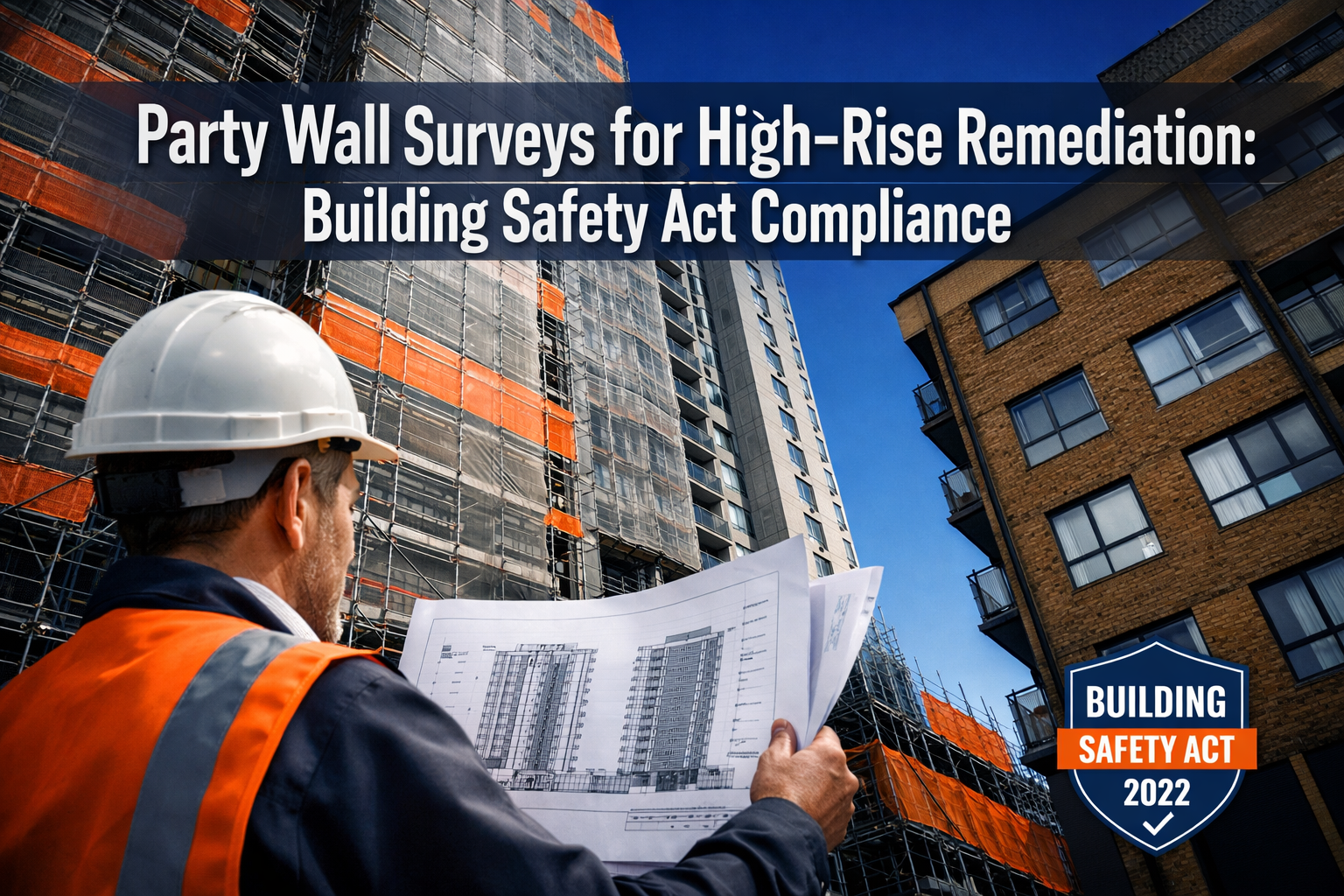
The UK's building safety crisis has thrust thousands of high-rise residential buildings into urgent remediation programmes. As building owners scramble to replace dangerous cladding and address reinforced autoclaved aerated concrete (RAAC) concerns in 2026, many are discovering an unexpected legal obstacle: party wall compliance. When remediation work affects shared structures or boundaries between properties, the Party Wall etc. Act 1996 creates mandatory notification and surveying requirements that can delay projects, inflate costs, and trigger disputes if not properly managed. Understanding how Party Wall Surveys for High-Rise Remediation Projects: Navigating Building Safety Act Noticing Requirements intersect has become essential for building owners, managing agents, and construction professionals facing regulatory deadlines.
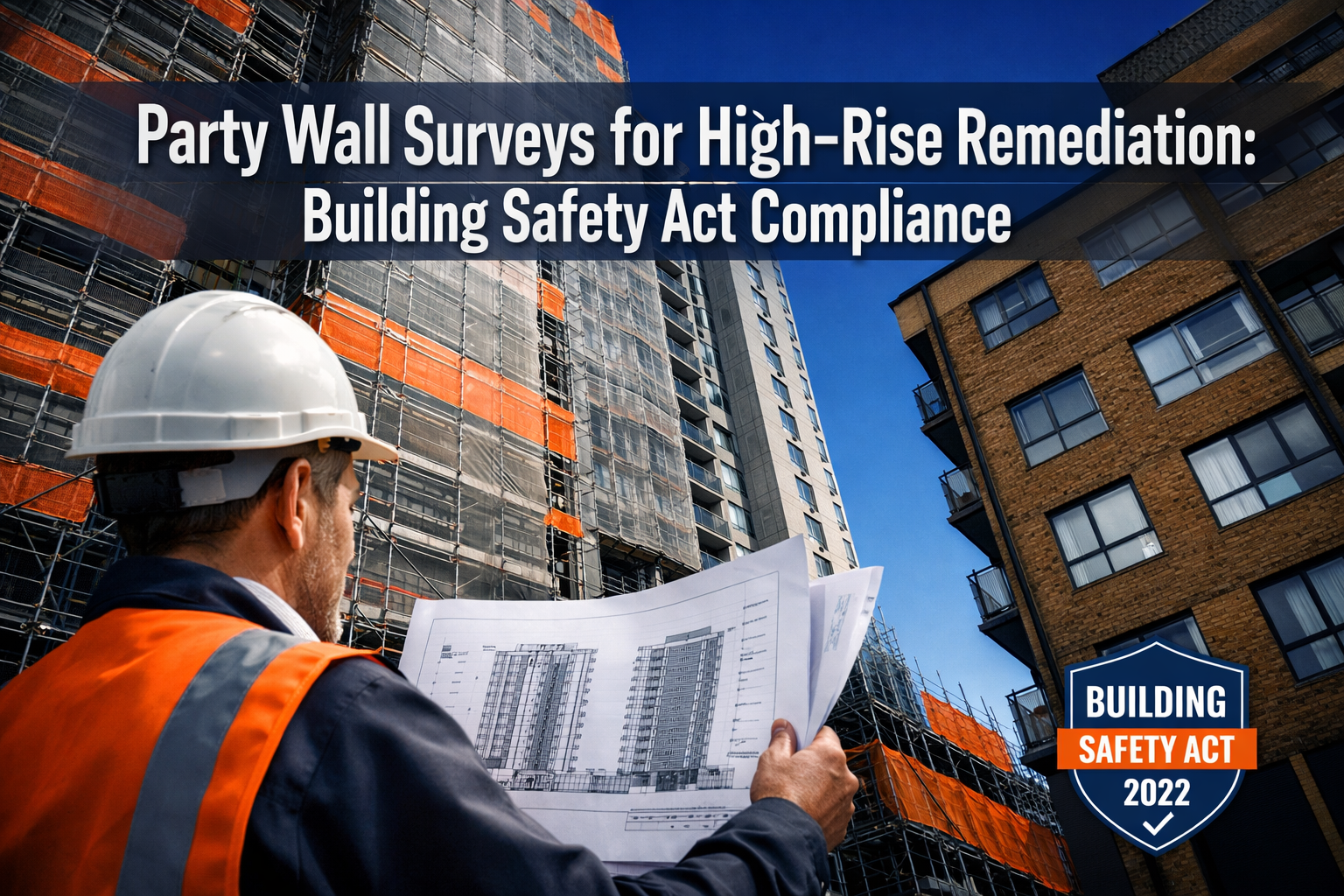
The convergence of building safety regulations and party wall law creates a complex compliance landscape. Remediation projects involving external wall systems, structural alterations, or excavation near neighboring properties trigger multiple legal frameworks simultaneously. This guide explores the practical application of party wall surveying procedures within the context of Building Safety Act 2022 requirements, providing templates, timelines, and strategies for successful project delivery.
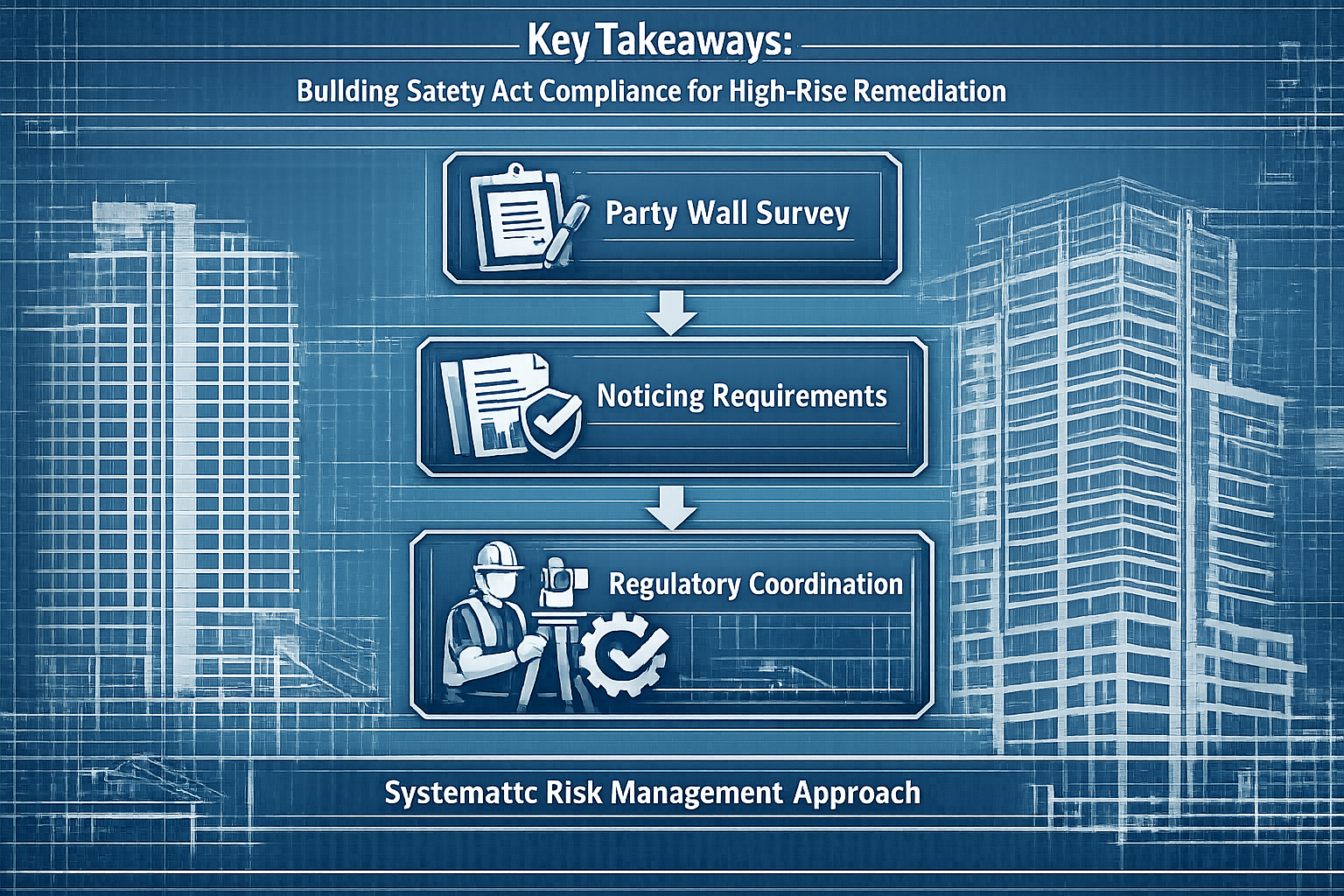
Key Takeaways
✅ Dual Compliance Required: High-rise remediation projects must satisfy both Building Safety Act 2022 requirements and Party Wall etc. Act 1996 obligations when work affects shared structures or boundaries.
✅ Early Notification Critical: Party wall notices must be served 2 months before building work begins, requiring careful integration with Building Safety Regulator timelines and remediation project schedules.
✅ Professional Surveyor Engagement: Appointing experienced party wall surveyors who understand both building safety regulations and party wall law prevents costly delays and dispute resolution expenses.
✅ Documentation Integration: Party wall awards must reference Building Safety Act compliance, golden thread requirements, and fire safety improvements to create comprehensive legal protection.
✅ Cost Planning Essential: Budget for party wall surveyor fees, potential adjoining owner surveyors, and dispute resolution mechanisms alongside remediation construction costs.
Understanding Party Wall Act Applications in High-Rise Remediation
When Does the Party Wall Act Apply to Remediation Projects?
The Party Wall etc. Act 1996 applies to specific categories of building work affecting shared structures or boundaries. For high-rise remediation projects in 2026, three primary sections create notification obligations:
Section 2: Work to Existing Party Walls 🏢
This section applies when remediation work involves:
- Cutting into party walls to install fire barriers or cavity closers
- Inserting damp-proof courses across shared structural elements
- Raising party walls to accommodate new roofing systems
- Underpinning shared foundations affected by structural defects
- Installing new beams or structural supports through party walls
Section 6: Adjacent Excavation and Construction ⛏️
Remediation projects triggering Section 6 include:
- Foundation work within 3 meters of neighboring buildings
- Excavation for new drainage systems serving remediated blocks
- Ground stabilization work affecting adjacent property foundations
- Installation of external structural supports requiring ground excavation
Section 1: New Building on Boundary Lines 🏗️
Less common but applicable when:
- Constructing new external structural walls at property boundaries
- Building new stairwell enclosures or fire escape structures at boundaries
- Installing balcony fire safety barriers along shared boundaries
RAAC and Cladding Remediation: Specific Party Wall Triggers
RAAC (Reinforced Autoclaved Aerated Concrete) Remediation
Buildings constructed between 1950-1990 may contain RAAC in floors, roofs, or walls. Remediation typically involves:
| RAAC Remediation Activity | Party Wall Trigger | Required Notice |
|---|---|---|
| Removing RAAC roof panels | Potential Section 2 if party wall affected | 2 months before work |
| Installing replacement structural beams | Section 2 if cutting into party walls | 2 months before work |
| Underpinning affected structures | Section 6 if within 3m of boundary | 1 month before work |
| Installing temporary support structures | Section 6 if excavation required | 1 month before work |
Cladding and External Wall System Replacement
External wall remediation projects involving combustible materials removal create multiple party wall considerations:
- Scaffolding Installation: While scaffolding itself doesn't trigger the Act, scaffold ties penetrating party walls or overhanging boundaries require licenses and may constitute trespass
- Cavity Barrier Installation: Cutting into party cavity walls to install fire-stopping materials triggers Section 2 requirements
- Balcony Reconstruction: Removing and replacing balconies attached to party walls requires formal notices
- Window Replacement: Enlarging or altering window openings in party walls needs Section 2 compliance
"The complexity of modern remediation work means that virtually every high-rise project will trigger party wall requirements at some stage. The question isn't whether you need compliance, but how to structure notices efficiently across multiple adjoining owners." — Senior Party Wall Surveyor, 2026
Party Wall Surveys for High-Rise Remediation Projects: Navigating Building Safety Act Noticing Requirements – The Integration Challenge
Building Safety Act 2022 and Party Wall Obligations
The Building Safety Act 2022 introduced the Accountable Person regime for high-rise residential buildings (18m+ or 7+ storeys). This creates overlapping responsibilities:
Accountable Person Duties:
- Assess building safety risks
- Manage building safety risks
- Maintain the "golden thread" of building information
- Register buildings with the Building Safety Regulator
- Provide safety case reports
Party Wall Building Owner Duties:
- Serve appropriate notices on adjoining owners
- Appoint party wall surveyors when required
- Ensure work complies with party wall awards
- Provide access for condition surveys
- Remedy damage caused by notifiable works
Timeline Integration: Critical Path Planning
Successful Party Wall Surveys for High-Rise Remediation Projects: Navigating Building Safety Act Noticing Requirements demands careful timeline coordination:
Recommended Project Timeline (Working Backwards from Remediation Start):
Month -6 to -4: Pre-Planning Phase
- Identify all adjoining owners (can be complex in mixed-use developments)
- Conduct preliminary party wall risk assessment
- Engage party wall surveyor for strategic advice
- Review Building Safety Regulator requirements
- Assess golden thread documentation needs
Month -4 to -3: Notice Preparation Phase
- Draft party wall notices incorporating Building Safety Act references
- Prepare technical drawings showing remediation scope
- Include fire safety improvement details in notices
- Reference Building Safety Regulator registration numbers
- Coordinate with building regulations compliance requirements
Month -3: Notice Service
- Serve Section 2 notices (2 months before work starts)
- Serve Section 6 notices (1 month before work starts)
- Provide comprehensive remediation project information
- Include contact details for appointed surveyor
- Document service method and dates meticulously
Month -2 to -1: Award Preparation
- Conduct condition surveys of adjoining properties
- Negotiate award terms with adjoining owner surveyors
- Incorporate Building Safety Act compliance clauses
- Define access requirements for ongoing monitoring
- Establish dispute resolution procedures
Month 0: Work Commencement
- Ensure awards are executed before work begins
- Implement monitoring procedures outlined in awards
- Maintain golden thread documentation requirements
- Coordinate with Building Safety Regulator notifications
Template: Party Wall Notice for Cladding Remediation
Building Owner's Notice – Section 2 Works
PARTY WALL ETC. ACT 1996
SECTION 2 NOTICE

TO: [Adjoining Owner Name]
    [Adjoining Owner Address]

FROM: [Building Owner Name]
      [Building Owner Address]
      Building Safety Act Accountable Person for [Building Name]
      BSR Registration Number: [Number]

DATE: [Date]

PROPOSED WORKS: External Wall System Remediation and Fire Safety Improvements

Dear [Adjoining Owner],

We hereby give you notice under Section 2 of the Party Wall etc. Act 1996 of our intention to carry out works to the party wall/structure between our properties.

DESCRIPTION OF WORKS:
1. Removal of non-compliant external cladding system identified as failing to meet Building Safety Act 2022 requirements
2. Installation of fire-resistant cavity barriers within party wall cavities
3. Insertion of fire-stopping materials at floor junctions with party walls
4. Replacement of external wall system with compliant materials
5. Installation of structural supports requiring cutting into party walls

BUILDING SAFETY CONTEXT:
These works are required to comply with:
- Building Safety Act 2022 Accountable Person duties
- Fire Risk Assessment of External Walls (FRAEW) recommendations dated [Date]
- Building Safety Regulator remediation notice dated [Date]
- PAS 9980:2022 fire risk assessment requirements

PROPOSED COMMENCEMENT: [Date - minimum 2 months from notice service]

PARTY WALL SURVEYOR:
We have appointed [Surveyor Name] of [Surveyor Firm] as our surveyor for these works.
Contact: [Phone] | [Email]

YOUR RIGHTS UNDER THE ACT:
You have 14 days from receiving this notice to:
1. Consent in writing to the proposed works, OR
2. Dissent and appoint your own surveyor (or use our surveyor as "Agreed Surveyor"), OR
3. Request additional information about the proposed works

If you dissent or do not respond within 14 days, a dispute is deemed to have arisen, and the matter will be resolved by party wall surveyors preparing a Party Wall Award.

CONDITION SURVEY:
We request access to conduct a photographic condition survey of your property before works commence to establish the pre-works condition.

Yours sincerely,
[Building Owner Signature]
[Date]
Template: Party Wall Award Incorporating Building Safety Requirements
Key Clauses for Remediation Project Awards:
Clause 1: Scope of Works
"The Building Owner shall carry out external wall system remediation works as described in the attached specifications and drawings, comprising removal of non-compliant cladding materials and installation of fire-resistant external wall systems in compliance with Building Safety Act 2022 requirements and Building Regulations Approved Document B (2019 edition, 2022 amendments)."
Clause 2: Building Safety Act Integration
"The Building Owner confirms that these works form part of their duties as Accountable Person under the Building Safety Act 2022 for [Building Name], BSR Registration Number [Number]. The Building Owner shall maintain golden thread documentation for all works affecting party structures and provide copies to the Adjoining Owner upon request."
Clause 3: Access and Monitoring
"The Adjoining Owner shall permit reasonable access for:
(a) Pre-works condition survey
(b) Periodic monitoring during construction
(c) Post-completion inspection
(d) Building Safety Regulator inspections where party structures are involved"
Clause 4: Damage and Remediation
"The Building Owner shall:
(a) Make good all damage caused by the works
(b) Maintain adequate insurance covering party wall damage
(c) Respond to damage claims within 14 days
(d) Complete remediation within 28 days of practical completion"
Clause 5: Fire Safety Improvements
"Where works improve fire safety performance of party structures, the Adjoining Owner acknowledges that such improvements benefit both properties and shall not constitute actionable damage or alteration requiring consent beyond this Award."
Practical Implementation: Managing Multiple Adjoining Owners
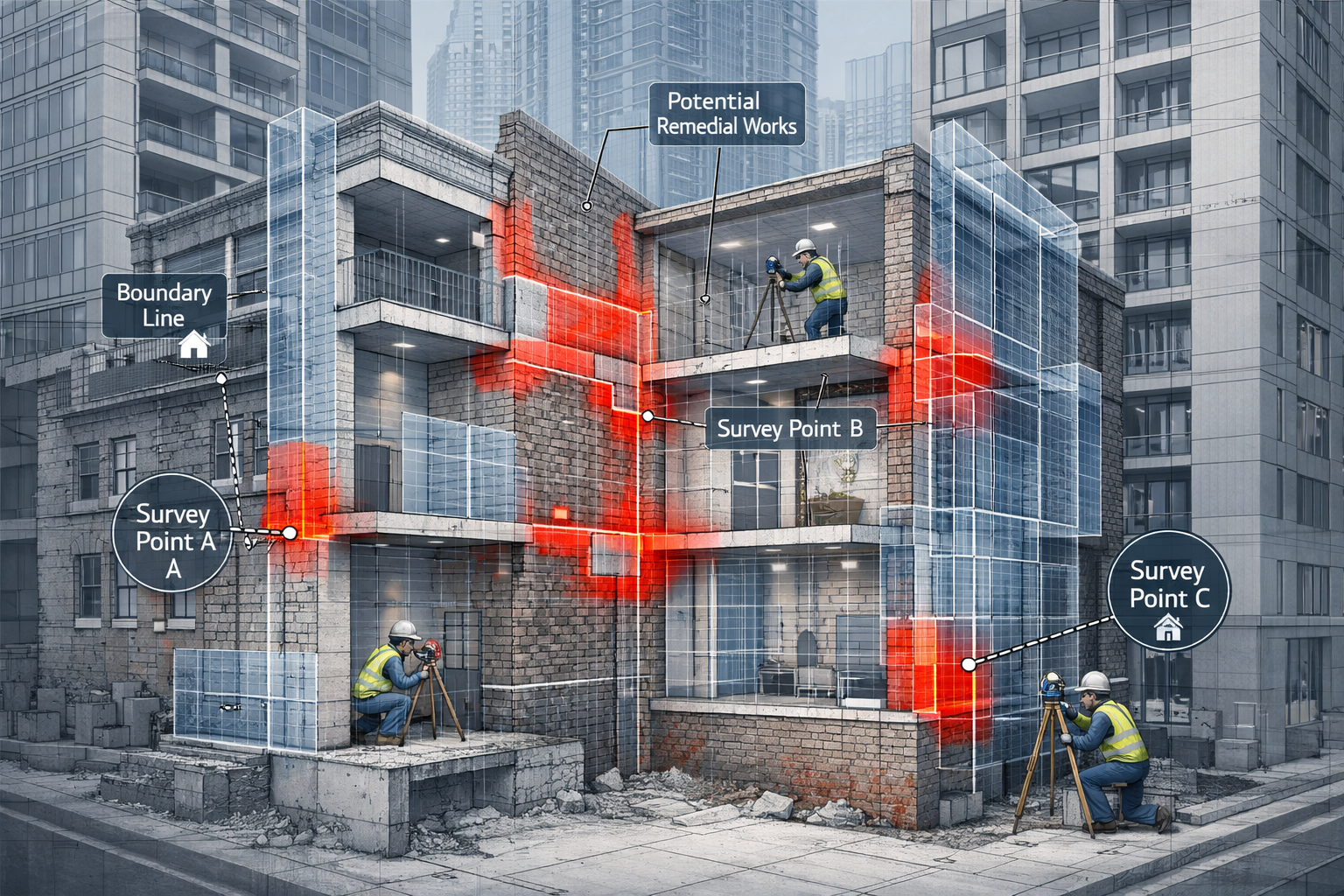
The Multi-Unit Challenge
High-rise remediation projects often involve dozens or even hundreds of adjoining owners:
Typical High-Rise Building Scenarios:
🏢 20-storey residential block:
- 80 individual leaseholders
- 1 freeholder
- 2-4 commercial ground floor units
- Adjacent building owners (potentially 2-6 properties)
- Total potential adjoining owners: 85-90+
Strategies for Efficient Management:
1. Agreed Surveyor Approach ⭐
Propose a single "Agreed Surveyor" who acts impartially for all parties:
- Advantages: Single award, faster process, lower costs
- Disadvantages: Requires unanimous consent, one objector triggers separate appointments
- Success Rate: Approximately 60-70% in well-managed projects
2. Building Owner's Surveyor + Multiple Adjoining Owner Surveyors
Traditional approach where dissenting owners appoint their own surveyors:
- Advantages: Respects individual rights, provides independent advice
- Disadvantages: Higher costs, longer timelines, potential for inconsistent awards
- Typical Timeline: 3-6 months for award preparation
3. Leaseholder Coordination Strategy
For blocks where the freeholder is the Building Owner:
- Engage leaseholder representatives early
- Provide comprehensive information sessions
- Offer to cover reasonable surveyor costs
- Create standardized consent forms
- Establish clear communication channels
Cost Implications and Budgeting
Typical Party Wall Surveyor Fees for Remediation Projects (2026):
| Project Scale | Building Owner's Surveyor | Adjoining Owner's Surveyor (each) | Third Surveyor (if required) |
|---|---|---|---|
| Small block (10-20 units) | £3,500-£6,000 | £1,500-£2,500 | £2,000-£3,500 |
| Medium block (20-50 units) | £6,000-£12,000 | £1,500-£2,500 | £2,500-£4,500 |
| Large block (50+ units) | £12,000-£25,000+ | £1,500-£2,500 | £3,000-£5,000 |
Additional Costs to Budget:
- Condition surveys: £500-£1,500 per adjoining property
- Third surveyor fees: If disputes arise between appointed surveyors
- Legal fees: For complex ownership structures or disputes
- Damage remediation: Reserve fund for potential party wall damage claims
- Delay costs: Budget for potential 2-4 month timeline extensions
💡 Cost Management Tip: Building owners are responsible for all reasonable surveyor fees under the Party Wall Act. Early engagement and transparent communication significantly reduce dispute-related costs.
Common Pitfalls and How to Avoid Them
❌ Pitfall 1: Inadequate Notice Periods
Starting work before awards are executed or notice periods expire creates legal liability and potential injunctions.
✅ Solution: Build 3-4 month buffer into project timelines specifically for party wall compliance.
❌ Pitfall 2: Incomplete Adjoining Owner Identification
Missing even one adjoining owner can invalidate the entire process.
✅ Solution: Conduct thorough Land Registry searches, review leasehold structures, and identify all commercial tenants with structural connections.
❌ Pitfall 3: Insufficient Technical Detail in Notices
Vague descriptions lead to disputes and requests for additional information.
✅ Solution: Include detailed drawings, specifications, and Building Safety Act compliance documentation with all notices.
❌ Pitfall 4: Ignoring Building Safety Act Integration
Treating party wall compliance as separate from Building Safety Act duties creates documentation gaps.
✅ Solution: Reference BSR registration numbers, golden thread requirements, and fire safety improvements in all party wall documentation.
❌ Pitfall 5: Poor Communication with Leaseholders
Leaseholders feeling uninformed or excluded often dissent unnecessarily.
✅ Solution: Host information sessions, provide FAQ documents, and establish dedicated communication channels before serving notices.
Building Safety Regulator Coordination
Golden Thread Documentation Requirements
The Building Safety Act 2022 requires Accountable Persons to maintain comprehensive "golden thread" documentation throughout a building's lifecycle. Party wall documentation forms part of this requirement:
Essential Party Wall Documents for Golden Thread:
- All party wall notices served (with proof of service)
- Party wall awards (executed copies)
- Pre-works condition survey reports (photographic evidence)
- Ongoing monitoring reports during construction
- Post-completion inspection reports
- Damage claims and remediation records
- Surveyor correspondence regarding building safety matters
Digital Documentation Standards:
- Store in accessible digital format (PDF/A for long-term preservation)
- Include metadata: dates, parties involved, work descriptions
- Link to relevant Building Safety Regulator submissions
- Maintain version control for amended awards
- Ensure 30+ year retention as required by Building Safety Act
Fire Risk Assessment Integration
Fire Risk Assessments of External Walls (FRAEW) often identify remediation needs that trigger party wall requirements. Coordination is essential:
FRAEW Recommendation → Party Wall Trigger Examples:
| FRAEW Recommendation | Party Wall Implication | Notice Type |
|---|---|---|
| Install cavity barriers in external walls | Cutting into party wall cavities | Section 2 |
| Replace combustible cladding | Potential party wall attachment work | Section 2 |
| Upgrade compartmentation at party walls | Cutting into party walls for fire-stopping | Section 2 |
| Install external sprinkler systems | Excavation for water supply infrastructure | Section 6 |
Best Practice: Provide copies of relevant FRAEW sections with party wall notices to demonstrate the building safety necessity of proposed works.
Dispute Resolution and Third Surveyor Appointments
When Disputes Arise
Disputes under the Party Wall Act occur when:
- Adjoining owners dissent to proposed works
- Appointed surveyors cannot agree on award terms
- Damage claims are disputed
- Access for surveys is refused
Third Surveyor Mechanism:
When the Building Owner's surveyor and Adjoining Owner's surveyor cannot reach agreement, they appoint a "Third Surveyor" who makes binding decisions:
Third Surveyor Selection Criteria:
- Must be independent of both parties
- Should have experience with similar remediation projects
- Understanding of Building Safety Act requirements beneficial
- RICS membership typically required
Timeline Impact:
Third surveyor involvement typically adds 6-12 weeks to the award preparation process.
Alternative Dispute Resolution
For complex high-rise projects, consider:
Mediation: Structured negotiation with neutral mediator
- Timeline: 2-4 weeks
- Cost: £2,000-£5,000
- Success Rate: 70-80% for party wall disputes
Expert Determination: Binding decision by independent expert
- Timeline: 4-8 weeks
- Cost: £5,000-£15,000
- Finality: Generally binding with limited appeal rights
Case Study: 2026 Cladding Remediation Project
Project: 15-storey residential block, 60 flats, non-compliant ACM cladding
Party Wall Challenges:
- 60 leaseholders (adjoining owners)
- 2 adjacent commercial properties
- Shared basement car park with neighboring block
Solution Implemented:
Month 1-2: Freeholder (Building Owner) engaged specialist party wall surveyor with building safety experience
Month 3: Information sessions held for all leaseholders explaining:
- Building Safety Act requirements
- Party wall process and timelines
- Proposed Agreed Surveyor approach
- No-cost option for leaseholders
Month 4: Section 2 notices served to all 62 adjoining owners with:
- Detailed remediation specifications
- FRAEW report excerpts
- Building Safety Regulator correspondence
- Proposed Agreed Surveyor details
Month 5:
- 55 leaseholders consented to Agreed Surveyor
- 5 leaseholders appointed their own surveyors
- 2 commercial properties appointed separate surveyor
Month 6-7:
- Condition surveys completed for all properties
- Awards prepared (1 main award + 2 separate awards)
- All awards executed before work commenced
Outcome:
- Remediation commenced on schedule
- No disputes or injunctions
- Total party wall costs: £18,500 (within budget)
- Project completed with full Building Safety Act compliance
Key Success Factors:
✅ Early surveyor engagement (6 months pre-construction)
✅ Transparent leaseholder communication
✅ Integration of Building Safety Act requirements in notices
✅ Agreed Surveyor approach for majority of owners
✅ Adequate budget allocation for party wall compliance
Conclusion
Party Wall Surveys for High-Rise Remediation Projects: Navigating Building Safety Act Noticing Requirements represents one of the most complex intersections of property law and building safety regulation in 2026. As thousands of high-rise buildings undergo essential remediation work to address cladding defects and RAAC concerns, building owners must navigate dual compliance frameworks that demand careful planning, professional expertise, and transparent communication.
The integration of Party Wall Act 1996 procedures with Building Safety Act 2022 requirements is not merely a legal formality—it protects both building owners and adjoining owners while ensuring remediation projects proceed efficiently. Failure to properly manage party wall compliance can result in costly delays, legal disputes, and even injunctions halting essential safety work.
Actionable Next Steps for Building Owners
Immediate Actions (This Month):
-
Conduct Party Wall Risk Assessment: Review remediation plans to identify all potential party wall triggers across Sections 1, 2, and 6 of the Act.
-
Engage Specialist Surveyor: Appoint a qualified party wall surveyor with experience in building safety remediation projects—ideally 4-6 months before planned construction start.
-
Identify All Adjoining Owners: Conduct thorough Land Registry searches and review leasehold structures to create comprehensive adjoining owner list.
-
Review Building Safety Documentation: Gather FRAEW reports, BSR registration details, and remediation specifications to include in party wall notices.
Short-Term Actions (Next 1-3 Months):
-
Prepare Comprehensive Notices: Draft Section 2 and Section 6 notices incorporating Building Safety Act references and detailed technical specifications.
-
Establish Communication Strategy: Plan leaseholder information sessions and create FAQ documents addressing party wall and building safety concerns.
-
Budget Appropriately: Allocate funds for surveyor fees, condition surveys, potential adjoining owner surveyor costs, and dispute resolution mechanisms.
-
Integrate Timeline Planning: Coordinate party wall notice periods with Building Safety Regulator deadlines and construction schedules.
Long-Term Actions (Ongoing):
-
Maintain Golden Thread Documentation: Establish digital systems for storing all party wall documentation as part of Building Safety Act compliance.
-
Monitor and Report: Implement ongoing monitoring procedures outlined in party wall awards and maintain records of any damage claims or remediation work.
The building safety crisis demands urgent action, but rushing party wall compliance creates greater risks than careful preparation prevents. By treating party wall surveys as an integral component of remediation project planning—rather than an administrative afterthought—building owners protect their legal position, maintain positive neighbor relations, and ensure essential safety work proceeds without costly interruption.
For professional guidance on Party Wall Surveys for High-Rise Remediation Projects: Navigating Building Safety Act Noticing Requirements, consult experienced party wall surveyors who understand both the technical requirements of remediation work and the legal complexities of the Party Wall Act 1996. The investment in proper compliance today prevents exponentially greater costs tomorrow.