
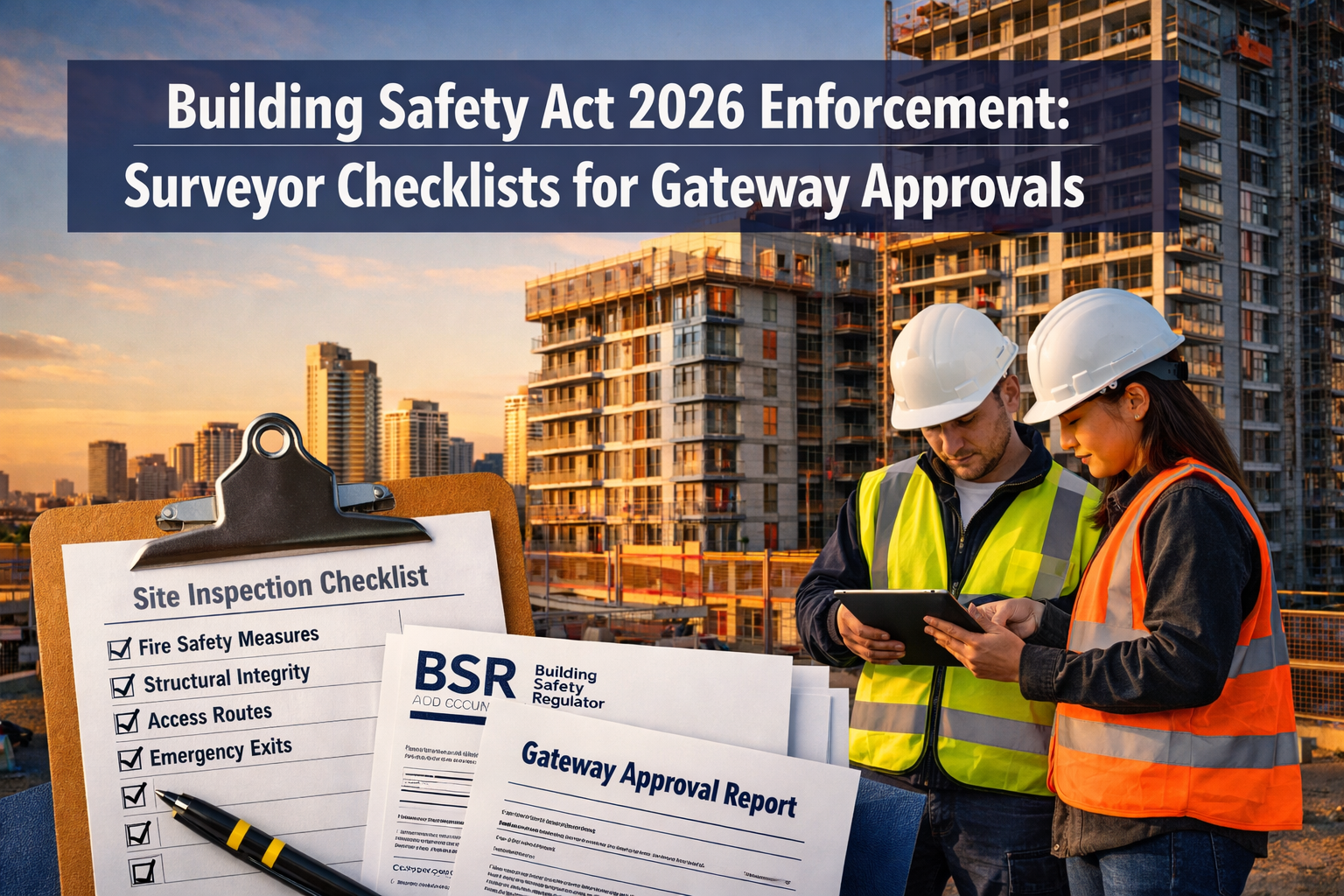
The landscape of building safety regulation in the UK transformed dramatically in 2026. With the Building Safety Regulator (BSR) becoming an independent body on 27 January 2026, enforcement of the Building Safety Act shifted from guidance-led approaches to active regulatory scrutiny with serious consequences for non-compliance. For surveyors working on higher-risk buildings—those at least 18 metres tall or with seven or more storeys containing residential units—the stakes have never been higher. Understanding Building Safety Act 2026 Enforcement: Surveyor Checklists for Gateway Approvals and Higher-Risk Buildings is now essential for professionals navigating this complex regulatory environment.
The transition has brought enhanced enforcement powers, mandatory compliance deadlines, and criminal penalties for failures. Surveyors must now master detailed checklists covering Gateway 2 (pre-construction) and Gateway 3 (pre-occupation) approvals while ensuring their clients meet stringent requirements for Building Assessment Certificates (BACs), golden thread documentation, and mandatory occurrence reporting. This comprehensive guide provides practical checklists and compliance steps specifically designed for surveyors handling Building Safety Act 2026 Enforcement: Surveyor Checklists for Gateway Approvals and Higher-Risk Buildings.
Key Takeaways
- ✅ Independent BSR enforcement began 27 January 2026, with criminal penalties including up to 2 years' imprisonment and unlimited fines for non-compliance with Section 99 notices
- 📋 Gateway 2 and 3 approvals require comprehensive checklists covering structural integrity, fire safety systems, golden thread documentation, and competency demonstrations
- 🏢 Building Assessment Certificates must be submitted within 28 days of BSR call-in, with substantive assessment replacing administrative checks
- 🚨 Personal Emergency Evacuation Plans became legally mandatory on 6 April 2026, requiring annual reviews for all residents needing evacuation assistance
- 💰 Building Safety Levy came into force in 2026, creating new financial obligations for developers of higher-risk buildings
Understanding the 2026 Regulatory Transformation
The independence of the Building Safety Regulator marks a watershed moment in construction regulation. Transitioning from the Health and Safety Executive (HSE) to a standalone body under the Ministry of Housing, Communities and Local Government (MHCLG), the BSR now operates with enhanced enforcement powers and a stated ambition to evolve into a single construction regulator covering building safety, building standards, and construction product regulation.[1]
The Shift from Guidance to Enforcement
Prior to 2026, the BSR adopted a primarily guidance-led approach, working with industry to establish compliance frameworks. However, the independent regulator has adopted a stronger enforcement posture, moving decisively toward active assessment and intervention.[1] This includes:
- Substantive assessment of Building Assessment Certificate applications rather than administrative processing
- Proactive requests for safety case reports from Principal Accountable Persons
- Issuance of compliance notices for buildings falling short of requirements
- Criminal prosecution for serious breaches and non-compliance
The establishment of a Remediation Enforcement Unit within the BSR further demonstrates this commitment to enforcement. Initially announced in February 2025 as part of the Remediation Action Plan, this dedicated unit became operational by January 2026 to accelerate remediation of residential buildings with unsafe cladding.[3]
Who Needs to Comply?
The current scope of higher-risk buildings includes:
| Building Type | Height Threshold | Alternative Threshold |
|---|---|---|
| Residential buildings | 18 metres or higher | 7 or more storeys |
| Purpose-Built Student Accommodation (PBSA) | 18 metres or higher | 7 or more storeys |
Important: A consultation closed on 10 March 2026 proposing to extend thresholds to buildings with 50 or more dwellings or 120 or more PBSA bedspaces, potentially expanding the scope significantly.[2] Surveyors should monitor this development closely as it may affect projects currently in planning stages.
For professionals seeking expertise in building surveyor services, understanding these thresholds is critical when advising clients on regulatory obligations.
Building Safety Act 2026 Enforcement: Surveyor Checklists for Gateway 2 Approvals
Gateway 2 represents the pre-construction approval stage where the BSR reviews and approves detailed design plans before any work begins on higher-risk buildings. Surveyors play a crucial role in ensuring applications meet all requirements and supporting documentation is comprehensive.
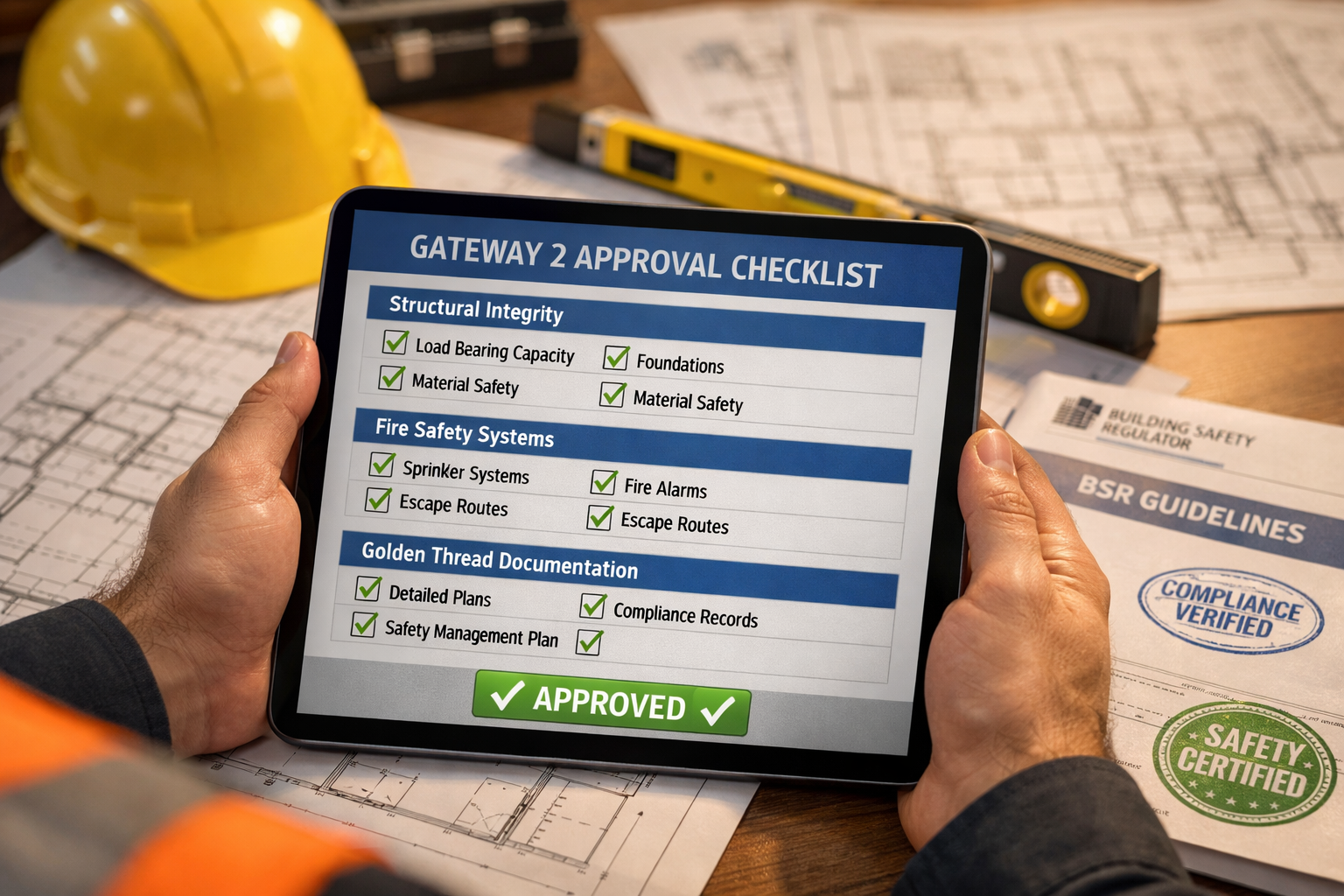
Gateway 2 Submission Checklist
📋 Design Documentation Requirements:
- ✅ Detailed architectural drawings showing all structural elements, fire compartmentation, and means of escape
- ✅ Structural engineering calculations certified by competent professionals with clear assumptions and safety factors
- ✅ Fire safety strategy prepared by qualified fire engineers demonstrating compliance with Approved Document B
- ✅ Building Regulations compliance statement addressing all relevant parts (A-S)
- ✅ Material specifications including fire performance ratings, structural properties, and durability assessments
- ✅ Construction methodology statement outlining sequencing, temporary works, and safety measures
👷 Competency Demonstrations:
The BSR requires evidence that all designers and principal contractors possess appropriate competency. Surveyors should verify:
- ✅ Professional qualifications (RICS, CABE, IStructE, etc.)
- ✅ Relevant project experience on similar higher-risk buildings
- ✅ Continuing professional development (CPD) records
- ✅ Professional indemnity insurance coverage
- ✅ Quality assurance procedures and internal review processes
🔥 Fire Safety Requirements:
- ✅ Fire risk assessment completed by competent assessor
- ✅ Compartmentation strategy with fire resistance ratings
- ✅ Active fire suppression systems (sprinklers, alarms)
- ✅ Means of escape analysis with travel distances and protected routes
- ✅ Fire service access and firefighting facilities
- ✅ Smoke control systems and ventilation strategies
📊 Golden Thread Foundation:
Gateway 2 establishes the foundation for golden thread documentation. Surveyors must ensure:
- ✅ Digital information management system identified
- ✅ Document control procedures established
- ✅ Version control and change management protocols
- ✅ Accessibility arrangements for future accountable persons
- ✅ As-designed information captured in structured format
Those working on new build properties should recognize that Gateway 2 approval is now a prerequisite for commencing construction on higher-risk buildings.
Gateway 2 Processing Improvements
Following establishment of an innovation unit in summer 2025, the BSR has made significant improvements to approval times compared to the legacy multi-disciplinary model.[2] However, surveyors should still allow adequate time for:
- Initial completeness check (typically 2-3 weeks)
- Substantive technical review (6-12 weeks depending on complexity)
- Response to queries and requests for additional information
- Formal approval decision and conditions
Pro Tip: Engage with the BSR early through pre-application discussions to identify potential issues before formal submission. This can significantly reduce approval timelines.
Building Safety Act 2026 Enforcement: Surveyor Checklists for Gateway 3 and Occupation
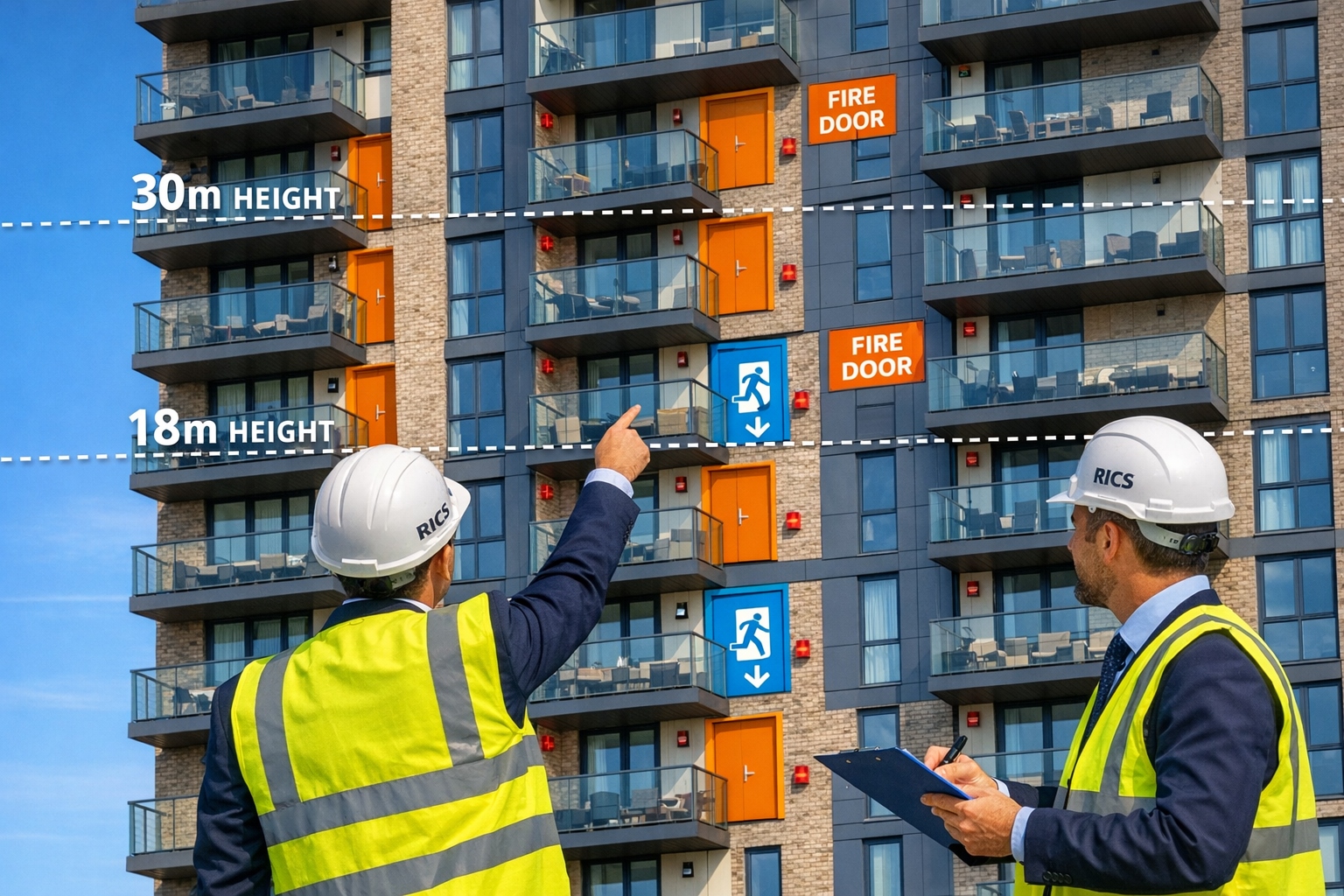
Gateway 3 represents the pre-occupation approval stage where the BSR verifies that the building has been constructed in accordance with approved Gateway 2 plans and is safe for occupation. This stage involves rigorous inspection and verification of as-built conditions.
Gateway 3 Submission Checklist
🏗️ As-Built Documentation:
- ✅ As-built drawings showing all deviations from approved Gateway 2 designs
- ✅ Change control log documenting all design changes with justifications
- ✅ Material substitution records with equivalent performance demonstrations
- ✅ Commissioning certificates for all fire safety and building services systems
- ✅ Test results for fire stopping, compartmentation, and structural elements
- ✅ Photographic evidence of concealed works before closure
🔍 Inspection and Verification:
Surveyors conducting Gateway 3 inspections should verify:
- ✅ Fire doors installed correctly with appropriate seals and closers
- ✅ Fire stopping completed at all penetrations and service routes
- ✅ Compartmentation maintained throughout construction
- ✅ Means of escape clear and compliant with approved strategy
- ✅ Fire alarm and detection systems fully commissioned
- ✅ Emergency lighting operational and tested
- ✅ Sprinkler systems (if required) installed and commissioned
- ✅ Smoke control systems functional
📚 Golden Thread Completion:
The golden thread must be fully populated before occupation:
- ✅ Complete as-built information including all M&E systems
- ✅ Operation and maintenance manuals for all safety-critical systems
- ✅ Structural information including design calculations and load capacities
- ✅ Fire safety information including strategy, risk assessments, and equipment locations
- ✅ Building manual prepared for residents and accountable persons
- ✅ Digital handover in agreed format with metadata and indexing
For those requiring structural survey expertise, Gateway 3 verification often requires detailed structural inspections to confirm as-built compliance.
Personal Emergency Evacuation Plans (PEEPs)
A critical Gateway 3 requirement that became legally mandatory on 6 April 2026 is the preparation of Personal Emergency Evacuation Plans for every resident requiring assistance evacuating.[1] Surveyors must verify:
- ✅ PEEP assessment process established
- ✅ Individual PEEPs prepared for identified residents
- ✅ Annual review cycle scheduled and documented
- ✅ Communication procedures for PEEP updates
- ✅ Training provided to relevant staff and emergency responders
⚠️ Non-compliance with PEEP requirements is now enforceable by the BSR, making this a critical checkpoint before occupation approval.
Completion Certificate and Handover
Gateway 3 culminates in:
- BSR Completion Certificate authorizing occupation
- Formal handover to Principal Accountable Person
- Registration of building with BSR
- Commencement of ongoing compliance obligations
Building Assessment Certificates: The 28-Day Challenge
The Building Assessment Certificate (BAC) process represents one of the most demanding aspects of Building Safety Act 2026 Enforcement: Surveyor Checklists for Gateway Approvals and Higher-Risk Buildings. The BSR continues its call-in process with priority-sequencing, currently targeting buildings over 30 metres high with more than 11 residential units.[1][2]
The BAC Submission Timeline
When a Principal Accountable Person receives a call-in notice, they have only 28 days to submit a complete application.[2] This compressed timeline demands exceptional preparation and coordination from surveyors.
📅 Week 1-2: Information Gathering
- Compile all structural drawings and specifications
- Collect fire safety documentation and risk assessments
- Gather maintenance records for safety-critical systems
- Review building control approval history
- Identify any outstanding remedial works
📅 Week 3: Documentation Preparation
- Complete BAC application form with all required sections
- Prepare safety case report demonstrating building safety
- Compile golden thread documentation package
- Document accountable persons structure and responsibilities
- Prepare resident engagement evidence
📅 Week 4: Review and Submission
- Internal quality assurance review
- Senior management sign-off
- Electronic submission via BSR portal
- Confirmation of receipt and completeness
Substantive Assessment by BSR
Unlike earlier administrative checks, the BSR now conducts substantive assessment of BAC applications.[1] This means:
- Technical review of safety case reports and supporting evidence
- Requests for additional information where gaps identified
- Site inspections to verify documentation accuracy
- Compliance notices issued where buildings fall short
Surveyors should prepare for extensive BSR engagement and potential requests for supplementary information beyond the initial 28-day submission.
Safety Case Report Requirements
The safety case report forms the core of the BAC application and must demonstrate:
✅ Comprehensive risk assessment covering all building safety risks
✅ Control measures in place to manage identified risks
✅ Competency of persons responsible for building safety
✅ Golden thread systems maintaining accurate building information
✅ Occurrence reporting procedures for safety incidents
✅ Resident engagement strategies and communication channels
✅ Mandatory occurrence reporting compliance with Section 87
Working with experienced RICS surveyors can help ensure safety case reports meet BSR expectations and withstand substantive assessment.
Mandatory Compliance Requirements for Higher-Risk Buildings
Beyond Gateway approvals and BACs, surveyors must ensure clients understand ongoing compliance obligations that are now subject to intensified enforcement in 2026.
Golden Thread Documentation (Sections 88-89)
Golden thread requirements mandate that buildings maintain accurate, up-to-date building safety information including:[1]
- Structural data and load-bearing capacity information
- Fire safety systems specifications and maintenance records
- Building services installations and commissioning certificates
- Maintenance records with completion dates and contractor details
- Evacuation procedures and emergency response plans
- Material specifications and product certifications
Enforcement Focus: The BSR now actively verifies that golden thread systems are functional and information is current, not merely that systems exist on paper.
Mandatory Occurrence Reporting (Section 87)
The BSR has tightened enforcement of mandatory occurrence reporting in 2026, taking a harder line on underreporting of structural and fire safety incidents.[1] Buildings must establish:
- ✅ Clear internal processes for identifying reportable events
- ✅ Staff training on reporting obligations and timelines
- ✅ Audit trails documenting incident identification and reporting
- ✅ Root cause analysis for reported occurrences
- ✅ Corrective action implementation and verification
Reportable occurrences include:
- Structural failures or significant defects
- Fire safety system failures
- Breaches of fire compartmentation
- Evacuation failures or near-misses
- Material defects affecting building safety
Compliance Notices and Criminal Penalties

The BSR's enforcement toolkit includes Section 99 compliance notices carrying serious consequences. Failure to comply without reasonable excuse constitutes a criminal offence punishable by:[1]
- 🚨 Up to 2 years' imprisonment
- 💰 Unlimited fines
- ⚖️ Daily fines for each day a breach continues after conviction
This represents a fundamental shift from advisory regulation to criminal enforcement, making compliance a matter of corporate and personal liability for directors and accountable persons.
Building Safety Levy
The Building Safety Levy came into force in 2026, creating a dedicated funding stream for remediation by requiring developers of new higher-risk buildings to pay charges.[1] Surveyors should factor levy costs into project budgets:
- Calculated based on building size and development value
- Payable at Gateway 2 or Gateway 3 stages
- Contributes to remediation of existing unsafe buildings
- Non-payment may delay or prevent occupation approval
Hiring Trends: The Rise of Building Safety Specialists
The intensified regulatory scrutiny has created significant demand for specialized building safety professionals. Surveyors and construction firms are adapting their hiring strategies to meet new competency requirements.
In-Demand Roles
Building Safety Managers 📊
- Coordinate BAC applications and ongoing compliance
- Manage golden thread documentation systems
- Oversee occurrence reporting and incident management
- Typical salary range: £55,000-£85,000
Fire Safety Engineers 🔥
- Prepare fire safety strategies for Gateway submissions
- Conduct fire risk assessments and safety case reviews
- Design and specify fire suppression systems
- Typical salary range: £45,000-£75,000
Principal Designers 📐
- Lead design coordination for higher-risk buildings
- Demonstrate competency for BSR approval
- Manage design change control processes
- Typical salary range: £60,000-£95,000
Compliance Surveyors ✅
- Conduct Gateway 3 verification inspections
- Prepare as-built documentation packages
- Verify completion of remedial works
- Typical salary range: £40,000-£65,000
Competency Requirements
The BSR places significant emphasis on demonstrable competency. Firms should invest in:
- Professional qualification pathways (RICS, CABE, IFE)
- Specialized training in Building Safety Act requirements
- Continuing professional development programs
- Quality assurance and peer review systems
For property owners considering professional support, understanding what surveyors do in the context of building safety regulation is increasingly important.
Future Developments: What's Coming in 2026-2027
Threshold Extension Consultation
The consultation that closed on 10 March 2026 proposed extending requirements to buildings with 50 or more dwellings or 120 or more PBSA bedspaces.[2] If implemented, this would:
- Significantly expand the number of higher-risk buildings
- Require retrospective BAC applications for existing buildings
- Create additional demand for surveyor services
- Extend Gateway approval requirements to mid-rise developments
Remediation Bill and Legal Duty to Remediate
A Remediation Bill introduction is planned, establishing a "Legal Duty to Remediate" with criminal penalties.[2] By end of 2029:
- Landlords failing to remediate buildings over 18 metres without reasonable excuse will face criminal prosecution with unlimited fines and/or imprisonment
- Buildings between 11-18 metres not remediated or scheduled for completion will face escalated investigation
- This creates urgent pressure for remediation planning and execution
Evolution Toward Single Construction Regulator
The BSR has stated ambitions to evolve into a single construction regulator covering:[1]
- Building safety (current focus)
- Building standards (broader quality and performance)
- Construction product regulation (material safety and certification)
This evolution would further expand the BSR's remit and enforcement powers, making comprehensive regulatory knowledge even more critical for surveyors.
Practical Recommendations for Surveyors
1. Develop Standardized Checklists
Create firm-wide standardized checklists for:
- Gateway 2 application reviews
- Gateway 3 inspection protocols
- BAC submission preparation
- Golden thread documentation audits
- Occurrence reporting verification
2. Invest in Digital Tools
Implement digital systems for:
- Document management and version control
- Inspection recording with photographic evidence
- Compliance tracking and deadline management
- Client communication and reporting
3. Build BSR Relationships
- Attend BSR industry engagement events
- Utilize pre-application advice services
- Participate in consultation responses
- Stay current with BSR guidance updates
4. Enhance Competency Frameworks
- Map staff competencies against BSR requirements
- Identify training needs and development pathways
- Maintain CPD records and professional memberships
- Implement peer review and quality assurance
5. Communicate Client Obligations
Ensure clients understand:
- Timeline requirements (especially 28-day BAC deadline)
- Criminal penalties for non-compliance
- Ongoing compliance obligations post-occupation
- Cost implications of levy and compliance systems
For professionals preparing property assessments, reviewing what to do before an RICS home survey can provide valuable context for client preparation.
Regional Considerations Across London
Building Safety Act enforcement applies uniformly across England, but surveyors working in different London boroughs may encounter varying local authority approaches to related matters. Professionals operating in areas such as Westminster, Kensington, and Southwark should maintain awareness of local planning considerations that may interact with Building Safety Act requirements.
Similarly, those working in outer London areas including Croydon, Barnet, and Enfield should coordinate Building Safety Act compliance with local building control services.
Conclusion
The Building Safety Act 2026 Enforcement: Surveyor Checklists for Gateway Approvals and Higher-Risk Buildings landscape has fundamentally transformed with the BSR's independence and enhanced enforcement powers. Surveyors now operate in an environment where criminal penalties, including imprisonment and unlimited fines, apply for serious non-compliance. The shift from guidance to active enforcement demands rigorous attention to detail, comprehensive documentation, and proactive compliance management.
Success in this new regulatory environment requires:
✅ Mastery of Gateway 2 and 3 checklists covering design approval and pre-occupation verification
✅ Understanding of the 28-day BAC submission challenge and substantive assessment requirements
✅ Implementation of robust golden thread systems maintaining accurate, current building information
✅ Establishment of mandatory occurrence reporting processes with clear audit trails
✅ Investment in competency development for building safety specialists
Actionable Next Steps
For Surveyors:
- Review and update internal checklists against current BSR requirements
- Schedule training on Building Safety Act enforcement provisions
- Audit current project compliance status and identify gaps
- Establish relationships with BSR regional teams
For Building Owners and Developers:
5. Conduct gap analysis of existing buildings against BAC requirements
6. Prepare for potential threshold extension affecting mid-rise buildings
7. Budget for Building Safety Levy costs in new developments
8. Engage qualified surveyors early in Gateway processes
For All Stakeholders:
9. Monitor Remediation Bill progress and prepare for Legal Duty to Remediate
10. Stay informed of BSR guidance updates and enforcement priorities
The regulatory landscape will continue evolving throughout 2026 and beyond. Surveyors who invest in comprehensive understanding of Building Safety Act 2026 Enforcement: Surveyor Checklists for Gateway Approvals and Higher-Risk Buildings will be well-positioned to guide clients through this complex environment while maintaining the highest standards of building safety.
For expert guidance on building safety compliance and comprehensive surveying services, consider consulting with qualified building surveyors who understand the nuances of the 2026 enforcement regime.
References
[1] Building Safety Act 2026 Update – https://brocade.app/blog/building-safety-act-2026-update
[2] Building Safety Act 2022 What To Expect In 2026 – https://gowlingwlg.com/en/insights-resources/articles/2025/building-safety-act-2022-what-to-expect-in-2026
[3] Building Safety Update New Rules Regulations And Guidance – https://www.dacbeachcroft.com/en/What-we-think/Building-safety-update-new-rules-regulations-and-guidance