

{"cover":"Professional landscape format (1536x1024) hero image with bold text overlay 'Valuation Adjustments for 2026 Bungalow Demand: Surveyor Strategies in Aging Population Shifts' in extra large 72pt white sans-serif font with dark shadow effect, positioned center-upper third. Background shows split composition: left side features modern single-story bungalow with accessible ramp and well-maintained garden, right side shows professional surveyor with tablet conducting property assessment, overlaid with subtle demographic aging statistics graphics and upward trending market charts. Color scheme: deep navy blue, warm terracotta, white accents. High contrast, magazine cover quality, editorial style with professional authority.","content":["Detailed landscape format (1536x1024) image showing professional surveyor conducting comprehensive bungalow property assessment, close-up view of surveyor's hands holding digital tablet displaying RICS valuation software with comparable properties data, background shows cross-section of traditional bungalow interior featuring accessibility modifications including wider doorways and level-access bathroom, overlay graphics showing condition rating scales and adjustment factors, warm natural lighting, technical documentation visible, professional assessment tools on clipboard, color palette of slate grey, warm beige, and professional blue tones, sharp focus on valuation methodology elements, editorial quality photography style.","Detailed landscape format (1536x1024) infographic-style image displaying demographic shift visualization with split-screen composition: left panel shows population pyramid chart highlighting 2026 aging population statistics with 65+ age group prominently featured in warm orange tones, right panel features map of Northern England regions with heat-map overlay indicating bungalow demand hotspots in graduated blue-to-red color scale, center section displays three modern bungalows in different retrofit stages with labeled energy efficiency improvements including solar panels, insulation upgrades, and heat pumps, professional data visualization aesthetic with clean typography, statistical annotations, and trend arrows, editorial infographic quality with accessible design.","Detailed landscape format (1536x1024) image showing professional surveyor's office workspace with dual monitors displaying property valuation software and market analysis dashboards, foreground features printed RICS Red Book valuation guidelines open to bungalow-specific methodology pages, desk surface shows spread of comparable sales data printouts with highlighted adjustment factors, background monitor displays interactive map with pinned bungalow properties and their recent sale prices, side desk area shows architectural plans for bungalow retrofit projects with energy performance certificates visible, warm office lighting, professional surveying equipment including laser measure and moisture meter arranged on desk, color scheme of professional navy, document white, and accent burgundy, sharp editorial photography capturing surveyor expertise and technical precision."]}
The property market in 2026 is witnessing a remarkable transformation. Single-story bungalows, once considered niche properties, are experiencing unprecedented demand across recovering markets—particularly in Northern England. This surge isn't coincidental. As the UK's population ages and more homeowners seek accessible, single-level living, surveyors face a critical challenge: accurately valuing these properties amid shifting demographics, retrofit trends, and evolving market dynamics. Understanding Valuation Adjustments for 2026 Bungalow Demand: Surveyor Strategies in Aging Population Shifts has become essential for property professionals navigating this complex landscape.
Key Takeaways
- 🏠 Bungalow demand is surging in 2026, driven by an aging population seeking accessible, single-level living arrangements, particularly in Northern markets
- 📊 RICS-compliant valuation methodologies require specific adjustments for bungalows, including comparables analysis, condition assessments, and demographic market factors
- 🔧 Retrofit and energy efficiency improvements significantly impact bungalow valuations, with modern upgrades commanding premium prices in competitive markets
- 📈 Market forecasting integration is essential, as surveyors must account for long-term demographic trends when providing accurate property valuations
- 💡 Professional surveyor expertise in understanding aging-in-place modifications and accessibility features has become a critical differentiator in 2026's property market
Understanding the 2026 Bungalow Market Surge
The Demographic Driving Force
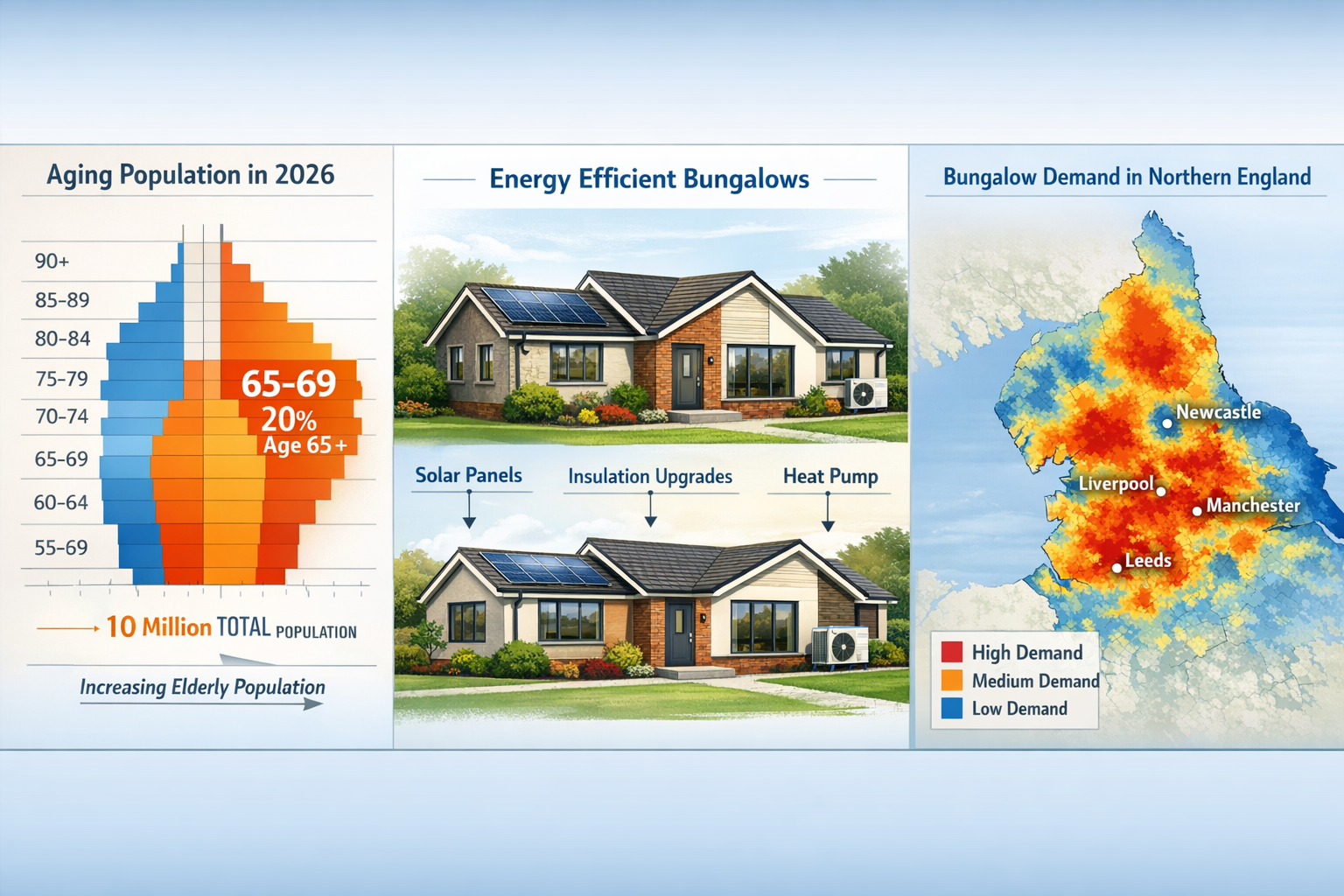
The United Kingdom's demographic landscape has shifted dramatically. By 2026, approximately 18.6% of the population is aged 65 or older, creating substantial demand for age-appropriate housing. Bungalows naturally meet this need, offering:
- Single-level accessibility eliminating stair-related risks
- Easier maintenance with reduced physical demands
- Adaptability for mobility aids and accessibility modifications
- Garden access at ground level for therapeutic outdoor activities
- Lower heating costs compared to multi-story properties
This demographic shift has transformed bungalows from a modest property segment into a highly sought-after commodity, particularly in regions with established retirement communities and healthcare infrastructure.
Regional Market Variations
Northern England has emerged as a bungalow demand hotspot in 2026. Areas including:
- Yorkshire and the Humber – Strong retirement migration patterns
- North West regions – Established bungalow stock with modernization potential
- North East communities – Affordable pricing attracting downsizers
- Coastal retirement areas – Premium demand for seaside bungalow properties
These regional variations require surveyors to develop location-specific valuation strategies that account for local market conditions, demographic concentrations, and infrastructure availability.
RICS Valuation Methodologies for Bungalow Properties
Comparables Analysis: The Foundation
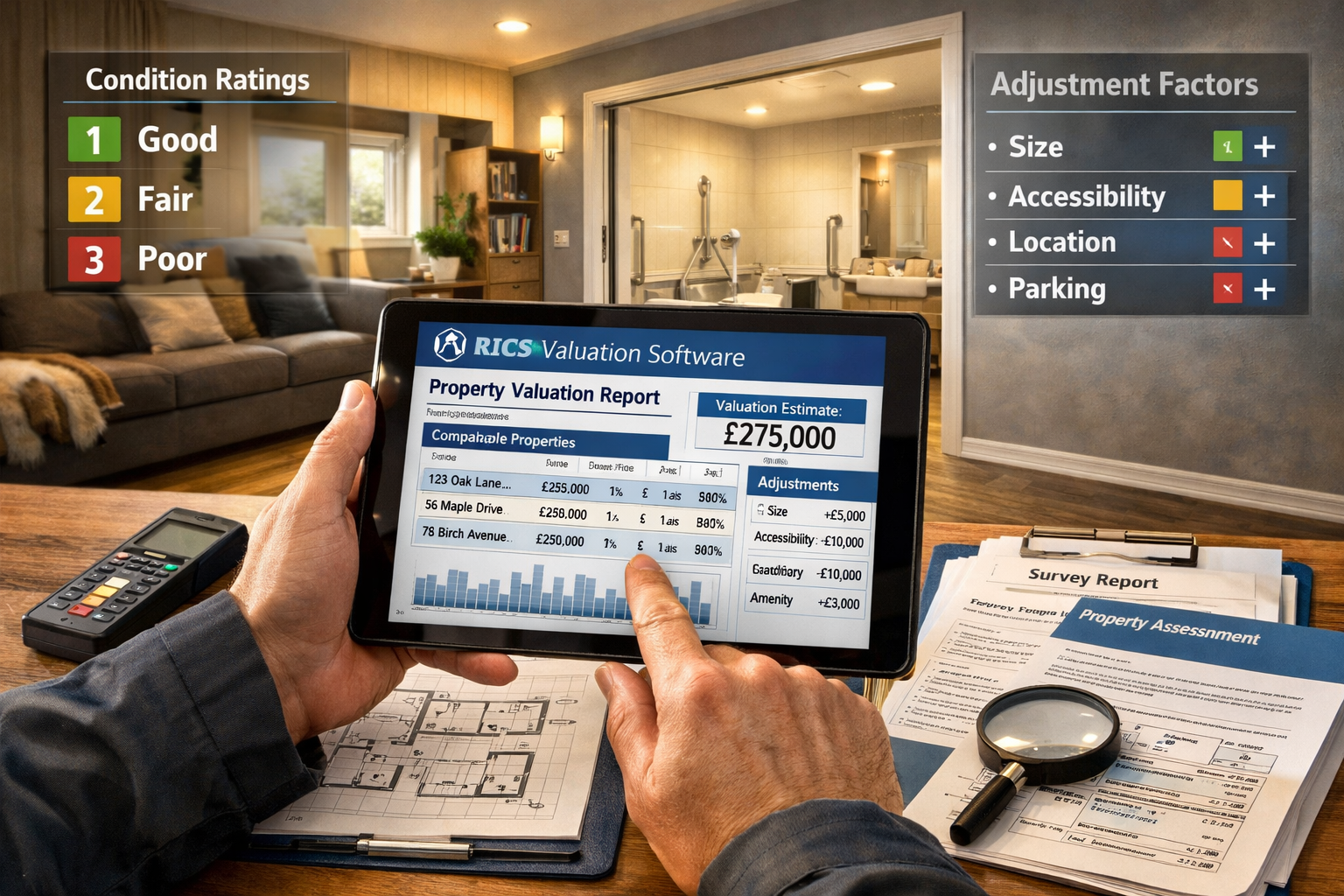
The Royal Institution of Chartered Surveyors (RICS) Red Book standards provide the framework for professional property valuation. When applying these principles to Valuation Adjustments for 2026 Bungalow Demand: Surveyor Strategies in Aging Population Shifts, surveyors must carefully select comparable properties.
Key Comparable Selection Criteria:
| Factor | Consideration | Impact on Valuation |
|---|---|---|
| Property Type | Like-for-like bungalow comparisons | High – fundamental baseline |
| Location | Within 1-mile radius preferred | High – local market variations |
| Age & Construction | Similar build period and materials | Medium – affects maintenance costs |
| Plot Size | Garden and land area matching | Medium – lifestyle value component |
| Bedroom Count | 2-3 bed most common | Medium – market segment definition |
| Accessibility Features | Modifications and adaptations | High – premium in aging market |
| Sale Recency | Within 6-12 months ideal | High – market timing sensitivity |
Surveyors conducting professional property assessments must recognize that bungalow comparables are often limited in certain areas, requiring broader geographic searches or adjustments from semi-detached/detached property sales.
Condition Impact Adjustments
Property condition significantly influences bungalow valuations in 2026. The building survey process identifies critical factors requiring valuation adjustments:
Positive Condition Factors:
- ✅ Modern roof replacement (last 10 years)
- ✅ Updated electrical systems with RCD protection
- ✅ Contemporary kitchen and bathroom installations
- ✅ Double/triple glazing throughout
- ✅ Well-maintained external rendering and brickwork
- ✅ Damp-proof course integrity
- ✅ Modern heating system (condensing boiler/heat pump)
Negative Condition Factors:
- ❌ Original 1960s-1980s electrical wiring
- ❌ Single-glazed windows
- ❌ Aging roof requiring replacement within 5 years
- ❌ Evidence of damp or structural movement
- ❌ Outdated heating systems
- ❌ Deferred maintenance accumulation
- ❌ Asbestos-containing materials requiring removal
Professional surveyors must quantify these condition impacts, typically applying 5-15% adjustments based on repair cost estimates and market buyer expectations. Understanding what surveyors assess during inspections helps property owners prepare for accurate valuations.
Retrofit and Energy Efficiency Premiums
The 2026 property market places unprecedented value on energy efficiency and sustainability. Bungalows with modern retrofit improvements command significant premiums:
High-Value Retrofit Improvements:
- Solar Panel Installation – Adds £8,000-£15,000 to valuation
- Air Source Heat Pumps – Premium of £10,000-£18,000
- Comprehensive Insulation (loft, cavity, external wall) – £6,000-£12,000 value increase
- EPC Rating Improvement to A or B – 5-10% overall premium
- Smart Home Integration – £3,000-£7,000 added value
- Water Efficiency Systems – £2,000-£5,000 premium
These improvements not only enhance property value but also attract environmentally conscious buyers and those seeking reduced running costs—particularly important for retirees on fixed incomes.
Surveyor Strategies for Accurate Bungalow Valuations
Integrating Demographic Market Analysis
Understanding Valuation Adjustments for 2026 Bungalow Demand: Surveyor Strategies in Aging Population Shifts requires surveyors to incorporate demographic forecasting into their assessments. This involves:
Market Intelligence Gathering:
- Analyzing local population age distribution trends
- Identifying healthcare facility proximity and quality
- Assessing public transport accessibility for non-drivers
- Evaluating local amenity suitability for older residents
- Reviewing retirement community development plans
Surveyors who integrate this broader market context provide more accurate long-term valuations that reflect sustainable demand rather than temporary market fluctuations.
Accessibility Feature Valuation
Modern bungalows increasingly incorporate aging-in-place modifications. Surveyors must accurately value these features:
Accessibility Modifications Value Assessment:
- Level-Access Shower Rooms – £4,000-£8,000 premium over standard bathrooms
- Widened Doorways (800mm+) – £2,000-£4,000 added value
- Ramp Access – £1,500-£3,500 depending on quality
- Grab Rails and Support Systems – £500-£1,500 value addition
- Accessible Kitchen Layouts – £3,000-£6,000 premium
- Smart Home Controls – £2,000-£5,000 for comprehensive systems
These features appeal specifically to the aging population demographic, creating niche market premiums that generic valuation models may overlook.
Handling Limited Comparable Data
Bungalow scarcity in certain markets creates valuation challenges. Professional surveyors employ several strategies:
Alternative Valuation Approaches:
- Expanded Geographic Search – Extending comparable radius to 2-3 miles
- Temporal Adjustments – Using older sales with market trend adjustments
- Property Type Adjustments – Starting from detached house values with bungalow premiums
- Residual Land Value Method – Particularly for larger plots
- Investment Method – For properties with rental potential
When conducting house evaluations, surveyors must document their methodology thoroughly, explaining any departures from standard comparable approaches.
Market Forecast Integration in 2026 Valuations
Short-Term Market Dynamics
The 2026 bungalow market reflects several concurrent trends:
Current Market Pressures:
- 📈 Demand outstripping supply in most regions (10-15% annual growth)
- 💷 Price premiums of 15-25% compared to equivalent-sized houses
- ⏱️ Faster sale times averaging 30-45 days vs. 60-75 for standard properties
- 🏗️ Limited new construction due to land constraints and planning preferences
- 💰 Cash buyer prevalence among downsizing retirees (65-70% of transactions)
These dynamics create a seller's market for quality bungalows, requiring surveyors to recognize competitive bidding scenarios when establishing market values.
Long-Term Demographic Projections
Forward-thinking valuations incorporate 5-10 year demographic forecasts:
2026-2035 Projections:
- Population aged 65+ expected to reach 21-22% by 2030
- Continued urban-to-suburban retirement migration
- Increased demand for accessible housing stock
- Growing preference for community-integrated retirement living
- Rising importance of healthcare proximity in location decisions
Surveyors providing RICS property valuations must balance current market conditions with these long-term trends, particularly for mortgage lending purposes where property value sustainability matters.
Regional Recovery Patterns
Northern England's property market recovery has been particularly pronounced in the bungalow sector:
Northern Market Characteristics:
- Affordability advantage compared to Southern regions
- Strong local demand from aging populations
- Quality of life factors attracting retirees from urban centers
- Investment potential recognized by property developers
- Infrastructure improvements supporting accessibility
Surveyors operating across regions must adjust their valuation approaches accordingly, recognizing that location-specific factors significantly influence bungalow premiums.
Practical Surveyor Considerations for 2026
Documentation and Reporting Standards
Professional surveyors must provide comprehensive documentation supporting their Valuation Adjustments for 2026 Bungalow Demand: Surveyor Strategies in Aging Population Shifts:
Essential Report Components:
- Executive Summary – Clear valuation figure with confidence range
- Comparable Evidence – Minimum 3-5 similar properties with adjustments
- Condition Assessment – Detailed findings from property inspection
- Market Analysis – Local demographic and demand trends
- Adjustment Justifications – Clear explanations for all value modifications
- Photographs – Comprehensive visual documentation
- Methodology Statement – RICS compliance confirmation
- Assumptions and Limitations – Transparent disclosure
This thorough approach protects both surveyors and clients, ensuring valuations withstand scrutiny from lenders, buyers, and legal professionals.
Negotiation Support and Price Reduction Strategies
Surveyors often support clients in negotiating purchase prices based on survey findings. For bungalows, key negotiation points include:
Common Negotiation Factors:
- Roof replacement requirements (£8,000-£15,000 potential reduction)
- Damp remediation needs (£2,000-£8,000 adjustment)
- Electrical rewiring requirements (£5,000-£10,000 reduction)
- Heating system replacement (£4,000-£12,000 adjustment)
- External maintenance backlog (variable, typically £3,000-£10,000)
Understanding these negotiation strategies helps surveyors provide actionable advice to purchasing clients.
Specialized Survey Types for Bungalows
Different bungalow scenarios require tailored survey approaches:
Survey Type Selection:
- Homebuyer Survey – Suitable for modern bungalows (post-1990) in good condition
- Building Survey – Recommended for pre-1980 bungalows or those with visible defects
- Specific Defect Survey – Targeted assessment of particular concerns (damp, structural movement)
- Red Book Valuation – Required for mortgage lending and legal purposes
For properties with specific concerns, a specific defect survey provides focused, cost-effective assessment without full structural survey expenses.
Technology and Data in Modern Bungalow Valuations
Digital Valuation Tools
2026's surveying landscape incorporates advanced technology:
Modern Surveyor Toolkit:
- 📱 Mobile inspection apps with photo annotation and voice notes
- 🗺️ GIS mapping software for location analysis and comparable identification
- 📊 Automated Valuation Models (AVMs) providing baseline estimates
- 🏠 3D property scanning for accurate measurements and virtual tours
- ☁️ Cloud-based reporting enabling real-time client access
- 📈 Market data platforms with demographic overlay capabilities
While technology enhances efficiency, professional judgment remains irreplaceable in interpreting bungalow-specific factors and aging population dynamics.
Data Sources for Demographic Analysis
Accurate Valuation Adjustments for 2026 Bungalow Demand: Surveyor Strategies in Aging Population Shifts require robust data sources:
Key Information Resources:
- Office for National Statistics (ONS) population projections
- Land Registry price paid data with property type filtering
- Local authority planning and development records
- Healthcare facility mapping and capacity data
- Retirement community development pipelines
- Regional market reports from property associations
Surveyors who systematically integrate these data sources provide more defensible and accurate valuations than those relying solely on anecdotal market knowledge.
Common Challenges and Solutions
Challenge 1: Overvaluation Risk in Hot Markets
Problem: Strong demand creates pressure to inflate valuations beyond sustainable levels.
Solution: Maintain strict adherence to RICS standards, document conservative assumptions, and provide value ranges rather than single-point estimates. Consider survey report impacts on lending decisions and buyer confidence.
Challenge 2: Retrofit Quality Variability
Problem: Not all energy efficiency improvements are equal; some DIY installations lack proper certification.
Solution: Verify retrofit work quality through installer certifications, warranty documentation, and EPC evidence. Adjust valuations based on professional vs. amateur installation standards.
Challenge 3: Future-Proofing Valuations
Problem: Demographic trends may shift unexpectedly, affecting long-term bungalow demand.
Solution: Include scenario analysis in valuation reports, acknowledging both optimistic and conservative demand projections. Provide sensitivity analysis showing valuation impacts under different market conditions.
Challenge 4: Regional Expertise Gaps
Problem: Surveyors may lack local knowledge when operating in unfamiliar markets.
Solution: Develop networks with local property surveyors across regions, subscribe to area-specific market intelligence, and conduct thorough pre-inspection research using multiple data sources.
Conclusion
Valuation Adjustments for 2026 Bungalow Demand: Surveyor Strategies in Aging Population Shifts represents a critical competency for property professionals navigating today's dynamic market. The convergence of demographic aging, retrofit trends, and regional recovery patterns has transformed bungalows from a niche property type into a premium market segment requiring specialized valuation expertise.
Successful surveyors in 2026 must integrate multiple analytical dimensions: RICS-compliant comparable analysis, thorough condition assessment, demographic market intelligence, retrofit quality evaluation, and forward-looking demand forecasting. This comprehensive approach ensures valuations accurately reflect both current market realities and sustainable long-term value.
Actionable Next Steps
For property surveyors looking to enhance their bungalow valuation capabilities:
- Invest in continuing professional development focused on aging population housing needs and accessibility standards
- Build comprehensive comparable databases specifically for bungalow properties across your operating regions
- Develop relationships with retrofit specialists to better understand energy efficiency improvement values
- Subscribe to demographic data services providing localized aging population projections
- Create standardized assessment frameworks for accessibility features and aging-in-place modifications
- Network with healthcare and retirement community professionals to understand location-specific demand drivers
- Regularly review and update valuation methodologies to reflect evolving market conditions and buyer preferences
The bungalow market's strength in 2026 presents significant opportunities for surveyors who develop specialized expertise in this sector. By combining rigorous RICS methodology with demographic awareness and market intelligence, property professionals can deliver exceptional value to clients navigating this competitive and evolving market landscape.
Whether you're valuing properties in Westminster, Islington, or Northern regions, understanding these demographic-driven valuation adjustments ensures professional credibility and client satisfaction in an increasingly specialized property market.