
{"cover":"Professional landscape format (1536×1024) editorial hero image featuring bold text overlay 'Valuation Challenges in Stabilizing London Markets' in extra large 72pt white sans-serif font with subtle dark shadow, positioned in upper third. Background shows iconic London skyline with prime central London properties including Knightsbridge and Mayfair architecture, overlaid with semi-transparent property valuation graphs showing plateau trend lines, subtle Union Jack color accents of deep blue and red. Foreground includes professional surveyor examining property documents with modern tablet displaying market data. High contrast composition with rule of thirds, magazine cover aesthetic, sophisticated color palette of navy blue, white, and gold accents. Editorial quality suitable for financial publication.","content":["Landscape format (1536×1024) detailed infographic showing London property market zones with color-coded map of prime central London areas including Knightsbridge, Mayfair, Chelsea, and Belgravia. Overlay displays percentage growth forecasts for 2026 with prominent ±0% indicators for prime segments. Include bar charts comparing Savills, Knight Frank, and Hamptons predictions, downward trending arrows for £1.9 million-plus segment, and upward arrows for mainstream market. Professional color scheme with deep blues, grays, and accent gold. Clean financial aesthetic with data visualization elements, property icons, and clear typography showing market stabilization trends.","Landscape format (1536×1024) conceptual illustration depicting surveyor methodology adjustment with split-screen composition. Left side shows traditional valuation approach with clipboard, measuring tools, and historical comparable sales data. Right side displays modern 2026 approach with digital tablet, AI-assisted analytics, international buyer sentiment indicators, stamp duty impact calculators, and non-dom rule consideration charts. Center shows professional RICS surveyor in business attire bridging both approaches. Include visual elements of London prime properties, tax documentation symbols, and recalibration concept with adjustment dials and precision instruments. Editorial quality with professional color palette.","Landscape format (1536×1024) forward-looking visualization showing London property market recovery trajectory from 2026 onwards. Central timeline graphic with key milestones including falling mortgage rates in 2026, returning international investment flows, and 2028 mansion tax implementation. Include visual representation of supply-demand dynamics with limited prime property inventory icons, international buyer flags showing renewed interest, and upward trending graph lines for selective market segments. Background features prestigious London properties with professional overlay of market indicators, percentage growth projections, and confidence index meters. Clean, optimistic aesthetic with professional blue, green, and gold color scheme suitable for investment analysis."]"}

The London property market is entering uncharted territory in 2026. For the first time in years, prime central London properties are experiencing virtually flat growth, forcing property professionals to fundamentally rethink how they approach valuations. Understanding the valuation challenges in stabilizing London markets: adjusting appraisals as prime properties plateau has become essential for surveyors, investors, and property owners navigating this new landscape.
Leading property consultancies have dramatically revised their forecasts, with Knight Frank downgrading prime central London predictions from 2.5% growth to ±0%, while Savills and Hamptons echo similar flat trajectories.[1] This plateau represents more than a temporary correction—it signals a structural shift requiring sophisticated recalibration of appraisal methodologies.
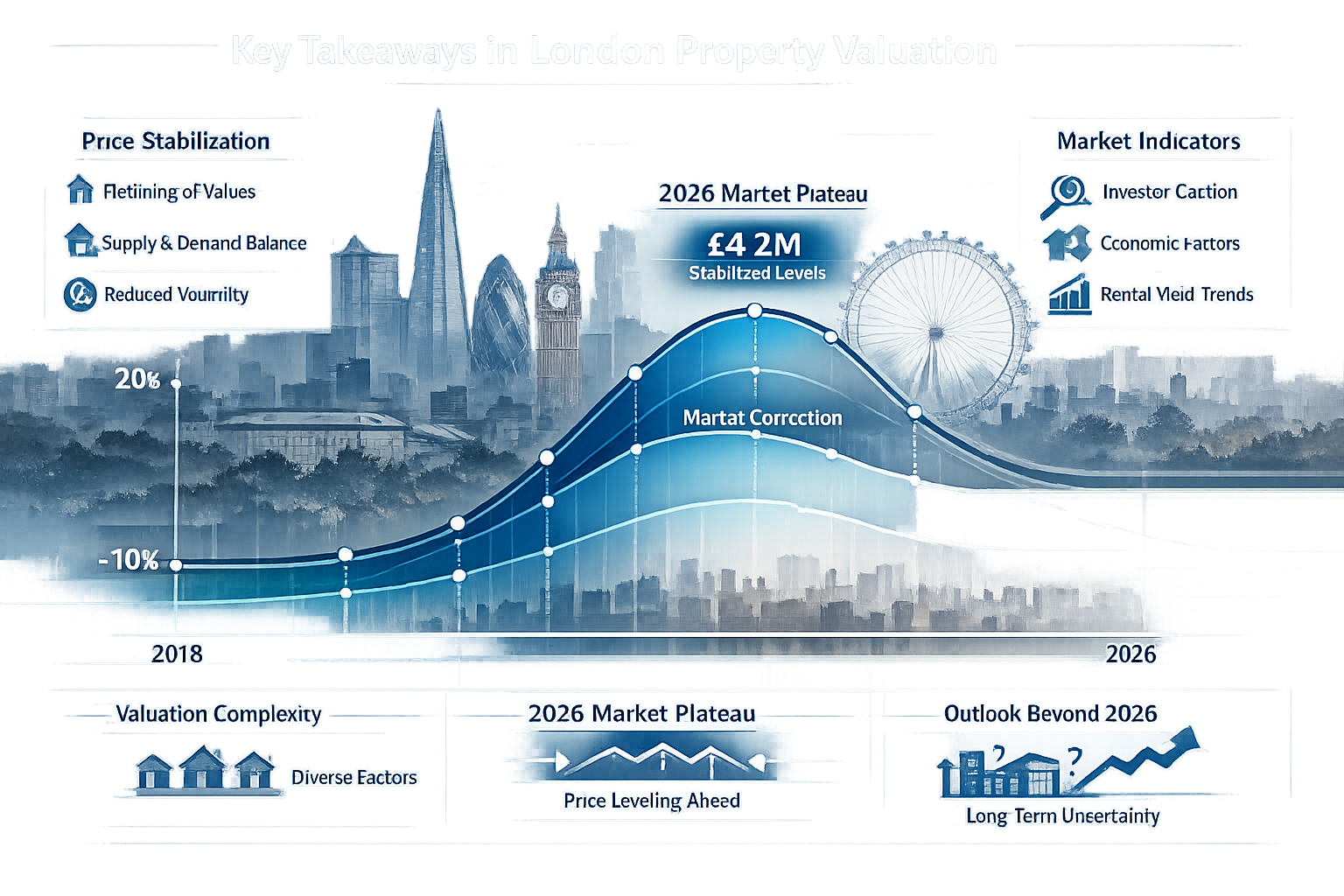
Key Takeaways
- Prime central London valuations are plateauing at ±0% growth in 2026, with properties above £1.9 million experiencing particular pressure
- Tax policy changes—including the 2% stamp duty increase and non-dom rule elimination—are fundamentally reshaping valuation parameters for premium properties
- Surveyor methodologies must adapt to incorporate international buyer sentiment shifts, forward-looking tax implications, and supply-demand recalibration
- Selective recovery is emerging in specific prime pockets as falling mortgage rates and returning international capital create valuation opportunities
- The 2028 mansion tax creates forward-looking uncertainty affecting current appraisals for ultra-premium properties above £2 million
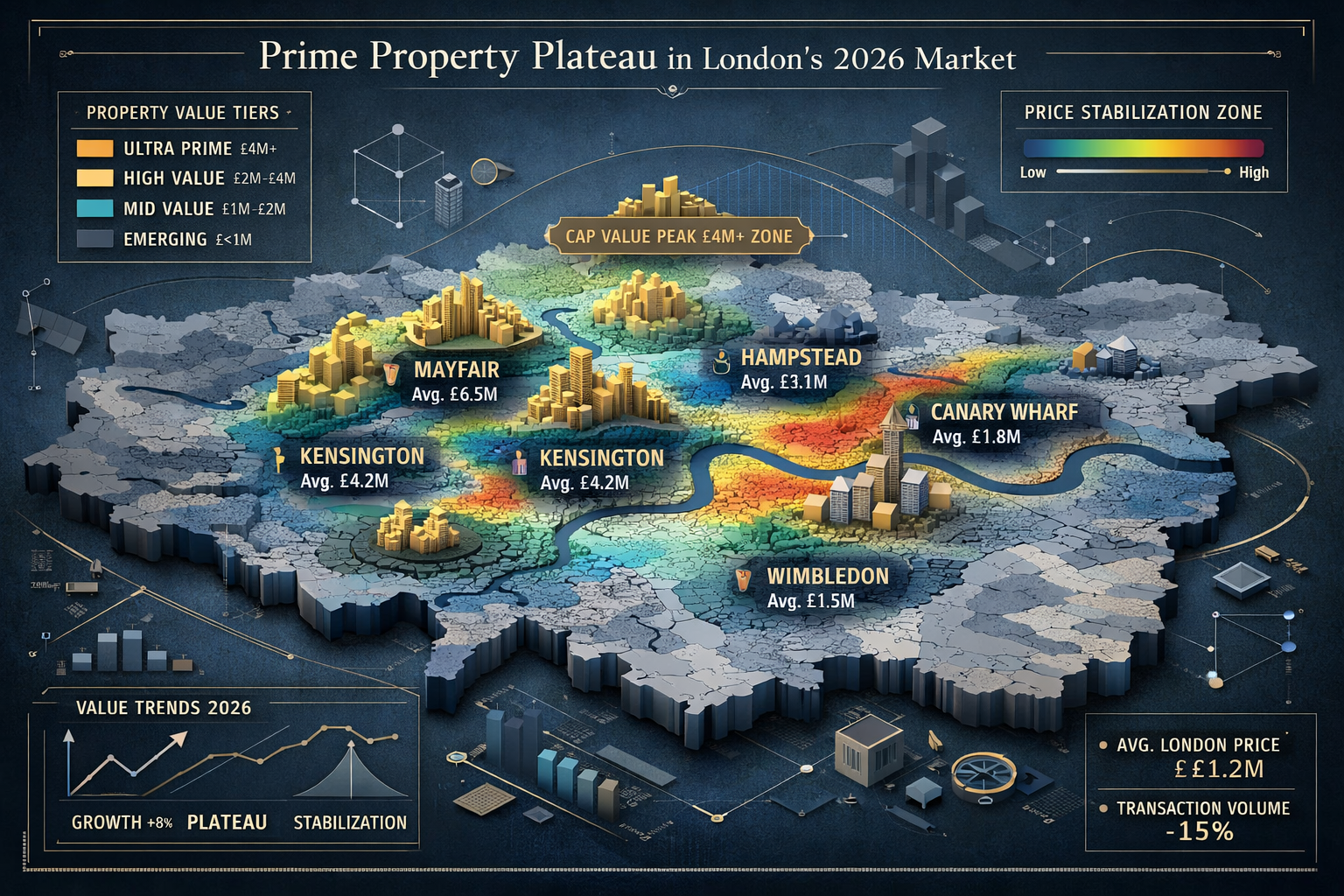
Understanding the Prime Property Plateau in London's 2026 Market
What's Driving the Flat Growth Trajectory?
The current market stabilization stems from multiple converging factors that professional London property surveyors must carefully weigh in their assessments.
Tax Policy Transformations 🏛️
The April 2025 implementation of a 2% stamp duty increase for additional homes has created immediate downward pressure on prime valuations. This policy change particularly affects:
- Buy-to-let investors in premium segments
- Second-home purchasers in central London
- International buyers acquiring additional UK properties
- Portfolio landlords expanding holdings
Simultaneously, the elimination of non-dom tax advantages has reduced the appeal of London's ultra-premium properties for wealthy international buyers who previously supported peak valuations.[1]
The Looming Mansion Tax 📊
Perhaps most significantly for appraisal methodology, the announced 2028 implementation of a tax on homes valued above £2 million creates forward-looking uncertainty. While affecting only 1% of properties nationally, this concentrated impact on London's prime market requires surveyors to incorporate future tax liability into current valuations.[2]
Market Segmentation: Where Growth Diverges
The London market in 2026 is experiencing pronounced segmentation that demands nuanced valuation approaches:
| Market Segment | 2026 Forecast | Key Characteristics |
|---|---|---|
| Prime Central London | ±0% | Knightsbridge, Mayfair, Belgravia facing plateau |
| Properties £1.9M+ | Small declines | Tax sensitivity and reduced international demand |
| Mainstream London | +3% growth | Supported by falling mortgage rates |
| Prime SW London pockets | Selective recovery | Improved value attracting buyers |
Hamptons' analysis reveals that small price falls in the £1.9 million-plus segment are being offset by growth in mainstream markets, creating a complex valuation landscape.[1]
Valuation Challenges in Stabilizing London Markets: Recalibrating Appraisal Methodologies
Traditional Comparable Sales Analysis Under Pressure
The cornerstone of property valuation—comparable sales analysis—faces significant challenges when markets plateau. Building surveyors in Knightsbridge and other prime areas must now contend with:
Limited Transaction Volume 📉
Flat markets typically see reduced transaction volumes as sellers resist price reductions and buyers wait for clearer trends. This creates:
- Fewer recent comparable sales
- Wider time gaps between relevant transactions
- Greater variation in individual sale circumstances
- Increased importance of off-market transactions
Rapidly Changing Tax Environment
Comparables from 12-18 months ago may not reflect current buyer sentiment shaped by:
- The April 2025 stamp duty increase
- Non-dom rule changes
- Forward-looking mansion tax concerns
- Evolving international buyer tax positions
Incorporating International Buyer Sentiment
A critical adjustment for 2026 valuations involves accurately gauging international capital flows. CBRE reports renewed interest from international buyers driven by falling debt costs, suggesting selective upward pressure on certain prime assets.[3]
Surveyors must now evaluate:
✅ Currency exchange rate impacts on effective pricing for international buyers
✅ Relative value comparisons with Paris, New York, and other global cities
✅ Tax treaty implications for specific buyer nationalities
✅ Geopolitical stability perceptions affecting London's safe-haven status
Supply-Demand Dynamics in Premium Segments
Despite price plateaus, high-quality prime property remains scarce, creating what industry analysts describe as "favourable long-term conditions" for valuation stability.[3] This supply constraint requires appraisers to differentiate between:
Truly Exceptional Properties 🌟
- Unique architectural significance
- Prime micro-locations within premium postcodes
- Recently renovated to highest standards
- Properties with outdoor space or exceptional views
Standard Premium Stock
- Well-located but not exceptional
- Period properties requiring modernization
- Leasehold with shorter remaining terms
- Properties with structural or maintenance issues
Professional RICS surveys become particularly valuable in this environment, as detailed condition assessments help justify valuation positions in a flat market.
Adjusting Appraisals: Practical Methodologies for 2026's Plateau Market
Forward-Looking Valuation Adjustments
The valuation challenges in stabilizing London markets: adjusting appraisals as prime properties plateau require incorporating future scenarios into current assessments.
Mansion Tax Discounting 💷
For properties valued near or above £2 million, surveyors should consider:
- Present value calculations of future tax liabilities beginning in 2028
- Buyer perception discounts reflecting reduced desirability
- Strategic positioning just below £2 million threshold
- Potential renovation impact on crossing valuation thresholds
Mortgage Rate Trajectory Integration
With borrowing costs forecast to fall to their lowest point in three years, valuations should reflect improved buyer purchasing power.[1] This creates upward pressure particularly for:
- Properties requiring mortgage financing (versus cash purchases)
- First-time buyers in prime mainstream segments
- Buy-to-let investors with improved yield calculations
- Developers assessing acquisition viability
Build Cost and Development Viability Considerations
Savills highlights that build costs and viability pressures continue throughout 2026, affecting new-build premium property valuations.[3] Appraisers must account for:
Construction Cost Inflation 🏗️
- Material cost increases affecting replacement value
- Labor shortages driving premium for quality trades
- Regulatory compliance costs (building safety, EPC requirements)
- Extended development timelines increasing holding costs
Development Margin Compression
- Reduced profit margins affecting land value calculations
- Viability assessments for conversion projects
- Impact on comparable evidence from new-build sales
- Potential for reduced new supply supporting existing stock values
Micro-Location Premium Differentiation
The 2026 market demonstrates that specific prime pockets are experiencing "gradual recovery and recalibration," with central and southwest London leading.[1] This requires granular location analysis:
Premium Micro-Locations Maintaining Value:
- Garden squares in Kensington
- Riverside positions in Chelsea
- Village atmosphere areas in Hampstead
- Transport-connected zones near Elizabeth Line stations
Areas Experiencing Greater Pressure:
- Properties on busy roads in prime postcodes
- Basement-only outdoor space in premium areas
- Leasehold properties with high service charges
- Locations with limited parking in car-dependent segments
Professional house evaluation services help identify these nuanced location factors that increasingly drive valuation differentials in flat markets.
Strategic Approaches for Different Market Participants

For Property Surveyors and Appraisers
Methodology Enhancements 📋
- Expand comparable search parameters to capture sufficient market evidence
- Weight recent transactions more heavily given rapid policy changes
- Incorporate tax impact modeling into valuation reports
- Document international buyer sentiment shifts in market analysis
- Utilize multiple valuation approaches (comparable, income, cost) for cross-validation
Professional Development Priorities
- Understanding international tax treaty implications
- Analyzing currency impact on effective pricing
- Assessing build cost trends and development viability
- Evaluating emerging prime micro-locations
- Incorporating sustainability and EPC considerations into valuations
For Property Investors and Buyers
Valuation Due Diligence 🔍
In a plateauing market, independent professional surveys become even more critical. Consider:
- Commissioning comprehensive building surveys to identify hidden issues that affect value
- Obtaining specialist assessments for period properties (damp, subsidence, structural)
- Evaluating renovation needs and costs before purchase
- Understanding leasehold implications and service charge trajectories
Negotiation Leverage
Flat markets create opportunities for informed buyers to negotiate property prices based on:
- Survey findings revealing condition issues
- Comparable evidence showing price adjustments
- Tax liability considerations for premium properties
- Market positioning relative to £2 million mansion tax threshold
For Property Owners and Sellers
Realistic Pricing Strategies 💡
Sellers in 2026's plateau market should:
- Accept current market realities rather than anchoring to peak valuations
- Highlight property differentiators that justify premium positioning
- Consider timing relative to mortgage rate trends and international buyer flows
- Address condition issues before marketing to maximize valuation
- Understand tax implications for potential buyers affecting achievable prices
Value Enhancement Opportunities
Strategic improvements can maintain or enhance valuations:
- EPC upgrades increasingly affecting buyer demand and mortgage availability
- Modern amenity additions (home offices, outdoor space improvements)
- Smart home technology integration
- Sustainability features (solar panels, efficient heating systems)
- Aesthetic modernization while respecting period character
Regional Variations: Prime London's Geographic Complexity
Central London Prime Postcodes
Areas like Knightsbridge, Mayfair, and Belgravia face the most pronounced plateau effects due to:
- Highest concentration of properties above £2 million
- Greatest exposure to non-dom rule changes
- Strongest international buyer dependency
- Limited domestic buyer pool at ultra-premium price points
Knightsbridge property surveyors report that valuations increasingly depend on specific property attributes rather than postcode alone.
Southwest London Recovery Pockets
Chelsea, Fulham, and Wimbledon demonstrate more resilient valuations through:
- Greater domestic buyer representation
- Family-oriented property stock with gardens
- Strong local amenities and schools
- More properties in the £1-2 million "sweet spot"
Professional Wimbledon property surveyors note selective strength in well-presented family homes with outdoor space.
Emerging Prime Areas
Notting Hill, Hammersmith, and Clerkenwell benefit from:
- Relative value compared to traditional prime central
- Strong transport connectivity (Elizabeth Line impact)
- Lifestyle amenities attracting younger affluent buyers
- Mixed-use vibrancy appealing to international relocators
These areas may see property surveyors applying more optimistic growth assumptions in forward-looking valuations.
The Role of Professional Surveys in Valuation Accuracy
Why Independent Surveys Matter More in Flat Markets
When prices plateau, condition becomes the primary value differentiator. Professional surveys provide:
Objective Condition Assessment ✅
- Identifying structural issues affecting value (subsidence, settlement, structural movement)
- Evaluating building services and remaining life expectancy
- Assessing damp, timber decay, and other deterioration
- Documenting repair and maintenance requirements
Renovation Cost Clarity
Detailed surveys help buyers and appraisers understand:
- Realistic costs for necessary repairs
- Potential for value-adding improvements
- Building regulation compliance requirements
- Impact of planning permission restrictions
Survey Types for Different Valuation Needs
RICS Home Survey Level 2 (HomeBuyer Report)
Appropriate for:
- Modern properties in reasonable condition
- Mainstream market valuations
- Standard mortgage lending requirements
- Properties without obvious defects
RICS Home Survey Level 3 (Building Survey)
Essential for:
- Period properties in prime areas
- Properties requiring renovation
- High-value purchases where condition significantly affects valuation
- Unusual construction or known issues
Professional guidance on which home survey is right helps ensure appropriate due diligence for valuation purposes.
Future Outlook: What Lies Beyond the 2026 Plateau
Selective Recovery Indicators
Despite current flat growth, several factors suggest selective valuation recovery:
Falling Mortgage Rates 📈
Nationwide forecasts overall property price growth of 2-4% by end of 2026, driven by:
- Lowest borrowing costs in three years
- Improved buyer confidence and spending power
- Wage growth outpacing property price growth
- Enhanced affordability for mainstream buyers[2]
Returning International Capital
CBRE's observation of renewed international buyer interest suggests:
- Stabilization of currency impacts
- Adjustment to new tax regime
- Recognition of relative value versus global cities
- Continued safe-haven appeal of London property[3]
Supply Constraints
Limited new prime property delivery due to:
- Build cost pressures reducing development viability
- Planning restrictions limiting new supply
- Conversion opportunities largely exhausted
- Preservation requirements in prime areas
Long-Term Valuation Considerations
The 2028 Mansion Tax Threshold 🏛️
Properties approaching £2 million face strategic considerations:
- Potential buyer preference for properties just below threshold
- Valuation clustering below £2 million
- Premium for exceptional properties justifying tax burden
- Possible threshold indexation affecting future valuations
Sustainability and EPC Requirements
Increasingly stringent energy efficiency standards will affect:
- Rental property valuations (minimum EPC requirements)
- Mortgage availability for lower-rated properties
- Cost of compliance for period properties
- Premium for already-compliant modern stock
Demographic and Lifestyle Shifts
Post-pandemic preferences continue influencing valuations:
- Outdoor space commanding significant premiums
- Home office space increasingly essential
- Proximity to green spaces valued more highly
- Village atmosphere within urban settings preferred
Conclusion: Navigating Valuation Challenges in London's New Normal
The valuation challenges in stabilizing London markets: adjusting appraisals as prime properties plateau represent a fundamental shift requiring sophisticated, nuanced approaches from property professionals. The ±0% growth forecast for prime central London in 2026 is not simply a pause—it's a recalibration driven by structural tax changes, international buyer sentiment shifts, and supply-demand rebalancing.[1]
For surveyors and appraisers, success in this environment demands:
✅ Methodological flexibility incorporating forward-looking tax impacts
✅ Granular micro-location analysis identifying selective recovery pockets
✅ International perspective on buyer sentiment and capital flows
✅ Comprehensive condition assessment as the primary value differentiator
✅ Multiple valuation approaches providing cross-validation in uncertain markets
For property investors and owners, the plateau creates both challenges and opportunities:
- Challenges: Reduced short-term capital appreciation, tax burden increases, selective buyer interest
- Opportunities: Improved negotiating position, relative value in global context, selective recovery potential in prime pockets
Actionable Next Steps
- Commission professional surveys from qualified RICS surveyors to establish accurate condition-based valuations
- Analyze tax implications specific to your property and buyer profile
- Monitor international buyer sentiment and currency trends affecting effective pricing
- Evaluate micro-location factors that create valuation premiums within broader prime areas
- Consider strategic timing relative to mortgage rate trends and market recovery indicators
- Invest in value-enhancing improvements that differentiate properties in flat markets
The London property market's stabilization phase requires patience, expertise, and strategic thinking. While prime properties may plateau in 2026, the fundamental appeal of London real estate—scarcity of quality stock, global city status, and long-term value preservation—remains intact. Professional valuation expertise becomes not just helpful but essential in navigating this complex landscape successfully.
References
[1] The Property Market In 2026 Britains Top Experts On What You Can Expect And Its Good News All Round – https://www.countrylife.co.uk/property/the-property-market-in-2026-britains-top-experts-on-what-you-can-expect-and-its-good-news-all-round
[2] House Prices – https://moneyweek.com/investments/house-prices/house-prices
[3] Are Successful Investors Back In The High Value Property Market For 2026 – https://togethermoney.com/blog/are-successful-investors-back-in-the-high-value-property-market-for-2026