Five times. That is how much more likely a home in England priced between £1.7m and £2.3m was to sell for just under £2,000,000 in the eight months to July 2026, compared with the same period a year earlier. For sellers in Wimbledon Village, the Common and Southfields weighing up their asking price this autumn, that single statistic sums up the pressure building around the mansion tax £2m cliff edge October 2026 Wimbledon home sellers are now navigating, and it arrives just weeks before a Budget that could move the goalposts again.
Published on 3 October 2026, this briefing from Wimbledon Surveyors sets out what the latest data actually shows, why a sale price under £2m offers less protection than many sellers assume, and what local homeowners should do before and after the Chancellor's Autumn Budget on 28 October 2026.
Key Takeaways
- Analysis of HM Land Registry data by Tax Policy Associates (Dan Neidle), published 22 September 2026, found clear "bunching" of sale prices just below £2m, but no proof that overall values above £2m have fallen.
- The High Value Council Tax Surcharge (the "mansion tax"), confirmed at the November 2025 Budget, charges £2,500 to £7,500 a year on homes worth £2m+ from April 2028, based on an April 2026 valuation date.
- Press reports suggest the Treasury may lower the threshold to £1.5m at the 28 October 2026 Budget, this is unconfirmed speculation, not government policy.
- The Valuation Office Agency will value homes using comparable evidence and property characteristics, not simply the price written on the completion statement, so pricing at £1.99m does not guarantee escaping the charge.
- Many Wimbledon houses in the £1.5m,£3m band sit directly in the zone most exposed to any threshold change, against a backdrop of a cooling London market.
The Mansion Tax £2m Cliff Edge October 2026: What the Bunching Data Shows
The clearest evidence yet of seller behaviour around the £2m threshold comes from Tax Policy Associates' review of Price Paid Data. Comparing December 2025, July 2026 against the equivalent period a year before, for existing homes priced £1.7m,£2.3m across England, the analysis found:
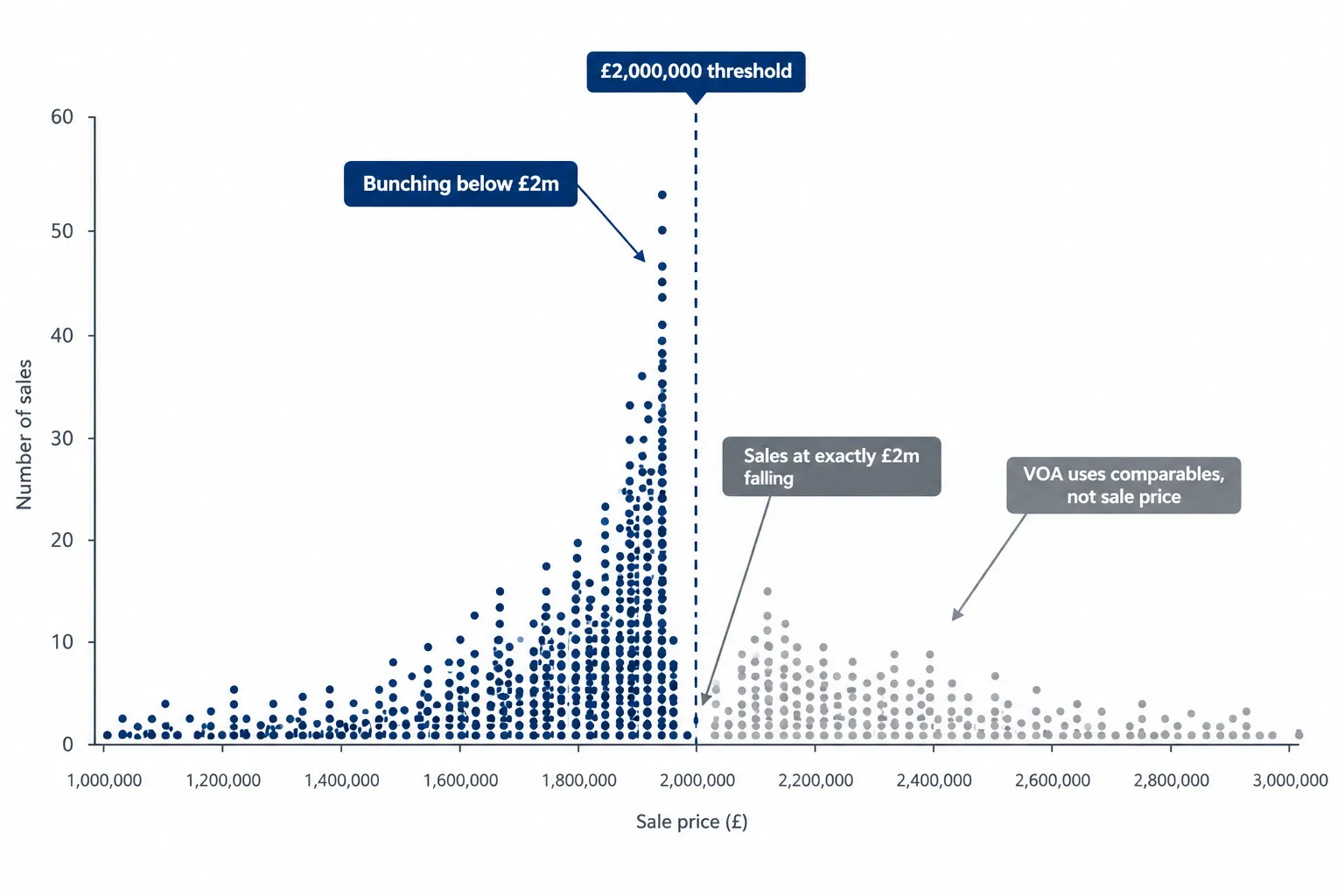
- Sales priced immediately below £2m rose from 0.44% to 2.27% of transactions in that band, roughly fivefold.
- Sales at exactly £2m fell from 5.69% to 2.70%.
- The proportion of sales in that price band that closed below £2m rose from 43.5% to 63.8%.
A similar bunching pattern appeared around £3.5m, another surcharge band threshold, but was absent at untaxed comparison points such as £1m, strong evidence that the mansion tax, not general market drift, is driving the pattern. Crucially, the same analysis found tests for a broader fall in property values above £2m were inconclusive and likely underpowered, meaning there is no reliable evidence yet that £2m-plus homes are losing value overall, only that completion prices are clustering just under the line.
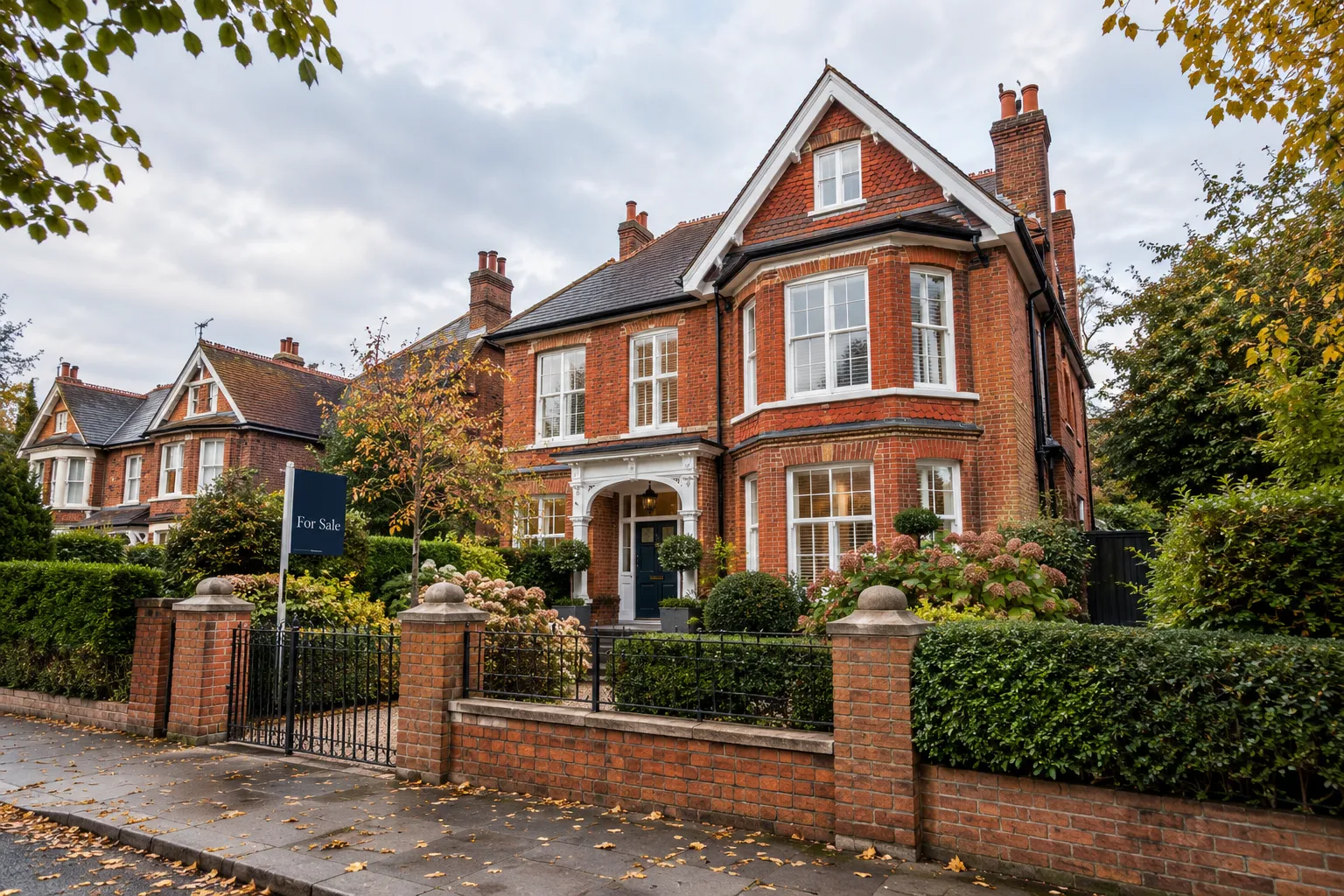
For Wimbledon, where many period houses around the Common and in Wimbledon Village sit comfortably either side of £2m, this is more than an academic finding. It suggests negotiations are increasingly shaped by the tax line itself, not just bricks and mortar.
Why Pricing Under £2m Does Not Guarantee Escaping the Mansion Tax
Here is the catch sellers and buyers both need to understand clearly: agreeing a sale price of £1,995,000 does not automatically mean a home avoids the High Value Council Tax Surcharge. The Valuation Office Agency (VOA) will assess liability using comparable sales evidence and the property's characteristics as at the April 2026 valuation date, not simply whatever figure appears on the memorandum of sale.
In practice, this means a four-bedroom Southfields semi that changes hands at £1.98m could still be assessed by the VOA as a £2.1m property if comparable evidence, extension size, plot, condition, recent similar sales nearby, points that way. The Tax Policy Associates analysis flags this explicitly as the key caveat behind its bunching findings: sellers appear to be targeting a psychological and contractual price point, but that does not bind the VOA's own valuation.
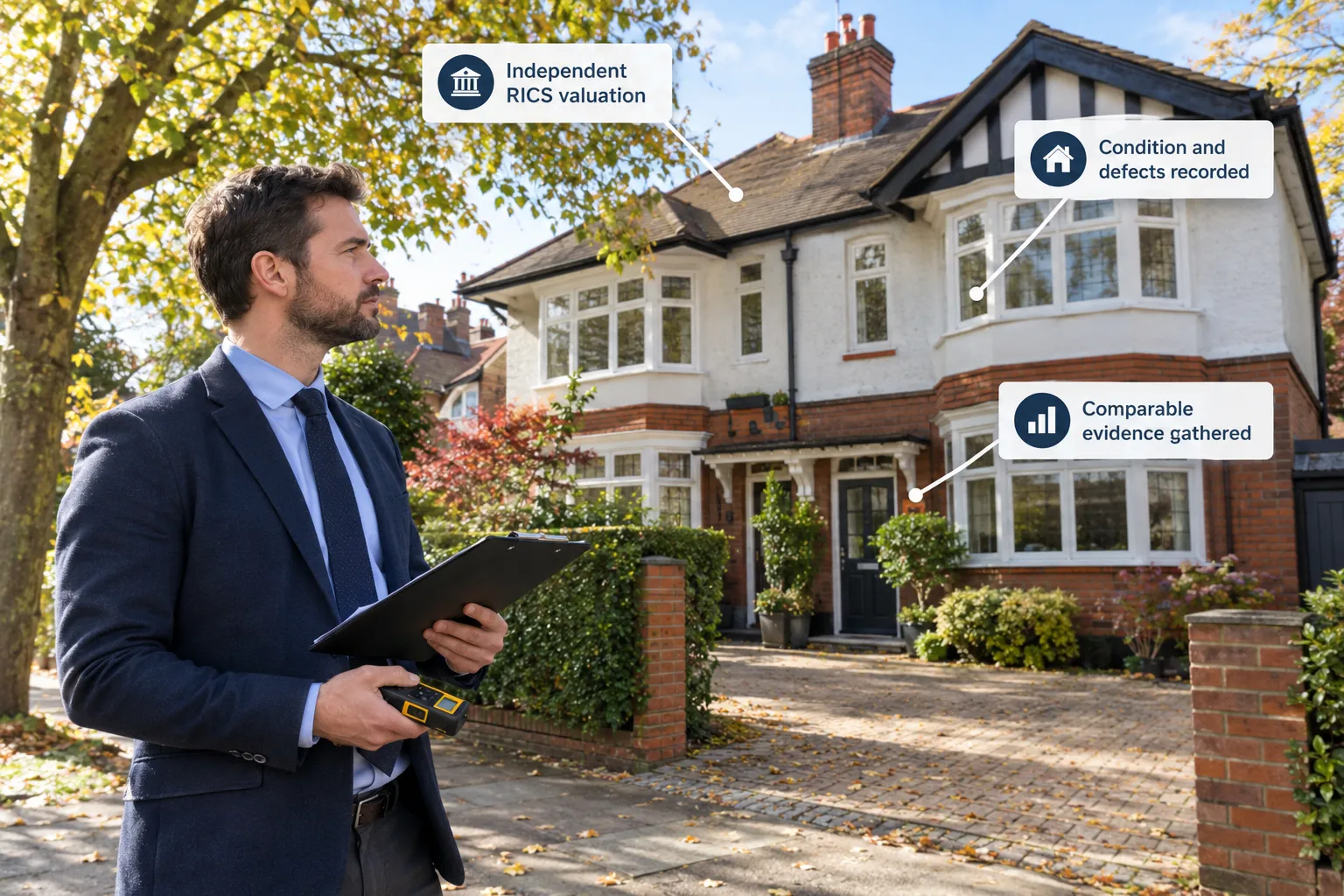
This is precisely where independent evidence matters. A documented, RICS-compliant Red Book valuation carried out close to the relevant date gives homeowners a professionally reasoned opinion of value they can refer back to if a VOA assessment looks out of step with the market, far stronger ground than relying on an agent's marketing estimate or a single completed sale price.
What a £1.5m Threshold Would Mean for SW19
Press reports first carried by The Times, and followed up by LBC and the HomeOwners Alliance, updated 1 October 2026, suggest the Treasury is weighing a cut to the mansion tax threshold, from £2m down to £1.5m, at the Autumn Budget on 28 October 2026. Reports cite this potentially roughly doubling the number of affected homes nationally, from around 165,000 to somewhere between 222,000 and 271,000, and raising an estimated extra £800m a year.
It is important to be precise about what this is: unconfirmed speculation. The Treasury has declined to comment, stating that tax decisions are for the Chancellor to announce at fiscal events. Nothing about a £1.5m threshold is confirmed, and homeowners should not make irreversible decisions based on press reports alone.
That said, the implications for SW19 would be significant if it happened. A huge swathe of Wimbledon's semi-detached and larger terraced housing stock, much of it already averaging around £1.22m for semis, would move into scope far more readily than at a £2m line. Anyone selling, buying, or simply holding a home in the £1.5m,£3m band should treat this Budget date as a genuine watershed and take professional tax advice before assuming either outcome.
Wimbledon's Property Market Backdrop in October 2026
The mansion tax debate is landing on a market that is already cooling. Rightmove sold-price data puts the overall average sold price in Wimbledon at roughly £833,600 over the past year, with semi-detached homes averaging about £1.22m, terraced houses around £936,000, and flats near £489,000. Overall sold prices in the area are about 6% down on the previous year and roughly 8% below the 2022 peak.
The wider picture reinforces this. Zoopla's September 2026 index, published 1 October 2026, shows London prices down 1% year-on-year, with only around 30% of London homes selling within three months. Nationwide's figures, released 2 October 2026, show UK annual price growth halving to 0.8% in September. Against this backdrop, Wimbledon Village, the Common and Southfields/Parkside, where many houses sit squarely in the £1.5m,£3m band, are the local areas most exposed to any change in the mansion tax threshold.
Practical Steps for Mansion Tax £2m Cliff Edge October 2026 Wimbledon Home Sellers
Whatever happens on 28 October, sellers and buyers in this price bracket can take sensible, low-regret steps now:
- Get independent valuation evidence. A RICS Red Book valuation establishes a defensible, professionally reasoned figure, useful both for pricing strategy and for any future VOA challenge.
- Document condition and defects. Items that reduce value, subsidence, damp, roof issues, outdated services, should be recorded formally. A RICS Level 3 Building Survey or Level 2 HomeBuyer Survey creates a paper trail that can support a lower valuation if challenged later.
- Keep records, not just impressions. Photographs, contractor quotes and survey reports dated around the April 2026 valuation point carry more weight than memory.
- Separate timing decisions from tax guesswork. Don't rush a sale purely to dodge a threshold that may not move. Equally, don't assume current £2m pricing norms will hold if the Budget changes the line.
- Buyers should price in the surcharge. An offer on a £2.1m or £2.6m home should reasonably reflect the expected annual charge from April 2028, much as buyers already factor in stamp duty and ongoing council tax. Surveyors can help buyers negotiate on the back of independent evidence rather than tax assumptions alone.
- Once an offer is agreed, sellers and buyers alike should understand what happens next in the transaction, since valuation and survey timing can matter for mansion tax evidence as well as the usual conveyancing steps.
Local specialists such as Wimbledon Surveyors provide RICS-regulated valuation and survey reports across SW19 and SW20 that can support exactly this kind of evidence gathering, without replacing the need for separate professional tax advice.
Frequently Asked Questions
Does selling my Wimbledon home for £1.99m guarantee I avoid the mansion tax?
No. The VOA assesses liability using comparable evidence and property characteristics as at the April 2026 valuation date, not simply the agreed sale price. A home sold just under £2m can still be assessed above it.
When does the mansion tax actually start being charged?
The High Value Council Tax Surcharge is collected annually from April 2028, alongside council tax. Homeowners are expected to be notified of potential liability in autumn 2027, with a window to challenge valuations before collection begins.
Is the £1.5m threshold confirmed?
No. It is unconfirmed press speculation ahead of the 28 October 2026 Autumn Budget. The Treasury has declined to comment, and tax decisions rest with the Chancellor at that fiscal event.
How much is the mansion tax likely to cost?
Under the confirmed bands: £2,500 for homes £2m,£2.5m, £3,500 for £2.5m,£3.5m, £5,000 for £3.5m,£5m, and £7,500 for homes over £5m, charged annually from April 2028.
What should Wimbledon sellers do before the Budget?
Obtain independent RICS valuation evidence, document property condition, and avoid making irreversible pricing decisions based solely on speculation about the threshold. Professional tax advice is essential given how much remains unconfirmed.
Conclusion
The mansion tax £2m cliff edge October 2026 Wimbledon home sellers are grappling with is real in its effect on pricing behaviour, but far from settled in its detail. The Tax Policy Associates data proves sellers are bunching prices just under £2m; it does not prove the tax is depressing values overall, and it explicitly warns that the VOA's comparable-based approach can override a headline sale price. Add genuine uncertainty over a possible £1.5m threshold at the 28 October Budget, and Wimbledon homeowners in the £1.5m,£3m band face a period where evidence, not guesswork, should drive decisions. The sensible next steps are straightforward: commission independent RICS valuation and survey evidence, keep thorough records of condition and defects, watch the Budget date closely, and take qualified tax advice before acting on headlines.
mansion tax, high value council tax surcharge, Wimbledon property market, SW19 home sellers, RICS valuation, Red Book valuation, Autumn Budget 2026, property tax UK, London house prices, Wimbledon Village, VOA comparables, stamp duty alternatives