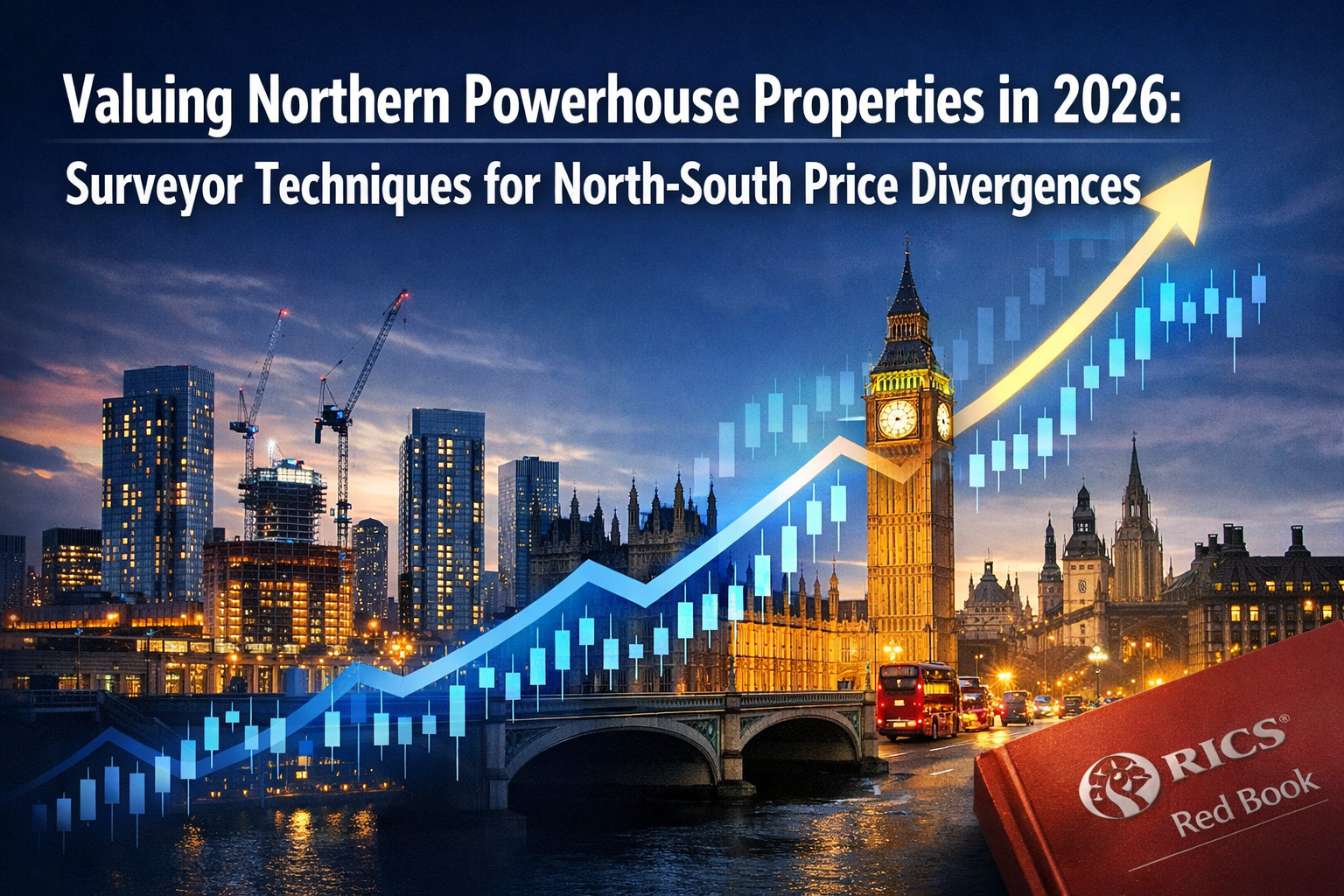
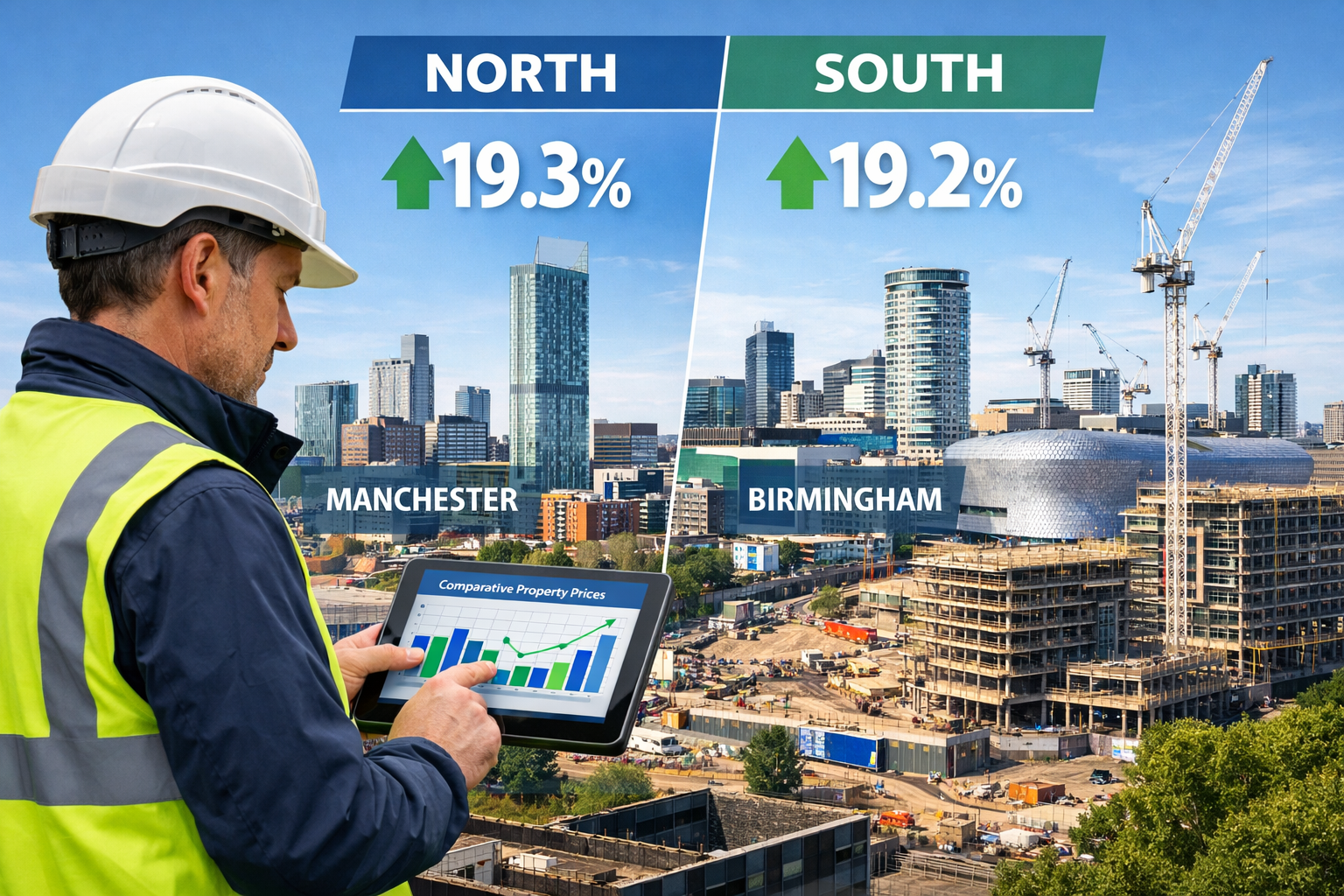
The UK property market in 2026 presents a fascinating paradox: while Southern regions experience price stagnation or decline, Northern Powerhouse cities are witnessing unprecedented growth. Manchester forecasts 19.3% property price increases through 2028, while Birmingham projects 19.2% growth through 2027 [1]. This dramatic regional divergence creates unique challenges for property surveyors who must accurately value assets amid contrasting market conditions. Understanding Valuing Northern Powerhouse Properties in 2026: Surveyor Techniques for North-South Price Divergences has become essential for RICS-qualified professionals navigating these complex regional variations.
Key Takeaways
- 🏗️ Northern Powerhouse cities show exceptional growth with Manchester and Birmingham leading at 19.3% and 19.2% projected increases respectively, requiring surveyors to adjust traditional valuation models
- 📊 Multiple valuation methods now serve different purposes in 2026, including AVMs, extended AVMs, desktop approaches, and full inspections—selecting the right method is critical for regional accuracy
- 🔍 Technology-enhanced property insight through tools like GeoConnect helps surveyors consolidate regional data before selecting valuation routes, improving accuracy across North-South divergences
- 💡 Long-term resilience assessment has become standard practice, with surveyors evaluating energy standards, maintenance requirements, and future use implications alongside current market value
- 📈 Government infrastructure investment through the Northern Growth Strategy supports projected growth, with major regeneration projects fundamentally altering regional property values
Understanding the North-South Property Price Divide in 2026
The regional property price divergence in 2026 reflects fundamental shifts in the UK economic landscape. The North East region has experienced growth of +6.8%, while many Southern areas face declining values [4]. This isn't simply a temporary market fluctuation—it represents structural economic changes driven by government policy, infrastructure investment, and demographic shifts.
Government infrastructure investment through the Northern Growth Strategy has catalyzed this transformation [2]. Major regeneration projects include:
- Manchester Piccadilly brownfield development
- Leeds South Bank regeneration
- Stockport town centre renewal
- Advanced Manufacturing Innovation District spanning 2,000 acres across the Don Valley corridor
These projects create tangible value increases that surveyors must quantify accurately. The challenge lies in applying appropriate valuation techniques that reflect both current market conditions and future growth potential.
Regional Growth Patterns Affecting Valuations
| Region | Projected Growth | Key Drivers | Surveyor Considerations |
|---|---|---|---|
| Manchester | 19.3% through 2028 | Infrastructure, tech sector | Regeneration premiums, future development |
| Birmingham | 19.2% through 2027 | HS2, manufacturing | Transport connectivity, commercial conversion |
| North East | +6.8% current | Affordability, migration | First-time buyer demand, renovation potential |
| London/South East | Declining/flat | Affordability crisis | Market saturation, price corrections |
For surveyors conducting building surveys, these regional variations demand different analytical frameworks. A property in Manchester requires assessment of regeneration proximity and infrastructure benefits, while similar properties in Southern regions may need downward adjustments reflecting market cooling.
Modern Surveyor Techniques for Valuing Northern Powerhouse Properties in 2026
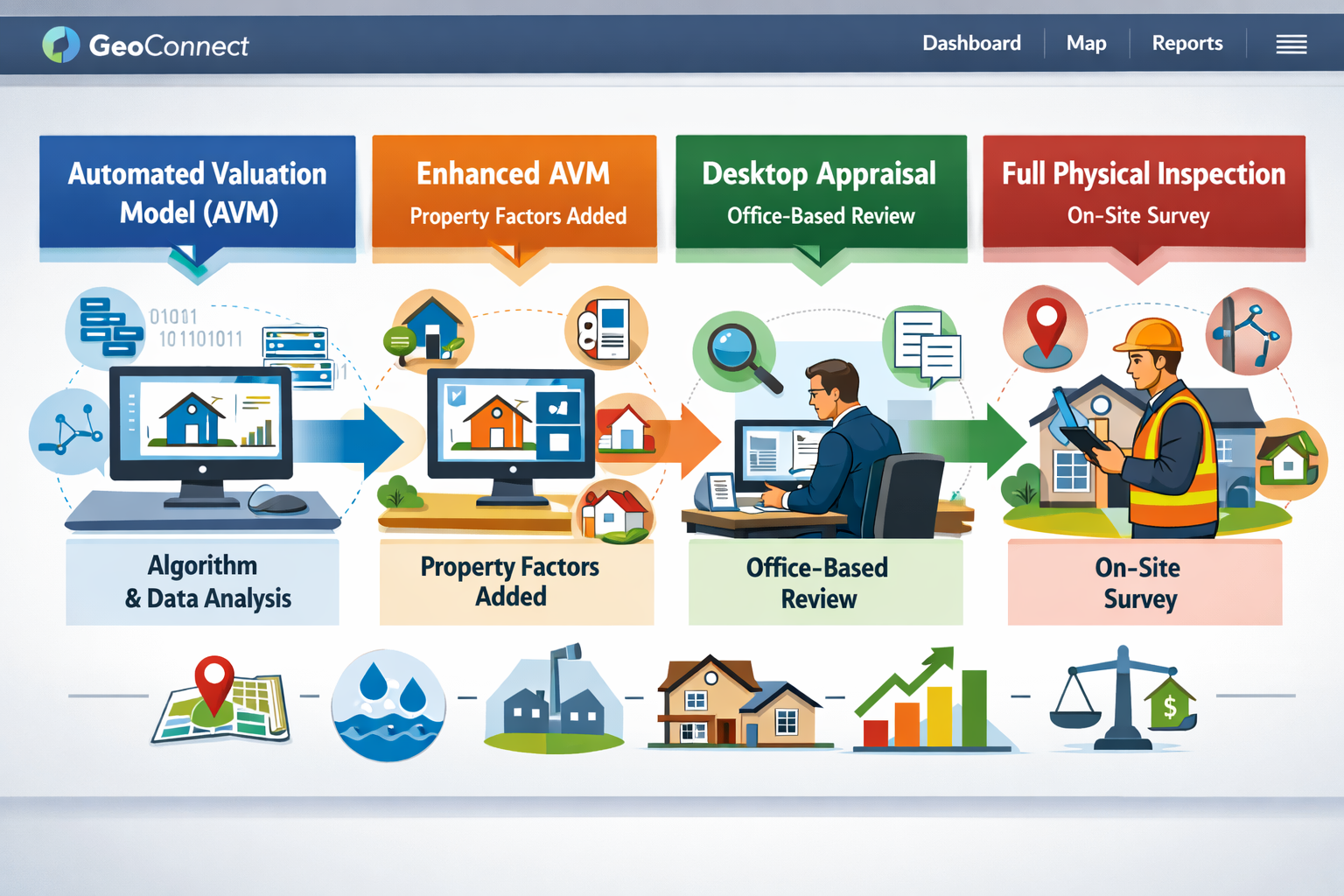
The surveying profession has evolved significantly to address regional price divergences. Multiple valuation methods now serve different purposes in 2026: automated valuation models (AVMs), extended AVMs, desktop approaches, and full inspections [3]. The critical skill isn't choosing one method over another—it's applying the right method to the right property type at the right time.
The Four-Tier Valuation Approach
1. Automated Valuation Models (AVMs) 📱
AVMs provide rapid baseline valuations using algorithmic analysis of comparable sales data. In Northern Powerhouse regions experiencing rapid growth, AVMs must be calibrated frequently to reflect accelerating price changes. These work best for:
- Standard construction properties
- Established residential areas with regular transactions
- Initial screening and portfolio assessments
2. Extended AVMs 🔍
Extended AVMs incorporate additional property-specific data layers beyond basic comparables. For Northern properties, this includes:
- Proximity to regeneration zones
- Infrastructure development timelines
- Local employment growth indicators
- Energy efficiency ratings
3. Desktop Valuations 💻
Desktop approaches combine data analysis with professional judgment without physical inspection. Surveyors review:
- Historical planning applications
- Environmental reports
- Local authority development plans
- Market trend analysis specific to Northern growth corridors
4. Full Physical Inspections 🏠
Comprehensive building surveys remain essential for complex properties, particularly the conversions, high-rise blocks, and non-standard construction that represent everyday lending scenarios in regenerating Northern cities [3].
Technology-Enhanced Property Intelligence
Surveyors face pressure from insufficient early-stage property understanding, leading to delays and rework [3]. Technology tools like GeoConnect consolidate property-specific information from multiple sources at the instruction point, enabling surveyors to understand the property first before selecting the valuation route [3].
This sequencing proves critical for managing regional divergences effectively. A surveyor valuing a converted warehouse in Manchester's Northern Quarter needs immediate access to:
- Original construction details
- Conversion specifications and building control approvals
- Comparable sales in similar regeneration areas
- Energy Performance Certificate (EPC) data
- Local rental yield information
The technology doesn't replace professional judgment—it enhances it by providing comprehensive context before the valuation methodology is selected.
Regional Adjustment Techniques for Accurate Red Book Valuations
RICS Red Book standards require valuations to be "market value" reflections based on comparable evidence. When Valuing Northern Powerhouse Properties in 2026, surveyors must apply sophisticated regional adjustments to ensure compliance while accurately reflecting divergent market conditions.
Comparable Selection in Divergent Markets
Traditional comparable selection within a 0.5-mile radius becomes problematic when regeneration creates micro-markets with dramatically different value trajectories. Surveyors now employ:
Temporal Weighting ⏰
Recent comparables receive greater weighting in rapidly appreciating Northern markets. A sale from six months ago may require 5-10% upward adjustment in high-growth areas, while Southern comparables might need downward adjustment for the same time lag.
Regeneration Proximity Adjustments 🏗️
Properties within 500 meters of major infrastructure projects command premiums. Manchester properties near Piccadilly regeneration show 15-25% premiums over comparable properties further from development zones [1].
Infrastructure Connectivity Multipliers 🚇
Transport improvements create measurable value impacts. Properties gaining improved connectivity through Northern Powerhouse Rail or local transport upgrades require positive adjustments reflecting reduced commute times and improved accessibility.
Environmental and Construction Factors
Environmental factors, construction type, form, location, history, and market context must be evaluated together to provide balanced regional risk assessment [3]. This holistic approach proves particularly important for Northern properties where:
- Victorian terraces undergo modern conversion
- Industrial buildings transform into residential lofts
- New-build developments fill brownfield sites
Each scenario requires different adjustment factors. A first-time buyer purchasing a converted mill apartment in Leeds needs valuation that reflects both the unique construction challenges and the regeneration premium.
Long-Term Resilience Assessment
Surveyors now assess longer-term resilience alongside current value [3], incorporating:
- Energy Standards: EPC ratings affect mortgage availability and future saleability
- Ongoing Maintenance Requirements: Older Northern stock requires realistic maintenance cost projections
- Future Use Implications: Adaptability for changing housing needs or commercial conversion potential
This forward-looking approach aligns with the growth trajectory of Northern Powerhouse cities. A property valued today must account for the market conditions likely to exist when the owner sells in 5-10 years—a particularly relevant consideration given the 19%+ growth projections [1].
Practical Application: Case Studies in Regional Valuation

Case Study 1: Manchester City Centre Apartment
Property: Two-bedroom apartment in converted warehouse, Northern Quarter
Challenge: No direct comparables due to unique conversion
Approach:
- Extended AVM analysis using broader Manchester city centre data
- Adjustment for regeneration proximity (+18%)
- Construction type adjustment for conversion quality (+5%)
- Energy efficiency premium for A-rated EPC (+3%)
- Future growth projection based on Piccadilly development timeline
Outcome: Valuation 26% higher than standard AVM, supported by detailed comparable analysis and regeneration impact assessment
Case Study 2: Birmingham Suburban Semi-Detached
Property: 1930s semi-detached house requiring modernization
Challenge: Balancing renovation costs against growth market
Approach:
- Full physical inspection identifying £35,000 renovation requirements
- Desktop analysis of comparable renovated properties (+15% post-renovation)
- HS2 connectivity adjustment (+8% for improved Birmingham-London links)
- Current condition adjustment (-12% for immediate works required)
- Net positive adjustment reflecting strong underlying market
Outcome: Valuation reflected both current condition and strong growth potential, enabling buyer to negotiate purchase price while understanding future value trajectory
Case Study 3: Leeds Commercial-to-Residential Conversion
Property: Former office building converted to 12 apartments
Challenge: Complex construction, leasehold structure, emerging market
Approach:
- Detailed inspection of conversion quality and building systems
- Analysis of South Bank regeneration impact (+22%)
- Leasehold structure review and ground rent capitalization
- Service charge sustainability assessment
- Comparable analysis from similar conversions in Manchester and Birmingham
Outcome: Comprehensive valuation supporting development finance, with clear risk factors identified regarding service charge structure and long-term building maintenance
Technology Integration and Future-Proofing Valuations
The sector is shifting from reactive valuation toward informed choice, with strong property insight and timely information enabling proper risk management [3]. Technology should support but not replace professional judgment in handling regional price divergences.
Data Consolidation Platforms
Modern surveyors utilize integrated platforms that aggregate:
- Land Registry transaction data with regional filtering
- Planning application databases showing future development
- Energy performance data correlated with sale prices
- Demographic and employment statistics by postcode
- Infrastructure investment timelines and project stages
This consolidated approach prevents the delays and rework that occur when critical property information emerges late in the valuation process [3].
Predictive Analytics for Growth Markets
Northern Powerhouse valuations benefit from predictive analytics that model:
- Infrastructure completion impact on local values
- Employment growth correlation with housing demand
- Regeneration zone expansion and value ripple effects
- Demographic shifts affecting property type demand
These tools don't determine valuations—they inform the professional judgment that RICS standards require.
Quality Assurance in Divergent Markets
Regional price divergences increase the risk of valuation errors. RICS surveyors implement enhanced quality assurance through:
- Peer Review: Northern valuations reviewed by surveyors with regional expertise
- Variance Analysis: Systematic review of valuations exceeding expected ranges
- Comparable Validation: Third-party verification of comparable property details
- Client Communication: Clear explanation of regional adjustment methodology
This rigorous approach protects both surveyors and clients while maintaining Red Book compliance.
Navigating Regulatory Requirements Across Regions
Valuing Northern Powerhouse Properties in 2026: Surveyor Techniques for North-South Price Divergences must account for varying regulatory environments across regions. While RICS Red Book standards apply nationally, local planning policies, conservation areas, and development frameworks create regional complexity.
Northern Planning Considerations
Northern Powerhouse cities have adopted growth-oriented planning frameworks that affect valuations:
- Simplified Planning Zones: Accelerated approval for certain development types
- Brownfield Prioritization: Incentives for regeneration site development
- Heritage Integration: Requirements balancing preservation with modernization
- Affordable Housing Quotas: Section 106 obligations affecting development viability
Surveyors must understand how these policies affect both current values and future development potential.
Building Regulation Variations
While building regulations are nationally consistent, enforcement and interpretation vary regionally. Northern properties, particularly conversions of industrial buildings, often present unique regulatory challenges requiring specialist knowledge.
Strategic Insights for Property Professionals
For property professionals working across North-South markets, several strategic principles emerge:
For Buyers and Investors 💰
- Commission comprehensive surveys in Northern growth markets to identify both risks and opportunities
- Understand regeneration timelines and their impact on value trajectories
- Consider long-term resilience factors beyond immediate market conditions
- Factor in regional adjustment methodologies when comparing properties across regions
For Lenders and Mortgage Providers 🏦
- Adopt flexible valuation methodologies appropriate to regional market conditions
- Invest in surveyor training specific to Northern Powerhouse growth dynamics
- Implement technology platforms that consolidate regional property intelligence
- Review comparable selection criteria to ensure Northern growth is accurately reflected
For Surveyors and Valuers 📋
- Maintain regional expertise through continuous professional development
- Utilize technology to enhance rather than replace professional judgment
- Document regional adjustments thoroughly to support Red Book compliance
- Engage with local market intelligence including regeneration project timelines
- Consider future resilience alongside current market value
Common Pitfalls in Regional Valuation
Even experienced surveyors can encounter challenges when valuing properties across divergent regional markets:
❌ Over-reliance on AVMs in rapidly changing Northern markets
✅ Solution: Use AVMs as baseline, apply manual regional adjustments
❌ Ignoring regeneration proximity in comparable selection
✅ Solution: Implement systematic proximity adjustments for infrastructure projects
❌ Applying Southern market assumptions to Northern properties
✅ Solution: Develop region-specific valuation frameworks
❌ Underestimating renovation costs in older Northern stock
✅ Solution: Conduct thorough physical inspections with specialist input
❌ Neglecting long-term resilience factors
✅ Solution: Incorporate energy efficiency, maintenance, and adaptability into valuations
Conclusion
Valuing Northern Powerhouse Properties in 2026: Surveyor Techniques for North-South Price Divergences requires sophisticated methodology that balances traditional surveying principles with modern technology and regional market intelligence. The dramatic growth projections for Manchester (19.3%), Birmingham (19.2%), and other Northern cities create both opportunities and challenges for property professionals.
The key to accurate valuation lies in understanding that no single method suffices for all properties. Automated tools, desktop analysis, and comprehensive physical inspections each serve specific purposes. The professional surveyor's role is selecting the appropriate methodology, applying rigorous regional adjustments, and documenting the rationale supporting the valuation conclusion.
Government infrastructure investment through the Northern Growth Strategy provides a solid foundation for projected growth, but individual property valuations must reflect specific location, condition, and market positioning. Technology platforms that consolidate property intelligence enable better-informed decisions, but cannot replace the professional judgment that RICS Red Book standards require.
Next Steps for Property Professionals
- Engage RICS-qualified surveyors with demonstrable Northern Powerhouse expertise for properties in growth regions
- Request detailed comparable analysis showing regional adjustment methodology
- Review regeneration project timelines affecting properties under consideration
- Consider comprehensive building surveys for complex properties including conversions and non-standard construction
- Evaluate long-term resilience factors including energy efficiency and maintenance requirements
- Understand the limitations of automated valuations in rapidly appreciating markets
The North-South property price divergence of 2026 represents a fundamental shift in UK real estate dynamics. Surveyors who master the techniques for accurately valuing properties across these regional variations will provide essential guidance for buyers, sellers, investors, and lenders navigating this complex landscape. By combining traditional surveying expertise with modern technology and deep regional market knowledge, property professionals can confidently assess values in both growth and declining markets, ensuring informed decision-making regardless of location.
References
[1] Valuation Surveys For Northern Powerhouse Properties Capturing 2026 Growth In Manchester And Birmingham – https://nottinghillsurveyors.com/blog/valuation-surveys-for-northern-powerhouse-properties-capturing-2026-growth-in-manchester-and-birmingham
[2] Northern Growth Strategy Case For Change – https://www.gov.uk/government/publications/northern-growth-strategy-case-for-change/northern-growth-strategy-case-for-change
[3] 2026 Forecasts Technology And Surveying – https://mortgagesoup.soup.co.uk/2026-forecasts-technology-and-surveying/
[4] Valuation Divergence North Vs South Uk House Prices In 2026 And Surveyor Adjustment Techniques Explained – https://nottinghillsurveyors.com/blog/valuation-divergence-north-vs-south-uk-house-prices-in-2026-and-surveyor-adjustment-techniques-explained