
Valuation multiples remain near historic highs in 2026, with Shiller P/E ratios hovering just above 39—the second-highest level in over 150 years[2]. This unprecedented market positioning has created a perfect storm of uncertainty in residential property transactions, leaving risk-averse buyers scrambling for concrete assurance before committing six or seven-figure sums. As traditional market indicators flash warning signals and economic volatility persists[3][6], chartered surveyors have responded by deploying sophisticated data-driven tools that transform property assessment from subjective opinion into quantifiable certainty.
The convergence of artificial intelligence, enhanced regulatory frameworks, and environmental considerations has revolutionized how professional surveyors deliver confidence to cautious buyers navigating 2026's turbulent residential market.
Key Takeaways
- Advanced valuation tools including AI-powered analytics and Red Book Valuations provide quantifiable risk assessment for property buyers in uncertain markets
- Comprehensive survey strategies combining structural inspections with environmental assessments deliver multi-layered protection against hidden defects
- Digital integration enables real-time data analysis and comparative market insights that strengthen negotiation positions
- RICS-accredited methodologies ensure professional standards and regulatory compliance while building buyer confidence
- Strategic survey selection based on property type and risk tolerance can save thousands in remediation costs and prevent transaction regret
Understanding Risk Aversion in 2026's Residential Property Market
Risk-averse buyers represent a growing segment of the residential property market in 2026. These purchasers prioritize security and certainty over potential bargains, seeking comprehensive information before committing to transactions[1]. Economic uncertainty, elevated interest rates, and market volatility have amplified this cautious approach.
What defines risk-averse property buyers in 2026?
- 📊 Demand extensive documentation and third-party verification
- 🔍 Require detailed condition assessments beyond basic requirements
- 💰 Willingness to invest in premium surveyor services for peace of mind
- ⚖️ Seek contractual protections and contingency clauses
- 📈 Prefer established neighborhoods with predictable value trajectories
The psychology behind risk aversion in property transactions stems from the substantial financial commitment involved. Unlike smaller purchases, residential property represents the largest investment most individuals make in their lifetime. A single overlooked defect can translate into tens of thousands in unexpected remediation costs.
Market Conditions Driving Demand for Certainty
Global M&A activity has experienced significant headwinds, with deal values declining substantially from previous peaks[3]. This broader financial caution has filtered into residential markets, where buyers increasingly mirror the due diligence approaches used in commercial transactions.
Investment outlooks for 2026 emphasize diversification and risk management strategies[6], principles that risk-averse residential buyers apply when evaluating property purchases. The parallel between institutional investment caution and individual buyer behavior has never been more pronounced.
Key market factors influencing buyer caution:
| Factor | Impact on Buyer Behavior |
|---|---|
| Interest Rate Volatility | Increased focus on property condition to avoid additional debt |
| Economic Uncertainty | Demand for comprehensive valuations to prevent overpaying |
| Climate Concerns | Growing emphasis on environmental assessments and energy efficiency |
| Regulatory Changes | Need for compliance verification and future-proofing |
Valuation Certainty Tools for Risk-Averse Buyers: Core Surveyor Instruments
Professional surveyors in 2026 deploy an arsenal of specialized tools designed to eliminate uncertainty from residential property transactions. These instruments range from traditional inspection methodologies to cutting-edge technological solutions that provide unprecedented insight into property condition and value.
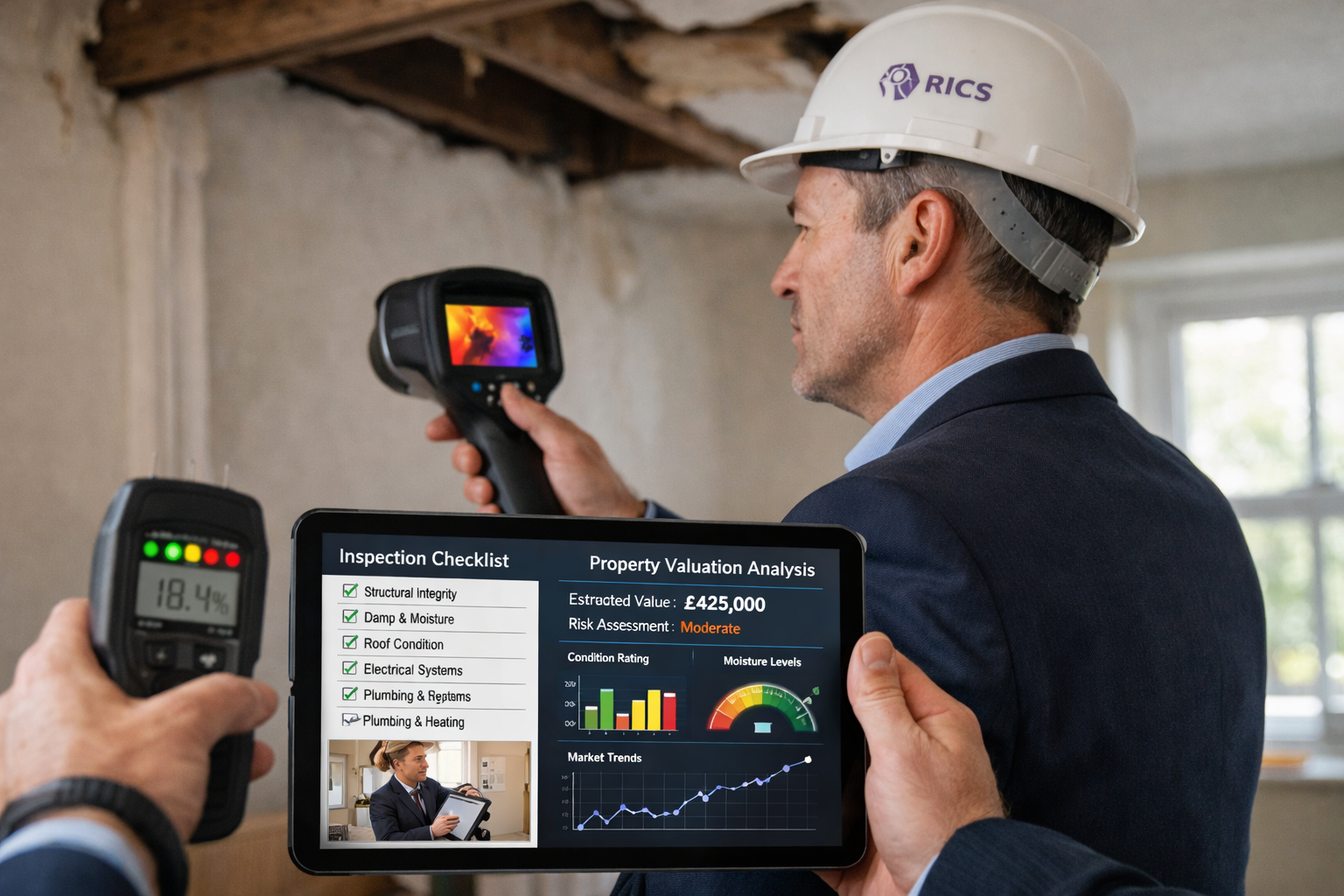
Red Book Valuations: The Gold Standard
Red Book Valuations represent the most rigorous valuation methodology available to residential buyers. Governed by RICS (Royal Institution of Chartered Surveyors) standards, these assessments provide legally defensible property valuations that lenders, courts, and financial institutions recognize.
Why risk-averse buyers choose Red Book Valuations:
- ✅ RICS-accredited methodology ensuring professional standards
- ✅ Comprehensive market analysis with comparable property data
- ✅ Legally defensible valuation figures for mortgage purposes
- ✅ Detailed reporting on factors affecting property value
- ✅ Professional indemnity insurance backing the assessment
Red Book Valuations go beyond simple price estimation, incorporating market trends, location analysis, property condition, and future development potential into a holistic value assessment. For buyers seeking maximum certainty, this represents the foundation of informed decision-making.
Building Surveys: Structural Certainty Through Comprehensive Inspection
Building surveys (Level 3 surveys) provide the most detailed examination of property condition available. These comprehensive inspections leave no stone unturned, identifying defects, maintenance issues, and potential future problems that could affect property value or safety.
What Building Surveys reveal:
- 🏗️ Structural integrity assessment including foundations, walls, and roof
- 💧 Moisture and damp issues with severity ratings
- ⚡ Electrical and plumbing system condition
- 🪟 Window, door, and external joinery assessment
- 🔧 Recommendations for repairs with estimated cost ranges
First-time buyers particularly benefit from Building Surveys, as these comprehensive reports educate purchasers about property maintenance requirements while identifying negotiation opportunities. The detailed nature of these surveys transforms abstract property risk into concrete, actionable information.
Homebuyers Reports: Balanced Assessment for Standard Properties
For properties in reasonable condition, Homebuyers Reports (Level 2 surveys) offer a middle ground between basic valuations and comprehensive Building Surveys. These reports use a traffic light system to categorize defects by severity, making risk assessment intuitive for non-technical buyers.
The standardized format of Homebuyers Reports enables easy comparison between properties, helping risk-averse buyers make informed choices when evaluating multiple options. Downloading example reports before commissioning surveys helps buyers understand what information they'll receive.
Specialist Surveys: Targeted Risk Mitigation
Beyond general property assessments, specialist surveys address specific concerns that risk-averse buyers identify during initial property evaluation:
Damp Surveys: Comprehensive damp assessments identify moisture penetration, condensation issues, and rising damp that can compromise structural integrity and create health hazards. These specialized inspections use moisture meters and thermal imaging to detect problems invisible to the naked eye.
Structural Engineering Reports: For properties showing signs of subsidence, cracking, or movement, structural engineers provide detailed analysis of foundation stability and recommend remediation strategies with cost estimates.
Environmental Assessments: Carbon footprint evaluations and energy efficiency ratings have become standard components of surveyor strategies in 2026, reflecting growing regulatory emphasis on environmental performance and future-proofing property investments.
Surveyor Strategies in 2026's Uncertain Residential Market: Technology Integration
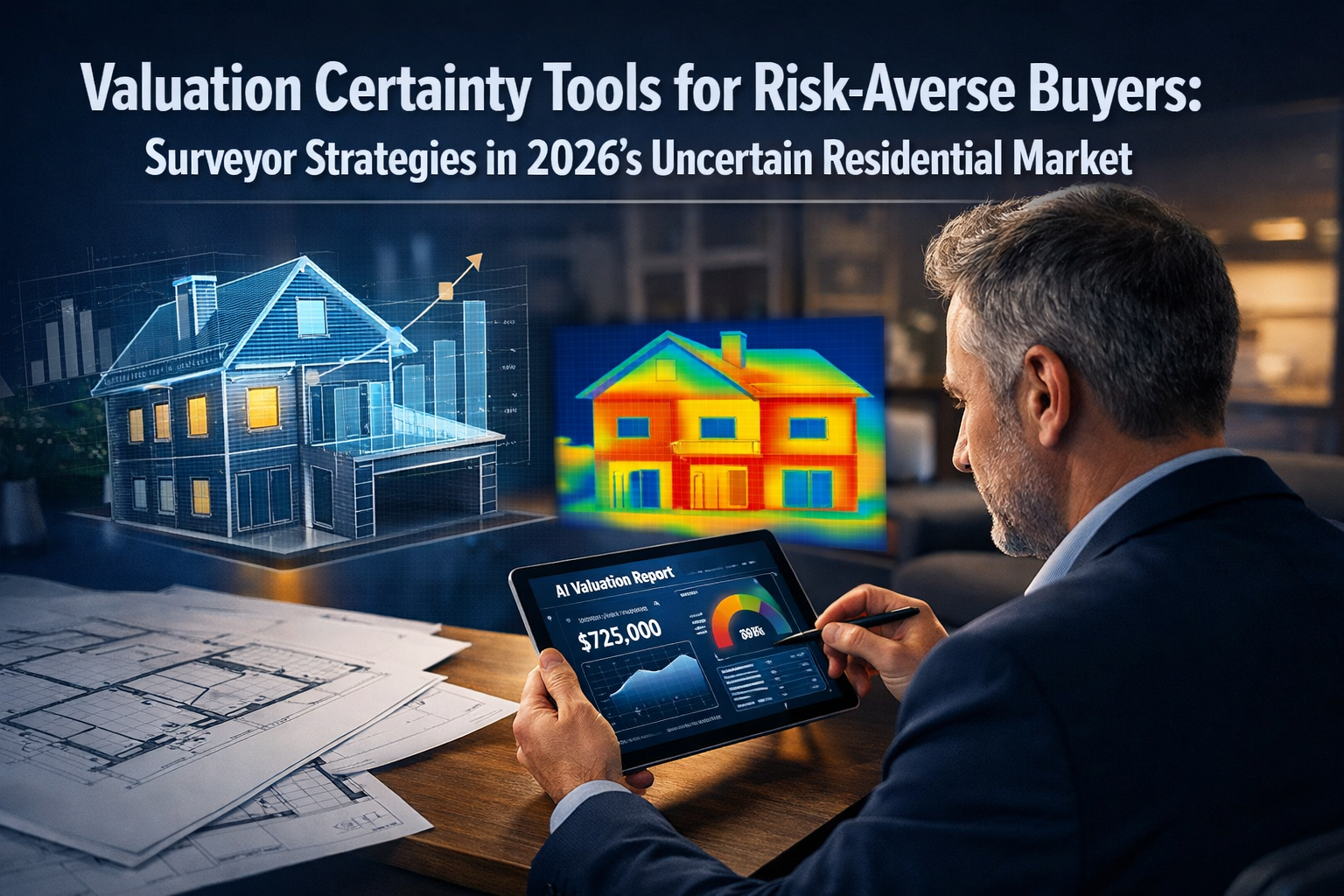
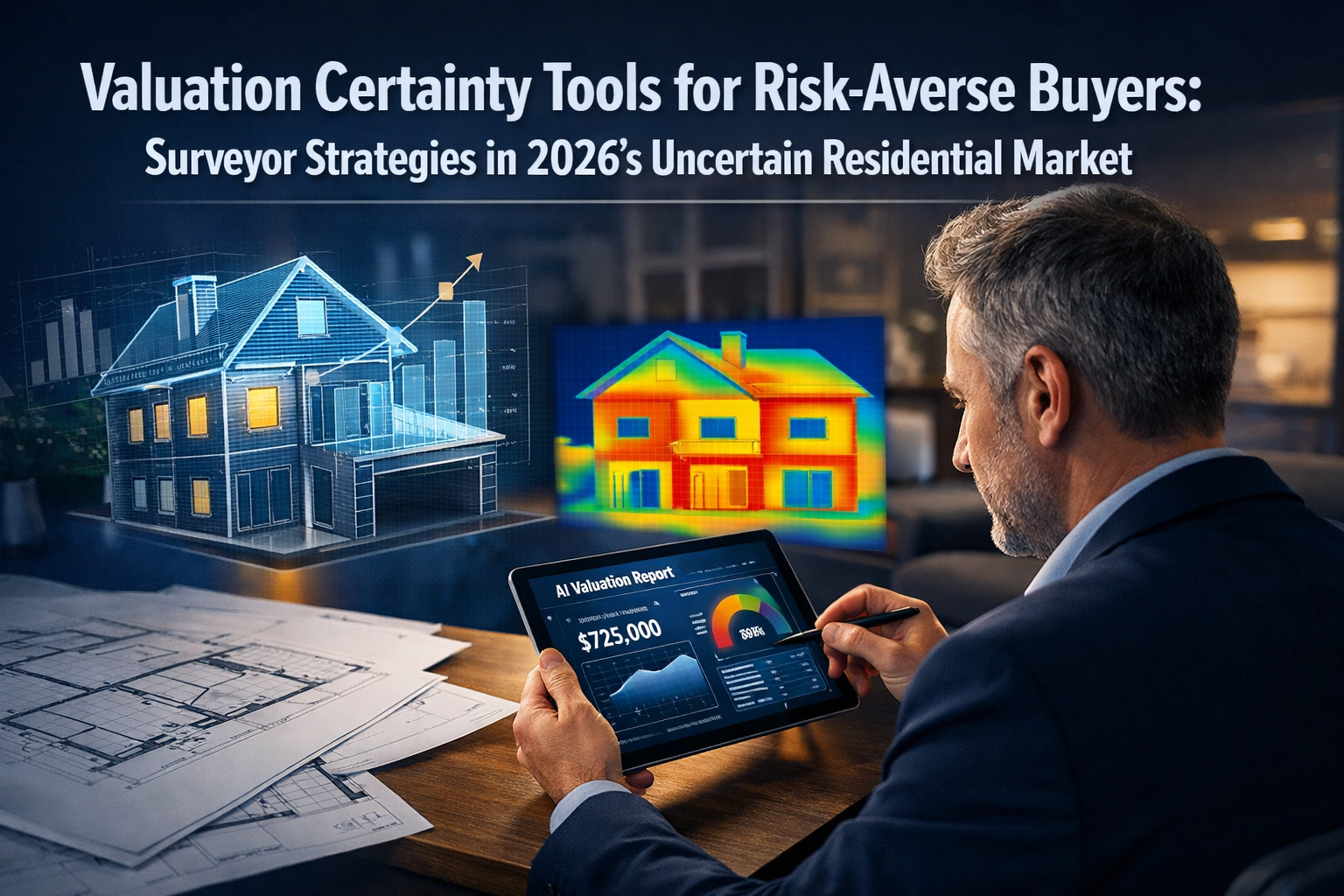
The integration of artificial intelligence and digital tools has revolutionized surveyor methodologies in 2026, providing risk-averse buyers with unprecedented analytical capabilities and comparative market insights.
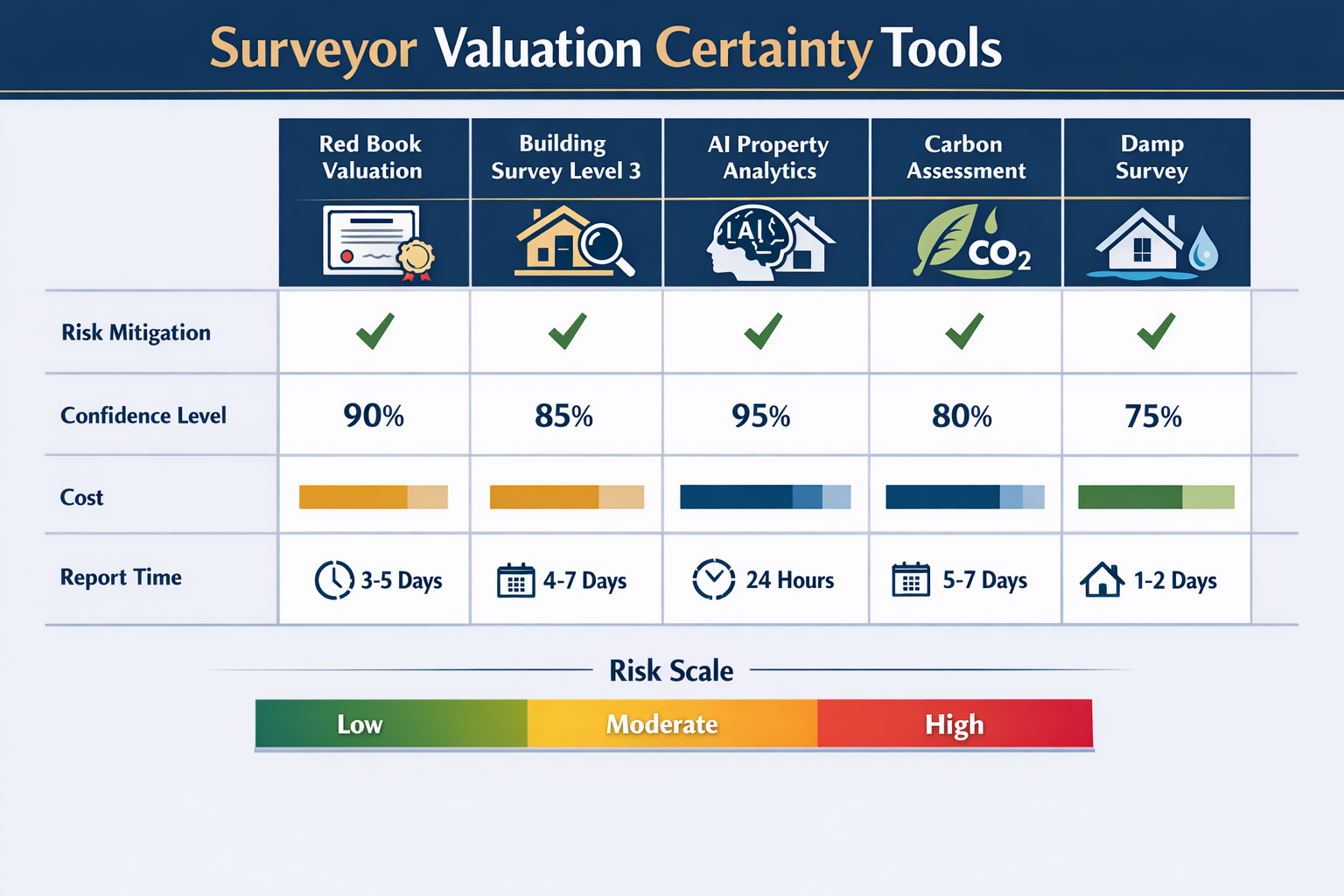
AI-Powered Valuation Analytics
Artificial intelligence platforms now analyze vast datasets of comparable property transactions, market trends, and economic indicators to provide probabilistic valuation ranges with confidence intervals. These tools complement traditional surveyor expertise by identifying market anomalies and pricing outliers that warrant additional investigation.
Benefits of AI-enhanced valuations:
- 📊 Real-time market data integration
- 🎯 Predictive analytics for future value trajectories
- 🔄 Automated comparable property identification
- 📉 Risk scoring based on market volatility metrics
- 🌐 Neighborhood trend analysis and demographic shifts
Professional surveyors leverage these AI tools as decision support systems, not replacements for human expertise. The combination of algorithmic analysis and experienced professional judgment delivers superior outcomes for risk-averse buyers.
Digital Inspection Technologies
Modern surveyors employ sophisticated equipment that reveals property conditions invisible to traditional inspection methods:
Thermal Imaging Cameras: Detect heat loss, moisture penetration, and insulation deficiencies by visualizing temperature variations across building surfaces.
Drone Surveys: Provide safe, comprehensive roof and chimney inspections without expensive scaffolding, capturing high-resolution imagery of otherwise inaccessible areas.
Moisture Meters: Quantify dampness levels with precise readings that distinguish between acceptable humidity and problematic moisture accumulation.
3D Laser Scanning: Creates detailed digital property models that enable remote consultation and precise measurement verification.
Blockchain-Verified Property Records
Emerging blockchain applications in 2026 enable immutable recording of survey findings, creating transparent property histories that future buyers can access. This technology reduces information asymmetry and builds confidence in property condition disclosure.
Strategic Survey Selection: Matching Tools to Risk Tolerance
Choosing the right survey type requires understanding both property characteristics and personal risk tolerance. The surveyor strategies employed in 2026's uncertain residential market emphasize customized assessment approaches rather than one-size-fits-all solutions.
Decision Framework for Risk-Averse Buyers
Property Age Considerations:
- New builds: Despite common assumptions, new builds benefit from independent surveys that verify construction quality and identify snagging issues
- Properties under 30 years: Homebuyers Reports typically provide adequate assessment
- Properties over 50 years: Building Surveys recommended to identify age-related deterioration
- Period properties: Comprehensive Building Surveys essential due to unique construction methods
Property Value Thresholds:
For high-value properties, the proportional cost of comprehensive surveys becomes negligible compared to potential hidden defect costs. Risk-averse buyers purchasing properties above £500,000 should default to Building Surveys regardless of apparent condition.
Layered Survey Strategies
Sophisticated buyers in 2026 employ sequential survey approaches that balance cost efficiency with comprehensive risk assessment:
- Initial Homebuyers Report to identify major concerns
- Specialist follow-up surveys targeting specific issues revealed
- Pre-completion inspection to verify agreed remediation work
This phased approach provides exit opportunities if serious defects emerge while avoiding unnecessary expense on properties that pass initial screening.
Leveraging Survey Findings: Negotiation and Risk Mitigation

Survey reports serve dual purposes for risk-averse buyers: informing purchase decisions and strengthening negotiation positions. Professional surveyors in 2026 increasingly provide strategic advice on leveraging findings to achieve favorable transaction terms.
Price Renegotiation Strategies
Renegotiating after poor survey results requires tactical approach supported by quantified remediation costs. Surveyors provide estimated repair expenses that form the basis for price reduction requests or seller remediation requirements.
Effective negotiation tactics:
- 💼 Present survey findings with contractor quotations for repairs
- 📋 Prioritize safety-critical issues over cosmetic concerns
- 🤝 Propose alternative solutions (price reduction vs. seller repairs)
- ⏰ Leverage market conditions and seller motivation
- 📄 Request contractual warranties for disclosed defects
Understanding what to do after receiving a bad survey report empowers buyers to make rational decisions rather than emotional reactions. Not all defects justify transaction abandonment—proper context and cost analysis enable informed risk assessment.
Contractual Protections and Contingencies
Risk-averse buyers incorporate survey findings into purchase contracts through specific clauses:
- Retention clauses: Withhold portion of purchase price pending remediation completion
- Warranty requirements: Demand seller guarantees for specific building elements
- Completion deadline extensions: Allow time for additional investigations
- Price adjustment mechanisms: Link final price to verified repair costs
Professional surveyors coordinate with solicitors to ensure technical findings translate into enforceable contractual protections.
Insurance and Future Risk Management
Comprehensive survey documentation supports insurance applications and claims, potentially reducing premium costs through demonstrated property knowledge. Insurers increasingly offer preferential terms for properties with recent RICS surveys documenting condition.
Survey reports also establish baseline property conditions that protect buyers against future seller misrepresentation claims, creating legal documentation of known defects at purchase time.
The RICS Advantage: Professional Standards for Buyer Confidence
RICS surveyors operate under strict professional standards that provide additional protection for risk-averse buyers. The regulatory framework governing chartered surveyors ensures consistent quality, ethical conduct, and professional accountability.
Why RICS Accreditation Matters
- 🎓 Rigorous qualification requirements and continuing professional development
- 🛡️ Professional indemnity insurance protecting clients against negligence
- 📜 Adherence to published practice standards and ethical codes
- ⚖️ Disciplinary procedures for substandard work
- 🔍 Independent regulation providing consumer protection
The RICS Red Book and associated practice standards ensure that valuations and surveys follow consistent methodologies, enabling meaningful comparison between different surveyor reports and properties.
Professional Indemnity Insurance
All RICS surveyors maintain professional indemnity insurance that compensates clients if negligent advice causes financial loss. This insurance backing provides crucial protection for risk-averse buyers, ensuring recourse if survey reports miss significant defects.
The insurance requirement distinguishes RICS surveyors from unregulated property inspectors, adding a financial safety net that reinforces professional accountability.
Cost-Benefit Analysis: Investment in Certainty
Risk-averse buyers often question whether comprehensive survey costs justify the expense. Analysis of 2026 market conditions demonstrates that professional surveyor strategies deliver substantial financial returns through avoided problems and negotiation leverage.
Survey Cost Benchmarks
Typical survey costs in London and surrounding areas:
- Basic Valuation: £300-£500
- Homebuyers Report: £400-£800
- Building Survey: £600-£1,500
- Specialist Surveys: £200-£600 each
These costs represent 0.1-0.3% of typical property values, making them negligible compared to potential hidden defect remediation expenses that frequently exceed £10,000-£50,000.
Return on Investment
Real-world examples demonstrate survey value:
- Case Study 1: Building Survey identifies £35,000 in structural repairs, enabling £40,000 price reduction
- Case Study 2: Damp survey reveals £15,000 remediation requirement, buyer negotiates seller completion of work
- Case Study 3: Comprehensive survey prevents purchase of property with Japanese knotweed, avoiding £25,000+ treatment costs
The pattern is clear: professional surveys consistently deliver returns many multiples of their cost through avoided problems and strengthened negotiation positions.
Environmental and Sustainability Considerations in 2026
Surveyor strategies in 2026 increasingly incorporate environmental performance assessment as regulatory frameworks tighten and buyer awareness grows. Risk-averse purchasers recognize that properties with poor energy efficiency face future compliance costs and reduced marketability.
Carbon Assessment Integration
RICS guidance now encourages surveyors to include carbon footprint evaluations and energy efficiency recommendations in standard survey reports. These assessments identify:
- 🌡️ Thermal performance deficiencies
- ⚡ Energy system upgrade requirements
- 🏡 Renewable energy integration opportunities
- 📊 EPC rating improvement potential
- 💷 Projected energy cost implications
Properties with poor environmental performance face increasing regulatory pressure and potential future retrofit requirements that risk-averse buyers factor into valuation calculations.
Climate Risk Assessment
Forward-thinking surveyors in 2026 evaluate climate-related risks including:
- Flood risk: Historical flooding and future climate projections
- Subsidence vulnerability: Clay soil behavior under changing rainfall patterns
- Overheating risk: Thermal performance during increasing temperature extremes
- Storm damage exposure: Wind and weather resilience assessment
These environmental considerations transform from nice-to-have extras into essential components of comprehensive risk assessment for cautious buyers planning long-term property ownership.
Future-Proofing Property Purchases: Long-Term Value Protection
Risk-averse buyers in 2026 think beyond immediate transaction concerns, seeking assurance that property investments will maintain value over decades. Professional surveyor strategies address this long-term perspective through forward-looking assessments.
Maintenance Planning and Lifecycle Costing
Comprehensive surveys include maintenance recommendations with projected timelines and cost estimates for major building element replacements:
- Roof replacement: 15-25 year lifecycle, £8,000-£25,000
- Heating system: 10-15 year lifecycle, £3,000-£8,000
- External decoration: 5-8 year cycle, £2,000-£6,000
- Window replacement: 20-30 year lifecycle, £8,000-£20,000
This lifecycle costing enables buyers to budget for predictable maintenance expenses, eliminating surprise costs that undermine financial planning.
Adaptability and Future Modification Potential
Surveyors assess properties for modification potential, identifying structural limitations or opportunities that affect long-term utility:
- Extension feasibility and planning considerations
- Loft conversion structural suitability
- Basement conversion drainage and damp challenges
- Open-plan reconfiguration possibilities
Understanding these factors helps risk-averse buyers select properties that accommodate changing lifestyle needs without requiring impractical or expensive modifications.
Conclusion
Valuation certainty tools for risk-averse buyers have evolved dramatically in 2026's uncertain residential market, with surveyor strategies incorporating advanced technology, environmental assessment, and comprehensive risk analysis. The convergence of AI-powered analytics, digital inspection tools, and rigorous RICS professional standards delivers unprecedented transparency for cautious property purchasers navigating volatile market conditions.
Risk-averse buyers who invest in comprehensive surveyor services consistently achieve superior outcomes through avoided problems, strengthened negotiation positions, and informed decision-making. The modest cost of professional surveys—typically 0.1-0.3% of property value—delivers returns many multiples higher through price reductions, remediation cost avoidance, and long-term value protection.
Actionable Next Steps
For buyers beginning their property search:
- Engage RICS-accredited surveyors early in the process to understand survey options and costs
- Review example survey reports to familiarize yourself with report formats and terminology
- Budget appropriately for comprehensive surveys, viewing them as essential transaction costs rather than optional extras
- Consider specialist surveys for specific concerns identified during property viewings
- Integrate survey findings into negotiation strategy with professional guidance
For buyers with accepted offers:
- Commission surveys immediately to maximize time for follow-up investigations
- Maintain communication with surveyors to clarify findings and discuss implications
- Obtain contractor quotations for identified repairs to support price negotiations
- Work with solicitors to incorporate survey findings into contractual protections
- Plan long-term maintenance based on surveyor recommendations and lifecycle costing
The uncertain residential market of 2026 rewards buyers who prioritize certainty through professional surveyor engagement. By leveraging comprehensive valuation tools, advanced inspection technologies, and strategic survey selection, risk-averse purchasers transform property acquisition from anxiety-inducing gamble into confident, informed investment decision.
The future belongs to buyers who recognize that professional surveyor strategies represent not expense but insurance—protection against the hidden defects, market volatility, and information asymmetry that characterize uncertain times. In a market where valuation multiples hover near historic highs[2] and economic signals flash caution[3][6], the certainty delivered by comprehensive surveyor assessment becomes not luxury but necessity for prudent property purchase.
References
[1] Real Estate Agent – https://themindreader.ai/buyer-intelligence/risk-averse-buyer/evaluation/real-estate-agent
[2] 10 Insights 2026 Advisors Market Us Clearnomics Charts Artificial Intelligence Tariffs Federal Reserve Dollar Valuations Diversification – https://www.kitces.com/blog/10-insights-2026-advisors-market-us-clearnomics-charts-artificial-intelligence-tariffs-federal-reserve-dollar-valuations-diversification/
[3] 2025 Ma Review And 2026 Outlook Report – https://www.lazard.com/media/vnajb4v3/2025-ma-review-and-2026-outlook-report.pdf
[4] Global M A Trends For 2026 – https://www.cliffordchance.com/insights/thought_leadership/trends/2026/global-m-a-trends-for-2026.html
[5] arxiv – https://arxiv.org/pdf/2603.09683
[6] Investment Outlook 2026 – https://am.gs.com/cms-assets/gsam-app/documents/insights/en/2025/Investment-Outlook-2026.pdf?view=true