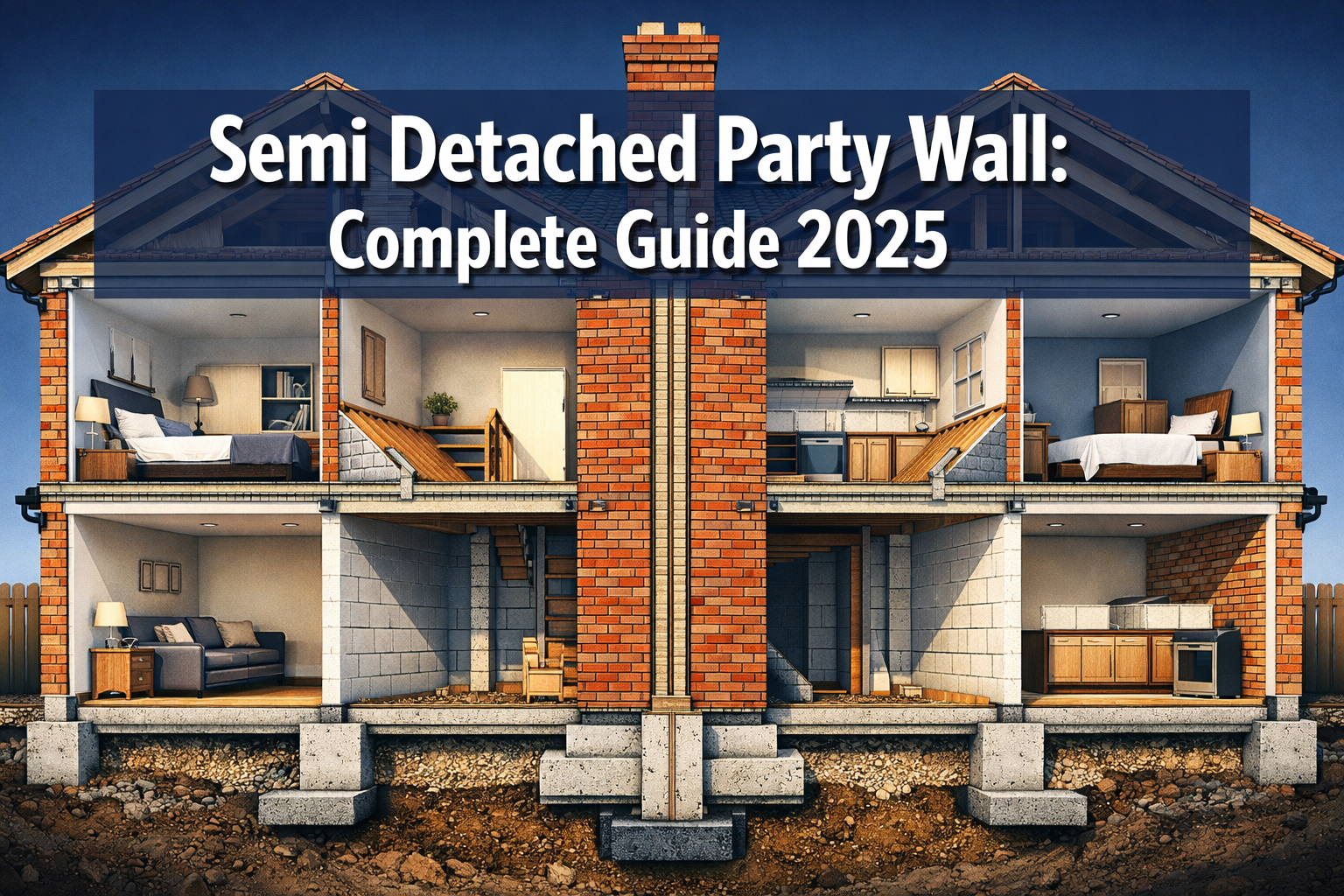
Semi Detached Party Wall: The Complete Guide for Property Owners in 2025
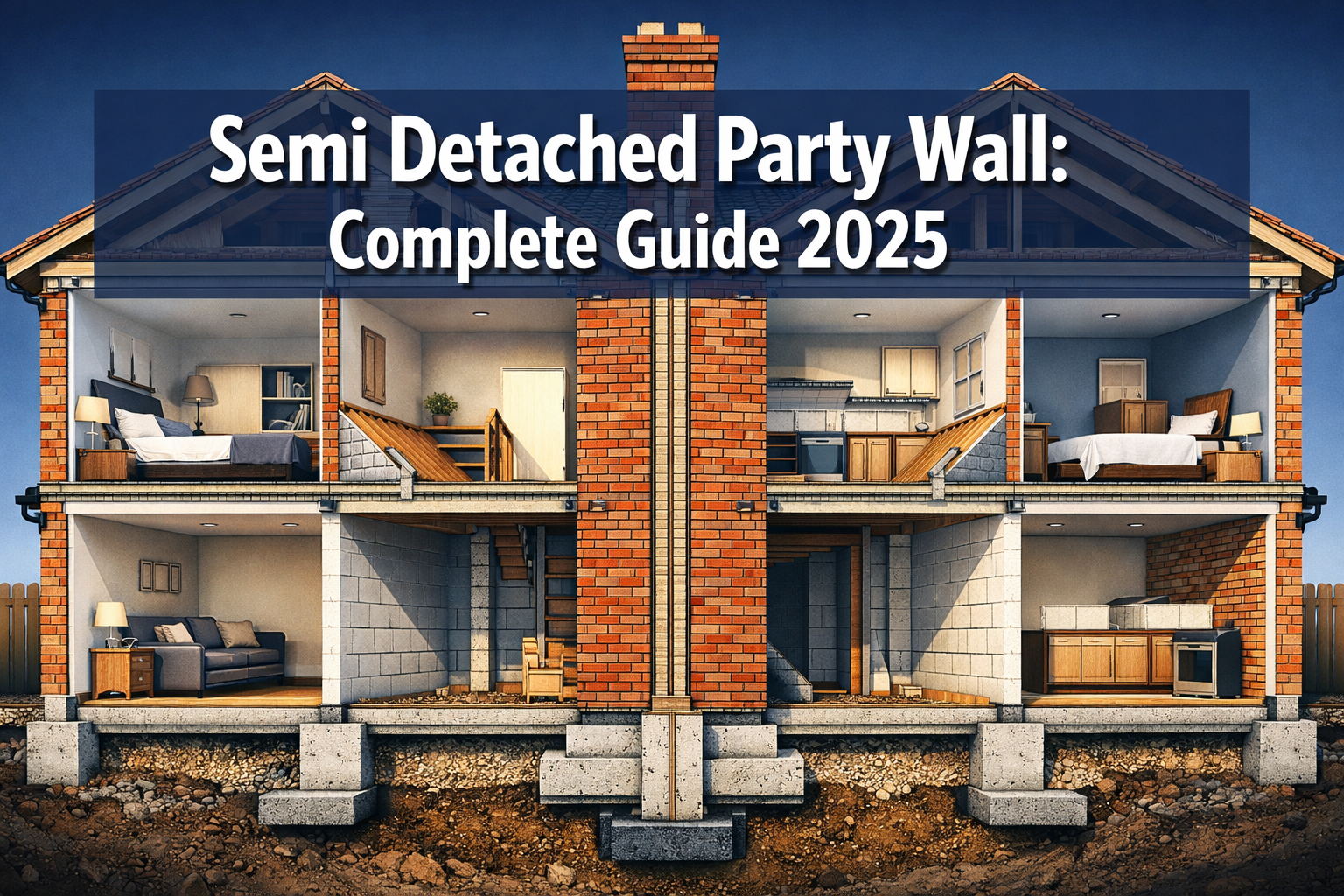
Imagine discovering that the wall you share with your neighbour isn’t quite as straightforward as you thought—especially when you’re planning renovations. For millions of homeowners living in semi-detached properties across the UK, understanding the semi detached party wall is not just important; it’s essential. This shared structure forms the backbone of your property’s legal, structural, and financial relationship with your neighbour, and getting it wrong can lead to costly disputes, construction delays, and even legal action.
Whether you’re planning an extension, converting a loft, or simply maintaining your property, the semi detached party wall comes with specific rights, responsibilities, and legal requirements that every homeowner must understand. This comprehensive guide will walk you through everything you need to know about party walls in semi-detached properties, from the legal framework to practical considerations.
Key Takeaways
- Semi detached party walls are shared structures between two adjoining properties, governed by the Party Wall etc. Act 1996, requiring formal notices for most building work
- Property owners must serve party wall notices 2 months before structural work and 1 month before non-structural alterations affecting the shared wall
- Understanding your rights and responsibilities can prevent costly disputes and maintain positive neighbour relations
- Professional party wall surveyors play a crucial role in resolving disagreements and ensuring compliance with legal requirements
- Proper documentation and communication are essential for any work involving semi detached party walls
What Is a Semi Detached Party Wall? 🏠
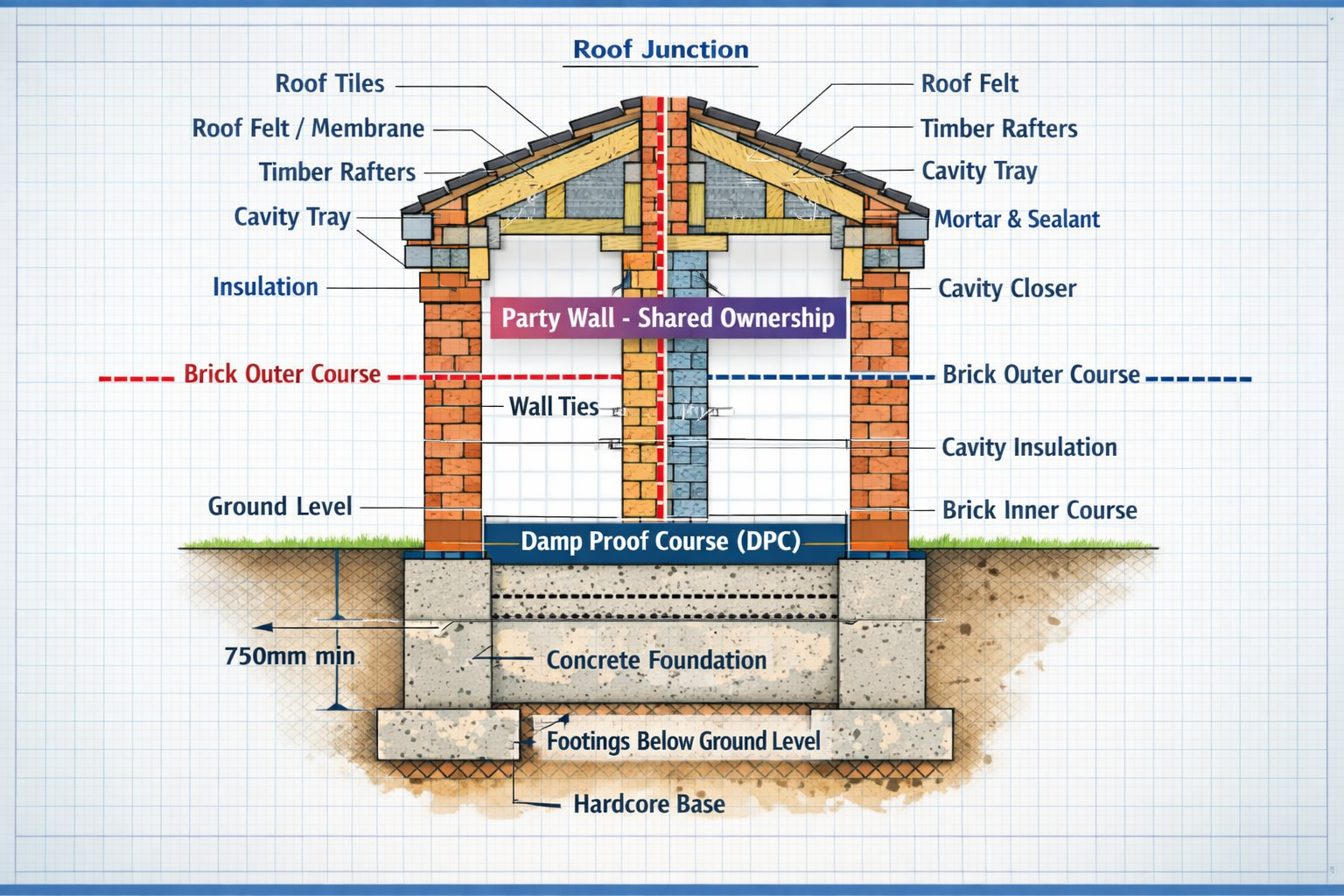
A semi detached party wall is a shared wall structure that separates two properties built side-by-side as a single architectural unit. Unlike terraced houses that share walls on both sides, semi-detached homes have one shared wall with a neighbouring property and three external walls.
Defining Characteristics
The party wall in a semi-detached property typically:
- Extends from the foundations to the roof line, providing structural support to both properties
- Sits on the boundary line between the two properties, with ownership shared equally
- Provides fire separation and sound insulation between the two homes
- Bears the load of both roof structures where they meet
This shared wall is legally classified as a “party structure” under the Party Wall etc. Act 1996, which means both property owners have specific rights and obligations regarding its maintenance, alteration, and repair.
Types of Party Walls in Semi Detached Properties
Not all party walls are identical. In semi-detached homes, you might encounter:
| Type | Description | Common Location |
|---|---|---|
| Type A Party Wall | Wall standing on both properties equally | Main dividing wall |
| Party Fence Wall | Wall on boundary used for separation only | Garden boundaries |
| Party Structure | Floor or other structure separating buildings | Rare in semi-detached |
Understanding which type of party wall you have is crucial when planning any building work. Professional surveyors can help identify the exact nature of your party wall structure during property assessments.
Legal Framework Governing Semi Detached Party Walls
The Party Wall etc. Act 1996 is the primary legislation governing party walls in England and Wales. This Act provides a framework for preventing and resolving disputes between neighbours when building work affects shared structures.
When Does the Party Wall Act Apply?
The Act applies to semi detached party walls in several scenarios:
✅ Building a new wall on or at the boundary line between properties
✅ Carrying out work to an existing party wall, including:
- Underpinning the foundations
- Raising the wall height
- Cutting into the wall for beam insertions
- Demolishing and rebuilding the wall
✅ Excavating within 3 or 6 metres of a neighbouring building (depending on depth)
✅ Removing chimney breasts that form part of the party wall
Notice Requirements for Semi Detached Party Wall Work
Before commencing any work covered by the Act, property owners must serve formal written notice to their neighbours. The notice periods are:
- Two months for structural work to the party wall
- One month for non-structural work or party fence walls
- One month for excavation work near boundaries
Failure to serve proper notice can result in injunctions, financial penalties, and the requirement to undo completed work—a costly mistake many homeowners make.
Your Rights and Responsibilities as a Semi Detached Property Owner
Understanding your legal position regarding the semi detached party wall helps prevent conflicts and ensures smooth project completion.
Rights of the Building Owner
If you’re planning work on your property (the “building owner”), you have the right to:
- Carry out necessary repairs to the party wall, even if it means accessing your neighbour’s property
- Underpin the party wall if required for your building work
- Insert beams or timbers into the party wall for structural support
- Raise the height of the party wall (with proper notice)
- Demolish and rebuild the party wall if structurally necessary
These rights come with the responsibility to minimize inconvenience, prevent unnecessary damage, and compensate your neighbour for any loss or damage caused by the work.
Rights of the Adjoining Owner
As the neighbour receiving notice (the “adjoining owner”), you have the right to:
- Receive proper written notice before work commences
- Request a party wall award setting out the work details and protections
- Appoint your own surveyor (at the building owner’s expense in most cases)
- Have a schedule of condition prepared to document your property’s state before work begins
- Receive compensation for any damage or loss of amenity
Important Note: You cannot unreasonably prevent your neighbour from carrying out work they have a legal right to do, but you can ensure proper procedures are followed and your interests are protected.
Common Building Projects Affecting Semi Detached Party Walls
Many home improvement projects trigger party wall requirements. Here are the most common scenarios:
1. Loft Conversions 🏗️
Loft conversions frequently affect semi detached party walls, particularly when:
- Steel beams need to be inserted into the party wall for support
- The party wall needs to be raised to create adequate headroom
- Fire-resistant plasterboard must be installed on the party wall face
- Structural alterations affect the shared roof structure
2. Extensions and Additions
Side extensions, rear extensions, and conservatories may require:
- New foundations dug close to the neighbour’s property
- Underpinning of the existing party wall
- New walls built up to or on the boundary line
- Modifications to existing party wall structures
3. Basement Conversions
Basement excavations are particularly complex for semi detached party walls because they often require:
- Underpinning of the party wall foundations
- Excavation within 3-6 metres of the neighbouring property
- Temporary support structures during construction
- Careful monitoring to prevent settlement or movement
Understanding the costs associated with party wall surveyors helps budget accurately for these projects.
4. Structural Repairs and Maintenance
Even routine maintenance can trigger party wall requirements:
- Repointing or rebuilding sections of the party wall
- Replacing or removing chimney stacks on the party wall
- Installing or replacing damp proof courses
- Repairing structural cracks or movement
The Party Wall Notice Process: Step-by-Step Guide
Navigating the party wall process doesn’t have to be complicated. Follow these steps for compliance:
Step 1: Determine If Notice Is Required
Review your planned work against the Party Wall Act criteria. When in doubt, consult a qualified surveyor or building professional who understands party wall legislation.
Step 2: Prepare and Serve the Notice
The notice must include:
- Your name and address
- The neighbour’s name and address
- Details of the proposed work with drawings
- The proposed start date
- Your contact information
Serve the notice by hand delivery, recorded delivery, or through a party wall surveyor.
Step 3: Await the Response
Your neighbour has 14 days to respond with either:
- Consent – work can proceed without a party wall award
- Dissent – triggers the appointment of surveyors
- No response – deemed dissent after 14 days
Step 4: Appoint Surveyors (If Required)
If your neighbour dissents or doesn’t respond, you have three options:
- Agreed Surveyor – both parties use one impartial surveyor
- Two Surveyors – each party appoints their own surveyor
- Three Surveyors – two party-appointed surveyors plus a third surveyor
The surveyor(s) will prepare a party wall award documenting the work, protections, and conditions.
Step 5: Complete the Work in Accordance with the Award
Once the award is issued, you must:
- Follow all conditions specified in the award
- Allow access for condition surveys if required
- Complete work within the timeframe specified
- Address any damage or issues promptly
Costs Associated with Semi Detached Party Wall Procedures 💰
Understanding the financial implications of party wall work helps with project budgeting:
Surveyor Fees
Party wall surveyor fees typically range from:
- £700-£1,200 for straightforward cases with an agreed surveyor
- £1,500-£3,000 for cases requiring two surveyors
- £3,000-£5,000+ for complex projects or disputed cases
The building owner (person doing the work) usually pays for both surveyors’ fees, even when the neighbour appoints their own surveyor.
Additional Costs
Beyond surveyor fees, budget for:
| Cost Item | Typical Range |
|---|---|
| Schedule of Condition | £300-£800 |
| Legal Fees (if disputes arise) | £1,000-£5,000+ |
| Remedial Work | Variable |
| Insurance Excess | £250-£1,000 |
Cost-Saving Tips
- Communicate early with neighbours to build goodwill
- Use an agreed surveyor when possible to reduce fees
- Provide detailed plans to minimize surveyor time
- Address concerns proactively to prevent disputes
For detailed information about party wall costs in your area, review London-specific pricing guides.
Common Disputes and How to Resolve Them
Even with proper procedures, disputes can arise regarding semi detached party walls. Here are common issues and solutions:
Noise and Disruption Complaints
Issue: Construction noise, dust, and disruption affecting the neighbour’s enjoyment of their property.
Solution:
- Agree on working hours in advance (typically 8am-6pm weekdays)
- Provide regular updates on project progress
- Use dust suppression measures
- Offer temporary accommodation for particularly disruptive phases
Damage to Neighbouring Property
Issue: Cracks, movement, or other damage appearing in the adjoining property during work.
Solution:
- Schedule of condition survey before work begins
- Regular monitoring during construction
- Prompt repairs to any damage caused
- Photographic evidence and documentation
Boundary Disputes
Issue: Disagreement about the exact location of the party wall or boundary line.
Solution:
- Review title deeds and Land Registry documents
- Commission a boundary survey from a chartered surveyor
- Consider mediation before legal action
- Consult boundary dispute specialists
Access Refusal
Issue: Neighbour refusing access for necessary work or surveys.
Solution:
- Serve formal access notice under the Party Wall Act
- Explain the legal right to reasonable access
- Offer flexible scheduling to accommodate the neighbour
- Use surveyors to negotiate access arrangements
Professional Tip: Most party wall disputes stem from poor communication rather than genuine legal disagreements. Investing time in neighbour relations often prevents costly legal battles.
Structural Considerations for Semi Detached Party Walls
Understanding the structural aspects of your semi detached party wall ensures safe and compliant building work.
Load-Bearing Capacity
Semi detached party walls typically bear significant loads:
- Roof loads from both properties where they meet
- Floor loads from upper storeys
- Wind loads acting on the structure
- Self-weight of the wall itself
Before undertaking structural alterations, a structural engineer should assess the wall’s capacity and design appropriate support measures.
Foundation Depth and Condition
Party wall foundations must:
- Extend below the frost line (minimum 1 metre in the UK)
- Be adequate for the soil conditions
- Support the combined loads from both properties
- Be inspected before underpinning or nearby excavation
Fire Resistance Requirements
Building Regulations require party walls to provide:
- 60 minutes minimum fire resistance for two-storey semi-detached houses
- 30 minutes minimum for single-storey structures
- Proper fire stopping at all junctions and penetrations
- Cavity barriers to prevent fire spread through voids
Sound Insulation Standards
Modern building standards require party walls to achieve:
- 45 dB DnT,w minimum for airborne sound insulation
- 62 dB LnT,w maximum for impact sound (where applicable)
- Proper acoustic detailing at junctions and service penetrations
Older semi-detached properties may not meet current standards, but any major alterations trigger requirements to upgrade to current regulations.
Maintenance and Long-Term Care of Semi Detached Party Walls
Proper maintenance prevents costly repairs and disputes:
Regular Inspection Schedule
Inspect your party wall annually for:
- Cracks or movement indicating structural issues
- Damp patches suggesting water penetration or condensation
- Deteriorating mortar requiring repointing
- Bulging or leaning indicating instability
Shared Maintenance Responsibilities
Both property owners share responsibility for:
- Routine repairs to the party wall structure
- Repointing and weatherproofing
- Replacing failed damp proof courses
- Addressing structural defects
The costs are typically shared equally unless the damage was caused by one party’s actions.
When to Call a Professional
Consult a qualified surveyor if you notice:
- Cracks wider than 5mm or showing progressive movement
- Horizontal cracks at floor or ceiling level
- Stepped cracks following the mortar joints
- Leaning or bulging visible from inside or outside
- Damp problems that don’t respond to basic treatment
Early professional intervention prevents minor issues from becoming major structural problems.
Party Wall Awards: What They Contain and Why They Matter
A party wall award is a legal document prepared by the appointed surveyor(s) that sets out the terms under which building work can proceed.
Key Components of a Party Wall Award
A comprehensive award includes:
- Description of the Work
- Detailed specifications
- Drawings and plans
- Construction methods
- Timeline for completion
- Rights and Responsibilities
- Access requirements
- Working hours
- Noise and dust control measures
- Security provisions
- Protective Measures
- Schedule of condition
- Monitoring requirements
- Temporary support specifications
- Protection for services and finishes
- Financial Provisions
- Surveyor fee allocations
- Security for expenses (if required)
- Compensation arrangements
- Dispute resolution procedures
Enforceability and Compliance
Party wall awards are legally binding documents. Failure to comply can result in:
- Injunctions stopping the work
- Claims for damages
- Court orders requiring compliance
- Additional costs and delays
Challenging a Party Wall Award
If you disagree with an award, you have 14 days to appeal to the County Court. Grounds for appeal include:
- Procedural errors in preparing the award
- Unreasonable conditions or requirements
- Failure to consider relevant factors
- Bias or conflict of interest by the surveyor
Insurance Considerations for Party Wall Work
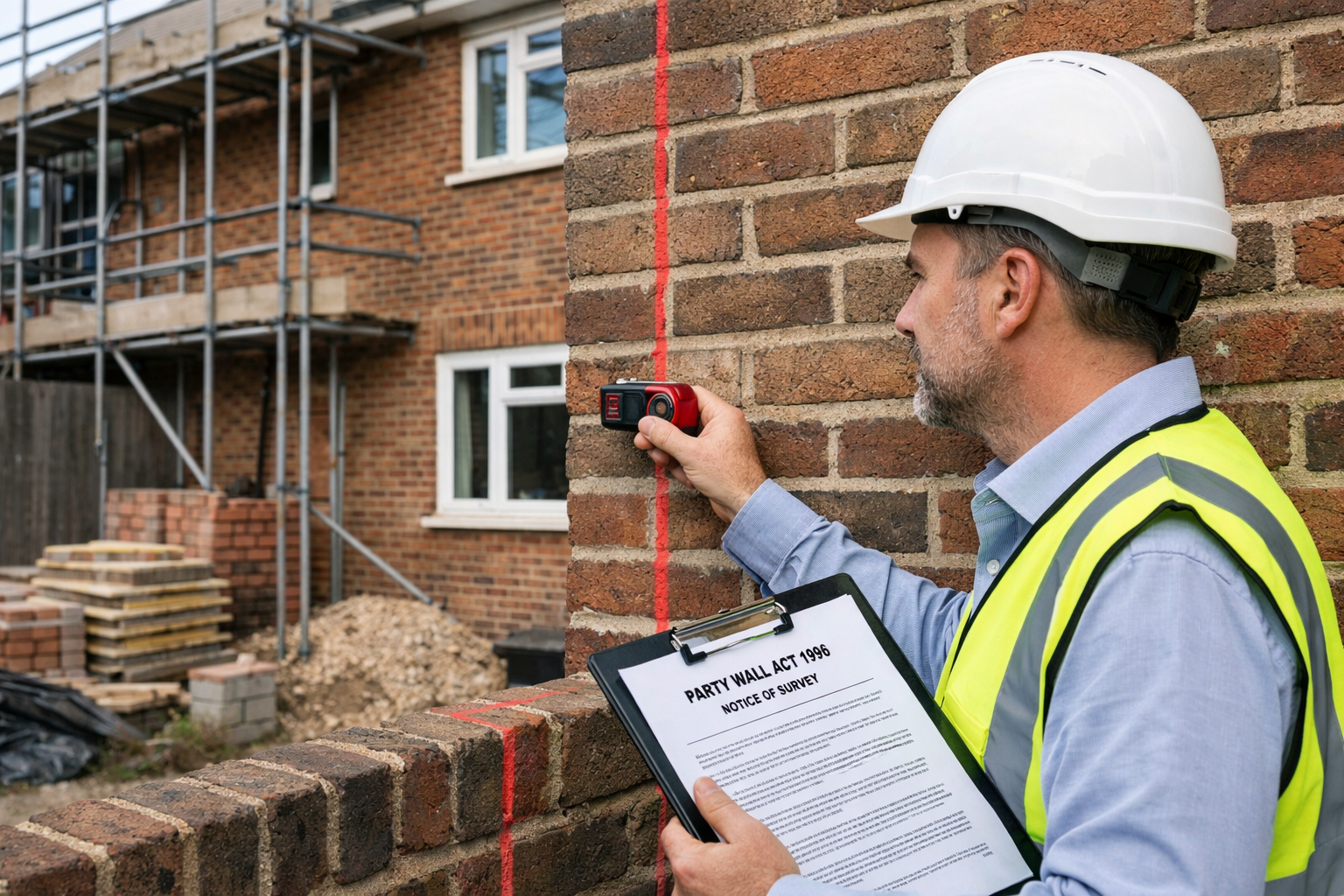
Proper insurance coverage protects all parties during semi detached party wall construction projects.
Essential Insurance Policies
For Building Owners:
- Public Liability Insurance (minimum £5 million coverage)
- Contract Works Insurance covering the project value
- Professional Indemnity Insurance for designers and surveyors
- Employer’s Liability Insurance if employing contractors
For Adjoining Owners:
- Buildings Insurance with adequate coverage limits
- Contents Insurance for possessions at risk
- Loss of Rent Insurance if the property is let
Notifying Your Insurer
Always inform your insurance company before:
- Starting building work affecting party walls
- Receiving party wall notices from neighbours
- Appointing party wall surveyors
- Experiencing damage from neighbouring work
Failure to notify insurers can invalidate coverage when you need it most.
Security for Expenses
In some cases, the adjoining owner’s surveyor may require the building owner to provide:
- Cash deposits held by the surveyor
- Bank guarantees from financial institutions
- Insurance bonds guaranteeing completion
- Parent company guarantees for corporate owners
This protects the adjoining owner if the building owner becomes insolvent or abandons the project.
Choosing the Right Party Wall Surveyor
Selecting an experienced, impartial surveyor is crucial for smooth party wall procedures.
Qualifications to Look For
Choose surveyors with:
- RICS membership (Royal Institution of Chartered Surveyors)
- Specialist party wall qualifications (FPWS, MFPWS)
- Professional indemnity insurance (minimum £1 million)
- Local knowledge of building practices and regulations
- Proven experience with semi-detached properties
Questions to Ask Potential Surveyors
Before appointing a surveyor, ask:
- How many party wall awards have you prepared?
- What is your fee structure and what does it include?
- How long will the process take?
- Have you worked on similar projects in this area?
- Can you provide references from previous clients?
- How do you handle disputes between parties?
The Agreed Surveyor Option
Using a single agreed surveyor offers several advantages:
- Lower costs (only one set of fees)
- Faster process (no need for surveyor coordination)
- Simpler communication (single point of contact)
- Reduced formality (more flexible approach)
However, this only works when both parties trust the surveyor to act impartially.
Regional Variations and Considerations
While the Party Wall Act applies across England and Wales, local factors affect semi detached party wall procedures.
London-Specific Considerations
In London, party wall work faces additional challenges:
- Higher property values increasing financial stakes
- Closer building proximities requiring more careful work
- Conservation area restrictions affecting permitted alterations
- Basement conversions being more common and complex
Working with experienced London surveyors who understand local conditions is essential.
Scotland and Northern Ireland
Different legislation applies in:
- Scotland – common law rather than statutory framework
- Northern Ireland – Access to Neighbouring Land Act (Northern Ireland) 2015
Property owners in these regions should consult local specialists familiar with the applicable legal framework.
Conservation Areas and Listed Buildings
Additional restrictions apply when:
- The property is Grade I, II, or II listed*
- Work is in a designated conservation area
- The building has Article 4 directions removing permitted development rights
Always check with your local planning authority before proceeding with party wall work in these circumstances.
Technology and Modern Party Wall Practices
Modern technology is transforming how professionals manage semi detached party wall procedures.
Digital Documentation
Contemporary party wall work increasingly uses:
- 3D laser scanning for accurate condition surveys
- Photogrammetry creating detailed visual records
- Digital awards with embedded drawings and photos
- Cloud-based document sharing for all parties
Monitoring Technology
Advanced monitoring systems detect movement and damage:
- Crack monitoring gauges tracking movement over time
- Vibration monitors ensuring construction stays within limits
- Tilt sensors detecting wall movement
- Automated alerts notifying surveyors of issues
Virtual Consultations
Since 2020, many party wall processes have moved online:
- Video consultations replacing site visits where appropriate
- Digital notice service via email or online platforms
- Virtual dispute resolution reducing delays and costs
- Online document signing streamlining the award process
Environmental and Sustainability Considerations
Modern party wall work increasingly considers environmental impacts:
Energy Efficiency Improvements
Party wall alterations offer opportunities to:
- Upgrade insulation in cavity walls
- Install acoustic and thermal barriers simultaneously
- Address thermal bridging at junctions
- Improve airtightness of the building envelope
Sustainable Materials
Consider using:
- Recycled or reclaimed materials where appropriate
- Low-carbon alternatives to traditional materials
- Breathable materials that manage moisture naturally
- Locally-sourced materials reducing transportation emissions
Waste Management
Responsible party wall work includes:
- Waste reduction through careful planning
- Material recycling wherever possible
- Proper disposal of hazardous materials
- Site cleanliness minimizing neighbour impact
Case Studies: Real-World Party Wall Scenarios
Learning from actual cases helps understand how party wall procedures work in practice.
Case Study 1: Loft Conversion with Beam Insertion
Scenario: Homeowner planned loft conversion requiring steel beam insertion into party wall.
Challenge: Neighbour concerned about structural damage and noise disruption.
Resolution:
- Comprehensive schedule of condition prepared
- Agreed working hours (9am-5pm weekdays only)
- Regular progress updates provided
- Minor cracks repaired at building owner’s expense
- Project completed successfully with maintained neighbour relations
Key Lesson: Proactive communication and comprehensive documentation prevent disputes.
Case Study 2: Basement Excavation Dispute
Scenario: Major basement excavation requiring underpinning of party wall foundations.
Challenge: Adjoining owner worried about subsidence and property damage.
Resolution:
- Detailed structural engineer’s report commissioned
- Continuous monitoring throughout excavation
- Temporary support installed before underpinning
- Independent inspection by adjoining owner’s surveyor
- No damage occurred; relationship preserved
Key Lesson: Professional expertise and transparent monitoring build trust.
Case Study 3: Boundary Wall Disagreement
Scenario: Dispute over exact location of party wall and ownership responsibilities.
Challenge: Title deeds unclear; both parties claiming different boundary positions.
Resolution:
- Professional boundary survey commissioned
- Historical records researched
- Mediation facilitated by agreed surveyor
- Compromise reached with shared maintenance agreement
- Legal agreement documented and registered
Key Lesson: Expert input and willingness to compromise resolve boundary uncertainties.
For more information on handling boundary disputes effectively, consult experienced professionals early in the process.
Future Trends in Party Wall Legislation and Practice
The party wall landscape continues to evolve:
Potential Legislative Changes
Discussions are ongoing about:
- Modernizing the 1996 Act to reflect current building practices
- Electronic service of notices becoming standard
- Standardized fee structures for surveyor appointments
- Mandatory mediation before formal disputes
Technological Advancement
Emerging technologies likely to impact party wall work:
- AI-powered risk assessment identifying potential issues
- Blockchain documentation creating tamper-proof records
- Augmented reality visualizing proposed work
- Automated compliance checking against building regulations
Climate Change Considerations
Future party wall work will increasingly address:
- Flood resilience in at-risk areas
- Thermal performance meeting net-zero targets
- Sustainable construction methods reducing embodied carbon
- Adaptation measures for extreme weather events
Practical Tips for Homeowners
Essential advice for anyone dealing with semi detached party wall issues:
Before Starting Any Project ✅
- Research whether party wall notice is required
- Budget for surveyor fees and potential delays
- Talk to your neighbour informally first
- Gather all relevant property documents
- Consult professionals early in the planning stage
During the Notice Period
- Serve notices with plenty of time before your planned start date
- Provide clear, detailed information about the work
- Be responsive to neighbour questions and concerns
- Keep all correspondence documented
- Remain professional even if tensions arise
Throughout Construction
- Stick to agreed working hours and conditions
- Maintain site cleanliness and security
- Provide regular updates on progress
- Address issues immediately as they arise
- Document everything with photos and notes
After Completion
- Conduct final inspection with the surveyor
- Address any remedial work promptly
- Obtain completion certificates
- Maintain good neighbour relations
- Keep all documentation for future reference
Frequently Asked Questions About Semi Detached Party Walls
Can I refuse my neighbour’s party wall notice?
You cannot prevent work your neighbour has a legal right to do, but you can ensure proper procedures are followed and your interests are protected through the surveyor appointment process.
Who pays for party wall surveyors?
The building owner (person doing the work) typically pays for both their own and the adjoining owner’s surveyor, as well as the agreed surveyor if one is appointed.
How long does the party wall process take?
From serving notice to receiving an award typically takes 6-12 weeks, though complex cases may take longer. Plan accordingly when scheduling construction projects.
What happens if I don’t serve a party wall notice?
Failure to serve proper notice can result in injunctions stopping your work, legal action, and requirements to undo completed work at your expense.
Can I do minor work without a party wall notice?
Minor repairs and maintenance that don’t affect the structure typically don’t require notice, but when in doubt, consult a surveyor to avoid costly mistakes.
What if my neighbour won’t respond to the notice?
After 14 days of no response, this is deemed a dissent, and you can proceed to appoint surveyors to prepare a party wall award.
For additional guidance on property surveys and building work, explore the comprehensive resources available from qualified professionals.
Conclusion: Navigating Semi Detached Party Walls Successfully
Understanding the complexities of semi detached party wall regulations, rights, and responsibilities is essential for any homeowner planning building work or facing notices from neighbours. While the Party Wall etc. Act 1996 provides a robust legal framework, successful outcomes depend on professional expertise, clear communication, and mutual respect between property owners.
The key to managing party wall matters effectively lies in:
Early Planning – Research requirements and consult professionals before committing to project timelines or budgets.
Professional Support – Engage qualified, experienced party wall surveyors who understand both the legal framework and practical construction issues.
Proactive Communication – Build positive neighbour relations through transparency, responsiveness, and consideration.
Comprehensive Documentation – Maintain detailed records of all notices, correspondence, surveys, and agreements.
Compliance and Cooperation – Follow legal requirements and award conditions while remaining flexible and reasonable.
Your Next Steps
If you’re planning work affecting a semi detached party wall or have received a party wall notice:
- Assess your situation – Determine whether party wall procedures apply to your project
- Consult professionals – Speak with qualified surveyors who can guide you through the process
- Communicate with neighbours – Open dialogue early to build understanding and goodwill
- Budget appropriately – Include party wall costs in your project budget from the outset
- Follow procedures – Serve proper notices and comply with all legal requirements
- Document everything – Keep comprehensive records throughout the process
Whether you’re the building owner undertaking construction or the adjoining owner receiving notice, understanding your rights and responsibilities ensures the process runs smoothly, relationships remain positive, and your property interests are protected.
The semi detached party wall may seem like a complex legal and technical challenge, but with proper knowledge, professional support, and good communication, it becomes a manageable aspect of property ownership and improvement. By following the guidance in this comprehensive guide, you’ll be well-equipped to navigate party wall matters confidently and successfully in 2025 and beyond.
For personalized advice on your specific party wall situation, contact experienced chartered surveyors who can provide expert guidance tailored to your property and circumstances.