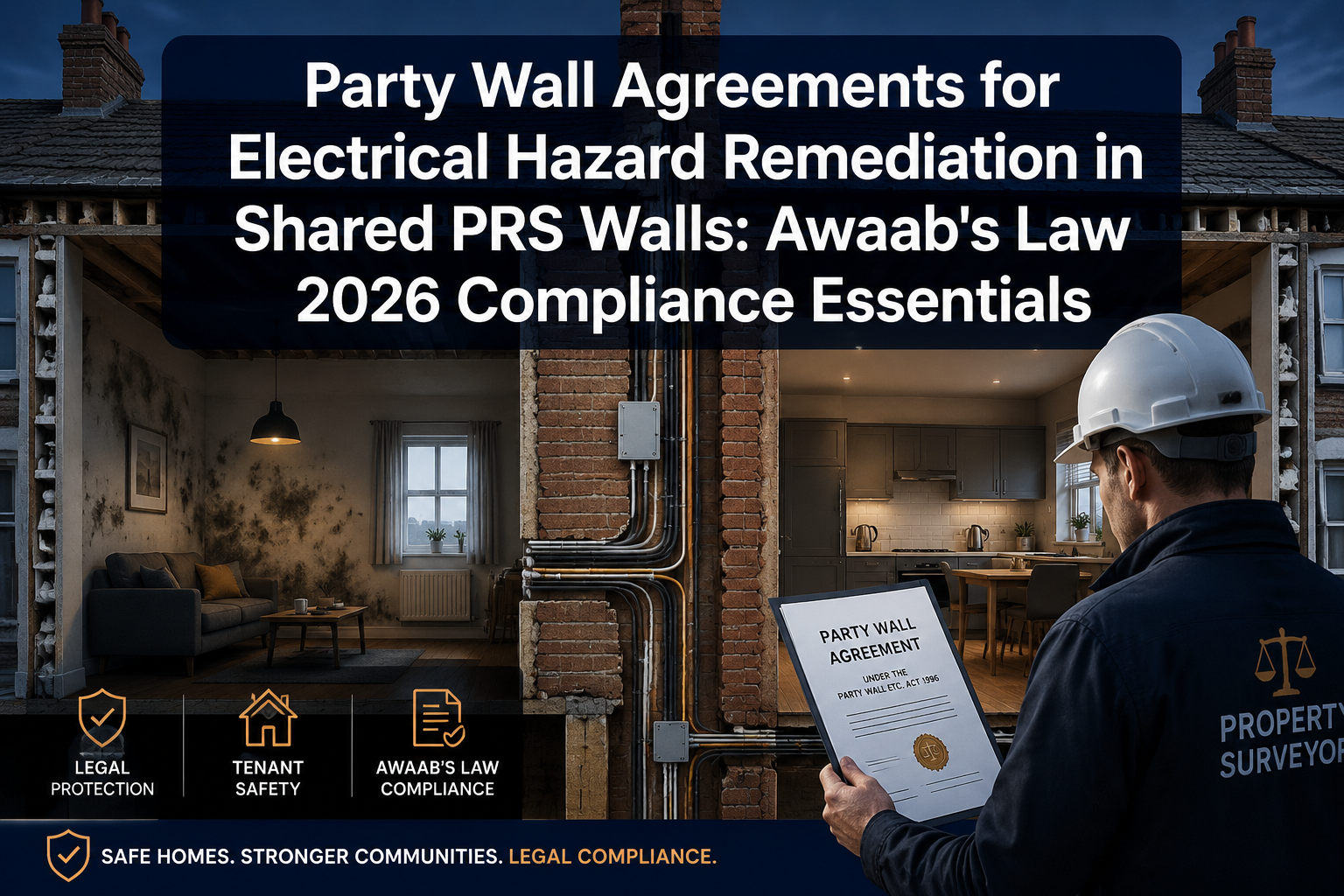
Electrical faults in shared party walls cause more than 20,000 house fires in England every year, yet the legal framework governing who fixes them — and how fast — has never been more complex or more consequential than it is right now. From October 2026, Phase 2 of Awaab's Law extends mandatory remediation obligations to electrical hazards in private rented sector (PRS) properties, including those running through or adjacent to shared party walls. For landlords, surveyors, and adjoining owners alike, understanding how Party Wall Agreements for Electrical Hazard Remediation in Shared PRS Walls: Awaab's Law 2026 Compliance Essentials intersect is no longer optional — it is a legal necessity.
This guide walks through every step of drafting a party wall award that addresses electrical defects in adjoining rental properties, ensuring all parties meet the extended Awaab's standards before enforcement action begins.
Key Takeaways
- From October 2026, Awaab's Law Phase 2 requires private landlords to address electrical hazards in PRS properties — including those in shared party walls — within strict statutory timeframes [2].
- Party wall awards can and should be drafted to incorporate Awaab's Law remediation obligations, creating a binding framework for both adjoining owners.
- Penalties for non-compliance reach £40,000 for repeat breaches, making proactive legal drafting essential [3].
- A qualified party wall surveyor is central to identifying electrical defects, scoping remediation works, and producing an enforceable award.
- The three-step Awaab's process — investigation, reporting, and remediation — must be embedded into any party wall award covering electrical hazard works [1].
Understanding the Legal Landscape: Party Wall Act 1996 Meets Awaab's Law 2026
The Party Wall etc. Act 1996 governs works to shared walls between adjoining properties. It provides a structured dispute resolution process, culminating in a party wall award — a legally binding document that sets out the scope, method, and conditions of any proposed works. For a detailed breakdown of how the Act applies, the Party Wall Act 1996 guide by a party wall agreement surveyor is an authoritative starting point.
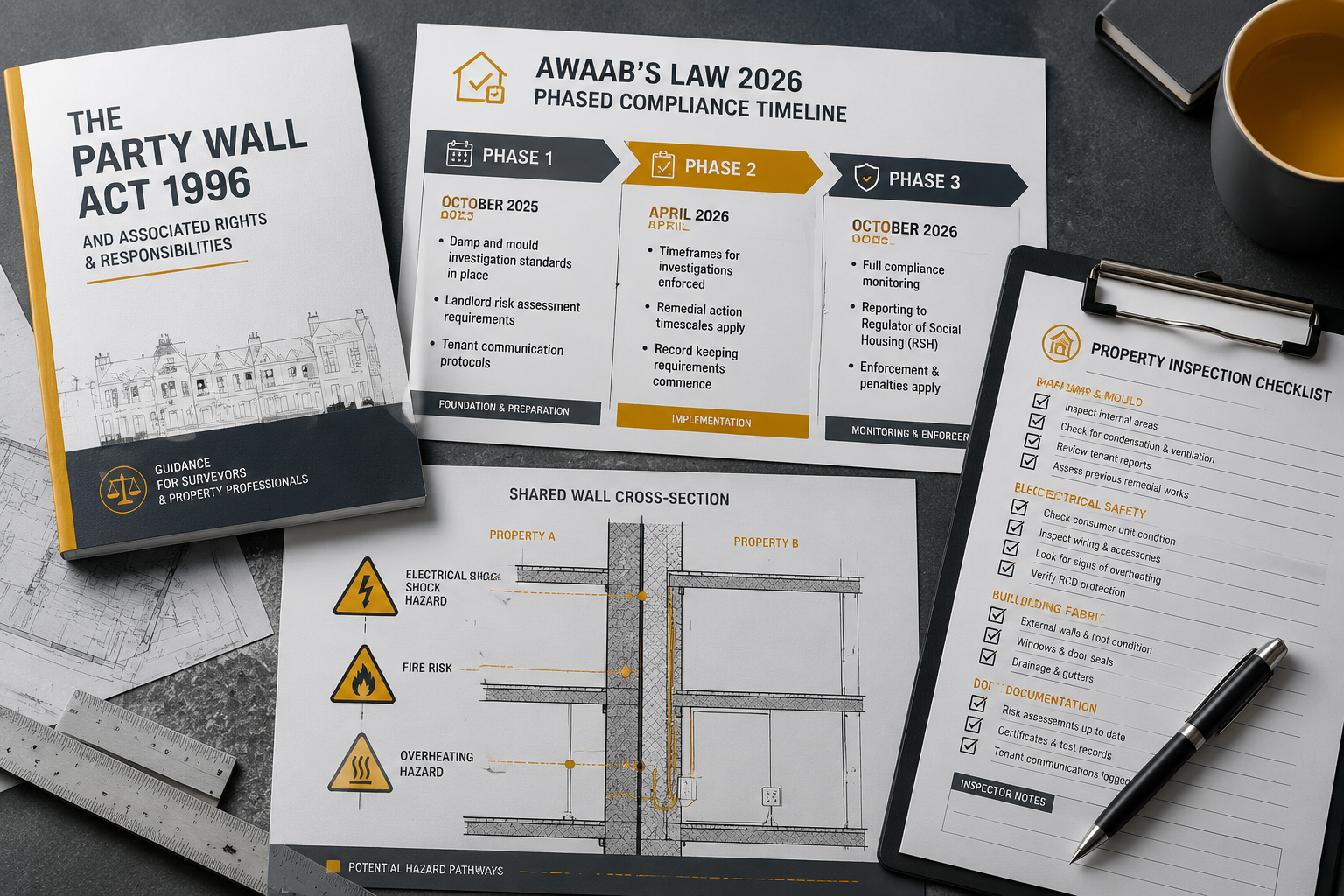
Awaab's Law, named after two-year-old Awaab Ishak who died from prolonged mould exposure in social housing, was originally introduced under the Social Housing (Regulation) Act 2023. Its extension to the PRS under the Renters' Rights Act 2025 took effect on 1 May 2026 [1]. The phased rollout is structured as follows:
| Phase | Timeline | Hazards Covered |
|---|---|---|
| Phase 1 | October 2025 | Emergency hazards; significant damp and mould |
| Phase 2 | October 2026 | Additional significant hazards including electrical issues |
| Phase 3 | 2027 | Full set of HHSRS hazards presenting significant risks |
The Housing Health and Safety Rating System (HHSRS) classifies electrical hazards as Category 1 or Category 2 risks depending on severity. From October 2026, any electrical defect in a PRS property that meets the threshold for a "significant hazard" under HHSRS triggers Awaab's mandatory response obligations [2].
Where party walls complicate matters: Electrical wiring, consumer units, and conduits frequently run through or along shared party walls in terraced and semi-detached properties. When a defect exists within or adjacent to that shared structure, remediation cannot proceed without the adjoining owner's consent — or, failing consent, a formal party wall award. This creates a direct collision between the speed demanded by Awaab's Law and the procedural timelines of the Party Wall Act.
The Three-Step Awaab's Process and How It Maps to Party Wall Procedures
Awaab's Law imposes a clear three-step obligation on landlords once a tenant reports a potential housing hazard [1]:
Step 1 — Investigation
- Emergency hazards: investigation must begin within 24 hours.
- Significant hazards: investigation must begin within 10 working days.
Step 2 — Written Report
- A written summary of findings must be provided to the tenant within three working days of completing the investigation.
Step 3 — Remediation
- If a significant hazard is confirmed, safety work must commence within five working days.
For electrical hazards in shared party walls, this timeline creates an immediate problem. Serving a party wall notice alone typically takes 14 days before a building owner can proceed with works — and that assumes the adjoining owner consents promptly. If the adjoining owner dissents, the appointment of surveyors and production of an award can take weeks or months.
The solution lies in proactive drafting. Landlords and their surveyors should not wait for a tenant report to begin the party wall process. Where electrical infrastructure is known to run through shared walls — particularly in older PRS stock — serving notice and securing an award in advance of any reported defect is the most defensible strategy.
For landlords seeking professional guidance on this process, working with an experienced party wall agreement surveyor in London is strongly recommended.
Step-by-Step Guide to Drafting a Party Wall Award for Electrical Hazard Remediation
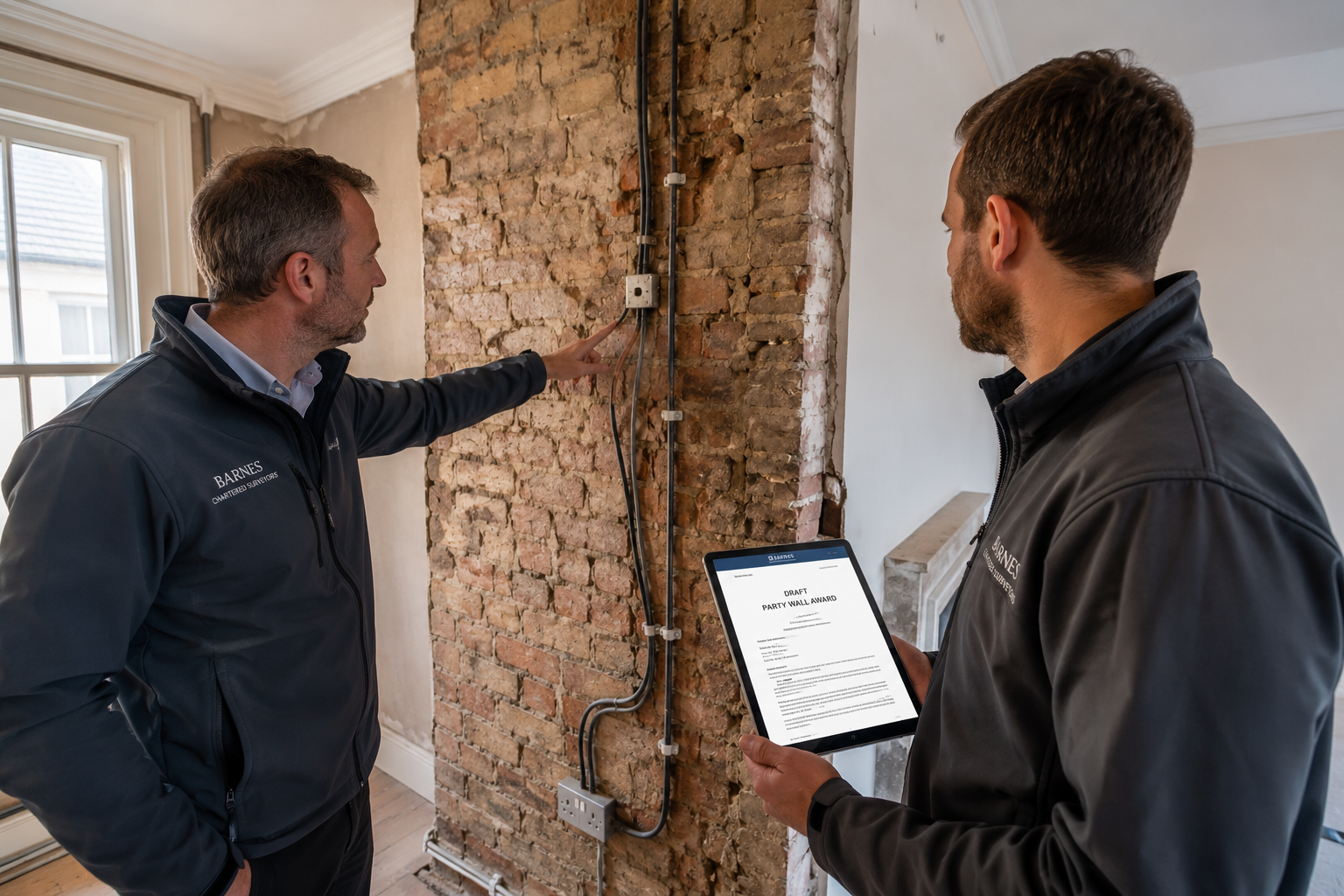
Drafting a party wall award that satisfies both the Party Wall Act 1996 and Awaab's Law 2026 compliance requirements demands precision. The following steps outline best practice for Party Wall Agreements for Electrical Hazard Remediation in Shared PRS Walls: Awaab's Law 2026 Compliance Essentials.
Step 1: Identify the Nature and Location of the Electrical Hazard
Before any notice is served, a thorough inspection of the shared wall is essential. Building surveyors play a central role here. They are responsible for identifying visible electrical defects — deteriorating insulation, overloaded circuits, outdated wiring systems such as rubber-insulated or aluminium wiring — and recommending further specialist assessments where necessary [4].
Key questions to answer at this stage:
- Is the defective wiring contained within the party wall structure, or does it only pass through it?
- Which property's electrical system is the source of the hazard?
- Does remediation require physical alteration of the shared wall (cutting, chasing, or re-routing)?
- Will works affect the structural integrity of the party wall?
A specific defect survey can provide a focused assessment of the electrical issue before formal party wall procedures begin, saving time and reducing the risk of disputes later.
Step 2: Serve the Correct Party Wall Notice
Under the Party Wall Act 1996, the type of notice served depends on the nature of the works:
- Section 2 Notice (Party Structure Notice): Required when works involve cutting into, exposing, or altering the party wall itself — most likely for re-routing electrical conduits or replacing wiring embedded in the shared structure.
- Section 6 Notice: Required if excavation near the boundary is involved, which is less common for electrical works but may apply in some basement or underpinning scenarios.
The notice must include:
- A description of the proposed electrical remediation works
- The proposed start date (no earlier than two months after the notice for Section 2, or one month for Section 3)
- Plans and sections showing the location and extent of works
Important: Given Awaab's Law's tight remediation timeframes, landlords should serve notice at the earliest possible opportunity — ideally during or immediately after the investigation phase, not after the written report has been issued to the tenant.
For more on the notice process, the party wall notice guidance provides useful context.
Step 3: Manage the Adjoining Owner's Response
The adjoining owner has 14 days to respond to the notice. Three outcomes are possible:
- Consent: Works can proceed on the agreed terms. A simple letter of consent is sufficient, though a written agreement is always preferable.
- Dissent with agreed surveyor: Both parties appoint a single agreed surveyor to produce the award.
- Dissent with separate surveyors: Each party appoints their own surveyor; the two surveyors then appoint a third surveyor in case of disagreement.
Where Awaab's Law is engaged, landlords should communicate the statutory urgency to the adjoining owner clearly and in writing. Local authorities have enhanced enforcement powers under the extended legislation [3], and demonstrating good faith efforts to resolve the matter quickly will be important if enforcement action is later considered.
Step 4: Draft the Party Wall Award — Core Clauses for Electrical Remediation
The award is the central document. For electrical hazard remediation in shared PRS walls, it must address the following:
Scope of Works
Define precisely which electrical elements are to be remediated — for example, replacement of rubber-insulated wiring in the party wall cavity, installation of new conduit, or relocation of a consumer unit. Vague descriptions lead to disputes.
Method of Works
Specify how the wall will be opened, the materials to be used, and the standard of reinstatement. Reference relevant British Standards (BS 7671 for electrical installations) and Building Regulations Part P.
Awaab's Law Compliance Clause
This is a critical addition for 2026 compliance. The award should include an explicit clause confirming that works are being carried out to discharge the building owner's obligations under Awaab's Law as extended by the Renters' Rights Act 2025, and that the remediation timetable aligns with the statutory requirements [1][2].
Access Rights
Define when and how the building owner's contractors may access the adjoining property, including notice periods for access (typically not less than 14 days except in genuine emergencies).
Security for Expenses
The building owner may be required to provide security for the adjoining owner's potential costs before works begin.
Condition Schedule
A photographic and written record of the adjoining property's condition before works commence protects both parties and is standard practice.
Completion and Reinstatement
Set out the standard to which the wall must be reinstated, including plastering, decoration, and any structural repairs.
Step 5: Coordinate with Electrical Specialists
A party wall surveyor is not an electrical engineer. Once the award is in place, a qualified electrician — ideally registered with NICEIC or NAPIT — must carry out the actual remediation works. The surveyor's role is to oversee the process, ensure works comply with the award, and certify completion.
Upon completion, an Electrical Installation Condition Report (EICR) should be obtained and provided to the tenant, fulfilling both the Awaab's written reporting obligation and the landlord's existing duty under the Electrical Safety Standards in the Private Rented Sector (England) Regulations 2020.
Penalties, Enforcement, and Risk Management for PRS Landlords
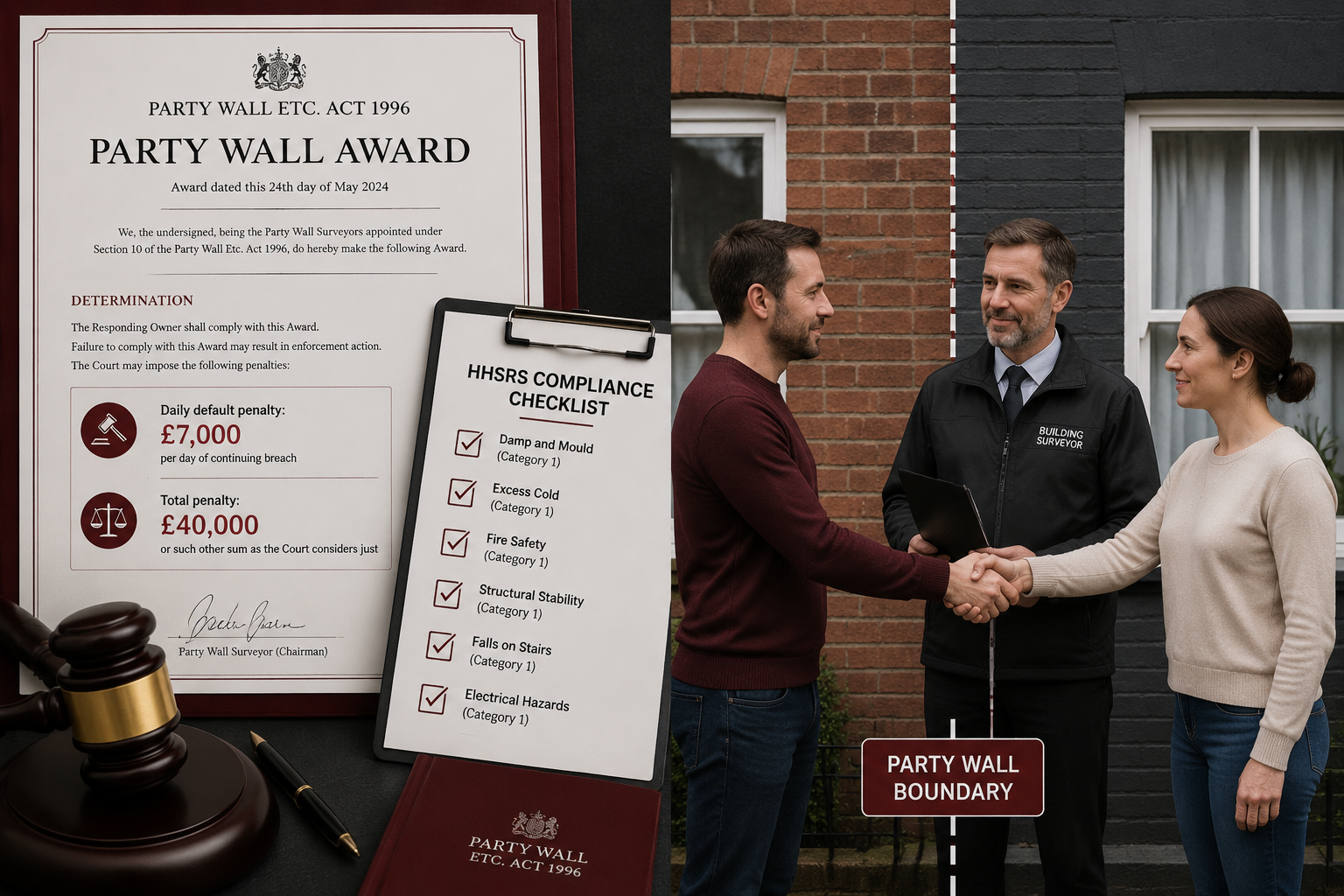
Non-compliance with Awaab's Law carries serious financial consequences. Fines reach £7,000 for a first offence and £40,000 for repeat breaches [3]. Local authorities have been given enhanced powers to inspect, enforce, and prosecute. These figures make the cost of proactive compliance — including professional surveyor fees and remediation works — look modest by comparison.
Key risk factors for PRS landlords with shared party walls:
- Older housing stock (pre-1970) is disproportionately likely to contain outdated wiring within shared wall structures.
- Tenants in PRS properties now have a clear statutory right to report hazards and receive a written response within defined timeframes [6].
- Failure to commence remediation within five working days of confirming a significant electrical hazard is a direct breach of Awaab's Law, regardless of any ongoing party wall dispute [1].
"The extension of Awaab's Law to the private rented sector means that landlords can no longer treat electrical hazards as a low-priority maintenance issue. The law now demands the same urgency applied to fire and structural risks." [4]
Practical risk mitigation steps:
- Commission a stock condition survey across all PRS properties to identify shared wall electrical risks before tenant reports trigger the Awaab's clock.
- Serve party wall notices proactively where electrical infrastructure in shared walls is known to be aging or non-compliant.
- Maintain a documented record of all tenant reports, investigation dates, written responses, and remediation commencement dates.
- Engage a party wall surveyor with experience in Awaab's Law compliance to draft awards that are fit for purpose in 2026.
For landlords managing properties across London, specialist surveyors are available across a wide range of locations. Those in south London can access support from Merton property surveyors, while those in east London may find Lewisham property surveyors well-placed to assist.
Common Pitfalls When Combining Party Wall and Awaab's Obligations
Several recurring errors undermine compliance when landlords and surveyors attempt to navigate both frameworks simultaneously.
Pitfall 1: Treating the party wall process as a reason to delay Awaab's remediation
The Party Wall Act does not suspend Awaab's Law obligations. If a significant electrical hazard is confirmed, the landlord must commence works within five working days — even if the party wall process is ongoing. In practice, this may mean beginning works on the parts of the electrical system that do not require party wall consent while the award is being finalised.
Pitfall 2: Failing to notify the adjoining owner of Awaab's Law urgency
Adjoining owners who are not informed of the statutory context may assume standard commercial timelines apply. A clear written explanation of the legal position, sent alongside the party wall notice, reduces the risk of unnecessary delay and strengthens the landlord's position if enforcement action follows.
Pitfall 3: Inadequate scope in the award
Awards that describe works in vague terms — "electrical repairs as necessary" — create disputes about what was authorised. Every element of the remediation should be specified, including the make and model of replacement components where relevant.
Pitfall 4: No Awaab's compliance clause in the award
An award that makes no reference to Awaab's Law provides no protection if the landlord is later challenged on whether works were carried out in accordance with statutory obligations. Explicit reference to the Renters' Rights Act 2025 and the applicable HHSRS hazard category should be standard in all awards drafted from 2026 onwards [2].
Pitfall 5: Overlooking the written reporting obligation
Even where works are carried out promptly, failure to provide the tenant with a written summary of findings within three working days of completing the investigation is itself a breach of Awaab's Law [1]. This administrative step must be built into the landlord's workflow, not treated as an afterthought.
For further guidance on the broader legal requirements governing boundary and shared wall structures, the legal requirements for boundary walls resource provides useful supplementary context.
Conclusion: Actionable Next Steps for Landlords and Surveyors
The convergence of Party Wall Agreements for Electrical Hazard Remediation in Shared PRS Walls: Awaab's Law 2026 Compliance Essentials represents one of the most significant compliance challenges facing the private rented sector this year. The good news is that the framework for managing it is clear, provided landlords and their advisers act early and systematically.
Immediate actions to take:
- Audit all PRS properties with shared party walls for electrical infrastructure age and condition — do not wait for a tenant report.
- Serve party wall notices now for any property where electrical remediation in a shared wall is foreseeable within the next 12 months.
- Engage a qualified party wall surveyor to draft awards that explicitly incorporate Awaab's Law compliance clauses, Awaab's investigation and remediation timetables, and clear scope of electrical works.
- Establish an internal reporting workflow that captures tenant hazard reports, investigation start dates, written report dates, and remediation commencement dates in real time.
- Obtain EICRs upon completion of all electrical remediation works and provide copies to tenants promptly.
- Seek expert party wall advice before any dispute escalates — early professional involvement consistently reduces costs and delays.
The penalties for inaction are severe. The tools for compliance are available. For landlords and surveyors navigating this intersection of property law and housing safety regulation in 2026, the time to act is now.
References
[1] Awaabs Law Landlords 2026 – https://letsafeuk.co.uk/awaabs-law-landlords-2026?utm_source=openai
[2] Awaabs Law Guidance – https://www.npta.org.uk/awaabs-law-guidance/?utm_source=openai
[3] landlord-ready – https://www.landlord-ready.com/?utm_source=openai
[4] Awaabs Law 2026 Extensions Building Surveyors Guide To Assessing Excess Cold Fire And Electrical Hazards In Prs Properties – https://www.canterburysurveyors.com/blog/awaabs-law-2026-extensions-building-surveyors-guide-to-assessing-excess-cold-fire-and-electrical-hazards-in-prs-properties/?utm_source=openai
[6] How Does Awaabs Law Protect My Rights As A Social Housing Tenant – https://www.hja.net/expert-comments/opinion/housing-law/how-does-awaabs-law-protect-my-rights-as-a-social-housing-tenant/?utm_source=openai