


From 1 May 2026, every assured shorthold tenancy in England automatically converted to an assured periodic tenancy, and the Section 21 'no-fault' eviction route closed permanently. That single date has fundamentally altered the risk profile of every letting in England — and it has made the quality of pre-tenancy documentation more consequential than at any point in the modern private rented sector's history.
The Renters' Rights Act 2026: how stronger tenant protections will change pre-tenancy reports, inspections and evidence for possession claims is not an abstract legal question. It is a practical challenge that landlords, letting agents and surveyors are already navigating. Without a watertight Section 21 backstop, the only route to repossession is through the courts on specific statutory grounds — and courts demand evidence. That evidence starts before the tenant moves in.
Key Takeaways
- Section 21 'no-fault' evictions were abolished from May 2026; all possession claims must now cite a specific statutory ground under Section 8.
- Pre-tenancy condition reports and professional inspections have become critical evidence in possession and deposit dispute proceedings.
- Landlords must provide written tenancy information — including repair obligations and rent terms — before the tenancy begins.
- Rent increases are capped at once per year via the Section 13 process, and tenants can challenge the initial rent within the first six months.
- A Private Rented Sector Database and Landlord Ombudsman Scheme are due in late 2026, increasing compliance scrutiny further.
What the Renters' Rights Act 2026 Actually Changes for Landlords and Agents
The legislation introduces a cluster of reforms that interact with one another. Understanding each one separately, and then how they combine, is essential for anyone managing residential lettings in 2026.
Abolition of Section 21 and the Shift to Section 8
The most discussed change is the abolition of the 'no-fault' eviction. Landlords can no longer serve a Section 21 notice to recover possession without giving a reason. Every possession claim must now proceed under Section 8, citing one or more of the expanded statutory grounds — such as significant rent arrears, antisocial behaviour, or the landlord's intention to sell or move into the property. [1]
This matters enormously for documentation. Under the old system, a landlord who found themselves in a difficult tenancy could simply serve a Section 21 notice and wait. That option is gone. Now, every ground must be evidenced. A landlord claiming the property is needed for personal occupation must demonstrate that intention credibly. A landlord citing property damage must show what condition the property was in at the start of the tenancy and what damage has occurred since.
Mandatory Written Tenancy Information
Before a new tenancy begins, landlords must provide written information covering: the landlord's name and address, the property address, the tenancy start date, the rent amount and payment schedule, procedures for ending the tenancy, and the landlord's repair and safety obligations. [1] For tenancies that existed before the Act without a written agreement, this information had to be provided by 31 May 2026.
This requirement dovetails directly with the need for pre-tenancy inspections. A landlord who provides written repair obligations but cannot demonstrate the property's condition at the outset is in a weak position if a dispute arises later.
Rent Controls, Bidding Bans and Anti-Discrimination Rules
Landlords and agents must now advertise a fixed asking rent and are prohibited from accepting bids above that figure. [1] Rent increases are limited to once per year and must follow the Section 13 process, with tenants retaining the right to challenge increases at tribunal. Tenants can also challenge the initial rent within the first six months of the tenancy. [1]
Discrimination against benefit claimants or tenants with children is now explicitly prohibited. [1] These changes affect how landlords screen applicants and what records they keep about their selection decisions.
Pet Ownership and Deposit Implications
Tenants can request permission to keep pets, and landlords may only refuse with a valid reason. Unreasonable refusals can be challenged in court. [1] This has a direct bearing on condition surveys: if a pet is permitted, the pre-tenancy report becomes the baseline against which any pet-related damage is assessed at the end of the tenancy.
How Stronger Tenant Protections Will Change Pre-Tenancy Reports and Inspections
The Renters' Rights Act 2026's impact on how stronger tenant protections will change pre-tenancy reports, inspections and evidence for possession claims is most visible at the start of a tenancy. The pre-tenancy inspection is no longer a courtesy or a best-practice recommendation — it is a legal necessity in practical terms.

Why a Basic Inventory Is No Longer Sufficient
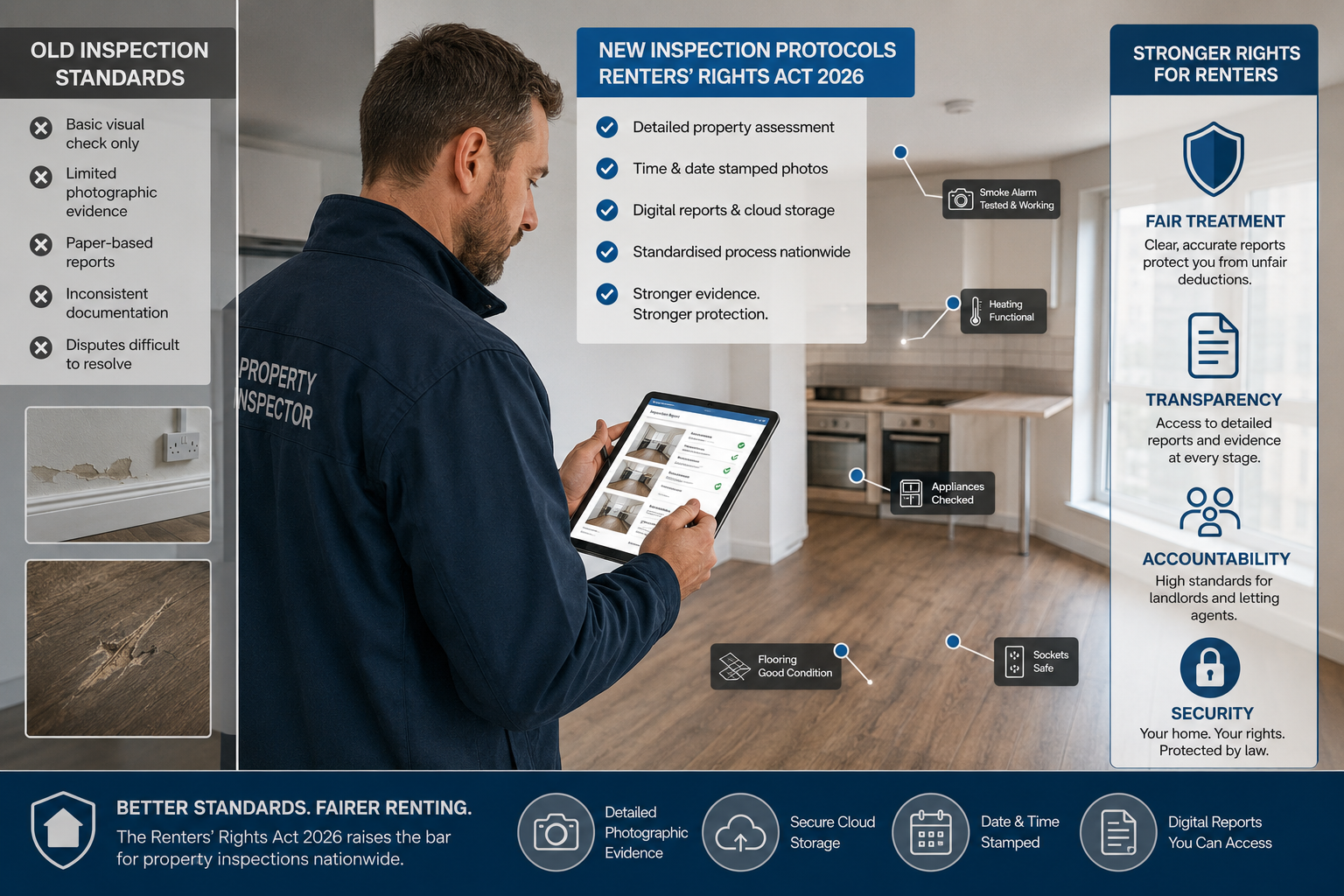
Many landlords have historically relied on a simple photographic inventory prepared by a letting agent. In the post-Section 21 world, that may not be enough. Courts and deposit adjudicators require evidence that is:
- Dated and timestamped — photographs must be demonstrably taken before the tenant's arrival
- Comprehensive — covering structure, fixtures, fittings, walls, ceilings, floors, and any pre-existing defects
- Professionally prepared — ideally by an independent third party with relevant qualifications
- Signed by both parties — or at minimum, served on the tenant with a clear record of delivery
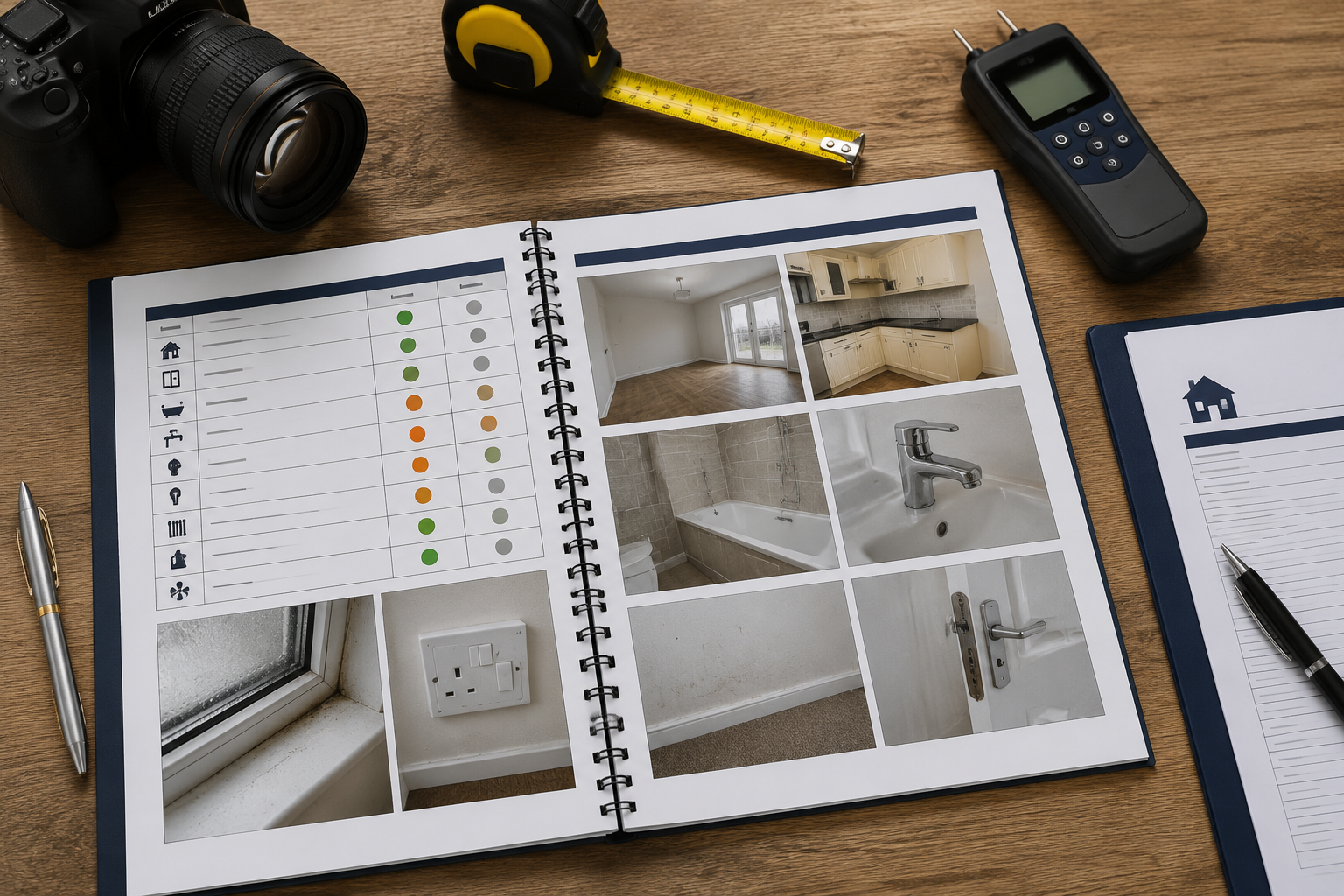
A condition survey report prepared by a chartered surveyor provides a level of detail and credibility that a standard inventory cannot match. It records the condition of the building fabric, identifies pre-existing damp, structural movement, or disrepair, and creates a timestamped baseline that is difficult to dispute.
Damp and Structural Defects: Documenting What Is Already There
One of the most common sources of deposit disputes and possession claims involves allegations of damage or disrepair. Damp is a particular flashpoint. A landlord who cannot prove that a damp patch existed before the tenant moved in may face a repair obligation claim rather than a damage claim.
A professional damp survey report prepared before the tenancy begins records the exact location, extent and likely cause of any moisture issues. This protects landlords from spurious damage claims and protects tenants from being charged for pre-existing problems. Understanding the average cost of damp inspections is a practical starting point for landlords budgeting for compliant pre-tenancy documentation.
The Role of RICS-Qualified Surveyors
A RICS survey provides independent, professionally accredited evidence of a property's condition. In the context of possession proceedings, a court is more likely to give weight to a report prepared by a RICS-qualified surveyor than to photographs taken on a smartphone by the landlord or their agent. The independence and professional accountability of the surveyor adds credibility that is hard to replicate.
For landlords in London, accessing qualified surveyors locally matters. Coverage is available across a wide range of areas — from Wandsworth and Battersea to Merton and beyond — making it practical to commission professional reports regardless of where the rental property is located.
What a Pre-Tenancy Report Should Cover in 2026
| Area | Minimum Documentation | Recommended Standard |
|---|---|---|
| Structural condition | Photographs of walls, ceilings, floors | Chartered surveyor condition report |
| Damp and moisture | Visual inspection notes | Damp meter readings with mapped locations |
| Fixtures and fittings | Inventory list with photos | Condition-rated inventory with timestamps |
| External areas | Photographs of garden, paths, fences | Measured and photographed external survey |
| Pre-existing damage | Noted in inventory | Formally recorded with cause assessment |
| Appliances | Tested and noted as working | Serial numbers, test certificates retained |
Evidence for Possession Claims: What Courts Now Require
The third dimension of the Renters' Rights Act 2026 — how stronger tenant protections will change pre-tenancy reports, inspections and evidence for possession claims — is the evidentiary standard that courts apply when landlords seek possession under Section 8.
Section 8 Grounds and the Evidence They Demand
The expanded Section 8 grounds each carry specific evidentiary requirements. The table below summarises the most commonly used grounds and the documentation landlords will typically need.
| Ground | Basis | Key Evidence Required |
|---|---|---|
| Ground 8 | Two months' rent arrears | Rent account statements, written demands |
| Ground 10 | Some rent arrears | Payment records, correspondence |
| Ground 11 | Persistent late payment | Full payment history |
| Ground 12 | Breach of tenancy | Tenancy agreement, breach evidence |
| Ground 13 | Deterioration of property | Pre-tenancy condition report, current inspection |
| Ground 14 | Antisocial behaviour | Incident logs, police reports, neighbour statements |
| Ground 1A (new) | Landlord intends to sell | Evidence of sale intention, notice periods |
| Ground 1 (new) | Landlord/family to occupy | Statutory declaration, notice periods |
Ground 13 — deterioration of the property — is where pre-tenancy documentation is most directly decisive. A landlord who cannot produce a condition report showing the property's state at the start of the tenancy will struggle to demonstrate that deterioration has occurred, let alone that the tenant caused it.
Notice Periods and Procedural Compliance
Each Section 8 ground carries a specific notice period. Failure to serve the correct notice in the correct form is a procedural defect that can cause a possession claim to fail entirely, regardless of the underlying merits. Landlords must ensure that:
- The correct form of Section 8 notice is used
- The correct notice period for the specific ground is observed
- The notice is served in a manner that can be evidenced (recorded delivery, process server, or in-person with a witness)
- All pre-conditions for the ground are met before the notice is served
Mid-Tenancy Inspections as Ongoing Evidence
Pre-tenancy documentation is the foundation, but it is not the complete picture. Regular mid-tenancy inspections — conducted with proper notice to the tenant and recorded in writing — create a chain of evidence that supports any future possession claim based on property condition. These inspections should be:
- Conducted at reasonable intervals (typically every three to six months)
- Recorded with dated photographs and written notes
- Communicated to the tenant in writing, with any required remediation clearly stated
- Filed alongside the original pre-tenancy report
This ongoing record demonstrates that the landlord has fulfilled their repair obligations — a point that courts will examine — while also tracking any deterioration attributable to the tenant.
The Private Rented Sector Database: A New Compliance Layer
Phase 2 of the Act, due in late 2026, will introduce a Private Rented Sector Database and a Landlord Ombudsman Scheme. [1] Landlords will be required to register on the database, and tenants will be able to check their landlord's compliance status. This creates a new layer of accountability: landlords who have failed to maintain proper documentation, carry out required inspections, or comply with the Act's procedural requirements will be identifiable and subject to enforcement action by local authorities, who now have extended civil penalty powers. [1]
Practical Steps for Landlords and Agents in 2026
The combined effect of these reforms demands a more systematic approach to property management. The following steps reflect current best practice for landlords operating under the Renters' Rights Act 2026.
Before the tenancy begins:
- Commission a professional condition survey or detailed inventory from an independent, qualified party
- Obtain a damp and timber report if the property is older or has any history of moisture issues — understanding damp and timber report pricing helps with budgeting
- Provide all mandatory written tenancy information before the agreement is signed
- Do not accept any rent payment before the tenancy agreement is executed [1]
- Publish a fixed asking rent and do not accept bids above it [1]
During the tenancy:
- Conduct regular mid-tenancy inspections with proper notice and written records
- Respond to repair requests in writing and retain copies of all correspondence
- Process any rent increase through the Section 13 procedure only, and no more than once per year [1]
- Keep records of any pet permission granted and the condition of the property at the time of granting
If possession becomes necessary:
- Identify the correct Section 8 ground before serving any notice
- Assemble the full evidence file: pre-tenancy report, mid-tenancy inspection records, rent account, correspondence, and any third-party reports
- Serve the Section 8 notice in the correct form with the correct notice period
- Consider commissioning a fresh condition survey to document current property condition for comparison with the pre-tenancy baseline
Conclusion
The Renters' Rights Act 2026 has fundamentally changed the legal landscape for private landlords in England. The abolition of Section 21 means that possession is no longer a procedural backstop — it is a substantive legal process that requires credible, well-organised evidence. That evidence begins with the pre-tenancy inspection and condition report.
Landlords and agents who invest in professional pre-tenancy documentation — including chartered surveyor condition reports, damp surveys, and properly executed inventories — are not just protecting themselves in the event of a dispute. They are also fulfilling the spirit of the Act, which is to create a fairer, more transparent rental market for both parties.
Actionable next steps:
- Review your current pre-tenancy documentation process and identify gaps against the standards described above.
- Commission a professional condition survey for any property being let or re-let in 2026.
- Ensure all mandatory written tenancy information is prepared and ready to serve before any new tenancy begins.
- Set up a mid-tenancy inspection schedule and record every visit formally.
- Familiarise yourself with the Section 8 grounds relevant to your portfolio and the evidence each requires.
- Register on the Private Rented Sector Database when it launches in late 2026 to avoid compliance penalties.
The landlords who adapt their processes now will be far better positioned when — not if — a possession claim or deposit dispute arises.
References
[1] Renters Rights Act An Overview For Landlords – https://www.gov.uk/guidance/renters-rights-act-an-overview-for-landlords