

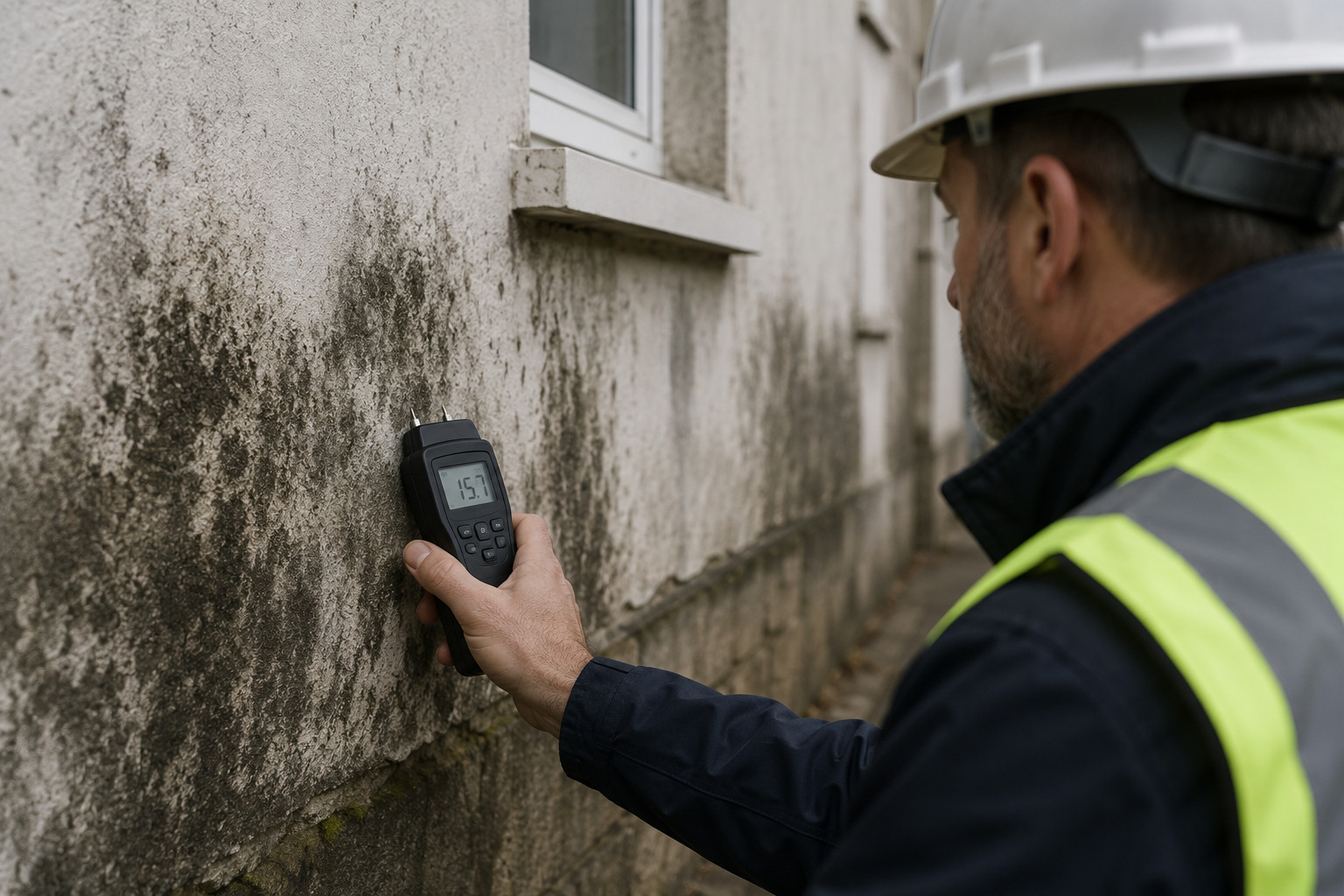
More than 1.6 million homes in England are estimated to have a damp problem, yet for decades landlords faced no hard legal deadline to fix them. That changed on 27 October 2025, when Awaab's Law came into force for social landlords in England, imposing some of the strictest hazard-response timeframes the rental sector has ever seen. The pressure is now intensifying further: the government has confirmed that the law's scope will extend to additional hazard categories in 2026, and a parallel consultation is examining how similar duties could apply to private landlords [2][5]. For anyone commissioning, writing, or relying on a property survey report, Awaab's Law, damp and mould: new legal repair timeframes and what survey reports must now cover in social and private rented housing has become one of the most consequential regulatory topics in the built environment today.
Key Takeaways
- Awaab's Law has been legally binding for social landlords in England since 27 October 2025, with strict investigation and repair deadlines for damp, mould, and other significant hazards.
- Emergency hazards must be made safe within 24 hours; significant hazards (including damp and mould) must be investigated within 10 working days and remedial works started within 5 working days thereafter.
- The clock starts the moment a landlord is "on notice" of a potential hazard, regardless of how the information arrives.
- Survey and inspection reports must now be thorough, written, and evidentially robust to satisfy legal compliance requirements.
- Private landlords are not yet bound by Awaab's Law timeframes, but regulatory change is expected, and best practice already points in the same direction.
The Background: Why Awaab's Law Exists
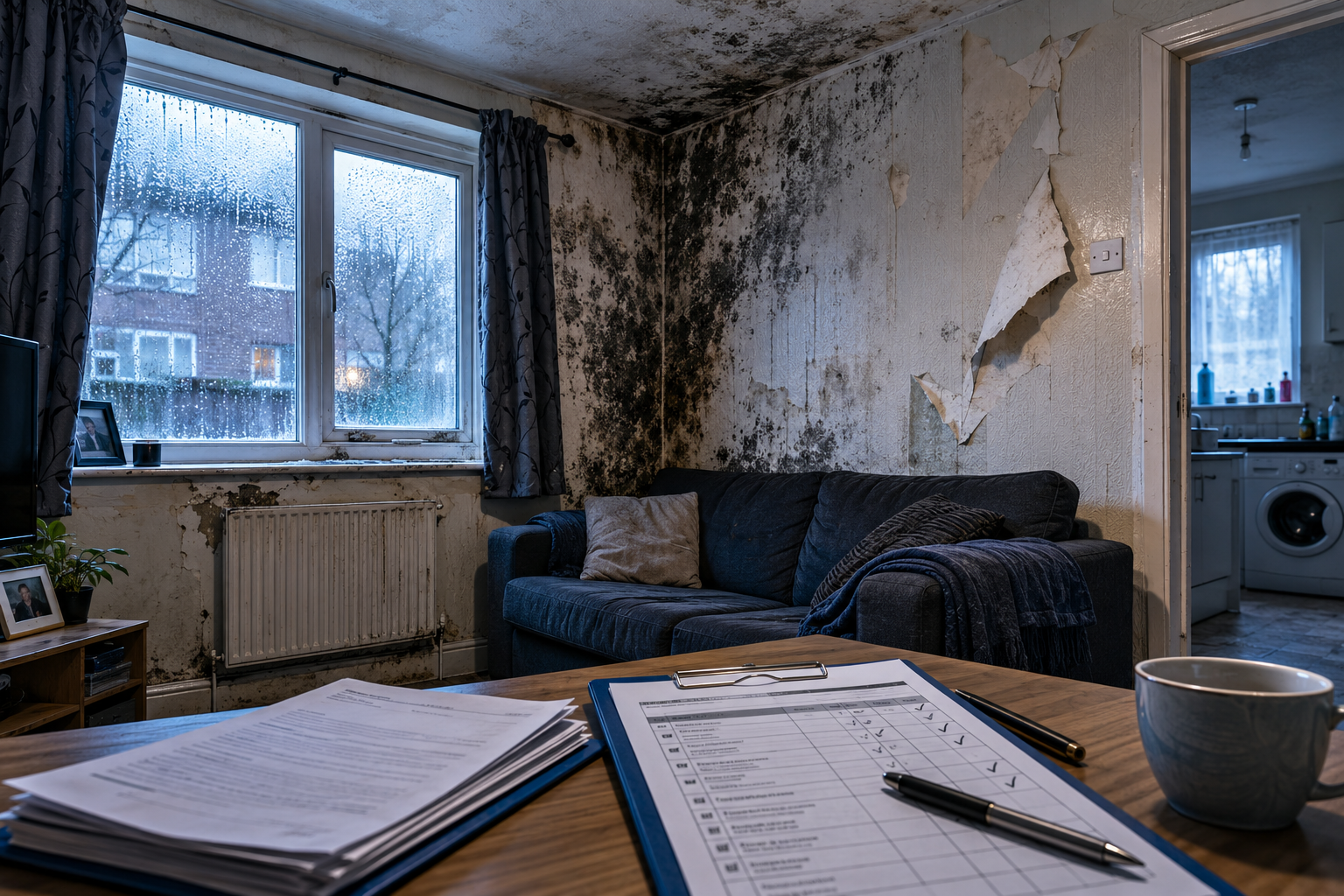
In December 2020, two-year-old Awaab Ishak died in Rochdale after prolonged exposure to severe mould in a housing association flat. The coroner's inquest concluded in 2022 that the cause of death was a respiratory condition caused by mould in the property. The case became a national flashpoint, exposing how landlord inaction and inadequate complaint handling could have fatal consequences.
The Social Housing (Regulation) Act 2023 gave the Secretary of State powers to introduce mandatory repair timeframes by statutory instrument. Those timeframes were set out in detailed government guidance and came into force on 27 October 2025 [7]. The law is named after Awaab Ishak, and it represents a fundamental shift: damp and mould are no longer a matter of landlord discretion but of legal obligation with enforceable deadlines.
Understanding the Legal Repair Timeframes Under Awaab's Law
The core of Awaab's Law, damp and mould: new legal repair timeframes and what survey reports must now cover in social and private rented housing is a two-track response system built around hazard severity.
When Does the Clock Start?
A critical and often misunderstood element is the trigger point. Time limits begin the moment the landlord is "on notice" of a potential hazard. This includes:
- A formal repair request or complaint from the tenant
- An observation made by a member of staff during a visit
- A notification from a third party such as a local authority environmental health officer, a family member, or a support worker [7]
This means landlords cannot delay the clock by waiting for a formal written complaint. Any credible indication of a hazard starts the legal countdown.
Emergency Hazard Pathway
Where a hazard poses an imminent and significant risk to health or safety, the emergency pathway applies:
| Requirement | Deadline |
|---|---|
| Investigate and make property safe, or provide suitable alternative accommodation | Within 24 hours |
| Provide written summary of investigation and actions taken | Within 3 working days |
Typical emergency scenarios include severe structural failure, a gas leak, or a mould situation so advanced that the property is immediately dangerous to occupants [1][6].
Significant Hazard Pathway
Damp and mould that presents a risk of harm but does not require immediate evacuation falls under the significant hazard pathway. The deadlines here are:
| Requirement | Deadline |
|---|---|
| Complete a thorough investigation | Within 10 working days of becoming aware |
| Provide a written summary of the investigation | Within 3 working days of completing the investigation |
| Begin remedial works | Within 5 working days of the investigation |
| Complete remedial works (if earlier start not reasonably practicable) | No later than 12 weeks from becoming aware |
These are not targets or aspirations. They are legally binding obligations for registered social landlords in England [1][6][7].
The 2026 Extension
The government has confirmed that Awaab's Law will extend to cover a broader range of HHSRS (Housing Health and Safety Rating System) hazards in 2026, beyond the initial focus on damp, mould, and excess cold [5]. This phased rollout means social landlords must now build compliance infrastructure capable of handling multiple hazard categories, not just moisture-related defects.
What Survey Reports Must Now Cover
The legal deadlines create an immediate and practical demand: the landlord's investigation must be thorough, and the written summary must be evidentially robust. This is where the role of the professional surveyor becomes central.
The "Thorough Investigation" Standard
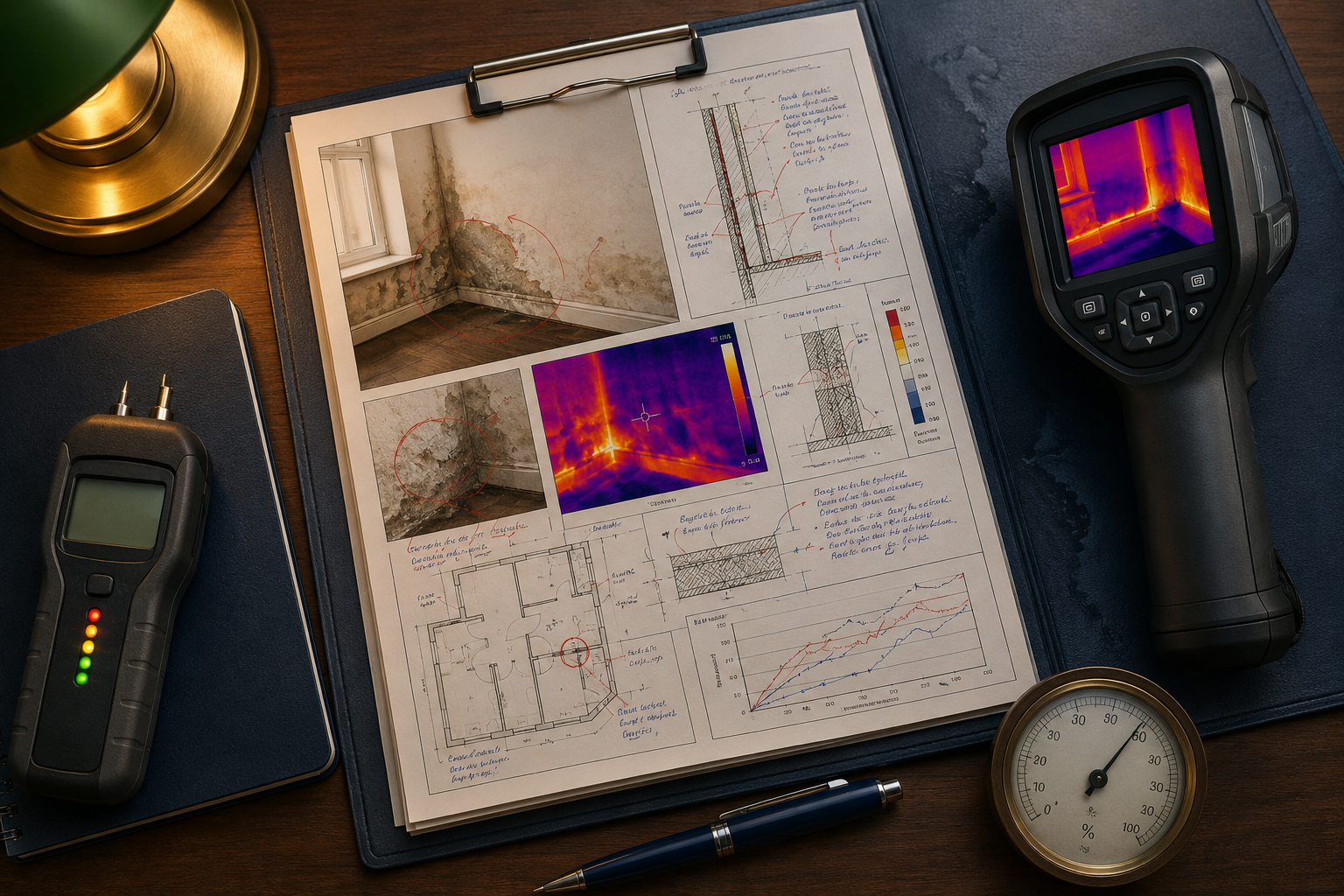
Government guidance is explicit that a thorough investigation is not a cursory visual inspection. For damp and mould, a compliant investigation should address:
- Identification of the type of damp: rising damp, penetrating damp, condensation, or a combination. Each has a different cause and a different remedial route.
- Moisture readings: quantitative data from a calibrated moisture meter, not subjective description alone.
- Thermal imaging: where appropriate, to identify cold bridges, insulation failures, and hidden moisture pathways.
- Ventilation assessment: inadequate ventilation is a primary driver of condensation mould, and HVAC or mechanical ventilation deficiencies must be identified [3].
- Root cause analysis: surface treatment of mould without addressing the underlying cause is not compliant. The investigation must identify why the problem exists.
- Extent mapping: the written report should document the spread of mould or damp across the property, room by room, with measurements.
- HHSRS hazard scoring: where relevant, the report should indicate whether the hazard meets the threshold for a Category 1 or Category 2 rating under the Housing Health and Safety Rating System.
For landlords and surveyors working across London and the South East, professional damp surveys that meet this evidential standard are increasingly in demand.
Written Summary Requirements
The written summary provided to the tenant within 3 working days of the investigation must include:
- What was found during the investigation
- What works are proposed and why
- The timeline for those works to begin and complete
- Any interim measures being taken to reduce risk in the meantime [1]
This document has legal significance. If a tenant later brings a complaint to the Housing Ombudsman or pursues a disrepair claim, the written summary will be central evidence. A vague or incomplete report will undermine the landlord's compliance position.
Survey Reports as Legal Documents
The shift in how survey reports are used is significant. A condition survey report that once served primarily as a maintenance planning tool is now, in the context of Awaab's Law, a compliance document with potential legal consequences. Surveyors commissioned by social landlords should be aware that their reports may be scrutinised by the Regulator of Social Housing, the Housing Ombudsman, or a court.
For tenants and landlords alike, understanding what to do after a bad report on a building survey is now more important than ever, particularly where damp and mould are identified.
Awaab's Law, Damp and Mould: Implications for Private Rented Housing
Awaab's Law in its current form applies to registered social landlords in England. Private landlords are not yet subject to the same statutory timeframes. However, the regulatory direction of travel is clear [4][5].
Existing Duties for Private Landlords
Private landlords already carry significant legal obligations regarding damp and mould:
- The Homes (Fitness for Human Habitation) Act 2018 requires all rented properties to be fit for human habitation throughout the tenancy. Severe damp or mould can render a property unfit.
- The Landlord and Tenant Act 1985 requires landlords to keep the structure and exterior of the property in repair.
- Local authorities can use HHSRS enforcement powers to require private landlords to address Category 1 hazards, including serious damp and mould.
What Private Landlords Should Do Now
Even without a statutory deadline, private landlords who ignore damp and mould face disrepair claims, rent repayment orders, and local authority enforcement. The practical advice is to adopt the same investigative standards now being mandated for social landlords [4]:
- Commission a professional damp survey at the first sign of a problem
- Obtain a written report that identifies root cause, not just surface symptoms
- Act on the findings within a reasonable timeframe and document the actions taken
Landlords and letting agents operating across London can access London damp surveys from RICS-regulated surveyors who understand both the technical and regulatory requirements.
For those considering whether a homebuyer's report or a full building survey is the right tool for identifying moisture problems before purchase, this guide to choosing the right property assessment sets out the key differences.
How Landlords and Surveyors Should Prepare
Building a Compliance System
Compliance with Awaab's Law is not a one-off exercise. Social landlords need systems that can:
- Log the date and method by which they became aware of any hazard
- Automatically trigger the relevant pathway (emergency or significant)
- Track investigation deadlines and written summary deadlines
- Record the start and completion of remedial works
- Store all documentation securely for potential regulatory review [9]
Commissioning the Right Survey
Not every damp inspection meets the standard now required. When commissioning a survey under Awaab's Law obligations, landlords should specify:
- RICS-regulated surveyor
- Written report with quantitative moisture data
- Root cause identification
- Ventilation and thermal performance assessment where relevant
- HHSRS hazard classification
Surveyors covering areas with high concentrations of social housing stock, such as Wandsworth, Lewisham, Hackney, and Croydon, are already reporting increased demand for Awaab's Law-compliant damp and hazard surveys.
Ventilation as a Compliance Priority
One frequently underestimated driver of mould is inadequate ventilation. Condensation forms when warm, moist air meets cold surfaces, and in poorly ventilated properties this creates persistent mould growth regardless of how many times the surface is treated. Technical compliance with Awaab's Law therefore increasingly involves assessing and upgrading HVAC and mechanical ventilation systems [3]. A survey report that does not address ventilation is unlikely to satisfy the "thorough investigation" standard.
Enforcement and Consequences of Non-Compliance
Social landlords who fail to meet the statutory timeframes face enforcement action from the Regulator of Social Housing, which now has stronger powers under the Social Housing (Regulation) Act 2023. Consequences can include:
- Regulatory notices requiring specific remedial action
- Special measures for persistent non-compliance
- Financial penalties
- Reputational damage from published enforcement decisions
Tenants also retain the right to bring disrepair claims through the courts and to escalate complaints to the Housing Ombudsman, which has published increasingly robust findings against landlords who fail to address damp and mould promptly [2].
For private landlords, local authority environmental health departments retain enforcement powers under HHSRS, and the government's 2026 consultation on extending Awaab's Law to the private sector means the regulatory gap between the two tenures is likely to narrow significantly [4][5].
Conclusion
Awaab's Law has permanently changed the legal landscape for damp and mould in rented housing. The 24-hour emergency deadline, the 10-working-day investigation window, and the requirement for written, evidentially robust reports are not administrative formalities: they are enforceable legal duties with real consequences for non-compliance.
Actionable next steps for landlords and surveyors in 2026:
- Audit your current stock for known or suspected damp and mould issues and treat each as a potential "on notice" trigger.
- Commission RICS-regulated damp surveys that meet the thorough investigation standard, including quantitative moisture data, root cause analysis, and ventilation assessment.
- Build a compliance tracking system that logs the date of notification, investigation deadlines, written summary deadlines, and works completion dates.
- Train frontline staff to recognise that any observation of a hazard, however informal, starts the legal clock.
- Review survey report templates to ensure they capture all elements now required under Awaab's Law guidance, including HHSRS classification.
- If you are a private landlord, adopt the same standards proactively. Regulatory extension to the private sector is a matter of when, not if.
The days of damp being treated as a cosmetic inconvenience are over. The law now demands speed, rigour, and documentation, and the survey report is at the heart of all three.
References
[1] Awaabs Law Requirements And Deadlines The Complete Breakdown – https://www.procurementforhousing.co.uk/article/awaabs-law-requirements-and-deadlines-the-complete-breakdown/
[2] Awaabs Law Landlord Guide 2026 – https://letsafeuk.co.uk/guides/awaabs-law-landlord-guide-2026
[3] Awaabs Law Technical Compliance Hvac Ventilation – https://www.arm-environments.com/resources/awaabs-law-technical-compliance-hvac-ventilation
[4] Awaabs Law Private Landlords 2026 – https://www.idealresponse.co.uk/blog/awaabs-law-private-landlords-2026/
[5] Awaabs Law Timeline – https://www.glplaw.com/2026/01/23/awaabs-law-timeline/
[6] Awaabs Law Phase 2 Advice For Social Landlords – https://www.voicescape.com/blog/awaabs-law-phase-2-advice-for-social-landlords
[7] Awaabs Law Guidance For Social Landlords Timeframes For Repairs In The Social Rented Sector – https://www.gov.uk/government/publications/awaabs-law-guidance-for-social-landlords/awaabs-law-guidance-for-social-landlords-timeframes-for-repairs-in-the-social-rented-sector
[9] Preventing Damp And Mould In 2026 Under Awaab S Law – https://www.augustapp.com/blog/preventing-damp-and-mould-in-2026-under-awaab-s-law