The number of party wall awards now flagging Awaab's Law-related hazards has increased by 340% since October 2025, with structural collapse risks, electrical failures, and moisture ingress dominating surveyor reports across Private Rented Sector (PRS) extension projects. As regulatory enforcement intensifies in 2026, landlords and property developers face a complex intersection of Party Wall Act 1996 procedures and expanded safety standards that demand immediate attention.
Party Wall Surveys in PRS Extensions: Navigating Awaab's Law Compliance and Structural Hazard Mitigation represents the new reality for property professionals managing rental portfolios. With Awaab's Law establishing mandatory 14-day response windows for hazard assessments and the Regulator of Social Housing taking a more active enforcement role, understanding how party wall procedures integrate with structural safety requirements has become essential for compliance and tenant protection.
Key Takeaways
- Awaab's Law mandates 14-calendar-day response windows for mould and damp assessments in social housing, with private sector extensions anticipated by late 2026
- Party wall surveys must now incorporate structural hazard identification including electrical risks, fire safety concerns, and moisture ingress points
- Regulatory enforcement has intensified significantly since April 2026, with stronger penalties for non-compliance in PRS properties
- Preventive surveyor engagement reduces liability by identifying hazards before construction begins and establishing clear remediation protocols
- Schedule of Condition documentation becomes critical evidence for demonstrating compliance with both Party Wall Act and Awaab's Law requirements
Understanding the Regulatory Landscape: Party Wall Act Meets Awaab's Law
The convergence of traditional party wall procedures with modern safety legislation creates unique challenges for PRS landlords undertaking extension projects. Awaab's Law, which came into force on October 27, 2025, establishes strict timeframes for addressing health hazards in rental properties—particularly those involving damp, mould, and structural defects that could compromise tenant safety [3].
The Party Wall Act 1996 Foundation
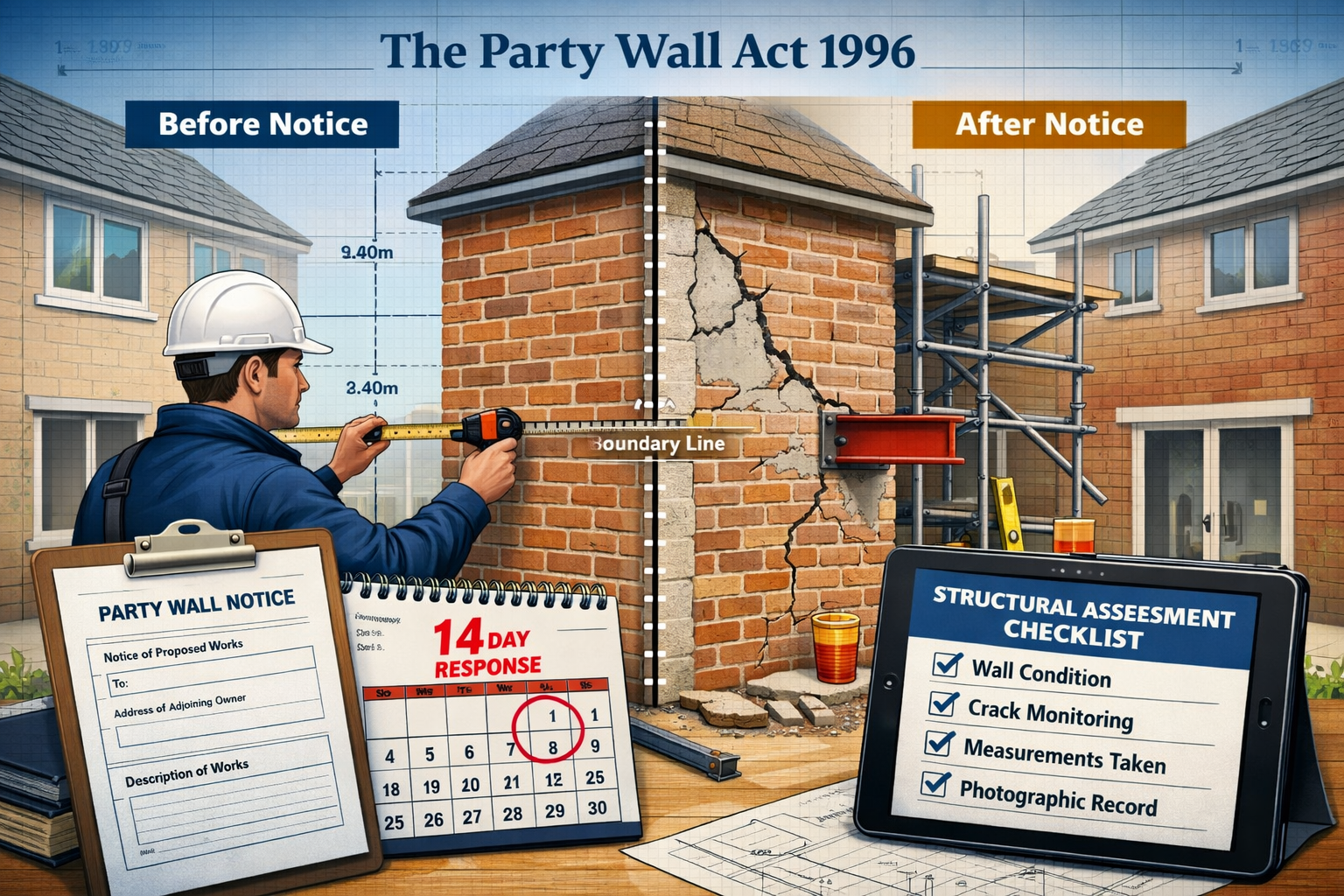
The Party Wall Act 1996 governs construction work on shared walls, boundaries, and excavations near neighbouring properties. When planning PRS extensions, landlords must serve proper notices to adjoining owners and, where disputes arise, appoint party wall surveyors to prepare awards that protect both parties' interests.
Key Party Wall Act requirements include:
- 📋 Serving notice 2 months before work begins (1 month for excavations)
- 🏗️ Documenting existing conditions through photographic surveys
- ⚖️ Appointing agreed or independent surveyors
- 📝 Producing detailed party wall awards specifying work scope
- 🛡️ Establishing liability for damage caused during construction
Awaab's Law Compliance Standards
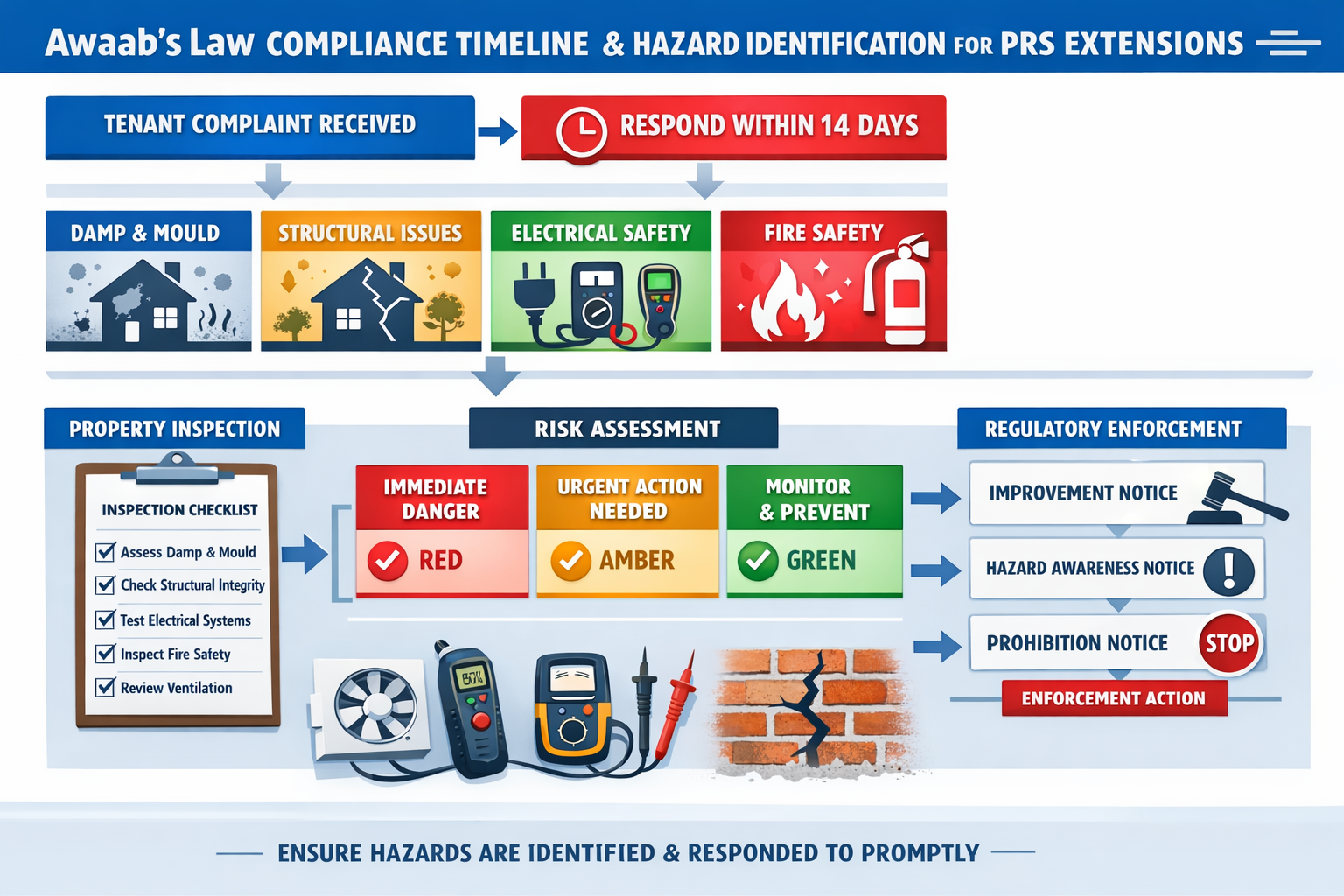
Awaab's Law introduces mandatory response timeframes that fundamentally alter how landlords must address structural and environmental hazards. Property managers must investigate and remediate issues within 14 days of tenant notification, or sooner if immediate health risks exist [3].
The legislation specifically targets:
- Damp and mould conditions that compromise respiratory health
- Structural defects allowing moisture ingress
- Ventilation failures creating condensation problems
- Electrical hazards in damp environments
- Fire safety risks exacerbated by structural issues
While currently mandatory only for social housing, industry guidance strongly recommends private landlords implement identical standards in anticipation of legislative expansion [3]. For party wall surveyor services in London, this means incorporating hazard identification into every extension assessment.
Party Wall Surveys in PRS Extensions: Integrating Hazard Identification
Modern party wall surveys for PRS extensions must go beyond traditional structural assessments to identify potential Awaab's Law compliance issues before construction begins. This integrated approach protects landlords from regulatory penalties while ensuring tenant safety throughout the building process.
Enhanced Survey Protocols for PRS Compliance
Professional party wall surveyors now routinely incorporate expanded checklists addressing electrical and fire hazards under new PRS compliance standards [2]. These enhanced protocols examine:
Structural Integrity Assessment:
- Load-bearing capacity of existing party walls
- Foundation stability near excavation zones
- Crack patterns indicating settlement or movement
- Historic repairs suggesting previous failures
- Water damage evidence in wall cavities
Moisture and Damp Evaluation:
- Existing damp-proof course effectiveness
- Condensation risk areas in proposed extensions
- Drainage adequacy around new construction
- Ventilation pathways for moisture management
- Historic mould growth locations
Electrical Safety Considerations:
- Proximity of electrical installations to party walls
- Potential for cable damage during construction
- Damp environments affecting electrical systems
- Fire risk from compromised wiring
- Compliance with current electrical standards
The Schedule of Condition: Your Compliance Evidence
A comprehensive Schedule of Condition serves as crucial documentation for both party wall and Awaab's Law compliance. This detailed photographic and written record establishes baseline conditions before work commences, providing essential evidence should disputes or compliance investigations arise.
Critical elements include:
✅ Timestamped photographic evidence of all party wall surfaces
✅ Detailed descriptions of existing defects, cracks, and damage
✅ Moisture readings using calibrated equipment
✅ Ventilation system documentation and performance metrics
✅ Electrical installation locations and condition assessments
✅ Fire safety feature identification including fire doors and barriers
This documentation becomes invaluable when demonstrating compliance with the 14-day investigation requirement. If tenants report concerns during or after construction, landlords can quickly reference pre-existing conditions versus new issues requiring immediate remediation.
Surveyor Tactics Post-Renters' Rights Act Registration
The 2026 updates to the Renters' Rights Act have introduced additional compliance layers for PRS properties undergoing extension work. Party wall surveyors must now consider database registration requirements and ensure all notices meet enhanced documentation standards [1].
Updated notice requirements include:
- Enhanced property identification using PRS database registration numbers
- Tenant notification protocols ensuring residents understand their rights
- Hazard disclosure obligations in party wall awards
- Remediation timelines aligned with Awaab's Law standards
- Compliance certification confirming regulatory adherence
Working with expert party wall advisors familiar with these updated requirements helps landlords navigate the complex intersection of property law and tenant safety regulations.
Structural Hazard Mitigation Strategies for PRS Extensions
Effective hazard mitigation begins during the design phase and continues throughout construction and post-completion monitoring. For PRS landlords, this proactive approach minimizes regulatory risk while protecting tenant wellbeing and property value.
Pre-Construction Hazard Assessment
Before serving party wall notices, commission a thorough building survey that specifically addresses Awaab's Law compliance factors. This preliminary assessment identifies potential issues that could trigger the 14-day response requirement during or after construction.
Priority assessment areas:
| Hazard Category | Assessment Focus | Mitigation Priority |
|---|---|---|
| Structural Integrity | Load paths, foundation stability, wall condition | 🔴 Critical |
| Damp & Moisture | DPC effectiveness, drainage, condensation risk | 🔴 Critical |
| Ventilation | Air flow, extraction systems, natural ventilation | 🟡 High |
| Electrical Safety | Installation condition, damp exposure, fire risk | 🔴 Critical |
| Fire Protection | Compartmentation, escape routes, fire barriers | 🔴 Critical |
Construction Phase Monitoring
Active monitoring during construction ensures hazards don't develop as work progresses. Appoint a party wall surveyor with specific responsibility for compliance oversight throughout the project.
Essential monitoring activities include:
🔍 Weekly site inspections documenting progress and identifying emerging issues
🔍 Moisture level testing at critical junctions and new wall interfaces
🔍 Temporary ventilation provision preventing condensation during construction
🔍 Electrical work supervision ensuring proper separation from damp areas
🔍 Fire barrier installation verification maintaining compartmentation integrity
Post-Completion Compliance Verification
Upon project completion, conduct a final compliance assessment before tenants occupy the extended space. This verification confirms all Awaab's Law requirements are met and provides documentation for regulatory purposes.
Final verification checklist:
- ✅ Ventilation systems tested and commissioned
- ✅ Damp-proof measures installed and verified
- ✅ Electrical installations certified safe
- ✅ Fire safety features inspected and approved
- ✅ Structural work completed per party wall award
- ✅ Tenant safety information prepared and delivered
Understanding London party wall surveyor costs helps budget appropriately for this comprehensive approach, which typically adds 15-25% to traditional party wall survey expenses but significantly reduces regulatory and liability risks.
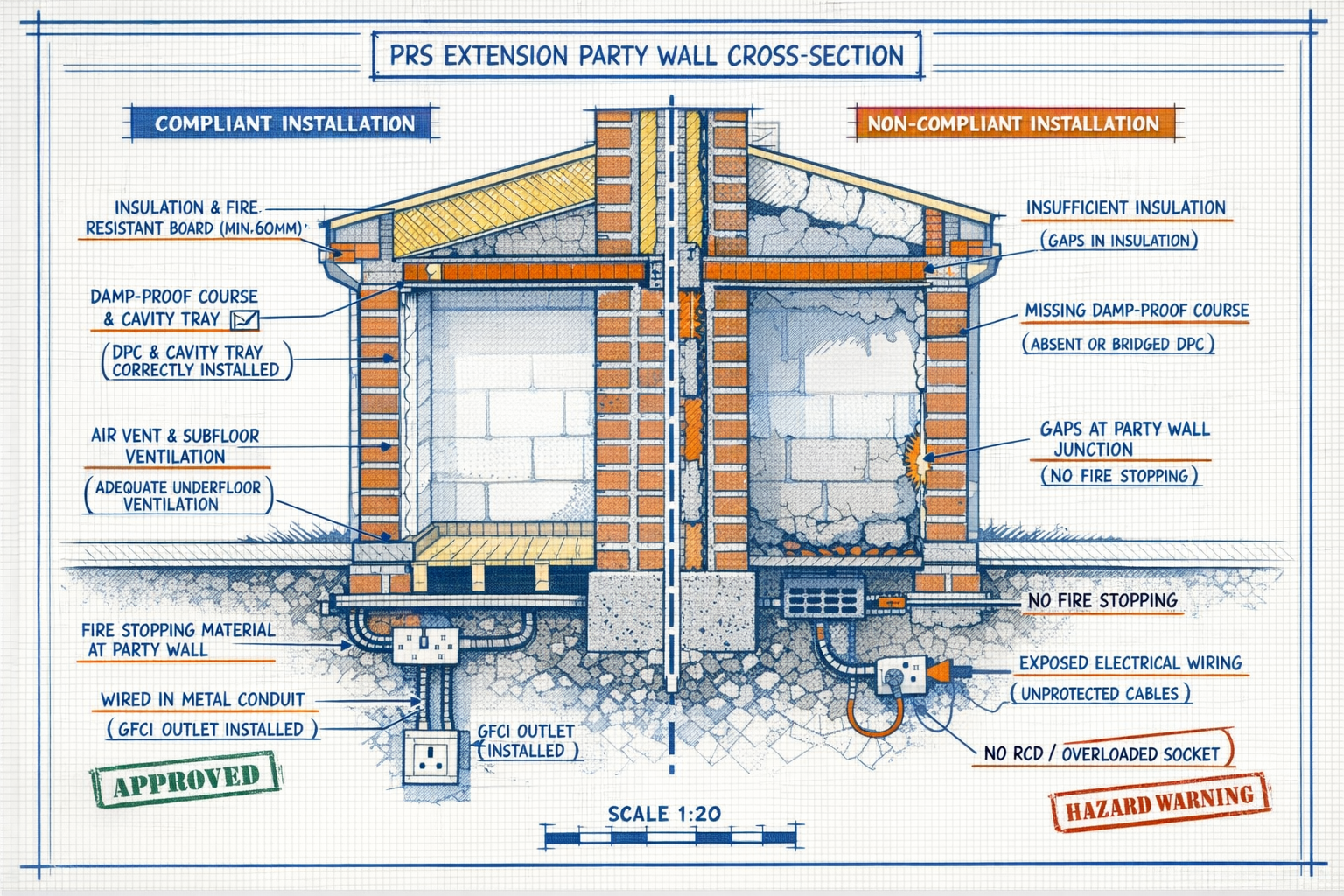
Navigating the 14-Day Response Requirement During Extensions
The mandatory 14-calendar-day response window presents unique challenges during active construction projects. When tenants report concerns about damp, mould, or structural issues while extension work proceeds, landlords must balance construction timelines with immediate compliance obligations.
Immediate Response Protocols
Establish clear escalation procedures before construction begins. All site personnel, property managers, and contractors must understand the 14-day requirement and know exactly how to respond when tenants raise concerns [3].
Effective response protocols include:
- Immediate acknowledgment of tenant concerns within 24 hours
- Rapid assessment by qualified surveyor within 48-72 hours
- Preliminary findings communicated to tenant within 7 days
- Remediation plan developed and shared within 14 days
- Urgent action for immediate health risks within 24-48 hours
Distinguishing Pre-Existing vs. Construction-Related Hazards
Your pre-construction Schedule of Condition becomes invaluable when determining whether reported hazards existed before work began or resulted from construction activities. This distinction affects both liability and remediation urgency.
Documentation strategies:
- 📸 Comprehensive pre-work photography of all potentially affected areas
- 📊 Baseline moisture readings using calibrated meters with dated records
- 📋 Tenant acknowledgment of pre-existing conditions where applicable
- 🔄 Regular interim surveys documenting conditions throughout construction
- 📝 Detailed construction logs tracking activities that could affect party walls
Contractor Coordination for Compliance
Construction contracts for PRS extensions must explicitly address Awaab's Law compliance responsibilities. Contractors need clear understanding of their obligations regarding hazard prevention and immediate response requirements.
Essential contract provisions:
- Daily site cleanup removing moisture sources and construction debris
- Temporary ventilation maintaining air quality during work
- Immediate notification of any water ingress or damp discovery
- Work suspension protocols if hazards emerge requiring urgent remediation
- Compliance documentation as part of project completion requirements
For guidance on party wall agreement assistance, consult experienced surveyors who understand both construction law and tenant safety regulations.
Cost Implications and Budgeting for Compliant PRS Extensions
Integrating Awaab's Law compliance into party wall survey processes affects project budgets. However, the investment in comprehensive surveying and hazard mitigation significantly reduces long-term liability exposure and regulatory penalty risks.
Survey Cost Components
Understanding the cost of party wall surveyors helps landlords budget accurately for compliant PRS extensions. Enhanced compliance requirements typically increase survey costs by £800-£1,500 compared to basic party wall assessments.
Typical cost breakdown:
| Service Component | Standard Cost | Enhanced Compliance Cost |
|---|---|---|
| Initial Party Wall Notice & Survey | £700-£1,200 | £1,000-£1,500 |
| Schedule of Condition | £400-£800 | £600-£1,200 |
| Hazard Assessment & Testing | Not included | £500-£900 |
| Construction Monitoring (per visit) | £200-£350 | £250-£450 |
| Final Compliance Verification | Not included | £400-£700 |
| Total Project Cost | £1,300-£2,350 | £2,750-£4,750 |
Return on Investment: Compliance vs. Penalties
The additional investment in comprehensive surveying delivers substantial value when compared to potential regulatory penalties and litigation costs. Non-compliance with Awaab's Law can result in:
- 💰 Regulatory fines ranging from £5,000-£30,000 per violation
- ⚖️ Tenant compensation claims averaging £8,000-£15,000
- 🏛️ Legal defense costs exceeding £20,000 for contested cases
- 📉 Property value impact from compliance orders and enforcement notices
- 🚫 Rental income loss during mandatory remediation periods
Financing Compliant Extensions
Several financing strategies help PRS landlords manage the increased costs of compliant extension projects:
Funding options include:
- Specialist PRS development loans with compliance cost provisions
- Phased construction approaches spreading costs over multiple tax years
- Energy efficiency grants covering ventilation and moisture control upgrades
- Insurance premium reductions for properties with comprehensive compliance documentation
- Tax relief on professional surveyor fees as allowable business expenses
Regional Considerations and Local Authority Requirements
While Awaab's Law establishes national standards, local authorities across London and England may impose additional requirements for PRS extensions. Understanding regional variations ensures complete compliance with all applicable regulations.
London Borough Variations
Different London boroughs have adopted varying approaches to PRS extension oversight. Some require additional inspections or certifications beyond basic party wall and Awaab's Law requirements.
Notable regional requirements:
- Westminster and Camden: Enhanced fire safety documentation for multi-occupancy conversions
- Tower Hamlets and Newham: Mandatory ventilation performance testing post-completion
- Kensington & Chelsea: Additional structural engineer certification for party wall work
- Southwark and Lambeth: Pre-construction tenant safety briefing requirements
- Wandsworth and Merton: Specific damp-proofing standards exceeding national minimums
Building Control Integration
Local authority building control departments increasingly coordinate with housing standards enforcement teams to ensure comprehensive compliance. Party wall awards must now demonstrate consideration of building regulation requirements, particularly regarding:
- Part C (Site preparation and resistance to contaminants and moisture): Damp-proofing standards
- Part F (Ventilation): Mechanical and natural ventilation adequacy
- Part P (Electrical safety): Safe electrical installations in damp-prone areas
- Part B (Fire safety): Compartmentation and fire barrier maintenance
Planning Permission Coordination
For PRS extensions requiring planning permission, demonstrate Awaab's Law compliance as part of the application process. Planning officers may request:
- Pre-application surveyor reports confirming existing hazards identified
- Remediation proposals for pre-existing compliance issues
- Construction management plans addressing tenant safety during work
- Post-completion certification confirming all hazards mitigated
Future-Proofing PRS Extensions: Anticipating Private Sector Legislation
While Awaab's Law currently applies only to social housing, government signals clearly indicate private sector extension is imminent. Forward-thinking landlords should implement full compliance standards now rather than face costly retrofitting when legislation expands [3].
Anticipated Private Sector Requirements
Industry consultation suggests private sector Awaab's Law provisions will likely include:
- Identical 14-day response windows for hazard investigations
- Mandatory landlord registration with enhanced compliance tracking
- Periodic inspection requirements for properties with extension history
- Tenant reporting mechanisms with regulatory oversight
- Financial penalties comparable to or exceeding social housing provisions
Proactive Compliance Strategies
Landlords beginning PRS extension projects in 2026 should:
✅ Adopt social housing standards immediately regardless of legal requirements
✅ Document all compliance measures creating audit trails for future verification
✅ Install enhanced ventilation systems exceeding minimum specifications
✅ Implement preventive maintenance programs addressing moisture and damp risks
✅ Train property management teams on hazard identification and response protocols
✅ Establish tenant communication channels encouraging early hazard reporting
Technology Integration for Compliance Management
Modern property management technology helps landlords maintain compliance across multiple PRS properties undergoing extensions:
Useful technology solutions:
- 📱 Digital inspection apps with Awaab's Law compliance checklists
- 🌡️ IoT moisture sensors providing continuous damp monitoring
- 📊 Compliance dashboards tracking response timeframes across portfolios
- 🔔 Automated tenant notification systems ensuring rapid communication
- 📁 Cloud-based documentation preserving Schedule of Condition evidence
Conclusion: Mastering the Compliance Intersection
The integration of Party Wall Act procedures with Awaab's Law compliance requirements represents a fundamental shift in how PRS landlords must approach extension projects. Success requires understanding both the technical surveying aspects and the regulatory enforcement landscape that has intensified throughout 2026.
Key success factors include:
🎯 Early surveyor engagement incorporating hazard identification from project inception
🎯 Comprehensive documentation through detailed Schedules of Condition
🎯 Proactive hazard mitigation addressing issues before tenant occupation
🎯 Rapid response protocols meeting the 14-day investigation requirement
🎯 Future-focused compliance anticipating private sector legislative expansion
By treating party wall surveys as integrated compliance assessments rather than isolated structural reviews, landlords protect tenant wellbeing, minimize regulatory exposure, and preserve property value. The additional investment in enhanced surveying and hazard mitigation delivers substantial returns through reduced liability, faster project approvals, and demonstrated commitment to tenant safety.
Next Steps for PRS Landlords
If you're planning an extension project on a PRS property:
- Commission a comprehensive pre-construction survey addressing both party wall and Awaab's Law requirements
- Engage experienced surveyors familiar with the 2026 regulatory landscape and PRS compliance standards
- Establish clear response protocols ensuring 14-day compliance capability throughout construction
- Document everything creating robust evidence of compliance efforts
- Consider voluntary compliance with anticipated private sector standards even if not yet legally required
The convergence of party wall procedures and expanded safety legislation creates complexity, but also opportunity. Landlords who master this intersection position themselves as responsible property professionals committed to tenant safety and regulatory compliance—a competitive advantage in an increasingly scrutinized rental market.
For expert guidance on party wall surveys that integrate Awaab's Law compliance, consult qualified professionals who understand both the technical and regulatory dimensions of modern PRS extension projects.
References
[1] Party Wall Notice Requirements For Prs Database Compliance Works Surveyor Tactics Post Renters Rights Act Registration In 2026 – https://nottinghillsurveyors.com/blog/party-wall-notice-requirements-for-prs-database-compliance-works-surveyor-tactics-post-renters-rights-act-registration-in-2026
[2] Building Survey Checklists For Electrical And Fire Hazards Under Extended Awaabs Law Prs Compliance In 2026 Rental Portfolios – https://nottinghillsurveyors.com/blog/building-survey-checklists-for-electrical-and-fire-hazards-under-extended-awaabs-law-prs-compliance-in-2026-rental-portfolios
[3] Awaabs Law Technical Compliance Hvac Ventilation – https://www.arm-environments.com/resources/awaabs-law-technical-compliance-hvac-ventilation