
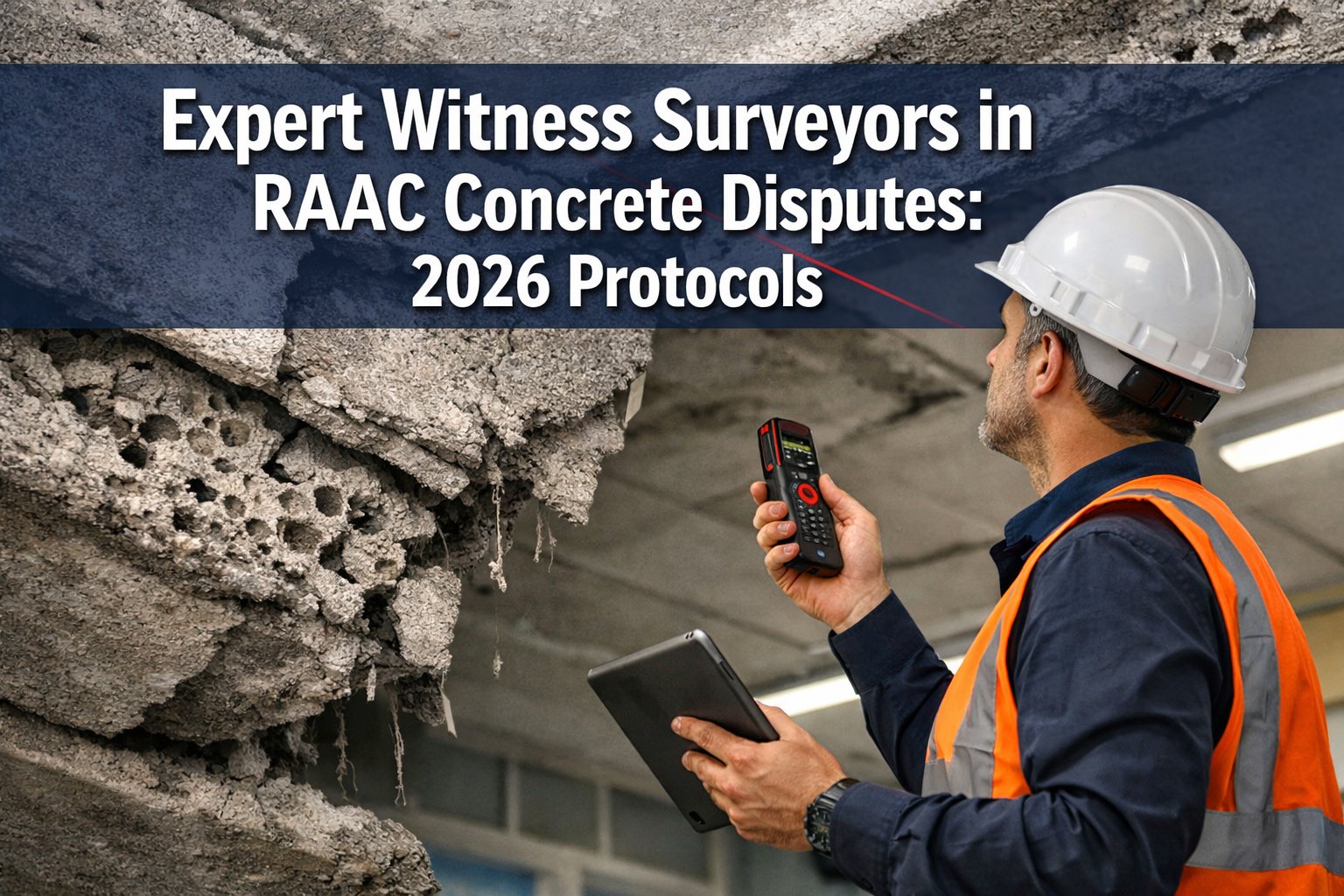
The UK construction industry faces an unprecedented crisis: over 230 schools and 34 NHS hospitals have been identified with failing Reinforced Autoclaved Aerated Concrete (RAAC) since September 2023, triggering a wave of remediation claims worth an estimated £1.5 billion. As litigation accelerates through 2026, Expert Witness Surveyors in RAAC Concrete Disputes: 2026 Protocols for School and Hospital Remediation Claims have become essential for property owners, contractors, and insurers navigating complex liability and valuation challenges. The convergence of RICS professional standards with Civil Procedure Rules (CPR) Part 35 requirements demands a sophisticated approach to evidence gathering and diminution valuations.
This comprehensive guide examines how chartered surveyors can provide court-ready expert testimony in RAAC disputes, focusing on the specialized protocols required for school and hospital remediation claims in 2026.
Key Takeaways
- 🏛️ RAAC concrete failures in UK public buildings have created a specialized niche requiring expert witness surveyors who understand both structural assessment and legal evidence standards
- ⚖️ CPR Part 35 compliance mandates that expert witnesses prioritize their duty to the court over client interests, requiring strict adherence to objectivity in diminution valuations
- 🔍 Site inspection protocols for RAAC disputes must document deterioration patterns, remediation costs, and building functionality impacts using standardized methodologies
- 📊 Diminution valuations require comprehensive analysis of repair costs, temporary accommodation expenses, and long-term property value impacts
- 🏥 Hospital and school claims present unique challenges due to operational disruption costs and public safety imperatives that affect settlement negotiations
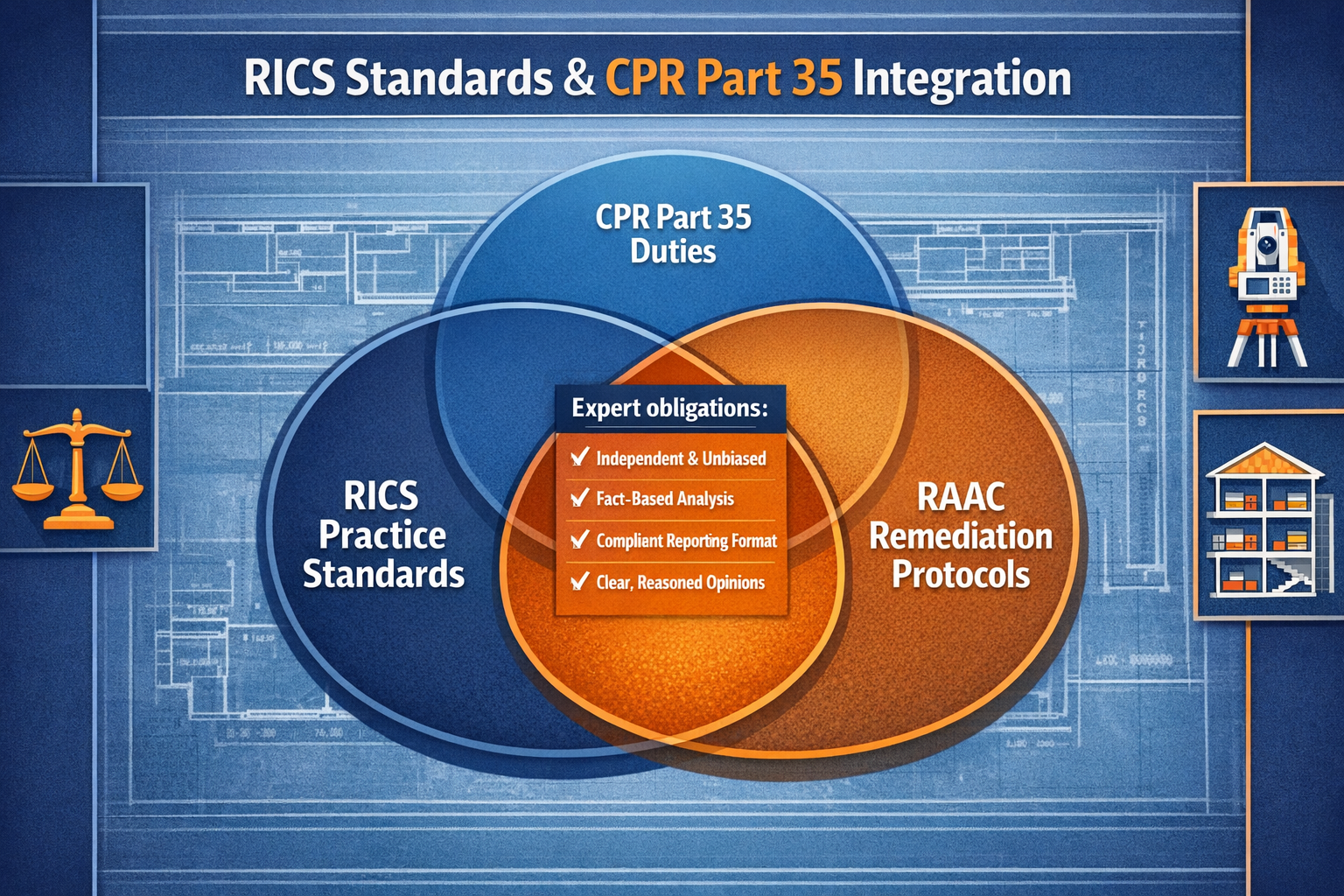
Understanding RAAC Concrete Failures and the Expert Witness Role
What Makes RAAC Concrete Problematic?
Reinforced Autoclaved Aerated Concrete was widely used in UK construction between 1950 and 1995, particularly in flat roof and floor applications for schools, hospitals, and public buildings. The material's lightweight, aerated structure made it economical and easy to install, but its 30-year design life has now expired in most installations.
RAAC planks exhibit several critical failure modes:
- Moisture ingress causing steel reinforcement corrosion
- Progressive deflection under sustained loading
- Sudden catastrophic collapse without warning signs
- Accelerated deterioration in poorly maintained environments
When RAAC failures occur, property owners face immediate safety concerns, emergency remediation costs, and potential liability claims. This is where expert witness surveyors become invaluable.
The Expert Witness Surveyor's Duty
Under CPR Part 35, expert witnesses have an overriding duty to the court that supersedes any obligation to the party instructing them[2]. For surveyors involved in RAAC disputes, this means:
✅ Providing objective, unbiased assessments of structural condition
✅ Documenting evidence using defensible methodologies
✅ Preparing reports that withstand cross-examination
✅ Maintaining professional independence throughout proceedings
RICS-accredited surveyors bring critical credibility to RAAC disputes through their professional qualifications and adherence to established practice standards[2]. When selecting construction dispute resolution experts in 2026, parties should prioritize professionals with demonstrable objectivity and tribunal experience[1].
"The expert witness must remember that their primary duty is to assist the court, not to advocate for the party who instructed them. This fundamental principle shapes every aspect of RAAC dispute evidence preparation." — RICS Expert Witness Guidance
Expert Witness Surveyors in RAAC Concrete Disputes: 2026 Protocols for Evidence Gathering
Pre-Inspection Preparation and Documentation Review
Before conducting site inspections, expert witness surveyors must establish a comprehensive evidence baseline. This preparatory phase includes:
Document Assembly:
- Original construction drawings and specifications
- Building maintenance records and inspection reports
- Previous structural surveys or stock condition surveys
- Correspondence regarding defect notifications
- Insurance policies and claims documentation
Regulatory Context Research:
- Department for Education guidance on RAAC remediation (2023-2026)
- Health and Safety Executive safety notices
- Local authority building control records
- Planning permissions for remediation works
Liability Framework Analysis:
- Identification of potentially responsible parties (designers, contractors, building owners)
- Review of contractual relationships and warranties
- Assessment of limitation period issues
- Insurance coverage scope determination
This preparatory work enables expert witnesses to conduct focused site inspections that address the specific issues in dispute.
Site Inspection Protocols for RAAC Disputes
The 2026 protocols for RAAC concrete inspection require systematic documentation that meets both technical and legal standards[3]. Expert witness surveyors should follow this structured approach:
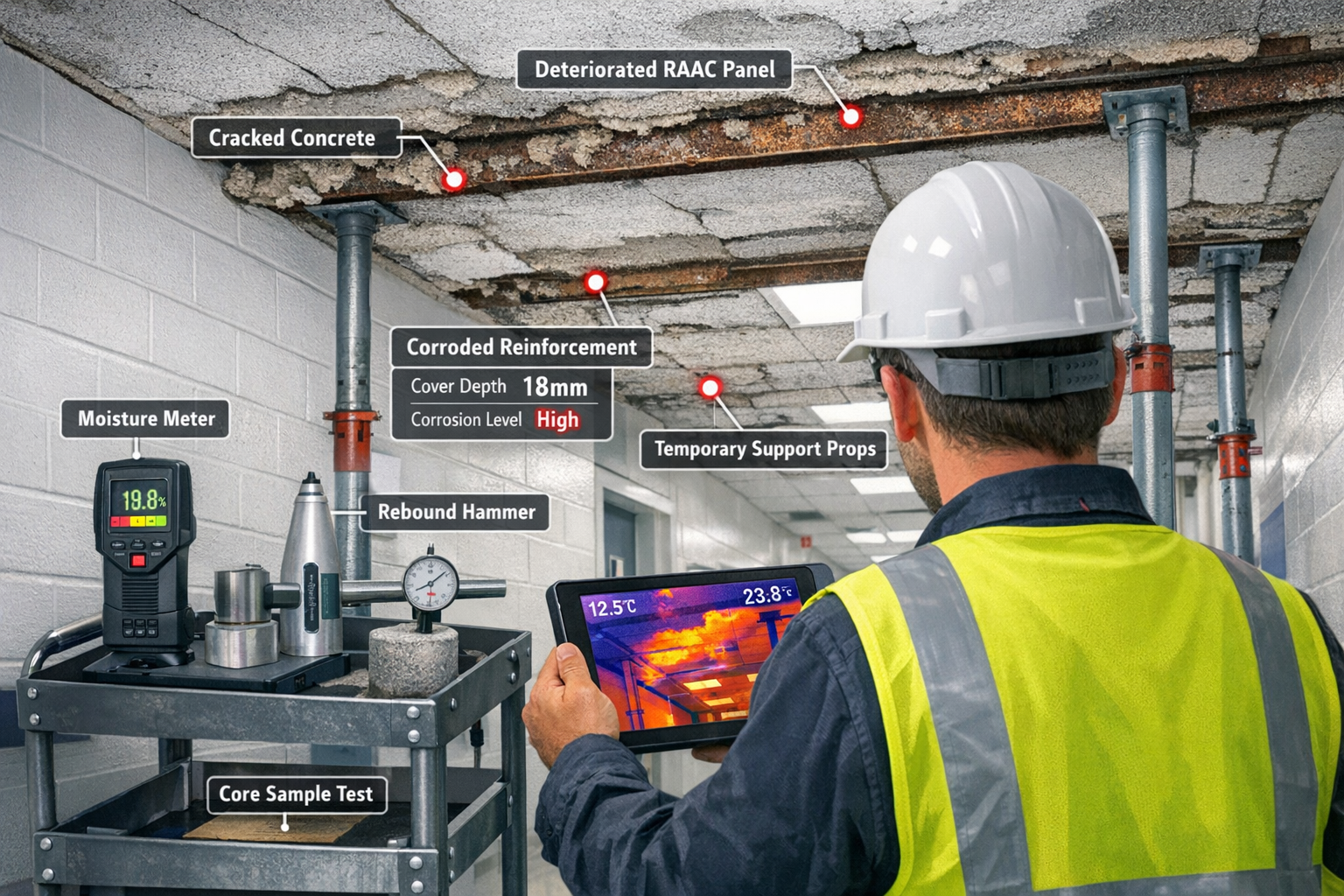
Phase 1: Visual Assessment and Safety Evaluation
Initial Observations:
- Document RAAC plank locations, dimensions, and installation patterns
- Identify visible deterioration signs (deflection, cracking, spalling)
- Assess immediate safety hazards requiring temporary support
- Photograph all affected areas with scale references
Environmental Conditions:
- Measure moisture levels in RAAC elements
- Document water ingress points and drainage deficiencies
- Record temperature and humidity conditions
- Assess ventilation adequacy in affected spaces
Phase 2: Technical Investigation
Non-Destructive Testing:
- Ultrasonic pulse velocity testing to assess concrete integrity
- Ground-penetrating radar to map reinforcement locations
- Thermal imaging to identify moisture patterns
- Load deflection measurements under controlled conditions
Intrusive Investigation (where authorized):
- Core sampling for laboratory analysis
- Exposure of reinforcement to assess corrosion
- Material strength testing
- Chemical analysis of concrete composition
Phase 3: Remediation Scope Assessment
Expert witnesses must evaluate proposed remediation approaches and provide opinions on:
- Adequacy of temporary support measures
- Appropriateness of repair versus replacement strategies
- Compliance with current building regulations
- Impact on building functionality during works
For complex projects involving schools and hospitals, surveyors should reference building survey checklists specifically developed for RAAC and cladding remediation projects in Q1 2026[3], which address post-reform compliance essentials.
Documentation Standards for Court-Ready Evidence
The evidence gathered during site inspections must be organized to withstand legal scrutiny. Expert witness surveyors should prepare:
Photographic Evidence:
- Time-stamped, geotagged digital images
- Consistent lighting and scale references
- Annotated photographs highlighting specific defects
- Before/during/after remediation documentation
Technical Drawings:
- Marked-up floor plans showing RAAC locations
- Cross-sections illustrating failure mechanisms
- Proposed remediation detail drawings
- Comparison drawings showing design versus as-built conditions
Data Tables:
- Measurement records with equipment calibration certificates
- Test results with laboratory accreditation documentation
- Cost estimates with supporting quotations
- Timeline analysis showing defect progression
This systematic approach ensures that expert testimony is supported by comprehensive, defensible evidence that meets tribunal standards.
Diminution Valuations in School and Hospital RAAC Claims
Calculating Property Value Impact
One of the most contentious aspects of RAAC disputes involves determining the diminution in property value caused by the defective concrete. Expert witness surveyors must provide valuations that account for multiple factors:
Direct Remediation Costs:
- RAAC removal and disposal (including asbestos considerations)
- Structural replacement with compliant materials
- Temporary support installation during works
- Professional fees (structural engineers, project managers, CDM coordinators)
Consequential Loss Elements:
- Temporary accommodation costs for displaced occupants
- Business interruption or educational disruption losses
- Accelerated depreciation of building elements
- Increased insurance premiums post-remediation
Stigma and Market Perception:
- Reduced marketability of buildings with RAAC history
- Buyer reluctance even after remediation
- Increased due diligence costs for future transactions
- Potential impact on rental values
School-Specific Valuation Considerations
RAAC disputes involving educational facilities present unique challenges for expert witness surveyors:
Operational Disruption Quantification:
- Cost of temporary classroom facilities (mobile units, alternative premises)
- Transportation expenses for student relocation
- Staff redeployment and training costs
- Impact on educational outcomes and inspection ratings
Regulatory Compliance Requirements:
- Department for Education standards for learning environments
- Fire safety and means of escape considerations
- Accessibility requirements under Equality Act 2010
- Acoustic and environmental performance standards
Public Sector Funding Constraints:
- Capital funding availability and approval timelines
- Value engineering requirements for remediation designs
- Procurement compliance (public contracts regulations)
- Audit trail documentation for public expenditure
Expert witnesses should be familiar with the dilapidations claim process as similar principles apply to quantifying building defect impacts.
Hospital and Healthcare Facility Valuations
NHS and private hospital RAAC claims involve additional complexity due to critical operational requirements:
Clinical Service Continuity:
- Cost of maintaining services during remediation
- Temporary facility provision (operating theaters, diagnostic equipment)
- Patient transfer and care coordination expenses
- Infection control measures during construction
Regulatory and Safety Standards:
- Health Technical Memoranda (HTM) compliance
- Care Quality Commission requirements
- Clinical governance considerations
- Medical equipment protection and recalibration
Specialized Building Systems:
- Medical gas pipeline impacts
- Critical ventilation system modifications
- Electrical supply redundancy requirements
- Data and communication infrastructure protection
The diminution valuation must reflect these sector-specific factors to provide a realistic assessment of claim value.
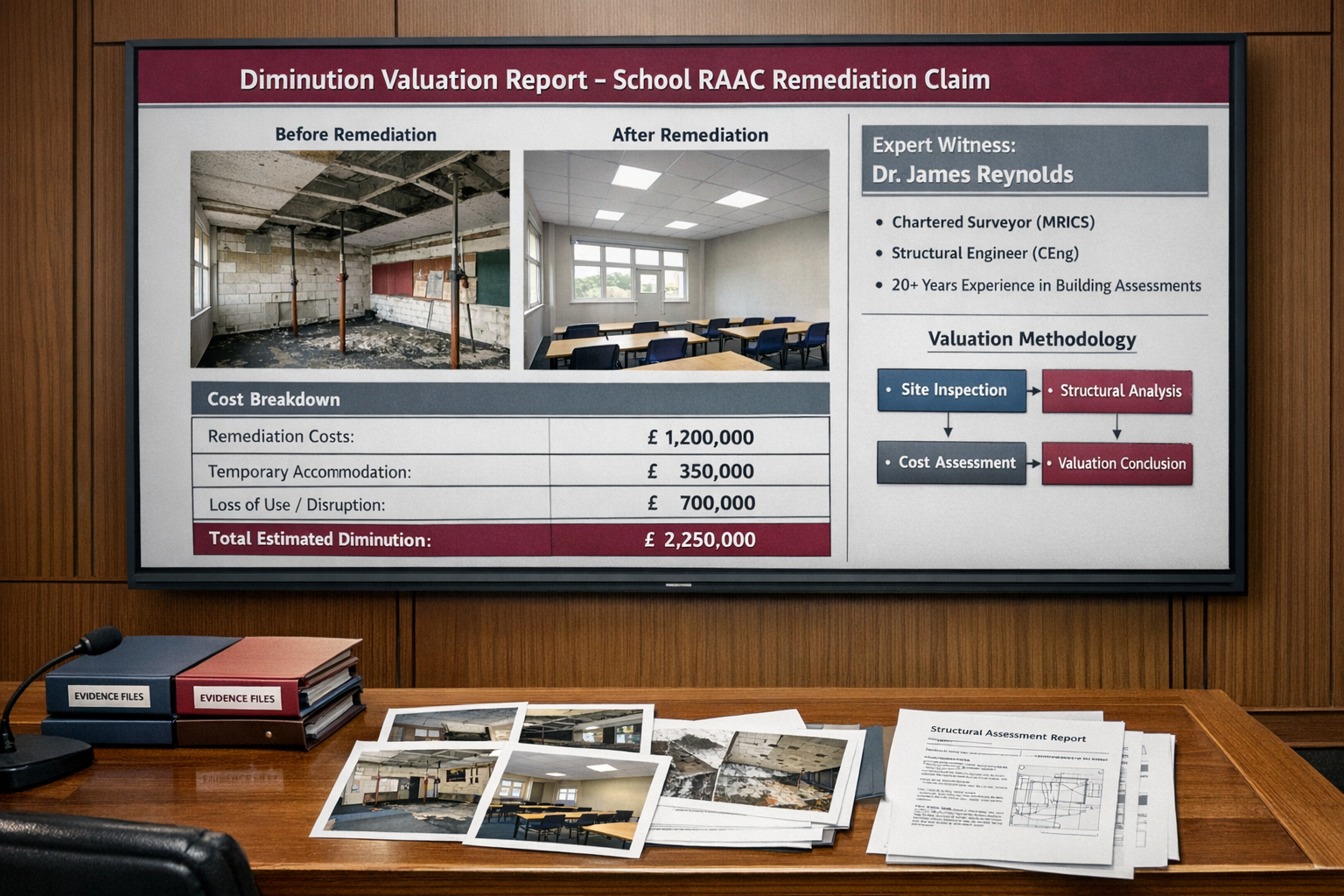
Expert Witness Surveyors in RAAC Concrete Disputes: 2026 Protocols for Report Preparation
Structure of Expert Witness Reports
RICS guidance and CPR Part 35 establish specific requirements for expert witness report structure. For RAAC disputes, reports should include:
1. Executive Summary
- Brief overview of instructions received
- Key findings and conclusions
- Opinion on liability and quantum (if within scope)
2. Expert's Qualifications and Experience
- Professional qualifications (MRICS, FRICS)
- Relevant experience with RAAC assessments
- Previous expert witness appointments
- Declaration of independence and absence of conflicts
3. Instructions and Scope
- Summary of instructing party's requirements
- Documents and information reviewed
- Site access arrangements and limitations
- Assumptions made in forming opinions
4. Technical Analysis
- Description of RAAC elements and condition
- Explanation of failure mechanisms
- Assessment of causation
- Evaluation of remediation options
5. Valuation Methodology
- Basis of valuation (diminution, cost of cure, loss of use)
- Comparable evidence and market data
- Assumptions and qualifications
- Range of values with supporting rationale
6. Conclusions and Opinions
- Clear statement of expert opinion on key issues
- Acknowledgment of limitations or uncertainties
- Response to specific questions posed by instructing party
- Statement of truth and CPR Part 35 compliance
Common Pitfalls to Avoid
Expert witness surveyors in RAAC disputes must be vigilant about potential credibility issues:
❌ Advocacy for the instructing party rather than objective analysis
❌ Insufficient technical investigation leading to speculative opinions
❌ Failure to consider alternative explanations for observed defects
❌ Inadequate documentation of inspection methodology
❌ Overreach beyond surveying expertise into structural engineering or legal matters
Maintaining professional boundaries while providing comprehensive evidence is essential for effective expert witness work. Surveyors should collaborate with structural engineers, quantity surveyors, and other specialists when issues exceed their competence.
Preparing for Cross-Examination
Expert witnesses must anticipate challenges to their evidence during tribunal proceedings. Effective preparation includes:
Anticipating Challenges:
- Identify weaknesses or assumptions in analysis
- Prepare explanations for methodology choices
- Review opposing expert reports thoroughly
- Develop responses to alternative interpretations
Communication Skills:
- Practice explaining technical concepts in plain language
- Prepare visual aids (photographs, diagrams, charts)
- Maintain composure under aggressive questioning
- Acknowledge limitations without undermining credibility
Professional Demeanor:
- Dress appropriately for court or tribunal settings
- Speak clearly and directly to the judge/panel
- Avoid technical jargon unless necessary
- Remain objective and non-defensive
The ability to withstand cross-examination while maintaining professional credibility distinguishes effective expert witnesses from those who merely prepare reports.
Emerging Protocols and Best Practices for 2026
Integration of Digital Technology
The 2026 landscape for expert witness surveying increasingly incorporates advanced technology:
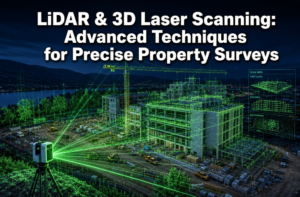
3D Laser Scanning:
- Precise dimensional documentation of RAAC elements
- Creation of digital twins for remediation planning
- Measurement accuracy exceeding traditional methods
- Permanent record of pre-remediation conditions
Drone Inspection:
- Safe access to high-level RAAC roof installations
- Thermal imaging for moisture detection
- Photogrammetry for structural deformation analysis
- Reduced inspection costs and safety risks
Building Information Modeling (BIM):
- Integration of inspection data with building models
- Visualization of remediation options
- Coordination with structural engineering analysis
- Enhanced communication with tribunals through 3D presentations
Expert witnesses who effectively leverage these technologies while maintaining traditional surveying rigor provide superior evidence quality.
Collaborative Expert Approaches
Complex RAAC disputes often benefit from collaborative expert approaches:
Joint Expert Appointments:
- Single expert appointed by agreement of both parties
- Reduced costs and expedited dispute resolution
- Enhanced objectivity and tribunal acceptance
- Appropriate for less contentious technical issues
Expert Meetings:
- Without-prejudice discussions between opposing experts
- Identification of agreed facts and narrow disputed issues
- Joint statements highlighting areas of agreement/disagreement
- Significant efficiency gains in tribunal proceedings
Multi-Disciplinary Teams:
- Surveyors working alongside structural engineers
- Quantity surveyors providing cost validation
- Building services engineers assessing system impacts
- Coordinated evidence addressing all claim aspects
These collaborative approaches align with tribunal preferences for efficient dispute resolution while maintaining expert independence.
Regulatory Developments and Compliance
The RAAC crisis has prompted regulatory responses that expert witnesses must incorporate:
Building Safety Act 2022 Implications:
- Enhanced duty holder responsibilities for existing buildings
- Mandatory occurrence reporting requirements
- Higher competence standards for construction professionals
- Impact on liability allocation in RAAC disputes
Updated RICS Guidance:
- Specific practice standards for RAAC assessment
- Enhanced quality assurance requirements
- Professional indemnity insurance considerations
- Continuing professional development requirements
Department for Education Protocols:
- Standardized RAAC identification methodologies
- Approved remediation approaches for educational facilities
- Funding application requirements and evidence standards
- Post-remediation certification and monitoring
Expert witnesses must stay current with these evolving standards to provide relevant, compliant evidence. Engaging with professional development resources and chartered surveyor networks helps maintain technical currency.
Case Study: Typical RAAC Dispute Timeline
Understanding the typical progression of RAAC disputes helps expert witnesses anticipate evidence requirements:
| Phase | Timeline | Expert Witness Activities |
|---|---|---|
| Discovery | Month 0 | RAAC identified during routine inspection or emergency failure |
| Emergency Response | Months 0-1 | Initial safety assessment, temporary support design, building evacuation decisions |
| Investigation | Months 1-3 | Comprehensive structural survey, extent of RAAC documentation, remediation feasibility study |
| Claim Notification | Months 3-4 | Liability assessment, preliminary valuation, expert appointment |
| Detailed Assessment | Months 4-8 | Site inspections, testing program, remediation design review, diminution valuation |
| Report Preparation | Months 8-10 | Expert report drafting, peer review, disclosure to opposing party |
| Expert Exchange | Months 10-12 | Review of opposing expert reports, expert meetings, joint statements |
| Tribunal/Settlement | Months 12-18 | Expert testimony, cross-examination, or settlement negotiations |
| Post-Decision | Months 18+ | Remediation monitoring, final account assessment, lessons learned |
This timeline varies based on dispute complexity, building size, and party cooperation, but provides a framework for expert witness engagement planning.
Selecting the Right Expert Witness Surveyor
Property owners, contractors, and insurers facing RAAC disputes should consider these factors when appointing expert witnesses:
Technical Competence:
- RICS accreditation (MRICS or FRICS)
- Demonstrated experience with RAAC assessment
- Understanding of relevant building types (schools, hospitals)
- Familiarity with remediation techniques and costs
Expert Witness Experience:
- Previous tribunal or court appointments
- Track record of report acceptance
- Ability to withstand cross-examination
- Understanding of CPR Part 35 requirements
Independence and Objectivity:
- No conflicts of interest with parties or properties
- Professional indemnity insurance coverage
- Reputation for balanced, defensible opinions
- Willingness to acknowledge limitations
Communication Skills:
- Ability to explain technical issues clearly
- Responsive to instructing party communications
- Collaborative approach with other experts
- Professional demeanor in formal proceedings
When choosing construction dispute resolution experts in 2026, parties should prioritize these qualities to ensure effective representation[1]. Regional expertise can also be valuable, with firms offering specialized services across Westminster, Kensington, and other London boroughs.
Conclusion: Navigating RAAC Disputes with Expert Guidance
The intersection of structural failure, regulatory compliance, and legal proceedings in RAAC concrete disputes creates a complex landscape requiring specialized expertise. Expert Witness Surveyors in RAAC Concrete Disputes: 2026 Protocols for School and Hospital Remediation Claims provide essential guidance for property owners, contractors, and insurers navigating these challenging situations.
Key principles for successful expert witness engagement include:
🔑 Rigorous adherence to CPR Part 35 duties ensuring objectivity and court-focused evidence
🔑 Comprehensive site inspection protocols that document RAAC condition using defensible methodologies
🔑 Sophisticated diminution valuations accounting for direct costs, consequential losses, and sector-specific impacts
🔑 Professional report preparation that withstands cross-examination and supports effective dispute resolution
🔑 Integration of emerging technologies while maintaining traditional surveying standards
Next Steps for Property Owners and Professionals
If you're facing a RAAC concrete dispute or need expert witness services:
- Conduct immediate safety assessments of any suspected RAAC installations
- Preserve evidence through comprehensive photographic and documentary records
- Engage qualified expert witnesses early to support claim development or defense
- Review insurance coverage and notify carriers promptly of potential claims
- Consider collaborative approaches such as joint experts to reduce costs and expedite resolution
For professional surveyors seeking to develop expert witness capabilities in RAAC disputes, invest in continuing professional development focused on structural assessment, valuation methodology, and legal evidence standards. Understanding related areas such as party wall procedures and boundary disputes provides valuable context for expert witness work.
The RAAC crisis presents significant challenges for the UK construction industry, but also an opportunity for expert witness surveyors to demonstrate the value of rigorous, objective professional evidence in resolving complex disputes. By adhering to established protocols and maintaining the highest standards of professional conduct, surveyors can help ensure fair outcomes while protecting public safety in schools, hospitals, and other critical facilities.
References
[1] Choosing The Right Construction Dispute Resolution Expert In 2026 – https://www.precisionschedulingconsultants.com/choosing-the-right-construction-dispute-resolution-expert-in-2026/
[2] Expert Witness Roles In 2026 Building Safety Act Disputes Evidence Standards For Mid Rise Residential Blocks – https://nottinghillsurveyors.com/blog/expert-witness-roles-in-2026-building-safety-act-disputes-evidence-standards-for-mid-rise-residential-blocks
[3] Building Survey Checklists For Raac And Cladding Remediation Projects In Q1 2026 Post Reform Compliance Essentials – https://nottinghillsurveyors.com/blog/building-survey-checklists-for-raac-and-cladding-remediation-projects-in-q1-2026-post-reform-compliance-essentials