

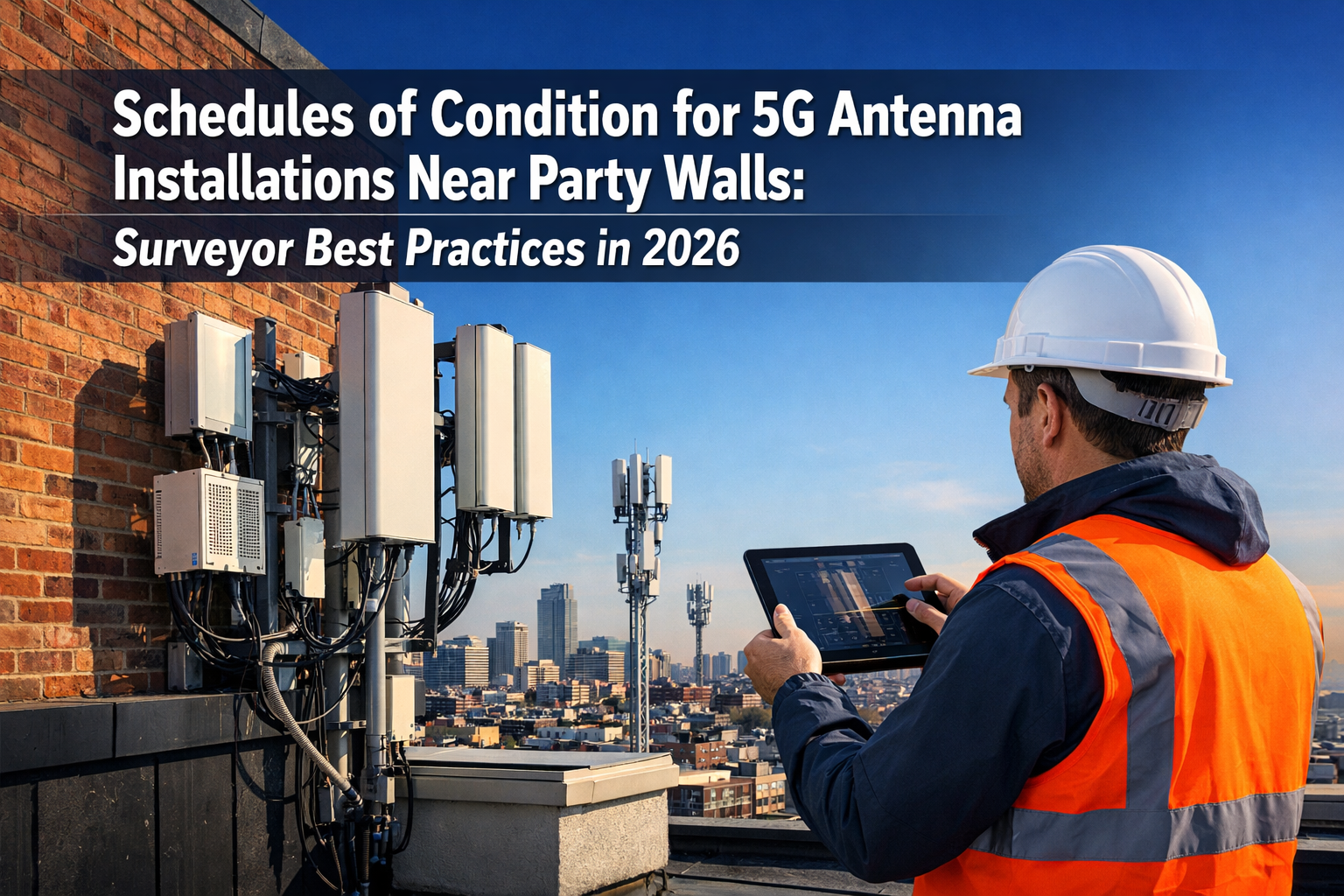
The rollout of 5G infrastructure demands that carriers install small cells every few hundred feet in urban areas—a density requirement that has transformed rooftops into prime telecommunications real estate[5]. As these installations multiply near party walls, property owners and surveyors face unprecedented challenges in documenting pre-existing conditions and protecting against post-installation damage claims. Schedules of Condition for 5G Antenna Installations Near Party Walls: Surveyor Best Practices in 2026 have evolved to address this complex intersection of telecommunications infrastructure, structural integrity, and property law.
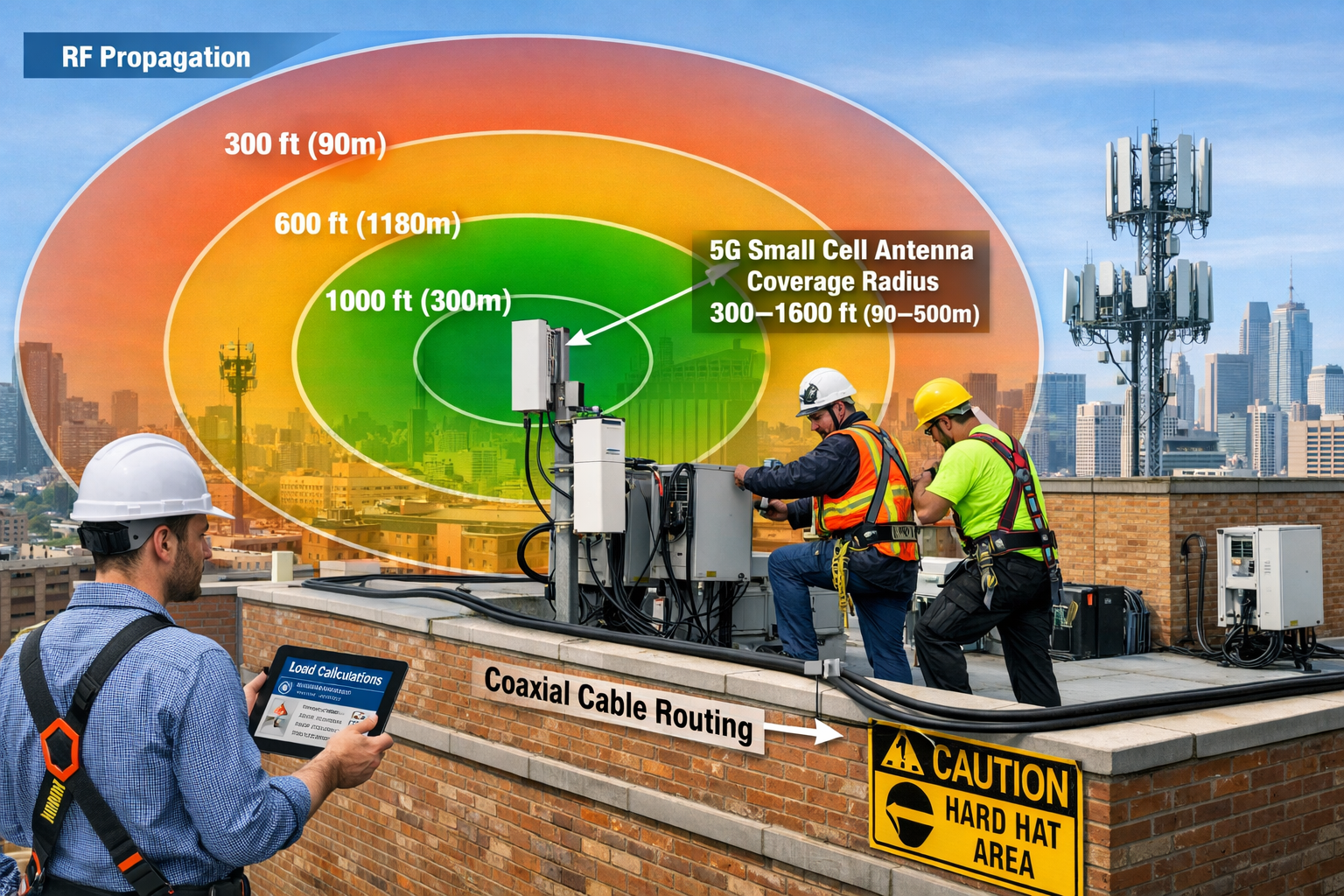
The technical reality is stark: high-frequency 5G signals travel only 300 to 1,600 feet, forcing network operators to deploy equipment on virtually every available rooftop in dense urban environments[5]. This infrastructure boom has created a critical need for rigorous documentation protocols that protect both property owners and telecommunications providers from costly disputes.
Key Takeaways
- 5G density requirements mandate small cell installations every few hundred feet, dramatically increasing rooftop antenna deployments near party walls across urban areas
- Pre-installation schedules of condition must include high-resolution digital photography, structural assessments, and timestamped documentation following RICS-aligned protocols
- RF engineering considerations require antenna positioning near building edges to prevent signal feedback, which directly impacts party wall proximity and documentation needs
- Digital monitoring systems enable surveyors to create defensible evidence chains through GPS-tagged imagery, 3D laser scanning, and comparative analysis tools
- Standardized templates reduce liability exposure by establishing clear baseline conditions before installation work begins
Understanding the 5G Infrastructure Challenge and Party Wall Implications
The telecommunications landscape in 2026 presents unique challenges for party wall surveyors working on antenna installations. Unlike previous wireless generations, 5G technology operates at higher frequencies with significantly reduced propagation distances. Mid-band 5G deployments utilizing 2.5 GHz, C-band (3.7–3.98 GHz), and CBRS frequencies demonstrate less effective building penetration than traditional cellular bands[6].
Why 5G Antenna Density Matters for Party Walls
The technical limitations of 5G signals create a perfect storm for party wall concerns:
- Signal range constraints: 5G carriers must position antennas every 300-1,600 feet in urban environments[5]
- Rooftop saturation: Nearly every multi-story building becomes a potential installation site
- Structural loading: Multiple antenna arrays add cumulative weight and wind load near party walls
- Access requirements: Installation and maintenance activities increase foot traffic near sensitive boundary structures
These factors have transformed what was once an occasional surveying concern into a standard practice requirement. Understanding what a party wall surveyor does becomes essential when evaluating 5G installation projects.
Technical Positioning Requirements That Affect Party Walls
Antenna site selection follows strict technical criteria that often place equipment near party wall boundaries. Optimal locations must:
- Minimize coaxial cable run distances to reduce signal loss
- Maintain clear line of sight to transmitting stations
- Position near building edges to prevent RF feedback loops that degrade system performance[2]
These engineering requirements frequently result in antenna placements within critical proximity to party walls, making comprehensive condition documentation absolutely essential.
Surveyor Best Practices for Pre-Installation Schedules of Condition
Creating effective Schedules of Condition for 5G Antenna Installations Near Party Walls: Surveyor Best Practices in 2026 requires a systematic approach that combines traditional surveying methods with modern digital documentation tools.
Comprehensive Visual Documentation Protocol
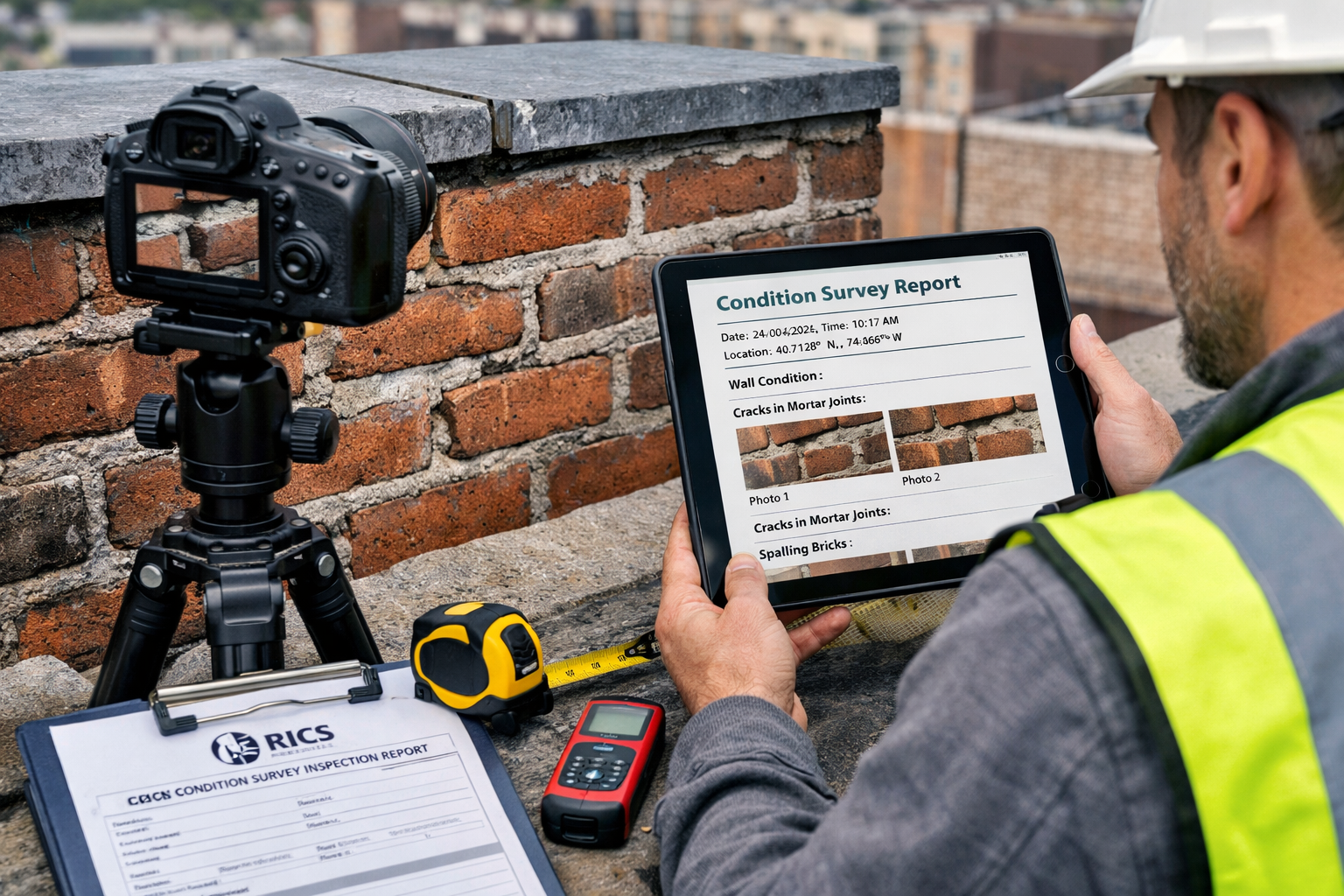
The foundation of any defensible schedule of condition rests on thorough photographic evidence. Modern best practices include:
📸 High-Resolution Digital Photography
- Minimum 12-megapixel resolution for all condition photographs
- Multiple angles of every party wall section within 10 meters of proposed antenna location
- Close-up detail shots of existing cracks, mortar deterioration, and structural features
- Wide-angle context shots showing relationship between party wall and installation site
🎯 Systematic Coverage Methodology
- Grid-based photography ensuring no section goes undocumented
- Consistent lighting conditions (preferably natural daylight)
- Scale references in every photograph using standardized measurement tools
- Overlapping coverage to create complete visual records
⏰ Metadata and Timestamping
- GPS coordinates embedded in image files
- Accurate date and time stamps on all digital media
- Weather conditions documented at time of survey
- Equipment specifications recorded (camera model, lens, settings)
A comprehensive schedule of condition serves as the baseline against which any post-installation claims will be evaluated.
Structural Assessment Components
Beyond photographic documentation, surveyors must conduct detailed structural evaluations:
| Assessment Element | Documentation Required | Purpose |
|---|---|---|
| Crack mapping | Precise measurements, width gauges, location diagrams | Establish pre-existing defects |
| Mortar condition | Joint integrity ratings, deterioration zones | Identify vulnerable areas |
| Load-bearing capacity | Structural calculations, engineer consultation | Verify installation feasibility |
| Drainage systems | Water management assessment, gutter condition | Prevent moisture-related claims |
| Movement indicators | Historic settlement evidence, alignment checks | Document existing structural behavior |
Digital Technology Integration
Modern surveying practices leverage advanced technology to create more defensible documentation:
3D Laser Scanning 📡
- Captures millimeter-accurate point clouds of party wall surfaces
- Creates permanent digital record of pre-installation geometry
- Enables precise before-after comparisons
- Particularly valuable for complex architectural features
Drone Photography 🚁
- Documents hard-to-access rooftop areas safely
- Provides aerial context of installation site
- Records surrounding property conditions
- Creates comprehensive visual baseline
Digital Annotation Tools 💻
- Real-time markup of condition photographs
- Cloud-based collaboration with stakeholders
- Standardized reporting templates
- Automatic report generation with embedded evidence
Technical Considerations for 5G Antenna Installations and Party Wall Safety
Understanding the technical requirements of 5G installations helps surveyors anticipate potential party wall impacts and document relevant conditions more effectively.
RF Engineering Factors Affecting Installation Location
Radio frequency engineering principles directly influence where antennas can be positioned, often placing them in proximity to party walls. Key technical considerations include:
Signal Propagation Requirements
- Line-of-sight paths to network infrastructure
- Minimal obstruction from building features
- Strategic positioning to maximize coverage area
- Coordination with existing cellular infrastructure
Installation Site Criteria
Institutional installations, such as those documented in government facilities, require extensive protocols including background investigations for personnel, detailed site surveys, comprehensive safety plans addressing radio-frequency exposure, and coordination with building security[3]. These same rigorous standards increasingly apply to commercial installations in 2026.
Structural Loading and Vibration Concerns
5G antenna installations introduce several mechanical stresses that can affect party walls:
- Static loads: Equipment weight, mounting hardware, cable infrastructure
- Dynamic loads: Wind forces on antenna arrays, maintenance access impacts
- Vibration transmission: Equipment operation, installation activities
- Thermal cycling: Temperature-induced expansion and contraction
Surveyors must document the party wall's current condition relative to these anticipated stresses. A specific defect survey may be warranted for party walls showing pre-existing structural concerns.
Access and Construction Impact Documentation
The installation process itself can affect party walls through:
- Heavy equipment access: Cranes, lifts, material handling
- Foot traffic patterns: Repeated access near wall boundaries
- Temporary support structures: Scaffolding, safety barriers
- Utility routing: Cable penetrations, conduit installations
Best Practice Tip: Document all access routes and temporary works locations in the pre-installation schedule of condition. Photograph areas where construction activity will occur, even if not immediately adjacent to the party wall.
RICS-Aligned Templates and Documentation Standards
Professional surveyors working on Schedules of Condition for 5G Antenna Installations Near Party Walls: Surveyor Best Practices in 2026 should adopt standardized templates that align with Royal Institution of Chartered Surveyors (RICS) guidance.
Essential Template Components
A comprehensive schedule of condition template should include:
📋 Executive Summary Section
- Property identification and address details
- Party wall location and description
- Installation project overview
- Survey date and conditions
- Surveyor credentials and contact information
📐 Detailed Condition Assessment
- Room-by-room or section-by-section documentation
- Condition ratings using standardized scales
- Photographic evidence cross-referenced to written descriptions
- Measurement data and dimensional information
- Material identification and age assessment
🔍 Special Considerations for 5G Installations
- Proximity measurements to proposed antenna locations
- Structural capacity evaluation relevant to installation loads
- Access route documentation
- Existing telecommunications equipment inventory
- Adjacent property condition notes
Standardized Condition Rating Systems
Consistent terminology ensures clarity and reduces ambiguity in dispute resolution:
| Rating | Description | Documentation Required |
|---|---|---|
| Excellent | No defects, as-new condition | General photographs |
| Good | Minor wear consistent with age | Photographs of representative areas |
| Fair | Moderate defects not affecting function | Detailed photographs, measurements |
| Poor | Significant defects requiring attention | Comprehensive documentation, specialist consultation |
| Critical | Structural concerns, immediate risk | Full engineering assessment, urgent remediation recommendations |
Digital Delivery and Archive Standards
Modern schedules of condition should be delivered in multiple formats:
- PDF report: Comprehensive, non-editable master document
- Cloud storage: Secure, timestamped digital archive
- Raw data files: Original photographs, measurements, scan data
- Summary dashboard: Quick-reference condition overview
Working with an expert party wall surveyor in London ensures documentation meets professional standards and legal requirements.
Post-Installation Monitoring and Dispute Prevention Strategies
Creating the initial schedule of condition represents only the first phase of effective party wall protection for 5G installations. Ongoing monitoring and clear protocols prevent disputes and provide evidence when claims arise.
Establishing Monitoring Protocols
Immediate Post-Installation Inspection ⚡
- Conduct within 48 hours of installation completion
- Use identical photographic positions from pre-installation survey
- Document any changes, however minor
- Create comparative analysis report
Periodic Monitoring Schedule 📅
- 30-day post-installation review
- 90-day structural settlement check
- Annual condition assessments
- Post-maintenance inspection protocols
Comparative Analysis Techniques
Modern digital tools enable precise before-after comparisons:
- Photographic overlay analysis: Digital alignment of pre and post-installation images
- 3D model comparison: Point cloud differential analysis showing structural changes
- Crack monitoring: Precise measurement of any crack propagation
- Settlement tracking: Laser level surveys detecting vertical movement
Dispute Resolution Documentation
When disputes arise, comprehensive documentation becomes invaluable:
Evidence Chain Requirements 🔗
- Unbroken custody record of all documentation
- Timestamped and GPS-tagged evidence
- Independent verification of survey methodology
- Professional credentials and qualifications
Expert Witness Preparation
Surveyors may need to provide expert testimony regarding party wall conditions. Proper documentation following Schedules of Condition for 5G Antenna Installations Near Party Walls: Surveyor Best Practices in 2026 creates defensible evidence that withstands legal scrutiny.
Understanding how to find the best local surveyor near you becomes critical when specialized 5G installation expertise is required.
Regulatory Compliance and Legal Considerations in 2026
The legal framework surrounding 5G installations near party walls continues to evolve. Surveyors must stay current with regulatory requirements affecting their documentation practices.
Party Wall Act 1996 Application
The Party Wall Act 1996 remains the foundational legislation governing work affecting party walls in England and Wales. Key provisions relevant to 5G installations include:
- Notice requirements: Building owners must serve proper notice before installation work
- Surveyor appointments: Parties may appoint agreed or separate surveyors
- Award provisions: Surveyors issue awards specifying work scope and protections
- Schedule of condition: Explicitly referenced as protective documentation
Telecommunications-Specific Regulations
5G deployments operate under additional regulatory frameworks:
Electronic Communications Code 📡
- Grants operators rights to install equipment on properties
- Establishes compensation frameworks
- Creates dispute resolution mechanisms
- Balances property rights with infrastructure needs
Planning and Permitted Development
- Many 5G installations qualify as permitted development
- Height, size, and location restrictions apply
- Prior approval processes in sensitive areas
- Local authority consultation requirements
Professional Liability Considerations
Surveyors conducting schedules of condition for 5G installations must maintain appropriate professional standards:
- Professional indemnity insurance: Adequate coverage for telecommunications work
- RICS membership and compliance: Adherence to professional conduct standards
- Continuing professional development: Current knowledge of 5G technology and impacts
- Conflicts of interest: Proper disclosure and management
Case Studies: Lessons from 5G Party Wall Disputes
Real-world examples illustrate the importance of comprehensive schedules of condition for 5G antenna installations.
Case Study 1: Inadequate Pre-Installation Documentation
Scenario: A telecommunications provider installed 5G equipment on a commercial building rooftop. Six months later, the adjoining property owner claimed the installation caused cracks in their party wall.
Documentation Gap: The initial schedule of condition included only general photographs without close-up detail of the party wall's mortar joints.
Outcome: Without clear evidence of pre-existing conditions, the dispute required expensive structural engineering investigations and ultimately settled for £45,000 despite uncertainty about causation.
Lesson: High-resolution close-up photography of all party wall surfaces is non-negotiable. Document existing cracks, mortar condition, and structural features in detail.
Case Study 2: Effective Digital Monitoring Prevents False Claims
Scenario: A residential property owner alleged that 5G antenna installation caused settlement damage to their party wall.
Documentation Success: The surveyor had created a comprehensive digital baseline including 3D laser scans and GPS-tagged photography. Post-installation monitoring showed no measurable changes.
Outcome: The claim was dismissed within weeks based on objective digital evidence showing the alleged damage pre-existed the installation.
Lesson: Investment in digital documentation technology provides cost-effective dispute resolution and protects all parties from unfounded claims.
Case Study 3: Ongoing Monitoring Identifies Legitimate Issues
Scenario: Routine 90-day post-installation monitoring revealed minor crack propagation in a party wall near a 5G installation.
Documentation Success: The schedule of condition had documented a hairline crack. Monitoring showed measurable widening from 0.5mm to 1.2mm.
Outcome: Early detection enabled prompt remediation before significant damage occurred. The telecommunications provider addressed the issue under the original installation contract, avoiding costly litigation.
Lesson: Ongoing monitoring protocols protect both property owners and installation companies by identifying genuine issues early when remediation costs remain manageable.
Cost-Benefit Analysis: Investing in Comprehensive Documentation
Property owners and telecommunications providers often question the cost of thorough schedules of condition. The financial analysis strongly favors comprehensive documentation.
Documentation Investment Costs
Basic Schedule of Condition 💷
- Visual inspection and photography: £800-1,500
- Written report with standard photographs: £1,200-2,000
- Suitable for simple installations with minimal party wall proximity
Comprehensive Digital Documentation 💷💷
- High-resolution photography with systematic coverage: £2,000-3,500
- 3D laser scanning and digital modeling: £3,500-6,000
- Drone photography and aerial documentation: £4,000-7,500
- Complete package with ongoing monitoring: £6,000-10,000
Dispute Resolution Cost Comparison
The cost of inadequate documentation becomes apparent when disputes arise:
| Scenario | Cost Without Proper Documentation | Cost With Comprehensive Documentation |
|---|---|---|
| Minor claim investigation | £8,000-15,000 (structural surveys, legal fees) | £500-1,500 (comparative analysis) |
| Moderate dispute resolution | £25,000-50,000 (expert witnesses, mediation) | £2,000-5,000 (evidence review) |
| Full litigation | £100,000-250,000+ (court proceedings) | £10,000-25,000 (expert testimony) |
Return on Investment: A £10,000 investment in comprehensive documentation can prevent £100,000+ in dispute costs—a 10:1 or better return.
Technology Trends Shaping Future Best Practices
The field of condition documentation continues to evolve rapidly. Surveyors should prepare for emerging technologies that will shape Schedules of Condition for 5G Antenna Installations Near Party Walls: Surveyor Best Practices in 2026 and beyond.
Artificial Intelligence and Automated Defect Detection
AI-powered image analysis tools can:
- Automatically identify cracks and structural defects in photographs
- Measure crack widths with sub-millimeter accuracy from standard images
- Compare before-after images to highlight changes
- Generate preliminary condition reports from photographic evidence
These tools increase efficiency while maintaining documentation quality.
Blockchain-Based Evidence Authentication
Emerging blockchain technology offers:
- Immutable timestamp verification for all documentation
- Tamper-proof evidence chains that withstand legal challenges
- Automated custody tracking for digital files
- Smart contract integration for automated monitoring triggers
Real-Time Structural Monitoring Systems
Advanced installations now incorporate:
- Permanent sensor networks monitoring party wall movement
- Continuous vibration monitoring during and after installation
- Automated alert systems for threshold exceedances
- Cloud-based dashboards providing real-time condition data
These systems transform schedules of condition from static documents into dynamic monitoring platforms.
Integration with Building Information Modeling (BIM)
BIM integration enables:
- 3D visualization of party walls within complete building models
- Structural analysis integration showing load distributions
- Installation planning that minimizes party wall impacts
- Lifecycle documentation tracking conditions over decades
Practical Implementation Guide for Surveyors
Implementing best practices for Schedules of Condition for 5G Antenna Installations Near Party Walls: Surveyor Best Practices in 2026 requires systematic preparation and execution.
Pre-Survey Preparation Checklist ✅
Documentation Review
- Obtain building plans and party wall locations
- Review telecommunications installation specifications
- Identify all affected party walls and adjacent properties
- Research property history and previous condition reports
Equipment Preparation
- High-resolution digital camera with backup batteries
- Laser distance measuring tools
- Crack width measurement gauges
- GPS-enabled devices for location tagging
- Adequate lighting equipment for interior spaces
- Safety equipment (hard hat, hi-vis vest, safety harness if needed)
Stakeholder Coordination
- Schedule access with all property owners
- Coordinate with telecommunications installation team
- Arrange for specialist consultations if needed (structural engineer, RF engineer)
- Confirm insurance coverage and professional indemnity limits
On-Site Survey Execution Protocol
Systematic Documentation Approach 📋
- Exterior assessment first: Document all external party wall surfaces
- Interior room-by-room survey: Work systematically through adjacent spaces
- Vertical coverage: Document party walls from foundation to roof level
- Special attention areas: Focus on locations near proposed antenna positions
- Context photography: Capture surrounding conditions and access routes
Quality Control During Survey
- Review photographs immediately for clarity and coverage
- Verify GPS tagging and metadata on all images
- Take redundant photographs of critical features
- Document any access limitations or restricted areas
- Note weather conditions affecting survey quality
Post-Survey Report Development
Report Structure Best Practices 📄
Executive Summary (1-2 pages)
- Key findings and overall condition assessment
- Critical issues requiring immediate attention
- Recommendations for installation precautions
Detailed Documentation (20-50 pages typical)
- Systematic condition descriptions
- Photographic evidence with annotations
- Measurement data and structural observations
- Material condition assessments
Appendices
- Complete photographic record
- Technical specifications
- Measurement data tables
- Professional credentials and methodology
Delivery Timeline
- Draft report within 5-7 business days
- Final report within 10 business days
- Digital archive delivery concurrent with final report
Conclusion
The intersection of 5G infrastructure deployment and party wall law has created unprecedented challenges for property owners, telecommunications providers, and surveyors in 2026. As carriers install small cells every few hundred feet to meet the technical demands of high-frequency 5G signals, virtually every urban rooftop becomes potential telecommunications real estate—and every party wall becomes a potential source of dispute.
Schedules of Condition for 5G Antenna Installations Near Party Walls: Surveyor Best Practices in 2026 provide the essential framework for protecting all stakeholders through comprehensive documentation, digital monitoring, and RICS-aligned professional standards. The evidence is clear: investing in thorough pre-installation condition surveys delivers exceptional returns by preventing costly disputes, enabling rapid resolution when claims arise, and creating defensible evidence chains that withstand legal scrutiny.
Actionable Next Steps
For Property Owners 🏢
- Engage a qualified party wall surveyor before any 5G installation work begins
- Insist on comprehensive digital documentation including high-resolution photography and 3D scanning
- Establish ongoing monitoring protocols with clear inspection schedules
- Maintain secure archives of all condition documentation
For Telecommunications Providers 📡
- Budget for comprehensive schedules of condition as standard project costs
- Implement digital documentation platforms across all installation projects
- Develop standardized templates aligned with RICS professional standards
- Create clear protocols for post-installation monitoring and dispute resolution
For Surveyors 📐
- Invest in digital documentation technology including 3D laser scanning and GPS-enabled photography
- Develop specialized expertise in telecommunications infrastructure and RF engineering principles
- Create standardized templates and workflows for 5G installation projects
- Maintain current knowledge of regulatory frameworks and emerging technologies
The rapid evolution of 5G infrastructure will continue throughout 2026 and beyond. Surveyors who adopt comprehensive documentation practices, leverage digital technology, and maintain professional standards will provide invaluable protection for all parties while positioning themselves as essential specialists in this growing field.
The cost of thorough documentation represents a fraction of potential dispute resolution expenses—making professional schedules of condition not just best practice, but sound financial strategy for everyone involved in 5G antenna installations near party walls.
References
[1] 5g Design Best Practices White Paper – https://www.ibwave.com/storage/app/media/pdf/white-papers/5g-design-best-practices_white-paper.pdf?blaid=4223656&v=2
[2] Public Safety Primer – https://www.saferbuildings.org/public-safety-primer
[3] 26101 26 05 – https://policymanual.nih.gov/26101-26-05
[4] 5g Deployment Best Practices – https://inorsa.com/5g-deployment-best-practices/
[5] 5g Towers 2026 – https://epb.com/get-connected/tech-support/5g-towers-2026/
[6] Cellular Das In 2026 Technical Considerations For Modern In‑building Wireless Systems – https://in-buildingwireless.com/cellular-das-in-2026-technical-considerations-for-modern-in%E2%80%91building-wireless-systems/
[7] M Ant 5g Mp Out N – https://www.cisco.com/c/en/us/td/docs/routers/connectedgrid/antennas/install-guide/b-cisco-industrial-routers-and-industrial-wireless-access-points-antenna-guide/m-ant-5g-mp-out-n.html