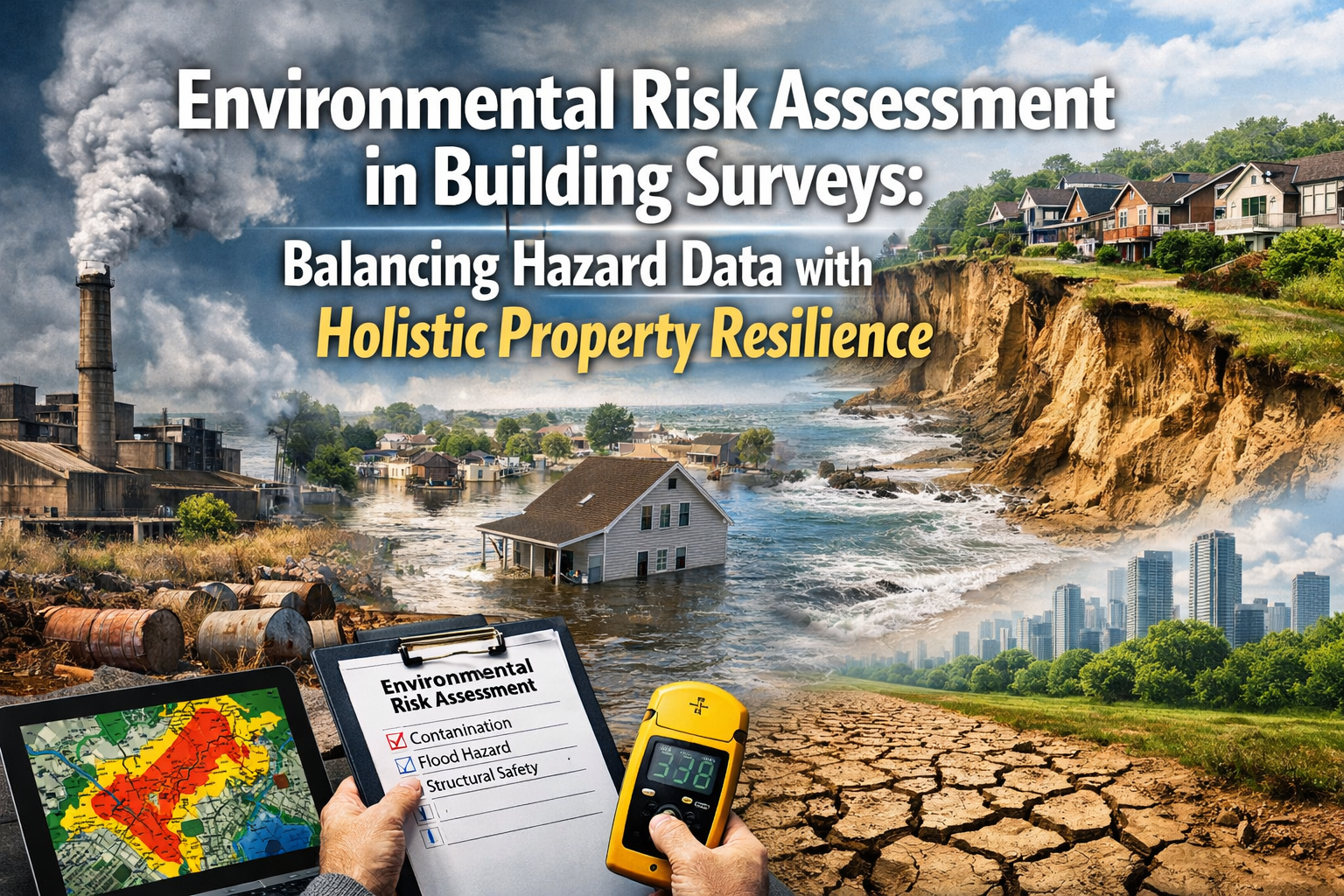
{"cover":"Professional landscape format (1536×1024) editorial hero image featuring bold text overlay 'Environmental Risk Assessment in Building Surveys: Balancing Hazard Data with Holistic Property Resilience' in extra large 70pt white sans-serif font with dark shadow effect, positioned in upper third with perfect alignment. Background shows split-screen composition: left side displays modern building with thermal imaging overlay showing heat loss patterns in blue and red gradients, right side shows surveyor with tablet examining property with climate data visualization floating holographically. Foreground includes moisture detection equipment, environmental sensors, and sustainability certification badges. Color palette: deep navy blue, bright cyan, white, orange accent highlights. High contrast, magazine cover quality, professional architectural photography style with technology integration, rule of thirds composition, visually commanding and authoritative","content":["Detailed landscape format (1536×1024) image showing comprehensive environmental assessment workflow diagram with three distinct layers: bottom layer displays traditional hazard data collection with clipboard checklists and moisture meters on aged building walls showing damp patches; middle layer shows digital transformation with tablet displaying thermal imaging, air quality sensors mounted on walls, and real-time data dashboards with graphs; top layer illustrates holistic resilience framework with interconnected nodes representing climate adaptation, energy efficiency ratings, flood risk mapping, and long-term maintenance planning. Color-coded pathways connect all layers with arrows. Professional infographic style with clean typography, icons for each assessment category, blue and green color scheme representing water and sustainability, white background with subtle grid pattern, technical yet accessible visual design","Detailed landscape format (1536×1024) image depicting modern surveyor conducting integrated environmental assessment in non-standard heritage property. Scene shows professional with advanced equipment including thermal camera, moisture detection probe, and tablet displaying real-time environmental data overlays. Visible assessment elements: exposed timber beams with moisture content readings displayed as floating digital annotations, wall cross-section cutaway revealing insulation layers and potential thermal bridges highlighted in orange, air quality monitoring device with particulate matter readings, and energy performance certificate framework visible on screen. Background shows period features like ornate moldings and original windows with double-glazing retrofit considerations marked. Split-screen effect shows same room in different seasons demonstrating climate resilience planning. Architectural photography style with technical overlay graphics, professional lighting, blue and amber color grading emphasizing technology meets tradition","Detailed landscape format (1536×1024) image illustrating comprehensive property resilience dashboard and future-proofing strategy visualization. Central focus shows large digital display screen mounted on wall showing integrated risk assessment interface with multiple data panels: top-left panel displays climate projection maps with flood zones and heat island effects for 2030-2050 timeline; top-right shows energy performance trending graphs with carbon emissions reduction targets; bottom-left features maintenance lifecycle calendar with predictive analytics for building systems; bottom-right displays financial modeling showing long-term value preservation curves. Foreground includes surveyor's desk with physical reports, sustainability certification documents, and building plans marked with resilience upgrade recommendations. Background shows window view of urban landscape with green infrastructure elements. Modern professional office aesthetic, clean data visualization design, green and blue corporate color scheme, high-tech professional photography with shallow depth of field on dashboard"]"}
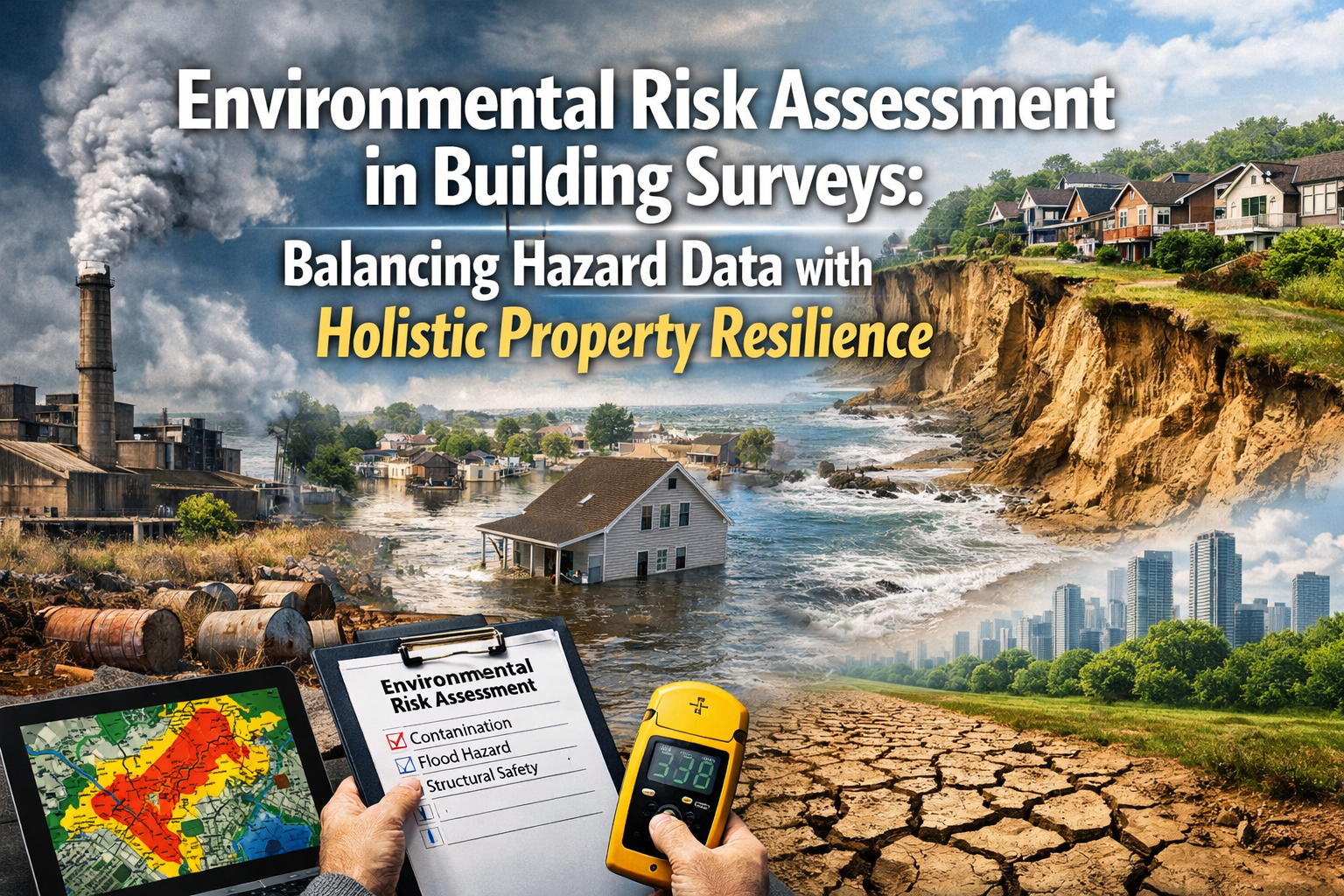
In 2026, the property assessment landscape has fundamentally transformed. Traditional building surveys that once focused narrowly on structural defects and immediate hazards now face mounting pressure to address climate resilience, energy performance, and long-term environmental sustainability. Environmental Risk Assessment in Building Surveys: Balancing Hazard Data with Holistic Property Resilience has become essential as regulatory frameworks tighten, climate risks intensify, and property stakeholders demand comprehensive insights that extend far beyond conventional checklists.
The convergence of mandatory emissions reporting, AI-powered monitoring systems, and evolving environmental standards means surveyors can no longer treat environmental assessment as an optional add-on. Whether evaluating a Victorian terrace with heritage constraints or a modern commercial building facing new disclosure requirements, professionals must integrate climate adaptation strategies, energy efficiency metrics, and predictive maintenance planning into every property assessment to deliver meaningful value in today's market.
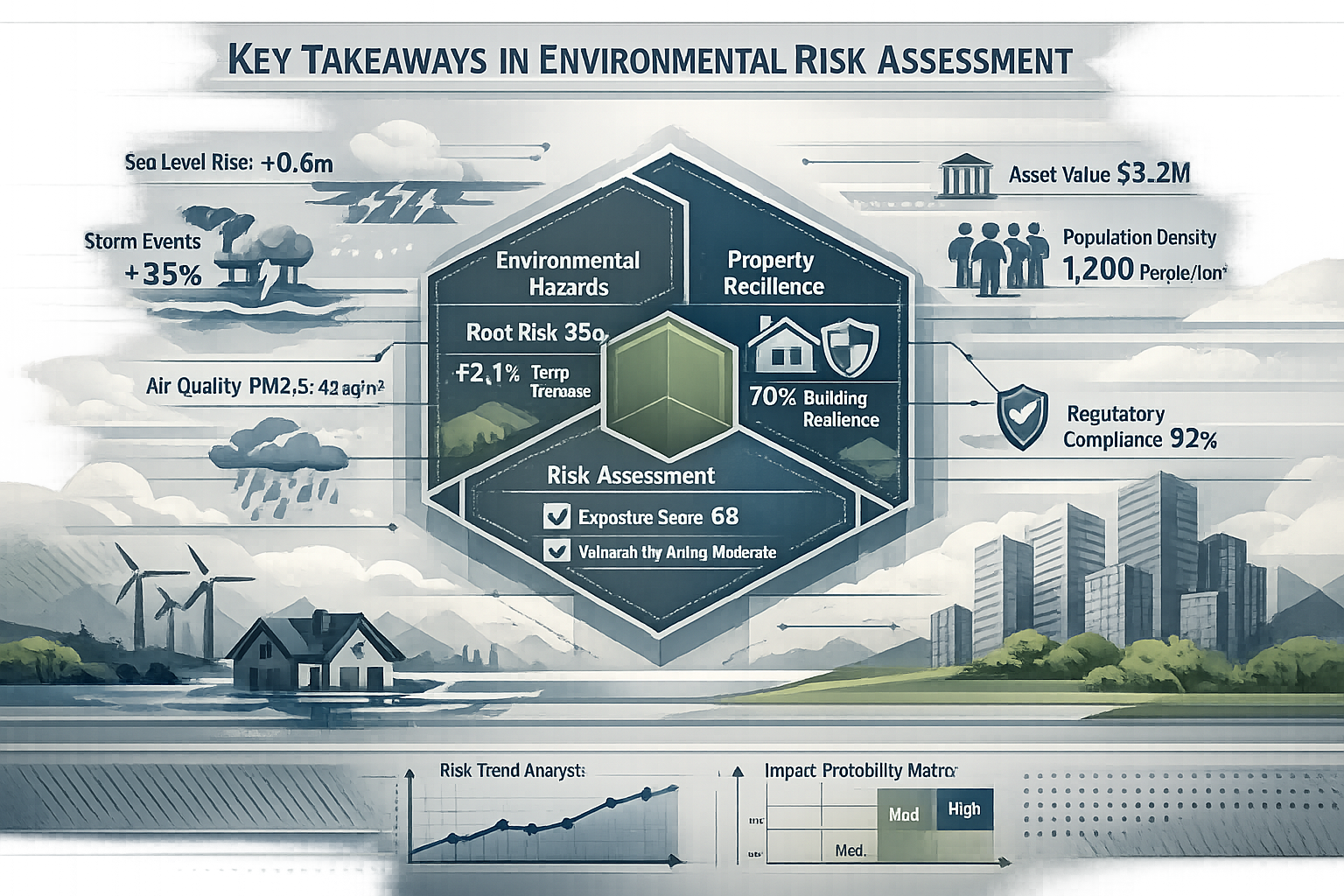
Key Takeaways
- 🏗️ Regulatory expansion in 2026 requires comprehensive moisture assessment, energy reporting for large buildings, and greenhouse gas emissions disclosure across multiple jurisdictions
- 🤖 AI-powered continuous monitoring is replacing periodic manual audits, enabling real-time hazard detection and predictive risk modeling for environmental factors
- 📊 Holistic resilience frameworks integrate traditional hazard data with climate projections, energy performance, embodied carbon, and long-term maintenance planning
- 🏘️ Non-standard and heritage properties present unique challenges requiring specialized environmental assessment approaches that balance preservation with sustainability
- 💰 Property valuations increasingly reflect environmental performance, climate resilience, and future regulatory compliance costs
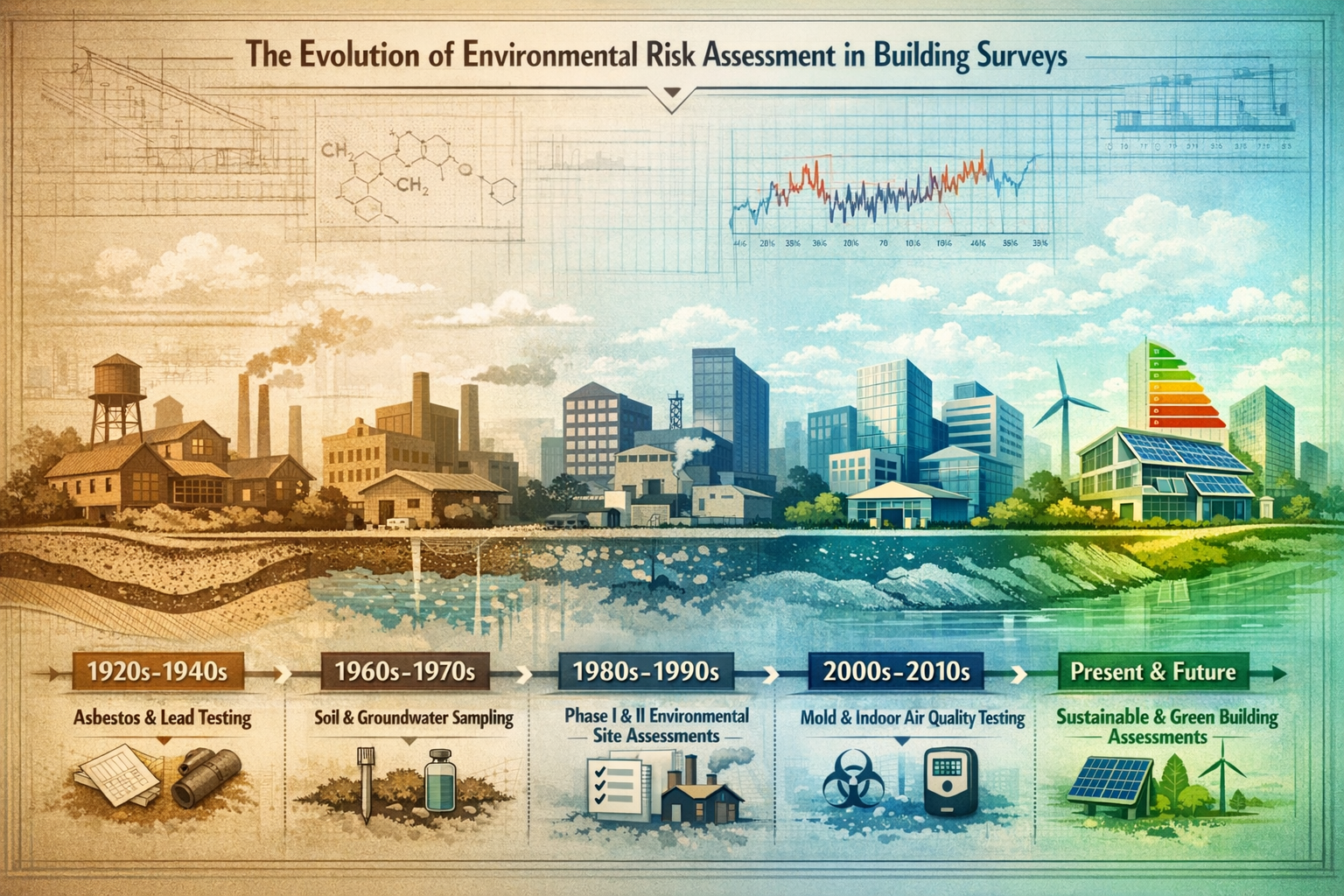
The Evolution of Environmental Risk Assessment in Building Surveys
From Checklist Compliance to Integrated Resilience
Traditional building surveys have historically focused on identifying immediate physical defects—structural cracks, damp penetration, roof deterioration, and similar tangible hazards. Environmental considerations, when included at all, typically consisted of basic asbestos screening, contaminated land checks, and flood risk zone identification. This narrow approach served adequately when regulatory requirements remained limited and climate impacts seemed distant.
The landscape has shifted dramatically. In 2026, the Enterprise Green Communities Certification now mandates comprehensive interior and exterior assessment of buildings undergoing substantial rehabilitation for evidence of moisture problems, with mandatory implementation of roofing materials and paved surface management options for new construction [1]. This represents just one example of how environmental assessment has moved from optional best practice to regulatory requirement.
Surveyors must now consider:
- Climate adaptation requirements including flood resilience, heat island mitigation, and extreme weather preparedness
- Energy performance standards with mandatory reporting for buildings exceeding 20,000 square feet in Massachusetts and similar thresholds across multiple states [2]
- Greenhouse gas emissions disclosure under California's Climate Corporate Data Accountability Act (SB 253), requiring Scope 1 and Scope 2 emissions reporting beginning in 2026 for qualifying entities [2]
- Embodied carbon calculations following the forthcoming ANSI 1550 Standard for residential projects, expected to release in 2026 [2]
- Long-term maintenance implications of environmental performance choices on property value and operational costs
The Technology Transformation
Environmental Health and Safety programs have transitioned from periodic audits to continuous monitoring using sensors, analytics, and workflow automation for real-time hazard detection and emissions modeling [4]. This technological shift fundamentally changes how surveyors approach environmental risk assessment.
AI-enabled capabilities now include:
- Thermal imaging analysis identifying heat loss patterns and insulation deficiencies
- Satellite-based air quality monitoring for comprehensive environmental impact evaluation [3]
- Predictive analytics forecasting maintenance needs based on environmental exposure patterns
- Automated compliance reporting tracking regulatory requirements across fragmented jurisdictions
- Real-time moisture detection preventing damage before visible symptoms appear
Leading environmental assessment firms like AECOM Technology Corporation leverage advanced GIS platforms and data analytics tools to provide comprehensive impact studies, regulatory compliance advisory, and sustainability consulting [3]. This level of sophistication has become increasingly accessible to property surveyors through specialized software platforms and partnership arrangements.
When conducting a homebuyers report or building survey, integrating these technological capabilities transforms the assessment from a snapshot evaluation to a forward-looking resilience analysis.
Balancing Traditional Hazard Data with Environmental Performance Metrics
Integrating Multiple Assessment Frameworks
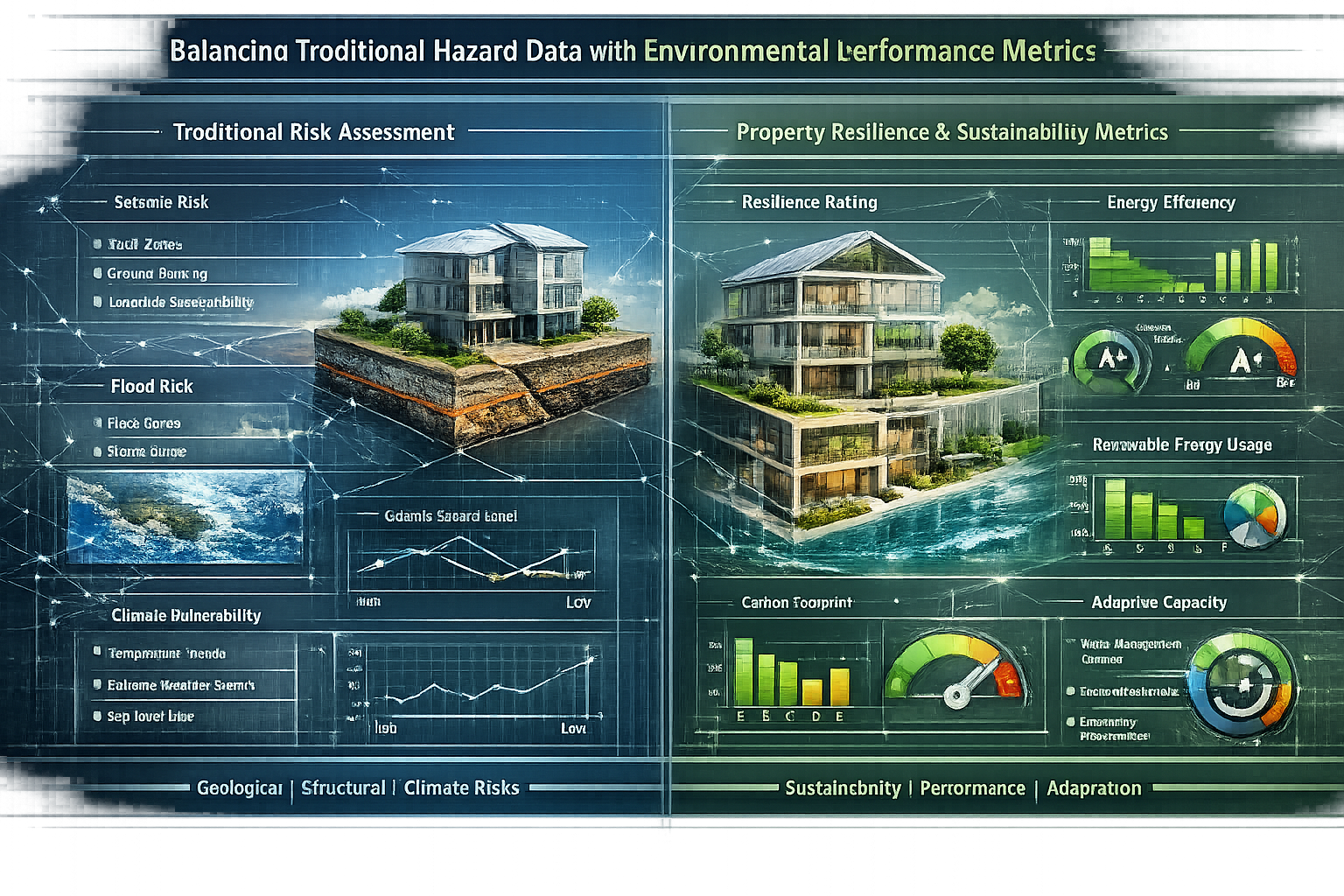
The challenge facing surveyors in 2026 lies not in choosing between traditional hazard identification and environmental performance assessment, but in effectively integrating both frameworks into a coherent, actionable report. Property stakeholders need to understand immediate risks alongside long-term resilience factors.
A comprehensive environmental risk assessment framework includes:
| Assessment Category | Traditional Hazard Data | Environmental Performance Metrics |
|---|---|---|
| Moisture & Damp | Visual inspection, moisture meter readings, evidence of water ingress | Whole-building hygrothermal modeling, condensation risk analysis, climate-adjusted projections |
| Energy Efficiency | Basic insulation presence, heating system age | EPC ratings, thermal imaging, predicted energy costs, carbon intensity calculations |
| Structural Integrity | Cracks, movement, foundation issues | Climate resilience assessment, extreme weather vulnerability, adaptation capacity |
| Indoor Environment | Ventilation adequacy, visible mold | Air quality monitoring, VOC levels, particulate matter, health impact assessment |
| External Factors | Flood zone identification, contaminated land screening | Multi-hazard climate projections, urban heat island effects, biodiversity impact |
This integrated approach provides property buyers, investors, and owners with the information needed to make informed decisions about purchase price negotiations, renovation priorities, and long-term holding strategies. Understanding average price reduction after survey findings requires consideration of both immediate repair costs and future environmental compliance expenses.
Specialized Assessments for Non-Standard Properties
Non-standard properties—including heritage buildings, unconventional construction types, and properties with unique environmental exposures—require particularly nuanced environmental risk assessment approaches. These properties often face conflicting pressures between preservation requirements and sustainability improvements.
For heritage properties, surveyors must balance:
- Conservation constraints limiting retrofit options with modern energy efficiency expectations
- Traditional construction methods (solid walls, single-glazed windows, lime plaster) with moisture management in changing climate conditions
- Listed building restrictions with mandatory energy performance disclosure requirements
- Historic fabric preservation with occupant comfort and operational cost considerations
A damp survey for a Victorian terrace, for example, must consider how traditional breathable construction interacts with modern heating patterns and increasingly intense rainfall events. Recommendations must preserve the building's character while improving resilience to environmental stressors.
Similarly, properties with unconventional construction—timber frame, steel frame, concrete panel systems—each present distinct environmental risk profiles requiring specialized assessment protocols. Understanding material-specific deterioration patterns under various climate scenarios becomes essential for accurate long-term resilience evaluation.
Implementing Holistic Property Resilience Assessment in Practice
The Five-Pillar Resilience Framework
To move beyond fragmented environmental checklists toward truly holistic resilience assessment, surveyors should adopt a structured framework addressing five interconnected pillars:
1. Climate Adaptation & Physical Resilience 🌍
Assess the property's vulnerability to climate-related hazards and capacity to adapt:
- Flood resilience: Current and projected flood risk zones, drainage capacity, flood-resistant construction features, emergency response provisions
- Thermal resilience: Overheating risk assessment, passive cooling capacity, extreme temperature adaptation strategies
- Weather event preparedness: Wind resistance, storm damage vulnerability, emergency access and egress
- Landscape resilience: Sustainable drainage systems, green infrastructure, biodiversity support
2. Energy Performance & Carbon Footprint ⚡
Evaluate current energy efficiency and pathways to decarbonization:
- Operational energy: Current EPC rating, heating/cooling system efficiency, renewable energy generation capacity
- Embodied carbon: Construction material carbon intensity, renovation carbon implications following ANSI 1550 methodology [2]
- Future compliance: Trajectory toward net-zero requirements, upgrade feasibility and costs
- Energy cost modeling: Projected operational expenses under various energy price scenarios
3. Indoor Environmental Quality 🏠
Assess factors affecting occupant health, comfort, and productivity:
- Air quality: Ventilation effectiveness, pollutant sources, particulate matter levels, VOC concentrations
- Moisture management: Condensation risk, mold potential, humidity control, breathability of construction
- Thermal comfort: Temperature stability, draft elimination, seasonal performance
- Acoustic environment: Noise insulation, sound transmission, external noise exposure
4. Material Durability & Maintenance 🔧
Predict long-term performance and maintenance requirements:
- Material lifespan modeling: Expected service life under projected climate conditions
- Maintenance cycle planning: Predictive maintenance scheduling, lifecycle cost analysis
- Deterioration risk assessment: Climate-accelerated degradation patterns, preventive intervention strategies
- Upgrade pathway planning: Phased improvement roadmap aligned with maintenance cycles
5. Regulatory Compliance & Market Position 📋
Evaluate current compliance status and future regulatory trajectory:
- Current compliance: Building regulations, energy performance standards, environmental disclosure requirements
- Emerging requirements: Anticipated regulatory changes, voluntary certification opportunities
- Market competitiveness: Positioning relative to comparable properties, tenant/buyer expectations
- Value preservation: Impact of environmental performance on long-term property value
This framework ensures that environmental risk assessment delivers actionable insights across all dimensions of property resilience rather than isolated hazard identification. When preparing a condition survey report, integrating these five pillars provides comprehensive value to clients.
Practical Implementation Strategies
For surveyors adopting holistic environmental risk assessment:
🔍 Pre-Survey Preparation
- Review available environmental data sources: flood maps, air quality monitoring, climate projections, energy certificates
- Identify property-specific risk factors based on location, construction type, and age
- Select appropriate assessment tools and technologies for the property characteristics
- Brief clients on the expanded scope and value of integrated resilience assessment
📊 On-Site Assessment Protocol
- Conduct traditional hazard identification using established methodologies
- Deploy environmental monitoring equipment: thermal cameras, moisture meters, air quality sensors
- Document climate vulnerability indicators: drainage patterns, solar exposure, wind exposure, vegetation condition
- Photograph evidence supporting both immediate hazards and long-term resilience factors
- Interview occupants about environmental comfort, operational costs, and maintenance history
📈 Analysis & Reporting
- Integrate traditional hazard findings with environmental performance metrics
- Apply predictive modeling for climate scenarios and maintenance trajectories
- Prioritize recommendations by urgency, impact, and cost-effectiveness
- Provide clear upgrade pathways with cost-benefit analysis
- Include visual aids: thermal images, performance graphs, comparison benchmarks
💡 Client Communication
- Explain the connection between immediate hazards and long-term resilience
- Contextualize findings within regulatory trends and market expectations
- Provide actionable next steps for different stakeholder priorities (buyers, investors, occupiers)
- Recommend specialist follow-up assessments where appropriate
- Support negotiation strategies with evidence-based valuation adjustments
Clients receiving a poor building survey result benefit significantly from this holistic approach, as it distinguishes between issues requiring immediate remediation and opportunities for strategic environmental improvement that enhance long-term value.
Addressing the Fragmented Regulatory Landscape
One of the most significant challenges facing surveyors in 2026 is navigating the increasingly fragmented regulatory environment. Environmental, health, safety, and sustainability compliance has become complex due to fragmentation across the U.S., Europe, Latin America, and Asia Pacific, requiring organizations to build more proactive compliance programs [4].
Key regulatory considerations include:
- Geographic variation: Different requirements across states, regions, and municipalities
- Building size thresholds: Varying reporting requirements based on square footage (e.g., Massachusetts 20,000 sq ft threshold [2])
- Ownership structure: Corporate reporting obligations under climate accountability acts affecting property portfolios
- Use classification: Residential, commercial, and mixed-use properties facing different standards
- Timeline requirements: Phased implementation of new standards requiring forward planning
Surveyors must maintain current knowledge of applicable requirements and communicate compliance implications clearly to clients. This regulatory complexity creates significant value for professional assessment services that can navigate the landscape effectively.
Case Applications: Environmental Risk Assessment Across Property Types
Heritage Properties: Preservation Meets Performance
Challenge: A Grade II listed Victorian villa requires environmental assessment before sale. The property features solid brick walls, original single-glazed sash windows, and decorative plasterwork. The buyer seeks to understand both immediate risks and long-term sustainability improvement potential within conservation constraints.
Integrated Assessment Approach:
- Traditional hazards identified: Rising damp in ground floor walls, roof tile slippage, outdated electrical installation
- Environmental performance baseline: EPC rating F, high heat loss through solid walls and single glazing, no renewable energy provision
- Climate resilience evaluation: Increasing rainfall intensity threatens existing drainage capacity; summer overheating risk in south-facing rooms
- Improvement pathway: Breathable internal wall insulation compatible with historic fabric, secondary glazing maintaining original appearance, heritage-appropriate solar panels on rear roof slope
- Regulatory trajectory: Property currently exempt from minimum EPC requirements but voluntary improvements would enhance marketability and reduce operational costs
Outcome: The comprehensive assessment enabled the buyer to negotiate a price reduction reflecting immediate repair costs while planning a phased sustainability improvement program respecting heritage constraints. The renegotiation after poor survey result succeeded because the report quantified both immediate and long-term costs.
Commercial Building: Compliance and Competitiveness
Challenge: A 35,000 square foot office building requires assessment before portfolio acquisition. The property must comply with emerging energy reporting requirements and remain competitive in a market increasingly focused on environmental credentials.
Integrated Assessment Approach:
- Regulatory compliance audit: Building exceeds Massachusetts 20,000 sq ft threshold requiring energy usage reporting [2]; California emissions reporting applies to portfolio owner
- Energy performance analysis: Current EPC rating C with potential for B rating through HVAC optimization and lighting upgrades
- Climate vulnerability: Cooling system capacity marginal for projected temperature increases; urban heat island effect intensifying
- Tenant expectations: Survey of comparable properties reveals sustainability certifications increasingly standard in lease negotiations
- Upgrade investment modeling: Cost-benefit analysis of various improvement scenarios including payback periods and tenant retention benefits
Outcome: The assessment informed acquisition pricing and identified priority upgrades delivering both regulatory compliance and competitive advantage. The buyer implemented recommendations immediately, achieving certification that supported premium lease rates.
New Build: Verification and Future-Proofing
Even new build properties in Wimbledon and London benefit from environmental risk assessment, particularly given the gap between design specifications and as-built performance.
Challenge: A newly constructed residential development requires verification that environmental performance claims match delivered reality before purchase completion.
Integrated Assessment Approach:
- Design specification verification: Thermal imaging confirms insulation installation quality and identifies thermal bridges
- Airtightness testing: Blower door test reveals performance below design specification due to construction defects
- Moisture risk assessment: Mandatory moisture assessment under Enterprise Green Communities standards identifies drainage issues requiring correction [1]
- Energy modeling validation: Actual predicted energy costs exceed developer claims due to identified deficiencies
- Future adaptation capacity: Assessment of provision for future solar panel installation, EV charging infrastructure, and smart home technology integration
Outcome: The assessment identified snagging issues requiring developer remediation before completion, protecting the buyer from purchasing a property with performance deficiencies that would compromise long-term value and increase operational costs.
The Future of Environmental Risk Assessment in Building Surveys
Emerging Technologies and Methodologies
The trajectory of environmental risk assessment continues toward greater sophistication, automation, and predictive capability:
🤖 Artificial Intelligence Integration
- Machine learning algorithms analyzing historical data to predict property-specific deterioration patterns
- Computer vision identifying environmental hazards from photographs with greater consistency than human observation
- Natural language processing extracting relevant information from regulatory documents and technical standards
- Automated report generation customizing recommendations based on property characteristics and client priorities
🛰️ Remote Sensing and IoT
- Satellite-based monitoring providing property-level environmental data without site visits [3]
- Permanent sensor installations enabling continuous environmental monitoring post-survey
- Integration of weather station data for hyperlocal climate projections
- Drone-based thermal imaging and structural inspection reducing access challenges
📊 Predictive Modeling Advancement
- Climate scenario modeling at individual property resolution
- Probabilistic risk assessment quantifying likelihood and impact of various environmental hazards
- Financial modeling integrating environmental performance with property value trajectories
- Lifecycle cost analysis incorporating climate-adjusted maintenance requirements
🌐 Data Standardization and Sharing
- Industry-wide adoption of standardized environmental assessment protocols
- Blockchain-based environmental performance certification ensuring data integrity
- Open data platforms enabling benchmarking and comparative analysis
- Integration with property transaction platforms for seamless information flow
Skills and Knowledge Requirements
Surveyors seeking to deliver comprehensive environmental risk assessment must develop capabilities beyond traditional building pathology:
- Climate science literacy: Understanding climate projections, adaptation strategies, and resilience principles
- Energy systems knowledge: Familiarity with building physics, HVAC systems, renewable energy technologies, and energy modeling
- Regulatory awareness: Tracking evolving environmental standards across jurisdictions and building types
- Technology proficiency: Competence with thermal imaging, moisture detection, air quality monitoring, and data analysis tools
- Sustainability frameworks: Knowledge of certification schemes (LEED, BREEAM, Passive House) and their assessment criteria
- Financial modeling: Ability to conduct cost-benefit analysis and lifecycle cost assessment
- Communication skills: Translating technical environmental data into actionable client recommendations
Professional development in these areas represents a strategic investment for surveyors positioning themselves for the evolving market demands of 2026 and beyond. Understanding the difference between Level 2 and Level 3 surveys increasingly includes consideration of environmental assessment depth.
Market Implications and Opportunities
The integration of environmental risk assessment into building surveys creates significant market opportunities:
For property buyers: Comprehensive environmental assessment reduces uncertainty, supports negotiation, and informs long-term ownership strategies. The investment in thorough assessment often pays for itself through improved purchase terms and avoided future costs.
For property owners: Regular environmental performance monitoring identifies optimization opportunities, supports regulatory compliance, and maintains competitive market position. Proactive assessment prevents small issues from becoming major problems.
For investors: Portfolio-level environmental risk assessment enables strategic capital allocation, identifies value-add opportunities, and manages regulatory compliance across multiple jurisdictions. Environmental performance increasingly correlates with asset value and tenant quality.
For surveyors: Expanding service offerings to include comprehensive environmental risk assessment differentiates practices, commands premium fees, and positions professionals as strategic advisors rather than transactional service providers. The complexity of the regulatory landscape creates sustained demand for expert guidance.
Conclusion
Environmental Risk Assessment in Building Surveys: Balancing Hazard Data with Holistic Property Resilience represents the essential evolution of property assessment practice for 2026 and beyond. The convergence of tightening regulatory requirements, intensifying climate impacts, advancing technology capabilities, and shifting market expectations has transformed environmental assessment from optional add-on to core professional competency.
Surveyors who successfully integrate traditional hazard identification with comprehensive environmental performance evaluation, climate resilience assessment, and long-term maintenance planning deliver substantially greater value to clients. This holistic approach enables property stakeholders to make informed decisions considering both immediate risks and long-term sustainability, resilience, and regulatory compliance.
The fragmented regulatory landscape across jurisdictions, building types, and ownership structures creates complexity that professional expertise can navigate effectively. From heritage properties balancing preservation with performance to commercial buildings facing mandatory emissions reporting, each property type presents unique environmental assessment challenges requiring specialized knowledge and integrated methodologies.
Actionable Next Steps
For property buyers and investors:
- ✅ Commission comprehensive environmental risk assessment as part of due diligence, not as an afterthought
- ✅ Review what to do when your property offer has been accepted including environmental assessment planning
- ✅ Request five-pillar resilience framework assessment covering climate adaptation, energy performance, indoor environment, maintenance, and regulatory compliance
- ✅ Use assessment findings to inform negotiation strategy and long-term ownership planning
- ✅ Consider specialist follow-up assessments for significant environmental risks identified
For property surveyors:
- ✅ Invest in technology capabilities including thermal imaging, moisture detection, and air quality monitoring
- ✅ Develop knowledge of climate science, energy systems, and evolving environmental regulations
- ✅ Adopt structured resilience assessment frameworks integrating multiple environmental factors
- ✅ Communicate environmental findings clearly with visual aids, benchmarks, and actionable recommendations
- ✅ Position environmental risk assessment as core service offering rather than optional extra
For property owners:
- ✅ Conduct periodic environmental performance assessments to identify optimization opportunities
- ✅ Track regulatory changes affecting your property type and location
- ✅ Implement recommended improvements strategically, aligning with maintenance cycles
- ✅ Document environmental performance improvements for future sale or lease negotiations
- ✅ Consider certification schemes enhancing market competitiveness
The future of property assessment lies in comprehensive, technology-enabled, forward-looking environmental risk evaluation that balances immediate hazard identification with long-term resilience planning. Professionals who embrace this evolution will find themselves indispensable advisors in an increasingly complex and environmentally conscious property market.
References
[1] 2026 Green Communities Checklist – https://www.greencommunitiesonline.org/sites/default/files/2026-02/2026%20Green%20Communities%20Checklist.pdf
[2] State of the Industry 2026: Point of Convergence – https://www.greenbuildermedia.com/blog/state-of-the-industry-2026-point-of-convergence
[3] Environmental Impact Assessments Market 2026: Supporting Sustainable Project – https://natlawreview.com/press-releases/environmental-impact-assessments-market-2026-supporting-sustainable-project
[4] Trends in EHS and Sustainability to Watch in 2026 – NAEM – https://www.naem.org/docs/default-source/research/naem-2026-research-2026-trends-in-environmental-health-safety-and-sustainability-first-part.pdf?sfvrsn=f1b506bc_6