

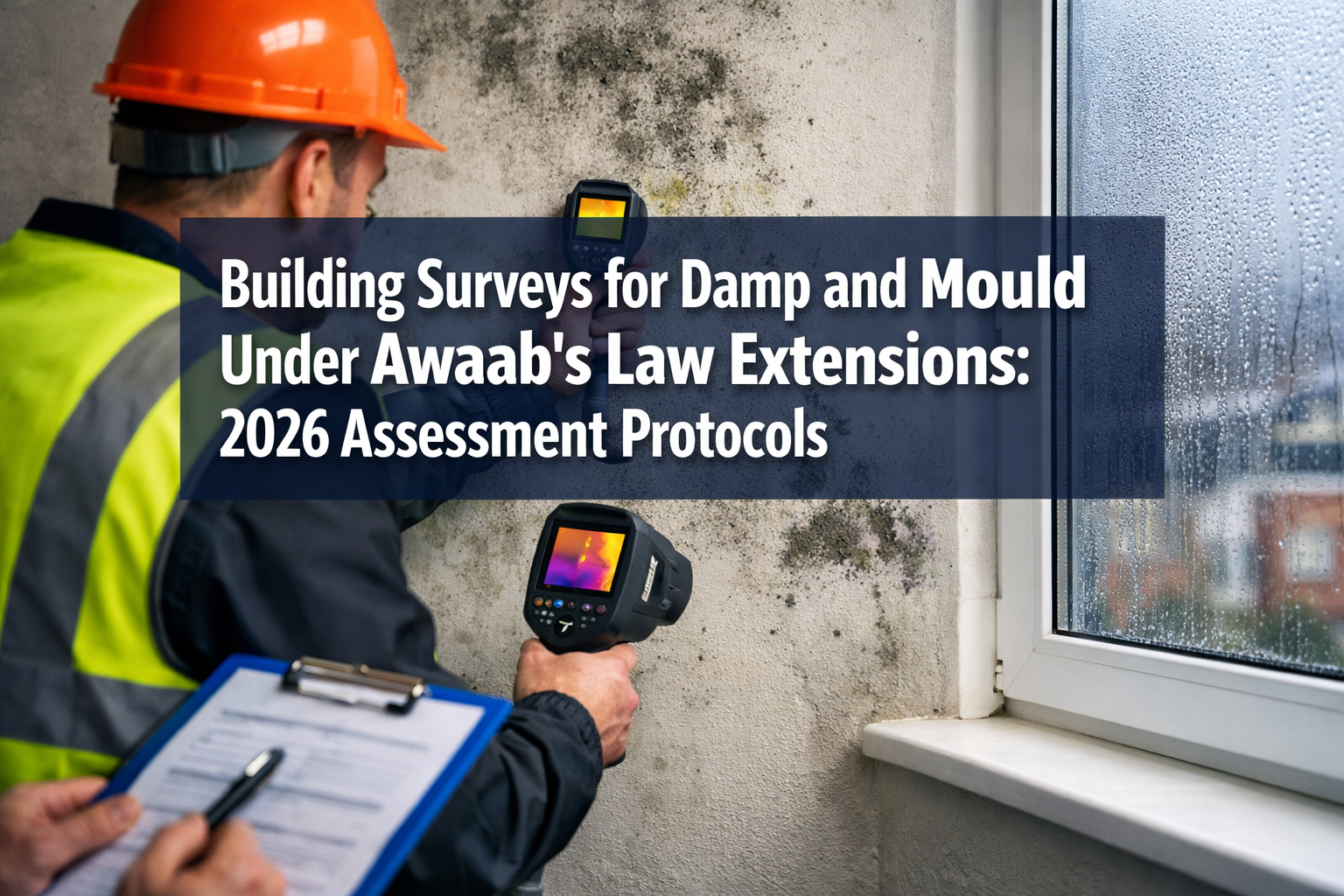
The tragic death of two-year-old Awaab Ishak in 2020 from prolonged exposure to mould in his family's social housing flat sparked a fundamental shift in how the UK addresses damp and mould hazards in rental properties. As we move through 2026, Building Surveys for Damp and Mould Under Awaab's Law Extensions: 2026 Assessment Protocols for Rental Properties have become essential compliance tools for landlords, housing associations, and professional surveyors navigating increasingly stringent regulatory requirements.
With Phase 1 implementation now in effect since October 2025, surveyors face unprecedented demands for systematic, evidence-based assessments that identify root causes rather than simply documenting surface symptoms. The legislation introduces strict investigation and remediation timelines, mandatory professional survey standards, and significant penalties for non-compliance—fundamentally transforming how rental property inspections must be conducted.
Key Takeaways
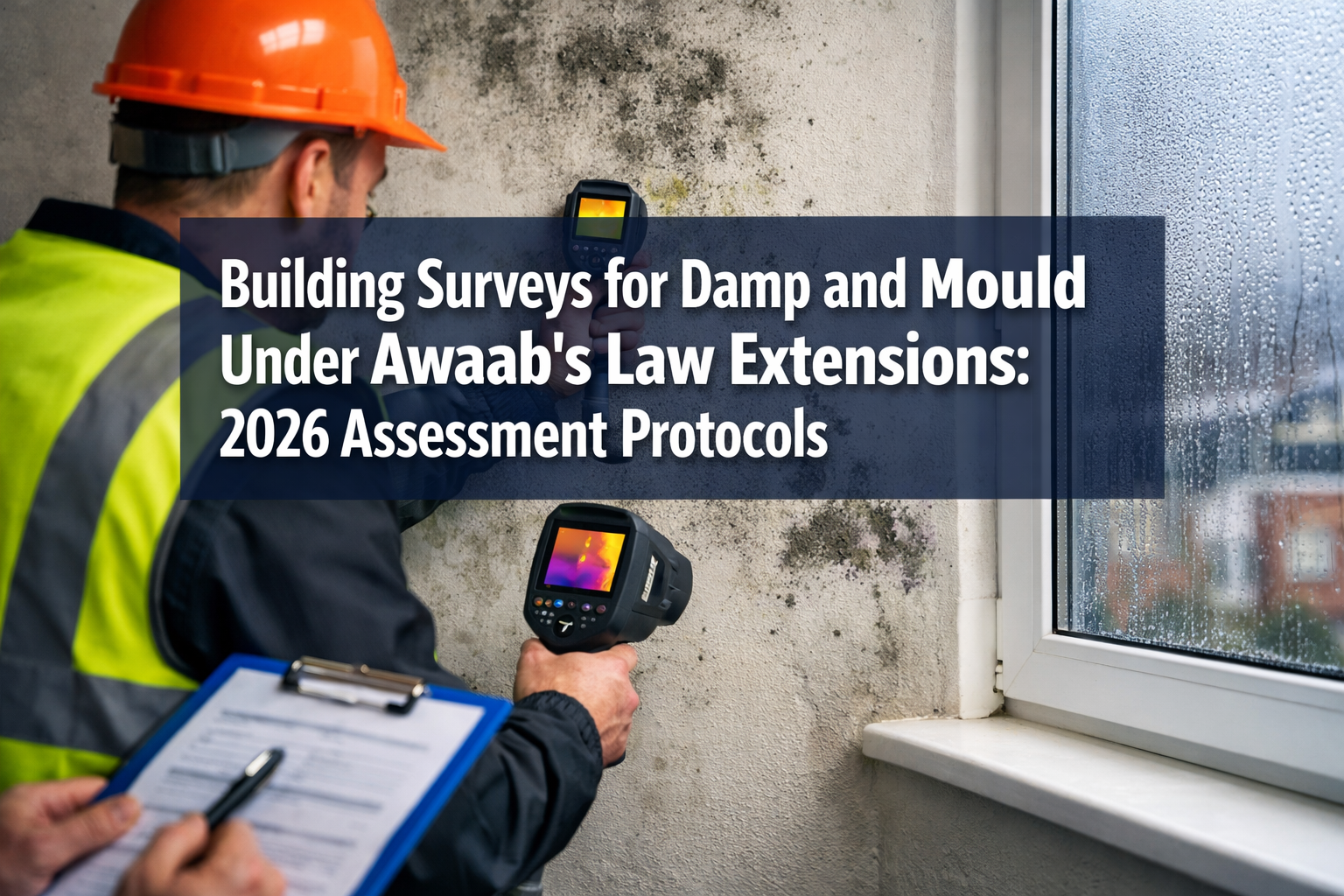
- ⏱️ Emergency hazards (including significant damp and mould affecting health) must be investigated and made safe within 24 hours of notification under 2026 protocols
- 📋 Social housing providers must complete investigations within 10 working days, with written summaries delivered to tenants within 3 working days after investigation concludes
- 🔧 Remediation works must commence within 5 working days and be completed within 12 weeks for complex cases, with detailed documentation required throughout
- 🔍 Professional surveys must identify root causes of moisture ingress, not just visible symptoms, using evidence-based assessment methodologies and advanced diagnostic equipment
- 📊 Comprehensive stock condition surveys are becoming standard practice for proactive hazard identification, with many social landlords conducting 100% property assessments in 2026
Understanding Awaab's Law: Legislative Framework and 2026 Extensions
Awaab's Law represents one of the most significant regulatory changes in UK housing safety legislation in recent decades. Named after Awaab Ishak, the legislation mandates strict response protocols for damp and mould hazards that pose significant health risks to tenants[4].
Phase 1 Implementation Requirements
The first phase came into force on 27 October 2025, establishing comprehensive requirements for social housing providers[2]. The legislation covers:
- Emergency hazards requiring immediate attention (gas leaks, electrical risks, significant damp or mould affecting health)
- All damp and mould hazards presenting significant risk of harm to occupants
- Investigation and remediation timelines with specific working day requirements
- Documentation and reporting standards for tenant communication
Timeline Requirements for Building Surveys Under Awaab's Law
Understanding the strict timelines is crucial for surveyors conducting damp surveys under the new regulations:
| Hazard Type | Investigation Timeline | Remediation Start | Completion Deadline |
|---|---|---|---|
| Emergency Hazards | Within 24 hours | Immediate | Make safe within 24 hours[4] |
| Significant Damp/Mould | Within 10 working days | Within 5 working days | 12 weeks maximum[2] |
| Safety Works | Within 10 working days | Within 5 working days | 5 working days[2] |
| Tenant Assessment Visit | Within 14 calendar days | N/A | N/A[3] |
Enforcement and Penalties
Non-compliance carries substantial consequences that extend beyond financial penalties[7]:
- 🚫 Enforcement orders requiring immediate corrective action
- 💰 Unlimited fines for serious or repeated violations
- 💵 Compensation payments to affected tenants
- ⚖️ Legal cost coverage for tenant proceedings
- 🏠 Loss of rental income if properties become uninhabitable
- 📉 Reputational damage affecting tenant relations and public perception
The legislation demonstrates reduced tolerance for temporary fixes or cosmetic solutions. Surveyors must now focus on identifying and documenting underlying structural, ventilation, or maintenance issues contributing to moisture problems[1].
Building Surveys for Damp and Mould Under Awaab's Law: Essential Assessment Protocols
Professional surveyors conducting assessments under Awaab's Law must adopt systematic, evidence-based methodologies that meet the legislation's stringent requirements. The 2026 assessment protocols demand comprehensive investigation beyond visual inspection alone.
Mandatory Survey Components
A compliant building survey for damp and mould under Awaab's Law must include:
1. Comprehensive Moisture Source Identification
Surveyors must identify all potential moisture sources contributing to damp and mould conditions[1]:
- External water ingress (roof defects, failed flashings, damaged guttering, penetrating damp through walls)
- Rising damp from failed or absent damp-proof courses
- Condensation issues related to inadequate ventilation, thermal bridging, or occupant lifestyle factors
- Plumbing leaks including hidden pipework failures
- Structural defects allowing water penetration (cracked masonry, failed pointing, window seal failures)
2. Root Cause Analysis
The legislation explicitly requires identification of underlying causes rather than surface-level documentation[1]. Surveyors must determine:
- Why moisture is accumulating in specific locations
- Whether building fabric defects contribute to the problem
- If mechanical ventilation systems are adequate and functioning correctly
- Whether thermal performance issues create condensation-prone cold spots
- How occupancy patterns and heating regimes affect moisture levels
3. Health Risk Assessment
Surveys must evaluate the significance of harm posed by identified hazards[6]:
- Extent and severity of mould growth
- Types of mould present (where specialist mycological testing is warranted)
- Vulnerable occupants in the household (children, elderly, immunocompromised individuals)
- Duration of exposure to damp and mould conditions
- Reported health symptoms correlating with environmental conditions
4. Evidence-Based Documentation
Professional documentation standards require[5]:
- Photographic evidence with date stamps and location references
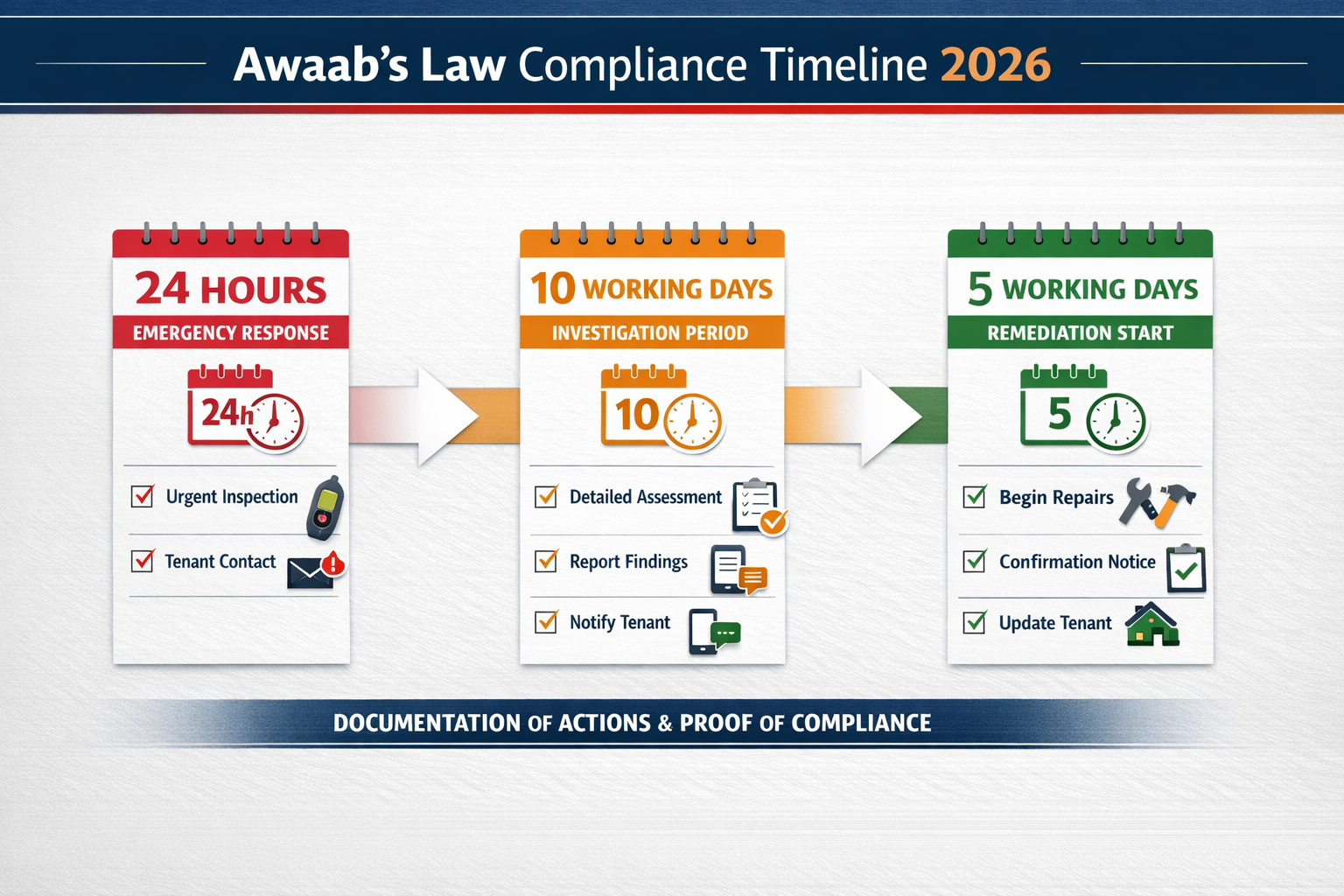
- Moisture meter readings (surface and deep-wall measurements)
- Thermal imaging identifying cold spots and thermal bridging
- Hygrometer readings documenting relative humidity levels
- Ventilation performance data (air change rates where measurable)
- Clear location plans marking affected areas
Advanced Diagnostic Equipment for 2026 Assessments
Modern property damp assessment requires sophisticated diagnostic tools:
Essential Equipment:
- 📱 Digital moisture meters (pin-type and non-invasive)
- 🌡️ Thermal imaging cameras for hidden moisture detection
- 💨 Hygrometers for relative humidity measurement
- 📏 Laser distance measurers for accurate documentation
- 💻 Tablet devices with survey software for real-time reporting
Advanced Tools:
- 🔬 Borescopes for cavity wall inspection
- 🌫️ Smoke pens for visualizing air movement patterns
- 📊 Data loggers for continuous environmental monitoring
- 🧪 Surface sampling kits for laboratory mould analysis
The integration of technology enables real-time report generation, allowing housing providers to receive assessment data before surveyors leave the property—a critical capability for meeting the legislation's tight compliance timelines[5].
Practical Assessment Checklists and Documentation Standards for Rental Properties
Implementing standardized assessment protocols ensures consistent, compliant surveys across different property types and surveyor teams. The following checklists represent best practice for Building Surveys for Damp and Mould Under Awaab's Law Extensions in 2026.
Pre-Survey Preparation Checklist
✅ Administrative Requirements:
- Confirm appointment within required timeframe (24 hours for emergencies, 10 working days for significant hazards)
- Review tenant notification and any reported symptoms
- Obtain property construction details and previous survey reports
- Prepare calibrated equipment and ensure batteries/power supplies
- Load property-specific templates into survey software
✅ Tenant Communication:
- Explain survey purpose and methodology
- Request access to all affected areas
- Inquire about health symptoms and timeline of issues
- Ask about heating patterns and ventilation habits
- Document any previous landlord responses or temporary repairs
On-Site Investigation Protocol
External Envelope Assessment
🏠 Roof and Guttering:
- Inspect roof covering condition and identify defects
- Check valley gutters, flashings, and abutments
- Examine rainwater goods for blockages, leaks, or inadequate capacity
- Assess chimney condition and weathering details
- Document any evidence of water penetration routes
🧱 Walls and Openings:
- Examine external wall condition (pointing, render, cladding)
- Check window and door seals and weatherproofing
- Identify cracks, gaps, or failed sealants
- Assess damp-proof course visibility and condition
- Inspect ground levels relative to DPC
Internal Condition Survey
🔍 Systematic Room-by-Room Inspection:
- Document visible mould growth (location, extent, severity)
- Record damp patches, staining, or efflorescence
- Take moisture meter readings at multiple points
- Capture thermal images of affected walls and ceilings
- Note condensation on windows or cold surfaces
- Assess ventilation provision (natural and mechanical)
📊 Environmental Measurements:
- Record ambient temperature in each affected room
- Measure relative humidity levels
- Document heating system functionality
- Assess adequacy of ventilation (trickle vents, extractors)
- Identify thermal bridging or cold spots via thermal imaging
Building Services Evaluation
⚙️ Ventilation Systems:
- Test mechanical extractor fan operation and airflow
- Check passive stack ventilation functionality
- Assess trickle vent provision and operation
- Evaluate whole-house ventilation systems (MVHR where present)
- Document any blocked, inadequate, or failed ventilation
🔧 Plumbing and Drainage:
- Inspect visible pipework for leaks or condensation
- Check bathroom and kitchen seals around fixtures
- Assess drainage adequacy and any signs of backup
- Examine waste pipe connections and seals
Post-Survey Documentation Requirements
Professional reporting standards under Awaab's Law demand comprehensive, actionable documentation. When preparing what to do after a bad report on building survey, landlords need clear guidance.
Essential Report Components
📋 Executive Summary:
- Clear statement of hazard significance
- Risk level classification
- Immediate actions required
- Timeline for compliance
📸 Photographic Evidence:
- Minimum 20-30 images for typical damp/mould survey
- Annotated photographs with measurement overlays
- Before/during/after moisture meter reading documentation
- Thermal images with temperature scales visible
📐 Technical Findings:
- Moisture content readings (expressed as percentage or Wood Moisture Equivalent)
- Thermal imaging analysis with temperature differentials
- Relative humidity measurements
- Ventilation performance assessment
- Root cause identification with supporting evidence
🔧 Remediation Recommendations:
- Prioritized action plan (emergency, urgent, routine)
- Specific remedial works required
- Estimated timescales for completion
- Specialist contractor requirements where applicable
- Post-remediation monitoring recommendations
Timeline Compliance Documentation
To meet Awaab's Law requirements, reports must include[2]:
| Document | Delivery Deadline | Content Requirements |
|---|---|---|
| Initial Assessment | Within investigation period | Hazard identification and severity |
| Written Summary | 3 working days post-investigation | Findings, causes, proposed actions |
| Remediation Plan | With written summary | Specific works, timescales, responsibilities |
| Completion Certificate | Upon works completion | Verification of remediation effectiveness |
Quality Assurance and Peer Review
Professional surveyors should implement quality control measures:
- ✔️ Peer review of reports before submission for complex cases
- ✔️ Calibration records for all moisture detection equipment
- ✔️ Photographic audit trails documenting survey methodology
- ✔️ Template compliance checks ensuring all mandatory sections completed
- ✔️ Client feedback mechanisms for continuous improvement
Stock Condition Surveys and Proactive Compliance Strategies
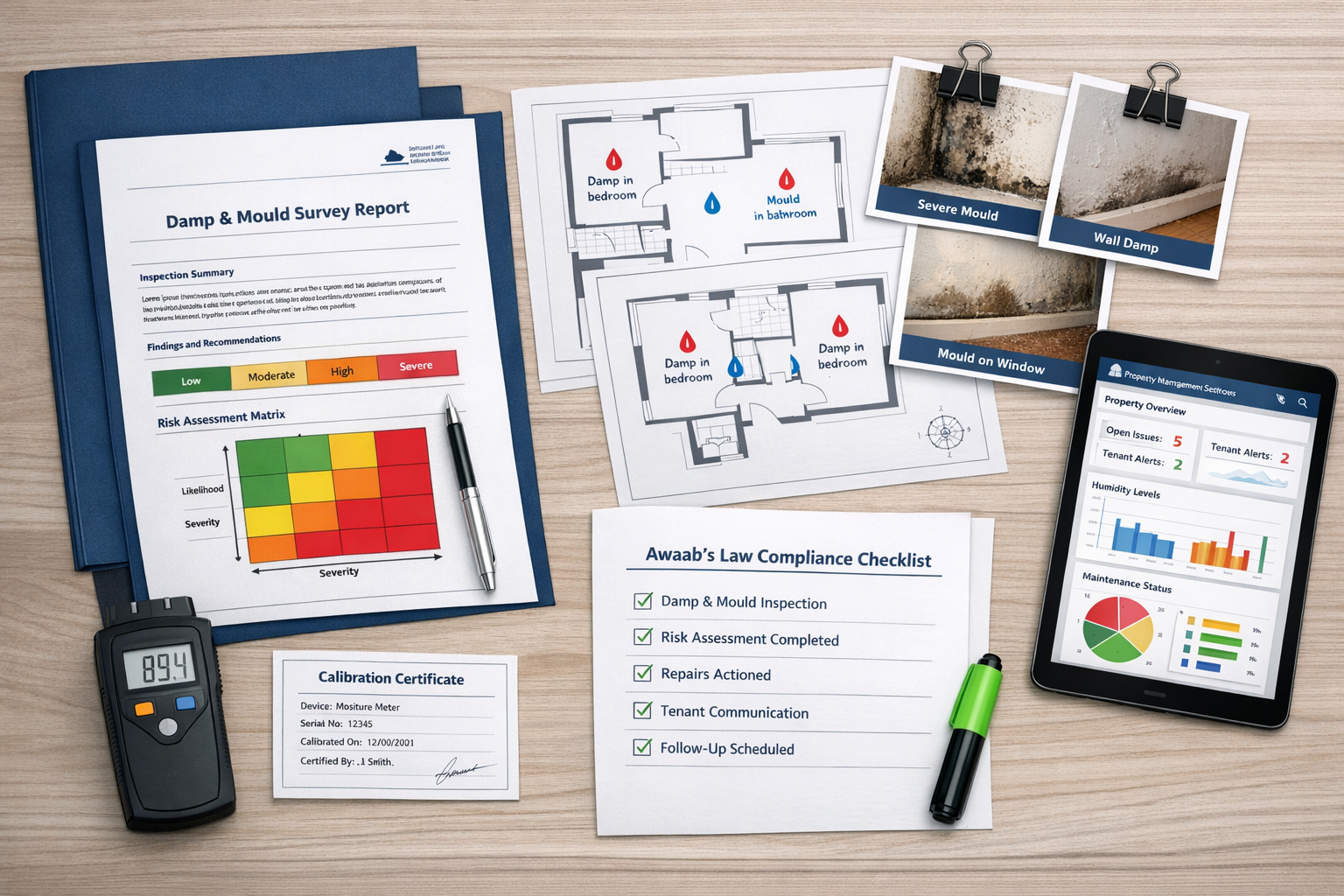
Forward-thinking housing providers are moving beyond reactive assessments to comprehensive proactive strategies. In 2026, stock condition surveys have become central to Awaab's Law compliance.
The Strategic Shift to 100% Stock Assessment
Many social landlords are conducting comprehensive assessments of their entire housing stock to identify potential damp and mould hazards before they escalate[4]. This proactive approach offers multiple benefits:
🎯 Risk Mitigation:
- Early identification of properties with damp/mould vulnerability
- Prevention of health hazards before tenant complaints arise
- Reduced emergency response incidents
- Lower overall remediation costs through early intervention
📊 Asset Management Integration:
- Damp and mould data incorporated into planned maintenance programs
- Investment planning based on evidence of building fabric condition
- Energy efficiency improvements aligned with moisture control measures
- Long-term budgeting for systematic upgrades
👥 Resident Wellbeing:
- Demonstrates proactive commitment to tenant health and safety
- Reduces tenant anxiety about reporting issues
- Improves landlord-tenant relationships
- Creates positive reputation for housing provider
Implementing Systematic Stock Surveys
Phase 1: Data Collection and Prioritization
- Review existing complaint records and maintenance history
- Identify property archetypes with known vulnerability (solid wall construction, poor ventilation)
- Prioritize properties with vulnerable occupants
- Develop survey schedule meeting capacity constraints
Phase 2: Standardized Assessment
- Deploy consistent survey methodology across all properties
- Utilize moisture damage assessments with standardized equipment
- Create centralized database of findings
- Generate risk matrices for portfolio-wide analysis
Phase 3: Remediation Planning
- Categorize findings by urgency and required intervention
- Develop costed remediation programs
- Integrate with planned maintenance schedules
- Establish monitoring protocols for borderline cases
Phase 4: Continuous Monitoring
- Implement periodic re-inspection cycles
- Deploy environmental sensors in high-risk properties
- Track remediation effectiveness
- Refine assessment protocols based on outcomes
Technology Integration for Compliance Management
Modern survey software and property management systems enable efficient compliance tracking[5]:
Real-Time Reporting Capabilities:
- Surveyors complete digital forms on-site using tablets
- Automatic report generation with standardized templates
- Instant transmission to housing provider systems
- Immediate visibility of urgent findings requiring rapid response
Compliance Dashboard Features:
- Visual tracking of investigation and remediation timelines
- Automated alerts for approaching deadlines
- Portfolio-wide risk mapping
- Regulatory reporting functionality
Data Analytics:
- Trend analysis identifying systemic issues across property types
- Predictive modeling for future damp/mould risk
- Cost analysis of remediation strategies
- Performance benchmarking against sector standards
Private Landlord Obligations Under Awaab's Law Extensions
While initial implementation focused on social housing providers, the principles and standards established by Awaab's Law are increasingly influencing expectations for private landlords in 2026[1]. Although not yet subject to identical statutory timelines, private sector landlords face growing pressure to adopt similar assessment and remediation standards.
Evolving Compliance Expectations
Private landlords must demonstrate:
🔍 Prompt Response:
- Timely acknowledgment of tenant damp/mould reports
- Reasonable investigation timescales (industry guidance suggests 14 days)
- Clear communication of findings and proposed actions
🔬 Adequate Investigation:
- Professional survey where causes are not immediately apparent
- Use of appropriate diagnostic equipment
- Documentation of findings and assessment methodology
🎯 Root Cause Identification:
- Investigation beyond surface symptoms
- Consideration of building fabric, ventilation, and heating adequacy
- Assessment of whether tenant behavior contributes (without using as excuse for inaction)
⚙️ Appropriate Remedial Action:
- Evidence-based remediation addressing underlying causes
- Rejection of temporary cosmetic fixes
- Professional contractor engagement where required
- Post-remediation verification of effectiveness
📋 Clear Record Keeping:
- Documentation of tenant reports and landlord responses
- Survey reports and remediation plans
- Contractor invoices and completion certificates
- Follow-up inspection records
Risk Management for Private Landlords
Private landlords can protect themselves from potential future regulation extensions by:
- Conducting RICS building surveys before tenant occupancy
- Implementing annual property inspections including damp/mould checks
- Maintaining comprehensive maintenance records
- Responding promptly to tenant reports with professional assessments
- Investing in adequate ventilation and heating systems
- Considering monitoring surveys for properties with historical moisture issues
Understanding average price reduction after survey can also help landlords factor potential remediation costs into property acquisition decisions.
Future Phases and Expanding Scope of Awaab's Law
The current Phase 1 implementation represents only the beginning of a broader regulatory framework. Phases 2 and 3 are planned to expand the scope beyond damp and mould to address additional housing safety hazards[7].
Anticipated Expansions
While specific details remain under consultation, industry experts anticipate future phases may include:
🔥 Fire Safety Hazards:
- Electrical system defects
- Gas appliance safety
- Escape route adequacy
- Fire detection and suppression systems
🏗️ Structural Hazards:
- Subsidence and settlement issues
- Structural instability
- Dangerous building fabric conditions
- Collapse risks
⚡ Environmental Hazards:
- Asbestos presence and condition
- Lead paint in pre-1970s properties
- Radon gas exposure
- Carbon monoxide risks
Preparing for Regulatory Evolution
Surveyors and housing providers can prepare for anticipated expansions by:
- Developing comprehensive inspection protocols covering multiple hazard categories
- Training staff in broader hazard identification and risk assessment
- Implementing integrated property management systems capable of tracking multiple compliance requirements
- Establishing relationships with specialist contractors across various disciplines
- Creating scalable documentation systems adaptable to additional hazard types
The trajectory is clear: housing safety regulation will continue to strengthen, with professional building surveys becoming increasingly central to compliance demonstration.
Conclusion
Building Surveys for Damp and Mould Under Awaab's Law Extensions: 2026 Assessment Protocols for Rental Properties represent a fundamental transformation in how the UK housing sector addresses moisture-related health hazards. The legislation establishes unprecedented standards for investigation timelines, remediation requirements, and professional documentation that surveyors must navigate with precision and expertise.
The key imperatives for 2026 compliance include:
✅ Understanding strict timelines (24 hours for emergencies, 10 working days for significant hazards, 5 working days for remediation commencement)
✅ Conducting evidence-based assessments using advanced diagnostic equipment to identify root causes rather than surface symptoms
✅ Implementing standardized protocols with comprehensive checklists ensuring consistent, compliant surveys
✅ Maintaining rigorous documentation with photographic evidence, technical measurements, and clear remediation recommendations
✅ Adopting proactive strategies including comprehensive stock condition surveys to identify hazards before escalation
✅ Integrating technology for real-time reporting and compliance tracking across property portfolios
Actionable Next Steps
For Housing Providers:
- Review current survey protocols against Awaab's Law requirements
- Invest in surveyor training and equipment upgrades
- Implement compliance tracking systems with automated deadline alerts
- Consider comprehensive stock assessments to identify portfolio-wide risks
- Establish clear escalation procedures for emergency hazards
For Private Landlords:
- Conduct professional damp surveys for any properties with moisture concerns
- Implement annual inspection regimes including damp/mould assessment
- Maintain detailed records of tenant reports and remediation actions
- Invest in adequate ventilation and heating systems proactively
- Engage qualified surveyors for professional assessments rather than relying on informal evaluations
For Professional Surveyors:
- Update survey templates to include all mandatory Awaab's Law documentation requirements
- Invest in thermal imaging and advanced moisture detection equipment
- Develop expertise in root cause analysis methodologies
- Implement quality assurance and peer review processes
- Stay informed about Phase 2 and 3 regulatory developments
The tragic circumstances that prompted Awaab's Law underscore the critical importance of professional, thorough building surveys in protecting tenant health and wellbeing. As the regulatory framework continues to evolve through 2026 and beyond, surveyors who embrace systematic assessment protocols, advanced diagnostic technology, and rigorous documentation standards will be best positioned to support landlords in meeting their compliance obligations while genuinely improving housing conditions across the UK rental sector.
References
[1] Awaabs Law Private Landlords 2026 – https://www.idealresponse.co.uk/blog/awaabs-law-private-landlords-2026/
[2] Awaabs Law Is Here The Surveyors Guide For Compliance – https://www.surventrix.com/blog/awaabs-law-is-here-the-surveyors-guide-for-compliance
[3] Awaabs Law Technical Compliance Hvac Ventilation – https://www.arm-environments.com/resources/awaabs-law-technical-compliance-hvac-ventilation
[4] Awaabs Law Explained – https://firntec.com/blog/awaabs-law-explained
[5] Awaabs Law Damp Mould Survey Compliance Guide – https://www.swiftreporter.com/blog/awaabs-law-damp-mould-survey-compliance-guide
[6] Awaabs Law Damp Mould Investigation Guidance – https://damp-knowledge-hub.co.uk/awaabs-law-damp-mould-investigation-guidance
[7] Awaabs Law Comes Into Force What Does It Mean For Construction – https://www.trowers.com/insights/2025/november/awaabs-law-comes-into-force-what-does-it-mean-for-construction