


The UK property market in 2026 presents a unique opportunity—and challenge. With national forecasts predicting modest price growth between 2% and 5%, homebuyers might assume that steadily appreciating properties are safe investments. However, this assumption could prove costly. Building Surveys for 2026 Modest Price Growth Properties: Defect Detection in 2-5% Uplift Forecasts have become essential tools for protecting buyers in markets where property values are rising gradually but structural issues remain hidden beneath the surface.
Recent data shows January 2026 recorded the largest month-on-month asking price increase ever documented, with prices jumping 2.8%[1]. Meanwhile, major lenders and estate agencies predict annual growth ranging from Halifax's conservative 1-3% forecast to Nationwide's more optimistic 2-4% projection[3]. Yet RICS surveyors report a striking +43% net balance expecting price rises over the next 12 months—a level of professional optimism that demands careful due diligence from buyers.
In markets experiencing modest appreciation, the temptation to skip comprehensive surveys grows stronger. After all, if prices are rising steadily, surely the property must be sound? This dangerous logic has caught countless buyers off-guard, leaving them with repair bills that dwarf any potential equity gains.
Key Takeaways
- Modest growth markets (2-5%) require heightened survey vigilance as defects can eliminate years of projected appreciation
- Level 3 Building Surveys detect structural issues that could cost £15,000-£25,000+ to remediate, far exceeding typical annual price gains
- Regional variations matter significantly: West Midlands, North West, and Wales show stronger growth potential but also contain older housing stock with hidden defects
- Professional RICS surveys provide negotiation leverage worth 5-10x their cost in markets with thin appreciation margins
- Defect detection becomes ROI-critical when annual price growth barely exceeds 2%, making survey findings directly impact investment returns
Understanding the 2026 Modest Price Growth Landscape
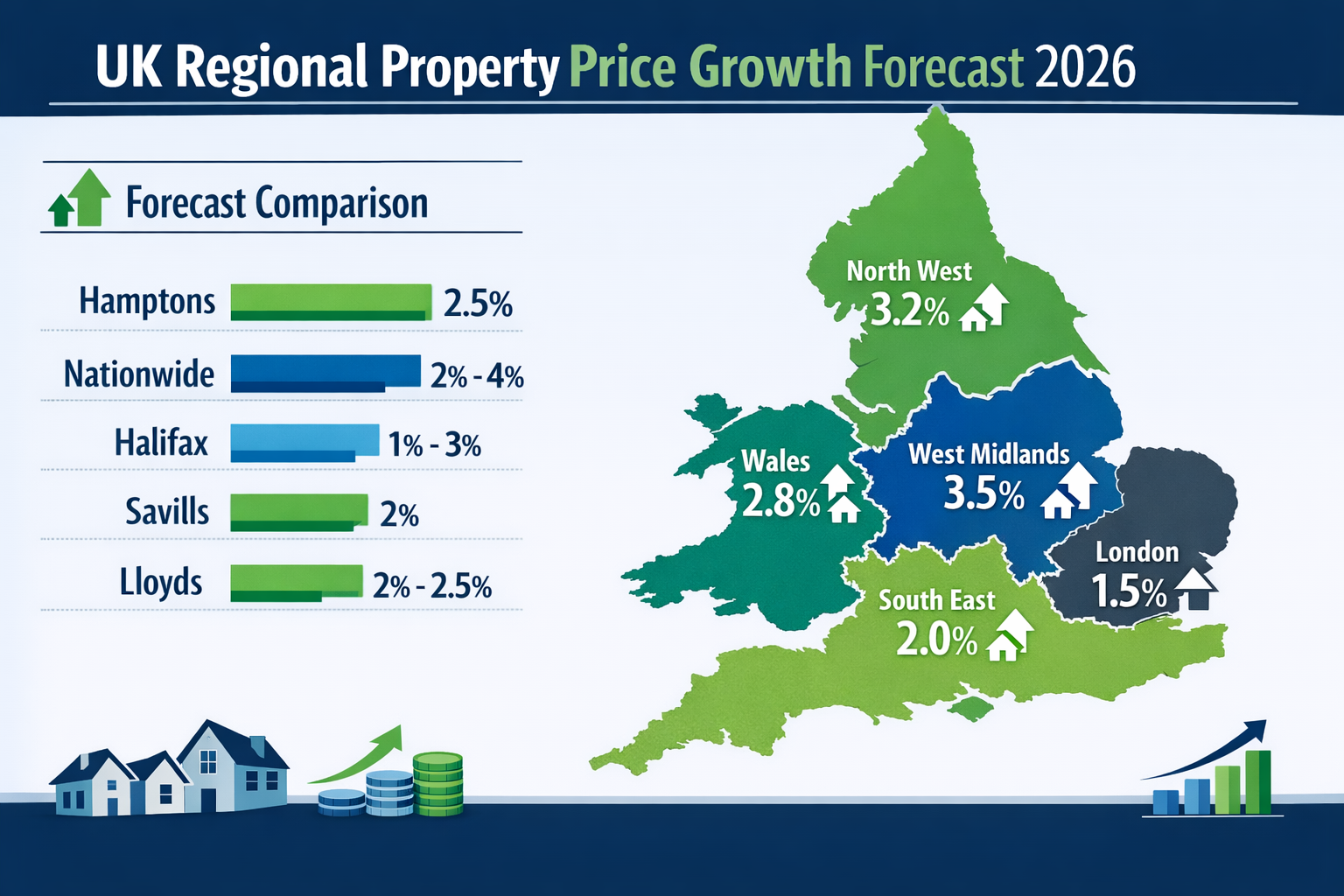
The UK housing market in 2026 operates within a fundamentally different context than the boom years of the past decade. Multiple authoritative forecasts converge around modest growth expectations, creating what industry professionals call a "steady appreciation environment."
National and Regional Growth Forecasts
Estate agency Hamptons forecasts 2.5% growth by Q4 2026, with growth concentrated in regions offering better affordability—primarily the West Midlands, North West, and Wales[3]. This regional variation creates significant implications for survey requirements, as these areas often contain older Victorian and Edwardian housing stock with characteristic defects.
Nationwide suggests 2-4% growth in 2026 driven by two key factors: falling mortgage rates and wage growth finally outpacing property price inflation[3]. This wage-to-price ratio improvement expands the buyer pool but also brings less experienced purchasers into the market—individuals who may not fully appreciate the importance of comprehensive property assessments.
Other major forecasters paint similar pictures:
- Halifax: 1-3% growth[3]
- Savills: 2% growth[3]
- Lloyds Banking Group: 2-2.5% nationally, with stronger gains in northern regions[4]
Why Modest Growth Demands Rigorous Surveys
When property prices increase by 10-15% annually, even significant defects may be absorbed by rapid appreciation. However, in a 2-5% growth environment, the mathematics change dramatically.
Consider a £400,000 property in a 3% annual growth market. The expected appreciation equals £12,000 over 12 months. If a comprehensive building survey uncovers structural issues requiring £20,000 in remediation, the defects have not only eliminated three years of projected growth but created a net loss position.
This is why Building Surveys for 2026 Modest Price Growth Properties: Defect Detection in 2-5% Uplift Forecasts represents a fundamental risk management strategy rather than an optional extra.
The RICS Optimism Factor
RICS surveyors—professionals who inspect properties daily—report a +43% net balance expecting price rises over the next 12 months. This professional optimism reflects improving market fundamentals but should not be confused with property condition assessments.
A rising market does not guarantee a sound structure. In fact, rapidly moving markets can sometimes mask underlying issues as buyers rush to secure properties before prices climb further. The difference between Level 2 and Level 3 surveys becomes particularly important in this context.
Critical Defects That Erode Modest Price Growth

In properties experiencing 2-5% annual appreciation, certain defects can completely eliminate projected gains—or worse, create negative equity situations. Understanding which issues pose the greatest financial risk helps buyers prioritize survey depth and focus.
Structural Movement and Subsidence 🏚️
Structural defects represent the most severe threat to investment returns in modest growth markets. Subsidence, heave, and foundation settlement can require remediation costing £10,000-£50,000 depending on severity.
Key indicators include:
- Progressive cracking wider than 3mm
- Diagonal cracks near windows and doors
- Stepped cracking in brickwork
- Doors and windows that stick or won't close properly
- Gaps between walls and ceilings or floors
A Level 3 Building Survey conducted by RICS-qualified professionals includes detailed structural analysis that identifies these issues before purchase. In a 2.5% growth market, structural repairs costing £25,000 represent more than six years of appreciation on a £400,000 property.
Damp and Water Ingress 💧
Damp issues rank among the most common defects in UK properties, particularly in older housing stock prevalent in the regions showing strongest 2026 growth forecasts. The cost of damp surveys pales in comparison to remediation expenses.
Three main damp types affect properties:
- Rising damp: Ground moisture ascending through walls via capillary action, typically requiring damp-proof course installation (£1,500-£3,500)
- Penetrating damp: Water ingress through walls, roofs, or windows, requiring targeted repairs (£500-£5,000+)
- Condensation damp: Moisture from internal activities, addressed through ventilation improvements (£200-£2,000)
A comprehensive damp survey report identifies moisture sources, extent of damage, and recommended remediation. In modest growth markets, undetected damp can require £8,000-£15,000 in treatment and redecoration—erasing 3-5 years of projected appreciation.
Roof Defects and Deterioration
Roof replacement represents one of the costliest property repairs, with full re-roofing costing £5,000-£12,000 for typical terraced houses and £8,000-£20,000+ for larger semi-detached and detached properties.
Common roof issues include:
- Missing, slipped, or damaged tiles/slates
- Deteriorated flashing around chimneys and valleys
- Sagging roof lines indicating structural problems
- Inadequate or damaged roof insulation
- Poorly maintained or leaking gutters and downpipes
Building Surveys for 2026 Modest Price Growth Properties must include thorough roof inspections, as these defects often remain invisible from ground level. A specific defect survey focused on roofing can provide additional detail when initial assessments raise concerns.
Electrical and Plumbing Systems
Outdated electrical systems pose both safety hazards and significant replacement costs. Properties with original wiring from the 1960s-1980s require complete rewiring (£3,000-£8,000), while plumbing systems with lead pipes, outdated materials, or poor installation demand attention.
Red flags include:
- Fuse boxes instead of modern consumer units
- Insufficient electrical sockets (indicating old wiring)
- Lead pipes (health hazard requiring replacement)
- Evidence of previous leaks or water damage
- Inadequate heating systems
Timber Defects: Rot and Infestation 🪵
Wet rot, dry rot, and woodworm infestations can compromise structural timber, requiring extensive treatment and replacement. Dry rot remediation alone can cost £1,500-£5,000 for localized treatment or £10,000+ for extensive infestations.
Level 3 surveys include detailed timber inspections in accessible areas, identifying:
- Active fungal growth
- Softened or crumbling timber
- Flight holes indicating beetle infestation
- Structural timber deflection or failure
The ROI of Comprehensive Building Surveys in Modest Growth Markets
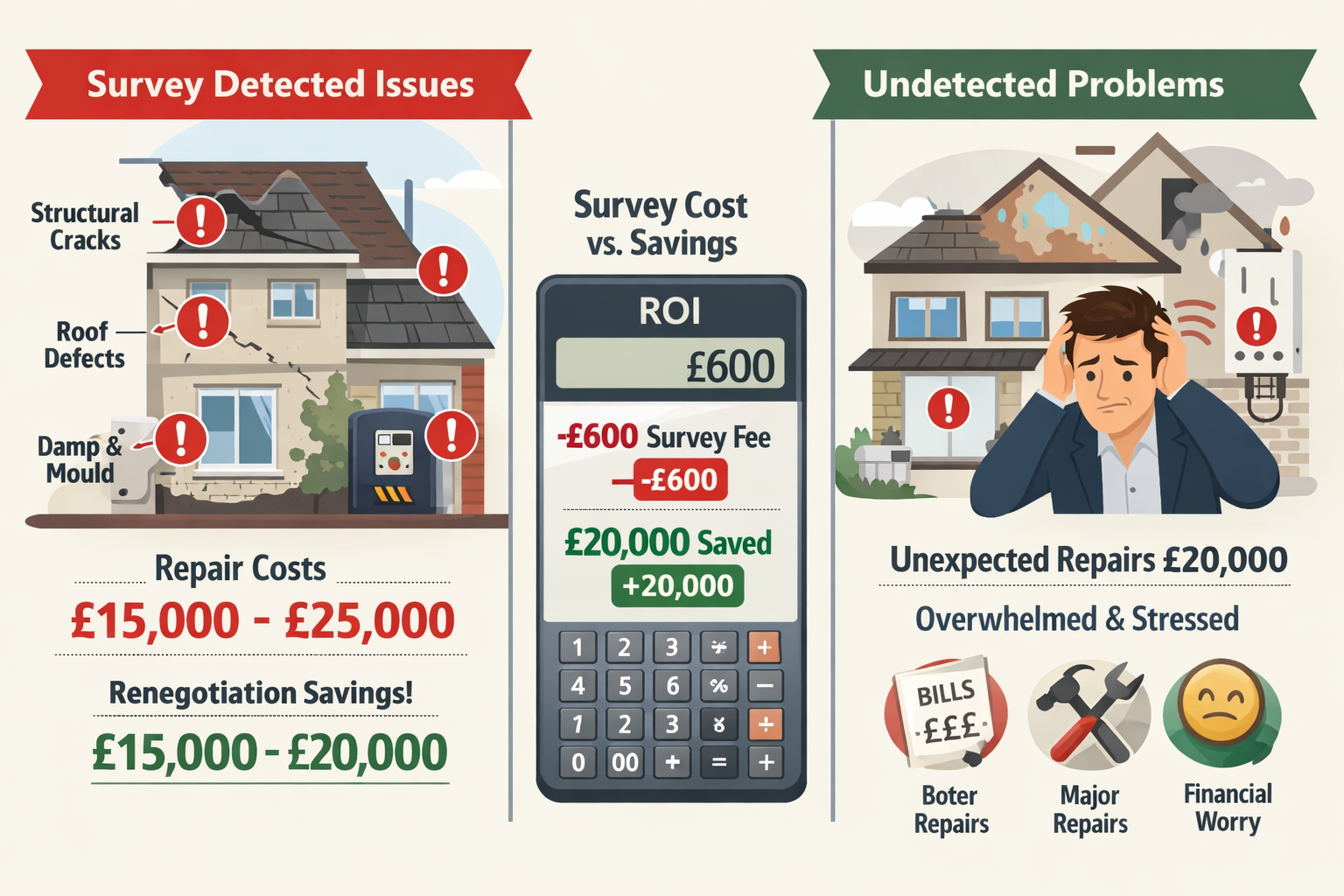
When property prices rise modestly, every pound spent on due diligence must demonstrate clear return on investment. Building Surveys for 2026 Modest Price Growth Properties: Defect Detection in 2-5% Uplift Forecasts deliver value through multiple channels beyond simple defect identification.
Direct Cost Savings Through Price Negotiation
Survey findings provide concrete evidence for price renegotiation. In practice, buyers typically achieve reductions of 5-15% of estimated repair costs through negotiation, though some sellers agree to full repair cost deductions.
Example scenario:
- Property asking price: £425,000
- Survey cost: £800
- Defects identified: £18,000 (structural repairs, damp treatment, roof work)
- Negotiated reduction: £12,000
- Net benefit: £11,200 (14x survey cost)
In a 2.5% annual growth market, this £12,000 saving represents more than three years of appreciation—time during which the buyer would have been living with unresolved defects. First-time buyers particularly benefit from this negotiation leverage.
Avoiding Negative Equity Traps
In modest growth environments, purchasing a property with undisclosed major defects can create immediate negative equity. If a £400,000 property requires £30,000 in urgent repairs, the effective purchase price becomes £430,000—potentially exceeding market value and certainly eliminating years of projected appreciation.
A comprehensive survey prevents this scenario by revealing issues before legal commitment. Understanding what to do after a bad building survey report empowers buyers to make informed decisions about proceeding, renegotiating, or withdrawing.
Planning and Budgeting Advantages
Even when buyers proceed with purchases despite identified defects, survey reports enable accurate budgeting and prioritization. Knowing that a property requires £15,000 in remediation over the next 2-3 years allows for:
- Proper mortgage affordability calculations
- Staged repair planning
- Contractor quotation preparation
- Insurance considerations
- Realistic renovation timelines
This planning advantage proves particularly valuable in modest growth markets where unexpected repair costs can strain finances and eliminate the thin margins of appreciation.
Insurance and Warranty Implications
Comprehensive surveys can affect insurance premiums and availability. Insurers may refuse coverage or charge significantly higher premiums for properties with known structural issues, subsidence history, or flood risk. Identifying these factors before purchase allows buyers to:
- Obtain accurate insurance quotations
- Factor insurance costs into affordability assessments
- Consider whether properties with insurability issues fit their risk profile
Long-Term Maintenance Planning 📋
Beyond immediate defects, building surveys identify maintenance requirements and anticipated future expenditures. This information enables:
- 5-10 year maintenance budgeting
- Prioritization of preventive work to avoid more costly reactive repairs
- Understanding of property lifecycle costs beyond mortgage payments
- Realistic appreciation expectations accounting for maintenance capital expenditure
Choosing the Right Survey Level for Modest Growth Properties
Not all surveys provide equal defect detection capabilities. Understanding survey types and selecting appropriate depth of investigation directly impacts risk mitigation in 2-5% growth markets.
Level 2 (HomeBuyer Report) vs. Level 3 (Building Survey)
The choice between survey levels fundamentally affects defect detection thoroughness:
Level 2 HomeBuyer Report:
- Suitable for conventional properties in reasonable condition
- Non-invasive visual inspection
- Traffic light system for condition ratings
- Less detailed than Level 3
- Lower cost (typically £400-£700)
Level 3 Building Survey:
- Comprehensive investigation of all accessible areas
- Detailed analysis of construction and condition
- Extensive written report with photographs
- Suitable for older, altered, or unusual properties
- Higher cost (typically £600-£1,200+)
In modest growth markets, Level 3 surveys provide superior value for properties built before 1970, properties with visible defects, or those in regions with older housing stock (West Midlands, North West, Wales—the areas showing strongest 2026 growth forecasts).
When to Commission Specialist Surveys
Building surveys may recommend additional specialist investigations:
- Structural engineer assessments for significant cracking or movement
- Electrical condition reports for properties with outdated wiring
- Damp and timber surveys when moisture or rot is suspected
- Drainage surveys for properties with suspected drainage issues
- Environmental surveys for contamination or flood risk concerns
These specialists provide detailed analysis beyond general surveyor scope. While adding cost, specialist surveys in modest growth markets often prove essential for accurate defect quantification and remediation planning.
Regional Considerations for 2026 Growth Areas
The strongest growth forecasts for 2026 concentrate in specific regions, each with characteristic property types and common defects:
West Midlands (3%+ forecast growth):
- Victorian terraced housing predominates
- Common issues: damp, structural movement in clay soils, roof deterioration
- Survey priority: structural assessment and damp investigation
North West (2.5-3.5% forecast growth):
- Mix of Victorian, Edwardian, and inter-war properties
- Common issues: slate roof deterioration, cavity wall tie failure, chimney defects
- Survey priority: comprehensive roof and wall assessment
Wales (2.5-3% forecast growth):
- Varied property ages including stone-built cottages
- Common issues: penetrating damp in solid walls, roof problems, timber defects
- Survey priority: moisture investigation and structural analysis
Understanding regional property characteristics helps buyers select appropriate survey depth and focus areas.
Maximizing Survey Value: Preparation and Follow-Through
The value of Building Surveys for 2026 Modest Price Growth Properties extends beyond the report itself. Proper preparation and strategic follow-through amplify ROI.
Pre-Survey Preparation
Before commissioning surveys, buyers should:
- Research property history through local planning departments and Land Registry
- Review listing details carefully for clues about alterations, extensions, or disclosed issues
- Conduct preliminary viewing noting any visible concerns to discuss with surveyors
- Prepare questions about specific concerns or planned alterations
- Understand survey scope and what will/won't be inspected
Knowing what to do before an RICS home survey ensures maximum value from the inspection.
During the Survey Process
Many surveyors welcome buyer attendance during inspections, providing opportunities to:
- Understand findings in real-time context
- Ask questions about specific defects
- Gain insight into maintenance requirements
- Develop realistic expectations about report content
Post-Survey Action Planning
Upon receiving survey reports, buyers should:
- Review thoroughly with attention to priority ratings and cost estimates
- Obtain contractor quotations for significant defects to verify surveyor estimates
- Consult mortgage lenders about any issues affecting lending decisions
- Develop negotiation strategy based on findings
- Consider withdrawal circumstances if defects exceed acceptable risk
The decision-making process after receiving reports requires careful analysis of defect severity, remediation costs, and personal risk tolerance.
Negotiation Strategies
Survey findings provide negotiation leverage through several approaches:
Price reduction requests:
- Full repair cost deduction (rare but possible)
- Partial cost deduction (most common outcome)
- Percentage-based reduction reflecting risk and inconvenience
Alternative arrangements:
- Seller completes repairs before completion
- Retention of funds in escrow pending repair completion
- Warranty or insurance provision for specific defects
Withdrawal considerations:
- Major structural issues exceeding 5-10% of property value
- Defects affecting mortgageability or insurability
- Cumulative repair costs eliminating projected appreciation
Effective negotiation in modest growth markets requires balancing defect severity against market conditions and personal circumstances.
The Future-Proofing Advantage
Beyond immediate defect detection, comprehensive surveys provide future-proofing benefits particularly valuable in modest growth markets.
Maintenance Roadmaps
Quality survey reports include maintenance recommendations and timescales, enabling buyers to:
- Budget for anticipated future expenditures
- Schedule preventive maintenance to avoid more costly reactive repairs
- Understand property lifecycle costs beyond mortgage payments
- Plan capital improvements strategically
Renovation and Extension Planning
For buyers considering future alterations, building surveys reveal:
- Structural constraints affecting extension feasibility
- Existing issues requiring resolution before alterations
- Opportunities for improvement during planned works
- Building regulation compliance status
Resale Considerations
When modest annual growth means longer ownership periods to achieve target returns, resale considerations matter. Addressing defects identified in purchase surveys:
- Prevents issues becoming more severe and costly
- Simplifies future sale processes
- Reduces risk of buyer survey findings derailing sales
- Demonstrates responsible property stewardship
Conclusion: Strategic Defect Detection in Steady Markets
Building Surveys for 2026 Modest Price Growth Properties: Defect Detection in 2-5% Uplift Forecasts represents far more than a procedural checkbox in the property purchase process. In markets where annual appreciation barely exceeds 2-3%, comprehensive defect detection becomes a fundamental investment protection strategy.
The mathematics are compelling: a £800 Level 3 survey that identifies £15,000 in hidden defects provides immediate ROI through price negotiation, prevents negative equity scenarios, and enables accurate budgeting. In a 2.5% growth market, those savings represent 4-5 years of projected appreciation—years during which unaddressed defects would likely worsen and increase in remediation cost.
Regional variations amplify this importance. The West Midlands, North West, and Wales—areas forecast for strongest 2026 growth—contain older housing stock with characteristic defects that demand professional assessment. Victorian terraces, Edwardian semis, and inter-war properties in these regions offer growth potential but carry hidden risks that only qualified RICS surveyors can properly evaluate.
Actionable Next Steps
For buyers navigating 2026's modest growth markets:
- Prioritize Level 3 Building Surveys for properties built before 1970 or showing any visible defects
- Budget survey costs into purchase planning as essential due diligence rather than optional extras
- Commission surveys early in the purchase process to allow time for negotiation or withdrawal
- Engage RICS-qualified professionals ensuring proper standards and insurance protection
- Use findings strategically for price negotiation, maintenance planning, and long-term budgeting
- Consider specialist surveys when building surveys identify areas requiring deeper investigation
- Maintain realistic expectations about property condition in older housing stock
The convergence of modest price growth forecasts, professional surveyor optimism, and regional variations creates a unique 2026 market environment. Success requires balancing opportunity with rigorous due diligence—exactly what comprehensive building surveys provide.
For those seeking professional survey services, understanding which survey type suits specific needs forms the essential first step. In markets where every percentage point of appreciation matters, defect detection isn't just prudent—it's financially essential.
The properties appreciating modestly in 2026 may not generate headline-grabbing returns, but with proper survey due diligence, they can provide solid, sustainable investment performance free from the nasty surprises that turn projected gains into actual losses.
References
[1] Record January House Price Jump Jan26 – https://www.rightmove.co.uk/news/articles/record-january-house-price-jump-jan26/
[3] House Prices – https://moneyweek.com/investments/house-prices/house-prices
[4] Whats Next For The Uk Housing Market In 2026 – https://www.lloydsbankinggroup.com/insights/whats-next-for-the-uk-housing-market-in-2026.html