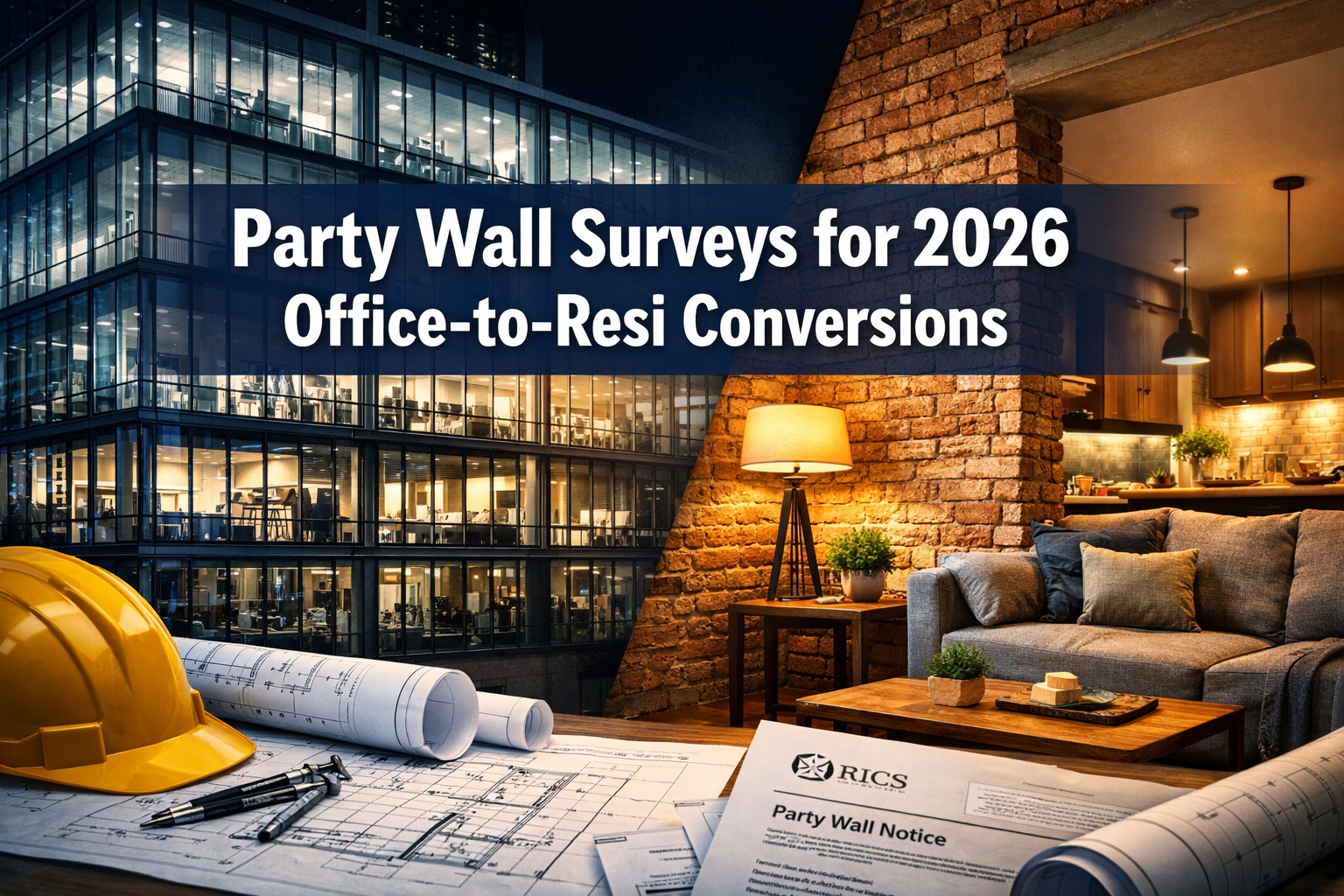
The commercial property landscape is experiencing a dramatic transformation in 2026, with office-to-residential conversions reaching unprecedented levels across UK cities. As businesses continue adapting to hybrid working models and commercial vacancy rates remain elevated, developers are seizing opportunities under Permitted Development Rights (PDR) to convert underutilized office spaces into much-needed residential units. However, this surge in conversions brings a critical challenge that many developers overlook until it's too late: party wall obligations.
Understanding Party Wall Surveys for 2026 Office-to-Resi Conversions: Managing Agreements in Permitted Development Expansions has become essential for developers, property owners, and investors navigating this booming sector. While PDR streamlines planning requirements, it doesn't eliminate the legal obligations under the Party Wall etc. Act 1996 when work affects shared structures between properties. The complexity increases exponentially when converting multi-story commercial buildings where party walls, floors, and structural elements are shared with neighbouring properties—both commercial and residential.
Key Takeaways
- 🏢 Office-to-residential conversions under PDR still require full party wall compliance when works affect shared structures, despite simplified planning processes
- 📋 Early party wall surveyor engagement (ideally 3-4 months before construction) prevents costly delays and neighbour disputes in conversion projects
- ⚖️ Party Wall Awards remain legally binding even under permitted development, with surveyors protecting both building owner and adjoining owner interests
- 💰 Building owners bear all party wall costs including their surveyor, the neighbour's surveyor, and any dispute resolution expenses
- 🔍 Pre-conversion condition surveys documenting neighbouring properties are essential to avoid liability disputes after construction completion
Understanding Party Wall Obligations in Office-to-Residential Conversions
The intersection of Permitted Development Rights and Party Wall Act requirements creates a unique regulatory landscape for office conversions in 2026. Many developers mistakenly believe that PDR exemptions from planning permission also exempt them from party wall procedures—a costly misunderstanding that can derail entire projects.
What Triggers Party Wall Requirements in Conversions?
Office-to-residential conversions typically involve extensive structural modifications that trigger party wall obligations under the Act [1]. These include:
Structural Works:
- Cutting into party walls for new doorways or service penetrations
- Installing or removing structural beams affecting shared walls
- Underpinning foundations that extend beneath neighbouring properties
- Strengthening floors that form party structures
Building on Boundary Lines:
- Constructing new external walls at the boundary
- Building extensions or additional stories
- Installing balconies or external structures
Excavation Works:
- Digging within 3 meters of neighbouring structures (deeper than their foundations)
- Excavation within 6 meters (if cutting below a 45-degree plane from neighbour's foundation base)
The Party Wall etc. Act 1996 applies to all these scenarios, regardless of whether planning permission is required [1]. Understanding what party wall surveyors do becomes crucial at this stage.
The Permitted Development Rights Framework in 2026
Class MA Permitted Development allows conversion of offices (Use Class E) to residential (Use Class C3) without full planning permission, subject to specific criteria. However, developers must still:
✅ Submit a prior approval application to the local planning authority
✅ Demonstrate adequate natural light in habitable rooms
✅ Ensure appropriate noise mitigation from commercial neighbours
✅ Comply with building regulations
✅ Fulfill all party wall obligations independently
The critical point: PDR simplifies planning but doesn't override property law. Party wall procedures run parallel to, not instead of, the prior approval process.
Party Wall Surveys for 2026 Office-to-Resi Conversions: The Complete Process
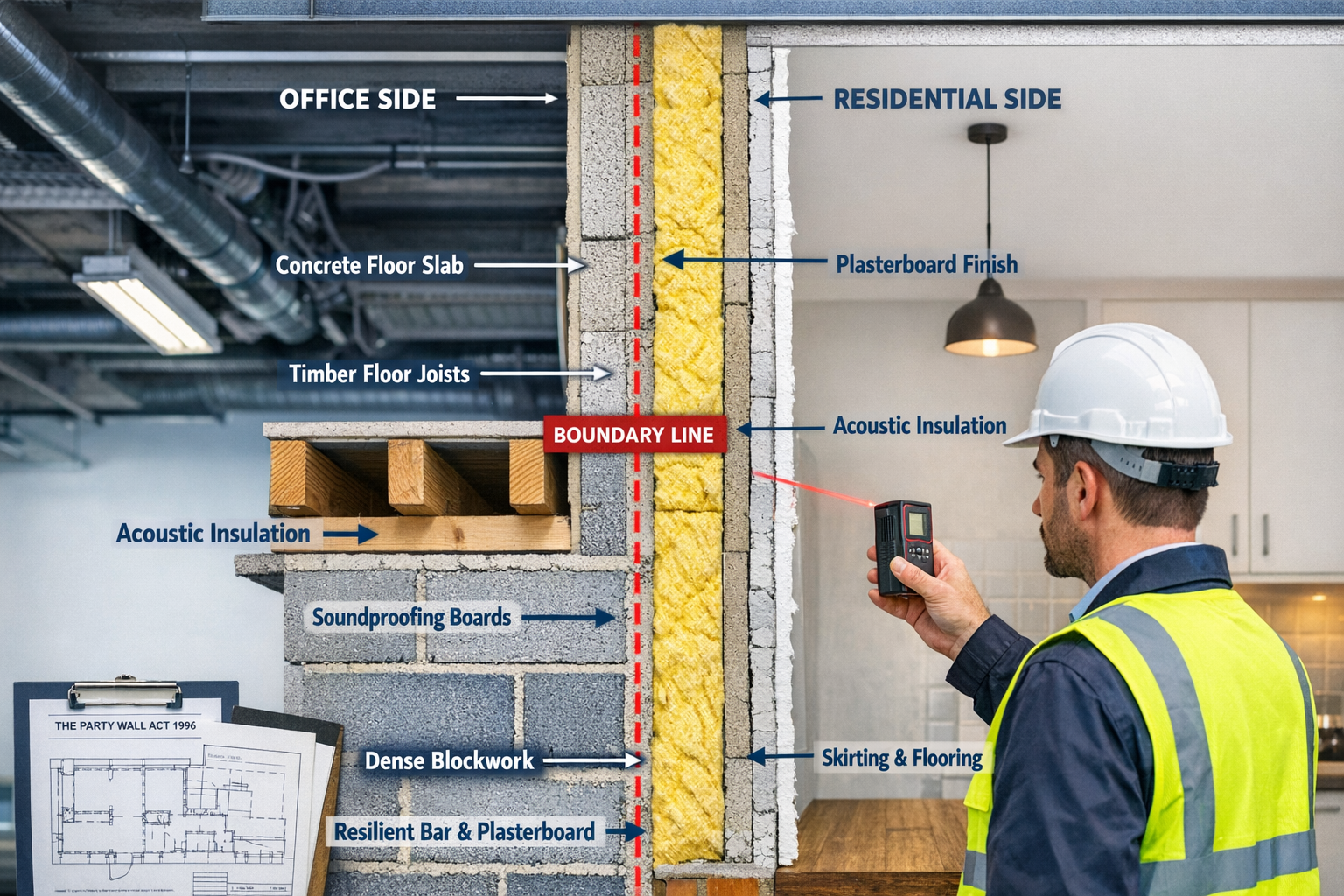
Navigating party wall agreements for office conversions requires systematic planning and professional expertise. The process differs from typical residential extensions due to the scale, complexity, and multiple adjoining owners often involved.
Step 1: Early Identification and Assessment (3-4 Months Pre-Construction)
Before purchasing a commercial building for conversion or finalizing design plans, conduct a party wall feasibility assessment:
Identify All Adjoining Owners:
- Properties sharing walls (including upper floors in multi-story buildings)
- Properties within excavation zones (3m or 6m depending on depth)
- Commercial tenants with separate interests
- Freeholders versus leaseholders
Assess Proposed Works:
- Which walls are party walls versus external walls on boundary
- Structural modifications required for residential layouts
- Service installation routes through shared structures
- Foundation work or basement conversions
Timeline Planning:
- Party Wall Notices require minimum 2 months for wall works [1]
- 1 month notice for excavation works [1]
- Add buffer time for potential disputes or surveyor appointments
- Coordinate with PDR prior approval timelines (typically 56 days)
Step 2: Serving Party Wall Notices
Once works are defined, the building owner (developer/converter) must serve formal notices to all adjoining owners:
Notice Types:
| Notice Type | When Required | Notice Period |
|---|---|---|
| Party Structure Notice | Works to existing party walls/floors | 2 months |
| Line of Junction Notice | New walls on boundary lines | 1 month |
| Notice of Adjacent Excavation | Digging within 3m or 6m zones | 1 month |
Notice Contents Must Include:
- Detailed description of proposed works
- Drawings showing extent of works
- Proposed start date
- Building owner's contact details
Critical Consideration: In office buildings with multiple tenants or unit owners, each separate interest may require individual notice. A 10-story building conversion could require serving dozens of notices.
Step 3: Neighbour Response and Surveyor Appointment
Adjoining owners have 14 days to respond to notices [1]. Three scenarios emerge:
Scenario A: Consent
Neighbour provides written consent. Works can proceed, but a pre-construction condition survey is still highly recommended to document existing conditions.
Scenario B: Dissent or No Response
This triggers the Party Wall Award process. Both parties appoint surveyors (or agree on a single "Agreed Surveyor").
Scenario C: Dispute
Formal dispute resolution through surveyors, potentially involving a Third Surveyor for final determination.
Step 4: The Party Wall Award
When consent isn't given, appointed surveyors prepare a Party Wall Award—a legally binding document that:
✅ Specifies exactly what works are permitted
✅ Sets conditions for construction methods and timing
✅ Establishes monitoring and inspection protocols
✅ Documents pre-construction conditions through schedules of condition
✅ Allocates costs and responsibilities
✅ Provides dispute resolution mechanisms
Typical Award Conditions for Office Conversions:
- Structural engineer certification for load calculations
- Acoustic testing requirements for party floors
- Working hours restrictions (crucial in mixed-use buildings)
- Vibration monitoring during works
- Regular progress inspections by surveyors
- Temporary works approvals (propping, shoring)
The Award protects both parties: building owners gain legal right to proceed; adjoining owners receive documented protections and recourse if damage occurs.
Step 5: Construction Phase Management
During conversion works, the party wall process continues:
Ongoing Surveyor Involvement:
- Pre-commencement inspections verifying baseline conditions
- Periodic site visits monitoring compliance with Award terms
- Responding to neighbour concerns or observed issues
- Documenting any damage or deviations from agreed works
Building Owner Responsibilities:
- Providing reasonable access for surveyor inspections
- Adhering to Award conditions and working methods
- Promptly addressing any damage to neighbouring properties
- Maintaining communication through surveyors
Cost Implications:
Building owners bear all party wall surveyor costs, including their own surveyor fees, adjoining owner surveyor fees, and any third surveyor costs if disputes escalate [2]. For large office conversions, total party wall costs can reach £15,000-£50,000+ depending on complexity and number of adjoining owners. Learn more about the cost of party wall surveyors in London.
Managing Complex Party Wall Agreements in Multi-Story Office Conversions
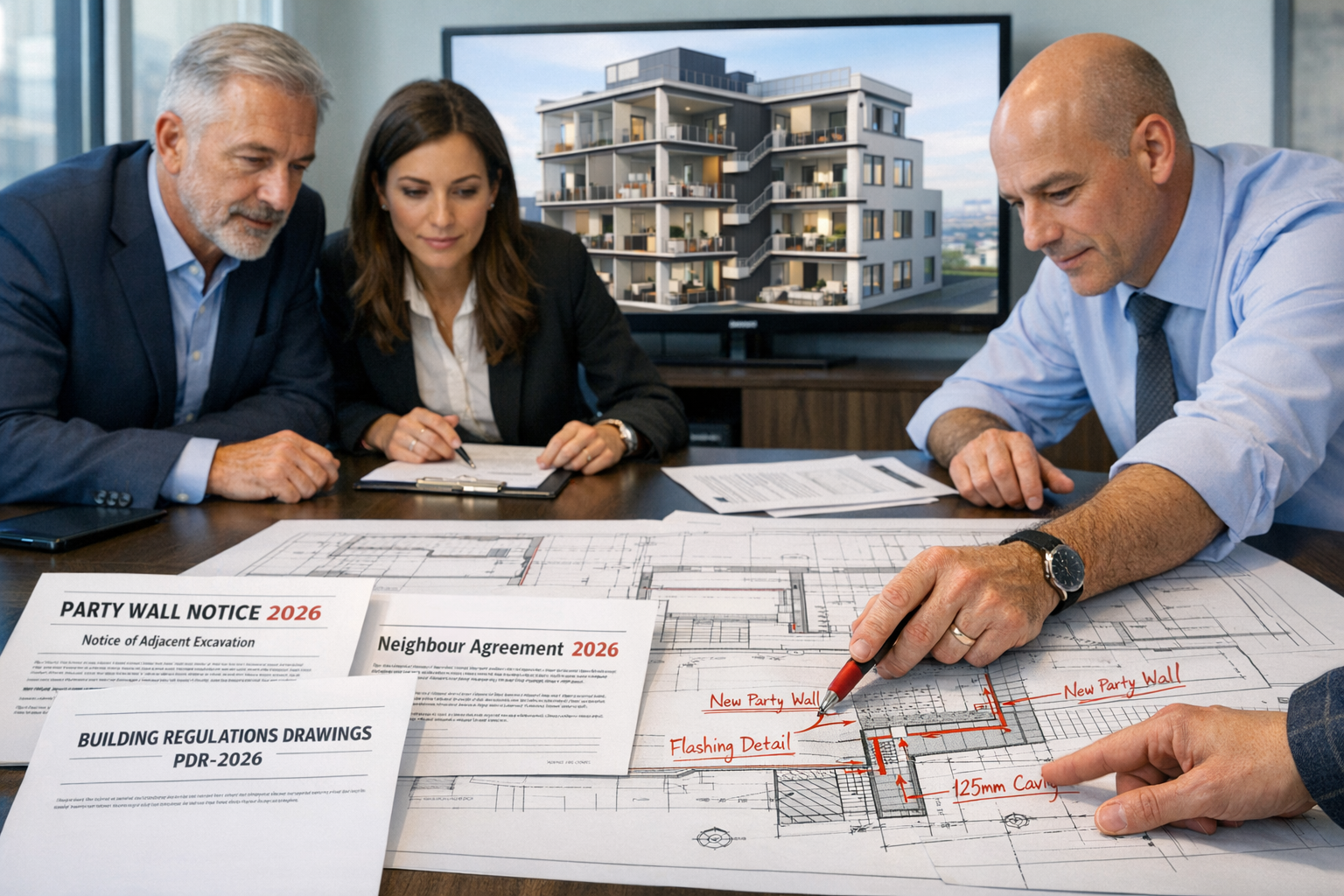
Large-scale office-to-residential conversions present unique challenges that distinguish them from typical residential party wall scenarios. Understanding these complexities is essential for Party Wall Surveys for 2026 Office-to-Resi Conversions: Managing Agreements in Permitted Development Expansions.
Multiple Adjoining Owners and Stacked Interests
A single office building conversion may involve:
Horizontal Adjacencies:
- Neighbouring commercial properties sharing side walls
- Retail units at ground level with separate ownership
- Adjacent residential properties in mixed-use areas
Vertical Adjacencies:
- Upper floor offices in separate ownership
- Residential flats above or below conversion floors
- Commercial tenants on different levels
Complex Ownership Structures:
- Freehold versus leasehold interests
- Commercial lease arrangements with repair obligations
- Resident management companies
- Multiple unit owners in converted buildings
Each separate legal interest requires individual notice and potentially separate surveyor appointments. A 15-unit office conversion could require coordinating with 20+ adjoining owners.
Managing Neighbour Relations During Conversions
Proactive Communication Strategies:
🤝 Pre-Notice Consultation
Before formal notices, inform neighbours about plans informally. Explain benefits (improved building appearance, increased local housing) and address concerns early.
📋 Clear Information Provision
Provide accessible explanations alongside technical notices. Many commercial tenants or residential neighbours lack familiarity with party wall procedures.
⏰ Realistic Timeline Communication
Office conversions typically take 12-18 months. Set clear expectations about construction phases, noisy work periods, and completion dates.
🔧 Dedicated Liaison Contact
Appoint a project manager as single point of contact for neighbour queries, separate from formal surveyor communications.
Common Disputes and Resolution Approaches
Typical Conversion-Related Disputes:
Structural Concerns:
Neighbours worry about load-bearing capacity when floors are modified for residential layouts. Resolution: Independent structural engineer certification and enhanced monitoring protocols in Award.
Noise and Disturbance:
Extended construction periods in occupied buildings. Resolution: Strict working hours (typically 8am-6pm weekdays), noise monitoring, and phased work schedules in Award conditions.
Access Issues:
Surveyors need access to neighbouring properties for inspections. Resolution: Scheduled appointments with reasonable notice, minimizing disruption.
Damage Claims:
Cracks, vibration damage, or service disruptions. Resolution: Comprehensive pre-construction condition surveys with photographic evidence, regular monitoring, and clear repair obligations in Award.
Cost Disputes:
Disagreements over surveyor fee reasonableness. Resolution: Fee transparency upfront, itemized invoicing, and third surveyor determination if necessary. Review typical party wall surveyor fees to understand market rates.
Specialized Surveyor Selection for Office Conversions
Not all party wall surveyors possess expertise in commercial-to-residential conversions. Select professionals with:
✅ Commercial Property Experience – Understanding of office building structures, services, and construction methods
✅ Multi-Party Coordination Skills – Managing multiple adjoining owners and complex notification schedules
✅ Structural Engineering Knowledge – Assessing load calculations and conversion feasibility
✅ Acoustic Expertise – Evaluating sound insulation requirements between commercial and residential uses
✅ RICS Accreditation – Professional standards and insurance coverage
✅ Local Authority Liaison Experience – Coordinating party wall and building control processes
Finding an expert party wall surveyor in London with conversion-specific experience significantly reduces project risks.
Best Practices for Developers and Building Owners in 2026
Due Diligence Before Property Acquisition
Pre-Purchase Party Wall Assessment:
Before committing to an office building purchase for conversion:
- Commission a feasibility study including party wall implications
- Identify all potential adjoining owners through Land Registry searches
- Assess previous party wall history (prior Awards, disputes, or damage claims)
- Estimate party wall costs as part of development budget (typically 1-3% of construction costs)
- Evaluate risk factors (hostile neighbours, complex structures, multiple owners)
This due diligence prevents post-purchase surprises that can delay projects by 6+ months or add tens of thousands in unexpected costs.
Integrated Project Planning
Coordinate Multiple Regulatory Processes:
| Process | Timeline | Key Milestones |
|---|---|---|
| PDR Prior Approval | 56 days (+ potential extensions) | Application submission, consultation, determination |
| Party Wall Notices | 2 months minimum | Notice service, response period, Award preparation |
| Building Regulations | Ongoing | Design approval, stage inspections, completion certificate |
| Construction Phase | 12-18 months typical | Mobilization, structural works, fit-out, handover |
Critical Path Considerations:
- Start party wall process before submitting prior approval application
- Party Wall Awards must be in place before construction commences
- Building control inspections may overlap with party wall surveyor visits
- Coordinate access requirements to minimize neighbour disruption
Budget Planning for Party Wall Costs
Typical Cost Components:
💷 Surveyor Fees:
- Building owner's surveyor: £1,500-£5,000+ per project
- Each adjoining owner's surveyor: £1,000-£3,000+ per neighbour
- Third surveyor (if required): £2,000-£5,000+
💷 Additional Costs:
- Condition surveys: £500-£1,500 per property
- Structural engineer reports: £1,000-£3,000
- Monitoring equipment: £500-£2,000
- Legal fees (if disputes escalate): £5,000+
💷 Contingency:
- Add 20-30% contingency for unexpected disputes or additional adjoining owners
For a typical 20-unit office conversion with 8-10 adjoining owners, budget £25,000-£60,000 for complete party wall costs. Understand the full scope of party wall costs in your planning.
Risk Mitigation Strategies
Insurance Considerations:
🛡️ Professional Indemnity Insurance – Ensure design team coverage includes party wall matters
🛡️ Contractors' All Risks Insurance – Include party wall damage coverage
🛡️ Public Liability Insurance – Adequate limits for neighbour property damage
🛡️ Latent Defects Insurance – Consider for converted residential units
Contractual Protections:
📄 Construction Contracts – Include party wall compliance obligations and cost allocation
📄 Design Team Appointments – Specify party wall coordination responsibilities
📄 Sales Contracts – Disclose party wall history to unit purchasers
Technology and Documentation
Digital Tools for 2026:
Modern party wall management increasingly leverages technology:
- Digital notice service with tracked delivery confirmation
- Cloud-based document management for Awards and correspondence
- Photographic condition surveys with timestamped, geotagged images
- Vibration monitoring systems with real-time data logging
- Project management platforms coordinating all stakeholders
Comprehensive documentation protects against future disputes and demonstrates compliance with Award conditions.
Regulatory Updates and Future Outlook for 2026
Recent Policy Developments
The UK government continues refining Permitted Development Rights in response to housing shortages and changing work patterns. Key 2026 considerations:
Extended PDR Provisions:
Recent consultations suggest potential expansion of Class MA to include larger office buildings and reduced prior approval requirements, potentially increasing conversion activity.
Quality Standards:
Growing emphasis on residential conversion quality, including minimum space standards and natural light requirements, may increase construction complexity and party wall implications.
Mixed-Use Considerations:
Guidance on managing party wall obligations in buildings retaining some commercial use while converting upper floors to residential is evolving through case law and professional practice notes.
Industry Standards and Professional Guidance
RICS Practice Standards:
The Royal Institution of Chartered Surveyors provides authoritative guidance for party wall surveyors, including:
- Party Wall Legislation and Procedure Guidance Note – Best practice for surveyors
- Conflicts of Interest Requirements – Ensuring surveyor independence
- Fee Guidelines – Reasonable cost expectations
- Dispute Resolution Protocols – Structured approaches to disagreements
Selecting RICS-qualified surveyors ensures adherence to these professional standards [3].
Case Law Developments
Recent tribunal and court decisions continue shaping party wall practice:
Key Precedents:
- Clarification of "reasonable costs" for surveyor fees in large-scale projects
- Interpretation of "necessary" works versus desirable modifications
- Adjoining owner rights to refuse access for non-essential inspections
- Damage assessment methodologies and repair standards
Experienced party wall surveyors stay current with case law to provide robust advice and defensible Awards.
Conclusion: Strategic Approach to Party Wall Surveys for Office Conversions
Successfully navigating Party Wall Surveys for 2026 Office-to-Resi Conversions: Managing Agreements in Permitted Development Expansions requires strategic planning, professional expertise, and proactive stakeholder management. As office conversion activity accelerates throughout 2026, developers who treat party wall obligations as integral project components—rather than administrative afterthoughts—will avoid costly delays, minimize disputes, and maintain positive neighbour relations.
Essential Action Steps:
- Engage party wall specialists early – Ideally during feasibility stage, minimum 3-4 months before construction
- Budget realistically – Allocate 1-3% of construction costs for party wall procedures and contingencies
- Communicate proactively – Inform neighbours before formal notices and maintain open dialogue throughout
- Document comprehensively – Detailed condition surveys and photographic evidence protect against future disputes
- Coordinate processes – Integrate party wall timelines with PDR prior approval and building control schedules
- Select experienced professionals – Choose surveyors with specific office conversion and multi-party experience
The intersection of Permitted Development Rights and Party Wall Act obligations creates both opportunities and challenges. While PDR streamlines planning, it doesn't eliminate the fundamental property law principles protecting adjoining owners' interests. Developers who understand this distinction and invest appropriately in party wall compliance will successfully navigate the booming office-to-residential conversion market.
Next Steps:
If you're planning an office-to-residential conversion in 2026, take action now:
- Schedule a party wall feasibility assessment with qualified surveyors before finalizing acquisition or design
- Review your project timeline to incorporate proper notice periods and Award preparation
- Identify all potential adjoining owners through comprehensive property searches
- Obtain preliminary cost estimates for complete party wall procedures including multiple surveyors
- Contact experienced party wall surveyors to discuss your specific project requirements
The commercial property landscape is transforming rapidly, and those who master the complexities of party wall management in office conversions will be best positioned to capitalize on this significant market opportunity while maintaining professional standards and legal compliance.
References
[1] Party Wall Agreement – https://hoa.org.uk/advice/guides-for-homeowners/i-am-improving/party-wall-agreement/
[2] Party Wall Surveyor Cost – https://hoa.org.uk/advice/guides-for-homeowners/i-am-improving/party-wall-surveyor-cost/
[3] Party Wall Surveyor – https://www.lcclconstruction.co.uk/party-wall-surveyor