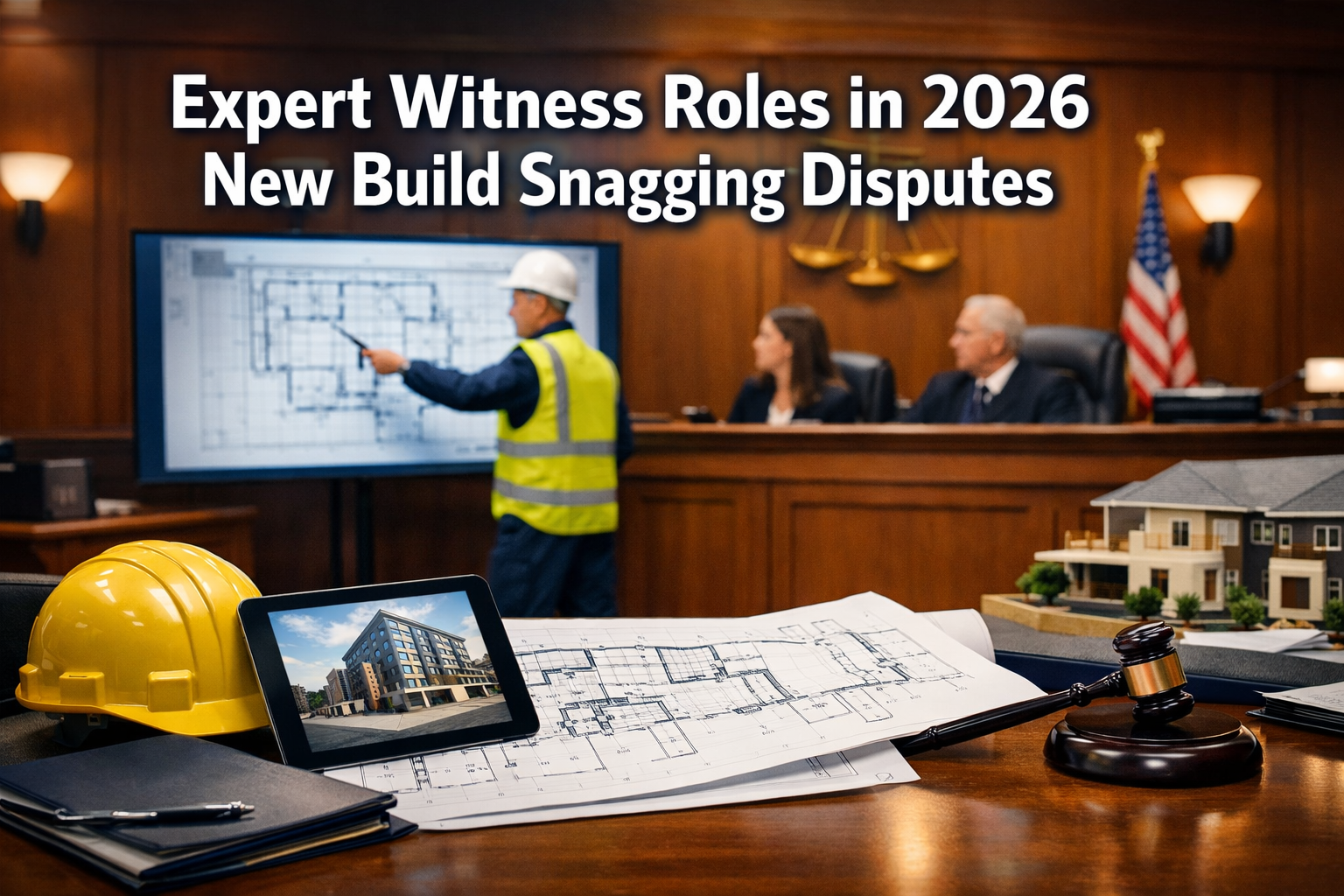
As the UK property market experiences a robust recovery in 2026, new build transactions are surging—and so are snagging disputes. With buyer enquiries climbing and more homeowners discovering defects after moving in, the demand for qualified expert witnesses has never been higher. Expert Witness Roles in 2026 New Build Snagging Disputes: RICS Evidence Standards Post-Warranty Claims Surge represents a critical intersection where construction quality, legal accountability, and professional standards converge. This comprehensive guide explores how RICS-qualified surveyors build defensible cases for tribunals and arbitration proceedings in today's increasingly litigious new build market.
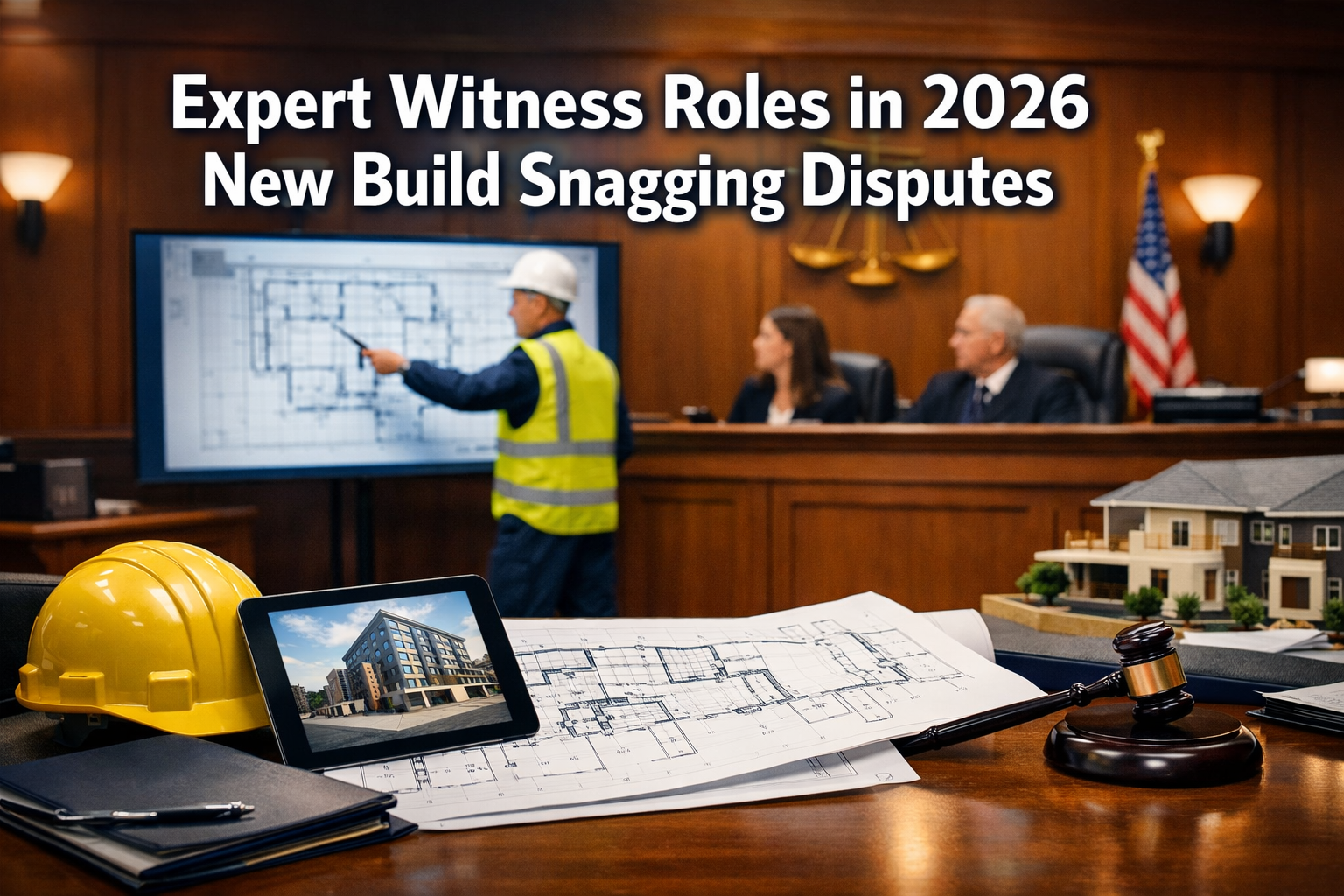
The rising tide of post-warranty claims has transformed how surveyors approach snagging inspections. No longer simply identifying defects, today's professionals must document findings with tribunal-ready precision, understanding that their reports may become pivotal evidence in formal dispute resolution proceedings. 📋
Key Takeaways
- Post-warranty claims surge: New build defect disputes have increased significantly in 2026 as market recovery drives transaction volumes, requiring expert witnesses with specialized RICS qualifications
- Evidence standards evolution: RICS has strengthened quality initiatives and expert witness protocols, demanding higher documentation standards and forensic-level defect analysis
- Tribunal-ready documentation: Surveyors must now create reports that withstand legal scrutiny, incorporating photographic evidence, technical measurements, and compliance assessments against current building regulations
- Multi-disciplinary expertise required: Effective expert witnesses combine building surveying knowledge, legal procedure understanding, and clear communication skills for tribunal presentations
- Proactive inspection benefits: Early snagging surveys for new builds prevent costly disputes and establish baseline evidence before warranty periods expire
Understanding the 2026 New Build Snagging Landscape
The Market Recovery and Claims Correlation
The UK property market's 2026 recovery has created a perfect storm for snagging disputes. As transaction volumes increase, more buyers are discovering that their "perfect" new homes harbor significant defects. Estate agents report buyer enquiries up by 18% compared to 2025, with new build developments accounting for a substantial portion of this growth.
This surge in purchases directly correlates with increased post-warranty claims. Homeowners who moved in during 2024-2025 are now discovering latent defects as their initial warranty periods expire or approach conclusion. Common issues include:
- Structural movement causing cracking in walls and ceilings
- Water ingress through poorly installed windows and doors
- Inadequate insulation leading to condensation and mold growth
- Defective plumbing and heating systems requiring complete replacement
- Poor workmanship in finishes, tiling, and joinery
According to industry data, approximately 98% of new build properties contain at least one defect, with the average new home harboring around 120 snags[2]. While many are minor cosmetic issues, a significant proportion represent serious construction failures requiring expert assessment.
Why Expert Witnesses Are Essential
When developers refuse to rectify defects or disputes escalate beyond negotiation, homeowners increasingly turn to formal dispute resolution mechanisms—adjudication, arbitration, or litigation. These proceedings require expert witness testimony to establish:
- What defects exist and their severity
- Whether defects breach building regulations or contract specifications
- Causation—what caused the defects and who is responsible
- Remediation costs and appropriate repair methodologies
- Impact on property value and habitability
Without qualified expert witnesses, homeowners struggle to prove their claims against well-resourced developers with in-house technical teams. RICS-qualified surveyors fill this critical gap, providing independent, authoritative evidence that tribunals and courts rely upon.
Expert Witness Roles in 2026 New Build Snagging Disputes: RICS Evidence Standards and Qualifications
RICS Expert Witness Requirements
The Royal Institution of Chartered Surveyors (RICS) maintains rigorous standards for members acting as expert witnesses. These requirements have strengthened in 2026 as part of broader quality initiatives affecting surveyor practice[4].
Core qualifications include:
- RICS membership (MRICS or FRICS) demonstrating professional competency
- Specialist knowledge in building pathology, construction defects, and relevant building regulations
- Expert witness training covering legal duties, report writing, and courtroom procedures
- Professional indemnity insurance with adequate coverage for expert witness work
- Continuing Professional Development (CPD) in both technical and legal aspects
RICS members acting as expert witnesses must understand their overriding duty to the tribunal or court, not to the party instructing them. This independence distinguishes expert witnesses from advocates and requires surveyors to provide objective, balanced opinions even when findings may disadvantage their instructing client.
The Evolution of Evidence Standards
RICS quality strengthening initiatives in 2026 have raised the bar for expert witness evidence in snagging disputes[4]. Modern reports must incorporate:
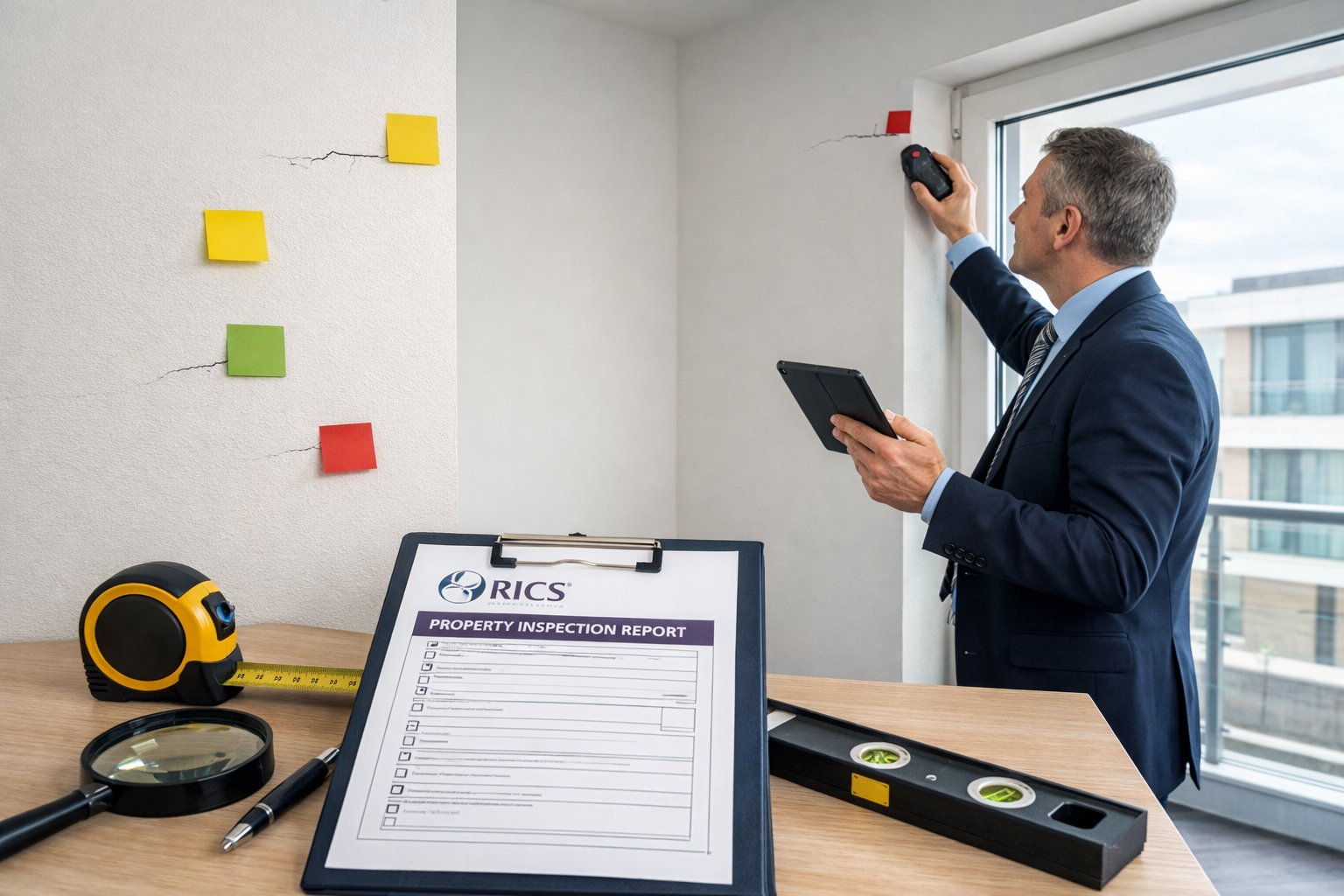
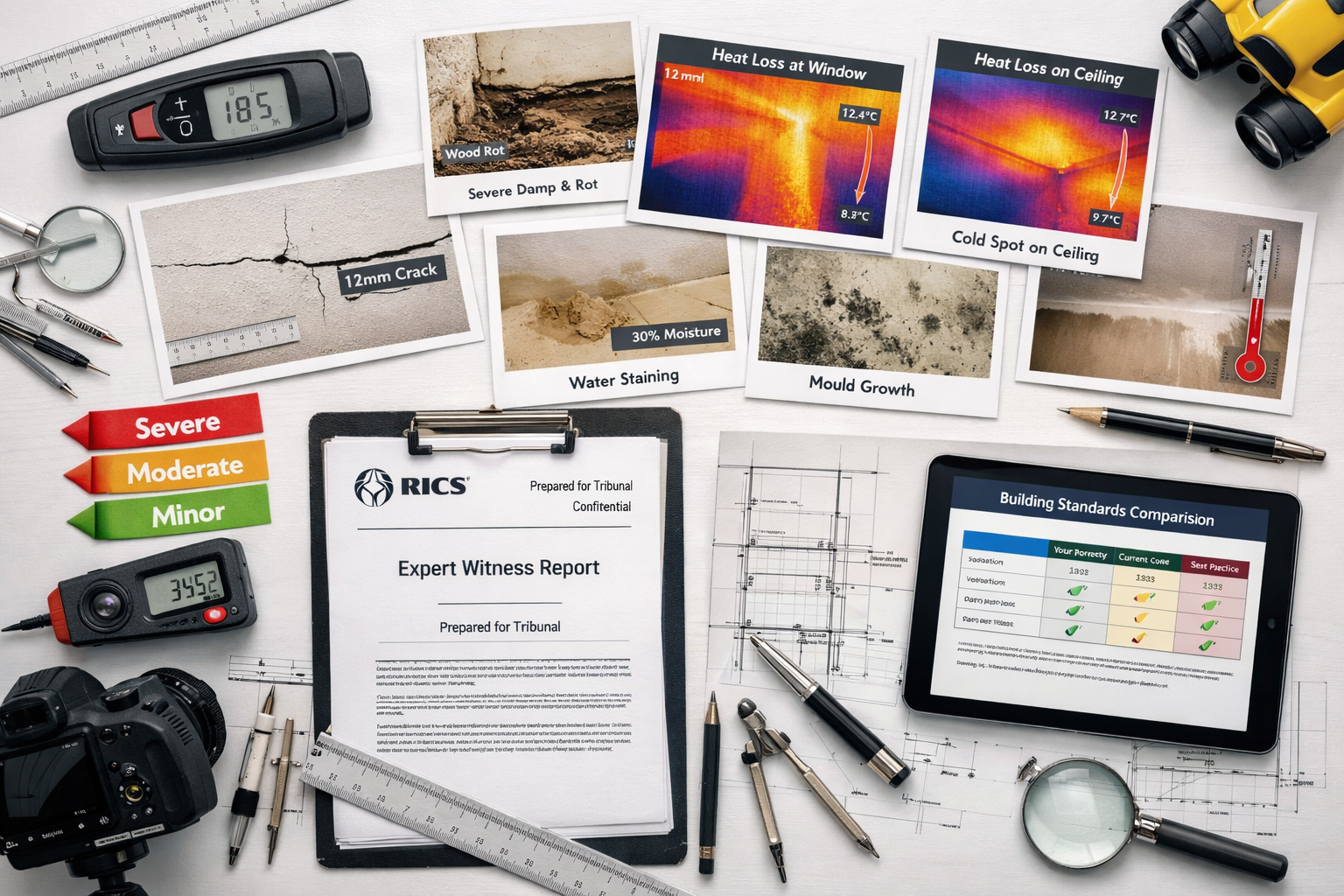
📸 Comprehensive Photographic Documentation
High-resolution images with:
- Clear defect identification with measurement scales
- Multiple angles showing context and extent
- Date and location metadata
- Annotated diagrams highlighting specific issues
📊 Technical Measurements and Testing
Quantitative data including:
- Moisture meter readings for damp issues
- Thermal imaging results showing heat loss patterns
- Spirit level measurements demonstrating out-of-plumb walls
- Crack width measurements using calibrated gauges
📋 Regulatory Compliance Assessment
Detailed analysis comparing construction against:
- Building Regulations 2010 (as amended)
- NHBC Standards for warranty-covered properties
- Energy efficiency requirements including EPC ratings[3]
- British Standards for materials and workmanship
💰 Cost Analysis and Remediation Specifications
Professional quantity surveying input providing:
- Detailed repair methodologies
- Material specifications and quantities
- Labor requirements and timescales
- Total remediation costs with contingencies
This multi-faceted approach creates reports that withstand cross-examination and provide tribunals with complete information for decision-making. A comprehensive RICS Building Survey forms the foundation for this level of detailed analysis.
Building Defensible Cases: From Inspection to Tribunal
The Inspection Process for Tribunal-Ready Evidence
Creating defensible expert witness reports begins with methodical inspection procedures. In 2026, snagging surveys must go beyond simple defect lists to capture forensic-level detail suitable for legal proceedings.
Stage 1: Pre-Inspection Preparation
Expert witnesses review:
- Purchase contracts and specifications
- Developer warranties and guarantees
- Previous correspondence about defects
- Building control completion certificates
- Original architectural plans and drawings
This contextual understanding helps identify where actual construction deviates from promised standards.
Stage 2: Systematic Site Inspection
Following a structured methodology ensures no defects are overlooked:
| Inspection Area | Key Focus Points | Evidence Capture |
|---|---|---|
| External envelope | Walls, roof, windows, doors, drainage | Photos, moisture readings, thermal imaging |
| Internal structure | Walls, ceilings, floors, stairs | Crack measurements, level checks, photos |
| Services | Plumbing, heating, electrical, ventilation | Functional testing, flow rates, temperature checks |
| Finishes | Decoration, tiling, flooring, joinery | Quality assessment, photos, defect lists |
| Energy efficiency | Insulation, airtightness, glazing | Thermal imaging, EPC review, ventilation checks[3] |
Modern snagging surveys in 2026 increasingly incorporate energy efficiency assessments, recognizing that poor thermal performance represents a significant defect category affecting both comfort and running costs[3].
Stage 3: Laboratory Testing and Specialist Input
Complex defects may require:
- Materials sampling and laboratory analysis
- Structural engineer consultations for serious cracking
- Damp specialists for persistent moisture issues
- Electrical testing certificates
- Drainage CCTV surveys
Expert witnesses coordinate these specialist inputs, synthesizing findings into comprehensive reports.
Report Writing for Legal Proceedings
Expert witness reports must balance technical accuracy with accessibility for non-technical tribunal members. RICS standards emphasize:
Clear Structure and Executive Summary
Reports should open with:
- Executive summary stating key findings and conclusions
- Scope of instructions clarifying what the expert was asked to investigate
- Qualifications and experience establishing credibility
- Site visit details including dates, weather conditions, and access limitations
Objective Analysis and Balanced Opinion
The core report sections must:
- Describe defects factually without exaggeration or minimization
- Explain technical issues in plain language accessible to lay readers
- Consider alternative explanations demonstrating balanced analysis
- Distinguish between fact and opinion clearly
- Reference authoritative sources including building regulations and British Standards
Defensible Conclusions
Expert opinions must be:
- Supported by evidence gathered during inspection
- Within the expert's competence area
- Clearly reasoned with logical progression from findings to conclusions
- Proportionate to the severity of defects identified
A well-constructed expert witness report withstands cross-examination because every conclusion traces back to documented evidence and established technical principles.
The Tribunal Process and Expert Witness Testimony
When disputes proceed to formal resolution, expert witnesses play several critical roles:
Pre-Hearing Responsibilities:
- Responding to questions from opposing experts
- Participating in joint expert meetings to narrow issues in dispute
- Preparing visual aids and presentation materials
- Reviewing and commenting on opposing expert reports
During Hearings:
- Presenting evidence clearly and confidently
- Explaining technical concepts to non-specialist tribunal members
- Responding to cross-examination professionally
- Maintaining objectivity and independence
- Assisting the tribunal in understanding technical issues
Post-Hearing:
- Providing clarifications if requested by the tribunal
- Assisting with cost assessments if required
The ability to communicate complex construction defects clearly distinguishes effective expert witnesses from merely competent surveyors. This communication skill, combined with technical expertise, makes RICS-qualified professionals invaluable in dispute resolution.
The Post-Warranty Claims Surge: Causes and Implications
Why Claims Are Increasing in 2026
Several converging factors explain the surge in post-warranty snagging claims:
🏗️ Construction Quality Issues During Peak Building Periods
Properties completed during 2022-2024 often suffered from:
- Labor shortages leading to less experienced tradespeople
- Material supply disruptions causing substitutions and delays
- Rushed completions to meet sales targets
- Reduced site supervision due to cost pressures
These quality compromises are now manifesting as defects as properties age beyond their first year.
⏰ Warranty Period Expiration
Standard NHBC warranties provide two-year coverage for non-structural defects. Properties completed in 2024 are now approaching or exceeding this threshold, prompting homeowners to identify and claim for defects before coverage expires.
💡 Increased Buyer Awareness
Homeowners in 2026 are more informed about their rights and the prevalence of new build defects. Social media groups, consumer advocacy organizations, and media coverage have raised awareness that "new" doesn't mean "perfect."
📈 Property Value Concerns
In a recovering market, homeowners recognize that unresolved defects impact resale values. This financial motivation drives more formal claims when developers prove unresponsive.
🏛️ Accessible Dispute Resolution
Alternative dispute resolution mechanisms—particularly adjudication—provide faster, more affordable routes to resolution than traditional litigation. This accessibility encourages homeowners to pursue legitimate claims they might previously have abandoned.
Implications for Surveyors and Developers
The claims surge creates both challenges and opportunities:
For Surveyors:
- Increased demand for expert building evaluation services
- Need for enhanced expert witness training and qualifications
- Requirement for more comprehensive professional indemnity insurance
- Opportunity to specialize in dispute resolution work
For Developers:
- Greater scrutiny of construction quality and site supervision
- Increased warranty claim costs and reputational damage
- Need for more robust quality assurance processes
- Financial pressure from remediation costs
For Homeowners:
- Better prospects for successful defect claims with expert support
- Clearer understanding of property condition through professional surveys
- Access to justice through expert witness testimony
- Improved negotiating position against developers
The trend toward formalized dispute resolution emphasizes the importance of obtaining professional surveys early. A proactive approach—commissioning surveys before warranty expiration—provides homeowners with documented evidence and stronger negotiating positions.
Practical Guidance for Homeowners and Professionals
For Homeowners: Protecting Your Investment
If you've purchased a new build property, take these proactive steps:
✅ Commission an Independent Snagging Survey
Don't rely solely on developer-provided inspections. An independent RICS Building Survey or specific defect survey provides objective assessment of your property's condition.
Optimal timing:
- Before completion: Identify defects for pre-move rectification
- Near warranty expiration: Document issues before coverage ends
- When problems emerge: Establish baseline for dispute resolution
📝 Document Everything
Maintain comprehensive records:
- All correspondence with developers about defects
- Photographs showing defect progression over time
- Repair quotes from qualified contractors
- Impact on daily living (for consequential loss claims)
⚖️ Understand Your Legal Position
Review your purchase contract, warranties, and guarantees to understand:
- What defects are covered and for how long
- Dispute resolution procedures specified in contracts
- Time limits for raising claims
- Your obligations regarding access for inspections
🎯 Engage Expert Witnesses Early
When disputes escalate, early expert witness involvement:
- Strengthens your negotiating position
- Provides realistic assessment of claim prospects
- Ensures evidence is preserved appropriately
- May facilitate settlement before formal proceedings
For Surveyors: Developing Expert Witness Capabilities
RICS members seeking to develop expert witness practices should:
📚 Invest in Training and Development
- Complete RICS-approved expert witness training courses
- Study relevant case law and tribunal decisions
- Develop report writing skills specifically for legal contexts
- Practice courtroom testimony techniques
🔍 Build Technical Expertise
Specialize in areas with high dispute frequency:
- Building pathology and defect diagnosis
- Moisture and damp issues in modern construction
- Energy efficiency and thermal performance[3]
- Building regulations compliance assessment
🤝 Develop Professional Networks
Connect with:
- Solicitors specializing in construction disputes
- Other expert witnesses for peer review and collaboration
- Technical specialists for complex investigations
- Professional bodies and expert witness directories
💼 Establish Robust Business Practices
- Secure appropriate professional indemnity insurance
- Develop clear terms of engagement and fee structures
- Create template report formats meeting RICS standards
- Implement quality assurance procedures for evidence gathering
The expert witness field offers rewarding opportunities for experienced surveyors who combine technical excellence with communication skills and professional integrity.
Emerging Trends and Future Outlook
Technology Integration in Evidence Gathering
Expert witnesses in 2026 increasingly leverage advanced technologies:
- 3D laser scanning creating detailed property models
- Drone surveys for roof and elevation inspections
- Artificial intelligence analyzing defect patterns across developments
- Blockchain documentation providing tamper-proof evidence chains
- Virtual reality presentations for tribunal evidence display
These technologies enhance evidence quality while improving efficiency and reducing costs.
Regulatory Developments
The UK government continues reviewing new build quality standards, with potential implications for snagging disputes:
- Strengthened building regulations enforcement
- Extended warranty periods under consideration
- New build ombudsman schemes expanding
- Consumer protection legislation enhancements
These developments may reduce defect prevalence while simultaneously raising standards for expert witness evidence.
Market Predictions for 2027 and Beyond
Industry analysts predict:
- Continued claims growth as 2024-2025 completions age
- Increased settlement values as tribunals recognize systemic quality issues
- Developer quality improvements driven by reputational and financial pressures
- Professionalization of expert witness services with specialized firms emerging
The snagging dispute landscape will likely remain active for several years as the construction quality issues of the pandemic and post-pandemic periods work through the system.
Conclusion
Expert Witness Roles in 2026 New Build Snagging Disputes: RICS Evidence Standards Post-Warranty Claims Surge reflects a critical evolution in UK property markets. As transaction volumes recover and homeowners discover defects in properties purchased during challenging construction periods, the demand for qualified expert witnesses has reached unprecedented levels.
RICS-qualified surveyors occupy a pivotal position in this landscape, providing the independent, authoritative evidence that tribunals require to resolve disputes fairly. The strengthened quality initiatives and evidence standards implemented in 2026 ensure that expert witness testimony meets the highest professional benchmarks, protecting both homeowner rights and professional integrity.
Key Action Steps
For homeowners:
- Commission independent snagging surveys before warranty expiration
- Document all defects and correspondence meticulously
- Engage RICS-qualified expert witnesses when disputes escalate
- Understand your contractual rights and dispute resolution options
For surveyors:
- Develop expert witness capabilities through training and specialization
- Maintain rigorous evidence gathering and documentation standards
- Stay current with RICS quality initiatives and regulatory developments
- Build professional networks supporting expert witness practice
For the industry:
- Improve construction quality to reduce defect prevalence
- Embrace transparent dispute resolution mechanisms
- Support professional standards development
- Recognize expert witnesses as essential to fair outcomes
The surge in post-warranty claims represents both challenge and opportunity. By maintaining the highest professional standards and leveraging comprehensive expert building evaluation methodologies, RICS-qualified surveyors ensure that homeowners receive justice while contributing to overall construction quality improvements.
Whether you're a homeowner concerned about defects, a surveyor developing expert witness capabilities, or a developer seeking to understand dispute trends, the message is clear: professional expertise, rigorous evidence standards, and independent assessment form the foundation for fair resolution of new build snagging disputes in 2026 and beyond.
For professional guidance on snagging surveys, expert witness services, or comprehensive property assessments, contact qualified RICS surveyors who understand both the technical and legal dimensions of new build defect disputes.
References
[1] Rics Snagging Survey – https://surveymatch.co.uk/rics-snagging-survey/
[2] The Importance Of Snagging Surveys For New Build Properties – https://bartleywest.co.uk/the-importance-of-snagging-surveys-for-new-build-properties/
[3] 10 Things Your New Build Snagging Survey Should Include In 2026 – https://www.snagitltd.com/content-types/blog/10-things-your-new-build-snagging-survey-should-include-in-2026/
[4] Building Survey Standards Evolution How Rics Quality Strengthening Initiatives Impact Surveyor Practice In 2026 – https://nottinghillsurveyors.com/blog/building-survey-standards-evolution-how-rics-quality-strengthening-initiatives-impact-surveyor-practice-in-2026
[5] Modus By Rics January 2026 – https://www.rics.org/content/dam/ricsglobal/documents/to-be-sorted/MODUS-by-RICS-January-2026.pdf