
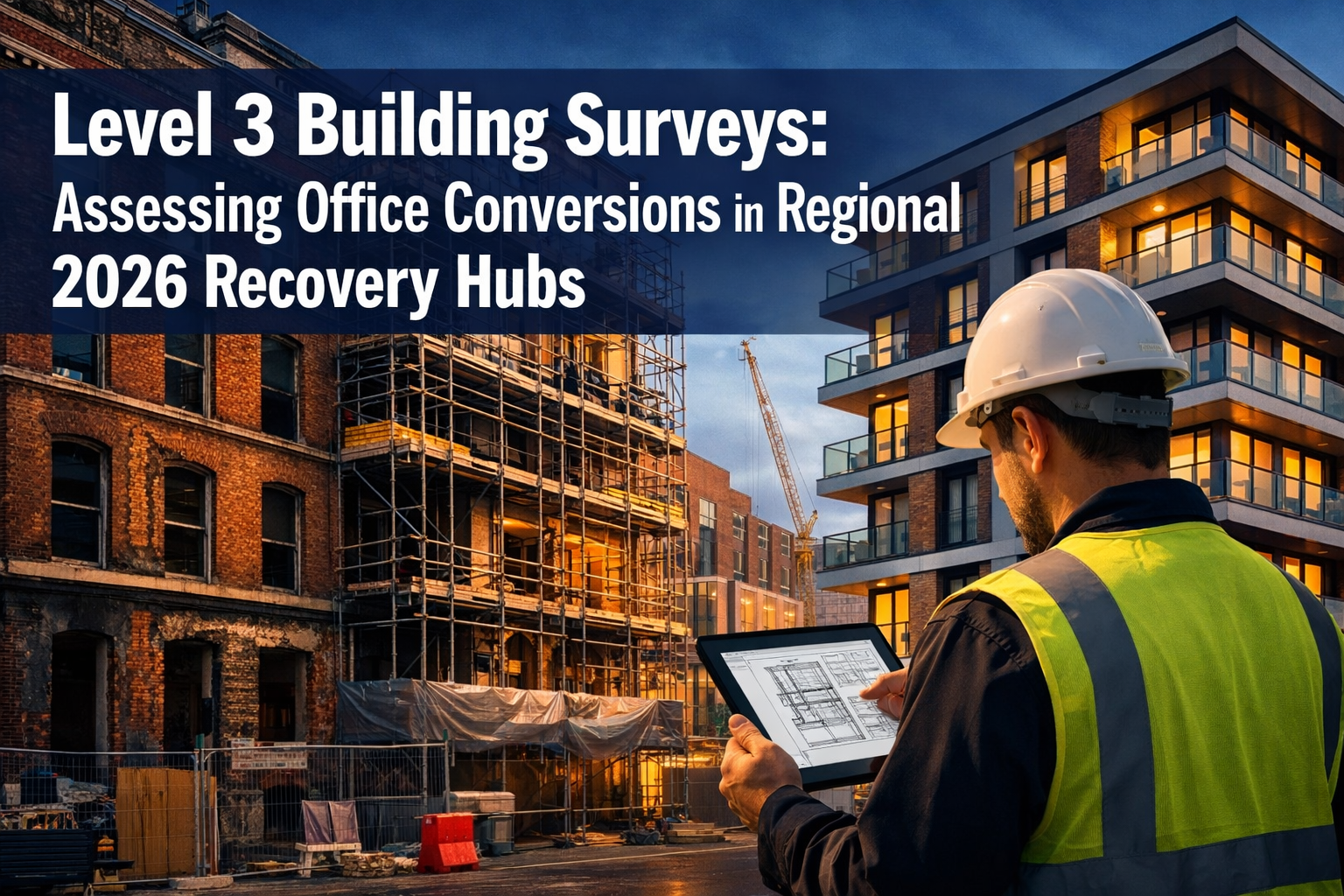
The landscape of commercial property in the UK has shifted dramatically. Vacant office buildings in regional cities now present unprecedented opportunities for residential conversion, particularly as permitted development rights expand beyond London's boundaries in 2026. For developers, investors, and local authorities eyeing these transformation projects, one critical question emerges: Is the building structurally suitable for conversion?
Level 3 Building Surveys for Office Conversions Beyond London: Assessing Viability in Regional 2026 Recovery Hubs has become essential due diligence in cities like Manchester, Birmingham, Leeds, and Liverpool. These comprehensive assessments go far beyond standard residential surveys, examining whether aging commercial structures can safely and economically transition to modern housing. With regional recovery hubs attracting significant investment, understanding the structural realities before committing capital can mean the difference between profitable development and costly failure.
Key Takeaways
- 🏢 Level 3 surveys provide the most comprehensive assessment available for office-to-residential conversions, examining structural integrity, building services, and hidden defects that standard surveys miss [2]
- 📋 Regional office conversions require specialized survey protocols that address multiple technical domains simultaneously, following RICS standards adapted for commercial-to-residential transitions [1]
- 💰 Survey costs typically range from £1,750 to £5,000+ depending on building complexity, with conversion projects requiring 4-8 hours on-site and detailed reports delivered within days [4]
- 🎯 North West recovery hubs offer particular opportunities where permitted development expansions enable conversions, but thorough structural assessment remains critical to viability
- ⚡ Access difficulties and occupancy can increase costs by 20-50%, making timing and planning crucial for conversion feasibility studies [4]
Understanding Level 3 Building Surveys for Office Conversions Beyond London
What Makes Level 3 Surveys Essential for Conversion Projects
Level 3 surveys represent the gold standard in property assessment, particularly vital for complex conversion projects. Unlike basic homebuyer surveys designed for standard residential purchases, these comprehensive investigations examine every accessible aspect of a building's condition [3].
For office-to-residential conversions, Level 3 surveys address critical questions:
- Can the existing structure support residential loads? Office buildings designed for distributed desk loads may struggle with concentrated residential loads like bathtubs, kitchen appliances, and bedroom furniture
- Are building services adequate for residential use? Commercial HVAC, electrical, and plumbing systems rarely meet residential requirements without significant modification
- What hidden defects exist? Decades-old office buildings often conceal issues like asbestos, outdated wiring, or structural deterioration behind suspended ceilings and raised floors
The difference between Level 2 and Level 3 surveys becomes particularly important here. Level 2 surveys provide a snapshot of visible condition, while Level 3 investigations include detailed analysis of construction methods, materials testing, and comprehensive defect identification [3].
RICS Standards for Commercial-to-Residential Conversions in 2026
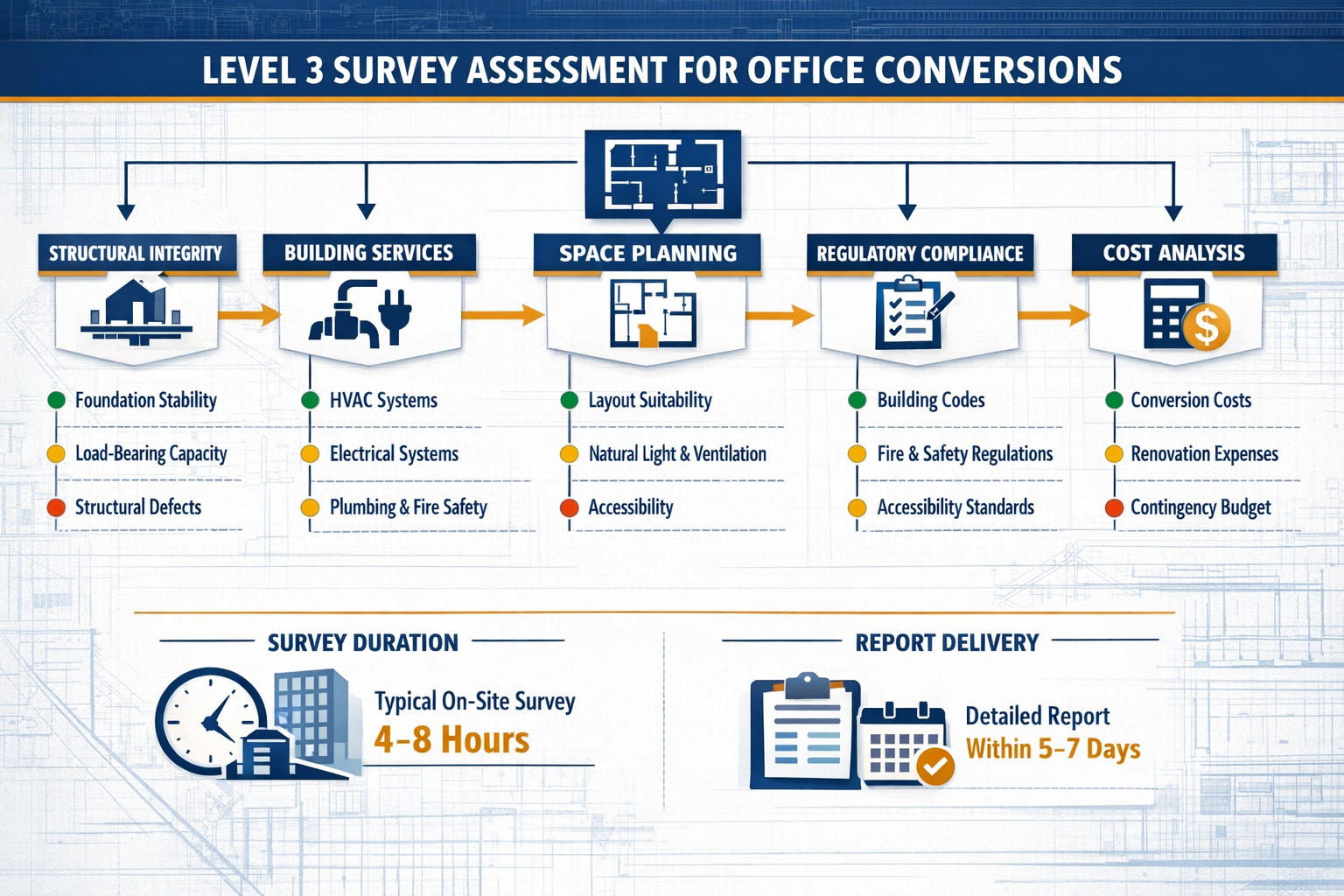
The Royal Institution of Chartered Surveyors (RICS) maintains rigorous standards governing building survey protocols for UK office-to-residential conversions in 2026 [1]. These frameworks ensure surveyors address the unique challenges of conversion projects:
Structural Assessment Methodologies must evaluate:
- Foundation capacity for altered load distributions
- Floor slab integrity and load-bearing capacity
- Wall and column structural adequacy
- Roof condition and potential for additional floors
Building Services Evaluation examines:
- Electrical capacity and distribution suitability
- Plumbing infrastructure and domestic water requirements
- Heating and ventilation system compatibility
- Fire safety and means of escape compliance
Regulatory Compliance Review confirms:
- Building Regulations Part L (energy efficiency)
- Part M (accessibility requirements)
- Part B (fire safety standards)
- Planning policy alignment with local authority requirements
These comprehensive survey checklists for office-to-residential conversions address multiple technical domains simultaneously, unlike standard residential surveys [5]. Professional chartered surveyors trained in conversion assessment understand these specialized requirements.
Timeline and Cost Considerations for Regional Projects
Understanding the practical aspects of commissioning Level 3 surveys helps developers plan effectively. A typical Level 3 survey requires 4-8 hours on-site depending on property size, age, and complexity, with reports usually delivered within a few working days [3].
For office conversion projects, expect:
| Building Type | Typical Survey Duration | Report Delivery | Cost Range |
|---|---|---|---|
| Small office (2-3 floors) | 4-6 hours | 5-8 working days | £1,750-£2,500 + VAT |
| Medium office (4-6 floors) | 6-10 hours | 8-12 working days | £2,500-£4,000 + VAT |
| Large/complex office | 10+ hours | 12-15 working days | £5,000+ + VAT |
Access difficulties and building occupancy can increase costs by 20-50% [4], particularly relevant for occupied commercial-to-residential conversions. Developers should factor these premiums when buildings remain partially occupied during assessment.
Regional location also influences pricing. While London commands premium rates, recovery hubs in the North West, Midlands, and Yorkshire typically offer more competitive surveyor fees while maintaining professional standards through RICS-accredited surveyors.
Assessing Viability in Regional 2026 Recovery Hubs
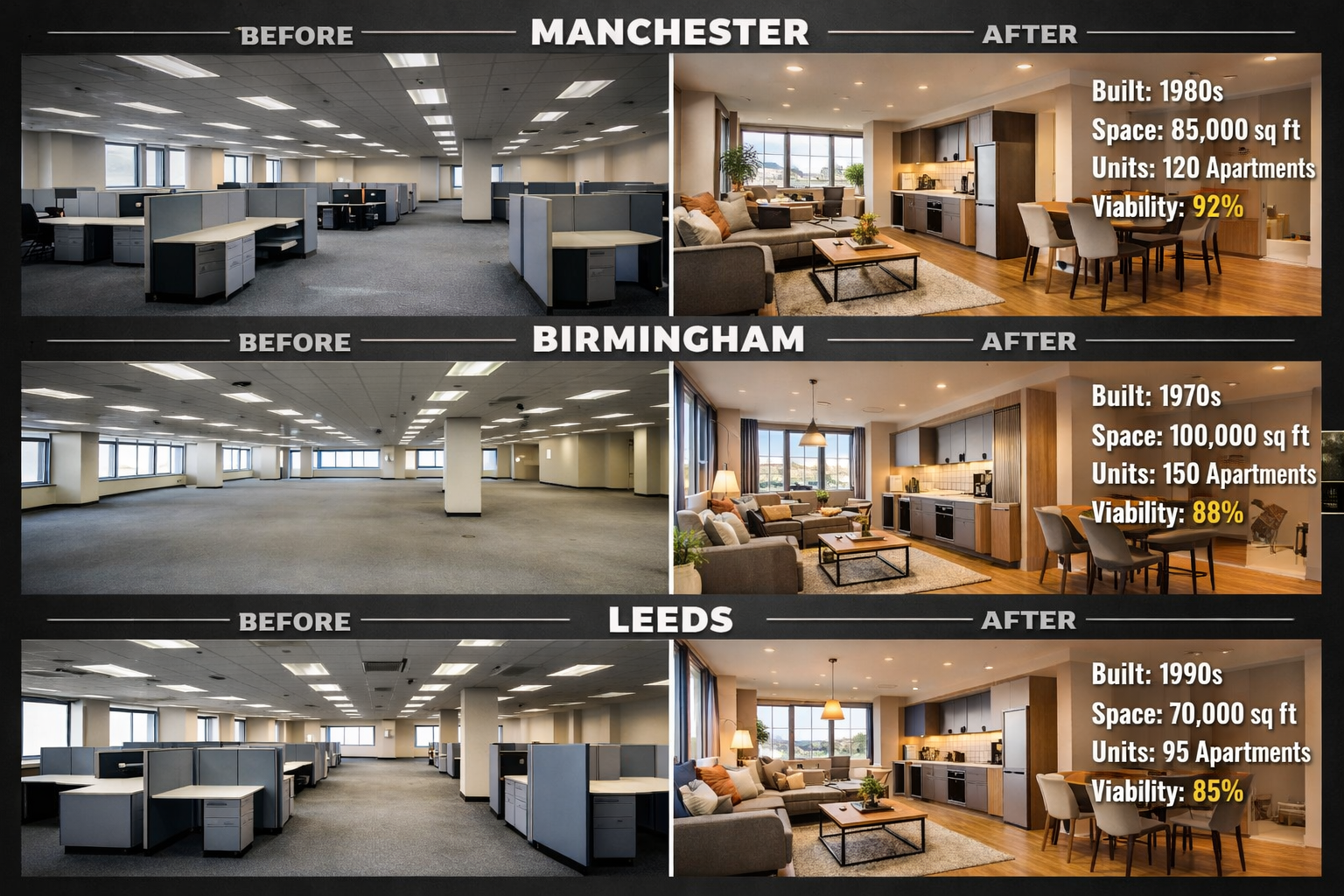
Why Regional Cities Present Unique Conversion Opportunities
The 2026 property landscape has shifted dramatically beyond London's boundaries. Regional recovery hubs—particularly Manchester, Birmingham, Leeds, Liverpool, and Newcastle—now offer compelling advantages for office-to-residential conversion projects.
Permitted development expansions enable office-to-residential conversions outside London with fewer planning obstacles, accelerating project timelines and reducing regulatory costs. This policy shift recognizes regional housing shortages while addressing commercial vacancy rates that climbed during post-pandemic workplace transformations.
Key advantages in regional markets include:
- 💷 Lower acquisition costs: Regional office buildings trade at 40-60% below London equivalents
- 🏗️ Higher conversion yields: Reduced construction costs paired with strong residential demand
- 📈 Growing population centers: Net migration to regional cities continues strengthening rental and sales markets
- 🎯 Government support: Levelling Up funding and regeneration grants target regional urban cores
However, these opportunities come with distinct challenges that Level 3 surveys must address. Regional office stock tends to be older than London counterparts, with buildings dating from 1960s-1980s construction booms. These structures often present:
- Outdated building systems requiring complete replacement
- Structural designs incompatible with modern residential standards
- Hidden defects from decades of deferred maintenance
- Asbestos and hazardous materials common in pre-1990s construction
North West Growth Areas: Manchester, Liverpool, and Leeds
The North West region exemplifies 2026's conversion opportunity. Manchester's office vacancy rate reached 18% in commercial districts, while residential demand remains robust with rental yields averaging 5-7%. Similar patterns emerge in Liverpool's commercial quarter and Leeds' financial district.
Level 3 Building Surveys for Office Conversions Beyond London: Assessing Viability in Regional 2026 Recovery Hubs must account for region-specific factors:
Manchester Considerations:
- Victorian and Edwardian commercial buildings with solid masonry construction
- Post-war concrete frame offices requiring extensive structural assessment
- Strong transportation links supporting residential demand
- Local authority support for city center residential density
Liverpool Factors:
- Historic commercial buildings with heritage constraints
- Waterfront regeneration creating premium residential markets
- Building condition varies significantly by district
- Damp and water ingress common in older commercial stock
Leeds Dynamics:
- Modern 1980s-2000s office stock with better baseline condition
- Purpose-built commercial districts requiring use class transitions
- Strong professional tenant demand supporting rental conversions
- Competitive construction costs enhancing project viability
Developers must commission building surveys that specifically address these regional characteristics. Generic survey approaches miss critical local factors affecting conversion feasibility.
Birmingham and Midlands Conversion Potential
Birmingham's transformation as a regional powerhouse creates substantial conversion opportunities. The city's commercial core contains approximately 2.5 million square feet of office space suitable for residential conversion, with similar potential in Coventry, Nottingham, and Leicester.
Midlands-specific survey considerations include:
🔍 Industrial heritage buildings: Former manufacturing facilities converted to offices now face second conversions to residential use, requiring assessment of multiple renovation layers
🔍 Concrete construction prevalence: Post-war rebuilding created numerous concrete frame offices with specific structural challenges for residential adaptation
🔍 Transport infrastructure improvements: HS2 and regional rail enhancements increase residential viability in previously marginal locations
🔍 Affordability dynamics: Lower regional house prices create tighter conversion margins, making accurate cost forecasting critical
When developers renegotiate after poor building survey results, regional markets offer more flexibility than London's competitive environment. Vendors increasingly recognize that realistic pricing based on actual building condition accelerates transactions.
Yorkshire and Humber Region Opportunities
Yorkshire's office-to-residential conversion market centers on Leeds, Sheffield, and Hull, each presenting distinct characteristics requiring tailored survey approaches.
Leeds offers modern office stock with relatively straightforward conversion potential, though competitive residential markets demand high-quality finishes. Sheffield provides opportunities in lower-cost buildings with strong student and young professional rental demand. Hull presents the region's most affordable entry points, though building condition varies significantly.
Regional recovery in Yorkshire benefits from:
- University-driven rental demand providing stable tenant pools
- Manufacturing sector recovery supporting population growth
- Lower land values enabling viable conversion economics
- Local authority planning support for residential intensification
Level 3 surveys in Yorkshire must particularly address damp survey requirements, as the region's climate and older building stock create elevated moisture risk. Comprehensive moisture assessment prevents costly remediation surprises during conversion execution.
Critical Assessment Areas for Conversion Viability
Structural Integrity and Load-Bearing Capacity
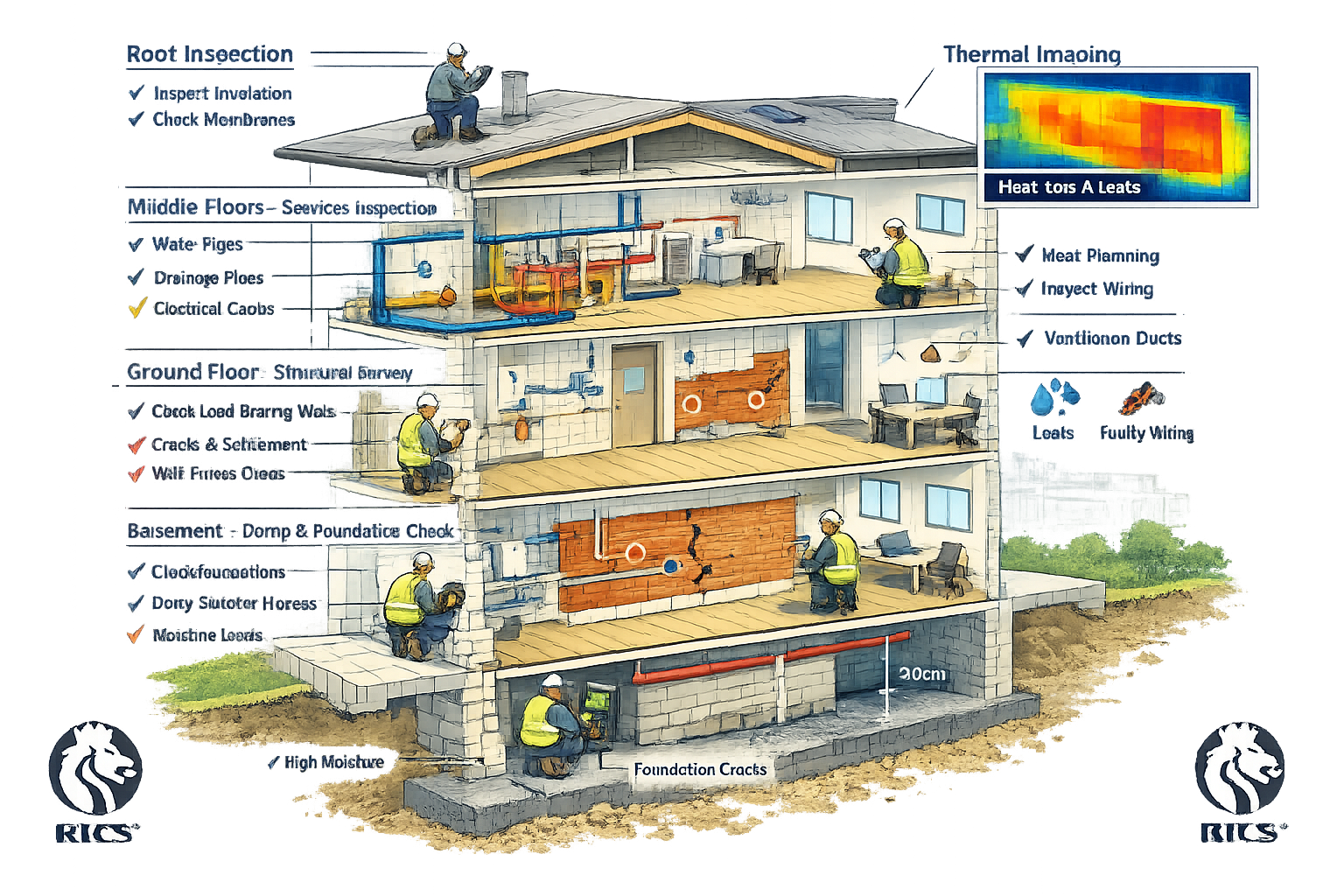
The foundation of any successful office-to-residential conversion rests on structural adequacy. Level 3 Building Surveys for Office Conversions Beyond London: Assessing Viability in Regional 2026 Recovery Hubs must rigorously evaluate whether existing structures can support residential use [2].
Key structural assessment areas include:
Foundation Analysis
- Load distribution changes from office to residential use
- Soil condition and bearing capacity verification
- Settlement patterns and differential movement
- Subsidence risk factors (particularly relevant given subsidence concerns in certain regional areas)
Floor Structure Evaluation
- Slab thickness and reinforcement adequacy
- Concentrated load capacity for bathrooms, kitchens, and appliances
- Deflection limits for residential comfort standards
- Existing floor finishes and leveling requirements
Column and Beam Assessment
- Structural frame capacity for altered loading patterns
- Space planning implications of structural grid
- Potential for column removal or relocation
- Connection integrity and corrosion assessment
External Envelope Condition
- Wall construction and thermal performance
- Window and door replacement requirements
- Weatherproofing and water ingress prevention
- Façade stability and cladding safety post-Grenfell
Surveyors conducting full structural inspections often discover that office buildings designed for 2.5-3.5 kN/m² distributed loads struggle with residential point loads that can reach 1.5 kN concentrated in small areas. This mismatch requires costly structural reinforcement that dramatically affects conversion viability.
Building Services and Infrastructure Retrofit Needs
Existing building services in commercial offices rarely meet residential requirements without substantial modification. Level 3 surveys must comprehensively assess retrofit needs [5].
Electrical Systems Assessment:
- Total electrical capacity and distribution adequacy
- Wiring condition and safety standards compliance
- Individual unit metering requirements
- EV charging infrastructure provision
Plumbing and Water Services:
- Domestic hot water system design and capacity
- Individual unit water metering and isolation
- Drainage system suitability for residential waste patterns
- Water pressure and supply adequacy for upper floors
Heating and Ventilation:
- Replacement of commercial HVAC with residential systems
- Individual unit heating control requirements
- Ventilation standards for habitable rooms
- Energy efficiency targets under Building Regulations Part L
Fire Safety Systems:
- Residential fire detection and alarm requirements
- Sprinkler system necessity and cost implications
- Means of escape compliance with residential standards
- Compartmentation and fire stopping adequacy
The cost of building services retrofit often exceeds structural modification expenses. Comprehensive surveys prevent underestimation that destroys project economics. Professional property surveyors with conversion experience understand these specialized requirements.
Regulatory Compliance and Planning Considerations
Even with permitted development rights, office-to-residential conversions face substantial regulatory requirements that Level 3 surveys must address [1].
Building Regulations Compliance:
✅ Part A (Structure): Altered loading and structural modifications
✅ Part B (Fire Safety): Residential fire safety standards significantly exceed commercial requirements
✅ Part C (Site Preparation and Resistance to Contaminants): Particularly relevant for former industrial sites
✅ Part E (Resistance to Sound): Acoustic separation between residential units
✅ Part F (Ventilation): Natural and mechanical ventilation for habitable spaces
✅ Part L (Conservation of Fuel and Power): Energy efficiency targets for conversions
✅ Part M (Access to and Use of Buildings): Accessibility requirements including lift provision
Planning Policy Alignment:
- Local authority residential space standards
- Affordable housing contribution requirements
- Parking and transportation policy compliance
- Heritage and conservation area constraints
Environmental and Safety Assessments:
- Asbestos surveys for pre-2000 buildings
- Contaminated land assessments for industrial sites
- Flood risk evaluation for riverside locations
- Energy Performance Certificate requirements
Developers who commission thorough property condition assessments early in the acquisition process avoid regulatory surprises that delay projects and inflate costs. Regional variations in planning policy make local surveyor expertise particularly valuable.
Cost-Benefit Analysis and Financial Viability
The ultimate purpose of Level 3 Building Surveys for Office Conversions Beyond London: Assessing Viability in Regional 2026 Recovery Hubs is determining financial feasibility. Comprehensive surveys provide the data foundation for accurate cost forecasting.
Survey-Informed Cost Categories:
| Cost Element | Typical Range (per sq ft) | Survey Impact |
|---|---|---|
| Structural works | £15-45 | High – survey reveals extent |
| Building services | £25-60 | High – hidden infrastructure costs |
| External envelope | £20-50 | Medium – visible but detail matters |
| Internal fit-out | £40-80 | Low – design-driven |
| Professional fees | £8-15 | Medium – complexity affects fees |
| Contingency | 10-20% | High – survey quality reduces risk |
Viability Calculation Framework:
- Acquisition cost (informed by survey findings enabling negotiation)
- Conversion costs (detailed from survey assessment)
- Professional fees (architects, engineers, surveyors, legal)
- Finance costs (interest during construction period)
- Sales/letting revenue (market-driven but quality-dependent)
- Developer profit (typically 15-20% for conversion projects)
Projects achieving gross development value exceeding total costs by 25-30% typically proceed, though regional variations affect acceptable margins. Level 3 surveys enable confident decision-making by reducing cost uncertainty.
Developers can save money with building surveys by investing in comprehensive assessment upfront rather than discovering problems during construction when costs multiply exponentially.
Selecting Qualified Surveyors for Regional Conversion Projects
Essential Qualifications and Conversion Experience
Not all chartered surveyors possess the specialized expertise required for office-to-residential conversion assessment. When commissioning Level 3 Building Surveys for Office Conversions Beyond London: Assessing Viability in Regional 2026 Recovery Hubs, developers should verify:
Professional Credentials:
- RICS membership (MRICS or FRICS designation)
- Building surveying specialism (not just valuation or residential)
- Commercial property experience
- Conversion project portfolio
Technical Expertise:
- Structural assessment capabilities
- Building services knowledge
- Regulatory compliance understanding
- Cost estimation experience
Regional Knowledge:
- Local building stock familiarity
- Regional planning policy understanding
- Local authority relationship
- Regional construction cost awareness
Developers should request case studies of similar conversion projects the surveyor has assessed, including outcomes. Surveyors who have completed multiple conversion assessments understand the critical success factors that generic building surveyors might miss.
Questions to Ask Before Commissioning Surveys
Before engaging a surveyor for conversion assessment, ask:
- How many office-to-residential conversion projects have you surveyed in the past two years?
- What is your approach to assessing structural suitability for residential loads?
- Do you work with structural engineers and building services consultants for complex assessments?
- What is your typical timeline from site visit to report delivery?
- How do you handle access to occupied buildings?
- What format does your report take, and does it include cost estimates?
- Are you familiar with permitted development requirements in our target location?
- Can you provide references from developers who have completed conversions based on your surveys?
Clear answers to these questions separate experienced conversion specialists from general practice surveyors. The investment in specialist expertise pays dividends through more accurate assessments and fewer costly surprises.
Integrating Survey Findings into Development Decisions
Level 3 survey reports provide comprehensive information, but developers must translate findings into actionable decisions. Effective integration requires:
Immediate Actions:
- Review survey findings with project team (architect, engineer, quantity surveyor)
- Quantify cost implications of identified issues
- Assess impact on project timeline
- Determine if findings warrant price renegotiation
Strategic Considerations:
- Compare survey findings against initial assumptions
- Recalculate project viability with updated cost estimates
- Consider alternative design approaches to mitigate issues
- Evaluate whether to proceed, renegotiate, or withdraw
Risk Management:
- Identify survey findings requiring specialist follow-up investigation
- Establish contingency allowances for uncertain items
- Plan phased approach if partial conversion proves more viable
- Document assumptions for future reference
Projects that treat survey reports as living documents—regularly referenced during design and construction—achieve better outcomes than those that file reports after initial review. The survey becomes a roadmap guiding successful conversion execution.
Conclusion
Level 3 Building Surveys for Office Conversions Beyond London: Assessing Viability in Regional 2026 Recovery Hubs represent essential due diligence for developers navigating the expanding opportunities in regional markets. As permitted development rights facilitate conversions across Manchester, Birmingham, Leeds, and other recovery hubs, comprehensive structural and systems assessment separates viable projects from costly failures.
The most successful conversion developers in 2026 recognize that survey investment prevents construction surprises. Spending £2,500-£5,000 on thorough Level 3 assessment protects against six-figure remediation costs discovered mid-project. Regional office buildings—often decades old with deferred maintenance—demand this rigorous evaluation.
Key Success Factors
✅ Commission Level 3 surveys from RICS-qualified surveyors with specific conversion experience
✅ Ensure assessments address structural capacity, building services adequacy, and regulatory compliance
✅ Use survey findings to inform accurate cost forecasting and viability analysis
✅ Negotiate acquisition prices based on comprehensive understanding of building condition
✅ Integrate survey recommendations throughout design and construction phases
Next Steps for Developers
If you're considering office-to-residential conversion in regional recovery hubs:
- Identify target buildings in high-demand residential locations with favorable planning contexts
- Engage qualified surveyors early in the acquisition process, ideally before making offers
- Commission comprehensive Level 3 surveys that address all critical conversion assessment areas
- Assemble specialist teams including structural engineers and M&E consultants for complex projects
- Calculate realistic viability incorporating survey-informed cost estimates with appropriate contingencies
- Maintain survey documentation as a reference throughout project delivery
The regional office-to-residential conversion market offers substantial opportunities in 2026, but success requires rigorous assessment of building suitability. Level 3 surveys provide the foundation for confident investment decisions, protecting capital while enabling transformation of underutilized commercial space into needed housing.
For developers ready to capitalize on regional recovery, comprehensive building surveys represent not an expense but an investment—one that pays returns through avoided costs, accurate budgeting, and successful project delivery in the UK's evolving property landscape.
References
[1] Building Survey Protocols For Uk Office To Residential Conversions Rics Standards Amid 2026 Urban Recovery – https://nottinghillsurveyors.com/blog/building-survey-protocols-for-uk-office-to-residential-conversions-rics-standards-amid-2026-urban-recovery
[2] Building Surveys For Office To Resi Conversions 2026 Assessing Structural Viability In Underpriced Markets – https://nottinghillsurveyors.com/blog/building-surveys-for-office-to-resi-conversions-2026-assessing-structural-viability-in-underpriced-markets
[3] Level 3 Survey – https://surveymatch.co.uk/level-3-survey/
[4] Step By Step Guide To Measured Building Surveys – https://blackacresurveyors.com/2025/02/04/step-by-step-guide-to-measured-building-surveys/
[5] Building Survey Checklists For Office To Resi Conversions Under 2026 Planning Reforms – https://nottinghillsurveyors.com/blog/building-survey-checklists-for-office-to-resi-conversions-under-2026-planning-reforms