The property surveying landscape is undergoing its most significant transformation in years. As RICS prepares to release the Home Survey Standard 2nd Edition in late 2026, building survey professionals face a critical challenge: how to integrate enhanced quality requirements without disrupting established workflows or compromising client relationships. With over 1,000 stakeholder comments shaping the final framework, the Building Survey Standards 2.0 Implementation: Practical Adoption Strategies for RICS Quality Enhancements in 2026 represents more than regulatory compliance—it's an opportunity to elevate professional practice and strengthen public confidence in the residential survey market.
The journey toward these enhanced standards began with unprecedented industry engagement. RICS conducted comprehensive research involving 325 member surveyors and over 1,400 UK homeowners, alongside consultations with regulatory bodies including The Property Ombudsman and the Homeowners Alliance [1]. This extensive stakeholder input revealed a consistent message: the market demands greater clarity, consistency, and quality in building survey delivery.
For professional surveyor services providers, the implementation timeline presents both opportunities and challenges. Understanding practical adoption strategies now will position firms to transition smoothly when the final standards take effect.
Key Takeaways
✅ Timeline Clarity: The Home Survey Standard 2nd Edition will be published in late 2026 following multi-stage regulatory review, giving firms several months to prepare implementation strategies
✅ Stakeholder-Driven Changes: Over 1,000 consultation comments from SME firms and industry professionals are shaping clearer, more concise requirements that balance prescription with competitive flexibility
✅ Quality Enhancement Focus: New standards emphasize consistency, professional competence, and public confidence while integrating technological advances and evolving consumer expectations
✅ Practical Implementation Required: Successful adoption demands structured training programs, workflow integration, technology upgrades, and client communication strategies tailored to individual firm capabilities
✅ Public Interest Mandate: As a Royal Charter body, RICS is compelled to act in the public interest, making these enhancements essential for maintaining professional credibility and market trust
Understanding the RICS Standards Evolution and Implementation Timeline
The current Home Survey Standard, originally published in 2019 and implemented in 2021, established the foundational framework that professionals have been working within for the past several years [2]. However, the residential property market has evolved significantly since then, with technological advances, changing consumer expectations, and emerging quality concerns driving the need for comprehensive revision.
The Consultation Process and Stakeholder Engagement
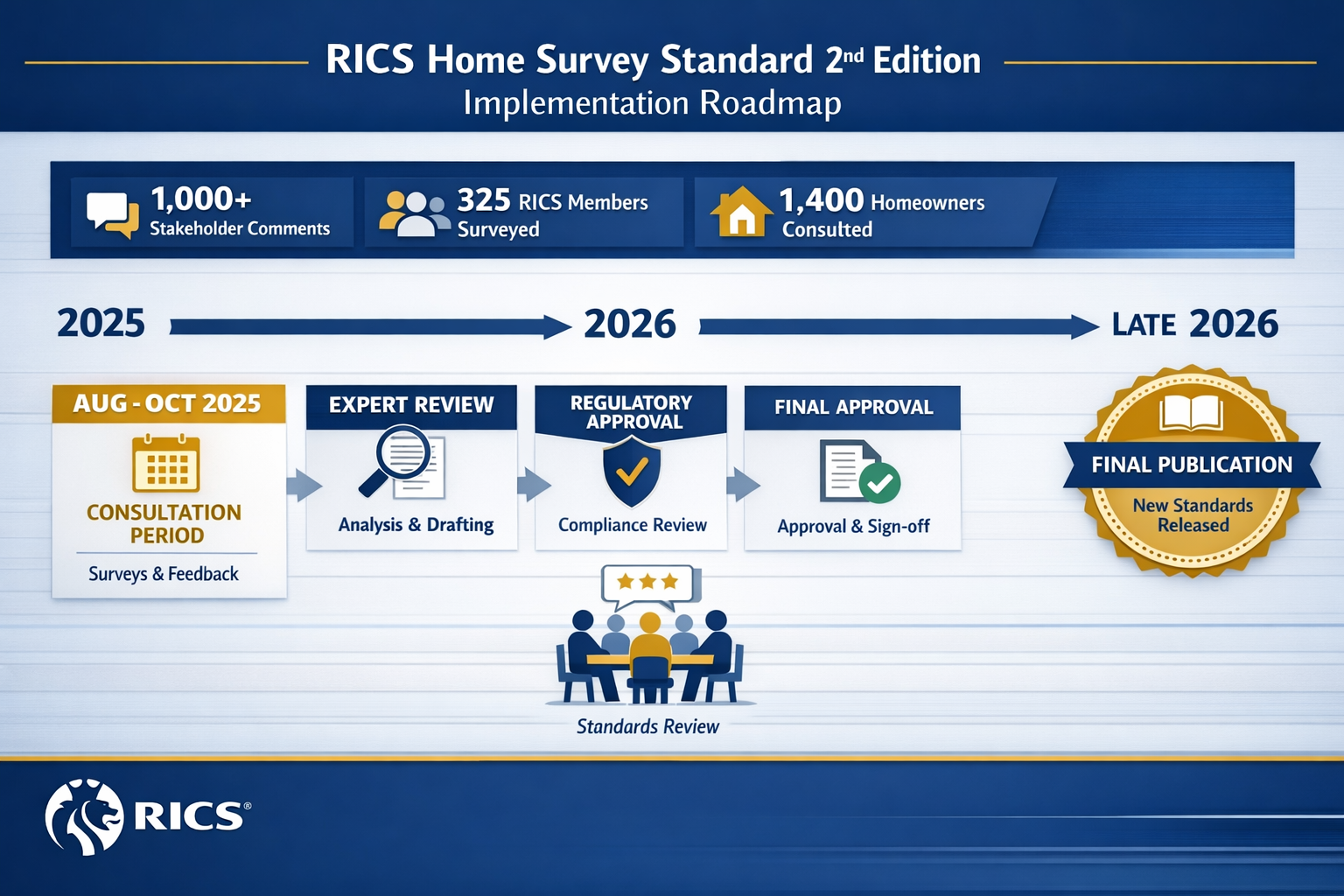
RICS launched an eight-week public consultation from August 19 to October 14, 2025, receiving substantial feedback from across the industry [1]. The consultation period generated over 1,000 detailed comments, with particularly strong engagement from small and medium-sized enterprise (SME) surveying firms—the backbone of the UK residential survey market.
Before the public consultation even began, the Author and Expert Group dedicated over 70 hours across more than 20 meetings refining the draft standard [1]. This intensive development process ensured that the proposed changes reflected both technical excellence and practical applicability.
The breadth of stakeholder engagement was remarkable:
- 📊 325 RICS members participated in detailed surveys about current practice challenges
- 🏠 1,400+ UK homeowners provided consumer perspective on survey quality expectations
- 🤝 Multiple regulatory bodies contributed oversight and consumer protection insights
- 👥 1,600+ industry professionals attended presentations at conferences including Surventrix, Legal & General, e-Surv, and the RICS Residential Property conference [1]
Key Feedback Themes Shaping Standards 2.0
The consultation feedback revealed several consistent themes that are fundamentally shaping the final standards. The most prominent concern centered on clarity and conciseness [1]. Stakeholders consistently emphasized the need for the draft to be clearer and more accessible, particularly for building surveyor services professionals working in fast-paced environments.
RICS faces a delicate balancing act: providing sufficient prescription to ensure quality consistency while preserving the competitive differentiation that allows individual surveyors and firms to distinguish themselves in the marketplace [1]. This balance is particularly important for SME firms that rely on specialized expertise and personalized service as key competitive advantages.
Another critical feedback area involved clarifying mandatory requirements versus recommended practices. The distinction between "musts" (mandatory requirements) and "shoulds" (recommended best practices) needed sharper definition to help surveyors understand their compliance obligations while maintaining professional judgment [1].
The Multi-Stage Regulatory Review Process
Following the consultation feedback analysis, the revised standard must navigate a comprehensive approval pathway before publication:
- Editorial Review: Ensuring clarity, consistency, and accessibility of language
- Residential Professional Group Panel Review: Technical validation by specialist practitioners
- Knowledge and Practice Committee Review and Approval: Strategic alignment with broader RICS standards
- Standards and Regulation Board Final Approval: Governance oversight and public interest confirmation [1]
This rigorous process ensures that the final Building Survey Standards 2.0 Implementation: Practical Adoption Strategies for RICS Quality Enhancements in 2026 will be thoroughly vetted before reaching practitioners. For building surveyors preparing for implementation, this timeline provides valuable planning certainty.
Public Interest and Regulatory Mandate
As a Royal Charter body, RICS operates under a fundamental obligation to act in the public interest [2]. This mandate drives the standards enhancement process beyond mere industry self-regulation. The updated framework is specifically designed to:
- ✨ Ensure consistency across different surveyors and survey types
- 📈 Raise professional standards throughout the residential survey sector
- 🛡️ Deliver public confidence in the reliability and quality of survey reports
- 🔍 Enhance transparency in survey methodologies and reporting
Interestingly, RICS concurrently explored development of a separate home survey regulation scheme aimed at further supporting public trust and professional consistency [2]. While insights from each consultation remain fundamentally independent, both initiatives reflect RICS's commitment to strengthening quality frameworks across the residential survey market.
Practical Implementation Strategies for Building Survey Standards 2.0
Successfully implementing the enhanced standards requires more than simply reading the updated requirements when they're published. Forward-thinking surveying firms are already developing comprehensive adoption strategies that will allow seamless transition when the standards take effect in late 2026.
Conducting a Pre-Implementation Gap Analysis
Before the final standards are even published, firms should conduct a thorough gap analysis comparing current practices against anticipated requirements based on consultation drafts and feedback themes. This proactive approach allows identification of areas requiring significant adjustment versus those where current practices already align with expected standards.
Key areas to evaluate include:
- 📋 Reporting templates and formats: Do current templates meet anticipated clarity and comprehensiveness requirements?
- 🔧 Inspection methodologies: Are inspection procedures sufficiently systematic and documented?
- 💻 Technology integration: Does current technology support enhanced data capture and reporting requirements?
- 👨🏫 Staff competencies: Do all team members possess the skills and knowledge required under enhanced standards?
- 📞 Client communication protocols: Are pre-survey and post-survey communication processes adequate?
For firms offering home surveys, this gap analysis should specifically examine how current Level 2 and Level 3 survey practices compare against anticipated Standards 2.0 requirements.
Developing Structured Training Programs
Training represents perhaps the most critical implementation component. The enhanced standards will inevitably introduce new requirements, clarified procedures, and refined quality expectations that all team members must understand and apply consistently.
Effective training programs should include:
| Training Component | Purpose | Timeline |
|---|---|---|
| Standards Overview | Comprehensive understanding of all changes | Pre-implementation (3-6 months before) |
| Detailed Technical Requirements | Specific procedural changes and new requirements | Pre-implementation (2-3 months before) |
| Reporting Template Training | Mastery of updated report formats and content | Pre-implementation (1-2 months before) |
| Practical Application Workshops | Hands-on practice with new procedures | Implementation period |
| Quality Assurance Protocols | Internal review and compliance checking | Ongoing post-implementation |
| Refresher Sessions | Reinforcement and problem-solving | Quarterly post-implementation |
Training should extend beyond technical requirements to include the rationale behind changes. When surveyors understand why standards have been enhanced—particularly the consumer insights and quality concerns driving specific requirements—they're more likely to embrace rather than resist the changes.
Upgrading Technology and Digital Infrastructure
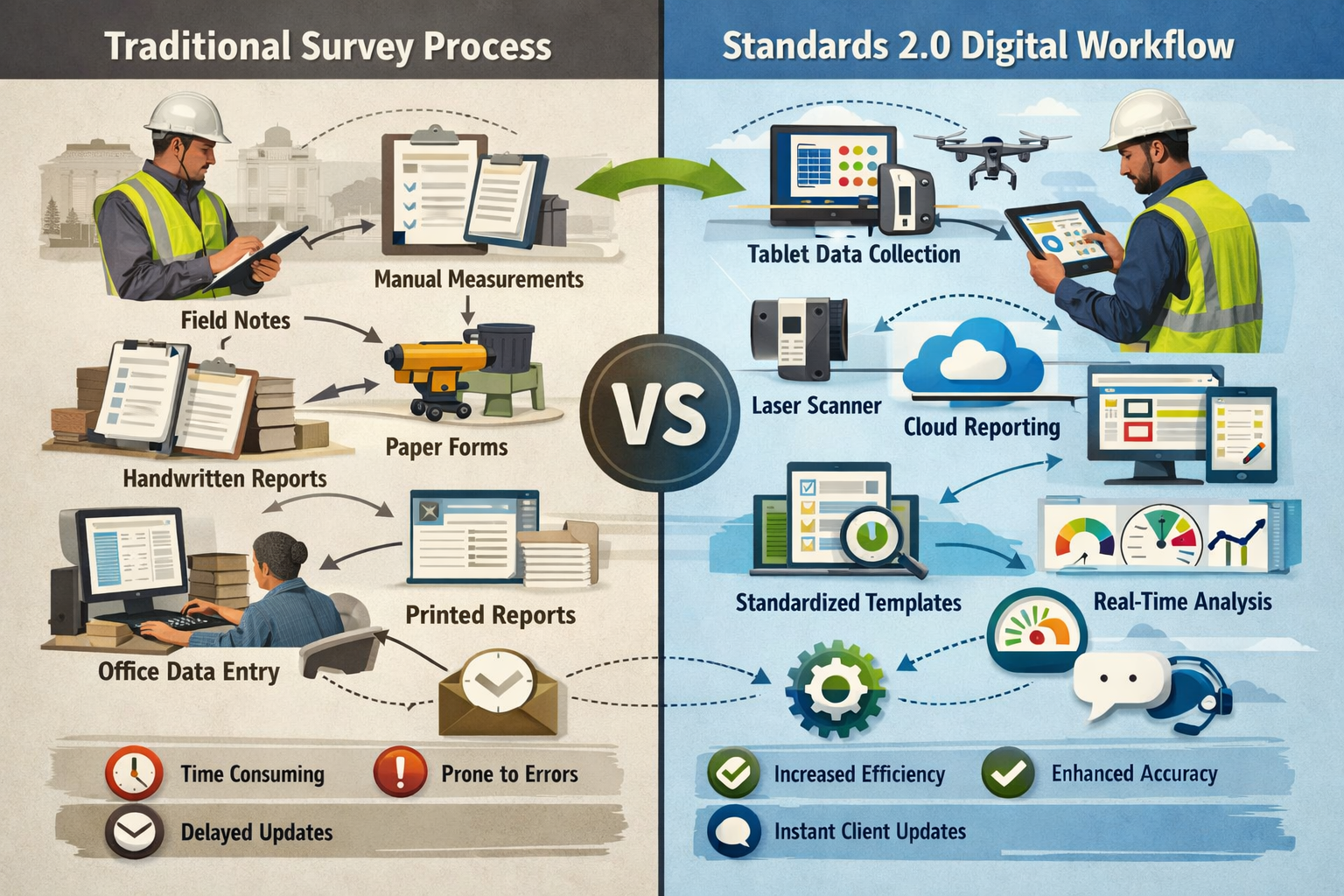
The enhanced standards reflect technological advances in the surveying profession, making technology upgrades an essential implementation component. Modern building evaluation increasingly relies on digital tools that improve accuracy, efficiency, and reporting quality.
Priority technology investments include:
🖥️ Digital Inspection Tools: Tablets or specialized devices for on-site data capture, photo documentation with automatic tagging, and real-time note-taking
📊 Reporting Software: Standardized templates that ensure compliance, automated quality checks for completeness, and integration with inspection data
☁️ Cloud-Based Systems: Secure data storage and backup, collaborative review capabilities, and version control for templates and procedures
📸 Advanced Documentation: High-resolution photography equipment, thermal imaging cameras where appropriate, and drone technology for roof and elevation inspection
🔄 Workflow Management: Job tracking and scheduling systems, client communication platforms, and quality assurance monitoring tools
For firms preparing what to do before an RICS home survey, implementing these technologies will also enhance client service and operational efficiency beyond mere standards compliance.
Revising Templates and Documentation
Report templates represent the most visible manifestation of standards compliance. Enhanced standards will likely require adjustments to template structure, content requirements, and presentation formats to ensure clarity and comprehensiveness.
Template revision should address:
- ✏️ Mandatory content sections: Ensuring all required information categories are included
- 📝 Clarity of language: Using accessible terminology that homeowners can understand
- 🎨 Visual presentation: Incorporating appropriate diagrams, photos, and formatting
- ⚠️ Risk communication: Clear articulation of defects, urgency, and recommended actions
- 📊 Standardized rating systems: Consistent application of condition ratings and priority indicators
Firms should develop multiple template versions for different survey types (Level 2 vs. Level 3) while maintaining consistency in approach and quality standards across all offerings. Consider creating a property survey template library that can be easily updated as standards evolve.
Establishing Quality Assurance Mechanisms
Implementation success depends on robust quality assurance (QA) processes that ensure consistent application of enhanced standards across all surveys and surveyors. QA mechanisms serve dual purposes: maintaining compliance and identifying areas where additional training or procedural refinement may be needed.
Effective QA systems include:
- Peer Review Protocols: Regular review of completed surveys by senior surveyors or designated quality managers
- Checklist-Based Audits: Systematic verification that all mandatory requirements have been addressed
- Client Feedback Integration: Monitoring client satisfaction and complaint patterns to identify quality gaps
- Benchmarking Exercises: Comparing practices against industry best practices and competitor offerings
- Continuous Improvement Processes: Regular review and refinement of internal procedures based on QA findings
For firms handling situations like what to do after a bad report on building survey, strong QA processes can prevent quality issues before they reach clients.
Managing Client Communication and Expectations
Enhanced standards will affect client-facing aspects of survey delivery, making proactive client communication essential. Clients need to understand what the enhanced standards mean for them—primarily improved quality, consistency, and reliability of survey reports.
Client communication strategies should:
- 📢 Announce the changes: Proactively inform clients about standards enhancements and their benefits
- 💰 Explain any pricing adjustments: If enhanced requirements increase costs, clearly articulate the value delivered
- ⏱️ Clarify timeline impacts: Address any changes to typical survey completion timeframes
- 📖 Provide educational resources: Help clients understand what to expect from enhanced survey reports
- 🤝 Emphasize quality commitment: Position standards adoption as demonstration of professional excellence
Clients considering whether they can renegotiate after a poor building survey result will have greater confidence in surveys conducted under enhanced standards, potentially reducing disputes and improving client satisfaction.
Overcoming Implementation Challenges and Maximizing Benefits
While the Building Survey Standards 2.0 Implementation: Practical Adoption Strategies for RICS Quality Enhancements in 2026 offers substantial benefits, implementation inevitably presents challenges. Understanding these obstacles and developing mitigation strategies will separate successful adopters from those who struggle with transition.
Common Implementation Challenges
Resource Constraints: SME firms often operate with limited staff and tight budgets, making substantial training investments and technology upgrades challenging. The consultation feedback revealed particular concern from smaller practices about implementation costs [1].
Mitigation Strategy: Prioritize changes based on impact and compliance necessity. Implement in phases rather than attempting comprehensive transformation simultaneously. Consider collaborative approaches such as shared training sessions with other local firms or industry associations.
Workflow Disruption: Introducing new procedures, templates, and technologies inevitably disrupts established workflows, potentially affecting productivity during transition periods.
Mitigation Strategy: Implement changes during traditionally slower periods if possible. Develop detailed transition plans that allow gradual adoption rather than abrupt switches. Maintain parallel systems temporarily to ensure continuity while new approaches are refined.
Staff Resistance: Experienced surveyors may resist changes to familiar practices, particularly if they perceive new requirements as bureaucratic rather than value-adding.
Mitigation Strategy: Involve staff in implementation planning to build ownership. Emphasize the professional development and quality improvement aspects rather than mere compliance. Share consumer feedback and public interest rationale to build understanding of why changes matter.
Technology Learning Curves: New digital tools require time investment to master, potentially reducing efficiency initially even if they ultimately improve productivity.
Mitigation Strategy: Provide comprehensive training before full deployment. Select user-friendly systems with strong vendor support. Designate "technology champions" within the team who can provide peer support during adoption.
Client Confusion: Clients accustomed to previous survey formats may find enhanced reports different or more detailed than expected, potentially generating questions or concerns.
Mitigation Strategy: Develop clear explanatory materials that help clients understand report enhancements. Provide comparison examples showing how new reports deliver greater value. Offer brief consultations to walk clients through their reports if needed.
Maximizing the Benefits of Enhanced Standards
Beyond compliance, the enhanced standards offer significant opportunities for firms willing to embrace them strategically:
🏆 Competitive Differentiation: Early adopters can market their compliance as evidence of quality commitment, distinguishing themselves from competitors who delay implementation or adopt minimally.
📈 Operational Efficiency: While initial implementation requires investment, standardized procedures and modern technology ultimately improve efficiency, reduce errors, and enhance consistency.
💼 Professional Development: Training and skill enhancement required for implementation elevates overall team capabilities, benefiting all aspects of practice beyond standards compliance.
🛡️ Risk Mitigation: Enhanced quality standards reduce the likelihood of errors, omissions, or client disputes, potentially lowering professional indemnity insurance costs and reputational risks.
🤝 Client Confidence: Surveys conducted under enhanced standards provide clients with greater confidence in report reliability, improving satisfaction and generating referrals.
Firms that view standards implementation as an investment in excellence rather than merely a compliance burden will realize these benefits most fully. For practices offering specialized services like homebuyers surveys, enhanced standards provide an opportunity to strengthen service differentiation and market positioning.
Building a Culture of Continuous Quality Improvement
The most successful firms will extend beyond one-time standards implementation to establish ongoing quality improvement cultures. This approach treats Standards 2.0 not as a destination but as a foundation for continuous professional development and service enhancement.
Elements of a quality-focused culture include:
- 🎯 Regular performance metrics review: Tracking quality indicators and identifying improvement opportunities
- 💡 Innovation encouragement: Welcoming suggestions for process improvements from all team members
- 📚 Ongoing professional development: Maintaining commitment to training and skill enhancement beyond initial implementation
- 🔍 Client feedback integration: Systematically gathering and acting on client input about service quality
- 🏅 Recognition of excellence: Celebrating quality achievements and best practice examples within the team
This cultural approach ensures that firms remain responsive to future standards evolution and market changes, positioning them as industry leaders rather than reluctant followers.
Preparing for Future Standards Evolution
The Standards 2.0 implementation represents a significant milestone, but professional standards will continue evolving as the market, technology, and consumer expectations change. Forward-thinking firms should view current implementation as preparation for ongoing adaptation.
Future-proofing strategies include:
- 🔄 Flexible systems: Selecting technologies and procedures that can be easily updated as requirements evolve
- 📡 Industry engagement: Maintaining active participation in RICS consultations and industry discussions
- 📊 Performance monitoring: Tracking how well current practices meet standards to identify potential gaps early
- 🌐 Market awareness: Staying informed about consumer trends, technological advances, and regulatory developments
- 🤝 Collaborative learning: Participating in peer networks and professional groups to share insights and best practices
By establishing adaptable systems and maintaining industry engagement, firms can respond efficiently to future standards updates without requiring the comprehensive transformation that Standards 2.0 implementation demands.
Conclusion
The Building Survey Standards 2.0 Implementation: Practical Adoption Strategies for RICS Quality Enhancements in 2026 represents a pivotal moment for the residential surveying profession. With the Home Survey Standard 2nd Edition scheduled for release in late 2026, firms have a limited but valuable window to prepare for successful implementation.
The enhanced standards, shaped by over 1,000 stakeholder comments and extensive consumer research, reflect genuine market needs for greater clarity, consistency, and quality in building surveys [1]. Rather than viewing these requirements as regulatory burden, forward-thinking practitioners recognize them as opportunities to strengthen professional credibility, improve service quality, and differentiate their offerings in an increasingly competitive market.
Successful implementation requires comprehensive preparation across multiple dimensions: conducting gap analyses, developing structured training programs, upgrading technology infrastructure, revising templates and documentation, establishing quality assurance mechanisms, and managing client communication effectively. Firms that approach implementation strategically—viewing it as an investment in excellence rather than mere compliance—will realize substantial benefits including competitive differentiation, operational efficiency, professional development, risk mitigation, and enhanced client confidence.
Actionable Next Steps
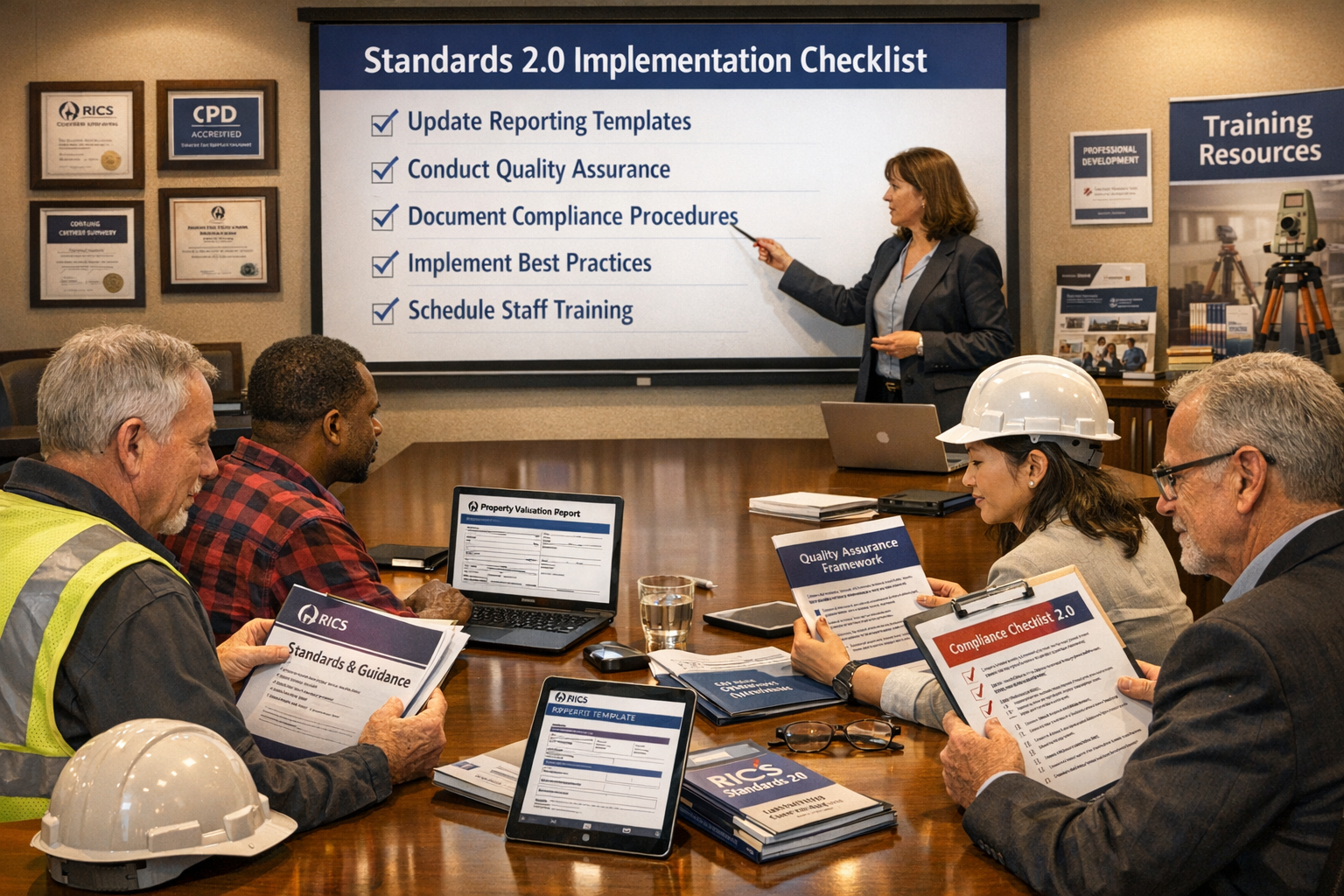
For surveying firms preparing for Standards 2.0 implementation, consider these immediate actions:
- Conduct a preliminary gap analysis comparing current practices against anticipated requirements based on consultation feedback themes
- Allocate budget and resources for training, technology upgrades, and implementation support
- Engage your team in implementation planning to build ownership and identify potential challenges
- Review and update templates to align with anticipated clarity and comprehensiveness requirements
- Establish quality assurance protocols that can verify standards compliance once implementation begins
- Monitor RICS communications for final standards publication and implementation guidance
- Connect with industry peers to share insights and collaborate on implementation approaches
The enhanced standards represent RICS's commitment to acting in the public interest while supporting professional excellence throughout the residential survey sector. By embracing these changes proactively and implementing them strategically, surveying firms can position themselves as quality leaders while contributing to greater public confidence in the profession.
For surveyor services providers, the time to begin preparation is now. The firms that invest in thoughtful, comprehensive implementation strategies today will emerge as the quality leaders of tomorrow's residential surveying market.
References
[1] Home Survey Standard 2nd Edition A Progress Update – https://www.rics.org/news-insights/home-survey-standard-2nd-edition-a-progress-update
[2] Rics Launches Consultation Updated Home Survey Standard – https://www.rics.org/news-insights/rics-launches-consultation-updated-home-survey-standard