
Last updated: October 20, 2026
A headline rise of 2.5% sounds like good news for anyone selling a house in London. But look past the top-line number and the picture changes fast: more than a third of London homes currently on the market have already had their asking price cut. That contradiction is the real story in October 2026, and it matters most for sellers and buyers in places like Wimbledon, where period stock and high price points make correct pricing the difference between a quick sale and a stale listing.
Quick Answer
London asking prices October 2026 rose 2.5% in the month to an average of £673,942, according to Rightmove's House Price Index published 19 October 2026, but values are still down 1.7% year on year, and 38% of London homes for sale have already had a price reduction. The rise reflects optimistic new sellers entering the market in autumn, not a genuine uplift in what buyers are willing to pay. For Wimbledon sellers, the practical lesson is to price for the 39-day sale window, not the 119-day one that overpriced homes fall into.
Key Takeaways
- London asking prices October 2026 averaged £673,942, up 2.5% month-on-month but down 1.7% year-on-year (Rightmove, 19 October 2026).
- 38% of London listings have been reduced, above the national rate of 34% and close to the September 2023 peak of 36%.
- Nationally, reduced homes take 119 days to sell versus 39 days for correctly priced homes (Rightmove, October 2026).
- Mortgage costs are rising: Rightmove's average 2-year fixed rate is 5.55%, up from 5.29% last month and 4.25% in February, adding roughly £250 a month to a typical new mortgage.
- Agreed sales are down 8% and buyer enquiries down 9% year-on-year, while new listings are up 3%.
- The South East (£475,582, -0.9% annually, 74 days to sell) is faring slightly better on speed than inner London's 78-day average.
- Two fixed dates matter for the next six weeks: the Autumn Budget on 28 October 2026 and the Bank of England's rate decision on 5 November 2026, with markets pricing a possible rise.
Why are London asking prices up 2.5% but so many homes getting reduced
The 2.5% monthly rise reflects a wave of new sellers listing optimistically for autumn, not an increase in what buyers will actually pay. Asking prices are set by sellers and agents before a sale; they are not transaction prices.
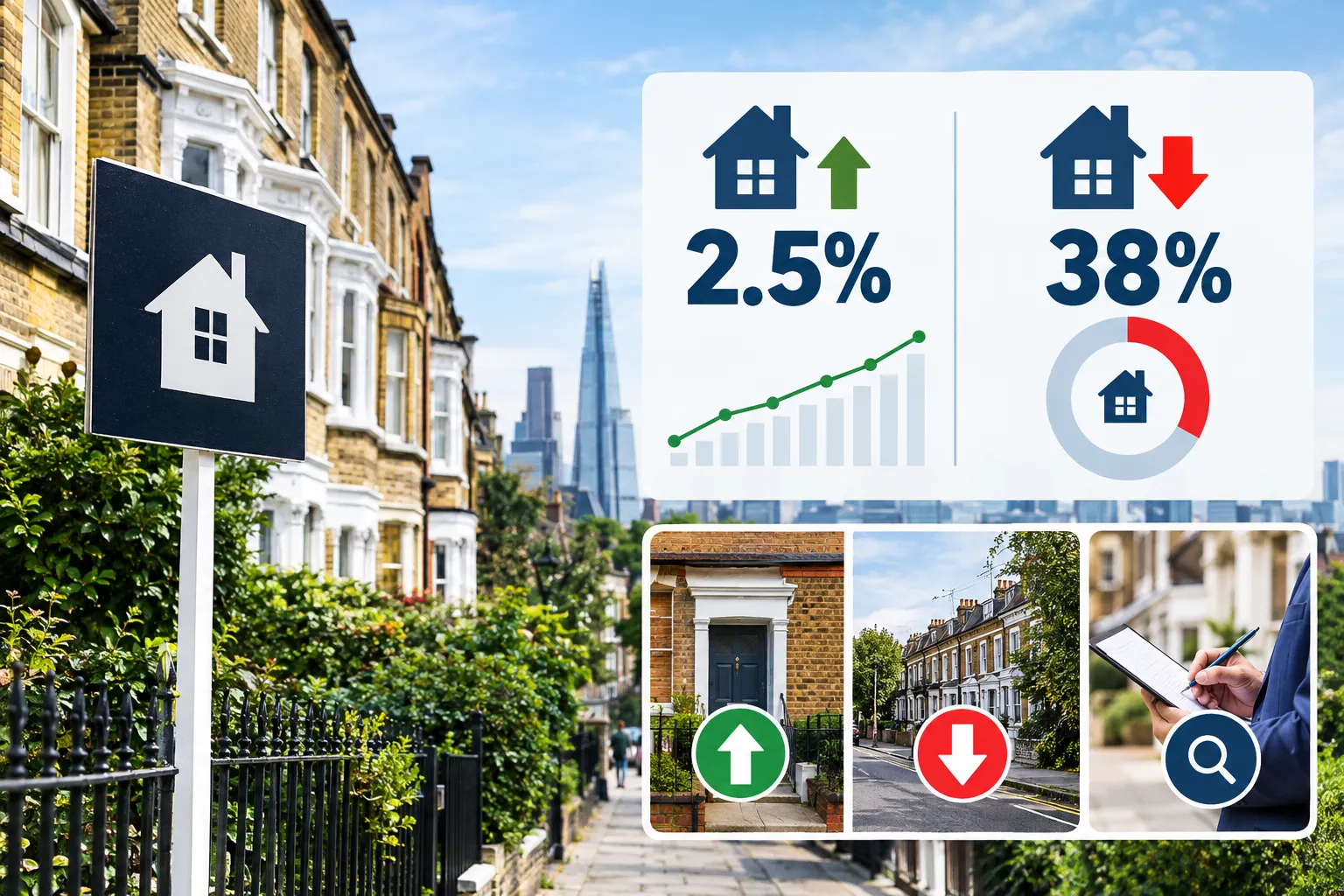
Each October, a fresh batch of properties comes to market after the summer lull, and many are priced ambitiously based on what owners hope to achieve. Rightmove's data shows this pattern every year: a seasonal uptick in the index coincides with sellers testing the market. The 38% reduction rate shows what happens next, a large share of those ambitious prices get corrected within weeks once viewing numbers and offers fail to match expectations. Buyer enquiries down 9% year-on-year confirms demand has not kept pace with the fresh supply.
What is the difference between asking price and actual sale price in London
The asking price is what a seller requests when a property is first marketed; the sale price is what a buyer actually agrees to pay, often after negotiation. In London, the gap between the two has widened as buyer affordability has tightened.
- Asking price: set by the seller and agent, often influenced by hope value and recent comparable listings rather than completed sales.
- Sale price: reflects what a willing buyer, backed by a mortgage offer, actually agrees after survey findings and negotiation.
- With agreed sales down 8% annually across London, the gap between initial asking price and eventual agreed price is widening, particularly on homes that needed a reduction to attract an offer.
A RICS Level 3 building survey or an independent valuation gives buyers hard evidence, damp, structural movement, roof condition, subsidence risk, that can justify a lower offer than the advertised asking price, especially on Wimbledon's older Victorian and Edwardian stock.
Is October 2026 a good time to sell in Wimbledon
October 2026 can work for Wimbledon sellers, but only if the property is priced to compete, not priced to test the market. With London homes taking 78 days on average to find a buyer, and reduced listings taking 119 days nationally, timing alone will not sell a house, pricing accuracy will.
Wimbledon's period houses and family homes near good schools still attract genuine demand, but buyers facing a 5.55% average two-year fixed rate are more price-sensitive than a year ago. Sellers who list at a realistic, evidence-based price from day one tend to sell within weeks; those who overreach often end up reducing anyway, after losing the crucial first fortnight of maximum buyer attention.
How does Wimbledon compare to other London areas
Wimbledon sits within the South West London market, which broadly tracks the capital's 78-day average time to sell, though exact borough-level figures were not published in Rightmove's October release. The comparable South East region, at £475,582 average asking price, sells faster at 74 days, suggesting outer zones with better affordability are moving more efficiently than premium inner and south-west London postcodes.
For Wimbledon specifically, the relevant comparison is less about the headline London average (£673,942) and more about matching a property's asking price to actual completed sales on the same street or in the same council tax band, information a local RICS surveyor can verify through recent comparable evidence.
What is causing the jump in London property prices this October
The October jump is largely seasonal and driven by new listings, not stronger buyer demand. New listings are up 3% on 2025, and sellers entering the market after summer often set ambitious opening prices, which lifts the average asking figure without reflecting what is actually being paid.
Rising mortgage costs are working against this optimism. Rightmove's average 2-year fixed rate has climbed from 4.25% in February to 5.55% now, adding about £250 a month to a typical new mortgage. That higher borrowing cost is a key reason agreed sales are down 8% and enquiries down 9%, buyers simply cannot stretch as far as sellers hope.
Should I reduce my listing price to sell faster in London
Yes, if a property has been on the market for several weeks without serious offers, a prompt, meaningful reduction is usually the right move. Waiting too long risks falling into the 119-day "reduced home" category rather than the 39-day "correctly priced" one.
- Review activity after 2-3 weeks: low viewing numbers or no offers signal the price is wrong, not that the market is slow.
- Cut early and decisively rather than making several small reductions, which can make buyers suspicious.
- Use independent evidence, a RICS valuation or recent sold-price data, to justify the new figure, rather than guessing.
Common mistake: sellers often reduce by a token 1-2%, which barely registers with buyers. National data shows average reductions run close to 7%, or about £21,000, which is the scale needed to genuinely re-engage the market.
Is London a buyer's market or seller's market right now
London currently favours buyers on price negotiation, even though asking prices rose this month. Falling annual values (-1.7%), lower agreed sales (-8%), and fewer enquiries (-9%) all point to buyers having more leverage than the headline asking-price rise suggests.
Sellers retain an advantage only on genuinely well-presented, correctly priced homes in sought-after pockets, where competition among a smaller pool of serious buyers can still produce quick, strong offers. For most of the market, though, patient buyers with mortgage approval in hand and a solid building survey report are negotiating from a position of strength.
Why do so many London homes get price reductions after listing
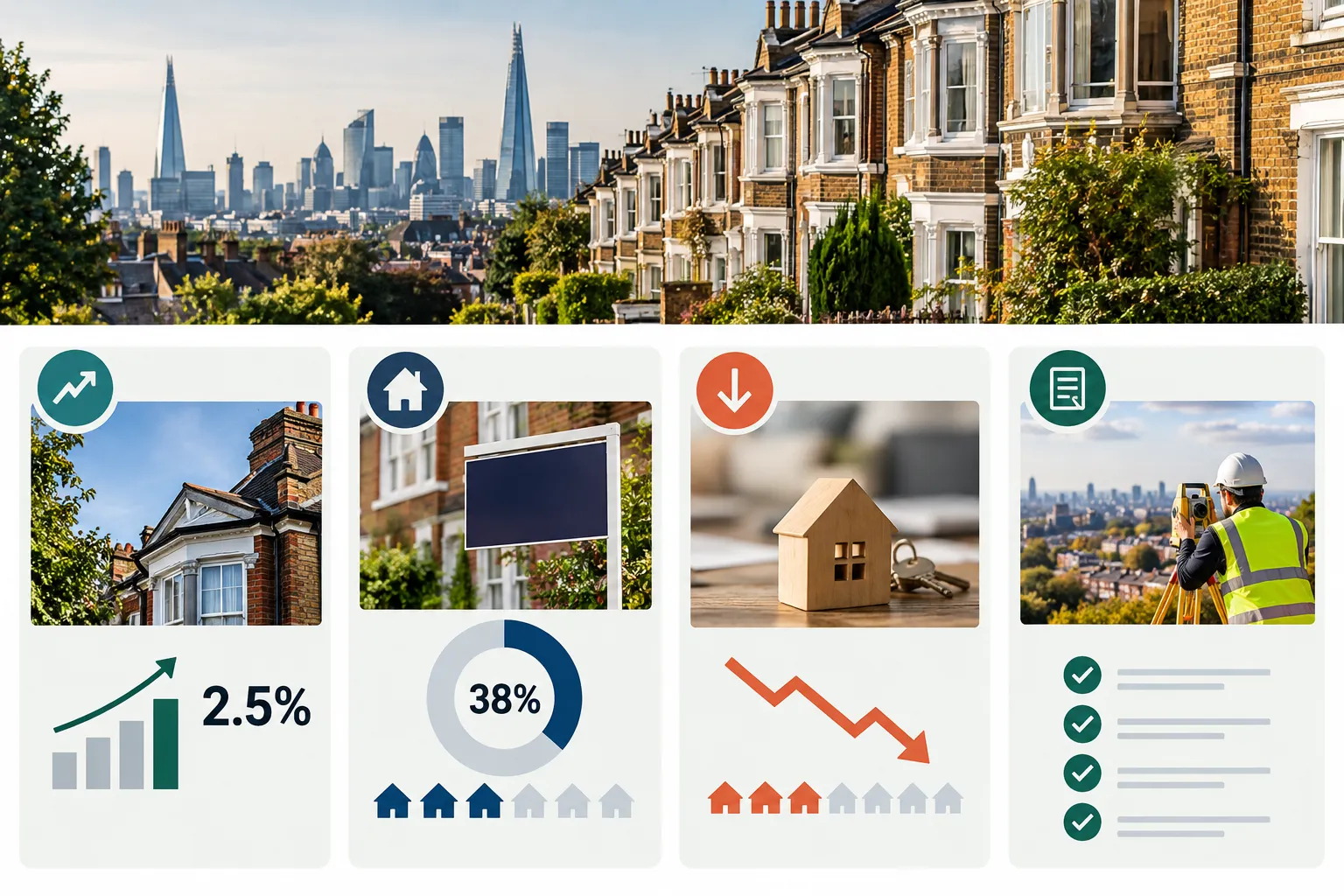
Price reductions happen because initial asking prices are frequently set above what the current pool of buyers will pay, especially when sellers anchor to the last comparable sale from a stronger market period. At 38% of London listings reduced, close to the September 2023 peak of 36%, this is now a defining feature of the market rather than an exception.
- Overestimating buyer appetite given the current 5.55% average mortgage rate.
- Comparing to sales agreed months ago, before rates and demand shifted.
- Agents setting a higher price to win the seller's instruction, then adjusting later.
Edge case: unique or exceptionally well-located homes with no direct comparables can justify ambitious pricing, but even these should be tested against buyer feedback within the first month.
How long do homes typically take to sell in Wimbledon
Wimbledon homes broadly follow the London-wide average of 78 days to find a buyer, though correctly priced properties typically sell much faster, in line with the national 39-day figure for non-reduced listings. Overpriced homes risk drifting toward the 119-day mark seen nationally among reduced properties.
Choose a launch price based on recent comparable sold prices, not aspirational asking prices, if the goal is a sale within six to eight weeks.
What percentage price reduction is normal when relisting in London
A meaningful reduction in the current market averages close to 7%, or roughly £21,000 on a typical home, based on Rightmove's September 2026 data on reduction sizes nationally. Smaller cosmetic cuts of 1-2% rarely shift buyer interest.
Are London property prices going to keep going up
No one can say with certainty, but the underlying data points to continued softness rather than sustained growth. London asking prices October 2026 are down 1.7% year-on-year despite the monthly bounce, and two events in the coming weeks, the Autumn Budget on 28 October 2026 and the Bank of England's decision on 5 November 2026, could influence mortgage rates and buyer confidence further. Markets are currently pricing in a possible rate rise, which would add further pressure on affordability rather than ease it.
Which London neighbourhoods have the biggest asking price increases
Rightmove's October 2026 release provides borough-level detail for London as a whole (£673,942, +2.5% month) and the South East region (£475,582, +0.9% month) but did not break out individual neighbourhood figures in the cited release. Sellers and buyers wanting hyper-local comparisons should rely on recent sold-price evidence for specific streets and postcodes, such as those within SW19, rather than the city-wide average.
Should I wait to buy in London or buy now at current prices
Buying now can make sense if a genuinely reduced, well-surveyed property is found, because falling annual prices and weaker buyer competition currently favour negotiation. Waiting carries its own risk: if the Bank of England raises rates on 5 November 2026 as some markets expect, mortgage costs could rise further from the current 5.55% average.
Choose to buy now if a property has already been reduced close to the 7% national average and a RICS survey confirms no major structural issues, that combination suggests the price reflects real market conditions rather than seller optimism.
What mistakes are Wimbledon sellers making with their asking prices
The most common mistake is anchoring to a neighbour's sale from 12-18 months ago rather than current buyer behaviour. With mortgage rates up from 4.25% in February to 5.55% now, what buyers could afford then is not what they can afford today.
- Ignoring the 78-day London average and assuming a premium postcode guarantees a fast sale.
- Skipping an independent valuation before launch, relying only on agent estimates that can be influenced by competition to win the listing.
- Delaying a reduction for months, drifting from the 39-day "correctly priced" track onto the 119-day "reduced" track.
What this means for you
For Wimbledon sellers: price against recent sold evidence, not last year's asking prices, and be ready to review within three weeks of listing. A RICS chartered surveyor can provide an independent valuation that strengthens the case for a realistic launch price and avoids the credibility damage of repeated reductions.
For Wimbledon buyers: use the current softer demand (-9% enquiries, -8% agreed sales) as negotiating leverage, but verify condition first. A RICS Level 3 building survey on period stock common in SW19, checking roofs, damp, subsidence and old wiring, gives concrete grounds to negotiate below asking price, particularly on any home that has already been reduced once.
Frequently Asked Questions
Did London house prices really rise in October 2026?
Asking prices rose 2.5% month-on-month to £673,942, but actual values are down 1.7% compared with October 2025, according to Rightmove.
Why are so many London homes reduced if prices are rising?
The rise reflects optimistic new asking prices from sellers entering the market, while 38% of existing listings are being cut because buyers are not matching those opening prices, especially with mortgage rates at 5.55%.
How long does it take to sell a home in Wimbledon right now?
Wimbledon broadly follows London's average of 78 days, though correctly priced homes nationally sell in around 39 days versus 119 days for reduced ones.
Should I get a survey before making an offer in this market?
Yes. A RICS Level 3 building survey is especially useful on Wimbledon's period housing stock and gives documented evidence to support a lower offer, particularly on homes still priced at or near their original asking figure.
Will the Autumn Budget or Bank of England decision affect London prices?
Potentially. The Autumn Budget on 28 October 2026 and the Bank of England's rate decision on 5 November 2026 could both influence mortgage affordability, with markets currently pricing in a possible rate rise.
Is now a good time to buy or sell in SW19?
It depends on pricing accuracy rather than timing alone. Sellers who price against real comparable evidence and buyers who use survey findings to negotiate are best placed regardless of the broader market direction.
Sources
- Rightmove House Price Index, 19 October 2026
- Bank of England, interest rate decision schedule, 2026
dividend investing, London property market, London asking prices October 2026, Wimbledon house prices, RICS building survey, Rightmove House Price Index, London house price reductions, mortgage rates UK, property valuation SW19, home selling strategy, buyer negotiation tips, UK housing market 2026