The property surveying landscape is undergoing its most significant transformation in decades. As homebuyers demand greater transparency and technological capabilities reshape professional practices, the Royal Institution of Chartered Surveyors (RICS) is responding with comprehensive reforms that will redefine Building Survey Quality Standards in 2026: Implementing RICS Strengthening Initiatives for Consumer Insight and Technological Integration. These changes aren't merely administrative updates—they represent a fundamental shift in how building surveyors deliver value, integrate cutting-edge technology, and meet evolving consumer expectations in an increasingly complex property market.
For building surveyors, property professionals, and homebuyers alike, understanding these strengthening initiatives is essential. The changes affect everything from survey methodology and reporting requirements to the ethical use of artificial intelligence in property assessments. As RICS navigates the final stages of consultation and approval, the surveying profession stands at a crossroads between traditional expertise and technological innovation.
Key Takeaways
- 📋 Enhanced Standards: RICS is finalizing the second edition of Home Survey Standards following extensive consultation with over 1,000 comments, focusing on clarity, consumer needs, and technological integration
- 🤖 Mandatory AI Framework: The first global professional standard for responsible AI use in surveying takes effect March 9, 2026, establishing ethical guidelines for technology integration across all surveying disciplines
- 🔍 Comprehensive Surveys: Level 3 building surveys in 2026 are significantly more thorough, uncovering hidden issues like interstitial condensation and complex building fabric problems that previous standards might have missed
- 👥 Consumer-Centric Approach: Strengthening initiatives directly respond to feedback from RICS members, regulatory bodies, and consumers, ensuring surveys better reflect real-world property concerns
- ⚖️ Clear Requirements: The updated standards distinguish between mandatory requirements ("musts") and recommended practices ("shoulds"), providing surveyors with clearer guidance while maintaining professional flexibility
Understanding the RICS Home Survey Standard Evolution
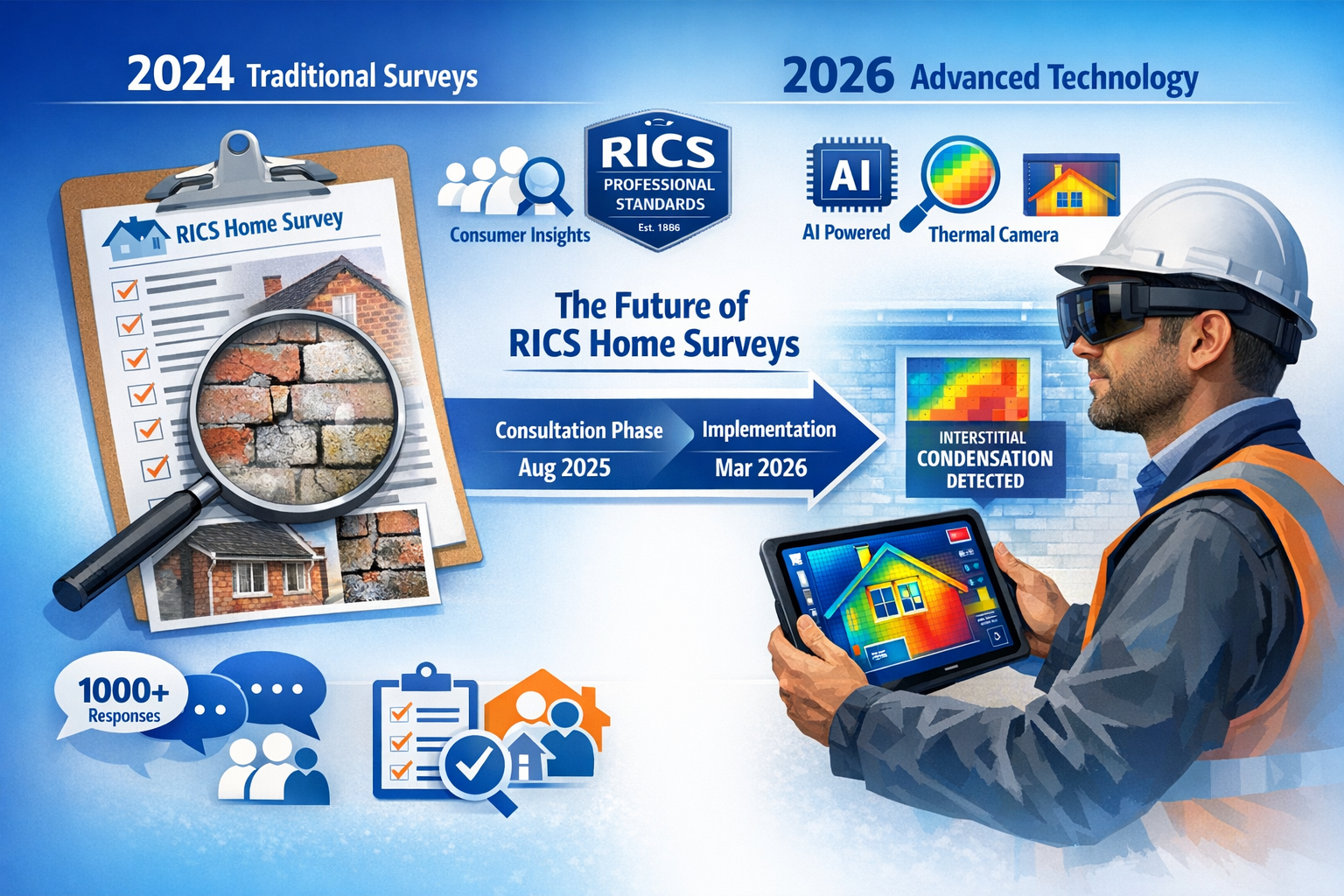
The journey toward Building Survey Quality Standards in 2026: Implementing RICS Strengthening Initiatives for Consumer Insight and Technological Integration began with recognition that existing standards needed modernization. The original RICS Home Survey Standard, while comprehensive, required updates to address technological advances, changing consumer expectations, and lessons learned from years of practical application.
The Consultation Process and Timeline
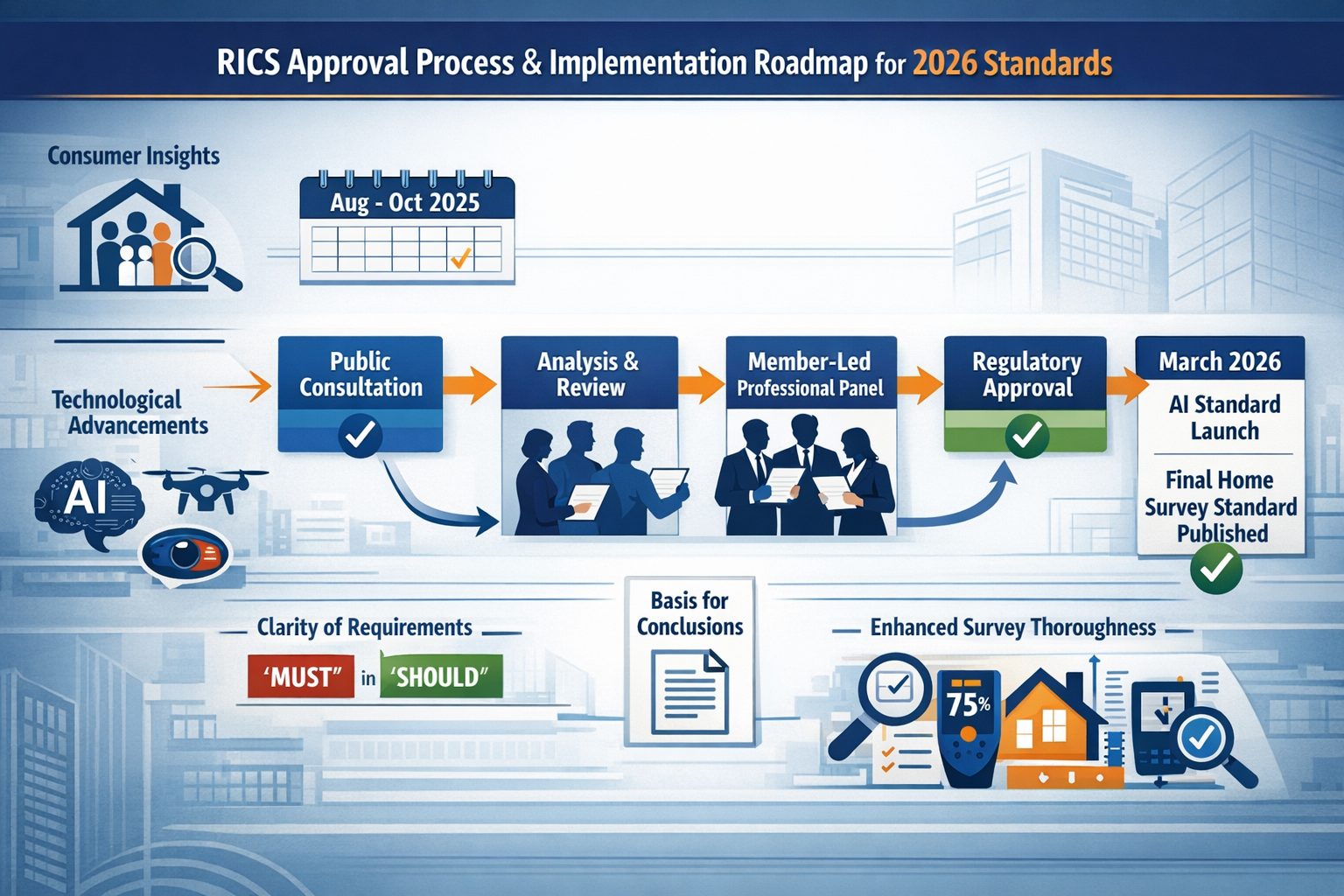
Between August 19 and October 14, 2025, RICS conducted an extensive public consultation that generated over 1,000 detailed comments from surveyors, consumers, regulatory bodies, and industry stakeholders.[2] This unprecedented level of engagement demonstrates the surveying profession's commitment to getting these standards right.
The consultation feedback is currently being reviewed line by line to determine appropriate revisions.[2] This meticulous approach ensures that every concern, suggestion, and technical point receives proper consideration before the standard moves forward.
Following the analysis phase, the updated standard will proceed through several critical stages:
- Member-Led Professional Panel Review: Expert practitioners and specialists examine the revised draft
- Board Approval: RICS governance boards composed of industry leaders provide oversight
- Regulatory Approval: Final regulatory review ensures compliance with professional standards
- Publication and Implementation: The finalized standard is published with comprehensive guidance
This multi-stage approval process ensures that the final standard reflects both technical excellence and practical applicability.[2]
Key Themes from Consultation Feedback
A consistent theme across all consultation responses emphasized the need for the draft to be clearer and more concise in its requirements.[2] Surveyors expressed concern about ambiguity in certain areas, particularly regarding:
- Prescriptive Requirements: How detailed should the standard be in specifying survey methodologies?
- Mandatory vs. Recommended: Clear distinction between what surveyors "must" do versus what they "should" do
- Technological Integration: How to incorporate new tools while maintaining professional judgment
- Consumer Communication: Ensuring survey reports are accessible to non-technical readers
RICS is addressing these concerns by refining language, restructuring sections for better clarity, and providing more specific guidance where needed while preserving professional flexibility where appropriate.[2]
Understanding different survey types and their purposes remains crucial as these standards evolve to meet modern requirements.
Consumer Insight Integration in Building Survey Quality Standards
One of the most significant aspects of Building Survey Quality Standards in 2026: Implementing RICS Strengthening Initiatives for Consumer Insight and Technological Integration is the deliberate incorporation of consumer perspectives into professional standards development.
Why Consumer Insight Matters
Feedback from RICS members and regulatory bodies identified the need to strengthen home survey areas and provide further clarification to reflect evolving consumer needs.[2] This consumer-centric approach represents a paradigm shift in how professional standards are developed.
Historically, surveying standards were primarily developed by professionals for professionals. While technical excellence remained paramount, the consumer experience sometimes received secondary consideration. The 2026 initiatives reverse this hierarchy, placing consumer understanding and satisfaction alongside technical competence.
Enhanced Survey Thoroughness
As of 2026, RICS Home Surveys are significantly more comprehensive, with Level 3 surveys providing detailed examinations that uncover hidden issues including building fabric problems and complex concerns like interstitial condensation.[3]
Interstitial condensation—moisture accumulation within building structures rather than on visible surfaces—represents exactly the type of hidden defect that modern surveys must identify. Traditional visual inspections might miss these issues, but enhanced standards now require surveyors to:
- ✅ Use appropriate diagnostic tools to detect moisture within structures
- ✅ Assess building fabric conditions more comprehensively
- ✅ Identify potential long-term deterioration risks
- ✅ Communicate findings clearly to non-technical clients
This enhanced thoroughness directly addresses consumer concerns about purchasing properties with hidden defects that emerge only after completion. When buyers invest in professional surveys, they expect comprehensive assessments that justify the cost and provide genuine protection.
For those wondering what to do after receiving a concerning survey report, the enhanced standards provide clearer guidance on defect severity and recommended actions.
Balancing Depth with Accessibility
A critical challenge in consumer insight integration involves making highly technical information accessible without oversimplifying complex issues. The strengthening initiatives address this through:
Structured Reporting Requirements: Reports must present information in logical hierarchies, with executive summaries for quick understanding and detailed technical sections for those requiring deeper information.
Visual Communication: Enhanced use of photographs, diagrams, and visual indicators helps consumers understand defects without requiring technical expertise.
Risk Categorization: Clear systems for categorizing defects by urgency and severity help consumers prioritize actions and budget appropriately.
Plain Language Requirements: Technical terminology must be explained in accessible language, ensuring consumers understand what surveyors have found and why it matters.
These improvements respond directly to consumer feedback indicating that previous survey reports, while technically accurate, sometimes failed to communicate effectively with property buyers making critical financial decisions.
Technological Integration and the AI Standard Revolution
Perhaps the most groundbreaking aspect of Building Survey Quality Standards in 2026: Implementing RICS Strengthening Initiatives for Consumer Insight and Technological Integration is the integration of artificial intelligence and advanced technology into professional surveying practice.
The Landmark AI Standard
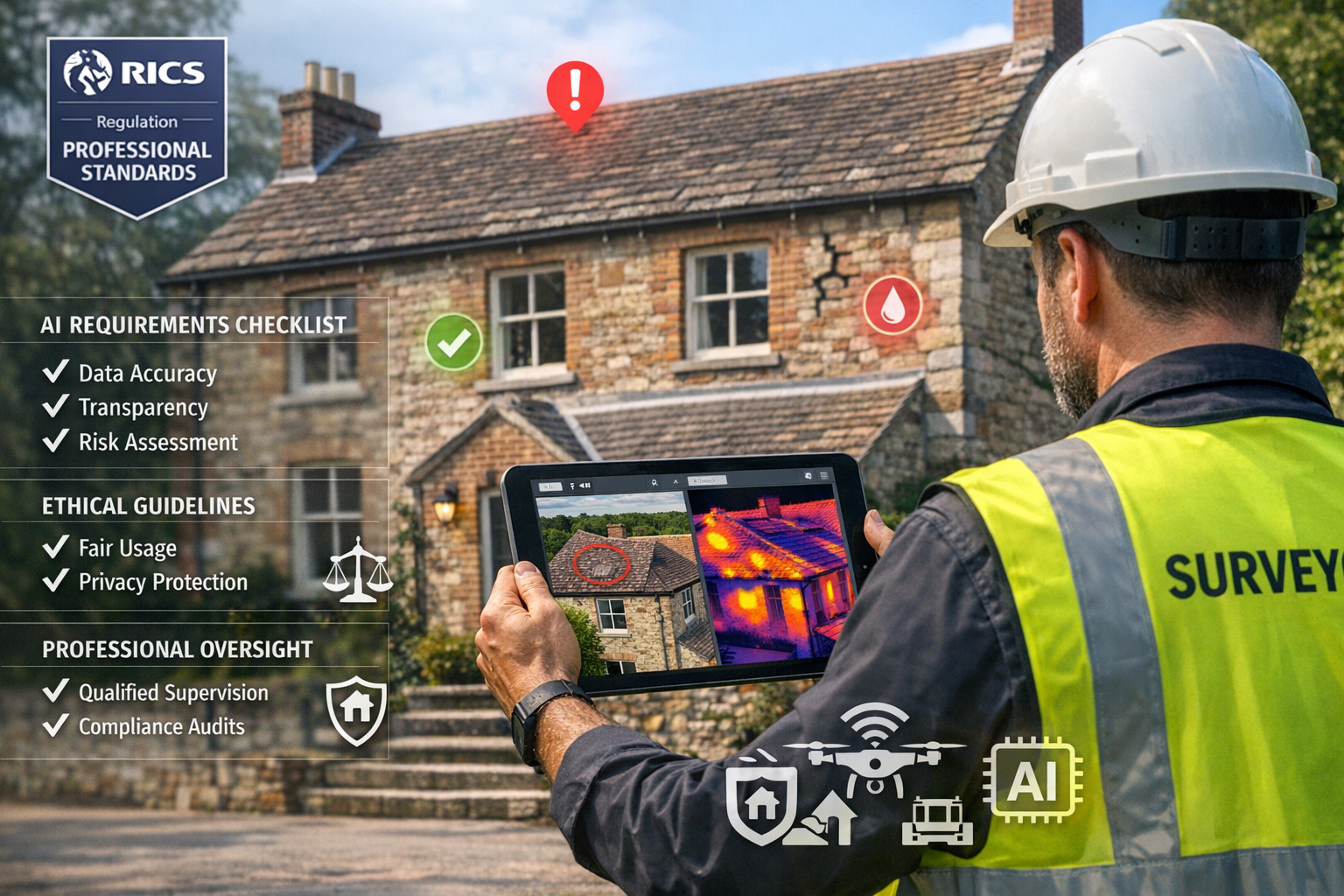
On March 9, 2026, RICS will implement the first global professional standard for responsible AI use in surveying.[5] This mandatory standard addresses AI integration across valuation, construction, infrastructure, and land services, establishing a framework that ensures technology enhances rather than compromises professional standards.
The AI standard sets out mandatory requirements and best practice expectations for RICS members and regulated firms worldwide, designed to ensure AI tools are used ethically, transparently, and with professional oversight.[5]
This represents a watershed moment for the surveying profession. Rather than resisting technological change or allowing unregulated AI adoption, RICS has proactively established guardrails that protect consumers while enabling innovation.
Key Principles of the AI Standard
The AI standard is built on several foundational principles:
| Principle | Description | Implementation Requirement |
|---|---|---|
| Transparency | Clients must understand when and how AI is used in their survey | Surveyors must disclose AI tool usage and explain its role in the assessment |
| Professional Oversight | AI assists but doesn't replace professional judgment | Surveyors remain responsible for all conclusions, regardless of AI input |
| Ethical Use | AI must be deployed without bias or discrimination | Regular auditing of AI tools for accuracy and fairness |
| Data Protection | Client information must be protected when using AI systems | Compliance with data protection regulations and secure AI platforms |
| Competence | Surveyors must understand the AI tools they use | Training requirements for any AI technology employed in surveys |
These principles ensure that as building surveyors adopt advanced technologies, they maintain the professional standards and ethical obligations that define chartered surveying.
Practical Applications of AI in Building Surveys
How does AI actually enhance building surveys in practice? The 2026 standards recognize several valuable applications:
🔍 Defect Detection and Pattern Recognition: AI algorithms can analyze thousands of building images to identify common defect patterns, alerting surveyors to potential issues that warrant closer inspection. For example, AI might flag subtle crack patterns indicative of subsidence or identify moisture staining patterns consistent with specific defect types.
📊 Comparative Analysis: AI systems can compare a subject property against databases of similar buildings, identifying unusual features or conditions that merit investigation. This contextual analysis helps surveyors understand whether observed conditions are typical for the property type or represent genuine concerns.
📈 Predictive Maintenance: Machine learning models can estimate the remaining service life of building components based on age, condition, and environmental factors, helping consumers budget for future maintenance and repairs.
🌡️ Thermal Imaging Analysis: AI-enhanced thermal imaging can automatically identify temperature anomalies indicative of insulation deficiencies, air leakage, or moisture problems, making thermal surveys more efficient and comprehensive.
📝 Report Generation Assistance: AI can help structure reports, suggest appropriate language for common defects, and ensure consistency in reporting standards, though professional review and approval remain mandatory.
Importantly, the standard emphasizes that AI assists rather than replaces professional judgment. The surveyor remains responsible for all conclusions and must be able to explain and justify findings independently of any AI input.
Technology Beyond AI
While AI receives significant attention, the strengthening initiatives also recognize other technological advances transforming building surveys:
Drone Surveys: Unmanned aerial vehicles enable safe, detailed inspection of roofs, chimneys, and other difficult-to-access areas, providing high-resolution imagery without requiring scaffolding or access equipment.
3D Laser Scanning: Precise dimensional surveys create detailed building models, useful for renovation planning and identifying structural irregularities.
Moisture Meters and Thermal Imaging: Advanced diagnostic tools detect hidden moisture and thermal bridging that visual inspection alone cannot identify.
Digital Reporting Platforms: Cloud-based systems enable real-time report creation, client access, and integration with other property transaction systems.
The standards recognize these technologies while maintaining the principle that tools enhance rather than replace professional expertise. A professional building surveyor must understand both traditional assessment methods and modern technological capabilities.
Strengthened Professional Standards and Competence Requirements
Building Survey Quality Standards in 2026: Implementing RICS Strengthening Initiatives for Consumer Insight and Technological Integration extends beyond technical survey requirements to encompass broader professional competence and ethical conduct.
Technical Competence in a Changing Landscape
RICS has reinforced its commitment to professional standards emphasizing technical competence and ethical conduct, increasing confidence in surveying services quality and reliability.[3] This strengthening recognizes that as surveys become more complex and technology-dependent, surveyor competence must evolve accordingly.
The enhanced competence framework requires surveyors to demonstrate:
Continuing Professional Development (CPD): Regular training in new technologies, building pathology advances, and evolving standards ensures surveyors maintain current knowledge throughout their careers.
Technology Literacy: Understanding how to use, interpret, and validate results from AI systems, thermal imaging, moisture detection equipment, and other modern tools.
Communication Skills: Ability to explain complex technical findings to diverse audiences, from first-time buyers to experienced property investors.
Ethical Judgment: Navigating situations where commercial pressures, client expectations, or technological limitations might compromise professional standards.
This comprehensive approach to competence ensures that as building surveying adapts to 2026 realities, professional quality keeps pace with technological capabilities.
The Surveyor as Trusted Adviser
Building surveying has adapted significantly, with surveyors increasingly acting as trusted advisers engaging deeply with clients' unique needs beyond basic property inspection.[3] This evolution reflects consumer expectations for personalized service rather than standardized reports.
Modern building surveyors must:
- Understand Client Context: A first-time buyer purchasing a Victorian terrace has different needs than an investor acquiring a commercial conversion
- Provide Strategic Advice: Beyond identifying defects, surveyors help clients understand implications for purchase decisions, renovation planning, and long-term ownership
- Navigate Complexity: Properties increasingly involve complex issues like cladding safety, energy efficiency requirements, and climate resilience
- Coordinate with Specialists: Knowing when to recommend specialist investigations for structural engineering, environmental hazards, or building services
This trusted adviser role represents a significant departure from the traditional surveyor-client relationship. Rather than simply delivering a report and moving to the next assignment, modern surveyors build relationships, provide ongoing consultation, and help clients navigate the entire property acquisition and ownership journey.
For those seeking comprehensive property condition assessments, this enhanced advisory role provides significant additional value beyond the written report.
Ethical Conduct in the Technology Age
The integration of AI and advanced technology introduces new ethical considerations that the strengthening initiatives explicitly address:
Conflicts of Interest: If AI tools are provided by companies with commercial interests in survey outcomes, how do surveyors maintain independence?
Data Privacy: Building surveys generate sensitive information about property conditions and client circumstances—how should this data be protected when using cloud-based AI systems?
Accuracy and Liability: When AI assists in defect identification, who bears responsibility if the technology misses a significant issue?
Accessibility and Discrimination: Do AI-enhanced surveys create affordability barriers that disadvantage certain consumers?
The 2026 standards require surveyors to navigate these ethical dimensions thoughtfully, ensuring that technological advancement serves rather than compromises professional integrity.
Implementation Challenges and Practical Considerations
While Building Survey Quality Standards in 2026: Implementing RICS Strengthening Initiatives for Consumer Insight and Technological Integration offers significant benefits, implementation presents practical challenges that surveyors and firms must address.
Investment in Technology and Training
The enhanced standards require investment in both equipment and expertise:
Technology Acquisition: Thermal imaging cameras, moisture meters, drone equipment, and AI software platforms represent significant capital expenditure, particularly for smaller surveying practices.
Training Costs: Developing competence in new technologies requires time and money for courses, certifications, and practical experience development.
Software Subscriptions: Many AI and digital reporting platforms operate on subscription models, creating ongoing operational costs.
Insurance Considerations: Enhanced survey scope and technology use may affect professional indemnity insurance requirements and premiums.
These investments create barriers to entry and may consolidate the industry toward larger firms with greater resources, potentially affecting competition and consumer choice.
Balancing Standardization with Professional Judgment
A recurring theme in the consultation feedback concerned how prescriptive the standard should be.[2] This tension reflects a fundamental challenge in professional regulation:
Too Prescriptive: Overly detailed requirements can stifle innovation, reduce professional judgment, and create checklist mentality where surveyors follow procedures without thinking critically.
Too Flexible: Insufficient guidance creates inconsistency, makes quality assurance difficult, and leaves consumers uncertain about what they're receiving.
RICS is working to strike the appropriate balance by clearly distinguishing mandatory requirements ("musts") from recommended practices ("shoulds").[2] This approach provides essential consistency while preserving professional discretion where appropriate.
For surveyors, this means understanding not just what the standards require, but why those requirements exist and how to apply them thoughtfully to diverse property situations.
Managing Consumer Expectations
Enhanced standards naturally raise consumer expectations about what surveys will reveal and how comprehensive assessments will be. This creates several challenges:
Scope Limitations: Even Level 3 surveys have limitations—they're non-invasive, conducted in accessible areas, and represent a snapshot in time. Consumers may expect comprehensive guarantees that surveys cannot provide.
Cost Justification: More thorough surveys with advanced technology cost more. Surveyors must articulate value clearly to justify fees that may exceed consumer expectations.
Liability Concerns: More comprehensive surveys potentially create more opportunities for alleged negligence if issues emerge post-purchase that weren't identified.
Communication Complexity: Balancing thoroughness with accessibility means reports become longer and more complex, potentially overwhelming consumers with information.
Successful implementation requires surveyors to manage these expectations through clear pre-engagement communication, transparent scope definition, and accessible reporting that helps consumers understand both what was assessed and what limitations exist.
Understanding different survey levels and choosing the right option helps consumers make informed decisions about appropriate survey depth for their circumstances.
The Basis for Conclusions: Transparency in Standards Development
An innovative aspect of the strengthening initiatives is RICS's commitment to publishing a comprehensive Basis for Conclusions document that will summarize consultation responses and explain how RICS addressed them.[2]
Why Transparency Matters
This transparency serves several important purposes:
Professional Understanding: Surveyors can understand the rationale behind specific requirements, helping them apply standards more thoughtfully rather than mechanically.
Consumer Confidence: Demonstrating that standards development incorporates diverse stakeholder input builds trust in the surveying profession.
Continuous Improvement: Documenting decision-making creates a foundation for future standards evolution, showing what was considered and why certain approaches were adopted.
Accountability: Publishing how consultation feedback was addressed holds RICS accountable to the profession and consumers for standards development decisions.
This approach reflects modern governance best practices and distinguishes RICS as a forward-thinking professional body committed to evidence-based standards development.
Learning from the Consultation Process
The consultation revealed several key insights that shaped the final standards:
Clarity Priority: Respondents consistently emphasized the need for clearer, more concise requirements rather than additional complexity.[2]
Technology Integration: Strong support for incorporating modern tools, balanced with concerns about maintaining professional judgment and managing costs.
Consumer Protection: Emphasis on ensuring surveys genuinely serve consumer interests rather than simply meeting minimum professional requirements.
Practical Applicability: Concerns that standards should be implementable across diverse practice contexts, from sole practitioners to large firms, and across different property types and regional markets.
These insights demonstrate the value of inclusive consultation processes that genuinely listen to stakeholder concerns rather than simply validating predetermined approaches.
Regional Considerations and Market Variations
While RICS standards apply broadly across the UK and internationally, Building Survey Quality Standards in 2026: Implementing RICS Strengthening Initiatives for Consumer Insight and Technological Integration must accommodate regional property market variations and local building characteristics.
Property Type Diversity
The UK property market encompasses extraordinary diversity:
- Period Properties: Georgian, Victorian, and Edwardian buildings with unique construction methods and common defect patterns
- Modern Construction: Contemporary buildings with different materials, techniques, and potential issues
- Non-Traditional Construction: Properties built with systems like concrete frame, timber frame, or prefabricated methods
- Conversions: Former commercial or industrial buildings adapted to residential use
- Listed Buildings: Historic properties with conservation constraints and specialized requirements
Enhanced standards must provide sufficient flexibility to address this diversity while maintaining consistent quality expectations. A surveyor assessing a 1930s semi-detached property uses different knowledge and techniques than one evaluating a converted warehouse or listed manor house.
Regional Market Characteristics
Different regions present distinct challenges:
London and Southeast: High property values justify more expensive comprehensive surveys, but access limitations in dense urban environments create practical challenges. Professional surveyor services in these areas must navigate complex building types and competitive market pressures.
Rural Areas: Properties may include agricultural buildings, septic systems, private water supplies, and other features uncommon in urban settings.
Coastal Regions: Salt exposure, flooding risks, and erosion concerns require specialized assessment approaches.
Industrial Areas: Former industrial regions may involve contamination risks, mining subsidence, or other location-specific concerns.
The strengthening initiatives recognize this diversity by establishing core principles and requirements while allowing professional judgment in application to specific circumstances.
Future-Proofing Building Survey Quality Standards
A critical consideration in Building Survey Quality Standards in 2026: Implementing RICS Strengthening Initiatives for Consumer Insight and Technological Integration is ensuring standards remain relevant as technology and consumer expectations continue evolving.
Adaptive Standards Framework
Rather than creating rigid requirements that quickly become outdated, RICS is developing an adaptive framework that can accommodate future developments:
Technology-Neutral Requirements: Where possible, standards focus on outcomes rather than specific technologies, allowing new tools to be adopted as they emerge.
Regular Review Cycles: Commitment to periodic standards review ensures they evolve with professional practice rather than becoming static documents.
Guidance Updates: Supplementary guidance can be updated more frequently than core standards, providing current advice on emerging issues.
Innovation Encouragement: Standards should enable rather than inhibit beneficial innovation, with clear pathways for adopting new approaches that maintain or enhance quality.
This adaptive approach recognizes that 2026 represents a moment in ongoing evolution rather than a final destination.
Emerging Trends to Watch
Several trends will likely influence future standards development:
Climate Change Adaptation: Increasing focus on flood resilience, overheating risks, and climate-related building performance.
Energy Efficiency: Growing emphasis on thermal performance, renewable energy integration, and operational carbon emissions.
Building Safety: Heightened attention to fire safety, structural integrity, and cladding following high-profile building failures.
Digital Integration: Continued development of Building Information Modeling (BIM), digital twins, and integrated property data systems.
Sustainability Assessment: Expanding survey scope to include embodied carbon, material sustainability, and circular economy considerations.
The strengthening initiatives create a foundation flexible enough to incorporate these emerging priorities as they mature from specialized concerns to mainstream requirements.
Practical Implementation Guidance for Building Surveyors
For building surveyors working to implement Building Survey Quality Standards in 2026: Implementing RICS Strengthening Initiatives for Consumer Insight and Technological Integration, several practical steps can facilitate successful adoption:
Assessment and Gap Analysis
Begin by evaluating current practice against emerging requirements:
- Review Current Procedures: Compare existing survey methodologies, reporting formats, and quality assurance processes against draft standards
- Identify Gaps: Determine where current practice falls short of new requirements
- Prioritize Improvements: Focus first on areas with greatest consumer impact or professional risk
- Develop Implementation Timeline: Create realistic schedule for achieving compliance before standards take effect
This systematic approach ensures nothing is overlooked and resources are allocated effectively.
Technology Adoption Strategy
Rather than rushing to acquire every available technology, develop a thoughtful adoption strategy:
Assess Client Needs: What technologies provide genuine value for your typical client base and property types?
Evaluate Cost-Benefit: Balance acquisition and training costs against efficiency gains and enhanced service quality.
Start Incrementally: Begin with technologies offering clearest benefits and manageable learning curves, expanding capabilities over time.
Ensure Competence: Invest in proper training before deploying new technologies in client-facing work.
Maintain Professional Judgment: Remember that technology assists rather than replaces expertise—develop protocols for validating and interpreting technology-generated information.
For surveyors considering whether to invest in advanced diagnostic equipment, understanding how building surveys save money for clients can help justify the investment.
Enhanced Communication Protocols
Implementing consumer-focused standards requires improving client communication:
Pre-Engagement Clarity: Clearly explain survey scope, limitations, and what clients should expect before work begins.
Accessible Reporting: Develop report templates that balance technical accuracy with plain-language accessibility.
Visual Communication: Incorporate photographs, diagrams, and visual indicators that help non-technical readers understand findings.
Post-Report Consultation: Offer follow-up discussions to answer questions and help clients understand implications of findings.
Feedback Collection: Systematically gather client feedback to identify communication improvements.
These practices ensure that enhanced survey thoroughness translates to genuine consumer understanding and satisfaction.
Quality Assurance Systems
Robust quality assurance becomes increasingly important as standards become more comprehensive:
- Peer Review: Implement systems where experienced surveyors review colleagues' reports before issue
- Checklists and Templates: Develop tools ensuring consistent coverage of all required elements
- Continuing Education: Maintain regular CPD focused on evolving standards and emerging building pathology knowledge
- Complaint Analysis: Review any complaints or concerns to identify systemic improvement opportunities
- File Documentation: Maintain thorough records of survey processes, decisions, and rationale
These systems protect both consumers and surveyors by ensuring consistent quality delivery.
The Consumer Perspective: What Property Buyers Should Know
While much of Building Survey Quality Standards in 2026: Implementing RICS Strengthening Initiatives for Consumer Insight and Technological Integration focuses on professional requirements, property buyers benefit from understanding how these changes affect their survey experience.
What to Expect from 2026 Surveys
Consumers commissioning building surveys under the new standards can expect:
Greater Thoroughness: More comprehensive assessments that identify issues previous standards might have missed, particularly hidden defects like interstitial condensation.
Technology Integration: Surveys may incorporate thermal imaging, moisture detection, drone photography, and AI-assisted analysis, providing more detailed information.
Clearer Communication: Reports structured to be more accessible, with plain-language explanations of technical findings and clear risk categorization.
Professional Expertise: Enhanced competence requirements ensure surveyors possess current knowledge of building pathology, technology, and professional standards.
Ethical Safeguards: Mandatory AI standards and strengthened ethical requirements protect consumers from inappropriate technology use or conflicts of interest.
These improvements represent genuine consumer benefits, though they may come with modestly higher survey costs reflecting enhanced scope and technology investment.
Choosing the Right Survey Level
Understanding whether to commission a homebuyers report or building survey remains important even as standards improve. The strengthening initiatives enhance all survey levels, but consumers must still select appropriate depth for their circumstances:
Level 2 (Homebuyer Survey): Suitable for conventional properties in reasonable condition, providing overview of condition and highlighting significant issues.
Level 3 (Building Survey): Appropriate for older properties, unusual construction, properties in poor condition, or where buyers plan significant alterations. Provides comprehensive assessment of building fabric and condition.
The enhanced 2026 standards make both survey levels more thorough and consumer-focused, but the fundamental distinction between overview and comprehensive assessment remains.
Questions to Ask Your Surveyor
When commissioning a survey under the new standards, consumers should ask:
- ✅ Are you familiar with the updated RICS standards taking effect in 2026?
- ✅ What technologies will you use during the survey, and how do they enhance the assessment?
- ✅ How do you ensure AI or other technology is used ethically and with proper professional oversight?
- ✅ Can you explain the difference between mandatory findings and recommendations in your report?
- ✅ What limitations should I understand about the survey scope?
- ✅ Will you be available to discuss findings after I receive the report?
These questions help ensure consumers receive services aligned with strengthened standards and understand what they're purchasing.
Conclusion: Embracing Standards That Serve the Profession and Public
Building Survey Quality Standards in 2026: Implementing RICS Strengthening Initiatives for Consumer Insight and Technological Integration represents a pivotal moment for the building surveying profession. These strengthening initiatives respond to genuine needs—consumer demands for greater transparency and thoroughness, technological capabilities that enable more comprehensive assessments, and professional recognition that standards must evolve with practice.
The journey from consultation through implementation demonstrates RICS's commitment to evidence-based standards development that genuinely serves stakeholder interests. By reviewing over 1,000 consultation comments line by line, engaging member-led professional panels, and committing to publish a comprehensive Basis for Conclusions, RICS has established a transparent, inclusive process that builds confidence in the resulting standards.[2]
For building surveyors, these changes require adaptation—investment in technology and training, evolution of reporting practices, and enhanced communication with clients. Yet they also offer opportunities to demonstrate value, differentiate services, and build stronger client relationships through the trusted adviser role that modern consumers seek.[3]
The mandatory AI standard taking effect March 9, 2026, establishes RICS as a global leader in responsible technology integration, providing a framework that enables innovation while protecting professional integrity and consumer interests.[5] This proactive approach positions the surveying profession to harness technological capabilities rather than being disrupted by them.
For consumers, the strengthening initiatives promise more comprehensive, accessible, and valuable surveys that genuinely inform property purchase decisions and protect against hidden defects. Enhanced thoroughness in identifying issues like interstitial condensation and building fabric problems provides the protection that survey investment should deliver.[3]
Actionable Next Steps
For Building Surveyors:
- Review Draft Standards: Familiarize yourself with the updated requirements and identify areas where current practice needs enhancement
- Assess Technology Needs: Evaluate which technologies would genuinely benefit your clients and develop an adoption plan
- Invest in Training: Ensure competence in both new technologies and evolving building pathology knowledge through targeted CPD
- Enhance Communication: Revise report templates and client engagement processes to align with consumer-focused requirements
- Implement Quality Assurance: Establish systems ensuring consistent delivery of enhanced standards across all surveys
For Property Buyers:
- Understand Survey Options: Research different survey levels to determine appropriate depth for your property and circumstances
- Select Qualified Surveyors: Choose RICS-chartered surveyors familiar with updated standards and committed to professional excellence
- Ask Informed Questions: Engage surveyors in discussion about their approach, technology use, and how they ensure quality
- Review Reports Thoroughly: Take time to understand findings and don't hesitate to request clarification on technical points
- Act on Recommendations: Use survey findings to inform purchase decisions, price negotiations, and future maintenance planning
For the Profession:
- Engage with Standards Development: Participate in consultations and provide constructive feedback to shape future standards
- Share Best Practices: Contribute to professional knowledge by sharing successful implementation approaches and lessons learned
- Support Innovation: Embrace beneficial technologies while maintaining the professional judgment and ethical standards that define chartered surveying
- Prioritize Consumer Service: Remember that standards exist ultimately to serve the public interest through quality, reliable surveying services
- Commit to Continuous Improvement: Recognize that 2026 standards represent progress rather than perfection, with ongoing evolution ahead
The building surveying profession stands at an exciting juncture where traditional expertise meets technological capability, where professional standards embrace consumer insight, and where quality expectations rise to meet the importance of property purchase decisions. By implementing these strengthening initiatives thoughtfully and professionally, surveyors can ensure that building surveys in 2026 and beyond deliver the comprehensive, reliable, accessible assessments that consumers deserve and the profession aspires to provide.
References
[1] The New Rics Home Survey Standard Explained – https://www.surveymerchant.com/blog/the-new-rics-home-survey-standard-explained
[2] Home Survey Standard 2nd Edition A Progress Update – https://www.rics.org/news-insights/home-survey-standard-2nd-edition-a-progress-update
[3] Things About Building Surveying You Need To Know In 2026 – https://mcessex.co.uk/2026/01/23/things-about-building-surveying-you-need-to-know-in-2026/
[4] What Sort Of Survey Should I Have – https://hoa.org.uk/advice/guides-for-homeowners/i-am-buying/what-sort-of-survey-should-i-have/
[5] Rics Launches Landmark Global Standard On Responsible Use Of Ai In Surveying – https://www.rics.org/news-insights/rics-launches-landmark-global-standard-on-responsible-use-of-ai-in-surveying
[6] Home Survey Standards – https://www.rics.org/profession-standards/rics-standards-and-guidance/sector-standards/building-surveying-standards/home-surveys/home-survey-standards
[7] 2026 Alta Nsps Land Title Survey Updates What Surveyors And Clients Must Know Before The February Deadline – https://nottinghillsurveyors.com/blog/2026-alta-nsps-land-title-survey-updates-what-surveyors-and-clients-must-know-before-the-february-deadline