


The UK property market has entered 2026 with remarkable momentum, recording the strongest opening for asking prices since 2020. After January witnessed an unprecedented £9,893 (2.8%) surge in average asking prices—the largest January rise in Rightmove's 25-year history—February brought a notable stabilisation, with prices holding virtually flat at £368,019[1][4]. This market recalibration presents a critical window of opportunity for property buyers and professionals alike. As Building Surveys in a Recovering Market: Capturing Opportunities as UK House Prices Stabilise in 2026 becomes increasingly relevant, understanding how to leverage professional building surveys during this transitional period can mean the difference between a sound investment and costly mistakes.
With buyer enquiries improving and newly listed properties up 11% compared to February 2024[1], the market conditions are ripe for informed purchasing decisions. However, this recovery phase demands heightened vigilance, making comprehensive building surveys not just advisable but essential for risk mitigation in an increasingly price-sensitive environment.
Key Takeaways
✅ January 2026 saw the largest asking price increase in 25 years at 2.8%, followed by February's stabilisation, signalling a recovering but cautious market[1][3]
✅ Improved affordability ratios with wages up 17% over three years while property prices rose just 1.5%, creating favourable conditions for buyers[1]
✅ Supply increases of 11% year-on-year provide buyers with more negotiating power, making building survey findings more impactful for price renegotiation
✅ Building surveys serve as essential risk mitigation tools in a recovering market, identifying defects that can justify price reductions or inform purchase decisions
✅ 2026 forecasts predict 2-4% growth, making thorough due diligence through professional surveys crucial for capitalising on current market opportunities[3]
Understanding the 2026 UK Property Market Recovery
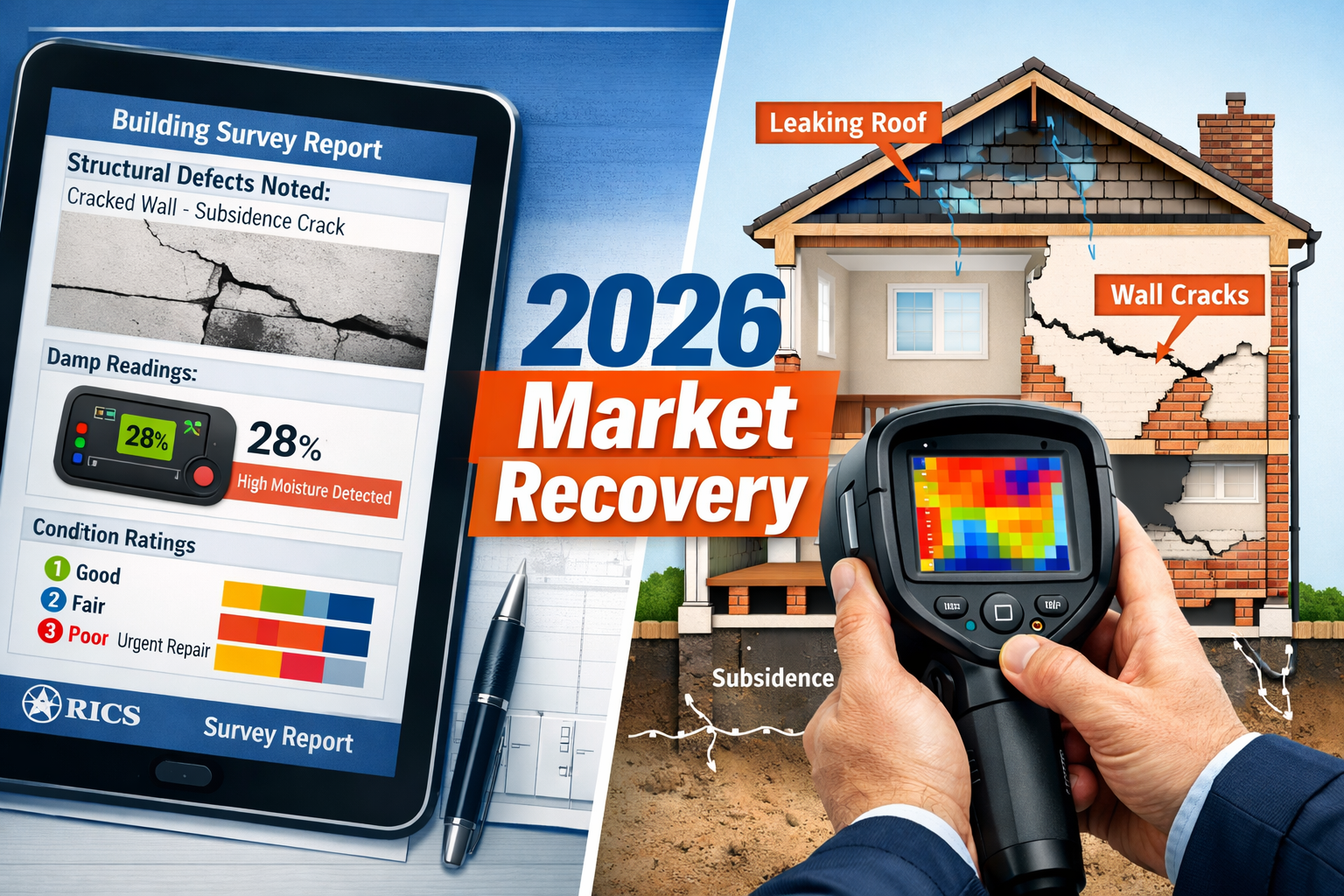
The January Surge and February Stabilisation
The UK housing market's performance in early 2026 has defied typical seasonal patterns. January's extraordinary 2.8% increase brought average asking prices to £368,031, representing the most significant January movement in Rightmove's quarter-century of data collection[1][3]. This surge reflected pent-up demand from late 2025 and improved mortgage market conditions.
However, February's near-static performance—with prices falling just £12 to £368,019—marked a notable departure from the typical 0.8% rise expected for this month[1][4]. This stabilisation suggests the market is finding equilibrium after January's exceptional performance, creating what industry experts describe as a "price-sensitive recovery phase."
Nationwide Building Society reported complementary data, showing 1% annual house price growth in January 2026, up from 0.6% in December, confirming the upward trajectory while acknowledging the measured pace of recovery[2].
Key Market Drivers in 2026
Several fundamental factors are shaping the current market dynamics:
📊 Improved Affordability Metrics
The most significant shift benefiting buyers comes from wage growth outpacing property price increases. Over the past three years, average wages have risen 17% while property prices increased merely 1.5%[1]. This dramatic improvement in affordability ratios means buyers can now access properties that were previously beyond their financial reach.
🏦 Enhanced Mortgage Accessibility
The Financial Conduct Authority's review of loan-to-income caps and increased flexibility in stress testing have fundamentally altered lending parameters. Lenders have become increasingly competitive, enabling typical buyers to borrow more while maintaining responsible lending standards[1][2]. This regulatory evolution has unlocked purchasing power for many previously marginalised buyers.
📈 Supply and Demand Rebalancing
With newly listed properties 11% higher than February 2024 and sales agreed up 9% year-on-year[1], the market is experiencing healthier supply-demand dynamics. This rebalancing gives buyers more choice and negotiating leverage—particularly when armed with comprehensive building survey findings.
2026 Price Forecasts and Market Outlook
Industry forecasters present a cautiously optimistic outlook for 2026:
| Forecaster | 2026 Growth Prediction | Key Assumptions |
|---|---|---|
| Hamptons | 2.5% by Q4 2026 | Continued mortgage rate stability |
| Nationwide | 2-4% growth | Wage growth supporting affordability |
| Savills | 2% (conservative) | Economic uncertainty factors |
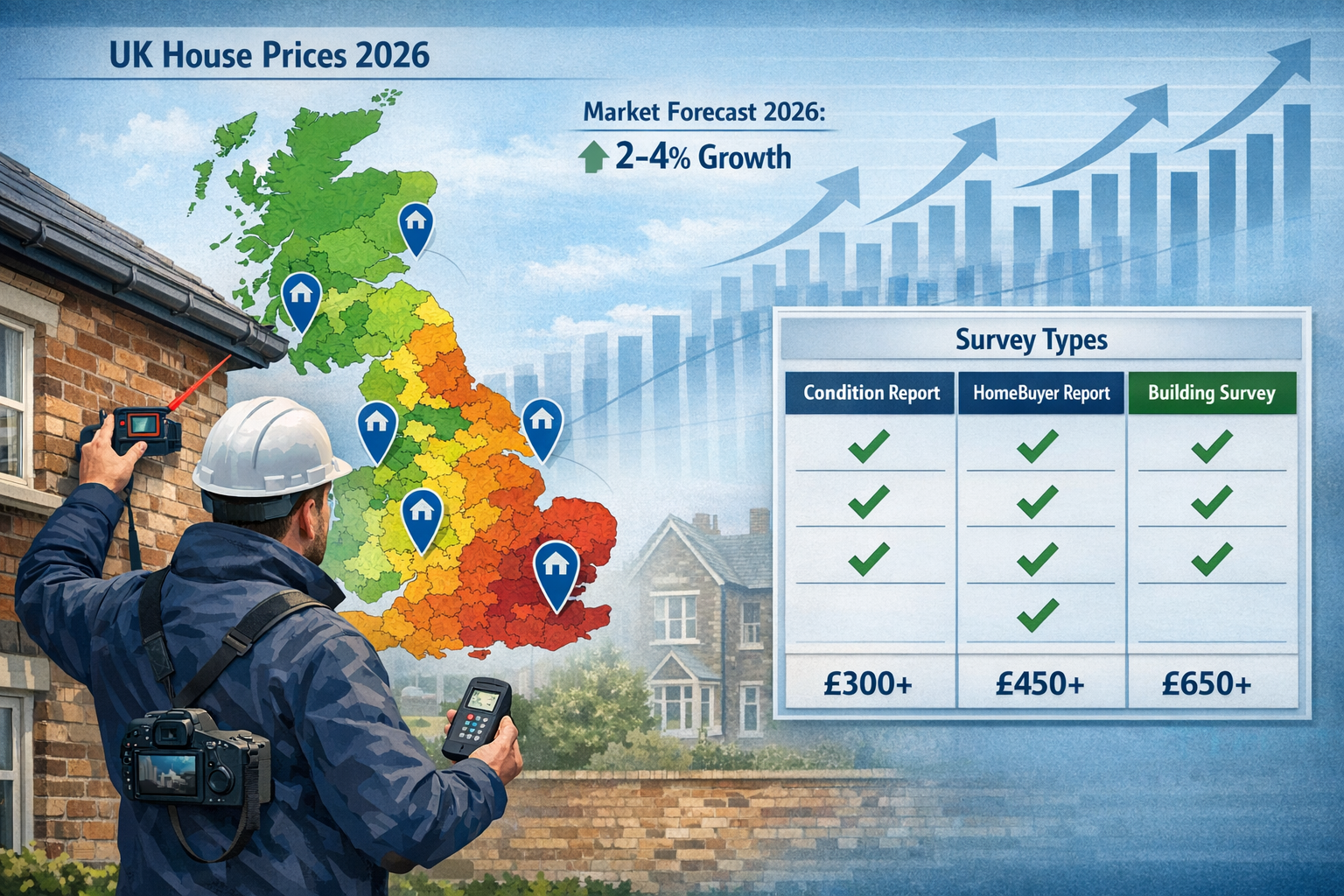
These projections suggest a moderate, sustainable recovery rather than rapid price escalation[3]. This environment favours buyers who conduct thorough due diligence, as the market lacks the urgency that often leads to rushed purchasing decisions without proper surveys.
Building Surveys in a Recovering Market: Essential Tools for Risk Mitigation
Why Building Surveys Matter More in Recovery Phases
During market recovery periods, building surveys become particularly valuable for several strategic reasons:
🔍 Price Sensitivity Amplifies Survey Impact
In a stabilising market where prices aren't rapidly escalating, buyers have greater negotiating power. A comprehensive building survey revealing significant defects provides concrete evidence for price renegotiation. Unlike boom periods where sellers might dismiss survey findings, the current environment makes vendors more receptive to justified price adjustments.
💰 Protecting Against Overpayment
With January's exceptional price surge potentially creating pockets of overvaluation, independent professional surveys help buyers determine whether asking prices reflect true property condition. This is particularly crucial given that the February stabilisation suggests the market is recalibrating after January's exuberance[1][4].
📋 Informed Decision-Making in Competitive Scenarios
While supply has increased 11% year-on-year[1], desirable properties still attract multiple interested parties. A pre-purchase building survey enables buyers to make informed offers that account for necessary repairs, avoiding post-purchase financial shocks that could undermine the benefits of current favourable affordability ratios.
Types of Building Surveys for Different Property Scenarios
Selecting the appropriate survey type maximises value in the current market:
Level 1: RICS Condition Report
Best suited for newer properties (built within the last 20 years) in good condition. This basic survey provides a traffic light rating system for key elements but offers limited detail on defects. In the 2026 recovering market, this option suits buyers purchasing modern builds where structural concerns are minimal.
Level 2: RICS HomeBuyer Report
The most popular choice for conventional properties in reasonable condition, this survey balances cost and comprehensiveness. It identifies visible defects, provides market valuation, and highlights urgent repairs. For buyers navigating the current market recovery, this represents excellent value for standard Victorian, Edwardian, and modern properties. Learn more about choosing the right survey type.
Level 3: RICS Building Survey (Full Structural Survey)
The most comprehensive option, essential for older properties (pre-1900), buildings with visible defects, or those requiring renovation. Given the current market's price sensitivity, this detailed survey provides maximum negotiating leverage by identifying all defects, from minor maintenance issues to major structural concerns.
Specialist Surveys
In certain circumstances, additional specific defect surveys may be warranted, including:
- Damp and timber surveys for properties showing moisture issues
- Structural engineering reports for subsidence or movement concerns
- Drainage surveys for older properties with ageing infrastructure
- Monitoring surveys for tracking crack progression over time
Key Areas Building Surveys Examine in 2026
Professional building surveys assess critical property elements that directly impact value and safety:
🏠 Structural Integrity
Surveyors examine foundations, walls, floors, and load-bearing elements for signs of movement, subsidence, or structural weakness. In the UK's ageing housing stock, these issues are surprisingly common and can represent five-figure repair costs.
🌧️ Roof Condition and Weatherproofing
The roof represents one of the most expensive replacement items in any property. Surveys assess roof covering condition, flashing, guttering, and potential water ingress points. For buyers in areas like Wimbledon and surrounding London boroughs, checking the roof condition is particularly crucial given the prevalence of period properties with original or aged roof coverings.
💧 Damp, Condensation, and Moisture Issues
Moisture-related problems affect property value, habitability, and health. Surveyors use specialised equipment to detect rising damp, penetrating damp, and condensation issues that may not be immediately visible during casual viewings.
🔌 Services and Utilities
While building surveys don't include full electrical or plumbing testing, surveyors assess the apparent age and condition of visible services, flagging potential upgrade requirements that could represent significant additional costs.
🏗️ Extensions and Alterations
Surveyors identify unauthorised alterations, poor-quality extensions, or work that may not comply with Building Regulations. In the current market, discovering such issues before completion can save buyers from expensive remediation or potential legal complications.
Capturing Opportunities: Strategic Use of Building Surveys in 2026
Leveraging Survey Findings for Price Negotiation
The current market stabilisation creates ideal conditions for effective price renegotiation based on survey findings. Here's how to maximise this opportunity:
📊 Quantifying Defects into Financial Terms
Professional surveyors often provide repair cost estimates for identified defects. In the price-sensitive 2026 market, presenting vendors with documented evidence of necessary repairs—backed by professional estimates—creates compelling grounds for price reduction.
For example, if a survey reveals roof repairs costing £15,000, subsidence monitoring requirements, and outdated electrical systems requiring £8,000 in upgrades, buyers have concrete justification for requesting a £23,000+ price reduction or requesting the vendor address these issues before completion.
🤝 Understanding When to Renegotiate
Not all survey findings warrant renegotiation. Strategic buyers focus on:
- Unexpected major defects not apparent during viewings
- Safety-critical issues requiring immediate attention
- Structural problems affecting property value or insurability
- Regulatory compliance failures requiring costly remediation
Minor maintenance items or issues that were visible during viewings typically don't provide strong renegotiation grounds. Learn more about renegotiating after poor survey results.
💼 Presenting Survey Findings Effectively
Successful renegotiation requires diplomatic presentation:
- Provide the full survey report to the vendor's agent
- Highlight specific defects with associated cost estimates
- Propose reasonable solutions: price reduction, vendor repairs, or retention of funds
- Maintain perspective: focus on significant issues rather than minor cosmetic items
- Be prepared to walk away if critical defects make the property unviable
In the current market, where supply has increased 11%[1], buyers have more alternatives if negotiations fail, strengthening their position.
Timing Your Building Survey in the 2026 Market
Strategic timing maximises survey value:
Early Survey Approach
Some buyers commission surveys before making formal offers, particularly in competitive scenarios. This approach:
- ✅ Enables informed offer pricing accounting for defects
- ✅ Demonstrates serious intent to vendors
- ✅ Accelerates transaction timelines
- ❌ Requires upfront investment without purchase certainty
Post-Offer, Subject-to-Survey Approach
The traditional approach involves making offers "subject to survey," then commissioning the survey after acceptance:
- ✅ Avoids wasted survey costs on unsuccessful offers
- ✅ Provides renegotiation opportunity based on findings
- ✅ Standard practice accepted by most vendors
- ❌ May delay transaction timelines
In the 2026 market, where competition remains present but less frenzied than boom periods, the post-offer approach typically provides optimal balance between cost management and due diligence.
Preparing for Your Building Survey
Maximising survey value requires proper preparation. Review our guide on what to do before an RICS home survey and consider these steps:
📝 Pre-Survey Actions
- Research the property's history: planning applications, previous sales, flood risk
- Identify specific concerns: areas you noticed during viewings requiring particular attention
- Ensure property access: arrange with vendors for surveyor access to all areas including lofts, basements, and outbuildings
- Gather available documentation: building warranties, guarantees for previous work, planning permissions
🔍 Communicating with Your Surveyor
Professional surveyors benefit from advance information about your concerns. Inform them about:
- Visible cracks, damp patches, or structural concerns you've noticed
- Plans for renovation or extension requiring structural assessment
- Specific elements critical to your purchase decision
- Any vendor disclosures about previous issues or repairs
📄 Understanding Survey Limitations
Building surveys assess visible and accessible elements. They typically don't include:
- Areas concealed by furniture, floor coverings, or wall finishes
- Specialist testing (electrical certification, gas safety, drainage CCTV)
- Invasive investigation requiring property alteration
- Future maintenance predictions beyond observable evidence
Understanding these limitations helps set realistic expectations and identifies when additional specialist surveys may be warranted.
Regional Opportunities Across the UK in 2026

London and Southeast Market Dynamics
The capital and surrounding areas present unique opportunities in the 2026 recovery:
Greater London Boroughs
Different London areas are experiencing varied recovery trajectories. Professional building surveys are particularly valuable across locations including:
- Wimbledon and Wandsworth – Period properties requiring thorough structural assessment
- Richmond and Kingston – High-value properties where survey findings significantly impact negotiations
- Chelsea and Westminster – Premium properties requiring detailed condition assessment
- Croydon and Bromley – Diverse housing stock from Victorian terraces to modern developments
Southeast Commuter Belt
Areas within commuting distance of London continue attracting buyers benefiting from improved affordability ratios. Building surveys in locations like Chelmsford help buyers assess properties in areas experiencing sustained demand.
Understanding Local Market Nuances
Regional variations in the 2026 recovery require localised expertise:
📍 Area-Specific Building Characteristics
Different regions present characteristic building issues:
- Victorian/Edwardian terraces: Common in inner London areas, prone to subsidence, damp, and original service infrastructure requiring upgrades
- 1930s semi-detached: Prevalent in outer London and suburbs, often featuring cavity wall tie corrosion and roof covering deterioration
- Post-war construction: May include non-traditional construction methods requiring specialist assessment
- Modern developments: Potential building regulation compliance issues or defects still under warranty
🏘️ Local Market Recovery Rates
While national figures show stabilisation, micro-markets vary considerably. Some areas continue experiencing strong price growth while others remain subdued. Building surveys provide consistent due diligence regardless of local price dynamics, protecting buyers from overpaying in inflated micro-markets or identifying bargains in slower-recovering areas.
Professional Building Surveyor Selection in 2026
Choosing the Right Surveyor for Market Conditions
The quality of your building survey depends entirely on surveyor expertise and independence:
🎓 RICS Chartered Status
Always engage Royal Institution of Chartered Surveyors (RICS) qualified professionals. RICS members:
- Maintain professional indemnity insurance protecting clients
- Adhere to strict ethical and professional standards
- Provide surveys following standardised RICS formats
- Face professional accountability for survey quality
🏠 Local Market Knowledge
Surveyors with extensive local experience understand area-specific building characteristics, common defects in local housing stock, and regional construction methods. This expertise enhances survey quality and relevance.
🔍 Independence and Objectivity
Never use surveyors recommended by estate agents or vendors, as this creates potential conflicts of interest. Independent surveyors provide unbiased assessments serving only the buyer's interests.
💬 Communication and Accessibility
Select surveyors who:
- Explain findings in clear, accessible language
- Remain available for post-survey questions
- Provide detailed written reports complementing verbal summaries
- Offer guidance on next steps based on findings
Understanding Survey Costs in the 2026 Market
Building survey costs vary based on property value, size, location, and survey type:
| Survey Type | Typical Cost Range | Best Suited For |
|---|---|---|
| RICS Condition Report | £300-£500 | Modern properties, good condition |
| RICS HomeBuyer Report | £400-£900 | Standard properties, conventional construction |
| RICS Building Survey | £600-£1,500+ | Older properties, complex buildings, renovation projects |
| Specialist Defect Surveys | £200-£800 | Specific concerns (damp, subsidence, drainage) |
While survey costs represent additional upfront expenditure, they provide exceptional value by:
- Identifying defects enabling price renegotiation often exceeding survey costs many times over
- Preventing purchase of properties with critical undisclosed defects
- Providing accurate budgeting information for necessary repairs
- Offering peace of mind supporting confident purchase decisions
In the current market where the average property costs £368,019[1][4], a £600-£1,000 survey investment represents just 0.16-0.27% of purchase price—minimal insurance against potentially catastrophic undiscovered defects.
Red Flags: When Surveys Reveal Deal-Breakers
Certain survey findings should prompt serious reconsideration of property purchases:
🚨 Critical Structural Issues
- Active subsidence requiring underpinning (£10,000-£50,000+ remediation costs)
- Major structural movement threatening building stability
- Failed structural alterations requiring extensive remediation
- Serious foundation defects
⚠️ Severe Damp and Timber Decay
- Extensive dry rot requiring major structural timber replacement
- Pervasive rising or penetrating damp affecting large areas
- Failed or absent damp-proof courses throughout the property
🏗️ Major Building Regulation Violations
- Unauthorised structural alterations requiring retrospective consent
- Dangerous electrical or gas installations requiring immediate attention
- Extensions or conversions without necessary approvals
🏚️ Properties Beyond Economic Repair
Some properties require repair costs exceeding their post-repair value. Professional surveyors can identify these scenarios, protecting buyers from financially unviable purchases.
When surveys reveal such issues, buyers face critical decisions: negotiate substantial price reductions accounting for full remediation costs, request vendor resolution before completion, or withdraw from the purchase entirely.
Future-Proofing Property Investments Through Comprehensive Surveys
Long-Term Value Protection
Building surveys provide benefits extending well beyond the purchase transaction:
📈 Maintenance Planning
Comprehensive surveys identify not just immediate defects but also elements approaching the end of their serviceable life. This information enables buyers to:
- Budget for upcoming major expenditures (roof replacement, boiler renewal, external redecoration)
- Prioritise maintenance activities preventing minor issues escalating
- Plan renovation projects with full knowledge of existing conditions
🏡 Insurance and Warranty Considerations
Survey findings affect property insurance:
- Disclosed subsidence or structural movement may require specialist insurance
- Identified defects must be disclosed to insurers to maintain policy validity
- Survey documentation supports insurance claims for pre-existing conditions
💷 Resale Value Protection
Properties purchased with thorough survey awareness enable informed renovation and maintenance decisions that protect and enhance resale value. Understanding a property's condition baseline helps owners track deterioration and address issues promptly.
Environmental and Energy Efficiency Considerations
Modern building surveys increasingly incorporate sustainability assessments:
🌱 Energy Performance
While not replacing formal Energy Performance Certificates (EPCs), building surveys can identify:
- Insulation deficiencies in walls, roofs, and floors
- Inefficient heating systems requiring upgrade
- Single-glazed windows reducing thermal performance
- Opportunities for energy efficiency improvements
Given rising energy costs and increasing environmental awareness, these considerations affect both running costs and future marketability.
🌧️ Climate Resilience
The 2026 market increasingly values climate-resilient properties. Surveys assess:
- Flood risk mitigation measures
- Drainage adequacy for increasingly intense rainfall events
- Thermal performance for both cold winters and warming summers
- Sustainable materials and construction methods
Technology Integration in Modern Building Surveys
Contemporary building surveys leverage advanced technology enhancing accuracy and detail:
📸 Thermal Imaging
Infrared cameras detect:
- Hidden moisture ingress not visible to naked eye inspection
- Insulation deficiencies and thermal bridging
- Air leakage points reducing energy efficiency
🚁 Drone Surveys
Unmanned aerial vehicles enable detailed roof and chimney inspection without expensive scaffolding or access equipment, particularly valuable for tall or complex buildings.
📱 Digital Reporting
Modern surveyors provide digital reports featuring:
- Annotated photographs clearly showing defects
- Interactive floor plans highlighting issue locations
- Hyperlinked navigation for easy reference
- Digital delivery enabling immediate access
These technological enhancements improve survey quality while maintaining cost-effectiveness, providing better value in the competitive 2026 market.
Maximising Building Survey Value: Practical Action Steps
Before Commissioning Your Survey
1. Define Your Requirements
Assess your property and circumstances:
- Property age, type, and condition
- Your renovation intentions and technical knowledge
- Budget for survey costs
- Timeline constraints
2. Research and Select Your Surveyor
- Verify RICS membership and qualifications
- Check professional indemnity insurance coverage
- Read client testimonials and reviews
- Confirm local area expertise
- Clarify exactly what the survey includes and excludes
3. Prepare the Property
Coordinate with vendors to ensure:
- Full access to all areas including locked spaces
- Removal of stored items blocking inspection areas
- Access to service meters and controls
- Availability of property documentation
During the Survey Process
🔍 Attendance Considerations
While not mandatory, attending the survey offers benefits:
- Direct discussion of concerns with the surveyor
- Immediate clarification of findings
- Enhanced understanding of property condition
- Opportunity to ask questions in context
However, surveyors work more efficiently alone, so if attending, maintain appropriate distance and avoid disrupting the inspection process.
📞 Maintaining Communication
Stay accessible during the survey day for any access issues or urgent findings requiring immediate discussion.
After Receiving Your Survey Report
1. Review Thoroughly
Carefully read the entire report, noting:
- Condition ratings for each element
- Identified defects and their severity
- Recommended further investigations
- Repair cost estimates where provided
Download an example HomeBuyer report to understand typical report formats.
2. Seek Clarification
Professional surveyors expect follow-up questions. Contact your surveyor to discuss:
- Technical terms or findings requiring explanation
- Prioritisation of identified repairs
- Recommendations for specialist investigations
- Overall property suitability for your needs
3. Obtain Specialist Reports if Recommended
If the survey recommends further investigation, commission:
- Structural engineer reports for movement or subsidence
- Electrical condition reports for outdated wiring
- Drainage CCTV surveys for suspected drainage defects
- Damp specialist assessments for moisture issues
4. Make Informed Decisions
Armed with comprehensive information, decide whether to:
- Proceed as planned: Minor issues only, property suitable
- Renegotiate price: Significant defects justifying price reduction
- Request vendor repairs: Critical issues requiring resolution before completion
- Withdraw from purchase: Fundamental defects making property unsuitable
Integrating Survey Findings into Your Purchase Strategy
💰 Financial Planning
Use survey findings to:
- Adjust your maximum offer accounting for necessary repairs
- Budget for immediate post-purchase works
- Plan medium-term maintenance expenditure
- Assess whether total costs (purchase + repairs) remain within budget
📋 Legal Considerations
Share relevant survey findings with your conveyancing solicitor, particularly:
- Unauthorised alterations requiring legal investigation
- Boundary or access issues requiring clarification
- Defects potentially indicating vendor misrepresentation
🏗️ Renovation Planning
For properties requiring renovation, survey findings inform:
- Project scope and priorities
- Structural constraints on planned alterations
- Existing defects requiring remediation during works
- Opportunities for improvement during renovation
Conclusion: Seizing the 2026 Market Opportunity Through Informed Decision-Making
The UK property market's stabilisation in 2026, following January's record-breaking price surge and February's subsequent levelling, creates a unique window of opportunity for informed buyers. With house prices holding steady at £368,019[1][4], improved affordability ratios resulting from wages outpacing property price growth by significant margins[1], and supply increases providing greater choice[1], the conditions favour buyers who approach purchases with thorough due diligence.
Building Surveys in a Recovering Market: Capturing Opportunities as UK House Prices Stabilise in 2026 represents more than just a prudent precaution—it's a strategic tool for maximising value in an evolving market landscape. Professional building surveys provide the critical intelligence needed to:
✅ Negotiate effectively in a price-sensitive environment where vendors are more receptive to justified adjustments
✅ Protect against overpayment by identifying defects that might otherwise remain hidden until after purchase
✅ Budget accurately for the true cost of property ownership including necessary repairs and maintenance
✅ Make confident decisions supported by independent professional assessment rather than emotional impulse
✅ Plan strategically for long-term property improvement and value enhancement
Your Next Steps
To capitalise on the current market recovery while protecting your investment:
1. Engage a qualified RICS chartered surveyor with local expertise and proven track record. Whether you're purchasing in Wimbledon, Kingston, or elsewhere across London and the Southeast, select professionals with specific area knowledge.
2. Commission the appropriate survey level matching your property type, age, and condition. Don't compromise on survey comprehensiveness to save modest costs that pale compared to potential undiscovered defects.
3. Use survey findings strategically to inform negotiations, ensuring your final purchase price reflects true property condition in the current market environment.
4. Plan beyond the purchase using survey insights to budget for maintenance, prioritise improvements, and protect your investment's long-term value.
The 2026 market recovery, with forecasts predicting 2-4% growth[3] and fundamentals supporting sustainable price appreciation, rewards buyers who combine market timing with thorough due diligence. As prices stabilise following January's exceptional performance, the opportunity exists to secure properties at fair values while leveraging professional surveys to ensure those values reflect genuine condition.
In a recovering market characterised by improved buyer affordability, increased supply, and more balanced negotiating dynamics, comprehensive building surveys transform from optional extras into essential tools for capturing opportunities while mitigating risks. The modest investment in professional survey services provides returns many times over through informed negotiations, accurate budgeting, and confident decision-making.
The 2026 market recovery is here—ensure you're positioned to capitalise on it through informed, survey-supported property purchases that protect your interests and maximise your investment potential.
References
[1] February House Prices Fall Uk B2920773 – https://www.the-independent.com/news/uk/home-news/february-house-prices-fall-uk-b2920773.html
[2] House Price Growth Recovery 2026 B1269197 – https://www.standard.co.uk/homesandproperty/property-news/house-price-growth-recovery-2026-b1269197.html
[3] House Prices – https://moneyweek.com/investments/house-prices/house-prices
[4] Uk House Prices Hold Steady In February After Bumper Start To 2026 – https://global.morningstar.com/en-gb/news/alliance-news/1771200097476297000/uk-house-prices-hold-steady-in-february-after-bumper-start-to-2026
[5] Uk House Prices Stabilize In February 2026 Despite Supply Reaching An 11 Year High – https://elbatrawy.io/news/uk-house-prices-stabilize-in-february-2026-despite-supply-reaching-an-11-year-high/