
The landscape of property purchasing has fundamentally shifted. Following devastating residential fires across Europe and the implementation of sweeping regulatory reforms, fire safety and cladding compliance have become non-negotiable considerations for anyone buying property in 2026. What was once a peripheral concern during building surveys has now emerged as a critical factor that can make or break a property transaction—affecting everything from mortgage approval to resale value and, most importantly, occupant safety.
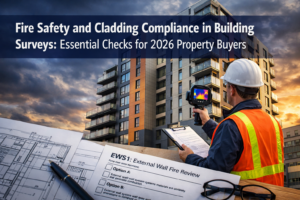
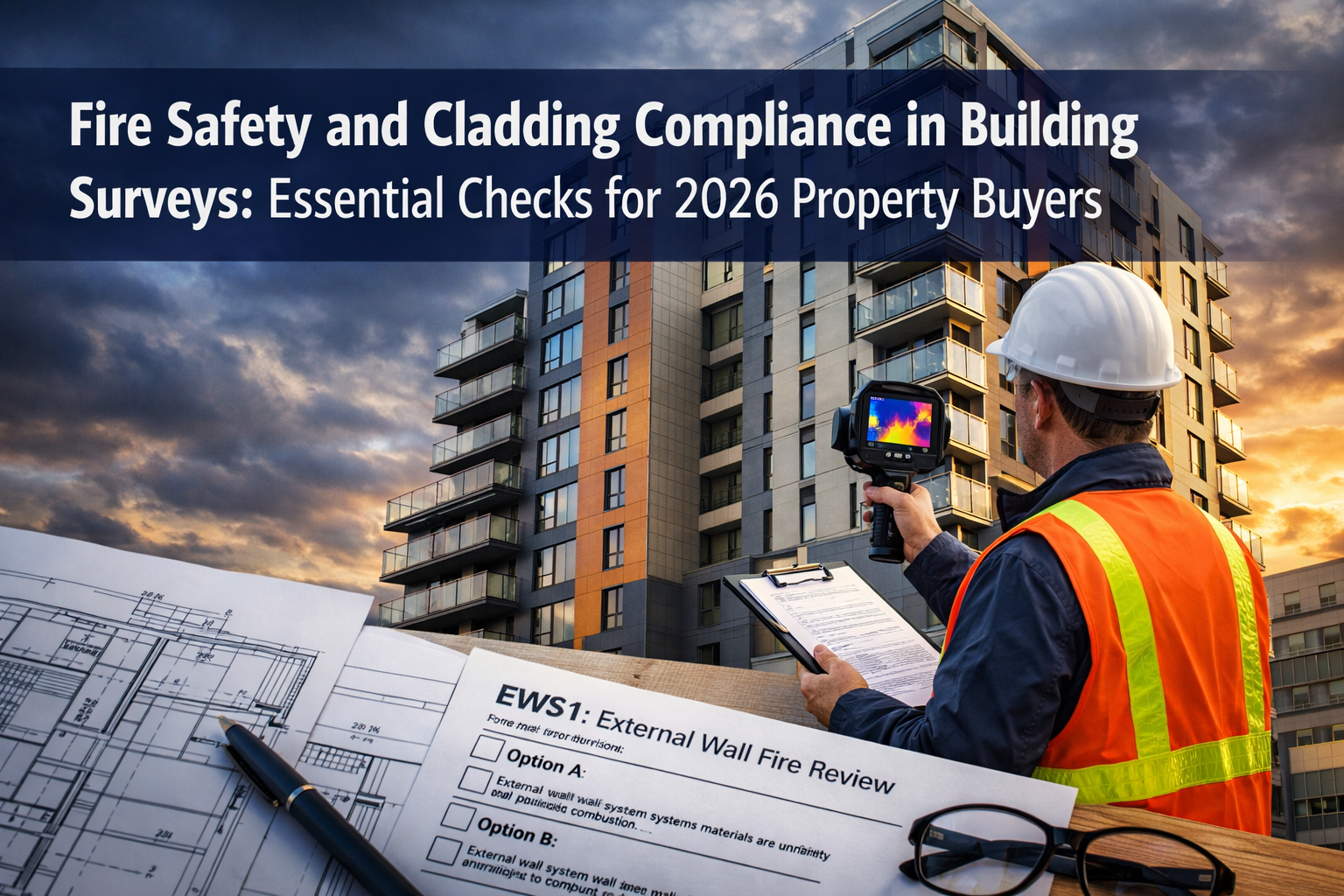
Understanding Fire Safety and Cladding Compliance in Building Surveys: Essential Checks for 2026 Property Buyers is no longer optional knowledge for the informed buyer. With the European cladding fire-safety standard undergoing its most significant overhaul in decades and new UK regulations mandating enhanced fire protection measures, property buyers must navigate an increasingly complex compliance landscape. Building surveyors now conduct structured risk assessments specifically designed to identify and document high-risk features before purchase, ensuring buyers understand exactly what they're acquiring.
This comprehensive guide explores how recent regulatory changes reshape the property buying process, what building surveyors examine during fire safety assessments, and the essential compliance checks every 2026 property buyer must understand before making one of life's largest financial commitments.
Key Takeaways
- New European testing standards effective 31 January 2026 introduce objective temperature-based criteria (270°C threshold) replacing subjective visual assessments for cladding fire safety[2][3]
- Mandatory dual staircases required for all new residential buildings exceeding 18 metres by 30 September 2026, fundamentally changing evacuation safety standards[4]
- External Wall System (EWS) surveys provide critical documentation through intrusive testing and laboratory analysis, producing EWS1 forms essential for mortgage approval on high-risk buildings[4]
- Building Safety Regulator targets aim for 40% assessment completion of High-Risk Buildings by April 2026, with enforcement action against non-compliant properties[5]
- Sprinkler system mandates now apply to all new residential buildings over 11 metres and all new care homes under updated Approved Document B[4]
Understanding the 2026 Regulatory Landscape for Fire Safety and Cladding
The Evolution of European Cladding Standards
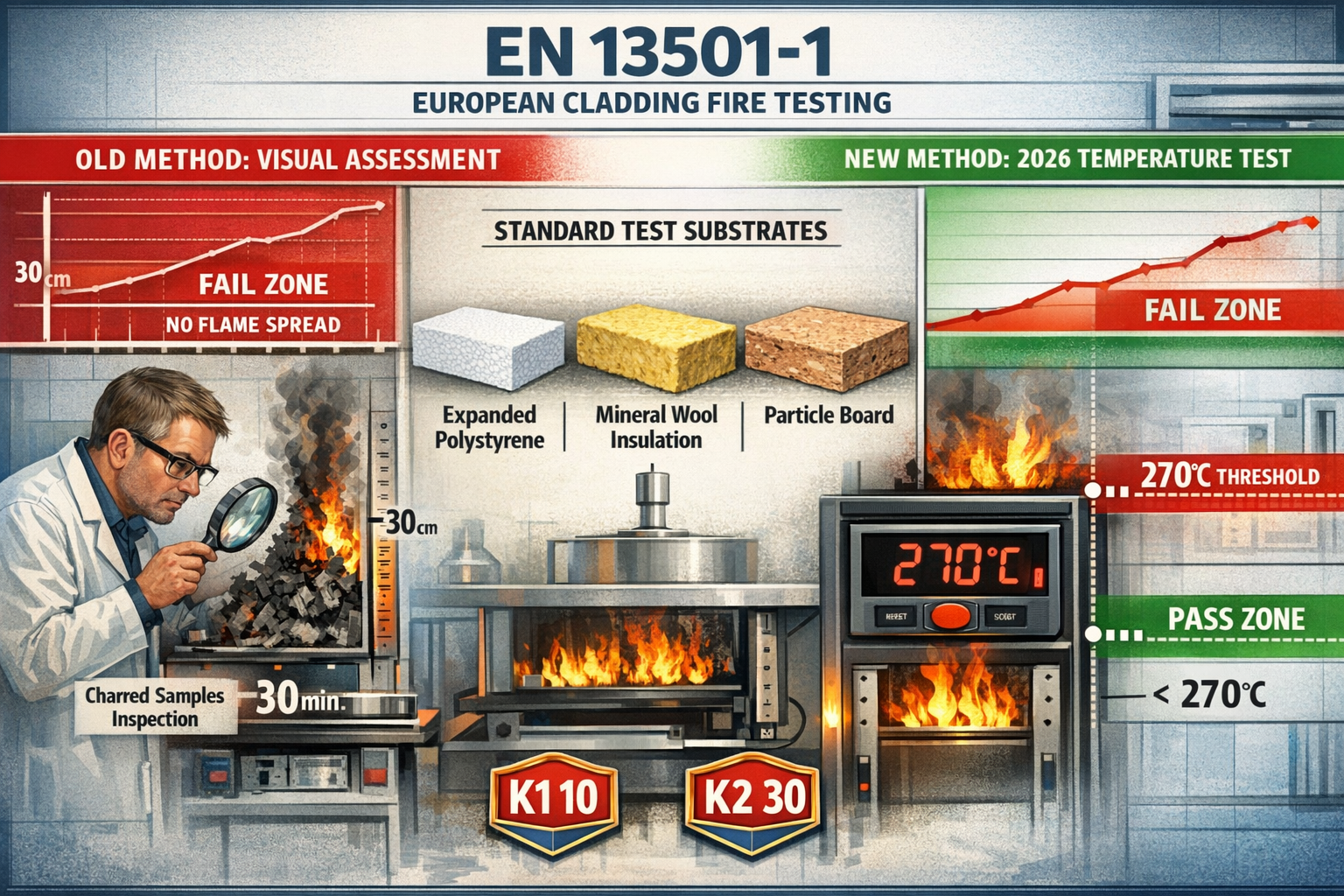
The tragic loss of approximately 5,000 lives annually from residential fires across Europe has driven unprecedented regulatory reform[3]. The revised European standard for cladding fire testing (EN 13501-1), effective 31 January 2026, represents the culmination of seven years of intensive standard revision by the DBI – The Danish Institute of Fire and Security[2].
The most transformative change eliminates the subjective nature of previous testing methods. Where laboratories once relied on visual assessments of charred materials—leading to inconsistent results and borderline case disagreements—the new standard introduces an objective temperature-based approach[2][3]. Materials that cause recorded temperatures to exceed 270°C automatically fail the test, removing interpretation variability between testing facilities.
This scientific rigor extends to testing procedures themselves. Three standardized test substrates are now mandatory:
- Expanded polystyrene (EPS) – considered the worst-case scenario
- Low-density insulation materials
- Particleboard[2][3]
Remarkably, a single EPS test now covers multiple substrate types including cellulose, seagrass, PIR (polyisocyanurate), and PUR (polyurethane), significantly reducing testing duplication and associated costs for manufacturers[2].
Updated Classification Systems and Documentation Requirements
The cladding classification system has undergone substantial refinement. K1 10 and K2 30 classifications—indicating 10 and 30 minutes of fire protection respectively—now operate under revised documentation rules specifically designed to prevent products being approved for unsuitable applications[2][3].
For property buyers, this means greater confidence that installed cladding systems have been appropriately matched to building requirements. When conducting a specific defect survey, chartered surveyors can now reference more robust classification documentation.
Manufacturers gain increased flexibility under the new standards. Switching between suppliers is now permitted if materials are of the same type with equivalent properties—a significant departure from previous requirements where any change in thickness, density, or manufacturer necessitated entirely new testing[2]. This flexibility should ultimately benefit property owners through increased competition and potentially lower remediation costs.
UK-Specific Regulatory Requirements for 2026
Beyond European standards, the United Kingdom has implemented additional fire safety mandates that directly impact property buyers:
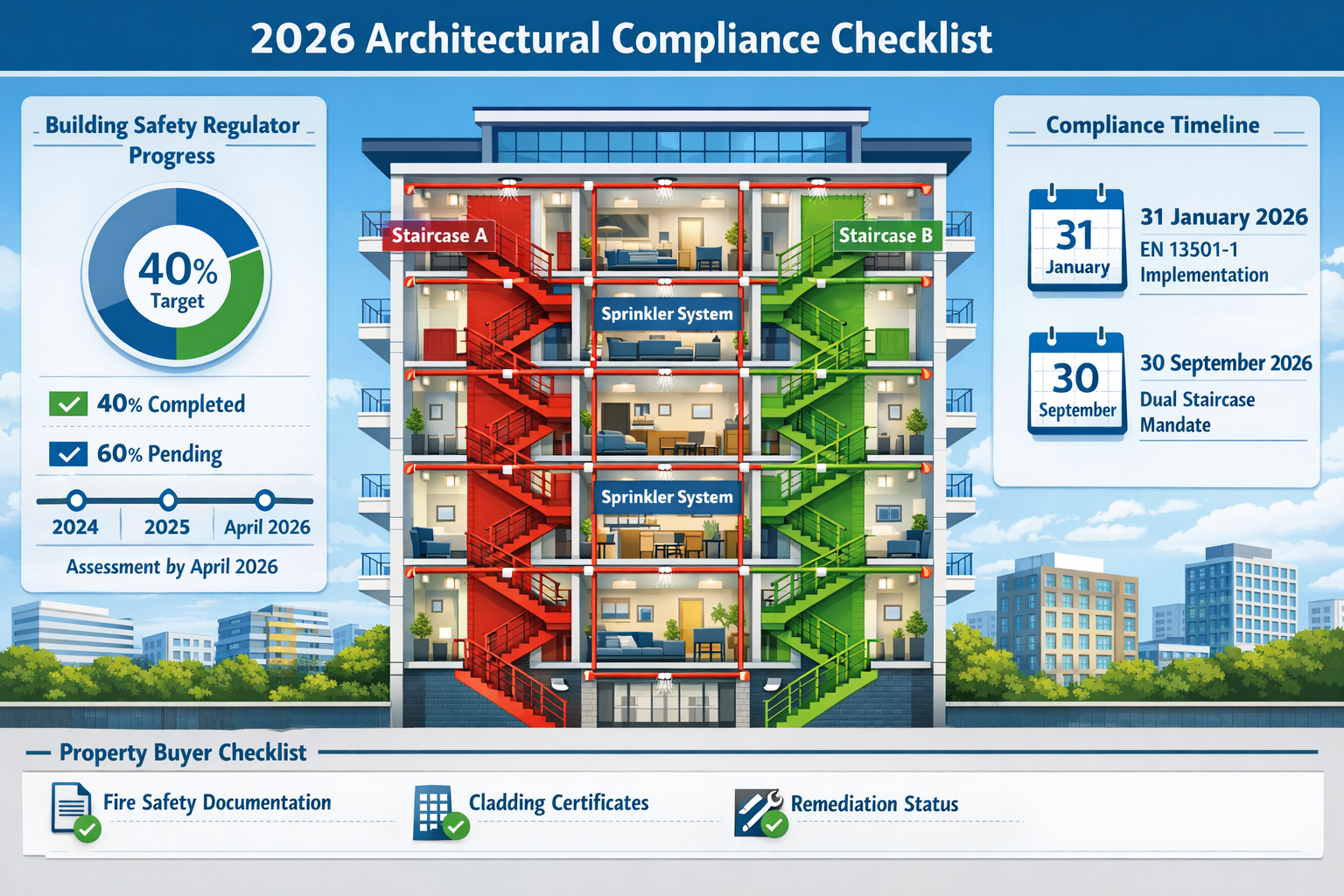
Mandatory Second Staircases: All new residential buildings exceeding 18 metres must include at least two separate staircases by 30 September 2026[4]. This requirement fundamentally alters building design and evacuation strategies, providing redundant escape routes in emergencies.
Universal Sprinkler Systems: Approved Document B (Fire Safety) now requires sprinkler systems in all new residential buildings over 11 metres and in all new care homes[4]. For buyers considering new-build properties, this represents enhanced protection but also increased maintenance responsibilities.
Building Safety Regulator Enforcement Timeline: By April 2026, the Building Safety Regulator (BSR) aims to assess approximately 40% of occupied High-Risk Buildings (HRBs), representing 65% of residential dwellings[5]. Any remediation work on dangerous cladding must be completed or underway by this date, with enforcement action planned against non-compliant properties.
Fire Safety and Cladding Compliance in Building Surveys: What Surveyors Examine
The External Wall System (EWS) Survey Process
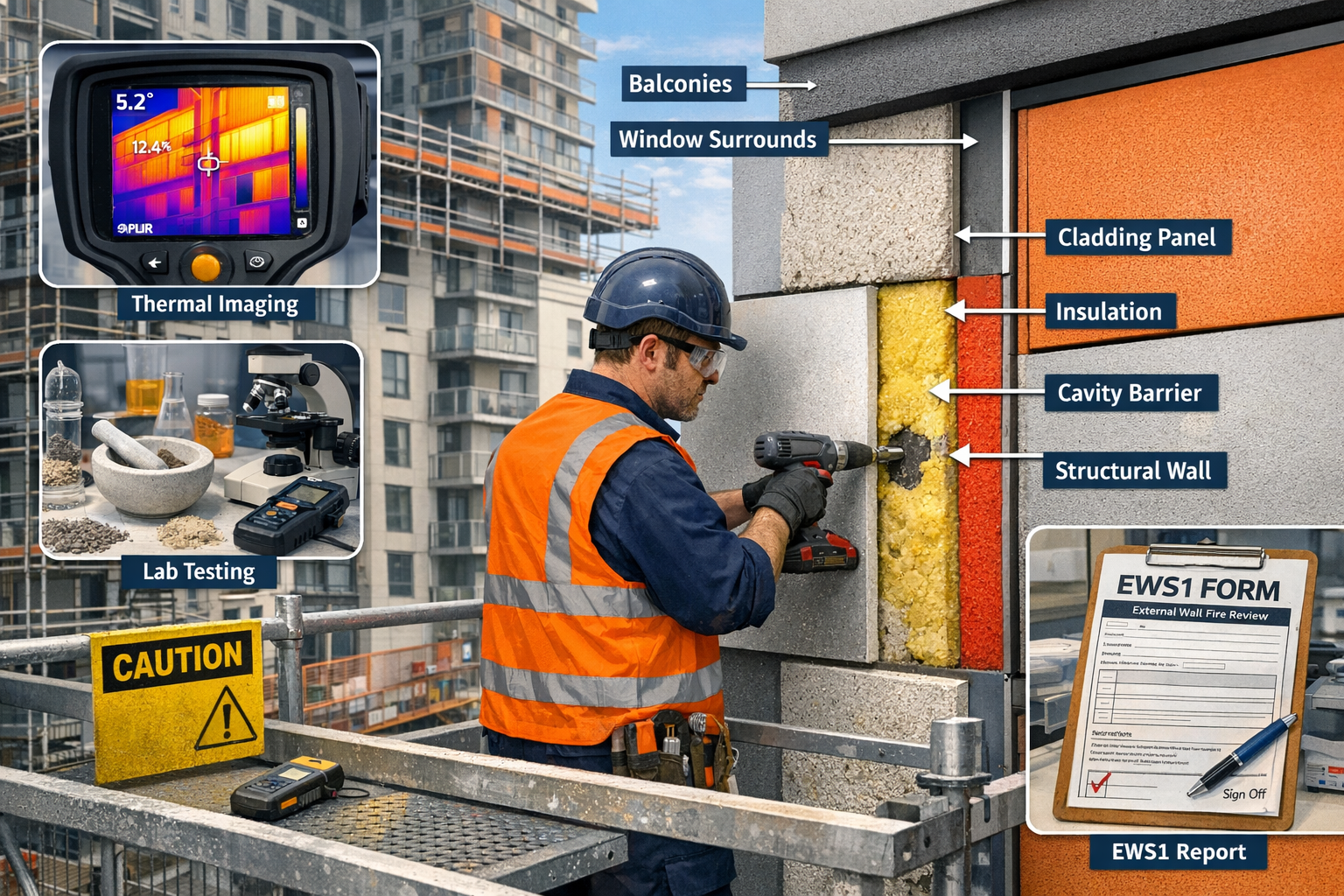
The External Wall System (EWS) survey has emerged as the gold standard for fire safety assessment in building surveys. These specialized investigations go far beyond visual inspection, employing intrusive testing methods and laboratory analysis to provide definitive answers about cladding safety[4].
A comprehensive EWS survey examines:
🔍 Exterior wall construction – Complete analysis of all layers from outer cladding to structural wall
🔍 Cladding materials – Identification of material composition, thickness, and fire performance ratings
🔍 Balcony construction – Assessment of balcony attachments, materials, and fire spread potential
🔍 Insulation systems – Laboratory testing of insulation material combustibility
🔍 Cavity barriers – Verification of proper installation and fire-stopping effectiveness
🔍 Window surrounds – Examination of potential fire spread pathways around openings
The survey culminates in EWS1 form documentation—a critical document for mortgage lenders when assessing high-risk buildings. Without this certification, many lenders refuse to provide financing, effectively rendering properties unsaleable until remediation work is completed.
When choosing between different survey levels, buyers of properties in buildings over 18 metres should specifically request EWS assessment as part of their due diligence process.
Intrusive Testing Methodologies
Unlike standard visual inspections, fire safety surveys often require intrusive testing to accurately assess cladding systems. This involves:
Material Sampling: Small samples of cladding and insulation materials are extracted and sent to accredited laboratories for combustibility testing. These tests determine whether materials meet current fire safety standards or pose unacceptable risks.
Thermal Imaging: Infrared cameras identify hidden defects, moisture ingress, and insulation gaps that could compromise fire performance. Temperature differentials reveal construction inconsistencies not visible to the naked eye.
Cavity Inspection: Endoscopic cameras inserted into wall cavities verify the presence and proper installation of cavity barriers—critical components that prevent vertical fire spread within wall systems.
Documentation Review: Surveyors examine building control certificates, manufacturer specifications, and installation records to verify compliance with building regulations applicable at the time of construction.
For buyers considering properties requiring extensive evaluation, a building evaluation by chartered surveyors provides the comprehensive analysis necessary for informed decision-making.
Identifying High-Risk Features and Documentation
Professional surveyors maintain structured checklists to systematically identify high-risk features:
| Risk Category | Assessment Criteria | Documentation Required |
|---|---|---|
| Cladding Type | ACM (Aluminum Composite Material), HPL (High-Pressure Laminate), combustible materials | Material test certificates, fire performance ratings |
| Building Height | Measurement from ground to top occupied floor | Architectural drawings, building control approval |
| Escape Routes | Number of staircases, travel distances, emergency lighting | Fire safety strategy, evacuation plans |
| Fire Suppression | Sprinkler coverage, detection systems, alarm functionality | Maintenance records, commissioning certificates |
| Compartmentation | Fire doors, cavity barriers, fire-stopping quality | Installation certificates, inspection reports |
| Remediation Status | Ongoing works, planned improvements, funding arrangements | Building Safety Fund applications, contractor agreements |
This systematic approach ensures no critical safety element escapes scrutiny. Buyers receive detailed reports documenting findings, complete with photographic evidence and risk ratings for each identified concern.
Understanding the difference between Level 2 and Level 3 surveys helps buyers select the appropriate depth of investigation for their specific property type and risk profile.
Essential Compliance Checks for 2026 Property Buyers
Pre-Purchase Fire Safety Due Diligence
Before committing to a property purchase in 2026, buyers must conduct comprehensive fire safety due diligence that extends well beyond traditional survey requirements. This process should begin before making an offer and continue through to completion.
Initial Screening Questions:
✅ What cladding materials are present on the building exterior?
✅ Has an EWS1 form been completed, and what was the outcome?
✅ Are there any ongoing or planned remediation works?
✅ What fire safety measures are currently in place (sprinklers, alarms, etc.)?
✅ How many staircases serve the building, and what are the evacuation routes?
✅ Has the building been assessed by the Building Safety Regulator?
✅ Are there any outstanding enforcement notices or improvement requirements?
✅ What is the building's fire risk assessment rating?
Sellers have legal obligations to disclose known fire safety issues, but buyers should independently verify all claims. Relying solely on seller representations without professional verification can lead to catastrophic financial and safety consequences.
For properties in areas like Islington or Hackney, where high-rise residential buildings are common, these checks become particularly critical.
Mortgage and Insurance Implications
Fire safety compliance directly impacts two fundamental aspects of property ownership: mortgage availability and insurance coverage.
Mortgage Lending Restrictions:
Many mortgage lenders have implemented strict policies regarding properties in buildings with fire safety concerns. Without a satisfactory EWS1 form, lenders may:
- Refuse to provide financing entirely
- Offer reduced loan-to-value ratios (requiring larger deposits)
- Apply higher interest rates to reflect increased risk
- Require additional security or guarantees
This creates a cascading effect on property values. Buildings requiring remediation but lacking funding mechanisms often see dramatic price reductions—sometimes 30-50% below comparable properties with confirmed safety compliance.
Insurance Challenges:
Property insurance for buildings with identified fire safety defects has become increasingly difficult to obtain. Insurers may:
- Decline coverage completely
- Impose substantial premium increases
- Apply restrictive policy terms and exclusions
- Require evidence of interim safety measures (waking watches, enhanced detection systems)
The annual cost of waking watch services—where fire marshals patrol buildings 24/7 until remediation is complete—can exceed £10,000 per flat in some developments, creating unsustainable financial burdens for leaseholders.
"The combination of mortgage restrictions and insurance challenges can render properties effectively unsaleable until remediation is completed, trapping owners in buildings they cannot leave and cannot afford to maintain." – Building Safety Compliance Expert
Remediation Costs and Funding Mechanisms
Understanding potential remediation costs and available funding mechanisms is essential for 2026 property buyers evaluating buildings with fire safety concerns.
Typical Remediation Costs:
- Full cladding replacement: £30,000-£75,000 per flat (depending on building size)
- Cavity barrier installation: £5,000-£15,000 per flat
- Sprinkler system retrofitting: £10,000-£25,000 per flat
- Compartmentation improvements: £3,000-£8,000 per flat
- Interim safety measures: £1,000-£3,000 per flat annually
Available Funding Sources:
- Building Safety Fund: Government funding for buildings 11-18 metres with unsafe cladding (applications closed but works ongoing)
- Cladding Safety Scheme: Funding for buildings over 11 metres (specific eligibility criteria apply)
- Developer Remediation Contract: Major developers committed to fixing buildings they constructed
- Manufacturer Contributions: Some cladding manufacturers providing remediation funding
- Leaseholder Protections: Statutory caps on leaseholder contributions based on property value and building height
Buyers must obtain detailed information about:
- Whether funding applications have been submitted and their status
- What proportion of costs will be covered by external funding
- Expected leaseholder contributions and payment schedules
- Timeline for remediation completion
- Interim safety measures and their ongoing costs
When reviewing a condition survey report, specific attention should be paid to sections addressing fire safety compliance and associated financial implications.
Compliance Documentation Checklist
Property buyers should request and verify the following documentation before proceeding with purchase:
Essential Fire Safety Documents:
📋 EWS1 Form – External Wall System assessment certificate
📋 Fire Risk Assessment – Current FRA conducted by competent person
📋 Fire Safety Strategy – Building-specific evacuation and protection plan
📋 Building Control Certificates – Original approval documents
📋 Cladding Specifications – Material certificates and fire performance ratings
📋 Remediation Plans – Detailed scope of works if remediation required
📋 Funding Agreements – Confirmed funding sources and amounts
📋 Interim Safety Measures – Documentation of waking watch, enhanced alarms, etc.
📋 Building Safety Case – For High-Risk Buildings registered with BSR
📋 Accountable Person Registration – Confirmation of responsible entity under Building Safety Act
Absence of any critical documentation should trigger serious concerns and potentially delay or prevent purchase until issues are resolved.
The Role of Chartered Surveyors in Fire Safety Assessment
Professional Qualifications and Expertise Requirements
Not all surveyors possess the specialized knowledge required for comprehensive fire safety and cladding compliance assessment. In 2026, property buyers should specifically engage chartered surveyors with relevant qualifications and experience.
Essential Surveyor Credentials:
- RICS membership (Royal Institution of Chartered Surveyors)
- Fire safety specialist training or additional qualifications
- EWS assessment accreditation for high-risk building evaluations
- Building pathology expertise for identifying construction defects
- Current knowledge of 2026 regulatory changes and testing standards
The complexity of modern fire safety regulations means general practice surveyors may lack the specific expertise required for accurate assessment. Buyers should ask potential surveyors about:
- Number of fire safety assessments completed
- Familiarity with EN 13501-1 standards and 2026 changes
- Experience with EWS1 form completion
- Professional indemnity insurance coverage for fire safety advice
- Access to accredited testing laboratories for material analysis
For properties in specific locations like Lewisham or Bromley, engaging local surveyors with knowledge of regional building stock characteristics can provide additional value.
Structured Risk Assessment Methodologies
Professional surveyors employ systematic risk assessment frameworks specifically designed for fire safety evaluation. These methodologies ensure consistent, comprehensive analysis across all critical building elements.
The Fire Safety Risk Assessment Process:
Step 1: Building Information Gathering
Collection of architectural drawings, building control approvals, material specifications, and construction records to establish baseline understanding.
Step 2: Visual Inspection
Systematic examination of all accessible areas including common parts, external elevations, roof spaces, and plant rooms.
Step 3: Intrusive Investigation
Targeted sampling and testing of materials, cavity inspections, and verification of hidden construction elements.
Step 4: Laboratory Analysis
Submission of material samples to accredited laboratories for combustibility testing and fire performance verification.
Step 5: Compliance Verification
Comparison of findings against current building regulations, fire safety standards, and manufacturer specifications.
Step 6: Risk Rating
Assignment of risk levels (low, medium, high, critical) to identified concerns based on severity and probability of fire spread.
Step 7: Recommendations Development
Preparation of prioritized remediation recommendations with cost estimates and urgency classifications.
Step 8: Report Production
Compilation of comprehensive written report with photographic evidence, test results, and executive summary.
This structured approach ensures no critical element escapes scrutiny while providing buyers with actionable information for decision-making.
Interpreting Survey Reports and Recommendations
Understanding how to interpret fire safety survey findings is crucial for making informed purchase decisions. Professional survey reports should clearly communicate risks without unnecessary technical jargon.
Report Structure Elements:
Executive Summary: High-level overview of critical findings, overall risk rating, and primary recommendations. This section should be comprehensible to non-technical readers and highlight deal-breaking issues immediately.
Detailed Findings: Comprehensive description of each identified concern, organized by building element (cladding, insulation, compartmentation, etc.). Each finding should include:
- Precise location and extent
- Photographic evidence
- Technical explanation of the concern
- Relevant regulatory standards
- Risk severity rating
Testing Results: Laboratory analysis outcomes for material samples, including combustibility classifications, fire performance ratings, and compliance status against current standards.
Compliance Assessment: Explicit statement of whether the building meets current fire safety regulations, with specific reference to 2026 requirements including the revised EN 13501-1 standard[2][3].
Remediation Recommendations: Prioritized list of necessary works, estimated costs, and suggested timelines. Recommendations should distinguish between:
- Urgent safety-critical works requiring immediate attention
- Regulatory compliance works necessary to meet current standards
- Best practice improvements that enhance safety beyond minimum requirements
Financial Implications: Clear explanation of potential costs, available funding mechanisms, and likely leaseholder contributions.
When reviewing survey reports, buyers should pay particular attention to any findings classified as "high risk" or "critical" and seek clarification on any technical terms or recommendations that are unclear.
For buyers needing guidance on choosing the right survey type, understanding these report components helps match survey depth to property risk profile.
High-Risk Buildings: Special Considerations for 2026 Buyers
Defining High-Risk Buildings Under Current Legislation
The Building Safety Act 2022 introduced specific legal definitions for High-Risk Buildings (HRBs) that trigger enhanced regulatory oversight and compliance requirements. Understanding whether a prospective purchase qualifies as an HRB is fundamental to assessing regulatory obligations.
High-Risk Building Criteria:
A building qualifies as high-risk if it:
- Contains at least two residential units, AND
- Is at least 18 metres in height OR has at least seven storeys
This definition captures approximately 12,500 buildings across England, housing hundreds of thousands of residents[5].
Additional Regulatory Requirements for HRBs:
🏢 Registration with Building Safety Regulator – Mandatory registration and ongoing compliance monitoring
🏢 Accountable Person designation – Legal responsibility assigned to building owner or manager
🏢 Building Safety Case – Comprehensive documentation of all safety measures and risk assessments
🏢 Mandatory Occurrence Reporting – Requirement to report safety incidents to BSR
🏢 Resident Engagement – Formal mechanisms for resident consultation and information sharing
🏢 Enhanced Inspection Regime – Regular BSR inspections with enforcement powers
For buyers considering properties in HRBs, these requirements create ongoing compliance obligations that extend far beyond the initial purchase. The Building Safety Regulator's strategic plan targets 40% assessment completion by April 2026[5], meaning many buildings will undergo intensive regulatory scrutiny during this period.
Rebuild Assessment and Compliance Costs
A frequently misunderstood aspect of high-risk building ownership concerns rebuild assessment and the compliance implications for insurance and mortgage purposes[4].
Common Misconceptions:
❌ Myth: Rebuild assessments only consider construction costs
✅ Reality: Modern rebuild assessments must account for current regulatory compliance, potentially requiring design modifications that significantly increase costs
❌ Myth: Original building specifications can be used for rebuild estimates
✅ Reality: Any rebuild must comply with 2026 standards, including dual staircases, sprinkler systems, and compliant cladding materials[4]
Rebuild Cost Implications:
When a high-risk building requires rebuild assessment for insurance purposes, the calculation must include:
- Demolition and site clearance of existing structure
- Design modifications to meet current regulations (additional staircases, sprinkler systems)
- Compliant materials meeting revised EN 13501-1 standards
- Enhanced fire safety features required under Approved Document B
- Professional fees for architects, engineers, and regulatory approval
- Temporary accommodation for residents during rebuild
These requirements can increase rebuild costs by 30-60% compared to simple like-for-like reconstruction, directly impacting insurance premiums and coverage adequacy[4].
"Buyers purchasing flats in high-risk buildings must ensure insurance policies reflect true rebuild costs under current regulations, not historical construction costs. Underinsurance can leave leaseholders personally liable for shortfalls following catastrophic events."
The Building Safety Regulator's Enforcement Timeline
The Building Safety Regulator has published clear enforcement targets for 2026 that directly impact property buyers[5]:
April 2026 Milestones:
- Assessment of 40% of occupied HRBs representing 65% of residential dwellings
- Completion or commencement of all remediation work on dangerous cladding
- Enforcement action against non-compliant building owners and managers
- Registration verification ensuring all HRBs are properly registered
Enforcement Powers:
The BSR possesses substantial enforcement capabilities including:
- Compliance notices requiring specific actions within defined timeframes
- Stop notices prohibiting occupation until safety concerns are addressed
- Financial penalties up to £5,000 for individuals and £50,000 for organizations
- Prosecution for serious breaches with potential unlimited fines
- Special measures including appointment of replacement accountable persons
For property buyers, purchasing in a building subject to BSR enforcement action creates significant risks:
- Potential occupation restrictions affecting ability to live in or rent the property
- Substantial unexpected costs if enforcement action requires immediate remediation
- Difficulty obtaining mortgage financing or insurance
- Dramatic impact on property values and saleability
Before purchasing any property in an HRB, buyers should verify the building's registration status and whether any enforcement proceedings are underway or anticipated.
Practical Steps for Property Buyers in 2026
Pre-Offer Investigation Checklist
Smart property buyers in 2026 begin fire safety due diligence before making offers, avoiding wasted time and expense on properties with insurmountable compliance issues.
Pre-Offer Investigation Steps:
1. Building Height Verification
Determine precise building height and storey count to establish whether HRB regulations apply. This information should be available from the seller or managing agent.
2. Cladding Material Identification
Request information about external wall construction and cladding materials. Presence of ACM (Aluminum Composite Material) or HPL (High-Pressure Laminate) should trigger enhanced scrutiny.
3. EWS1 Form Status
Ask whether an EWS1 assessment has been completed and request a copy. If the assessment identified concerns, request details of remediation plans and funding.
4. Remediation Status Inquiry
For buildings with known issues, obtain comprehensive information about:
- Scope of required works
- Confirmed funding sources and amounts
- Expected leaseholder contributions
- Projected completion timeline
- Interim safety measures and costs
5. Building Safety Regulator Registration
Verify whether the building is registered with the BSR and request the building safety case if available.
6. Service Charge Review
Examine recent service charge accounts for evidence of fire safety costs (waking watch, enhanced insurance, interim measures) that may continue or increase.
7. Insurance Confirmation
Verify that the building has current buildings insurance and request confirmation that coverage is adequate for rebuild costs under current regulations[4].
This preliminary investigation can be conducted through document requests to the seller or managing agent, often before engaging professional surveyors. Properties failing these initial checks may not warrant further investment in comprehensive surveys.
Engaging Specialist Surveyors and Fire Safety Consultants
For properties passing preliminary screening, engaging qualified professionals becomes essential. The complexity of 2026 fire safety regulations often requires multi-disciplinary expertise.
Professional Team Assembly:
Chartered Building Surveyor: Primary professional conducting comprehensive building survey with fire safety awareness. Should have expert building evaluation credentials and relevant experience.
Fire Safety Consultant: Specialist focusing exclusively on fire safety compliance, particularly valuable for complex HRBs or buildings with known concerns.
Structural Engineer: For buildings requiring intrusive investigation or where structural modifications may be necessary for remediation.
Quantity Surveyor: To provide accurate cost estimates for identified remediation works and verify rebuild assessments.
Legal Advisor: Solicitor with building safety expertise to review lease terms, remediation agreements, and leaseholder protection provisions.
Coordination and Communication:
Effective coordination between professionals ensures comprehensive coverage without duplication. Buyers should:
- Share all documentation with the entire professional team
- Arrange joint site visits where practical
- Request integrated reporting highlighting interdependencies
- Ensure professionals communicate directly about technical findings
- Obtain consolidated recommendations and cost estimates
The investment in specialist expertise typically represents 1-2% of property value but can prevent catastrophic financial mistakes worth tens or hundreds of thousands of pounds.
Negotiation Strategies Based on Survey Findings
Fire safety survey findings provide powerful negotiation leverage when issues are identified. Strategic use of this information can significantly improve purchase terms or justify withdrawal from unsuitable transactions.
Negotiation Approaches:
Price Reduction Requests:
When remediation works are required but funding is secured, request price reductions reflecting:
- Leaseholder contribution amounts
- Ongoing interim safety measure costs
- Inconvenience during remediation works
- Temporary reduction in property value and marketability
Conditional Offers:
Structure offers conditional on:
- Completion of specific remediation works before exchange
- Confirmation of funding for identified works
- Obtaining satisfactory EWS1 certification
- Building Safety Regulator approval or clearance
Retention Arrangements:
Negotiate retention of portion of purchase price in escrow pending:
- Completion of minor remediation works
- Resolution of outstanding compliance issues
- Confirmation of insurance coverage adequacy
Walk-Away Scenarios:
Some findings justify complete withdrawal from purchase:
- Critical safety defects requiring immediate evacuation risk
- Remediation costs exceeding property value
- Absence of viable funding mechanisms for essential works
- Building Safety Regulator enforcement action prohibiting occupation
- Inability to obtain mortgage financing or insurance
Documentation Requirements:
All negotiated agreements regarding fire safety matters should be:
- Documented in writing with specific, measurable terms
- Incorporated into the sale contract with appropriate warranties
- Supported by professional survey reports and cost estimates
- Reviewed by legal advisors before finalization
Buyers should never accept verbal assurances about fire safety matters without independent verification and contractual protection.
Post-Purchase Responsibilities and Ongoing Compliance
Fire safety obligations don't end at completion. Property buyers in 2026 must understand ongoing compliance responsibilities, particularly in HRBs.
Leaseholder Obligations:
📌 Cooperation with Accountable Person – Providing access for inspections and complying with safety instructions
📌 Maintenance of fire safety features – Ensuring flat entrance doors, smoke detectors, and compartmentation remain effective
📌 Prohibition on unauthorized alterations – Obtaining approval before modifications that could affect fire safety
📌 Incident reporting – Notifying management of fire safety concerns or defects
📌 Financial contributions – Payment of service charges for building-wide fire safety measures
Freeholder/Accountable Person Obligations:
For buyers purchasing freehold properties or buildings where they will be the accountable person:
✓ Building Safety Case maintenance – Keeping comprehensive safety documentation current
✓ Regular fire risk assessments – Conducting and acting on professional FRAs
✓ Mandatory occurrence reporting – Reporting specified incidents to BSR
✓ Resident engagement – Establishing consultation mechanisms and information provision
✓ Compliance with improvement notices – Acting on BSR enforcement within specified timeframes
✓ Record keeping – Maintaining comprehensive documentation of all safety measures and incidents
Ongoing Cost Considerations:
Budget for recurring fire safety expenses including:
- Annual fire risk assessment updates (£500-£2,000)
- Fire safety equipment testing and maintenance (£300-£1,500 annually)
- Enhanced buildings insurance premiums (potentially 50-200% above standard rates)
- Service charge contributions for building-wide measures
- Potential remediation contributions if issues emerge post-purchase
Understanding these ongoing obligations helps buyers accurately assess the total cost of ownership beyond the initial purchase price.
Common Pitfalls and How to Avoid Them
Relying Solely on Seller Disclosures
The Pitfall: Accepting seller statements about fire safety compliance without independent verification.
The Risk: Sellers may:
- Lack accurate knowledge about building construction and materials
- Minimize known concerns to facilitate sale
- Provide outdated information predating regulatory changes
- Misunderstand technical compliance requirements
The Solution:
- Commission independent professional surveys regardless of seller assurances
- Request documentary evidence for all fire safety claims
- Verify information directly with building managers or freeholders
- Conduct laboratory testing of materials rather than accepting specifications
- Review building control records independently
"Caveat emptor—let the buyer beware—applies with particular force to fire safety matters. Sellers have limited legal liability for non-disclosure of issues they didn't know about, leaving buyers to bear consequences of inadequate due diligence."
Underestimating Remediation Timelines and Disruption
The Pitfall: Assuming remediation works will be completed quickly with minimal disruption.
The Risk: Major cladding remediation projects typically:
- Take 18-36 months from planning to completion
- Require scaffolding covering entire building exterior
- Generate significant noise, dust, and access restrictions
- Limit balcony use and natural light during works
- Affect property values and rentability throughout duration
The Solution:
- Obtain detailed project timelines before purchase
- Request contractor track records and realistic schedules
- Factor disruption into purchase price negotiations
- Consider deferring purchase until works are substantially complete
- Verify interim safety measures will remain in place throughout works
Ignoring Service Charge Implications
The Pitfall: Focusing solely on purchase price while overlooking ongoing fire safety service charges.
The Risk: Buildings with fire safety concerns often experience:
- Waking watch costs: £1,000-£3,000 per flat annually
- Enhanced insurance: 50-200% premium increases
- Interim safety measures: Additional detection, signage, evacuation equipment
- Professional fees: Consultants, project managers, legal advisors
- Reserve fund contributions: Building reserves for future compliance works
The Solution:
- Review three years of service charge accounts for trends
- Request detailed budgets for upcoming fire safety expenditure
- Verify whether costs are temporary or ongoing
- Understand leaseholder contribution caps and protections
- Factor total occupancy costs into affordability calculations
Overlooking Insurance and Mortgage Implications
The Pitfall: Assuming existing insurance and mortgage arrangements will continue unchanged.
The Risk:
- Mortgage offers withdrawn when lenders receive survey reports identifying concerns
- Insurance policies cancelled or not renewed when fire safety issues emerge
- Inability to remortgage or release equity while compliance issues remain unresolved
- Personal liability for buildings insurance shortfalls if rebuild costs are underestimated[4]
The Solution:
- Obtain mortgage agreement in principle after sharing survey findings with lender
- Verify buildings insurance is in place and adequate before exchange
- Confirm insurance covers current rebuild costs under 2026 regulations[4]
- Understand lender policies on EWS1 requirements and cladding concerns
- Arrange personal contents insurance with fire safety disclosure
The Future of Fire Safety Regulation Beyond 2026
Anticipated Regulatory Developments
While 2026 brings significant regulatory changes, the fire safety landscape continues evolving. Property buyers should understand likely future developments that may affect long-term ownership.
Emerging Regulatory Trends:
🔮 Extended HRB Definition: Potential expansion to include buildings below 18 metres with particular risk factors (care homes, student accommodation, hospitals)
🔮 Enhanced Testing Requirements: Possible introduction of full-scale fire testing for new cladding systems beyond laboratory bench testing
🔮 Stricter Retrofit Standards: Gradual tightening of requirements for existing buildings to match new-build standards
🔮 Digital Building Passports: Comprehensive digital records of all building safety information accessible to residents and regulators
🔮 Expanded Accountable Person Duties: Additional responsibilities potentially including climate resilience and structural safety beyond fire concerns
Industry Preparation Timelines:
The DBI has emphasized that manufacturers should begin preparing test procedures immediately, as typical fire testing takes several months[2]. This urgency reflects the complexity of compliance with the revised EN 13501-1 standard and suggests further refinements may follow as implementation challenges emerge.
Property buyers should view 2026 compliance as a minimum baseline rather than a final destination, anticipating that buildings demonstrating commitment to exceeding minimum standards will command value premiums over time.
Technology and Innovation in Fire Safety
Technological advancement is transforming fire safety monitoring and response capabilities, with implications for property values and insurance costs.
Emerging Technologies:
Smart Detection Systems: AI-powered smoke and heat detection that distinguishes between cooking steam and actual fire, reducing false alarms while improving response times.
Automated Suppression: Advanced sprinkler systems with precise activation zones minimizing water damage while maximizing fire control.
Evacuation Management: Digital systems providing real-time evacuation guidance through smartphone apps and building displays.
Continuous Monitoring: IoT sensors tracking building conditions 24/7, identifying developing risks before they become critical.
Predictive Maintenance: AI analysis of sensor data predicting equipment failures before they occur, ensuring safety systems remain operational.
Buildings incorporating these technologies may benefit from:
- Reduced insurance premiums (10-30% discounts for advanced systems)
- Enhanced resident safety and peace of mind
- Improved property values and marketability
- Lower long-term maintenance costs through predictive approaches
When evaluating properties, buyers should consider not only current compliance but also the building's capacity to incorporate future safety innovations.
Market Impact and Property Value Trends
Fire safety compliance has emerged as a fundamental value determinant in the property market, creating clear differentiation between compliant and non-compliant buildings.
Value Impact Patterns:
Compliant Buildings: Properties in buildings with:
- Confirmed safe cladding systems
- Satisfactory EWS1 certification
- Modern fire suppression systems
- Clear Building Safety Regulator approval
These properties command premium values (5-15% above comparable non-certified properties) and demonstrate:
- Shorter marketing times
- Higher buyer demand
- Better mortgage terms
- Lower insurance costs
Non-Compliant Buildings: Properties requiring remediation experience:
- Value discounts of 30-50% in severe cases
- Extended marketing periods (6-12+ months)
- Limited buyer pool (cash buyers only in extreme cases)
- Uncertain future costs deterring purchasers
Remediation-in-Progress Buildings: Properties in buildings undergoing active remediation occupy middle ground:
- Moderate discounts (10-25%) reflecting disruption and uncertainty
- Gradual value recovery as completion approaches
- Improved marketability once funding is secured
- Potential value appreciation post-completion
For buyers with appropriate risk tolerance and financial capacity, purchasing during remediation phases can offer value opportunities, provided comprehensive due diligence confirms funding adequacy and realistic completion timelines.
Conclusion: Making Informed Decisions in 2026's Fire Safety Landscape
The convergence of regulatory reform, technological advancement, and heightened safety awareness has fundamentally transformed property purchasing in 2026. Fire Safety and Cladding Compliance in Building Surveys: Essential Checks for 2026 Property Buyers are no longer optional considerations but mandatory elements of responsible property acquisition.
The implementation of the revised European cladding fire-safety standard on 31 January 2026, with its objective 270°C temperature threshold and standardized testing protocols, provides greater certainty for buyers evaluating building materials[2][3]. Combined with UK-specific requirements including mandatory dual staircases for buildings over 18 metres by 30 September 2026 and universal sprinkler systems in new construction over 11 metres, these regulations create a robust framework for fire safety[4].
However, regulatory compliance alone does not guarantee problem-free ownership. The Building Safety Regulator's ambitious targets—assessing 40% of High-Risk Buildings representing 65% of residential dwellings by April 2026—signal an enforcement environment that will identify non-compliant buildings and require remediation[5]. Property buyers must navigate this landscape with professional guidance, comprehensive due diligence, and realistic expectations about costs and timelines.
Actionable Next Steps for Property Buyers
Immediate Actions:
-
Engage qualified professionals early – Commission chartered surveyors with fire safety expertise before making offers
-
Request comprehensive documentation – Obtain EWS1 forms, fire risk assessments, remediation plans, and funding confirmations
-
Verify building registration – Confirm High-Risk Buildings are properly registered with the Building Safety Regulator
-
Assess total ownership costs – Calculate purchase price plus remediation contributions, interim measures, and enhanced insurance
-
Secure appropriate financing – Discuss fire safety findings with mortgage lenders before proceeding to exchange
Ongoing Vigilance:
-
Monitor regulatory developments – Stay informed about evolving fire safety requirements affecting your property
-
Maintain compliance documentation – Keep comprehensive records of all fire safety measures and inspections
-
Participate in building governance – Engage with accountable persons and resident consultation processes
-
Budget for ongoing costs – Maintain financial reserves for fire safety maintenance and potential future compliance requirements
-
Review insurance regularly – Ensure coverage remains adequate as rebuild costs change with regulatory requirements[4]
The property market of 2026 rewards informed buyers who conduct thorough due diligence and engage qualified professionals. While fire safety compliance adds complexity to the purchasing process, it ultimately protects both financial investment and—most importantly—the lives of building occupants. With approximately 5,000 residential fire deaths occurring annually across Europe[3], the regulatory reforms implemented in 2026 represent essential progress toward preventing future tragedies.
Property buyers who embrace comprehensive fire safety assessment, understand the implications of their findings, and make decisions based on professional advice position themselves for successful ownership in an increasingly safety-focused regulatory environment. The essential checks outlined in this guide provide a roadmap for navigating this complex landscape with confidence and security.
References
[1] 2025 In Review Whats Ahead In 2026 – https://commercialfireprotection.co.uk/our-blogs/2025-in-review-whats-ahead-in-2026
[2] New European Cladding Fire Test Standard To Take Effect In 2026 – https://internationalfireandsafetyjournal.com/new-european-cladding-fire-test-standard-to-take-effect-in-2026/
[3] Revised European Cladding Fire Safety Standard Coming 2026 – https://firesafetydigital.com/news/revised-european-cladding-fire-safety-standard-coming-2026
[4] Cladding And High Risk Buildings Rebuild Assessment Misconceptions – https://www.rebuildcostassessment.com/technical-insight/cladding-and-high-risk-buildings-rebuild-assessment-misconceptions
[5] Building Safety Regulator Strategic Plan 2023 To 2026 – https://www.gov.uk/government/publications/building-safety-regulator-strategic-plan-2023-to-2026/building-safety-regulator-strategic-plan-2023-to-2026
[6] How 2026 Fire Safety Regulations Could Affect Your Commercial Property – https://natfiresafety.com/how-2026-fire-safety-regulations-could-affect-your-commercial-property/
[7] Building Safety Compliance Heightened What 2026 Could Look Like – https://manageyourblock.co.uk/building-safety-compliance-heightened-what-2026-could-look-like/
[8] Fire Safety In Construction – https://www.ajg.com/uk/news-and-insights/fire-safety-in-construction/
[9] Are You 2026 Ready Fire Security Compliance Checks Every Building Needs – https://shieldservicesgroup.com/are-you-2026-ready-fire-security-compliance-checks-every-building-needs/
[10] Compliance Uncertainty Leaves Lift Fire Safety Exposed Fm Sector – https://www.facilitatemagazine.com/2026/02/04/compliance-uncertainty-leaves-lift-fire-safety-exposed-fm-sector