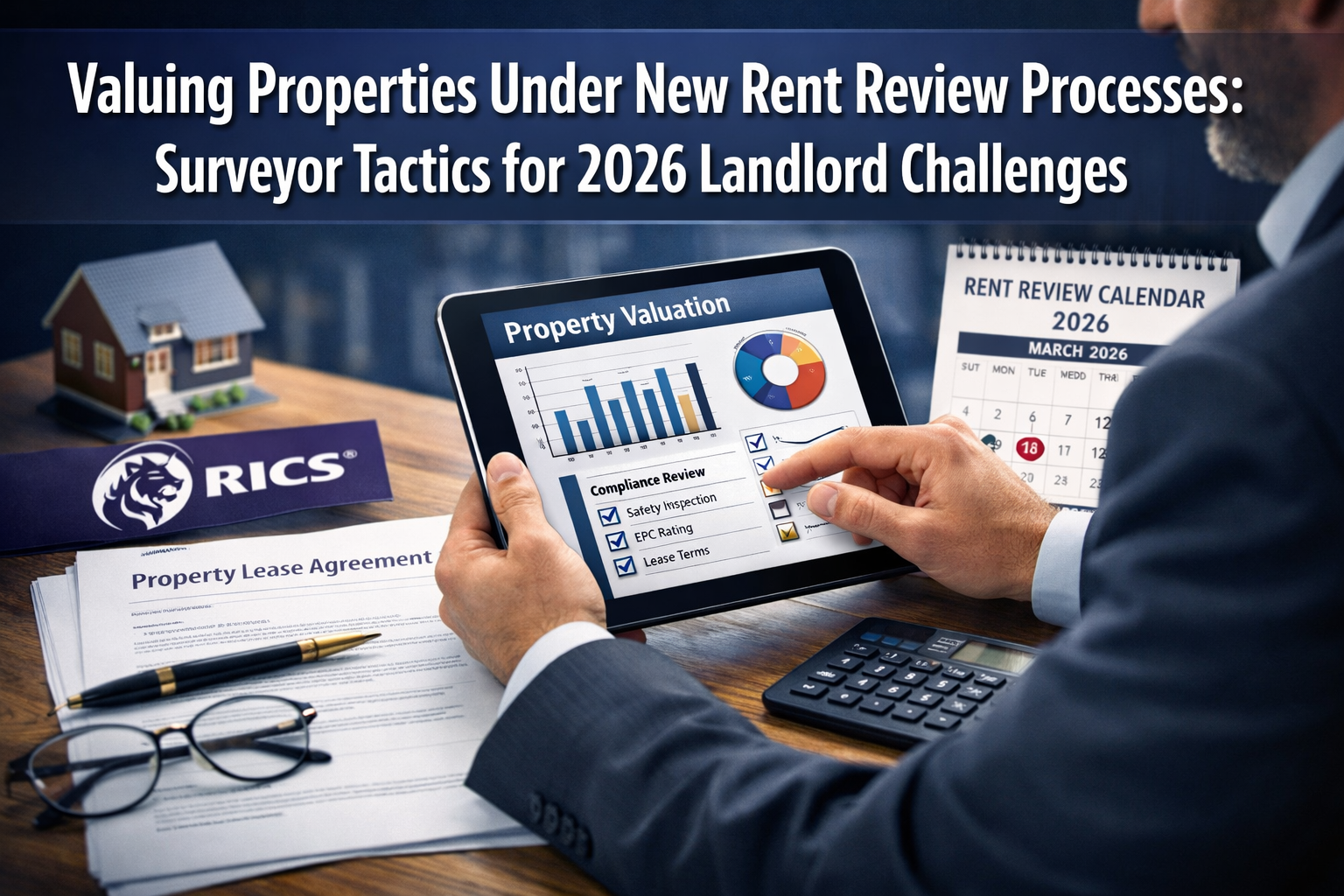
Rent-regulated properties now trade at 30 basis points higher required cap rates than market-rate assets, translating into a staggering 26% lower pricing per unit [3]. This valuation gap has widened dramatically as the UK Renters' Rights Act 2026 takes effect on May 1, 2026, fundamentally reshaping how surveyors must approach Valuing Properties Under New Rent Review Processes: Surveyor Tactics for 2026 Landlord Challenges. The legislation triggers the most significant recalibration of UK rental property valuations in recent years, requiring surveyors to develop new assessment protocols that account for landlord-tenant compliance impacts on asset value [7].
For landlords navigating annual rent reviews under these new regulations, the stakes have never been higher. Unsupported rent increases face immediate challenge, while market-aligned adjustments require robust evidence and defensible methodologies. This comprehensive guide explores how surveyors can support landlords through evidence-based valuation strategies, compliance assessments, and dispute escalation tactics in 2026's transformed rental landscape.
Key Takeaways
- Revenue flexibility has become the central valuation factor, with the divide between regulated and unregulated income streams creating persistent pricing gaps of up to 26% per unit [3]
- Independent professional appraisals now serve as recommended alternatives to automatic rent increase formulas, establishing defensible market-aligned benchmarks [2]
- The 1% rental rule has been updated to 0.75%-0.8% for move-in-ready properties in higher-cost markets, requiring recalibrated cash flow projections [1]
- Three-tier cap rate models based on asset class now differentiate valuation approaches, with Class A properties serving as stability benchmarks while Class C properties face wider cap rate spreads due to operating expense variability [3]
- Dispute escalation strategies require documented evidence chains from initial market analysis through independent appraisal to tribunal-ready documentation packages
Understanding the 2026 Regulatory Landscape for Rent Reviews
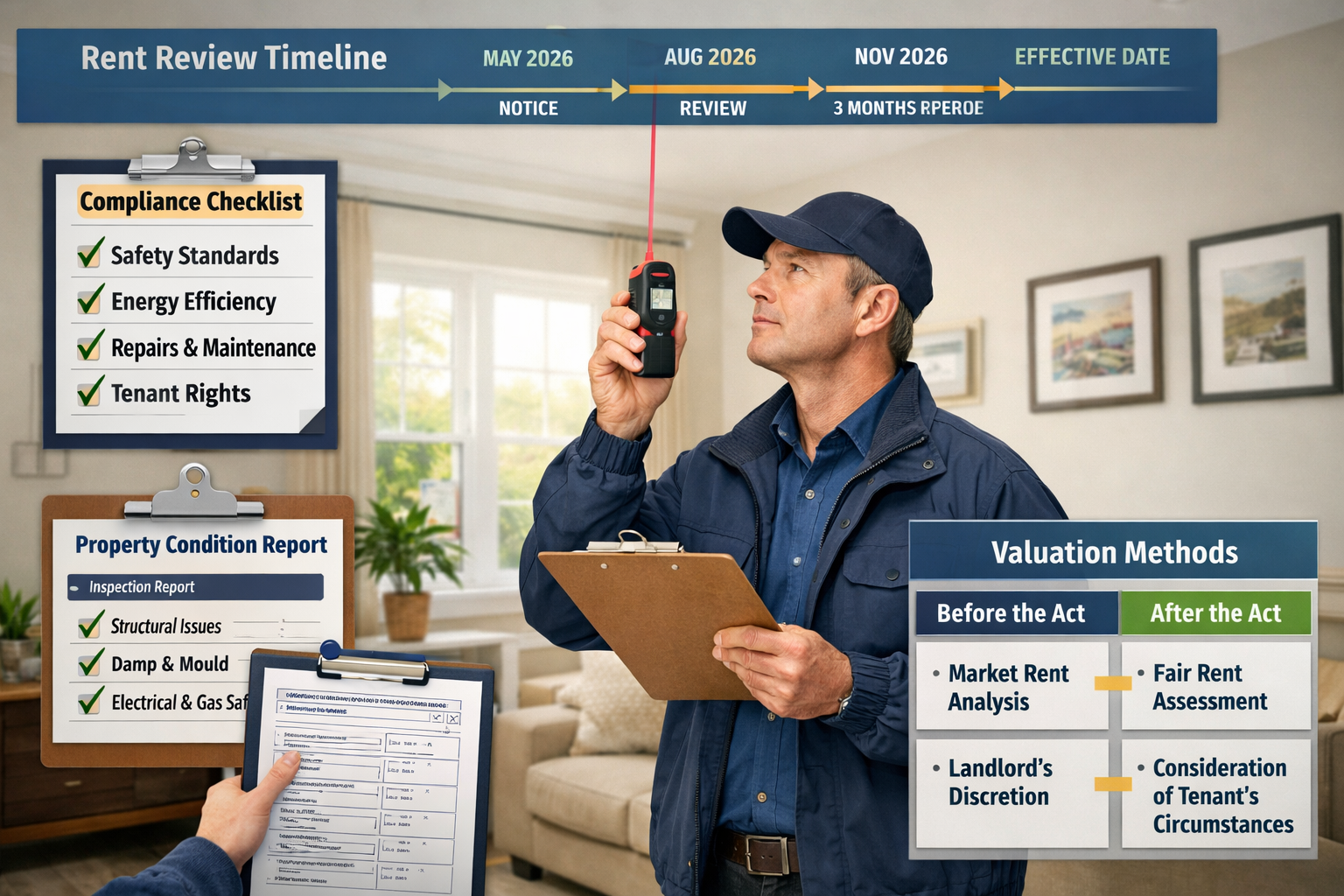
The UK Renters' Rights Act 2026 represents a watershed moment for property valuations, fundamentally altering how surveyors must assess rental income potential and compliance risk. Effective May 1, 2026, the legislation introduces stricter controls on rent increases, enhanced tenant protections, and mandatory disclosure requirements that directly impact asset valuations [7].
Key Regulatory Changes Affecting Property Valuations
The new framework establishes several critical provisions that surveyors must incorporate into valuation methodologies:
📋 Mandatory Rent Review Protocols
- Annual rent reviews must be supported by documented market evidence
- Landlords cannot implement automatic percentage increases without justification
- Rent adjustments must align with local market conditions and property-specific factors
- Transparency requirements mandate disclosure of all mandatory fees and charges [4]
🔍 Compliance Impact on Asset Value
Professional surveyor services must now account for compliance costs and restrictions when determining market value. Properties with documented compliance histories command premium valuations, while those with regulatory violations face significant discounts.
The Federal Trade Commission's concurrent review of rental pricing practices adds another layer of scrutiny, examining whether landlords clearly disclose total rent including all mandatory fees [4]. This dual regulatory pressure from UK and international oversight bodies creates a complex valuation environment where transparency and documentation become critical value drivers.
The Shift from Formula-Based to Evidence-Based Increases
Traditional automatic rent escalation formulas—such as fixed percentage increases or CPI-linked adjustments—no longer provide sufficient justification under the 2026 framework. Instead, surveyors must develop evidence-based valuation approaches that demonstrate market alignment through:
- Comparable property analysis showing similar units in the local market
- Market trend documentation reflecting supply-demand dynamics
- Property-specific improvements that justify value-added increases
- Operating cost verification supporting expense-driven adjustments
Independent professional appraisals have emerged as the recommended standard, with jurisdictions considering models similar to New York's Local Regulated Housing Restoration Adjustment to prevent extreme rent jumps while establishing reasonable regulated rents tied to actual market changes [2].
Valuing Properties Under New Rent Review Processes: Evidence-Based Assessment Methodologies

Surveyors supporting landlords through 2026 rent reviews must employ rigorous, defensible methodologies that withstand scrutiny from tenants, regulatory bodies, and potential dispute resolution panels. The foundation of successful Valuing Properties Under New Rent Review Processes: Surveyor Tactics for 2026 Landlord Challenges lies in comprehensive market analysis and transparent documentation.
Updated Valuation Metrics for 2026
The traditional 1% rental rule—suggesting monthly rent should equal 1% of purchase price—has been recalibrated for current market conditions. Conservative underwriting now recommends 0.75% to 0.8% for move-in-ready properties in higher-cost cities [1]. For example:
| Purchase Price | Old 1% Rule | Updated 0.75-0.8% Rule | Monthly Difference |
|---|---|---|---|
| £200,000 | £2,000/month | £1,500-£1,600/month | -£400 to -£500 |
| £350,000 | £3,500/month | £2,625-£2,800/month | -£700 to -£875 |
| £500,000 | £5,000/month | £3,750-£4,000/month | -£1,000 to -£1,250 |
This recalibration reflects market realities where aggressive projections create significant downside risk when variables move unfavorably [1]. Finding the best local surveyor becomes essential for accurate local market calibration.
Three-Tier Cap Rate Valuation Model
Market-rate multifamily properties in comparable U.S. markets are currently priced at $233,197 per unit with a 6.1% cap rate, supported by rent-reset flexibility and deeper market liquidity [3]. UK surveyors should adopt similar risk-based differentiation:
Class A Properties (Stability Benchmarks) ⭐
- Premium locations with strong tenant demand
- Modern amenities and high-quality construction
- Lower cap rates (5.5-6.5%) due to reduced risk
- Minimal execution risk and stable operating expenses
Class B Properties (Moderate Risk Premium) 🏢
- Good locations with solid fundamentals
- Some deferred maintenance or dated features
- Mid-range cap rates (6.5-7.5%) reflecting execution and churn risk
- Moderate capital expenditure requirements
Class C Properties (Highest Risk Adjustment) 📊
- Functional but aging properties in secondary locations
- Higher cap rates (7.5-9.0%) due to operating expense variability
- Significant capital expenditure burden
- Greater turnover risk and management intensity
This three-tier framework allows surveyors to justify valuation differentials based on objective risk factors rather than subjective assessments [3].
Comparable Property Analysis Protocols
Effective comparable analysis under the new regulatory framework requires:
Geographic Proximity Standards
- Primary comparables within 0.5-mile radius
- Secondary comparables within 1-mile radius for specialized properties
- Adjustment factors for location quality differences
Property Characteristic Matching
- Similar unit sizes (±15% square footage)
- Comparable amenity packages
- Similar building age and condition
- Matching property class (A/B/C designation)
Temporal Relevance Requirements
- Rental transactions within past 6 months preferred
- Adjustments for market trend direction and velocity
- Seasonal variation considerations
Documentation Standards 📝
- Verified rental rates from multiple sources
- Photographic evidence of comparable properties
- Tenant incentive and concession disclosure
- Lease term and renewal condition documentation
Working with professional building surveyors ensures these protocols meet RICS standards and regulatory requirements.
Capital Improvement Valuation Adjustments
The Renters' Rights Act 2026 requires that capital improvement-based rent increases be tied to actual value added rather than spending formulas alone [2]. Appraisal-based fair market rent benchmarks provide defensible valuation ceilings that reflect local market conditions, allowing third-party review bodies to resolve disputes over rent increases.
Qualifying Capital Improvements:
- Building-wide system upgrades (HVAC, electrical, plumbing)
- Structural enhancements improving safety or functionality
- Energy efficiency improvements with documented savings
- Amenity additions that demonstrably increase market appeal
Non-Qualifying Expenditures:
- Routine maintenance and repairs
- Cosmetic updates without functional improvement
- Deferred maintenance catch-up work
- Improvements mandated by code violations
Surveyors must document the market rent premium that similar properties with comparable improvements command, rather than simply calculating a percentage return on capital expenditure.
Valuing Properties Under New Rent Review Processes: Dispute Escalation Strategies
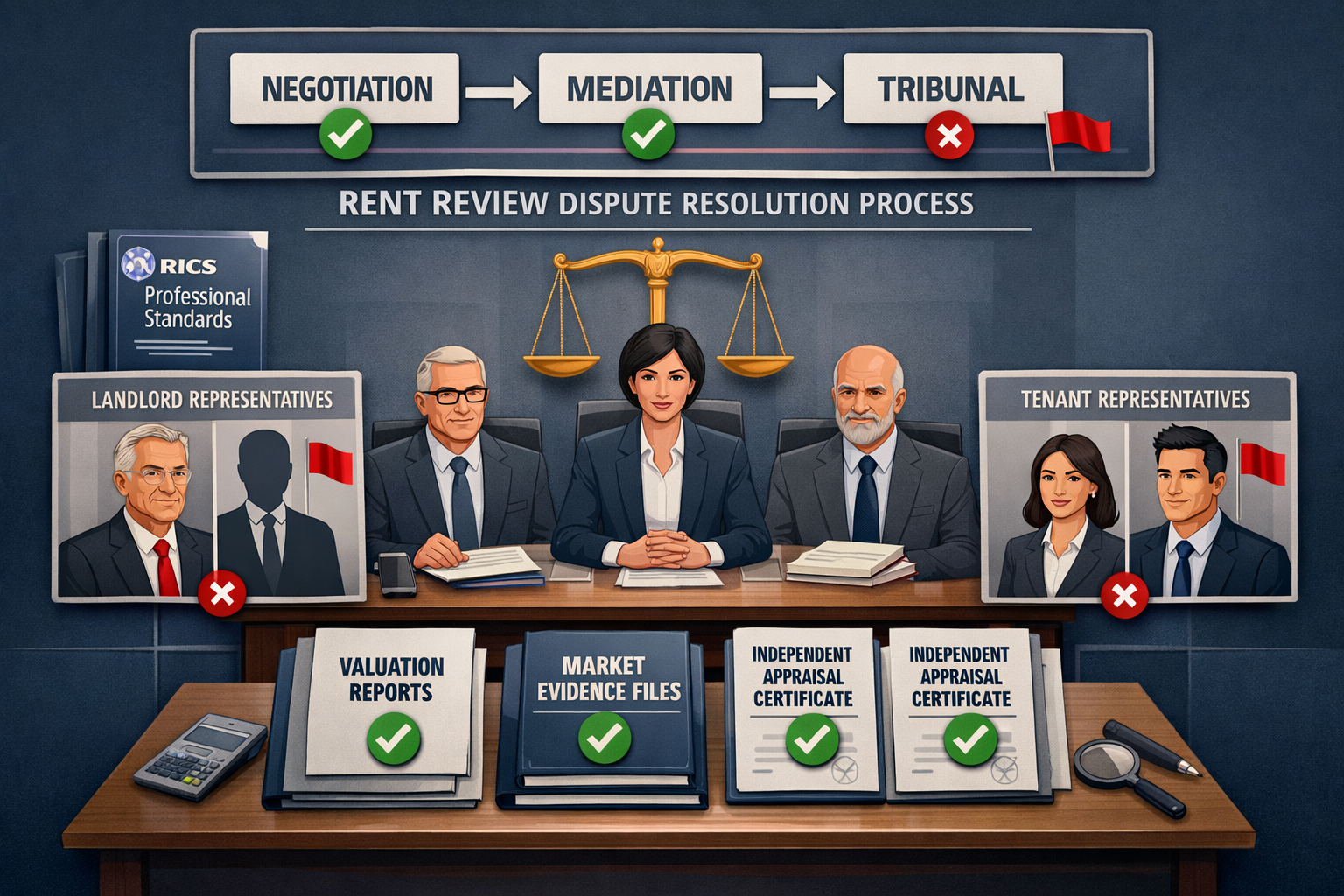
Despite thorough preparation and evidence-based approaches, rent review disputes remain inevitable in the 2026 regulatory environment. Surveyors must equip landlords with comprehensive dispute escalation strategies that progress from negotiation through mediation to formal tribunal proceedings.
Stage 1: Initial Negotiation and Evidence Presentation
The first response to a tenant challenge should involve structured evidence presentation that demonstrates the reasonableness of the proposed increase:
Evidence Package Components:
- Executive summary of proposed increase with clear justification
- Comprehensive comparable analysis with detailed property matching
- Market trend documentation showing area-wide rental movements
- Property-specific improvements with before/after valuations
- Operating cost verification if expense-driven adjustments apply
- Regulatory compliance documentation showing adherence to disclosure requirements
This initial package should be prepared by qualified professional surveyor services and presented in a format accessible to tenants without technical expertise.
Negotiation Best Practices:
- ✅ Schedule face-to-face or video meetings rather than email-only exchanges
- ✅ Provide visual aids and simplified explanations of technical valuation concepts
- ✅ Demonstrate willingness to address legitimate tenant concerns
- ✅ Consider phase-in approaches for larger increases
- ✅ Document all communications for potential future proceedings
Stage 2: Independent Appraisal and Mediation
When initial negotiations fail to resolve disputes, independent professional appraisals provide neutral third-party validation of proposed rent adjustments [2]. This approach offers several advantages:
Benefits of Independent Appraisal:
- 🎯 Removes perception of landlord bias from valuation process
- 🎯 Provides credible expert opinion for mediation or tribunal proceedings
- 🎯 Establishes defensible valuation ceiling based on market evidence
- 🎯 Demonstrates landlord good faith in seeking objective assessment
Mediation services specializing in landlord-tenant disputes can facilitate resolution using independent appraisal findings as the foundation for compromise. Successful mediation often involves:
- Split-the-difference approaches when valuations fall within reasonable ranges
- Phase-in agreements that implement increases gradually over 12-24 months
- Improvement-linked adjustments where increases coincide with specific property enhancements
- Market review clauses that trigger automatic adjustment if comparable rents shift significantly
Stage 3: Tribunal Preparation and Formal Proceedings
When negotiation and mediation fail, formal dispute resolution through housing tribunals or courts becomes necessary. Surveyors must prepare tribunal-ready documentation packages that meet evidentiary standards:
Tribunal Evidence Requirements:
📑 Comprehensive Valuation Report
- Detailed methodology explanation accessible to non-technical adjudicators
- Multiple valuation approaches (comparable, income, cost) for cross-verification
- Sensitivity analysis showing how key assumptions affect conclusions
- Professional credentials and qualifications of preparing surveyor
📑 Comparable Property Evidence
- Verified rental rates with supporting documentation (lease agreements, advertisements)
- Photographic evidence of comparable properties
- Detailed adjustment calculations with transparent reasoning
- Geographic mapping showing comparable locations
📑 Market Analysis Documentation
- Area rental trend analysis with statistical support
- Supply-demand dynamics affecting local market
- Economic indicators influencing rental values
- Expert opinion on market trajectory
📑 Compliance Verification
- Documentation of regulatory adherence
- Disclosure compliance evidence
- Property condition and safety certifications
- Maintenance and improvement records
Expert Witness Testimony Preparation:
Surveyors serving as expert witnesses must prepare to:
- Explain technical valuation concepts in plain language
- Defend methodology choices against alternative approaches
- Respond to cross-examination regarding assumptions and data sources
- Maintain professional objectivity while supporting landlord position
- Reference RICS standards and industry best practices
Working with experienced property inspection professionals ensures documentation meets evidentiary standards.
Cost-Benefit Analysis of Dispute Escalation
Landlords must weigh the costs of formal dispute proceedings against potential outcomes:
| Dispute Stage | Typical Cost Range | Timeline | Success Rate Factors |
|---|---|---|---|
| Negotiation | £500-£2,000 | 2-4 weeks | Quality of initial evidence |
| Mediation | £2,000-£5,000 | 4-8 weeks | Independent appraisal credibility |
| Tribunal | £5,000-£15,000+ | 3-6 months | Documentation completeness, expert testimony quality |
Strategic Considerations:
- Small increases (under 5%) may not justify tribunal costs
- Properties with clear comparable evidence have higher success rates
- Documented compliance histories strengthen landlord positions
- Repeat disputes with same tenant may indicate deeper relationship issues
Practical Implementation: Surveyor Tactics for Different Property Types
Different property types require tailored valuation approaches under the new rent review processes. Surveyors must adapt their methodologies to match property characteristics and market segments.
Single-Family Rental Properties
Valuation Focus Areas:
- Neighborhood-specific rental trends rather than building-wide comparables
- Property condition and maintenance history
- School district quality and family amenity access
- Yard and parking considerations
Common Challenges:
- Fewer direct comparables in some neighborhoods
- Greater variation in property conditions
- Seasonal demand fluctuations
- Longer tenant tenure expectations
Multi-Family Residential Buildings
Valuation Focus Areas:
- Building-wide amenity packages
- Unit mix and size distribution
- Operating expense efficiency
- Management quality and tenant services
Common Challenges:
- Balancing individual unit reviews with building-wide considerations
- Addressing tenant associations and collective bargaining
- Capital improvement allocation across units
- Vacancy and turnover management
Commercial and Mixed-Use Properties
Valuation Focus Areas:
- Business viability and commercial tenant financial strength
- Lease structure and renewal option impacts
- Triple-net vs. gross lease considerations
- Mixed-use synergies and tenant mix optimization
Common Challenges:
- Commercial tenant negotiations with greater sophistication
- Longer lease terms and less frequent review opportunities
- Economic cycle sensitivity
- Regulatory differences between residential and commercial components
For specialized property assessments, consider consulting London property surveyors with expertise in your specific property type and location.
Technology and Data Tools for Modern Rent Review Valuations
The complexity of Valuing Properties Under New Rent Review Processes: Surveyor Tactics for 2026 Landlord Challenges demands sophisticated technology tools that streamline data collection, analysis, and reporting.
Essential Technology Platforms
Rental Market Data Aggregators 📊
- Real-time comparable rental rate tracking
- Historical trend analysis and forecasting
- Geographic heat mapping of rental values
- Automated comparable property identification
Property Valuation Software
- Multi-methodology valuation modeling
- Sensitivity analysis and scenario planning
- Automated report generation with compliance documentation
- Integration with property management systems
Compliance Tracking Systems
- Regulatory requirement monitoring
- Disclosure documentation management
- Inspection and maintenance scheduling
- Audit trail creation for dispute proceedings
Communication and Documentation Platforms
- Tenant communication tracking
- Evidence package assembly and sharing
- Secure document storage and retrieval
- Timeline management for review processes
Data Quality and Verification Standards
Technology tools are only as reliable as the data they process. Surveyors must maintain rigorous data quality protocols:
✓ Source Verification – Confirm rental rates through multiple independent sources
✓ Temporal Currency – Prioritize recent transactions over older data
✓ Adjustment Transparency – Document all modifications to raw data
✓ Outlier Analysis – Identify and investigate anomalous data points
✓ Regular Calibration – Validate software outputs against manual calculations
Conclusion: Positioning for Success in the 2026 Rental Landscape
The transformation of rental property valuations under the Renters' Rights Act 2026 and evolving regulatory frameworks represents both challenge and opportunity for landlords and their surveyor partners. Success in this new environment requires abandoning outdated formula-based approaches in favor of evidence-based methodologies that withstand regulatory scrutiny and tenant challenges.
Key Success Factors for 2026 and Beyond:
🎯 Embrace Conservative Underwriting – The updated 0.75-0.8% rental rule and risk-based cap rate models reflect market realities that reward realistic projections over aggressive assumptions [1][3]
🎯 Invest in Professional Valuation Services – Independent appraisals and qualified professional surveyor services provide defensible evidence that prevents costly disputes and supports justified increases [2]
🎯 Maintain Comprehensive Documentation – From initial market analysis through comparable selection to final valuation conclusions, transparent documentation creates the foundation for successful rent reviews and dispute resolution
🎯 Understand Revenue Flexibility Value – The 26% valuation gap between regulated and market-rate properties underscores how rent-reset capability drives asset values in 2026 [3]
🎯 Develop Escalation Readiness – Prepare tribunal-ready evidence packages from the outset, even when disputes seem unlikely, to avoid scrambling for documentation under deadline pressure
Actionable Next Steps for Landlords
- Conduct Compliance Audit – Review current properties for Renters' Rights Act 2026 compliance gaps and remediation needs
- Engage Qualified Surveyors – Establish relationships with experienced professionals before rent review deadlines approach
- Update Valuation Models – Recalibrate financial projections using updated metrics and risk-based cap rates
- Implement Documentation Systems – Create processes for maintaining comparable data, improvement records, and communication logs
- Review Dispute Resolution Provisions – Ensure lease agreements include clear rent review procedures and escalation pathways
- Consider Stability Over Maximization – Evaluate whether moderate, defensible increases with lower dispute risk outweigh aggressive approaches with higher challenge probability [6]
The rental property market of 2026 rewards landlords who combine market knowledge with professional expertise and transparent processes. By partnering with qualified surveyors who understand both valuation fundamentals and regulatory requirements, landlords can navigate rent reviews confidently while maintaining positive tenant relationships and protecting asset values.
For specialized support with your property valuation needs, explore RICS Homebuyer Survey services and building surveyor services that provide comprehensive assessment capabilities aligned with 2026 regulatory standards.
References
[1] How To Evaluate Rental Property Deals – https://www.landlordstudio.com/blog/how-to-evaluate-rental-property-deals
[2] 20260106 Appraisal Insights – https://www.appraisalinstitute.org/insights-and-resources/insights/newsroom/appraisal-now/20260106-appraisal-insights
[3] Return Of Risk Based Multifamily Valuations – https://www.matthews.com/market_insights/return-of-risk-based-multifamily-valuations
[4] Rental Pricing Practices Under Federal Review – https://www.floridarealtors.org/news-media/news-articles/2026/03/rental-pricing-practices-under-federal-review
[6] Lease Renewals In 2026 Why Were Recommending Stability Over Rent Increases – https://www.hbrrentals.com/blog/lease-renewals-in-2026-why-were-recommending-stability-over-rent-increases
[7] Valuation Adjustments For Renters Rights Act 2026 How Building Surveyors Must Assess Landlord Tenant Compliance – https://nottinghillsurveyors.com/blog/valuation-adjustments-for-renters-rights-act-2026-how-building-surveyors-must-assess-landlord-tenant-compliance