
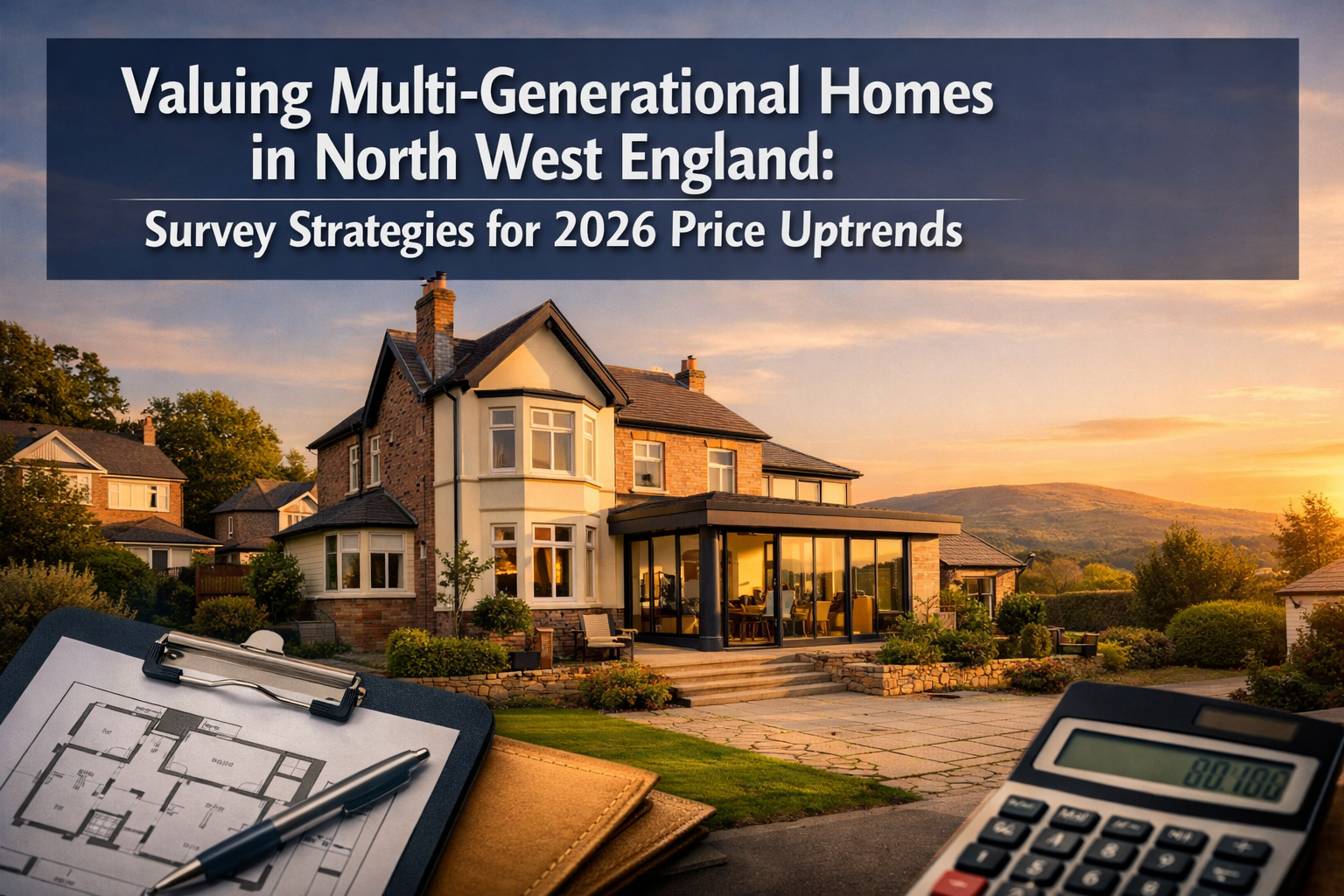
The North West England property market is experiencing remarkable momentum in 2026, with multi-generational homes emerging as one of the most sought-after property types. As extended families increasingly seek shared living arrangements that balance independence with togetherness, understanding how to accurately value these adaptable properties has become essential for buyers, sellers, and investors alike. Valuing Multi-Generational Homes in North West England: Survey Strategies for 2026 Price Uptrends requires a specialized approach that goes beyond standard property assessment methods.
With regional prices climbing 31% over the past five years and average values projected to exceed £300,000 by year-end 2026[1][7], the stakes for accurate valuation have never been higher. Multi-generational properties—typically featuring annexes, converted spaces, or flexible layouts—demand comprehensive survey strategies that assess both current condition and future adaptability potential.

Key Takeaways
✅ North West prices show sustained growth: Regional property values have increased 31% over five years, with 2026 forecasts predicting 2.2-4% annual growth[1][4]
✅ Multi-generational properties command premium valuations: Homes with adaptable layouts, annexes, and accessibility features appeal to a growing market segment seeking flexible family living solutions
✅ Comprehensive surveys are essential: Standard valuations miss critical factors like conversion potential, regulatory compliance, and long-term adaptability that significantly impact multi-generational home values
✅ Strategic pricing maximizes returns: Well-presented, realistically priced properties with documented survey insights generate stronger buyer interest in increasingly selective markets[1][2]
✅ Regional variations matter significantly: Premium areas like Cheshire command 50%+ higher valuations than regional averages, making location-specific survey strategies crucial[1]
Understanding the Multi-Generational Housing Trend in North West England
Multi-generational living arrangements have surged in popularity across the North West, driven by economic pressures, cultural preferences, and the desire to provide family care without sacrificing independence. These properties typically feature self-contained annexes, ground-floor bedroom suites, dual kitchens, or separate access points that enable multiple generations to live together while maintaining privacy.
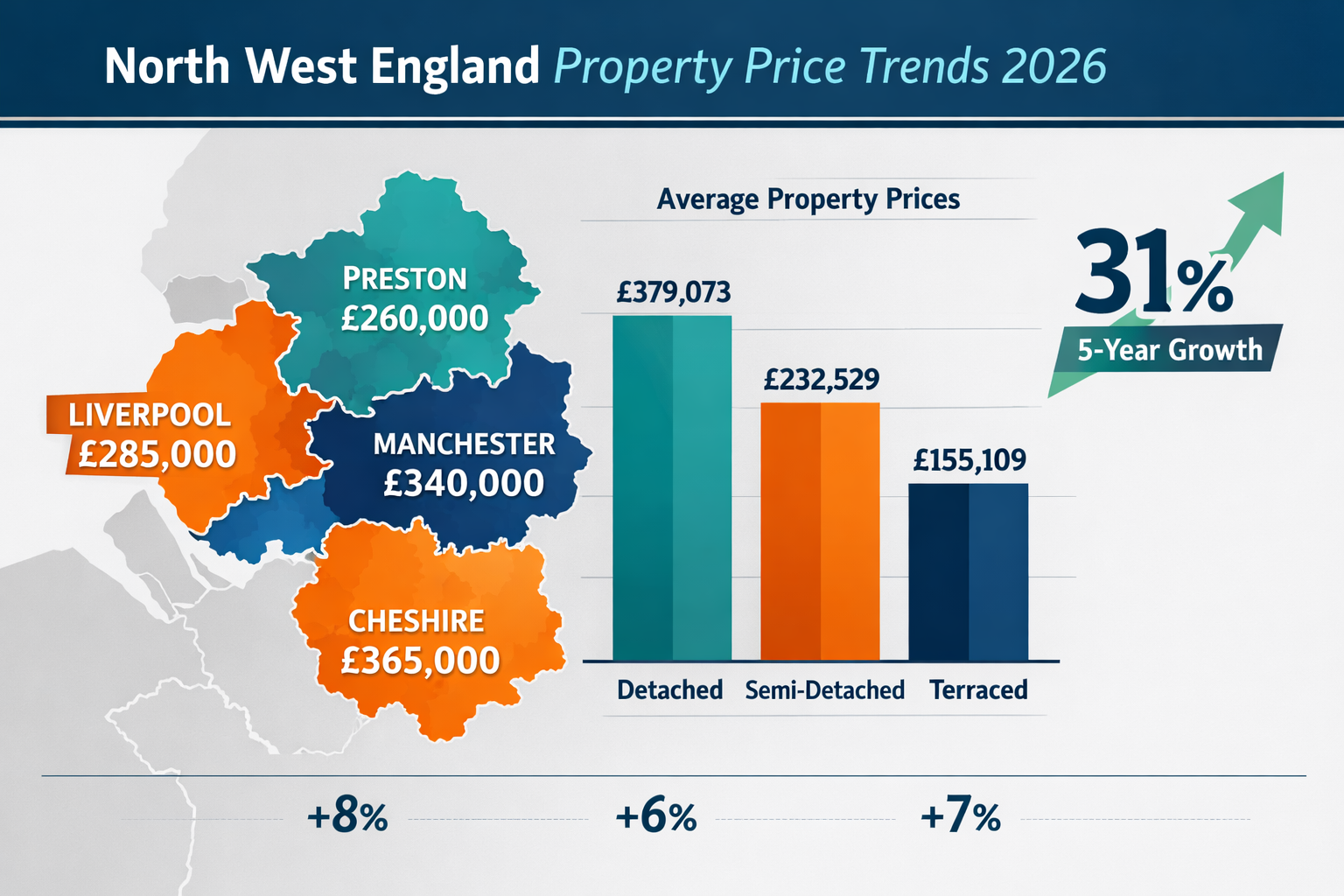
The North West's property landscape is particularly well-suited to this trend. Semi-detached and terraced homes—which dominate regional transactions[1]—often offer the space and configuration potential needed for multi-generational adaptations. With semi-detached properties averaging £232,529 and detached homes reaching £379,073 as of March 2026[1], these properties represent accessible entry points for families seeking adaptable living solutions.
Why Multi-Generational Homes Command Premium Values
Several factors contribute to the enhanced valuations of multi-generational properties:
- Dual functionality: Properties serve multiple household configurations simultaneously
- Income potential: Annexes or separate units may generate rental income
- Aging-in-place features: Accessibility adaptations appeal to long-term homeowners
- Reduced care costs: Families can provide eldercare without institutional expenses
- Market scarcity: Purpose-built or well-converted properties remain relatively rare
Understanding these home survey considerations helps valuers and buyers recognize the premium these features command in 2026's competitive market.
Survey Strategies for Valuing Multi-Generational Homes in North West England: 2026 Price Uptrends
Accurately assessing multi-generational properties requires specialized survey approaches that extend beyond standard RICS surveys. The following strategies provide comprehensive valuation frameworks tailored to the North West market's unique characteristics.
Comprehensive Building Survey Checklist for Extended Family Properties
A thorough survey of multi-generational homes must evaluate both existing conditions and adaptation potential. Here's a detailed checklist:
Structural Assessment
- ✅ Load-bearing wall configurations for potential conversion spaces
- ✅ Foundation capacity for extensions or annexes
- ✅ Roof structure condition and insulation standards
- ✅ Damp-proofing effectiveness (particularly critical in North West climate)
- ✅ Subsidence or settlement indicators
Accessibility and Adaptability Features
- ✅ Ground-floor bedroom and bathroom configurations
- ✅ Doorway widths (minimum 800mm for wheelchair access)
- ✅ Level access entrances and thresholds
- ✅ Stairlift installation potential
- ✅ Bathroom adaptation feasibility
- ✅ Kitchen accessibility for multiple users
Independent Living Spaces
- ✅ Separate entrance availability or potential
- ✅ Self-contained unit configurations
- ✅ Kitchen and bathroom duplication feasibility
- ✅ Utility connections for separate metering
- ✅ Privacy and sound insulation between zones
Regulatory Compliance
- ✅ Building regulations compliance for conversions
- ✅ Planning permission requirements for annexes
- ✅ Fire safety standards for multi-occupancy
- ✅ Energy Performance Certificate (EPC) ratings
- ✅ Council tax implications of separate units
Before commissioning any survey, review what to do before an RICS home survey to ensure maximum value from the assessment process.
Regional Price Benchmarking for North West Multi-Generational Properties
Understanding regional price variations is crucial for accurate valuation. The North West demonstrates significant geographic diversity in property values:
| Property Type | North West Average (March 2026) | Premium Areas (Cheshire) | Growth Potential |
|---|---|---|---|
| Detached | £379,073 | £529,080+ | High |
| Semi-Detached | £232,529 | £310,000+ | Moderate-High |
| Terraced | £155,109 | £195,000+ | Moderate |
| Flats | £139,450 | £175,000+ | Moderate |
Source: Edward Mellor North West Market Insights[1]
Premium location factors in areas like Stockton Heath and Northwich include:
- 🏫 Outstanding school catchment areas
- 🚆 Excellent transport connectivity
- 🌳 Lifestyle amenities and green spaces
- 💼 Employment hub proximity
- 🏥 Healthcare facility access
Properties in regeneration zones like Preston, Lancaster, and Morecambe benefit from infrastructure investment that supports sustained value growth[5], making them attractive for multi-generational buyers seeking long-term appreciation.
Conversion Potential and Added Value Assessment
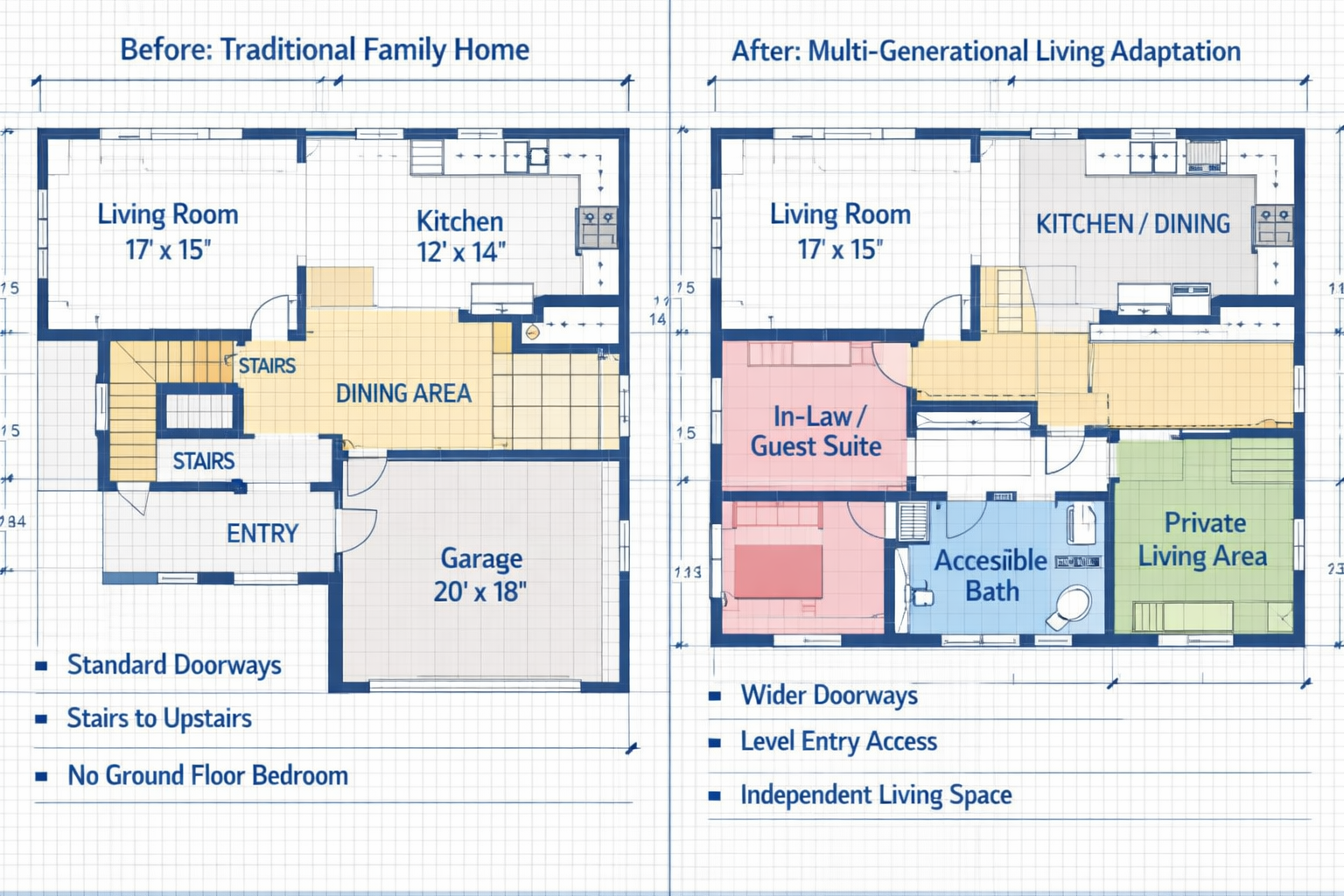
One of the most critical aspects of Valuing Multi-Generational Homes in North West England: Survey Strategies for 2026 Price Uptrends involves assessing conversion potential. Properties with adaptable layouts can command premiums of 15-25% above comparable single-family homes when properly configured.
High-Value Conversion Opportunities
Garage conversions: Converting attached or integral garages into ground-floor suites typically adds £15,000-£35,000 in value, depending on size and finish quality. Surveys should assess:
- Structural adequacy for habitable space
- Damp-proofing requirements
- Heating and insulation needs
- Window and natural light provision
Loft conversions: Additional bedroom space for extended family members can add £20,000-£50,000 in North West markets. Survey considerations include:
- Roof height and headroom adequacy
- Structural support requirements
- Staircase installation space
- Building regulation compliance costs
Basement conversions: Where applicable, basement spaces offer excellent multi-generational potential, potentially adding £30,000-£60,000. Critical survey points:
- Waterproofing and tanking requirements
- Ventilation and natural light solutions
- Access and egress provisions
- Ceiling height limitations
Garden annexes: Purpose-built structures command the highest premiums (£40,000-£100,000+ added value) but require comprehensive assessment:
- Planning permission likelihood
- Utility connection costs
- Foundation and drainage requirements
- Long-term maintenance considerations
When evaluating conversion potential, consider consulting professional surveyor services to ensure accurate cost-benefit analysis.
Market Positioning and Pricing Strategies for 2026
With buyer selectivity increasing across the North West[1], strategic pricing based on comprehensive survey insights has become essential. Properties that enter the market with realistic valuations supported by detailed survey documentation achieve faster sales and higher final prices than those requiring subsequent reductions.
The Impact of Survey Findings on Negotiation
Survey results significantly influence final transaction prices. According to market data, well-documented property conditions can affect negotiations in several ways:
- Clean surveys: Properties with minimal defects may achieve asking price or above
- Minor issues: Typically result in 1-3% price adjustments
- Significant defects: Can trigger 5-10% reductions or sale collapses
- Major structural concerns: May necessitate 10-15%+ reductions or withdrawal
Understanding average price reduction after survey helps sellers price properties appropriately from the outset, avoiding the stigma of price reductions that can deter serious buyers.
Presenting Multi-Generational Features to Maximize Value
Documentation is key. Properties with comprehensive records of conversions, compliance certificates, and adaptation features command premium prices. Essential documentation includes:
- Planning permissions and building regulation approvals
- Energy Performance Certificates showing separate zones
- Electrical and gas safety certificates
- Structural engineer reports for conversions
- Warranty documentation for recent works
- Council tax banding clarifications
Sellers should commission pre-sale surveys that highlight multi-generational features as value-adding assets rather than allowing buyers' surveys to frame them as potential complications.
2026 Price Growth Projections and Investment Timing
The North West market demonstrates strong fundamentals supporting continued growth through 2026 and beyond. Key projections include:
- Overall regional growth: 2.2% average, with some areas reaching 3-4%[2][4]
- Average price target: £300,000+ by year-end 2026[7]
- Premium segment resilience: High-quality family homes in desirable locations showing strongest performance[2]
For multi-generational properties specifically, the supply-demand imbalance creates favorable conditions. As demographic trends continue driving demand for flexible family housing, well-positioned properties in the North West are likely to outperform broader market averages.
Investors and homebuyers should note that pricing strategy remains critical. The 809,000 price reductions recorded across the UK in 2025[1] demonstrate the consequences of overpricing in selective markets. Properties entering at realistic valuations based on comprehensive survey data consistently achieve better outcomes.
Common Valuation Pitfalls and How to Avoid Them
Even experienced valuers can underestimate or overlook critical factors when assessing multi-generational homes. Awareness of these common pitfalls ensures more accurate valuations:
Pitfall 1: Ignoring Regulatory Compliance Costs
Many properties feature informal conversions that lack proper approvals. Retrospective compliance can cost £5,000-£15,000+, significantly impacting net value. Surveys must explicitly identify:
- Unapproved structural alterations
- Non-compliant electrical or plumbing work
- Missing building regulation certificates
- Planning permission violations
Pitfall 2: Overvaluing Poorly Executed Conversions
Not all adaptations add value equally. Low-quality conversions with poor finishes, inadequate insulation, or substandard workmanship may actually detract from property value. Survey assessments should evaluate:
- Build quality and finish standards
- Thermal efficiency and energy costs
- Maintenance implications
- Market appeal of design choices
Pitfall 3: Underestimating Ongoing Maintenance Costs
Multi-generational properties typically feature increased complexity in systems and structures. Surveys should project:
- Dual heating system maintenance
- Multiple kitchen and bathroom upkeep
- Separate utility monitoring costs
- Annex or extension weatherproofing needs
Understanding home maintenance costs helps buyers make informed decisions about long-term ownership expenses.
Pitfall 4: Neglecting Market-Specific Demand Factors
Multi-generational appeal varies significantly by location. Properties in areas with:
- Strong cultural traditions of extended family living
- High property prices making separate homes unaffordable
- Excellent schools and amenities attracting families
- Aging populations requiring eldercare solutions
…command higher premiums than similar properties in areas lacking these characteristics.
Technology and Innovation in Multi-Generational Property Surveys
The surveying profession has embraced technological advances that enhance valuation accuracy for complex properties. In 2026, cutting-edge tools provide unprecedented insight into multi-generational home characteristics:
Thermal Imaging and Energy Efficiency Assessment
Modern surveys increasingly incorporate thermal imaging to identify:
- Heat loss through inadequate insulation
- Air leakage around doors and windows
- Moisture ingress and damp issues
- Heating system efficiency variations
For multi-generational properties with multiple heating zones, this technology ensures accurate assessment of running costs—a critical factor for buyers considering extended family living arrangements.
3D Modeling and Virtual Survey Tours
Advanced surveying now includes 3D property modeling that allows:
- Remote assessment by multiple stakeholders
- Visualization of conversion potential
- Accurate space measurement and planning
- Enhanced documentation for future reference
These tools prove particularly valuable for multi-generational properties where family members in different locations need to participate in purchase decisions.
Drone Surveys for Large Properties
Properties with extensive grounds, annexes, or outbuildings benefit from aerial drone surveys that capture:
- Roof condition across multiple structures
- Boundary and land extent documentation
- External building envelope assessment
- Site layout and access evaluation
Legal and Financial Considerations for Multi-Generational Properties
Beyond physical condition, comprehensive valuation must address legal and financial complexities unique to multi-generational homes.
Council Tax and Separate Dwelling Status
Properties with self-contained annexes may face separate council tax assessments, significantly impacting ongoing costs. Surveys should clarify:
- Whether separate units meet "dwelling" criteria
- Current council tax banding arrangements
- Potential for future reassessment
- Comparative cost implications
Mortgage and Insurance Implications
Lenders and insurers treat multi-generational properties differently. Key considerations include:
- Mortgage availability: Some lenders restrict lending on properties with income-generating annexes
- Insurance premiums: Multi-occupancy may increase costs
- Rental income assessment: Lenders may consider annex rental potential in affordability calculations
- Building insurance adequacy: Separate structures require appropriate coverage
Understanding these financial implications ensures buyers can secure appropriate financing and protection.
Inheritance and Estate Planning Factors
Multi-generational properties often feature in complex estate planning arrangements. Valuations should consider:
- Potential inheritance tax implications
- Ownership structure options (joint tenancy vs. tenants in common)
- Future division or sale scenarios
- Capital gains tax considerations for annexes with rental history
Regional Success Stories: Premium Multi-Generational Properties
Examining successful multi-generational property transactions across the North West provides valuable insights into effective valuation strategies.
Case Study: Cheshire Family Estate
A detached property in Stockton Heath featuring a converted coach house annex achieved £585,000—over 10% above the £529,080 local average for detached homes[1]. Success factors included:
- ✅ Comprehensive pre-sale survey documenting all approvals
- ✅ Professional presentation highlighting dual-living benefits
- ✅ Energy-efficient upgrades reducing running costs
- ✅ Detailed financial projections for rental potential
- ✅ Strategic pricing based on comparable sales analysis
Case Study: Manchester Suburban Conversion
A semi-detached property in South Manchester with ground-floor annex conversion sold for £285,000—23% above the regional semi-detached average[1]. Key elements:
- ✅ Building regulation certificates for all conversion work
- ✅ Separate entrance providing genuine independence
- ✅ High-quality finishes matching main house standards
- ✅ Accessible design features appealing to aging-in-place buyers
- ✅ Location near excellent transport links and amenities
These examples demonstrate that Valuing Multi-Generational Homes in North West England: Survey Strategies for 2026 Price Uptrends requires comprehensive documentation, strategic positioning, and recognition of the premium buyers will pay for well-executed adaptable properties.
Preparing for Your Multi-Generational Property Survey
Whether buying or selling a multi-generational home in the North West, proper preparation maximizes survey value and ensures accurate valuation.
For Sellers: Pre-Sale Survey Preparation
Gather documentation: Compile all planning permissions, building regulation certificates, electrical and gas safety certificates, and warranty documents for conversion work.
Address obvious issues: Resolve minor maintenance problems that could disproportionately affect survey outcomes and buyer confidence.
Highlight features: Prepare a comprehensive information pack detailing multi-generational features, running costs for separate zones, and any rental income history.
Commission pre-sale survey: Consider obtaining your own survey to identify and address issues before buyers discover them, avoiding common myths about property surveys that can derail transactions.
For Buyers: Maximizing Survey Value
Choose appropriate survey level: Multi-generational properties typically warrant Level 3 Building Surveys rather than basic valuations, given their complexity.
Brief surveyor comprehensively: Ensure your surveyor understands you're specifically assessing multi-generational suitability and adaptation potential.
Request specific assessments: Ask for explicit evaluation of conversion quality, regulatory compliance, accessibility features, and future adaptation potential.
Plan for specialist reports: Budget for additional specialist surveys if issues emerge—damp surveys, structural engineer assessments, or electrical inspections may prove necessary.
Develop negotiation strategy: Use survey findings strategically in price negotiations, distinguishing between minor issues and significant defects that warrant price adjustments.
Future Outlook: Multi-Generational Housing Beyond 2026
The long-term trajectory for multi-generational housing in the North West remains exceptionally positive. Several demographic and economic trends support continued demand growth:
Demographic Drivers
- Aging population: Increasing numbers of elderly parents seeking family proximity while maintaining independence
- Young adult housing challenges: Rising property prices making independent homeownership difficult for young adults
- Cultural diversity: Growing populations with strong multi-generational living traditions
- Sandwich generation pressures: Middle-aged adults simultaneously supporting aging parents and adult children
Economic Factors
- Care cost inflation: Institutional care costs rising faster than general inflation, making family-based care more attractive
- Property price growth: Continued appreciation making shared ownership more economically efficient
- Income potential: Rental income from annexes or separate units helping families manage mortgage costs
- Inheritance planning: Strategic property arrangements facilitating wealth transfer while maintaining family cohesion
Policy and Planning Considerations
Local authorities across the North West are increasingly recognizing multi-generational housing benefits, with some areas introducing more flexible planning policies for annexes and conversions. This regulatory evolution should further support property values for well-configured multi-generational homes.
Conclusion: Strategic Approaches to Valuing Multi-Generational Homes in North West England
As the North West property market continues its robust performance into 2026, with prices projected to exceed £300,000 and regional growth reaching 2.2-4% annually[1][2][4][7], multi-generational homes represent a particularly compelling segment for buyers, sellers, and investors. Valuing Multi-Generational Homes in North West England: Survey Strategies for 2026 Price Uptrends requires specialized knowledge, comprehensive assessment methodologies, and strategic market positioning.
The key principles for successful valuation include:
🔑 Comprehensive survey approaches that assess both current condition and future adaptation potential
🔑 Regulatory compliance verification ensuring all conversions and adaptations meet legal requirements
🔑 Regional market understanding recognizing significant price variations across North West locations
🔑 Strategic documentation of multi-generational features as value-adding assets
🔑 Realistic pricing strategies based on comparable sales and detailed survey insights
Actionable Next Steps
For prospective buyers:
- Commission comprehensive building surveys specifically evaluating multi-generational suitability
- Research local planning policies regarding annexes and conversions
- Obtain detailed running cost projections for properties with separate living zones
- Consult mortgage advisors experienced with multi-generational property financing
- Consider long-term family needs when assessing adaptation potential
For current owners and sellers:
- Gather comprehensive documentation of all conversion work and approvals
- Commission pre-sale surveys to identify and address issues proactively
- Develop marketing materials highlighting multi-generational features and benefits
- Research comparable sales to establish realistic pricing expectations
- Consider strategic improvements that maximize multi-generational appeal
For property investors:
- Focus on areas with strong demographic drivers for multi-generational demand
- Evaluate properties with high conversion potential in premium locations
- Assess long-term rental income potential from separate units
- Monitor regeneration zones offering value growth opportunities
- Build relationships with specialist surveyors understanding multi-generational valuation
The North West England property market's sustained strength, combined with growing demand for flexible family housing solutions, creates exceptional opportunities for those who understand how to accurately value and strategically position multi-generational properties. By implementing comprehensive survey strategies and recognizing the unique characteristics that drive premiums in this specialized market segment, stakeholders can capitalize on the 2026 price uptrends while securing properties that serve evolving family needs for decades to come.
Whether you're navigating your first multi-generational property transaction or refining investment strategies in this growing market, professional survey insights remain the foundation of successful outcomes. The complexity of these properties demands expertise, but the rewards—both financial and personal—make the investment in comprehensive valuation strategies worthwhile.
References
[1] North West Property Market Insights March 2026 – https://edwardmellor.co.uk/news/north-west-property-market-insights-march-2026/
[2] North West Regional Market Report – https://www.fineandcountry.co.uk/insights/property-market-reports/north-west-regional-market-report
[3] Uk Property February 2026 – https://www.garrington.co.uk/market-review/uk-property-february-2026/
[4] Uk Residential Property Market Predictions For 2026 With 2025 Retrospective – https://www.willowprivatefinance.co.uk/uk-residential-property-market-predictions-for-2026-with-2025-retrospective
[5] Uk Property Market Forecast For 2026 What Buyers Should Expect – https://www.farrellheyworth.co.uk/blog/uk-property-market-forecast-for-2026-what-buyers-should-expect/
[6] 2026 Uk House Price Predictions – https://www.rightmove.co.uk/news/articles/property-news/2026-uk-house-price-predictions/
[7] Property Expert Predicts House Prices In North West For The First Quarter Of 2026 – https://builder-master.co.uk/2025/12/12/property-expert-predicts-house-prices-in-north-west-for-the-first-quarter-of-2026/