


{"cover":"Professional landscape format (1536×1024) hero image with bold text overlay 'Upfront Building Surveys Under Homebuying Reform Proposals: Preparing for Mandatory Condition Assessments in 2026' in extra large 72pt white sans-serif font with dark shadow and semi-transparent navy overlay box, positioned in upper third center. Background shows split scene: left side features surveyor with tablet inspecting residential property exterior with clipboard and measuring tools visible, right side shows modern UK terraced houses with 'For Sale' boards. Color scheme: deep navy blue, white, professional green accents. High contrast, magazine cover quality, editorial style with professional property assessment theme, clear visual hierarchy, rule of thirds composition","content":["Landscape format (1536×1024) detailed infographic showing timeline visualization of UK homebuying reform implementation from 2025 consultation period through 2026-2027 implementation phases. Features horizontal timeline with milestone markers, icons representing government consultation documents, RICS professional standards badges, surveyor capacity building phases, and property condition assessment requirements. Includes cost comparison chart showing seller expenses rising from £38 to £380 for surveys. Color scheme: professional blue, green, and grey with clear data labels, arrows indicating process flow, and calendar icons marking key dates. Clean business infographic style with governmental reform theme","Landscape format (1536×1024) conceptual illustration showing mandatory upfront property condition assessment process. Split composition: top half displays modern UK residential property cross-section with surveyor conducting detailed inspection, highlighting structural elements, damp areas, roof condition, and electrical systems with annotation callouts. Bottom half shows digital property passport concept with tablet displaying standardised dataset including EPC rating, title information, building safety certificates, and survey reports in organized dashboard format. Professional color palette: navy, white, green accents. Technical yet accessible visual style with educational focus","Landscape format (1536×1024) professional scene showing surveying sector adaptation and growth for 2026. Features modern surveyor office environment with multiple RICS chartered surveyors reviewing building survey reports, digital tablets displaying property condition assessments, wall-mounted monitors showing increased workload capacity charts and volume projections trending upward. Foreground includes Level 3 Building Survey documentation, standardised assessment templates, and professional certification materials. Background shows training session in progress. Color scheme: professional navy, white, and growth-indicating green. Optimistic, forward-looking business atmosphere with sector readiness theme"]"}

The UK property market stands on the brink of its most significant transformation in decades: sellers may soon be legally required to commission comprehensive building surveys before listing their properties. With the Government's 12-week consultation period concluding at the end of December 2025, the proposed reforms to home buying and selling could fundamentally reshape when, how, and who pays for property condition assessments[4]. For surveyors, conveyancers, and homebuyers alike, understanding Upfront Building Surveys Under Homebuying Reform Proposals: Preparing for Mandatory Condition Assessments in 2026 is no longer optional—it's essential preparation for an industry-wide shift that could begin implementation within the next 12-24 months.
The proposed changes would move property condition assessments from their current position—typically commissioned by buyers after making an offer—to the very beginning of the sales process. This represents a seismic shift in transaction dynamics, cost allocation, and market transparency that will affect every stakeholder in the property chain.
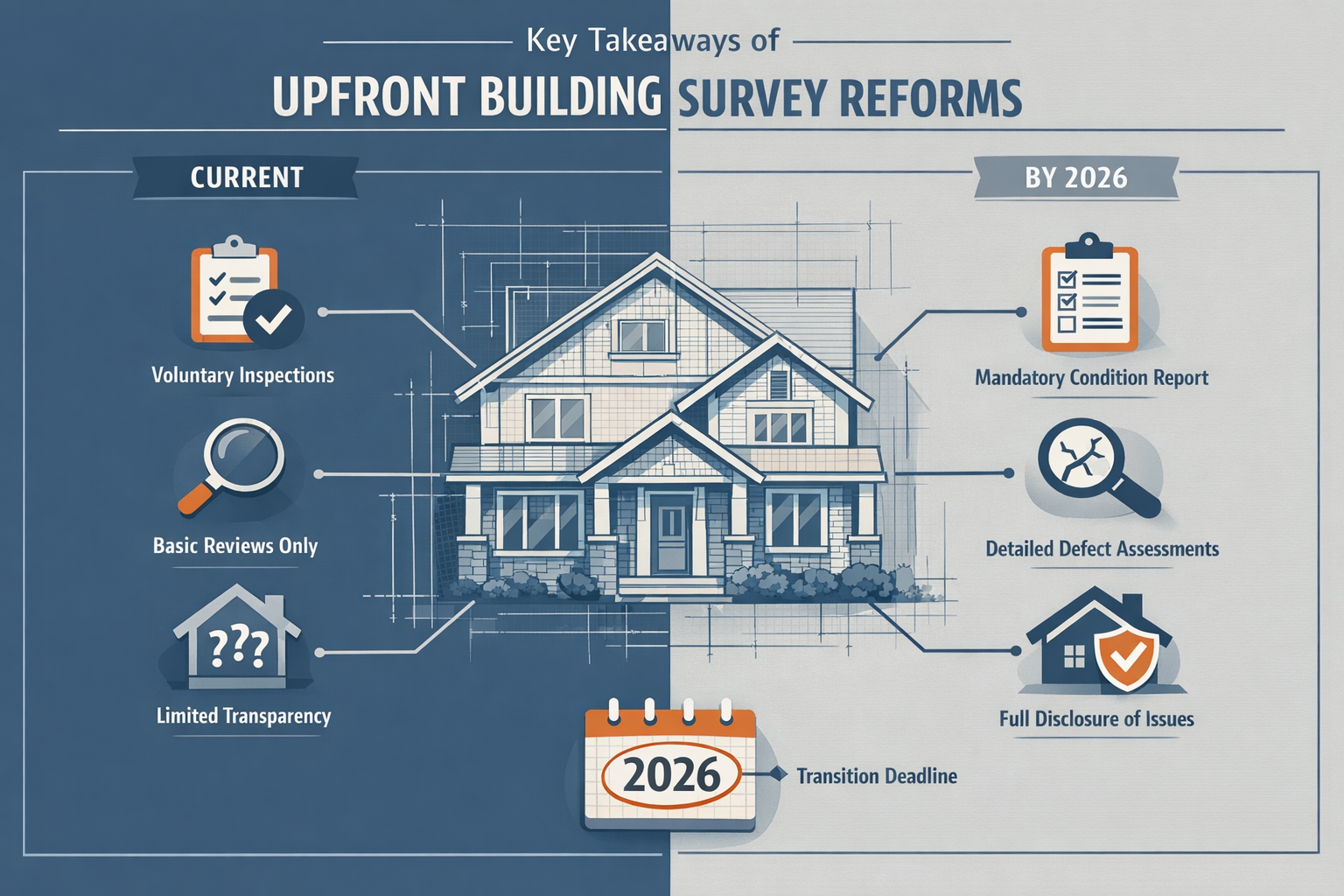
Key Takeaways
✅ Mandatory upfront surveys proposed: Sellers may soon be required to commission property condition assessments before listing, shifting costs and timing dramatically[5]
✅ Significant cost increases for sellers: Survey spending could increase from an average of £38 to £380, raising total fixed upfront costs to approximately £710[5]
✅ Transaction speed improvements expected: Early searches and upfront information could reduce transaction times by four weeks based on pilot evidence[5]
✅ 24-month implementation minimum needed: RICS emphasizes that at least two years is essential for building capacity, developing standards, and establishing guidance[4]
✅ No definitive timeline yet confirmed: The Government has not published a roadmap for implementation, and it remains unclear which reforms will require primary legislation[4]
Understanding the Proposed Upfront Building Survey Requirements
What the Government Consultation Proposes
The Government's consultation on home buying and selling reforms, launched on October 6, 2025, proposes a fundamental restructuring of how property information is gathered and shared[4]. At the heart of these reforms lies a requirement for sellers to work with conveyancers and surveyors to carry out searches and a property condition assessment prior to listing[5].
This upfront assessment would form part of a comprehensive standardised dataset required at the point of listing, including:
- Tenure details and property type
- Council tax band and EPC rating
- Title information and seller ID verification
- Leasehold terms (where applicable)
- Building safety data and compliance certificates
- Standard searches (local authority, drainage, environmental)
- Property information forms
- Property condition assessment tailored to property age and type[5]
The proposed "property passport" concept would create a centralised digital database—similar to checking a vehicle's MOT and tax status online—containing safety certificates, surveys, and compliance reports[3]. This would establish a permanent digital record accessible throughout the property's lifecycle.
How This Differs from Current Practice
Currently, the typical sequence sees buyers commissioning surveys only after making an offer and having it accepted. This creates several problems:
🔴 Information asymmetry: Sellers know their property's condition; buyers do not until late in the process
🔴 Transaction failures: Surveys revealing significant defects often lead to renegotiation or complete transaction collapse
🔴 Wasted costs: Buyers may spend hundreds on surveys for properties they ultimately don't purchase
🔴 Time delays: The survey process adds weeks to an already lengthy transaction timeline
A recent poll revealed that no more than 2% of home movers believed they had received sufficient information prior to making an offer[5]—a damning indictment of the current system's transparency failures.
The proposed reforms would flip this model entirely. With upfront surveys, buyers would have access to professional property condition assessments before viewing or making offers, fundamentally changing negotiation dynamics and reducing transaction uncertainty.
For guidance on current survey options, see our comprehensive RICS Building Survey guide.
The Financial Impact: Cost Redistribution and Market Implications
Seller Cost Increases Under Reform Proposals
The financial implications of Upfront Building Surveys Under Homebuying Reform Proposals: Preparing for Mandatory Condition Assessments in 2026 are substantial and will fundamentally alter the economics of property sales.
According to Government projections, sellers will face significantly increased upfront costs:
| Cost Component | Current Average | Proposed Average | Increase |
|---|---|---|---|
| Survey costs | £38 | £380 | +£342 |
| Total fixed upfront costs | ~£368 | ~£710 | +£342 |
Survey spending alone is projected to increase tenfold, from an average of £38 to £380[5]. Earlier estimates suggested upfront costs of £310 specifically for assessments and surveys[5], though the final figure may vary depending on property type, age, and complexity.
These costs represent a significant barrier, particularly for sellers who:
- Need to sell quickly due to financial pressure
- Are selling lower-value properties where £700+ represents a larger proportional cost
- Are elderly or vulnerable with limited savings
- Face unexpected life circumstances requiring urgent sale
The Government acknowledges this concern, recognising that "if sellers must complete an expensive checklist before listing, those needing a quick sale may be excluded entirely—potentially creating new barriers while removing old ones"[3].
Transaction Speed Benefits and Cost Savings
However, these upfront costs must be weighed against potential benefits. Evidence from pilots in England and Scotland—where upfront information requirements have already been implemented—suggests that early searches and upfront information could increase transaction speed by four weeks[5].
Faster transactions deliver multiple benefits:
💰 Reduced chain collapse risk: With comprehensive information available upfront, fewer surprises emerge during conveyancing
💰 Lower holding costs: Sellers reduce mortgage payments, maintenance, and utility costs during the sales period
💰 Reduced buyer survey duplication: When sellers commission comprehensive surveys, buyers may need only targeted specialist assessments rather than full surveys
💰 Fewer aborted transactions: Better information quality reduces the likelihood of deals falling through after significant costs have been incurred
The current system sees buyers commissioning surveys that sellers may have already obtained privately, creating unnecessary duplication. Upfront surveys eliminate this waste while providing buyers with professional assessments before they commit emotionally and financially to a property.
For insights on how surveys influence negotiations, explore our article on average price reductions after surveys.
Industry Capacity and Implementation Timeline Challenges
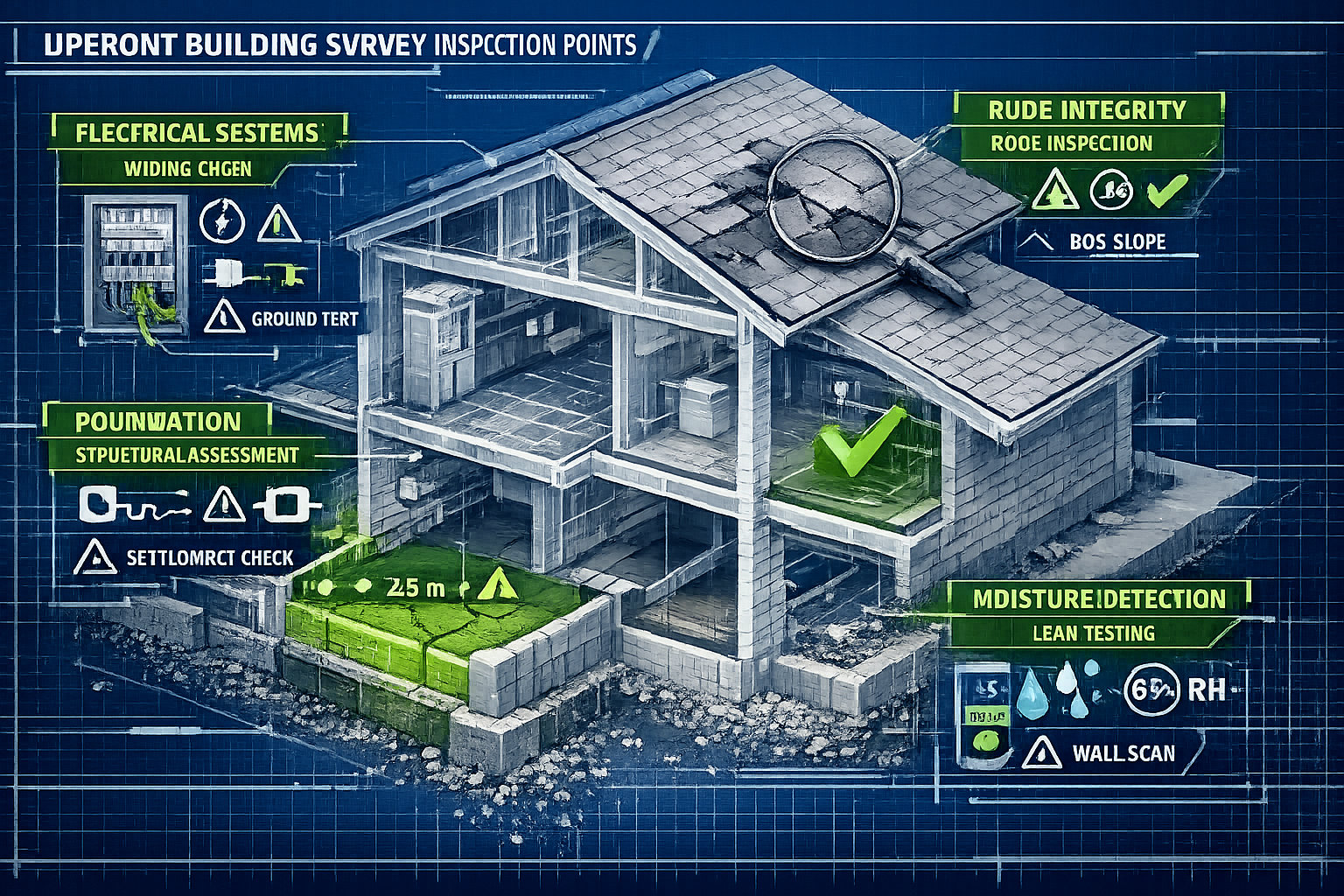
RICS Concerns About Surveyor Capacity
The Royal Institution of Chartered Surveyors (RICS) has been vocal about implementation concerns, particularly regarding industry capacity to handle a dramatic increase in survey demand. RICS has stressed that a minimum 24-month implementation period is essential to allow sufficient time for capacity to be built, standards to be developed, and clear guidance to be established[4].
The capacity challenge is multifaceted:
Workforce availability: The surveying profession would need to significantly expand its workforce to handle every property listing requiring an upfront survey. Current capacity is calibrated to a market where only a percentage of properties receive comprehensive surveys.
Training and standardisation: New standardised assessment protocols must be developed, tested, and rolled out across the profession. Surveyors will need training on these new standards to ensure consistency.
Quality assurance: Rapid expansion risks diluting quality. Robust quality assurance mechanisms must be established before mandatory requirements take effect.
Geographic distribution: Capacity constraints may be more acute in certain regions, potentially creating bottlenecks in areas with fewer qualified surveyors.
RICS has offered to support the Government with further research to better understand industry capacity and resourcing needs, emphasising the importance of a clear, realistic timetable so surveyors and businesses can plan effectively[4].
What "2026" Really Means for Implementation
Despite references to "2026" in discussions about Upfront Building Surveys Under Homebuying Reform Proposals: Preparing for Mandatory Condition Assessments in 2026, it's crucial to understand that no definitive timeframe for implementation has yet been announced[4].
The consultation period concluded at the end of December 2025, but significant steps remain:
- Consultation analysis: The Government must review and analyse responses from thousands of stakeholders
- Policy refinement: Proposals may be modified based on consultation feedback
- Legislative process: It remains unclear which reforms will require primary legislation versus secondary legislation or regulatory changes[4]
- Standards development: Industry bodies must develop detailed standards and guidance
- Capacity building: The surveying sector needs time to expand and prepare
- Technology infrastructure: Digital property passport systems must be designed, built, and tested
Given these requirements and RICS's emphasis on a minimum 24-month implementation period, full implementation is more likely in 2027 or 2028 rather than 2026, though preparatory changes may begin earlier.
For first-time buyers navigating this transitional period, our first-time buyer guide to building surveys provides essential context.
Preparing for Mandatory Condition Assessments: Practical Steps
For Surveyors and Building Survey Professionals
The surveying sector is positioning itself for growth, with expectations of an uplift in volumes across both lending and surveys in 2026[8]. Professionals should take concrete steps now to prepare for Upfront Building Surveys Under Homebuying Reform Proposals: Preparing for Mandatory Condition Assessments in 2026:
1. Capacity Planning and Workforce Development
- Recruit and train: Begin expanding teams now to handle anticipated demand increases
- Invest in technology: Implement digital survey tools, reporting software, and mobile inspection technologies
- Develop standardised templates: Create efficient, comprehensive reporting templates that can be adapted to mandatory requirements
- Establish quality controls: Implement robust peer review and quality assurance processes
2. Service Offering Adaptation
- Develop seller-focused services: Create packages specifically designed for sellers commissioning upfront surveys
- Tiered assessment options: Offer different levels of assessment tailored to property age, type, and value
- Fast-track services: Develop expedited survey options for sellers needing quick turnarounds
- Bundle services: Package surveys with other required upfront assessments (EPC, safety certificates)
3. Professional Development and Standards
- Monitor RICS guidance: Stay current with evolving standards and guidance documents
- Participate in consultations: Engage with industry bodies shaping the new requirements
- Continuing professional development: Ensure all team members receive training on new standards as they emerge
- Specialisation opportunities: Consider developing expertise in specific property types or assessment areas
Our building surveyor services page outlines current professional standards that will form the foundation for future mandatory requirements.
For Property Sellers and Estate Agents
Even before mandatory requirements take effect, sellers can gain competitive advantages by voluntarily commissioning upfront surveys:
Benefits of voluntary upfront surveys:
✅ Marketing advantage: Properties with comprehensive surveys stand out in listings
✅ Price confidence: Professional assessments support asking price justification
✅ Faster sales: Buyers move more quickly when information is readily available
✅ Reduced renegotiation: Transparency upfront minimises surprises and price challenges later
✅ Serious buyer attraction: Comprehensive information filters out time-wasters
Practical preparation steps:
- Budget planning: Factor survey costs into selling expense calculations now
- Property preparation: Address obvious defects before commissioning surveys to maximise property presentation
- Document gathering: Compile all property documentation (guarantees, building control certificates, planning permissions) in advance
- Choose qualified surveyors: Work with RICS chartered surveyors who understand evolving standards
Estate agents should begin educating sellers about coming changes and positioning upfront surveys as value-added services that facilitate faster, smoother transactions.
For Property Buyers

Buyers navigating the transitional period should understand both current and emerging practices:
In the current system:
- Continue commissioning independent surveys even when sellers provide information
- Use seller-provided surveys as starting points but verify with your own professional assessments
- Understand that seller-commissioned surveys may present information differently than buyer-commissioned ones
Preparing for the new system:
- Learn to interpret survey reports: Develop literacy in understanding property condition assessments
- Ask detailed questions: Don't assume upfront surveys eliminate the need for due diligence
- Consider specialist follow-ups: Even with comprehensive upfront surveys, specific concerns may warrant targeted specialist assessments
- Understand limitations: Know what mandatory assessments will and won't cover
For detailed guidance on using survey information in negotiations, see our article on how RICS surveys help negotiate property prices.
Buyers should also familiarise themselves with homebuyers report examples to understand what comprehensive property assessments should contain.
The Broader Context: Why Reform Is Happening Now
Systemic Problems in the Current System
The push for Upfront Building Surveys Under Homebuying Reform Proposals: Preparing for Mandatory Condition Assessments in 2026 stems from long-standing, well-documented problems in the UK property transaction system:
Transaction failure rates: The UK experiences significantly higher rates of transaction collapse compared to other developed markets. Chains fall through regularly, wasting time, money, and emotional investment.
Information opacity: The current system allows sellers to withhold or obscure property condition information, creating asymmetric information dynamics that disadvantage buyers.
Extended timelines: UK property transactions take significantly longer than in comparable markets—often 3-6 months from offer acceptance to completion.
Duplicated costs: Multiple parties in chains often commission similar surveys and searches, creating inefficiency.
Consumer dissatisfaction: The 2% satisfaction rate regarding pre-offer information availability demonstrates fundamental system failure[5].
Learning from Scotland's Experience
Scotland implemented upfront information requirements earlier than England, providing valuable evidence about reform impacts. The Scottish experience shows:
- Faster transactions: Evidence indicates that upfront information has contributed to faster transaction times[5]
- Reduced surprises: Better information quality reduces unexpected issues during conveyancing
- Market adaptation: The property industry successfully adapted to new requirements after an adjustment period
- Consumer acceptance: Buyers and sellers have generally accepted the new system once implemented
This evidence has informed the English reform proposals, though the specific requirements and implementation approach may differ.
The "Property Passport" Vision
The long-term vision extends beyond mandatory upfront surveys to a comprehensive digital "property passport" system[3]. This would create a permanent, accessible record for each property containing:
- Historical surveys and inspections
- Safety certificates (gas, electrical, fire safety)
- Building control approvals and planning permissions
- EPC ratings and energy efficiency improvements
- Structural alterations and renovation records
- Compliance documentation for building safety regulations
This digital infrastructure would transform property information from scattered, paper-based records to a centralised, instantly accessible system—dramatically improving transparency and transaction efficiency.
For insights into broader surveying sector trends, explore our analysis of what surveyors do.
Potential Challenges and Criticisms
Concerns About Market Access and Equity
Critics of the reforms raise several legitimate concerns about Upfront Building Surveys Under Homebuying Reform Proposals: Preparing for Mandatory Condition Assessments in 2026:
Financial barriers for vulnerable sellers: The £700+ upfront cost burden may exclude:
- Elderly sellers on fixed incomes
- Those selling due to financial distress
- Owners of lower-value properties where costs represent larger proportional burdens
- Executors of estates with limited estate funds
Potential for two-tier market: Concerns exist that mandatory requirements could create a formal market for those who can afford upfront costs and an informal market for those who cannot.
Regional disparities: Implementation may affect different regions differently, with capacity constraints potentially more acute in rural areas or regions with fewer surveyors.
Property type challenges: Standardising assessments across vastly different property types—from modern flats to historic cottages—presents significant technical challenges.
Quality and Standardisation Questions
Ensuring consistent quality across thousands of mandatory surveys presents challenges:
- Surveyor independence: When sellers commission surveys, will surveyors face pressure to minimise reported defects?
- Standard variations: How will standards accommodate different property types, ages, and regional construction methods?
- Dispute resolution: What mechanisms will exist when buyers disagree with seller-commissioned survey findings?
- Liability questions: Who bears liability when upfront surveys miss significant defects?
These questions must be addressed through robust standards, clear guidance, and effective regulatory oversight as implementation proceeds.
Looking Ahead: The Surveying Sector in 2026 and Beyond
Despite implementation uncertainties, the surveying sector is positioning for growth. Industry analysis indicates expectations of an uplift in volumes across both lending and surveys in 2026, with the sector positioned for recovery and renewed demand[8].
Opportunities for the surveying profession:
📈 Volume increases: Mandatory upfront surveys would dramatically increase demand for professional assessments
📈 Service diversification: New requirements create opportunities for specialised assessment services
📈 Technology adoption: Digital property passports and standardised reporting drive technological innovation
📈 Professional recognition: Mandatory requirements elevate the profession's profile and importance in property transactions
Strategic positioning for success:
Surveying firms that prepare now—investing in capacity, technology, and standardised processes—will be best positioned to capitalise on coming changes. Those that wait risk being overwhelmed when implementation begins.
The transition period offers opportunities to shape emerging standards, develop innovative service offerings, and establish market leadership in upfront assessment services.
For surveyors seeking to understand the full scope of professional responsibilities, our guide on RICS surveyors provides essential context.
Conclusion: Preparing for Transformation
Upfront Building Surveys Under Homebuying Reform Proposals: Preparing for Mandatory Condition Assessments in 2026 represents more than a procedural change—it's a fundamental reimagining of how property information flows through the transaction process. While the exact timeline remains uncertain and implementation details continue to evolve, the direction of travel is clear: the UK property market is moving toward greater transparency, earlier information disclosure, and mandatory condition assessments.
For surveyors, this transformation presents both challenges and opportunities. Capacity building, standards development, and service adaptation are essential preparation steps that should begin now, regardless of the precise implementation date. The sector's projected growth in 2026 reflects industry confidence that these reforms will ultimately expand demand for professional surveying services[8].
For sellers, understanding that upfront costs may increase substantially—but transaction times may decrease significantly—is crucial for financial planning and timing decisions. Early adopters who voluntarily commission comprehensive surveys may gain competitive advantages even before mandatory requirements take effect.
For buyers, the reforms promise better information quality and reduced transaction uncertainty, though the transition period may create temporary complexity as old and new systems coexist.
Actionable Next Steps
For Surveying Professionals:
- Begin capacity planning and recruitment now
- Invest in digital survey tools and reporting systems
- Monitor RICS guidance and participate in industry consultations
- Develop standardised templates and quality assurance processes
For Property Sellers:
- Budget for potential upfront survey costs in selling expense calculations
- Consider voluntary upfront surveys for competitive advantage
- Gather all property documentation in preparation for comprehensive disclosure requirements
For Property Buyers:
- Develop literacy in interpreting survey reports and property condition assessments
- Continue commissioning independent verifications even when seller surveys are available
- Stay informed about evolving requirements and implementation timelines
For All Stakeholders:
- Monitor Government announcements for confirmed implementation timelines
- Engage with consultation processes when opportunities arise
- Prepare for a more transparent, information-rich property market
The transformation of UK homebuying through mandatory upfront surveys will reshape the property landscape for decades to come. Those who prepare now—understanding both the opportunities and challenges—will navigate this transition most successfully, whether as professionals serving the market or individuals buying and selling property in a fundamentally changed system.