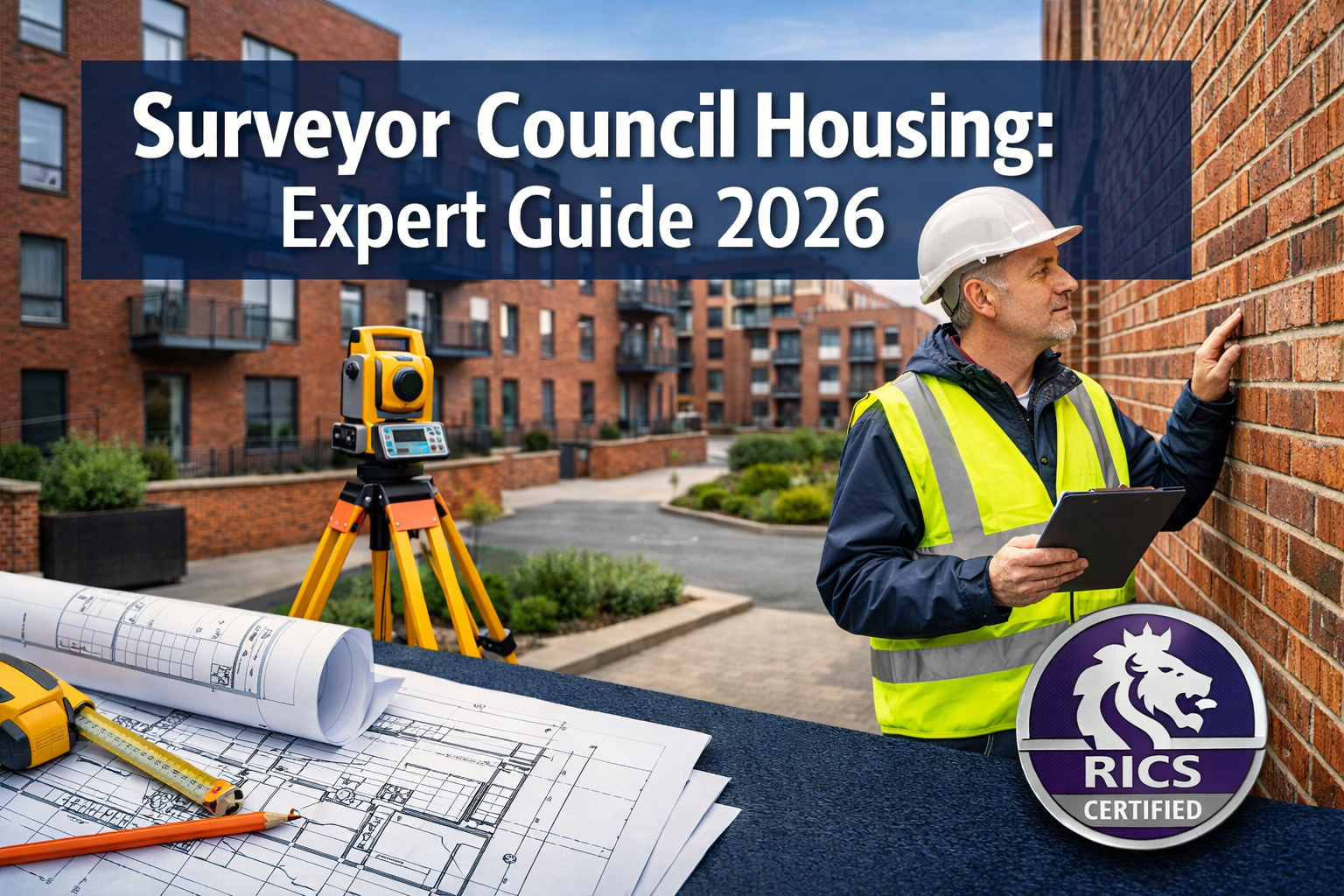
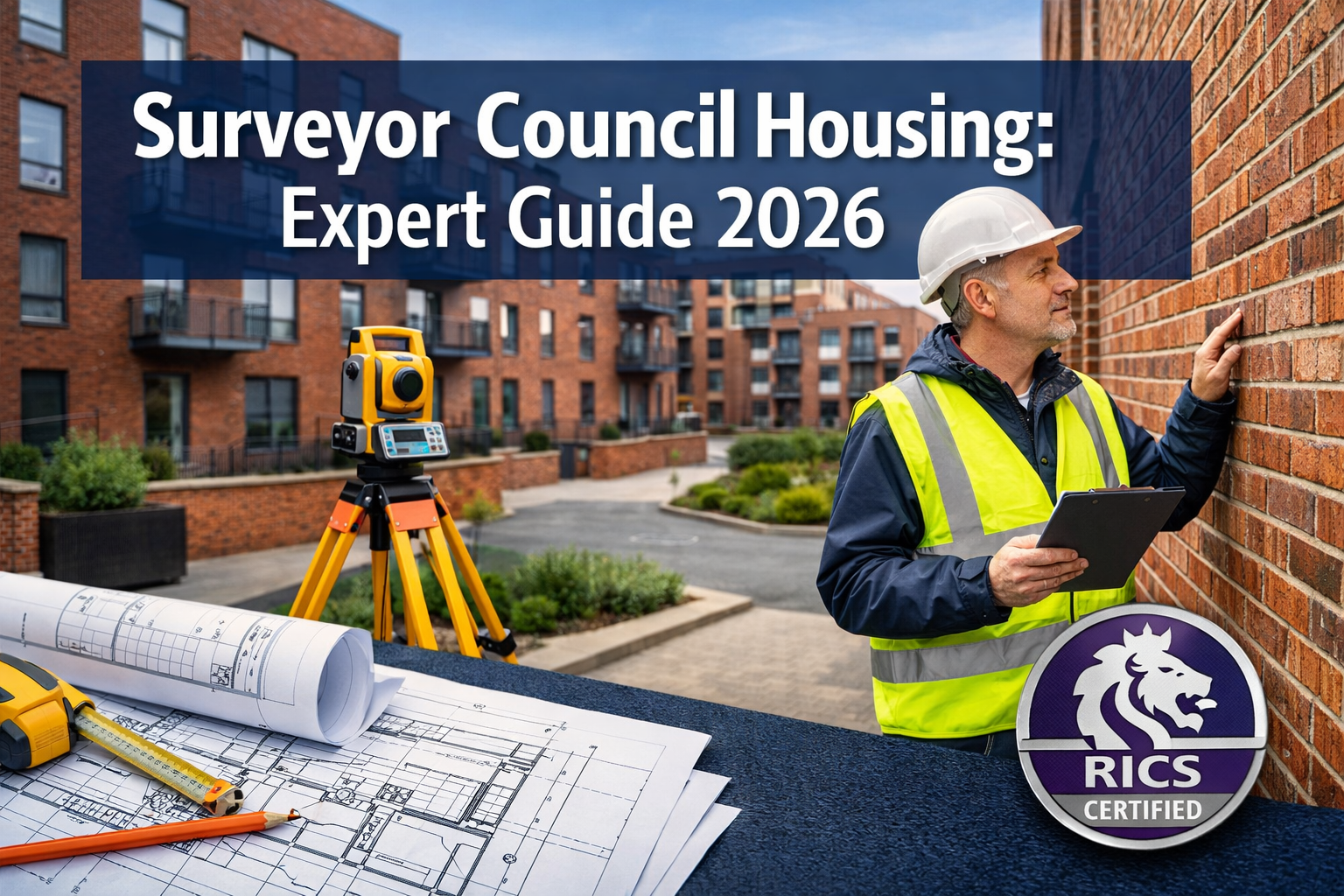
Surveyor Council Housing: Your Complete Guide to Property Inspections and Tenant Rights in 2026
When thousands of council tenants across the UK discovered serious structural defects in their homes in 2025, many didn’t know they had the right to request a professional survey. Surveyor council housing services play a crucial role in protecting both tenants and local authorities, ensuring that social housing meets essential safety and quality standards. Whether you’re a council tenant concerned about property conditions, a housing officer managing maintenance schedules, or someone navigating the Right to Buy scheme, understanding how surveyors work within the council housing sector can save money, prevent disputes, and ensure safe living conditions.
Key Takeaways
- Council tenants have rights to request property surveys when serious defects are suspected, and local authorities must address significant safety concerns
- Professional surveyors provide independent assessments that can support disrepair claims, Right to Buy valuations, and maintenance planning
- Different survey types serve specific purposes in council housing, from basic condition reports to comprehensive structural assessments
- Costs vary significantly depending on survey type, property size, and whether the tenant or council commissions the work
- Survey findings can lead to mandatory repairs, rent reductions, or compensation in cases of serious neglect
Understanding Surveyor Council Housing Services
What Is a Council Housing Survey?
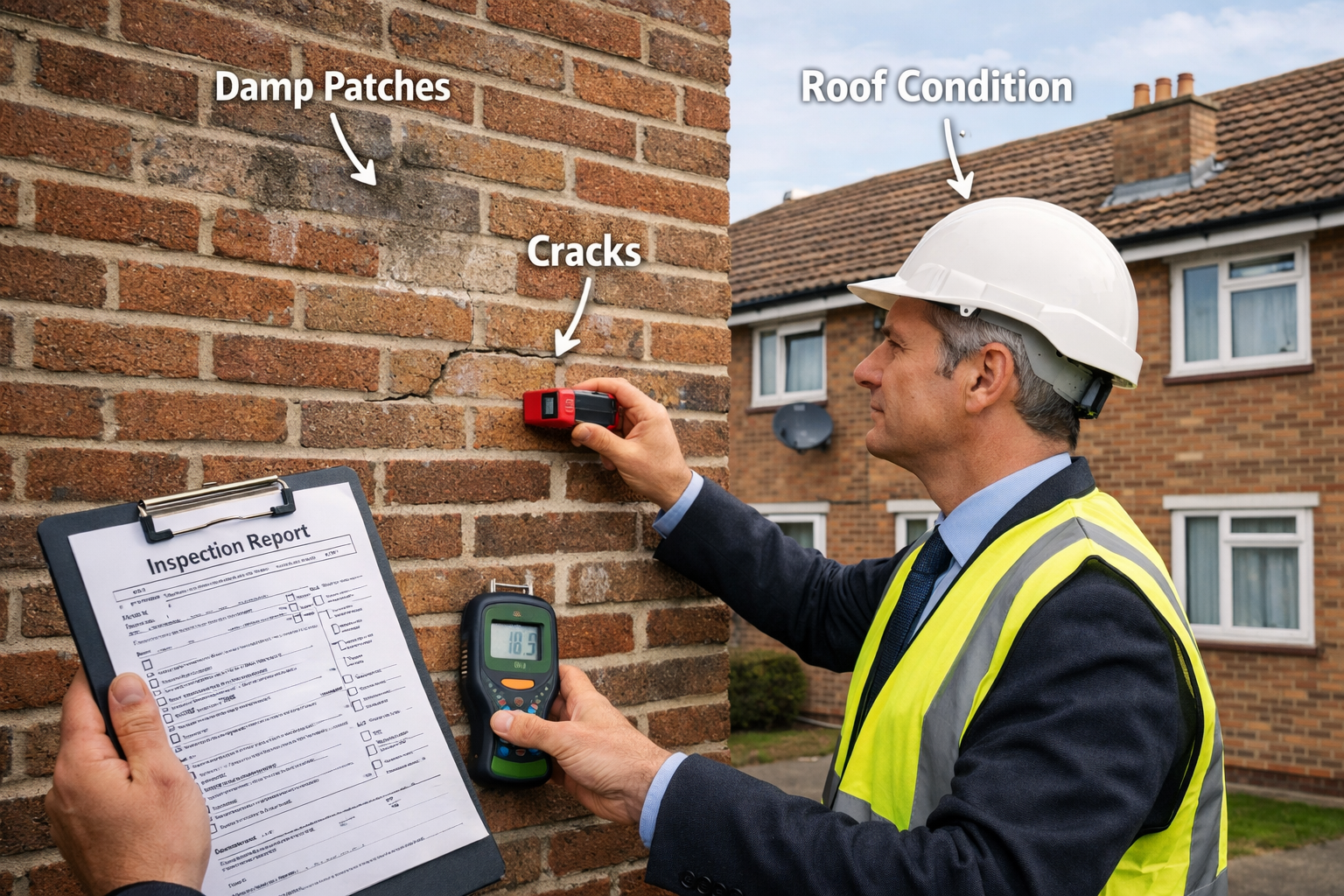
A council housing survey is a professional property inspection conducted by a qualified surveyor on social housing owned and managed by local authorities. Unlike private property surveys, surveyor council housing assessments often involve unique considerations related to tenant rights, council obligations, and public housing standards.
These surveys serve multiple purposes:
- 🏠 Condition assessments for maintenance planning
- 📋 Pre-purchase evaluations for Right to Buy applications
- 🔍 Defect investigations following tenant complaints
- 💰 Valuation services for asset management
- ⚖️ Legal evidence in disrepair claims
Council housing surveyors must understand both building pathology and the complex legal framework governing social housing, including the Homes (Fitness for Human Habitation) Act 2018 and various tenant protection regulations.
Who Conducts Council Housing Surveys?
Professional surveyors working in the council housing sector typically hold qualifications from the Royal Institution of Chartered Surveyors (RICS). Chartered surveyors bring specialized expertise in:
- Building surveying for structural assessments
- Valuation for Right to Buy calculations
- Dilapidations for end-of-tenancy evaluations
- Expert witness services for legal proceedings
Local authorities may employ in-house surveyors or commission independent firms to ensure impartiality, particularly when disputes arise between tenants and housing departments.
Types of Surveys Available for Council Housing
RICS HomeBuyers Report for Council Properties
The RICS HomeBuyers Report (Level 2 Survey) represents the most common survey type for council tenants pursuing Right to Buy purchases. This standardized assessment provides:
✅ Traffic light ratings for property elements (good/amber/poor)
✅ Market valuation reflecting current condition
✅ Insurance rebuild costs for mortgage purposes
✅ Urgent defect identification requiring immediate attention
For council properties, HomeBuyers Reports often reveal issues specific to social housing construction methods, including system-built properties from the 1960s-1980s. Understanding the difference between survey levels helps tenants choose appropriate inspection depth.
Building Survey (Level 3) for Older Council Housing
Older council housing stock, particularly pre-1970s properties, benefits from comprehensive Building Surveys. This detailed surveyor council housing assessment includes:
| Survey Component | What’s Included |
|---|---|
| Structural analysis | Foundation, walls, roof structure examination |
| Materials assessment | Identification of construction types and condition |
| Defect investigation | Root cause analysis of problems |
| Repair recommendations | Prioritized action plan with cost estimates |
| Future maintenance | Long-term planning advice |
Building Surveys prove invaluable when buying council properties with known issues or when tenants suspect serious structural problems requiring evidence for legal action.
Specific Defect Surveys
When council tenants identify particular problems, targeted surveys address specific concerns:
- Damp and timber surveys for moisture-related issues
- Structural movement assessments for cracks and subsidence
- Roof condition reports for leak investigations
- Electrical and heating surveys for safety compliance
These focused investigations provide detailed evidence for disrepair claims. Damp surveys are particularly common in council housing, where condensation and penetrating damp frequently affect older properties.
When Council Tenants Need a Surveyor
Disrepair and Tenant Rights
Council tenants experiencing property disrepair have legal rights to safe, habitable accommodation. Surveyor council housing expertise becomes essential when:
🔴 Structural defects compromise safety
🔴 Persistent damp affects health
🔴 Heating failures occur repeatedly
🔴 Roof leaks cause internal damage
🔴 Electrical hazards present risks
The Homes (Fitness for Human Habitation) Act 2018 requires landlords, including councils, to ensure properties remain fit for occupation. Independent survey evidence strengthens tenant positions when councils fail to respond adequately to repair requests.
Right to Buy Valuations
Under the Right to Buy scheme, council tenants purchasing their homes require accurate property valuations. The council commissions a district valuer, but tenants benefit from independent surveyor council housing assessments to:
- Verify the council’s valuation accuracy
- Identify defects affecting market value
- Support price negotiations
- Plan for post-purchase repairs
- Secure appropriate mortgage terms
Discrepancies between council valuations and independent surveys can lead to significant savings. Understanding how surveys help negotiate property prices proves valuable during Right to Buy transactions.
Pre-Litigation Evidence Gathering
When informal resolution fails, tenants pursuing legal action against councils for disrepair need professional survey evidence. Expert surveyors provide:
- Detailed defect schedules documenting all issues
- Photographic evidence with technical annotations
- Cause and effect analysis linking defects to council negligence
- Repair cost schedules for compensation calculations
- Expert witness testimony if cases proceed to court
Courts give significant weight to RICS-qualified surveyor reports, making professional surveyor council housing assessments crucial for successful claims.
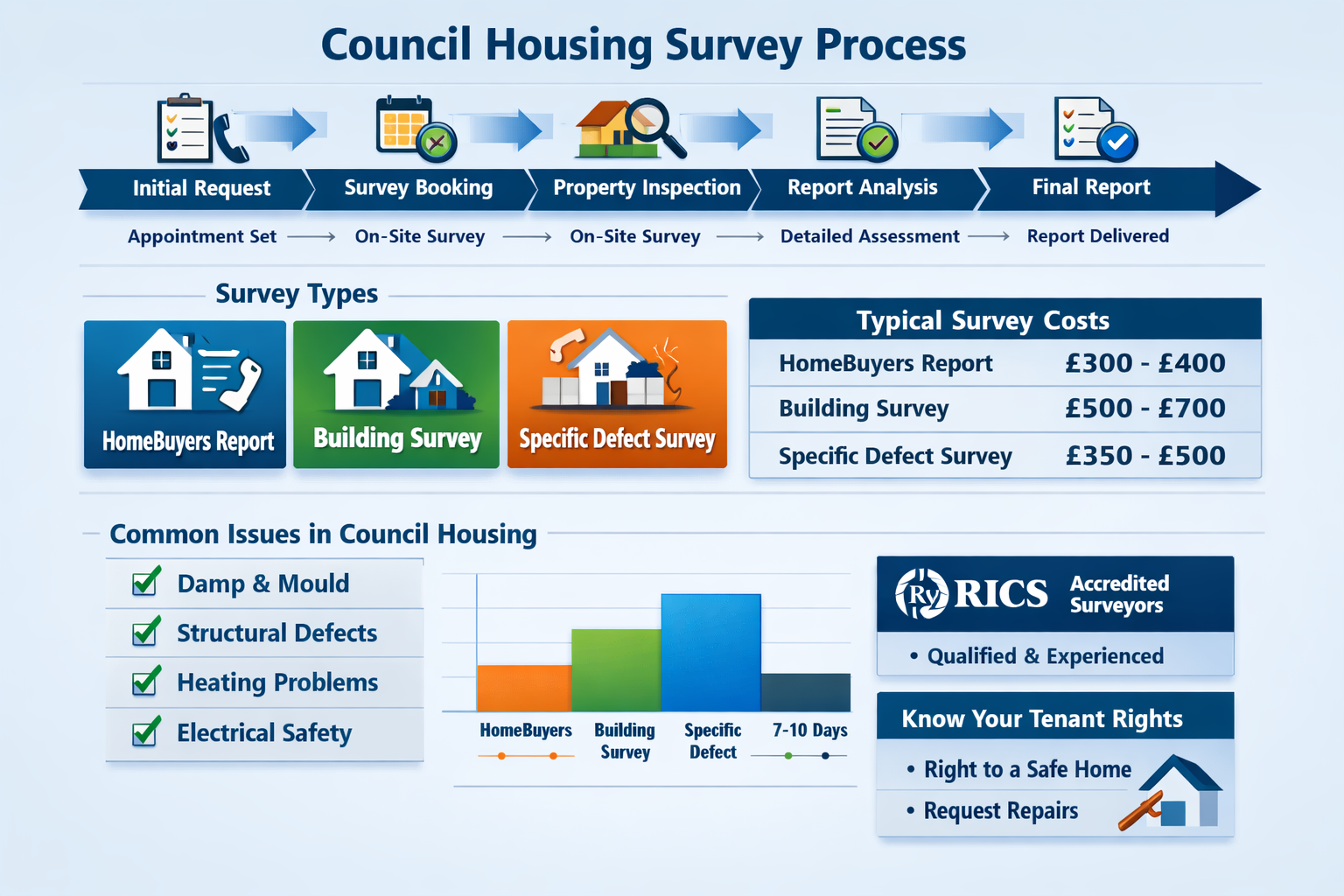
The Council Housing Survey Process
Initial Consultation and Scope Definition
Professional survey engagement begins with clear scope definition:
- Problem identification: What concerns prompted the survey request?
- Survey type selection: Which assessment level suits the situation?
- Access arrangements: Coordinating with tenants and councils
- Timeline establishment: Understanding urgency and deadlines
- Cost agreement: Transparent fee structures and payment terms
Reputable firms like Wimbledon Surveyors provide clear explanations of different survey options, helping clients make informed decisions.
The Inspection Phase
During the physical inspection, surveyors conduct systematic examinations:
External Assessment:
- Roof coverings and rainwater goods
- External walls and render condition
- Windows, doors, and external joinery
- Drainage systems and manholes
- Boundary walls and outbuildings
Internal Assessment:
- Structural elements (walls, floors, ceilings)
- Damp and moisture testing
- Heating and hot water systems
- Electrical installations (visual inspection)
- Internal joinery and finishes
Advanced diagnostic equipment including moisture meters, thermal imaging cameras, and endoscopes help identify hidden defects common in council housing stock.
Report Delivery and Recommendations
Comprehensive survey reports typically arrive within 5-10 working days, containing:
📊 Executive summary highlighting critical findings
📊 Detailed condition analysis for each property element
📊 Photographic evidence supporting observations
📊 Repair recommendations with priority ratings
📊 Cost estimates for remedial works
📊 Legal implications where relevant
Reports use clear, accessible language explaining technical findings. When renegotiating after poor survey results, professional documentation provides essential leverage.
Common Issues Found in Council Housing Surveys
Damp and Condensation Problems
Surveyor council housing inspections frequently identify moisture-related defects:
- Condensation damp: Poor ventilation in bathrooms and kitchens
- Rising damp: Failed or absent damp-proof courses
- Penetrating damp: Roof leaks, failed pointing, or cracked render
- Plumbing leaks: Hidden pipe failures within walls or floors
Damp issues affect approximately 40% of council housing stock, particularly in older properties. Surveyors distinguish between different damp types, as treatments and responsibilities vary significantly. Understanding common causes like subsidence helps identify root problems.
Structural Movement and Subsidence
Council housing built on clay soils or with shallow foundations may experience:
- Subsidence: Ground movement causing foundation settlement
- Heave: Ground expansion pushing foundations upward
- Settlement: Normal consolidation in newer properties
- Thermal movement: Expansion and contraction in concrete structures
Not all cracks indicate serious problems, but professional assessment distinguishes cosmetic issues from structural concerns requiring urgent intervention.
Defective Construction Methods
System-built council housing from the 1950s-1980s presents unique challenges:
Large Panel Systems (LPS):
- Concrete panel construction with potential joint failures
- Some types designated as “non-traditional” affecting mortgageability
- Require specialist assessment and potential PRC certification
Concrete Frame Construction:
- Carbonation of concrete reducing reinforcement protection
- Spalling and concrete cancer in severe cases
- Thermal bridging causing cold spots and condensation
Cavity Wall Issues:
- Tie corrosion in coastal or industrial areas
- Cavity fill problems causing damp penetration
- Lack of insulation in older properties
Roof and Rainwater Defects
Roof problems represent the most common urgent defect in council housing surveys:
🏚️ Flat roof failures (common in 1960s-70s blocks)
🏚️ Missing or slipped tiles on pitched roofs
🏚️ Blocked or damaged gutters causing overflow
🏚️ Failed flashings around chimneys and abutments
🏚️ Asbestos cement roofing requiring specialist removal
Roof condition checks prove particularly important for Right to Buy purchasers facing immediate repair costs.
Costs of Surveyor Council Housing Services
Typical Survey Fees
Survey costs for council housing vary based on property type, size, and survey level:
| Survey Type | Typical Cost Range | Best For |
|---|---|---|
| RICS Condition Report | £300-£500 | Modern flats in good condition |
| HomeBuyers Report | £400-£800 | Standard houses and maisonettes |
| Building Survey | £600-£1,500+ | Older properties or known defects |
| Specific Defect Survey | £250-£600 | Targeted investigations |
| Expert Witness Report | £800-£2,000+ | Legal proceedings |
Prices increase for larger properties, difficult access, or urgent turnaround requirements. Understanding average survey costs helps budget appropriately.
Who Pays for Council Housing Surveys?
Payment responsibility depends on the survey purpose:
Tenant-Commissioned Surveys:
- Right to Buy pre-purchase surveys
- Independent evidence for disrepair claims
- Second opinions on council assessments
Council-Commissioned Surveys:
- Routine stock condition surveys
- Planned maintenance assessments
- Official Right to Buy valuations
Legal Aid Funding:
- Available for some disrepair claims
- Requires means testing
- Covers expert witness costs in qualifying cases
Cost Recovery and Compensation
Successful disrepair claims may include survey cost recovery as part of settlements. When councils accept liability for serious defects, tenants can often reclaim:
- Survey fees as reasonable investigation costs
- Alternative accommodation expenses during repairs
- General damages for inconvenience and distress
- Special damages for damaged possessions
Professional surveyor council housing reports strengthen compensation claims by documenting the full extent of problems and their impact on living conditions.
Choosing the Right Surveyor for Council Housing
Essential Qualifications and Experience
When selecting a surveyor for council housing matters, verify:
✓ RICS membership (AssocRICS or MRICS minimum)
✓ Relevant experience with social housing stock
✓ Professional indemnity insurance (minimum £1 million)
✓ Local knowledge of construction types in your area
✓ Expert witness experience if litigation anticipated
Finding the best local surveyor requires research into qualifications, reviews, and specializations.
Questions to Ask Potential Surveyors
Before commissioning a surveyor council housing inspection, ask:
- How many council housing surveys have you conducted?
- Are you familiar with system-built properties?
- What diagnostic equipment do you use?
- How long until I receive the report?
- Do you provide expert witness services if needed?
- What’s included in your fee?
- Can you provide example reports?
- Do you have references from previous clients?
Transparent, detailed answers indicate professional competence and reliability.
Red Flags to Avoid
Beware of surveyors who:
❌ Lack proper RICS qualifications
❌ Provide quotes without property details
❌ Promise specific outcomes before inspection
❌ Refuse to explain their methodology
❌ Have no professional indemnity insurance
❌ Cannot provide references or examples
Professional surveyors maintain ethical standards, provide realistic expectations, and deliver impartial assessments regardless of who commissions the work.
Legal Framework Governing Council Housing Surveys
Landlord Obligations Under Housing Law
Local authorities face statutory duties ensuring council housing meets minimum standards:
Landlord and Tenant Act 1985:
- Structural repair obligations
- External maintenance responsibilities
- Installation maintenance duties
Homes (Fitness for Human Habitation) Act 2018:
- Properties must be fit for occupation
- Tenants can take legal action for serious defects
- Covers hazards under the Housing Health and Safety Rating System (HHSRS)
Housing Act 2004:
- HHSRS assessment framework
- Category 1 hazards require immediate action
- Category 2 hazards need addressing within reasonable timeframes
Tenant Rights and Survey Access
Council tenants have rights to:
- Request property inspections when defects arise
- Commission independent surveys at their expense
- Access survey reports commissioned by the council
- Use survey evidence in legal proceedings
- Withhold rent in extreme disrepair cases (with legal advice)
Councils cannot unreasonably refuse access for tenant-commissioned surveys, though reasonable notice requirements apply.
Right to Buy Survey Requirements
The Right to Buy process involves mandatory valuation by the district valuer, but tenants benefit from independent surveys to:
- Verify valuation accuracy
- Identify defects affecting value
- Plan post-purchase repairs
- Secure appropriate mortgage offers
- Challenge overvaluations
Survey findings can support formal challenges to council valuations, potentially saving thousands of pounds on purchase prices.
Using Survey Results Effectively
Negotiating Repairs with Councils
Survey evidence strengthens tenant positions when requesting repairs:
Step 1: Formal Complaint
Submit the survey report with a detailed repair request, referencing specific defects and legal obligations.
Step 2: Escalation
If the council doesn’t respond within reasonable timeframes (typically 20 working days), escalate through official complaints procedures.
Step 3: Environmental Health
Report Category 1 hazards to the local authority’s environmental health department for independent assessment.
Step 4: Legal Action
Use survey evidence to support formal legal proceedings if informal resolution fails.
Professional surveyor council housing reports provide the technical foundation for each escalation stage.
Supporting Disrepair Claims
Successful disrepair litigation requires:
- Evidence of defects: Detailed survey documentation
- Notice to landlord: Proof the council knew about problems
- Failure to repair: Demonstration of inadequate response
- Impact assessment: How defects affect health and enjoyment
- Cost quantification: Repair costs and compensation calculations
Expert surveyors provide court-ready reports meeting Civil Procedure Rules requirements, including:
- Statements of truth
- Compliance with Part 35 expert duties
- Clear, impartial professional opinions
- Detailed photographic evidence
- Comprehensive repair specifications
Right to Buy Price Negotiations
Independent surveys reveal defects affecting property values, supporting price negotiations:
Minor Defects (£500-£2,000 repairs):
Request modest price reductions reflecting immediate repair costs.
Significant Defects (£2,000-£10,000 repairs):
Challenge valuations or request the council completes repairs before sale.
Major Defects (£10,000+ repairs):
Consider whether purchase remains viable or seek substantial price reductions.
Survey evidence provides objective justification for negotiations, moving discussions beyond subjective opinions to documented facts.
Future Trends in Council Housing Surveys
Technology Integration
Modern surveyor council housing practices increasingly incorporate:
- Thermal imaging for insulation and moisture detection
- Drone surveys for high-level roof inspections
- 3D scanning for accurate measurements and records
- Digital reporting with interactive elements
- Building Information Modeling (BIM) for asset management
These technologies improve accuracy, reduce inspection times, and provide better documentation for long-term planning.
Energy Efficiency Assessments
With 2026 bringing increased focus on net-zero targets, council housing surveys now routinely address:
- Energy Performance Certificate (EPC) ratings
- Retrofit opportunities for improved efficiency
- Renewable energy installation feasibility
- Thermal performance of building fabric
- Ventilation and indoor air quality
Councils face pressure to upgrade housing stock to EPC Band C minimum, making energy assessments integral to condition surveys.
Regulatory Changes
Anticipated developments affecting surveyor council housing services include:
- Stricter enforcement of Decent Homes Standard
- Enhanced tenant rights under proposed legislation
- Increased scrutiny following building safety reforms
- Greater transparency in council housing management
- Mandatory regular condition surveys for social housing
These changes will likely increase demand for professional surveying services as both councils and tenants seek independent assessments.
Conclusion: Protecting Your Rights and Property Through Professional Surveys
Surveyor council housing services provide essential protection for tenants, support councils in asset management, and ensure social housing meets acceptable standards. Whether you’re exercising Right to Buy, addressing disrepair, or simply concerned about property conditions, professional surveys deliver the evidence and expertise needed for informed decisions.
The investment in a quality survey—typically £400-£1,500 depending on property type and assessment level—can save thousands in unexpected repairs, support successful legal claims, or secure fair purchase prices. More importantly, surveys protect health and safety by identifying hazards requiring urgent attention.
Next Steps
If you’re a council tenant concerned about property conditions:
- Document all defects with photographs and written records
- Report problems formally to your housing officer
- Consider commissioning an independent survey if responses are inadequate
- Seek legal advice for serious disrepair affecting health or safety
If you’re pursuing Right to Buy:
- Arrange an independent survey before committing to purchase
- Compare findings with the council’s valuation
- Budget for identified repairs in your financial planning
- Use survey evidence to negotiate fair prices
If you need professional surveying services:
- Contact experienced chartered surveyors familiar with council housing
- Request detailed quotes explaining what’s included
- Verify qualifications and relevant experience
- Ensure surveyors understand your specific needs and objectives
Professional surveyor council housing expertise empowers tenants, supports fair transactions, and maintains the quality of social housing stock across the UK. Don’t hesitate to seek professional advice when property conditions, purchase decisions, or legal matters require independent expert assessment.